GMC Week 2
What is the ‘Glocal’?
Self-becoming &
Community building
Globalisation
In today’s class:
- To understand the concepts of
‘glocal’ and cosmopolitanism in the
context of media convergence.
- To explore Bauman’s example of
“From Pilgrim to Tourist”,
understanding the difference
between so-called “ethnic” media
and transnational networks.
- To understand the idea of
transnationalism.
- To understand the dialogic approach
in studying globalisation.
New Media Order
Regulatory, economic and
technological changes in the 80’s
transformed the economic/social
model of media
From regulation in public interest
Deregulation
Specialist and localized media
Mass media
Public citizens
Private consumer entities
•Audiovisual geographies are thus becoming detached from the
symbolic spaces of national culture, and realigned on the basis of the
more 'universal' principles of international consumer culture. The
free and unimpeded circulation of programmes – television without
frontiers – is the great ideal in the new order. It is an ideal whose
logic is driving ultimately towards the creation of global
programming and global markets – and already we are seeing the
rise to power of global corporations intent on turning ideal into
reality.The new media order is set to become a global order.”
(Robins and Morley 2002: 11)
PopCosmopolitanism
Media convergence
Pop culture
HenryJenkins
“The ways that the
transcultural flows of popular
culture inspire new global
consciousness and cultural
competency”.
--- More celebratory tone by Henry Jenkins
Trans
localities
How we inhabit the
world and relate to
each other
changed/
is changing/
will continue to
change
From Pilgrim
toTourist
Zygmunt Bauman
Modernity:
• From Enlightenment to 20th Century
• Main problem Looking
for an identity
Who are we?
Self-construction
- Life away from distractions
within cities
- Life in the dessert, a no-
place, where one could lose
their identity and stay away
from duties and responsibilities
- Fulfilment in the desert
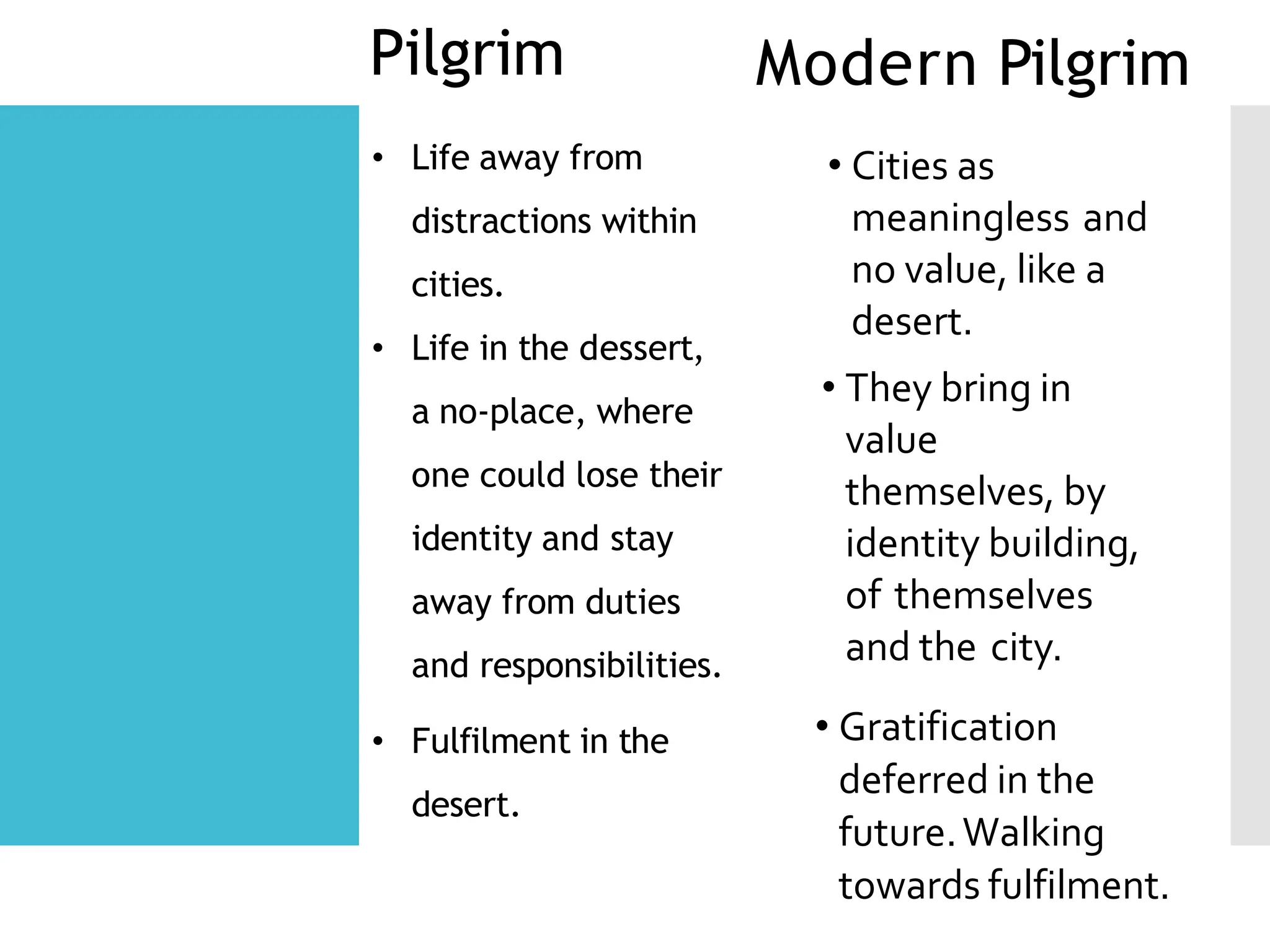
Pilgrim
Modern Pilgrim
Pilgrim
• Cities as
meaningless and
no value, like a
desert.
• They bring in
value
themselves, by
identity building,
of themselves
and the city.
• Gratification
deferred in the
future.Walking
towards fulfilment.
• Life away from
distractions within
cities.
• Life in the dessert,
a no-place, where
one could lose their
identity and stay
away from duties
and responsibilities.
• Fulfilment in the
desert.
How we inhabit the world and
relate to each other
changed/
is changing/
will continue to change
We will take a more optimistic
view when talking about
Agency in another lecture
later
“[Modern] Pilgrims had a stake in the
solidity of the world they walked, a
kind of world in which one can tell
life as a continuous story – moving
towards fulfilment – The world of
pilgrims, of identity-builders must be
orderly, determined, predictable, but
most of all it must be one in which
one can make engravings in the sand
so that past travels are kept and
preserved.”
(Bauman 1996: 23)
• Life as nothing waiting to be
something.
• Bringing in identity through self-
construction: coming out
of poverty, getting a highly
paid job, marrying a high-class woman –
becoming someone.
• Constructing his identity in a no-place,
New York: a place for
perpetual beginning, of
potentiality, opportunity, that takes the
identity of those in it.
• Linear life waiting for final
gratification.
Don Draper
We are living in an
inhospitable world
Nothing is fixed, stable, solid.
Everything is in constant change, circulation, in a
state of permanent liquidity.
No fixed identity,
capacity for constant
self-transformation.
Delayed gratification
turns into instant
gratification.
There is no progress:
it’
s not about moving
forward, but the ability
to stand still.
Living in unstable times.
Identities are always
transforming.
Culture is always
changing.
Our contexts are not
geographically bound
anymore.
The massification of the
media has resulted in
our lives, cultures and
societies becoming
transnational.
Transnationalism/
Transnationalmedia
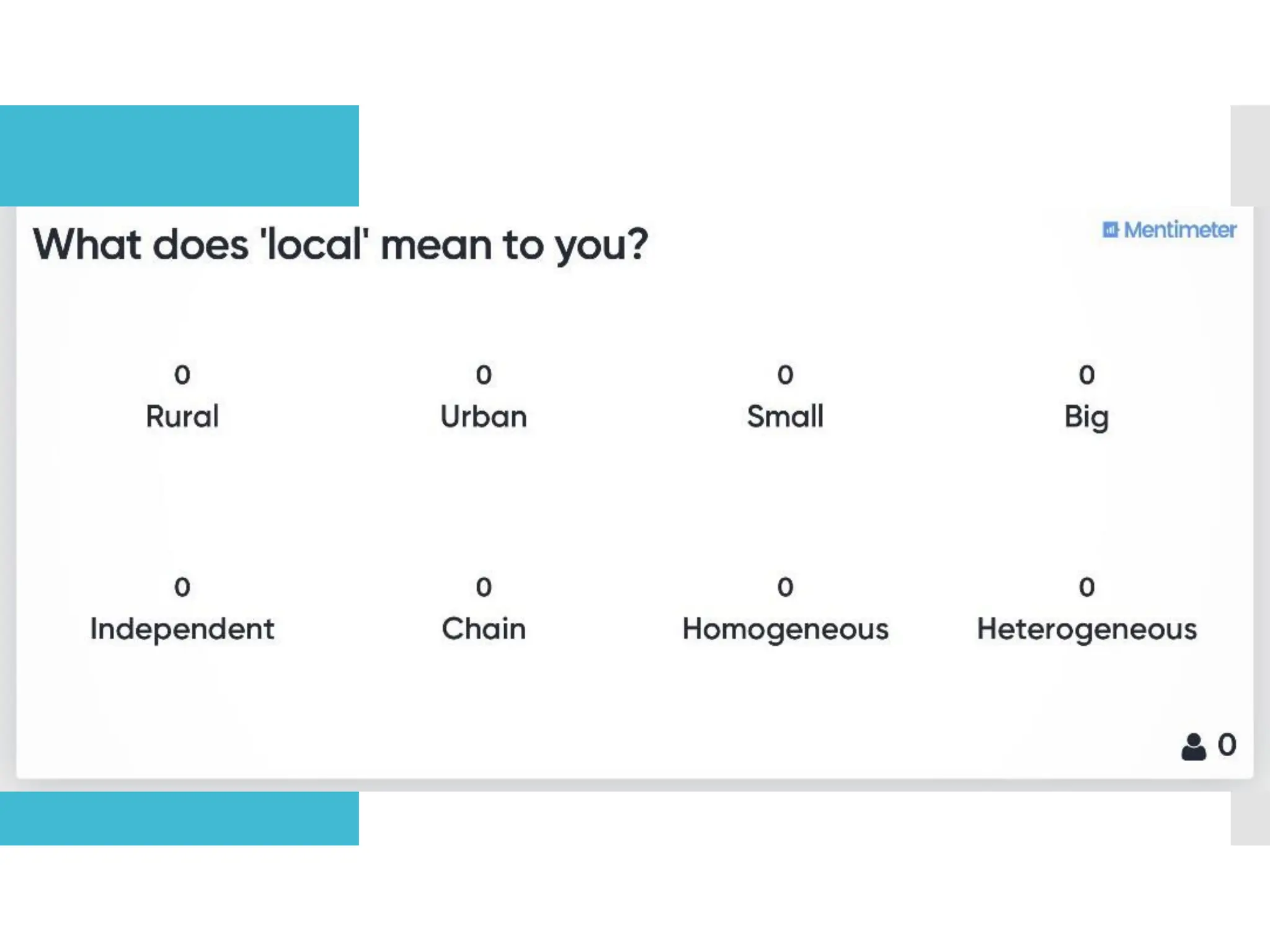
What is locality?
•“I view locality as primarily
relational and contextual rather
than as scalar or spatial. I see it as
a complex phenomenological
quality, constituted by a series of
links between the sense of social
immediacy, the technologies of
interactivity, and the relativity of
contexts.”
• (Appadurai 1996: 178)
Ethnic media
vs.
T
ransnational
media?
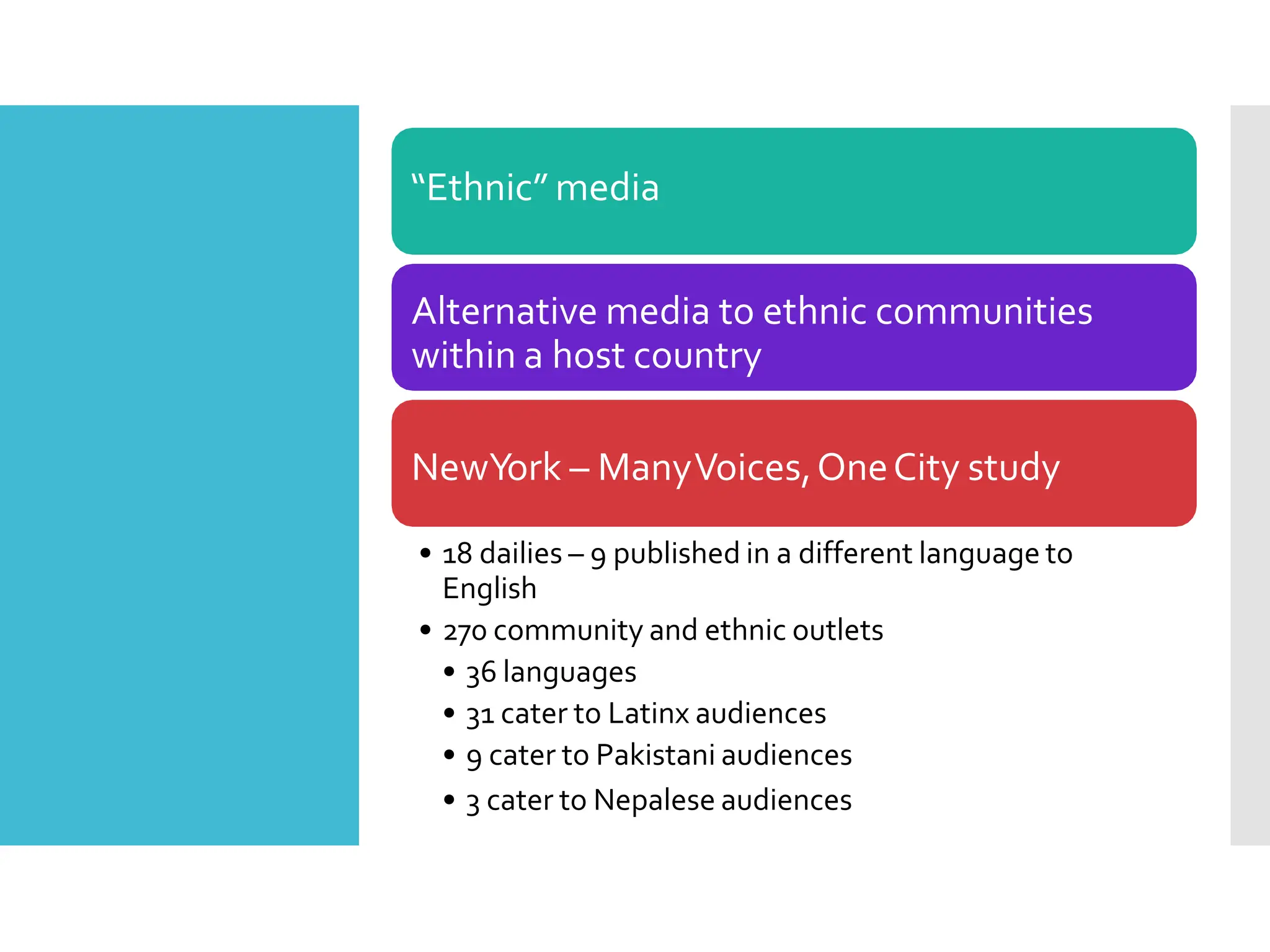
“Ethnic” media
Alternative media to ethnic communities
within a host country
NewYork – ManyVoices,OneCity study
• 18 dailies – 9 published in a different language to
English
• 270 community and ethnic outlets
• 36 languages
• 31 cater to Latinx audiences
• 9 cater to Pakistani audiences
• 3 cater to Nepalese audiences
Examples?
London’s Brick Lane
Chinese influencers on
RED
Ethnic media is growing, not
despite of, but partly due to the
rise of transnational media
Factor : Deterritorialization
- No boundaries
- Merging of cultural contexts
-Adaptation and integration of
audiences
Cosmopolitanization of audiences
US Reality TV Show
Adapted to new country
and culture
Adaption of production
to recognizable locations
by audience
Co-production and talent
exchanging to optimize
the cultural influence and
profits
Transnational
mediaas
consumer
culture
Hybridity
1) mixing previously separate
cultural systems
2)deterritorialization of cultural
processes from their original
physical environment to new and
foreign contexts
3)Impure cultural genres that are
formed out of the mixture of
several cultural domains
(Garcia-Candini 1995)
The process of hybridization:
“[…] we need to acknowledge
that hybridity is not a mere summation
of differences whereby eclectic symbolic
elements cohabitate. Rather, hybridity
is the dialogical re-inscription
of various codes and discourses in a
spatio-temporal zone of signification.
As such, conceptualizing hybridity entails
re-formulating intercultural and
international communication beyond
buoyant models of resistance and
inauspicious
patterns of domination.”
(Kraidy 1999: 472)
Hybridity
Cultural
appropriation?
https://www.theguardian.com/music/2020/jul/20/k-
pop-black-fans-creatives-industry-accountable-race
Rosalía – Spain – Flamenco
JBalvin – Colombia – Cumbia/Reggaeton
A dialogic
approach
Iwabuchi
Mediaproductionandconsumption
Bakhtin+Dialogism
Communication as double-voiced
reflections
Subjectivity–self-becoming
Recall – cultural consequences of
globalization
Recall–culturalconsequencesofglobalization
Hybridisationofcultures
Personal narratives– EdwardSaid
Personal narratives –EdwardSaid
Atacollectiveandculturallevel:
Dominationofcultures
recallthedebatewementionedearlierinthislecture
Iwabuchi – de-westernization
Cultural mixing and corporate collaboration
Socio-historically specific experiences
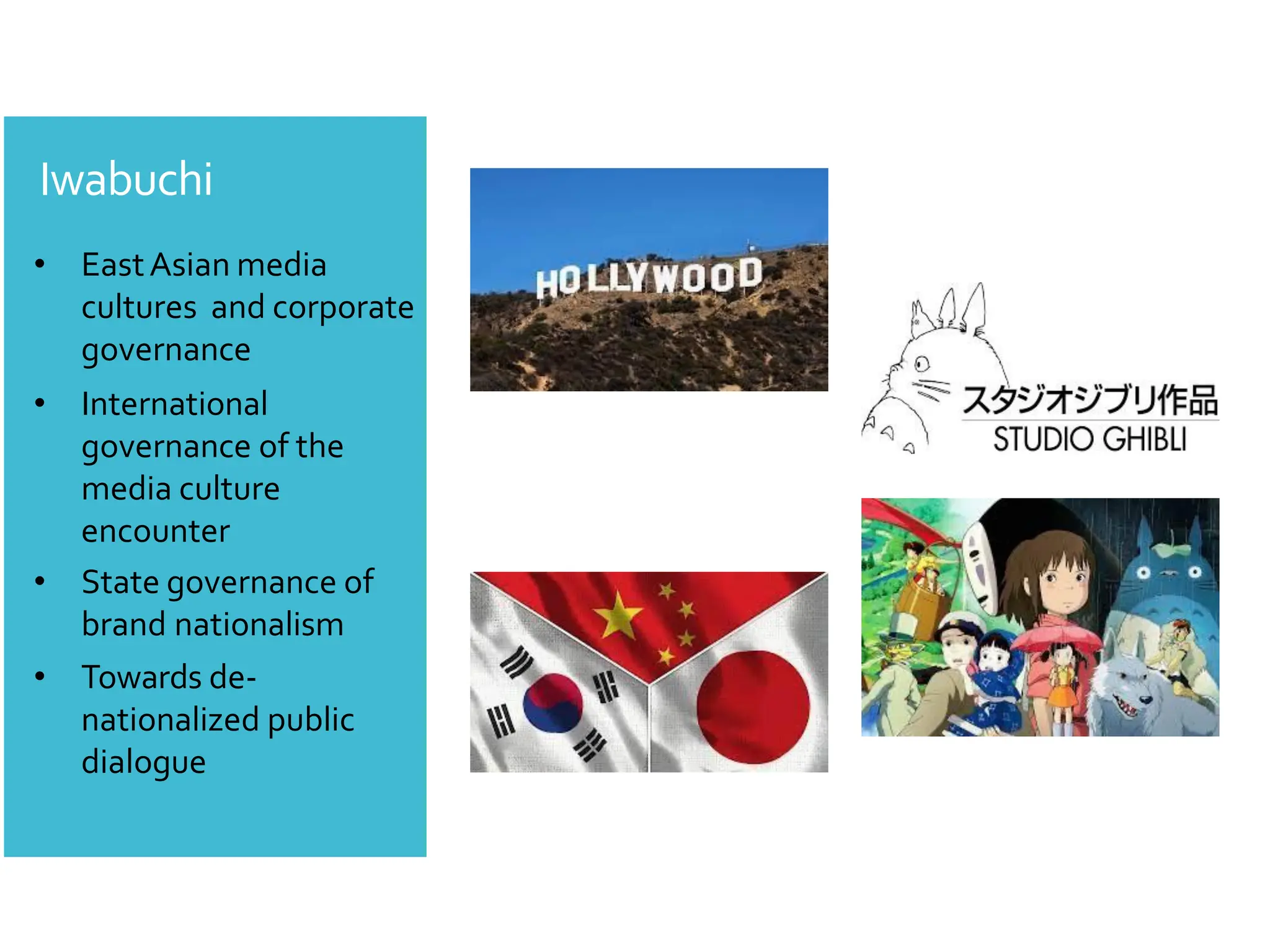
Iwabuchi
• EastAsian media
cultures and corporate
governance
• International
governance of the
media culture
encounter
• State governance of
brand nationalism
• Towards de-
nationalized public
dialogue
Atacollectiveandculturallevel:
Dominationofcultures
recallthedebatewementionedearlierinthislecture
Iwabuchi – nuanced arguments
He examined,
• the collaboration of the media and cultural industries;
• the institutionalization of cultural internationalism; and
• the growing interest of states in branding the nation via
media cultures.
• Reciprocal, mutual understanding and self-reflection
• Consumption and Co-production
• Dialogic – when dealing with others
Atacollectiveandculturallevel:
Dominationofcultures
recallthedebatewementionedearlierinthislecture
Iwabuchi – nuanced arguments
“Media cultures have thus connected East Asia in new, dialogic ways:
dialogic in the sense of rethinking one’s own life, society and culture at the
same time as reflecting in critical fashion on one’s socio-historically
constructed relations with others.
In this regard, it can be argued that travelling East Asian media cultures have
engendered a cultural public sphere, which McGuigan defines as ‘the
articulation of politics, public and personal, as a contested terrain through
affective (aesthetic and emotional) modes of communication’ and which
‘provides vehicles for thought and feeling, for imagination and disputatious
argument’” (Iwabuchi, 2010, pp. 406-407).

GMC_Week 2_20230203203023032323232023.pdf

  • 1.
    GMC Week 2 Whatis the ‘Glocal’? Self-becoming & Community building
  • 2.
  • 3.
    In today’s class: -To understand the concepts of ‘glocal’ and cosmopolitanism in the context of media convergence. - To explore Bauman’s example of “From Pilgrim to Tourist”, understanding the difference between so-called “ethnic” media and transnational networks. - To understand the idea of transnationalism. - To understand the dialogic approach in studying globalisation.
  • 4.
    New Media Order Regulatory,economic and technological changes in the 80’s transformed the economic/social model of media From regulation in public interest Deregulation Specialist and localized media Mass media Public citizens Private consumer entities
  • 5.
    •Audiovisual geographies arethus becoming detached from the symbolic spaces of national culture, and realigned on the basis of the more 'universal' principles of international consumer culture. The free and unimpeded circulation of programmes – television without frontiers – is the great ideal in the new order. It is an ideal whose logic is driving ultimately towards the creation of global programming and global markets – and already we are seeing the rise to power of global corporations intent on turning ideal into reality.The new media order is set to become a global order.” (Robins and Morley 2002: 11)
  • 6.
  • 7.
    “The ways thatthe transcultural flows of popular culture inspire new global consciousness and cultural competency”. --- More celebratory tone by Henry Jenkins
  • 8.
  • 9.
    How we inhabitthe world and relate to each other changed/ is changing/ will continue to change
  • 10.
  • 11.
    Modernity: • From Enlightenmentto 20th Century • Main problem Looking for an identity Who are we? Self-construction
  • 12.
    - Life awayfrom distractions within cities - Life in the dessert, a no- place, where one could lose their identity and stay away from duties and responsibilities - Fulfilment in the desert Pilgrim
  • 13.
    Modern Pilgrim Pilgrim • Citiesas meaningless and no value, like a desert. • They bring in value themselves, by identity building, of themselves and the city. • Gratification deferred in the future.Walking towards fulfilment. • Life away from distractions within cities. • Life in the dessert, a no-place, where one could lose their identity and stay away from duties and responsibilities. • Fulfilment in the desert.
  • 14.
    How we inhabitthe world and relate to each other changed/ is changing/ will continue to change We will take a more optimistic view when talking about Agency in another lecture later
  • 15.
    “[Modern] Pilgrims hada stake in the solidity of the world they walked, a kind of world in which one can tell life as a continuous story – moving towards fulfilment – The world of pilgrims, of identity-builders must be orderly, determined, predictable, but most of all it must be one in which one can make engravings in the sand so that past travels are kept and preserved.” (Bauman 1996: 23)
  • 16.
    • Life asnothing waiting to be something. • Bringing in identity through self- construction: coming out of poverty, getting a highly paid job, marrying a high-class woman – becoming someone. • Constructing his identity in a no-place, New York: a place for perpetual beginning, of potentiality, opportunity, that takes the identity of those in it. • Linear life waiting for final gratification. Don Draper
  • 17.
    We are livingin an inhospitable world Nothing is fixed, stable, solid. Everything is in constant change, circulation, in a state of permanent liquidity.
  • 18.
    No fixed identity, capacityfor constant self-transformation. Delayed gratification turns into instant gratification. There is no progress: it’ s not about moving forward, but the ability to stand still.
  • 19.
    Living in unstabletimes. Identities are always transforming. Culture is always changing. Our contexts are not geographically bound anymore. The massification of the media has resulted in our lives, cultures and societies becoming transnational.
  • 20.
  • 21.
  • 23.
    •“I view localityas primarily relational and contextual rather than as scalar or spatial. I see it as a complex phenomenological quality, constituted by a series of links between the sense of social immediacy, the technologies of interactivity, and the relativity of contexts.” • (Appadurai 1996: 178)
  • 24.
  • 25.
    “Ethnic” media Alternative mediato ethnic communities within a host country NewYork – ManyVoices,OneCity study • 18 dailies – 9 published in a different language to English • 270 community and ethnic outlets • 36 languages • 31 cater to Latinx audiences • 9 cater to Pakistani audiences • 3 cater to Nepalese audiences
  • 26.
  • 27.
    Ethnic media isgrowing, not despite of, but partly due to the rise of transnational media Factor : Deterritorialization - No boundaries - Merging of cultural contexts -Adaptation and integration of audiences Cosmopolitanization of audiences
  • 28.
    US Reality TVShow Adapted to new country and culture Adaption of production to recognizable locations by audience Co-production and talent exchanging to optimize the cultural influence and profits
  • 29.
  • 30.
  • 31.
    1) mixing previouslyseparate cultural systems 2)deterritorialization of cultural processes from their original physical environment to new and foreign contexts 3)Impure cultural genres that are formed out of the mixture of several cultural domains (Garcia-Candini 1995) The process of hybridization:
  • 32.
    “[…] we needto acknowledge that hybridity is not a mere summation of differences whereby eclectic symbolic elements cohabitate. Rather, hybridity is the dialogical re-inscription of various codes and discourses in a spatio-temporal zone of signification. As such, conceptualizing hybridity entails re-formulating intercultural and international communication beyond buoyant models of resistance and inauspicious patterns of domination.” (Kraidy 1999: 472)
  • 33.
  • 34.
  • 35.
  • 36.
  • 37.
  • 38.
  • 39.
  • 40.
    Recall – culturalconsequences of globalization
  • 41.
  • 42.
  • 43.
  • 44.
  • 45.
  • 46.
    Iwabuchi • EastAsian media culturesand corporate governance • International governance of the media culture encounter • State governance of brand nationalism • Towards de- nationalized public dialogue
  • 47.
    Atacollectiveandculturallevel: Dominationofcultures recallthedebatewementionedearlierinthislecture Iwabuchi – nuancedarguments He examined, • the collaboration of the media and cultural industries; • the institutionalization of cultural internationalism; and • the growing interest of states in branding the nation via media cultures. • Reciprocal, mutual understanding and self-reflection • Consumption and Co-production • Dialogic – when dealing with others
  • 48.
    Atacollectiveandculturallevel: Dominationofcultures recallthedebatewementionedearlierinthislecture Iwabuchi – nuancedarguments “Media cultures have thus connected East Asia in new, dialogic ways: dialogic in the sense of rethinking one’s own life, society and culture at the same time as reflecting in critical fashion on one’s socio-historically constructed relations with others. In this regard, it can be argued that travelling East Asian media cultures have engendered a cultural public sphere, which McGuigan defines as ‘the articulation of politics, public and personal, as a contested terrain through affective (aesthetic and emotional) modes of communication’ and which ‘provides vehicles for thought and feeling, for imagination and disputatious argument’” (Iwabuchi, 2010, pp. 406-407).