Global AI Bootcamp 2023 - 2-4 March 2023
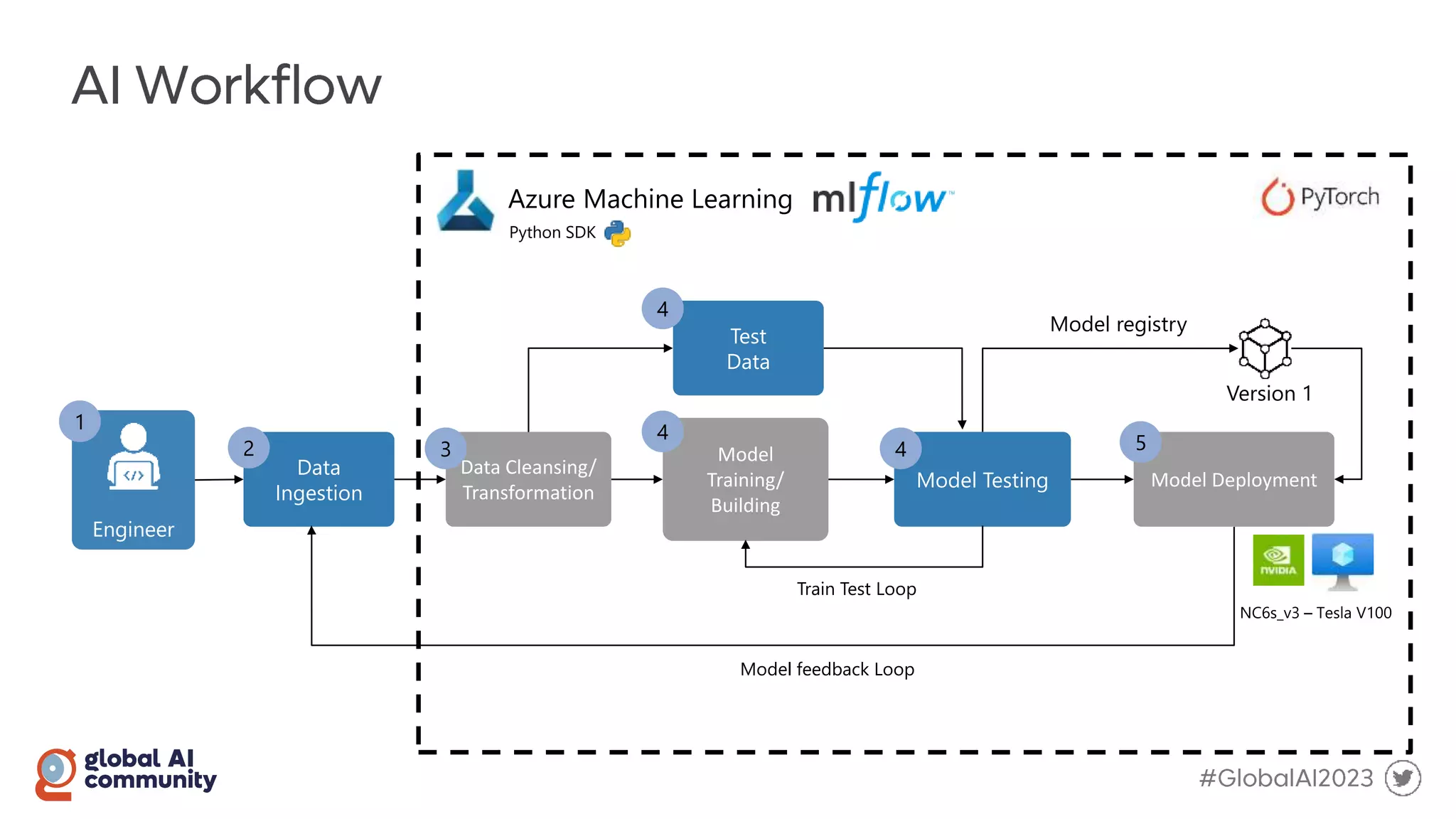
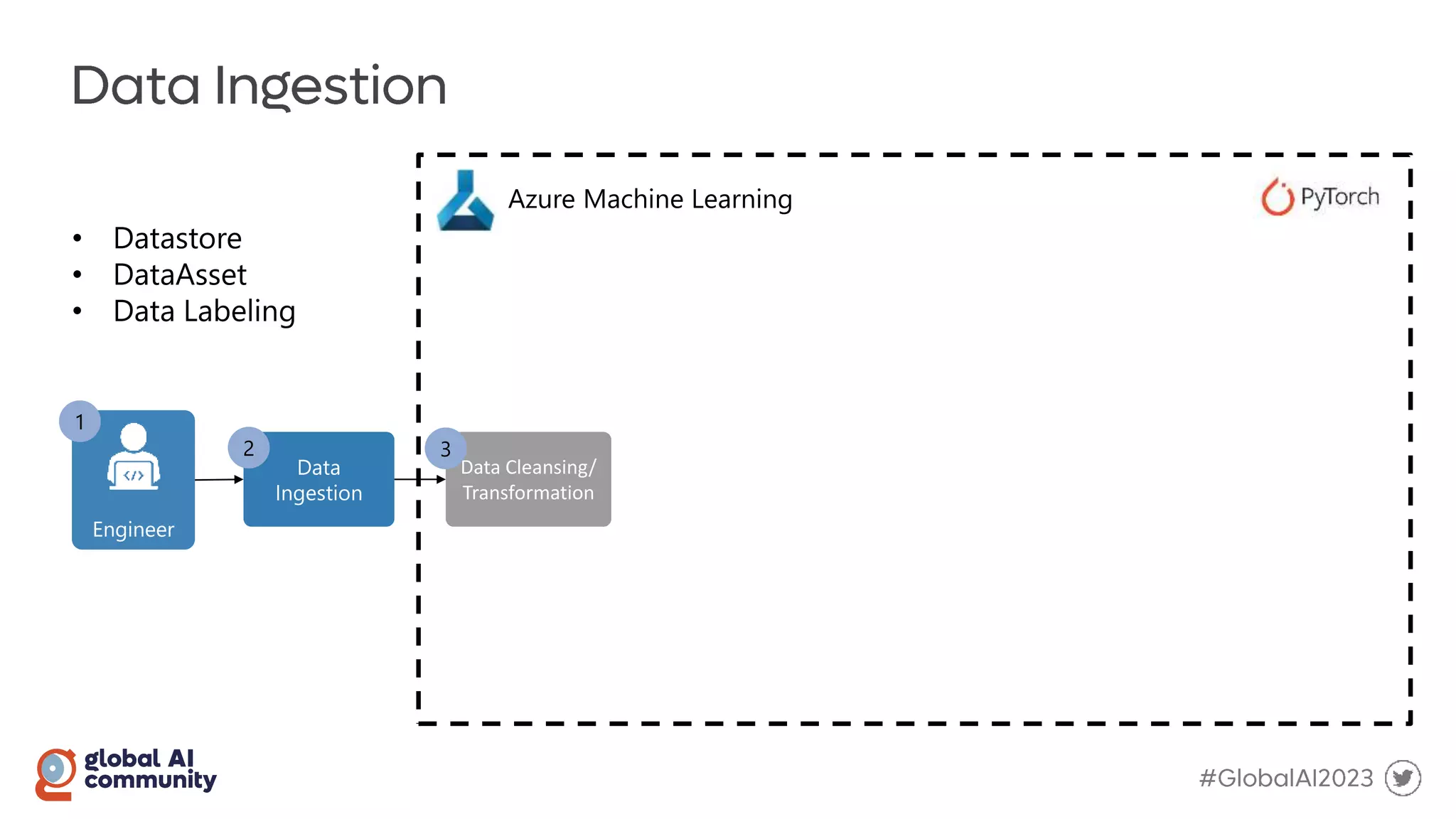
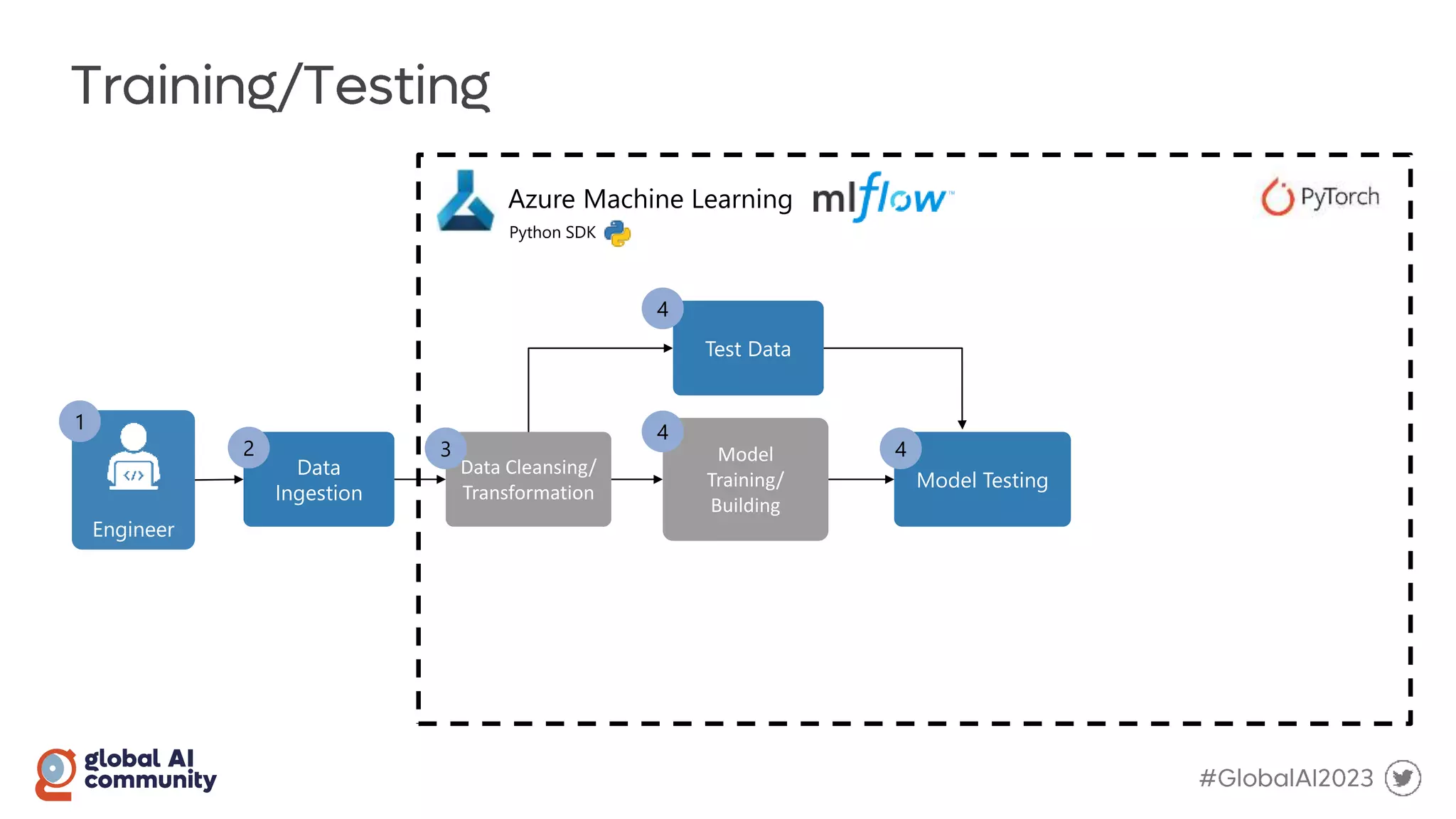
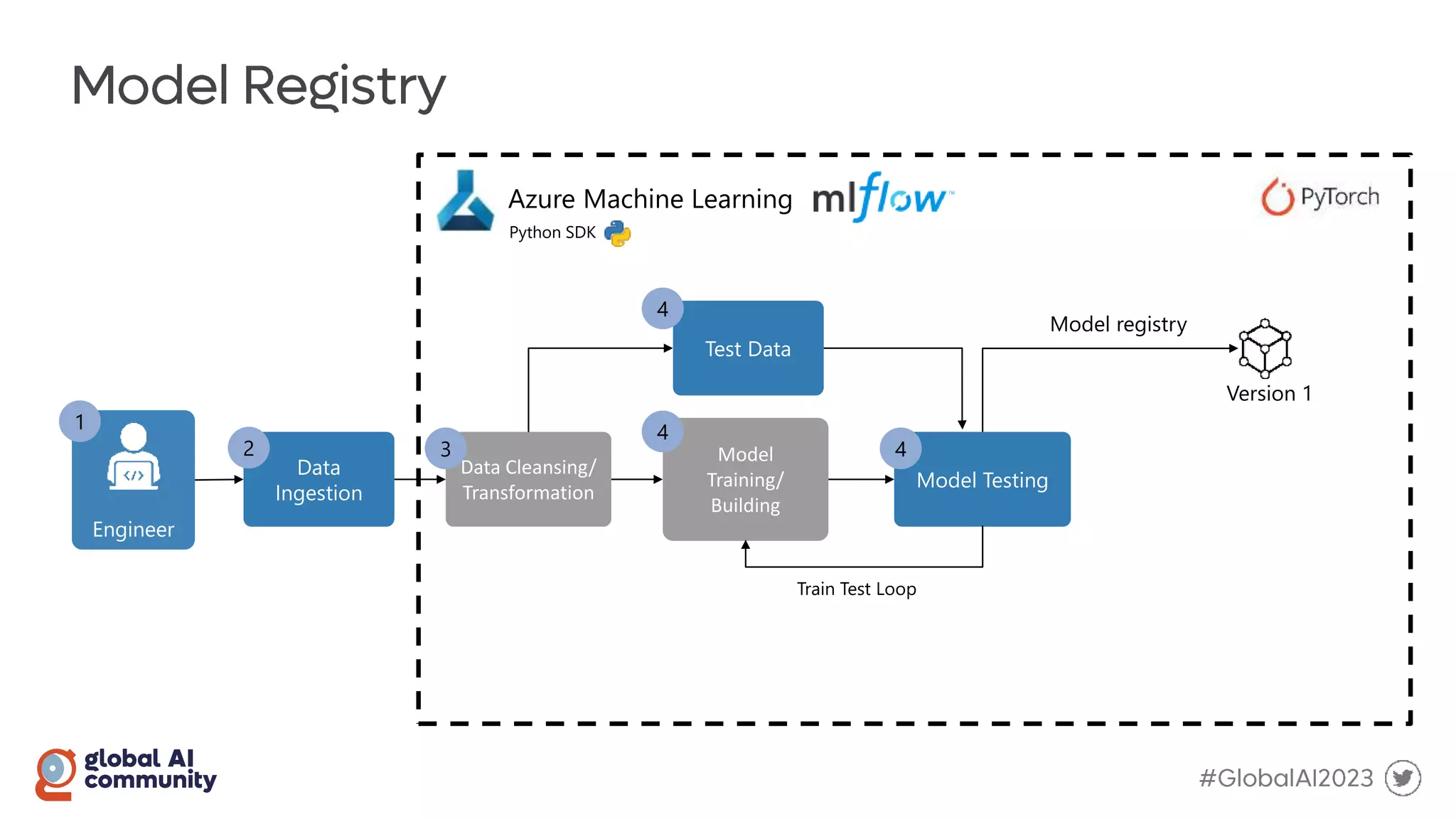
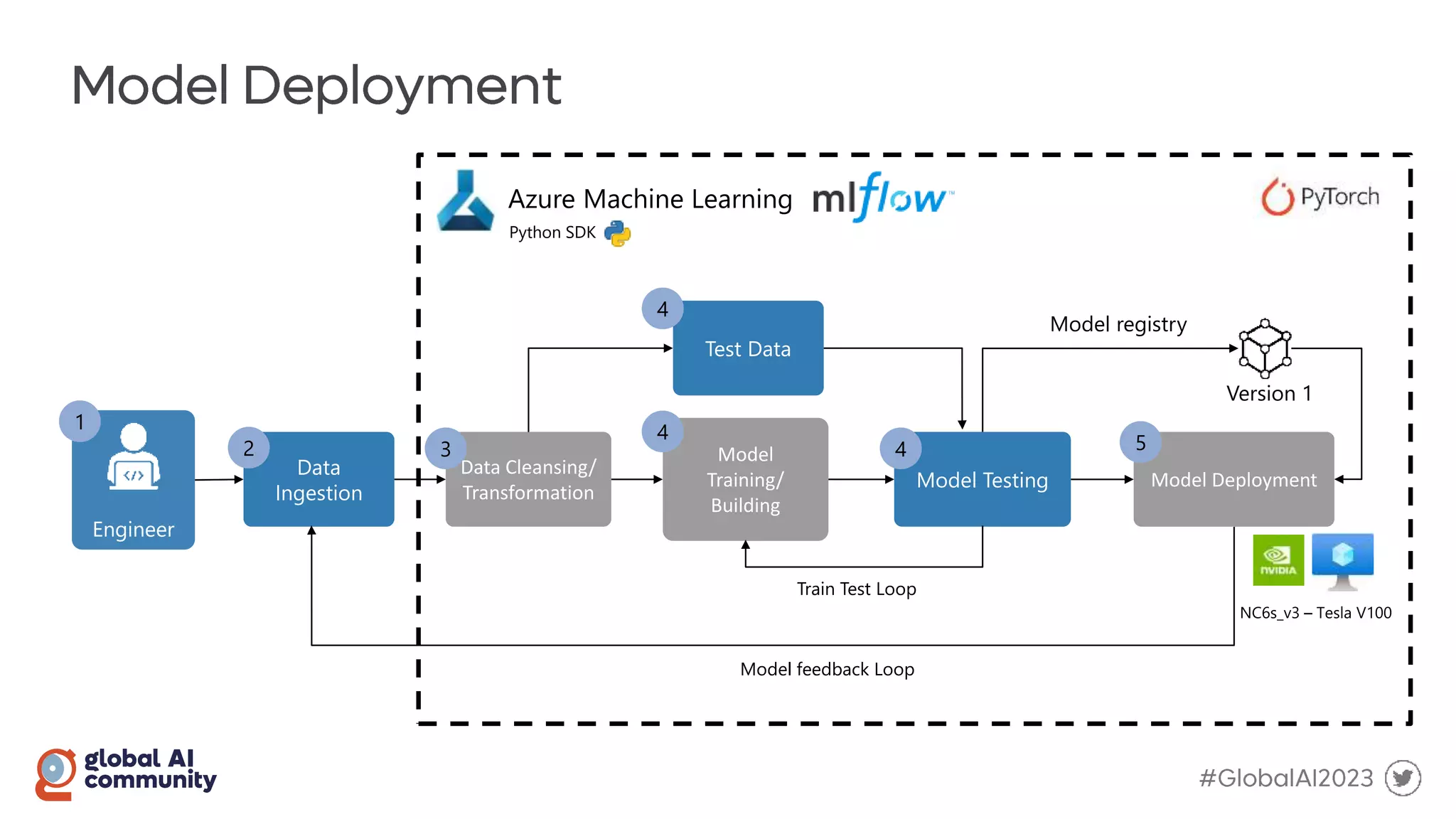
Engineer
1
Data
Ingestion
Data Cleansing/
Transformation
2 3 Model
Training/
Building
Model Testing Model Deployment
4
4 5
Azure Machine Learning
Model registry
Version 1
Train Test Loop
Model feedback Loop
Python SDK
Test
Data
4
Engineer
1
Data
Ingestion
2
Data Cleansing/
Transformation
3
Azure Machine Learning
•
•
•
Engineer
1
Data
Ingestion
Data Cleansing/
Transformation
2 3 Model
Training/
Building
Model Testing
4
4
Azure Machine Learning
Python SDK
Test Data
4
•
•
•
.
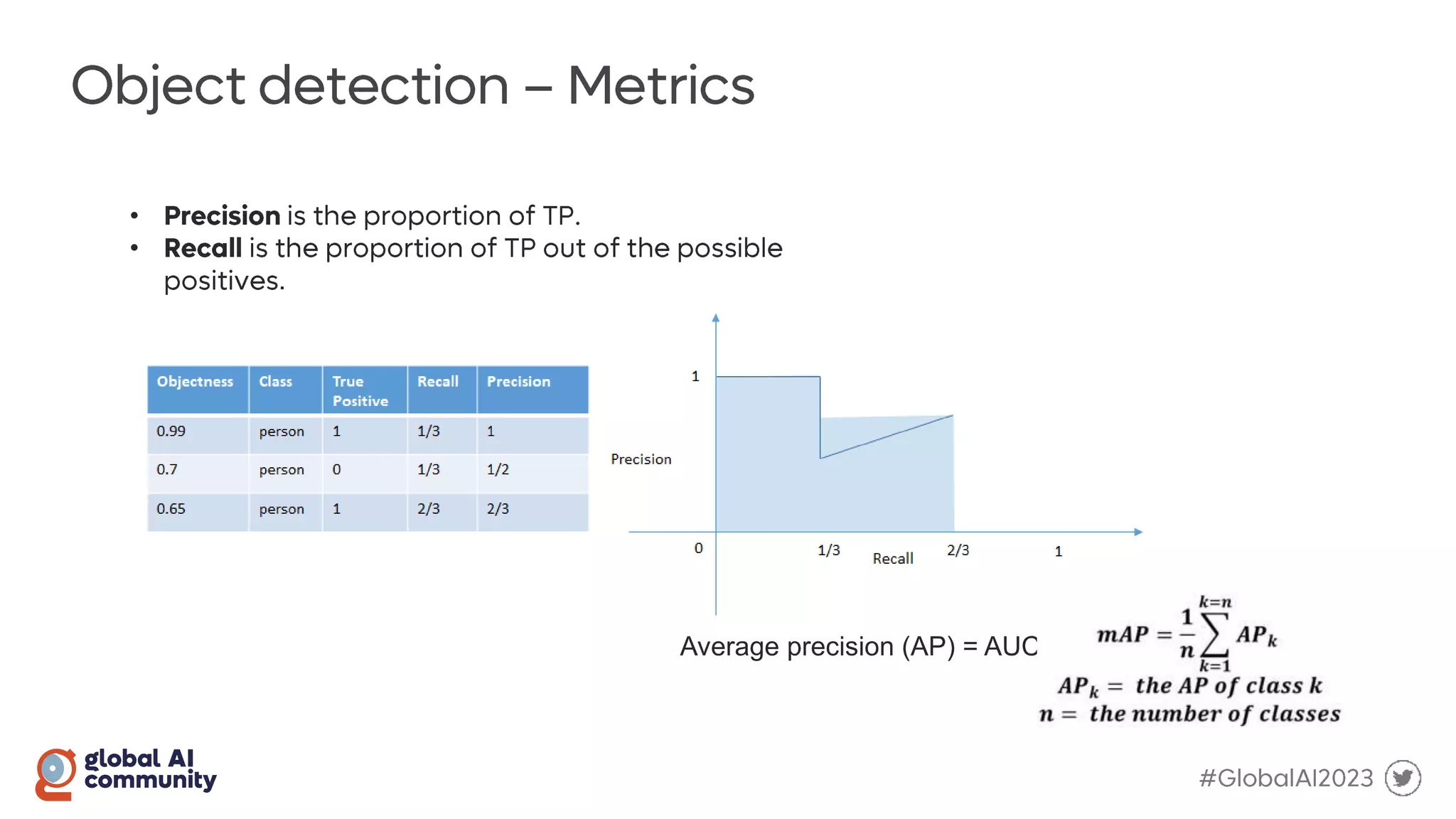
Average precision (AP) = AUC
Engineer
1
Data
Ingestion
Data Cleansing/
Transformation
2 3 Model
Training/
Building
Model Testing
4
4
Azure Machine Learning
Model registry
Version 1
Train Test Loop
Python SDK
Test Data
4
Engineer
1
Data
Ingestion
Data Cleansing/
Transformation
2 3 Model
Training/
Building
Model Testing Model Deployment
4
4 5
Azure Machine Learning
Model registry
Version 1
Train Test Loop
Model feedback Loop
Python SDK
Test Data
4
GlobalAIObjectDetection.pptx

GlobalAIObjectDetection.pptx

Editor's Notes

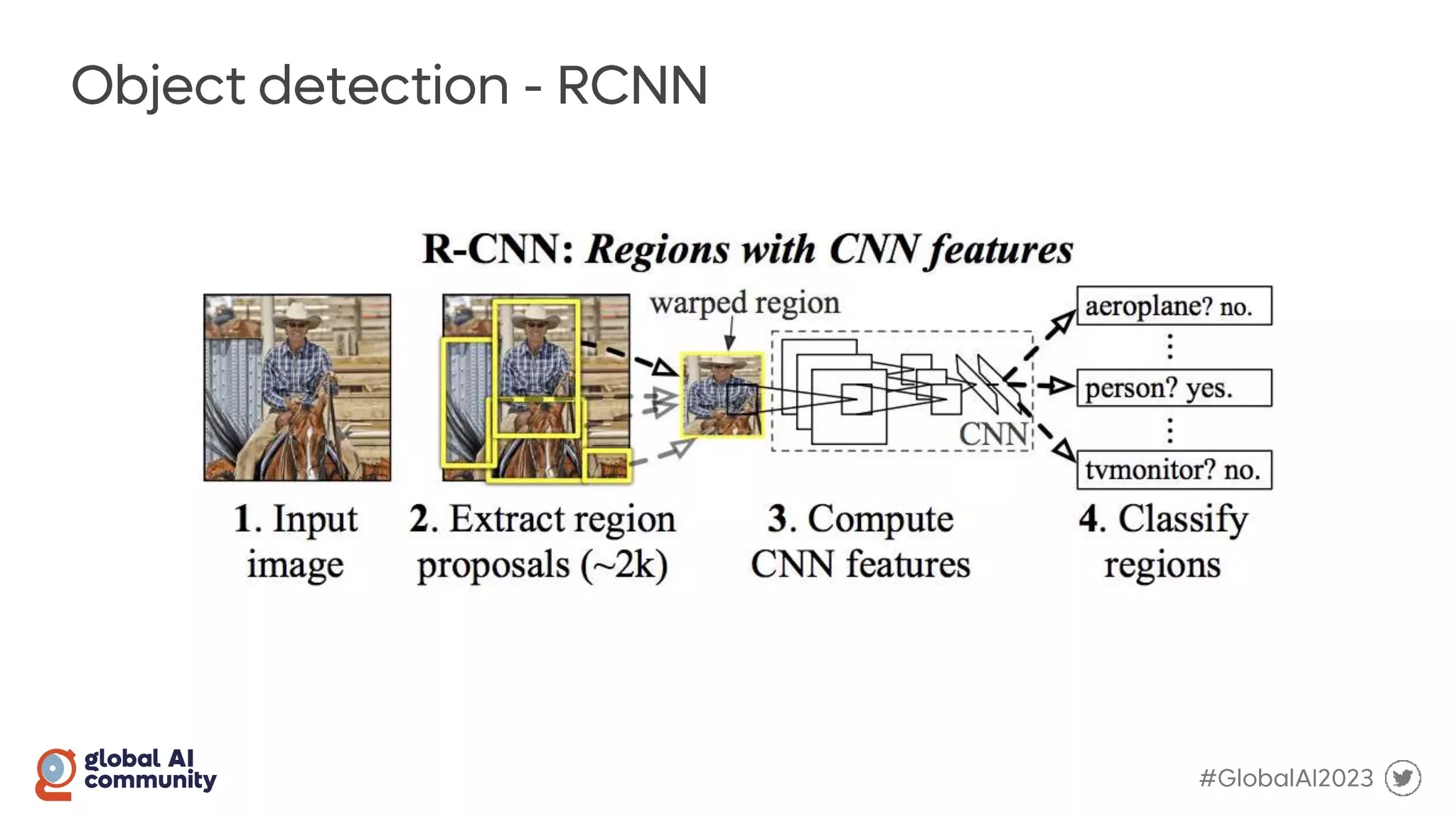
  • #13 Module 1: Region Proposal. Generate and extract category independent region proposals, e.g. candidate bounding boxes. Module 2: Feature Extractor. Extract feature from each candidate region, e.g. using a deep convolutional neural network. Module 3: Classifier. Classify features as one of the known class, e.g. linear SVM classifier model.
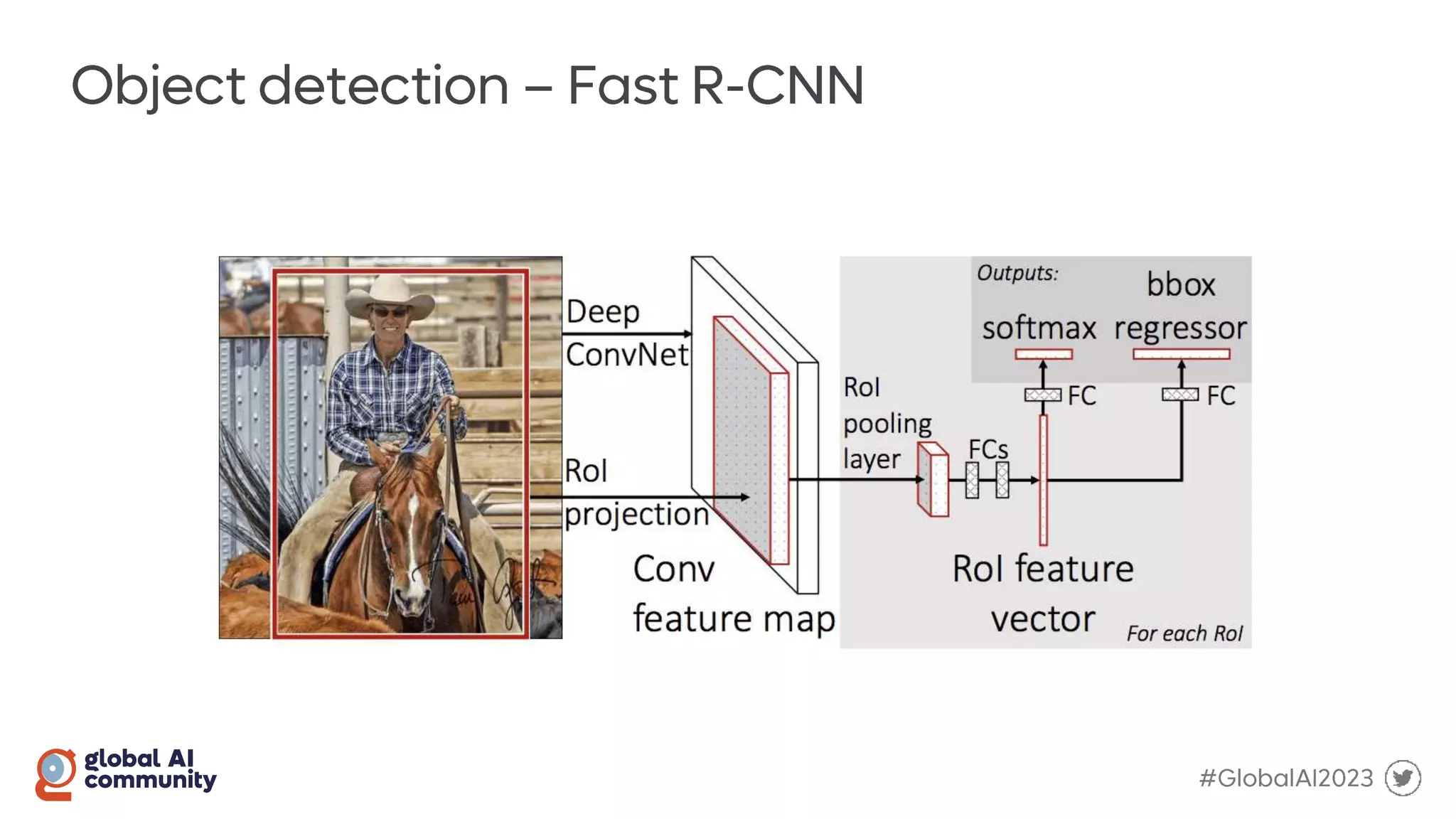
  • #14 The same author of the previous paper(R-CNN) solved some of the drawbacks of R-CNN to build a faster object detection algorithm and it was called Fast R-CNN. The approach is similar to the R-CNN algorithm. But, instead of feeding the region proposals to the CNN, we feed the input image to the CNN to generate a convolutional feature map. From the convolutional feature map, we identify the region of proposals and warp them into squares and by using a RoI pooling layer we reshape them into a fixed size so that it can be fed into a fully connected layer. From the RoI feature vector, we use a softmax layer to predict the class of the proposed region and also the offset values for the bounding box. The reason “Fast R-CNN” is faster than R-CNN is because you don’t have to feed 2000 region proposals to the convolutional neural network every time.
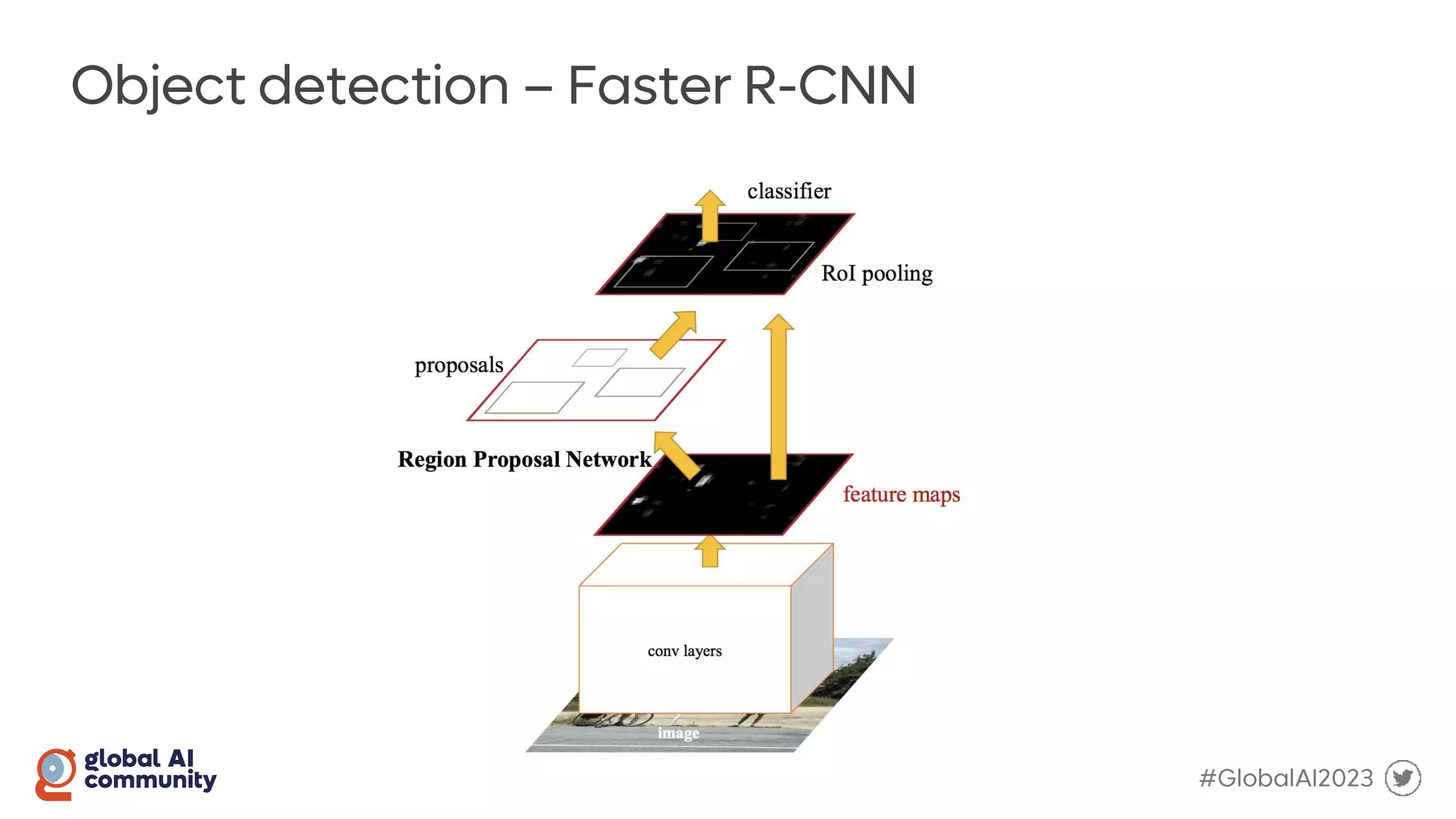
  • #15 Instead of using selective search algorithm on the feature map to identify the region proposals, a separate network is used to predict the region proposals. The predicted region proposals are then reshaped using a RoI pooling layer which is then used to classify the image within the proposed region and predict the offset values for the bounding boxes
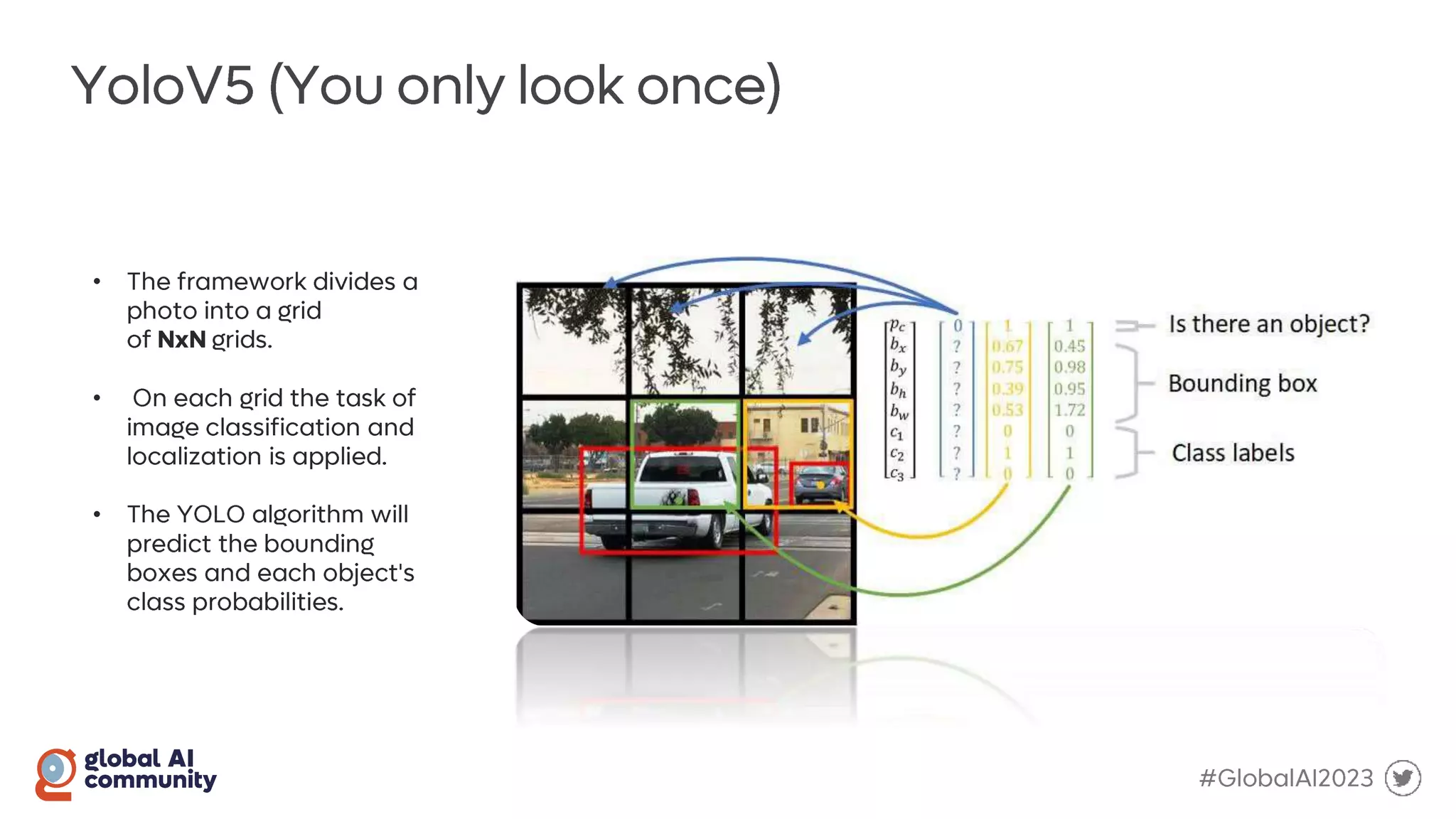
  • #16 There is no selection of the ROI, instead the bounding boxes and the labels are predicted for the whole image at once. This makes the detection faster than classification algorithms.