GLASS & GLAZING
SAFETY
NUB INSTITUTE OF ENVIRONMENT, HEALTH
AND SAFETY
Why Glazing Safety is important?
GLASS & GLAZING SAFETY2018
Glass Safety Standards
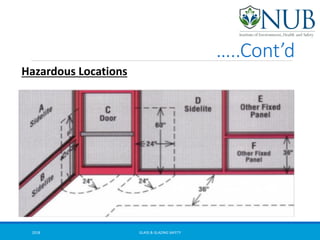
As per the International Residential Code, all glass or panels in fixed, operable,
swinging, sliding and bifold doors must be constructed from safety glass,
regardless of size.
In addition, any glass located adjacent to a door within a 24-inch arc of the
door must be constructed from safety glass.
If the bottom edge of the glass is less than 60 inches above the walking
surface.
The only exception to these rules is decorative glass. and any glass opening too
small for a 3-inch ball to pass through.
All glass located within 40 inches of an exterior or interior dwelling unit door be
tempered or burglar-resistant.
Doors and Transoms
GLASS & GLAZING SAFETY2018
…..Cont’d
Hazardous Locations
GLASS & GLAZING SAFETY2018
…..Cont’d
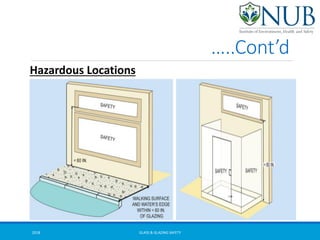
Fixed or operable windows must include safety glass if;
they measure larger than 9 feet square,
the bottom edge is less than 18 inches above the floor,
the top edge is more than 36 inches above the floor,
 and there is a walking surface within 36 inches of the glass. Tempered
glass is not required unless all four of these conditions are met.
Windows
GLASS & GLAZING SAFETY2018
…..Cont’d
Hazardous Locations
GLASS & GLAZING SAFETY2018
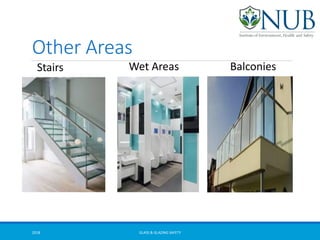
Other Areas
Stairs Wet Areas Balconies
GLASS & GLAZING SAFETY2018
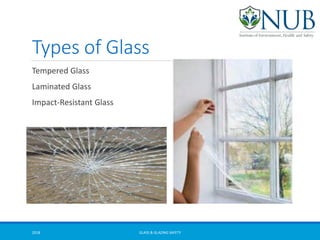
Types of Glass
Tempered Glass
Laminated Glass
Impact-Resistant Glass
GLASS & GLAZING SAFETY2018
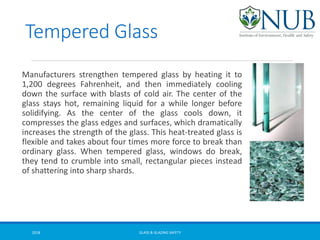
Tempered Glass
Manufacturers strengthen tempered glass by heating it to
1,200 degrees Fahrenheit, and then immediately cooling
down the surface with blasts of cold air. The center of the
glass stays hot, remaining liquid for a while longer before
solidifying. As the center of the glass cools down, it
compresses the glass edges and surfaces, which dramatically
increases the strength of the glass. This heat-treated glass is
flexible and takes about four times more force to break than
ordinary glass. When tempered glass, windows do break,
they tend to crumble into small, rectangular pieces instead
of shattering into sharp shards.
GLASS & GLAZING SAFETY2018
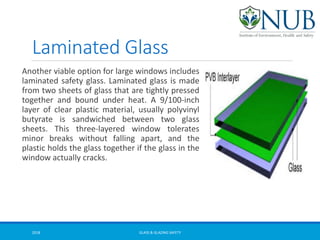
Laminated Glass
Another viable option for large windows includes
laminated safety glass. Laminated glass is made
from two sheets of glass that are tightly pressed
together and bound under heat. A 9/100-inch
layer of clear plastic material, usually polyvinyl
butyrate is sandwiched between two glass
sheets. This three-layered window tolerates
minor breaks without falling apart, and the
plastic holds the glass together if the glass in the
window actually cracks.
GLASS & GLAZING SAFETY2018
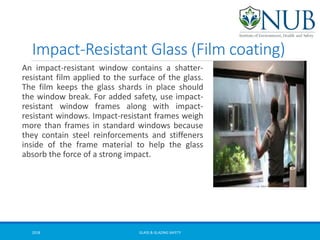
Impact-Resistant Glass (Film coating)
An impact-resistant window contains a shatter-
resistant film applied to the surface of the glass.
The film keeps the glass shards in place should
the window break. For added safety, use impact-
resistant window frames along with impact-
resistant windows. Impact-resistant frames weigh
more than frames in standard windows because
they contain steel reinforcements and stiffeners
inside of the frame material to help the glass
absorb the force of a strong impact.
GLASS & GLAZING SAFETY2018

Glass safety

  • 1.
    GLASS & GLAZING SAFETY NUBINSTITUTE OF ENVIRONMENT, HEALTH AND SAFETY
  • 2.
    Why Glazing Safetyis important? GLASS & GLAZING SAFETY2018
  • 3.
    Glass Safety Standards Asper the International Residential Code, all glass or panels in fixed, operable, swinging, sliding and bifold doors must be constructed from safety glass, regardless of size. In addition, any glass located adjacent to a door within a 24-inch arc of the door must be constructed from safety glass. If the bottom edge of the glass is less than 60 inches above the walking surface. The only exception to these rules is decorative glass. and any glass opening too small for a 3-inch ball to pass through. All glass located within 40 inches of an exterior or interior dwelling unit door be tempered or burglar-resistant. Doors and Transoms GLASS & GLAZING SAFETY2018
  • 4.
  • 5.
    …..Cont’d Fixed or operablewindows must include safety glass if; they measure larger than 9 feet square, the bottom edge is less than 18 inches above the floor, the top edge is more than 36 inches above the floor,  and there is a walking surface within 36 inches of the glass. Tempered glass is not required unless all four of these conditions are met. Windows GLASS & GLAZING SAFETY2018
  • 6.
  • 7.
    Other Areas Stairs WetAreas Balconies GLASS & GLAZING SAFETY2018
  • 8.
    Types of Glass TemperedGlass Laminated Glass Impact-Resistant Glass GLASS & GLAZING SAFETY2018
  • 9.
    Tempered Glass Manufacturers strengthentempered glass by heating it to 1,200 degrees Fahrenheit, and then immediately cooling down the surface with blasts of cold air. The center of the glass stays hot, remaining liquid for a while longer before solidifying. As the center of the glass cools down, it compresses the glass edges and surfaces, which dramatically increases the strength of the glass. This heat-treated glass is flexible and takes about four times more force to break than ordinary glass. When tempered glass, windows do break, they tend to crumble into small, rectangular pieces instead of shattering into sharp shards. GLASS & GLAZING SAFETY2018
  • 10.
    Laminated Glass Another viableoption for large windows includes laminated safety glass. Laminated glass is made from two sheets of glass that are tightly pressed together and bound under heat. A 9/100-inch layer of clear plastic material, usually polyvinyl butyrate is sandwiched between two glass sheets. This three-layered window tolerates minor breaks without falling apart, and the plastic holds the glass together if the glass in the window actually cracks. GLASS & GLAZING SAFETY2018
  • 11.
    Impact-Resistant Glass (Filmcoating) An impact-resistant window contains a shatter- resistant film applied to the surface of the glass. The film keeps the glass shards in place should the window break. For added safety, use impact- resistant window frames along with impact- resistant windows. Impact-resistant frames weigh more than frames in standard windows because they contain steel reinforcements and stiffeners inside of the frame material to help the glass absorb the force of a strong impact. GLASS & GLAZING SAFETY2018