GAMAR: Adding layers to
library instruction through
augmented reality
Innovative Tools and Apps:
What's Hot
Elizabeth German
NISO Webinar
June 6, 2018
About Augmented Reality
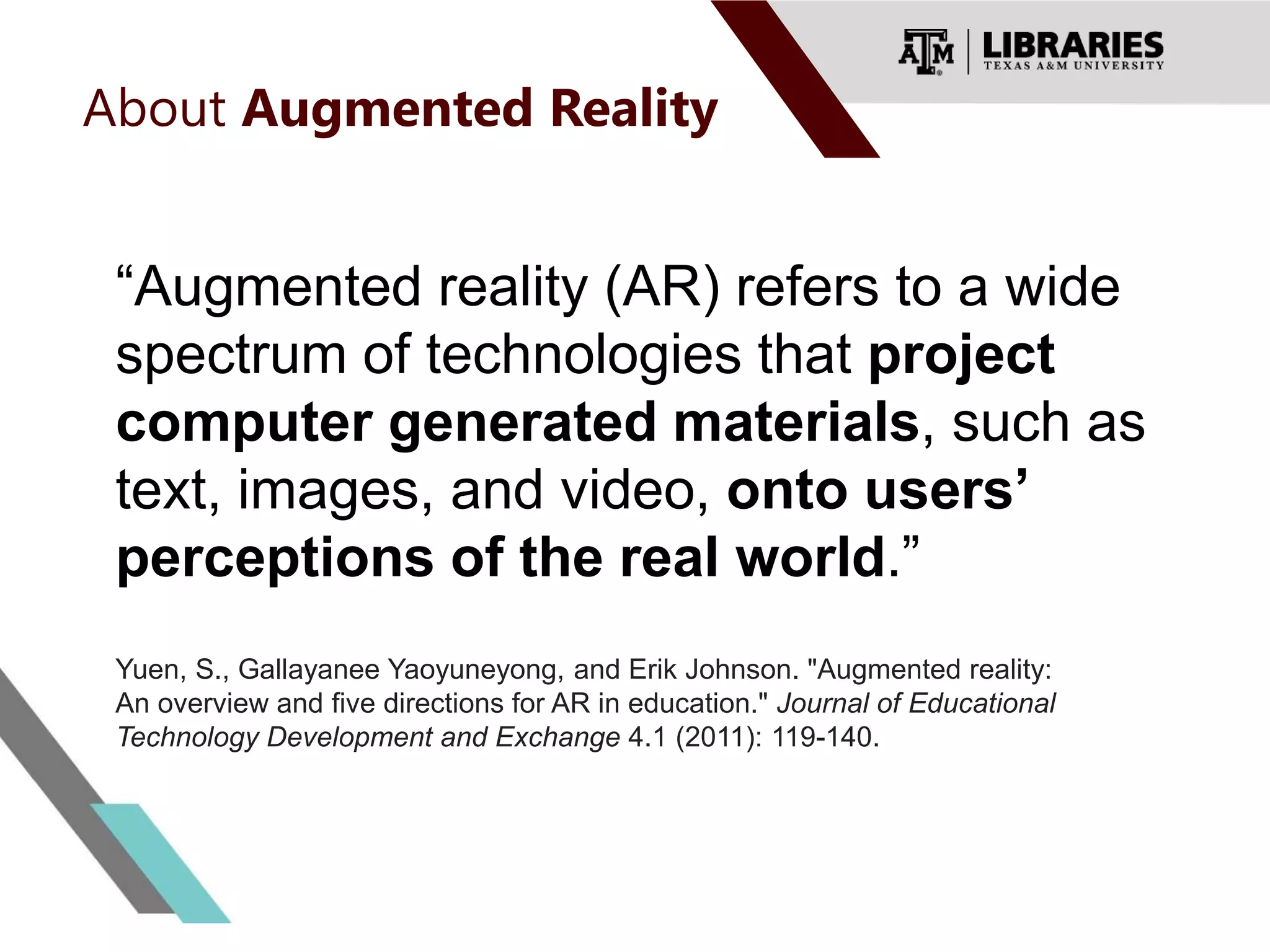
“Augmented reality (AR) refers to a wide
spectrum of technologies that project
computer generated materials, such as
text, images, and video, onto users’
perceptions of the real world.”
Yuen, S., Gallayanee Yaoyuneyong, and Erik Johnson. "Augmented reality:
An overview and five directions for AR in education." Journal of Educational
Technology Development and Exchange 4.1 (2011): 119-140.
About Augmented Reality
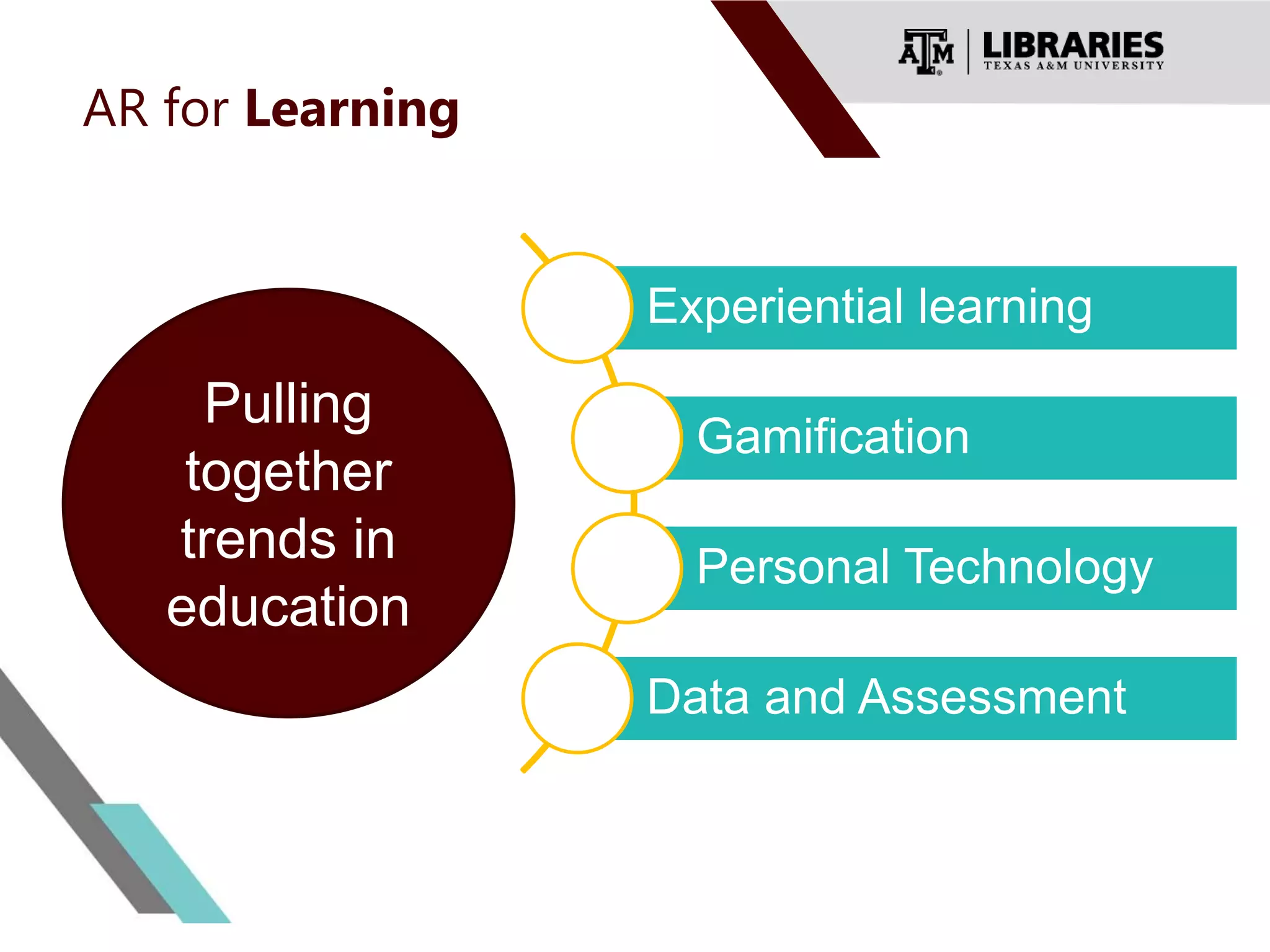
AR for Learning
Experiential learning
Gamification
Personal Technology
Data and Assessment
Pulling
together
trends in
education
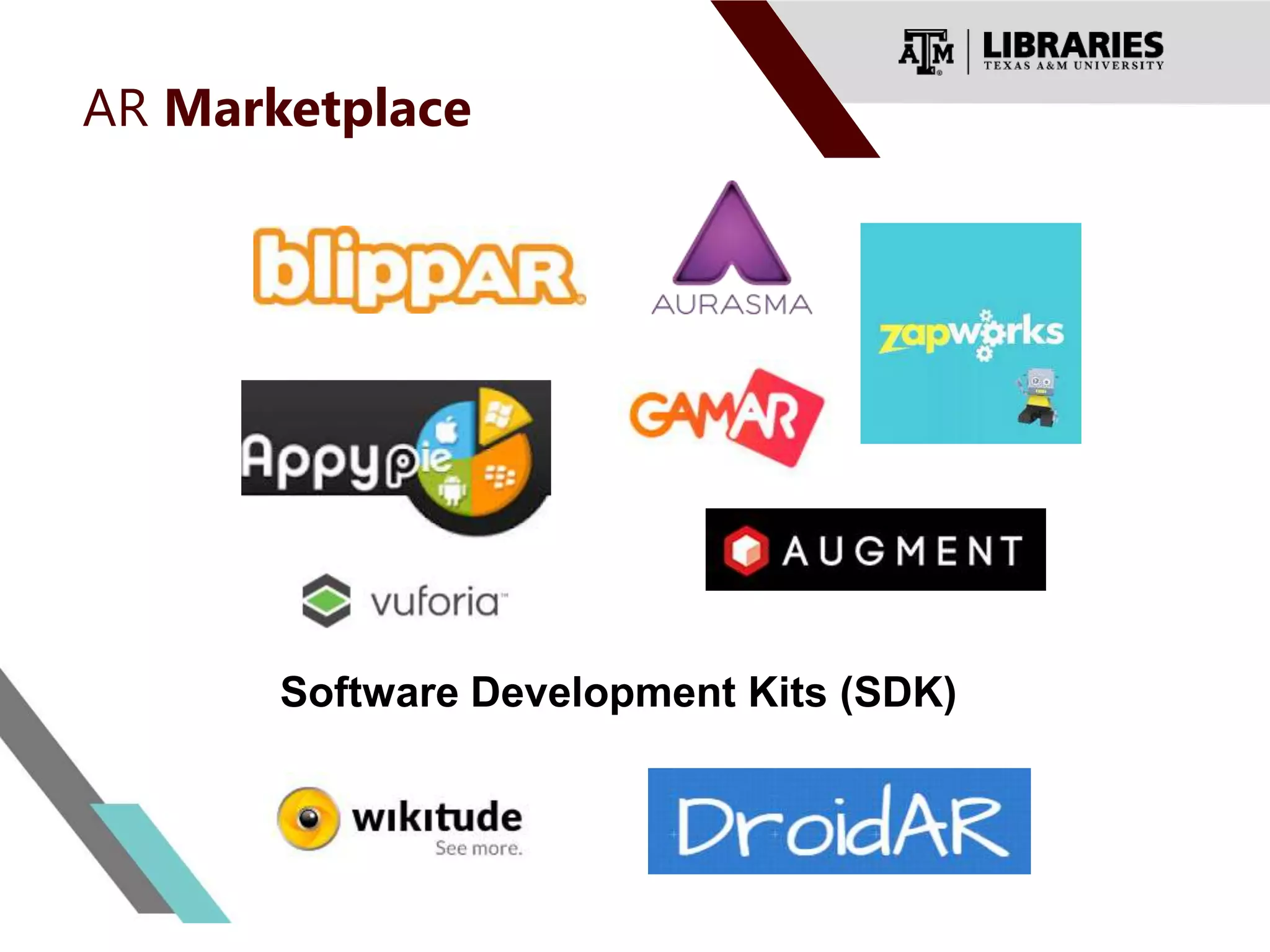
AR Marketplace
Software Development Kits (SDK)
Texas A&M Project
Project Team
• Sarah LeMire
Coordinator of First Year Programs
• Stephanie Graves
Director of Learning and Outreach
• Michael Hawkins
Education Technology Support
• Beth German
Service Design Librarian
English 104
• Learning objective – Academic Resource awareness
• Constraint – 57 English 104 Sections, 25 students each = 1,425
students
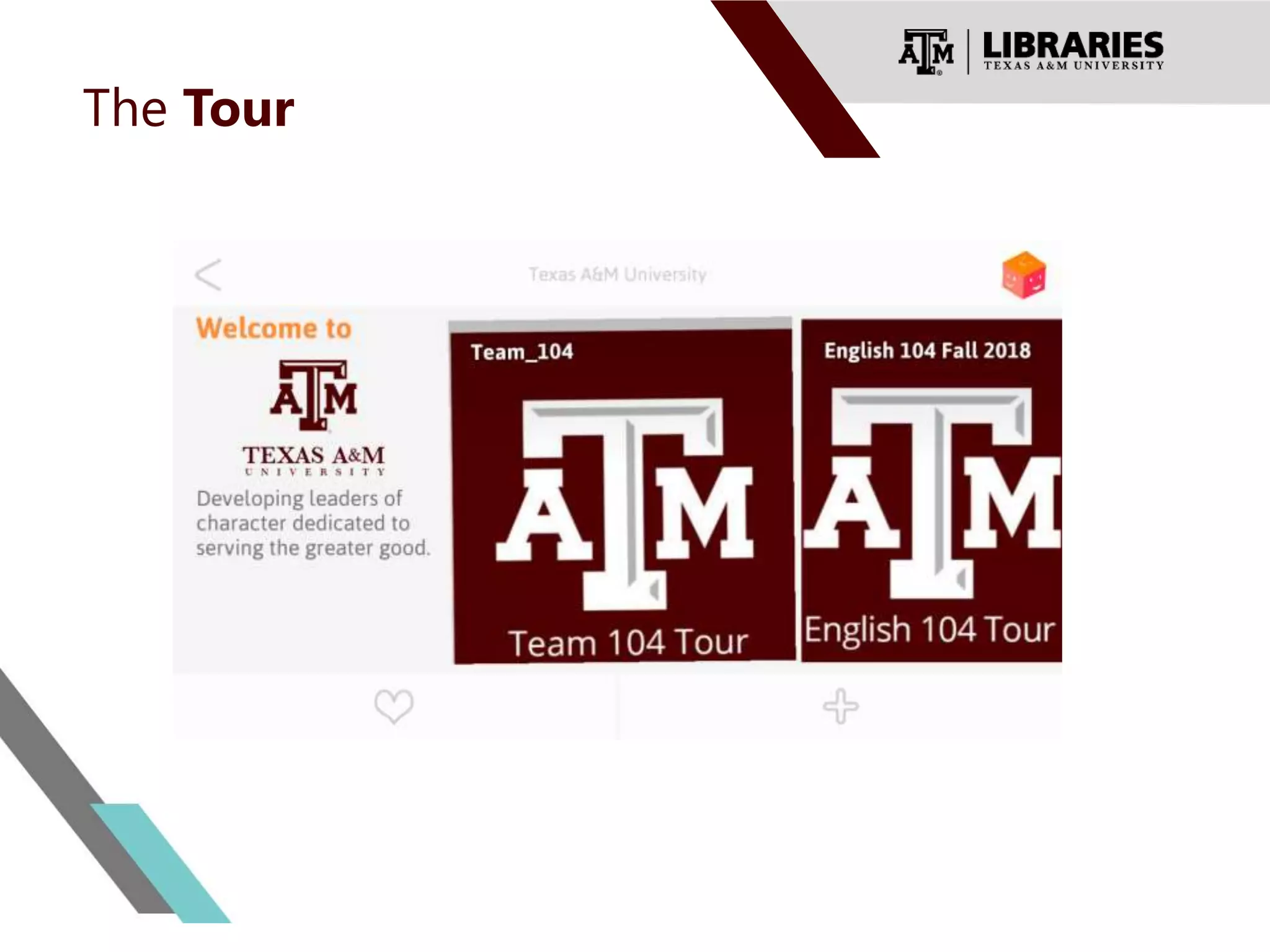
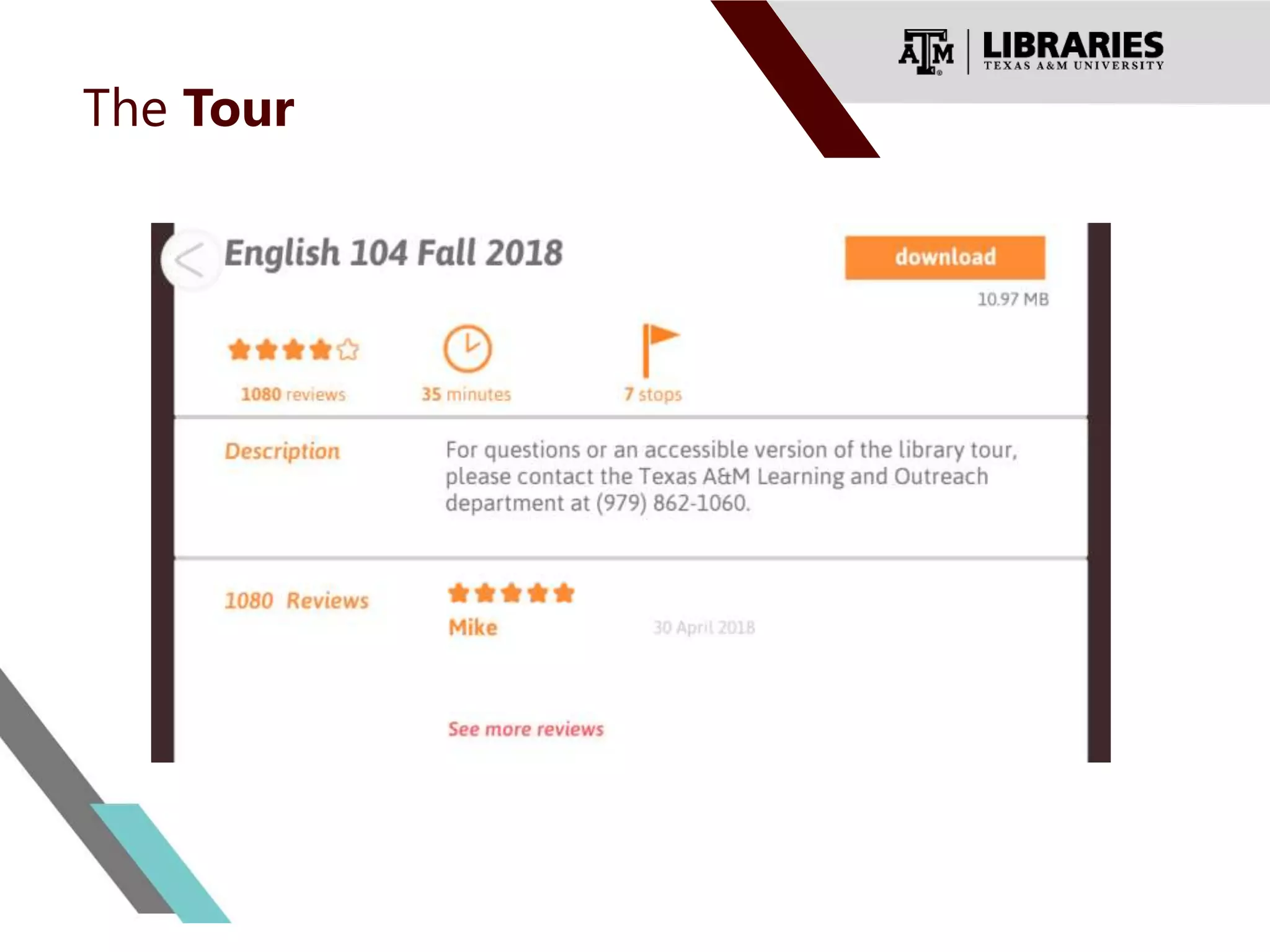
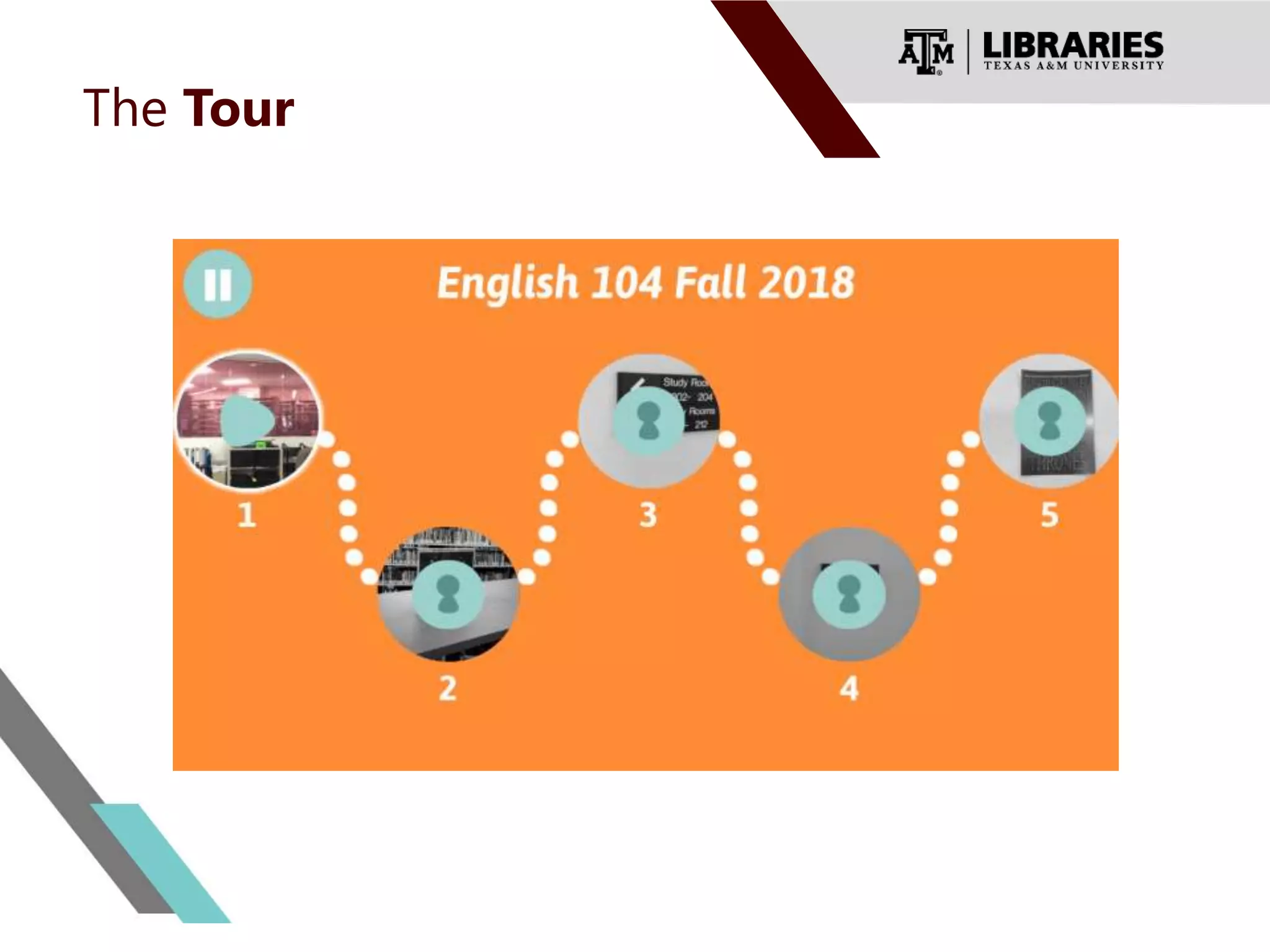
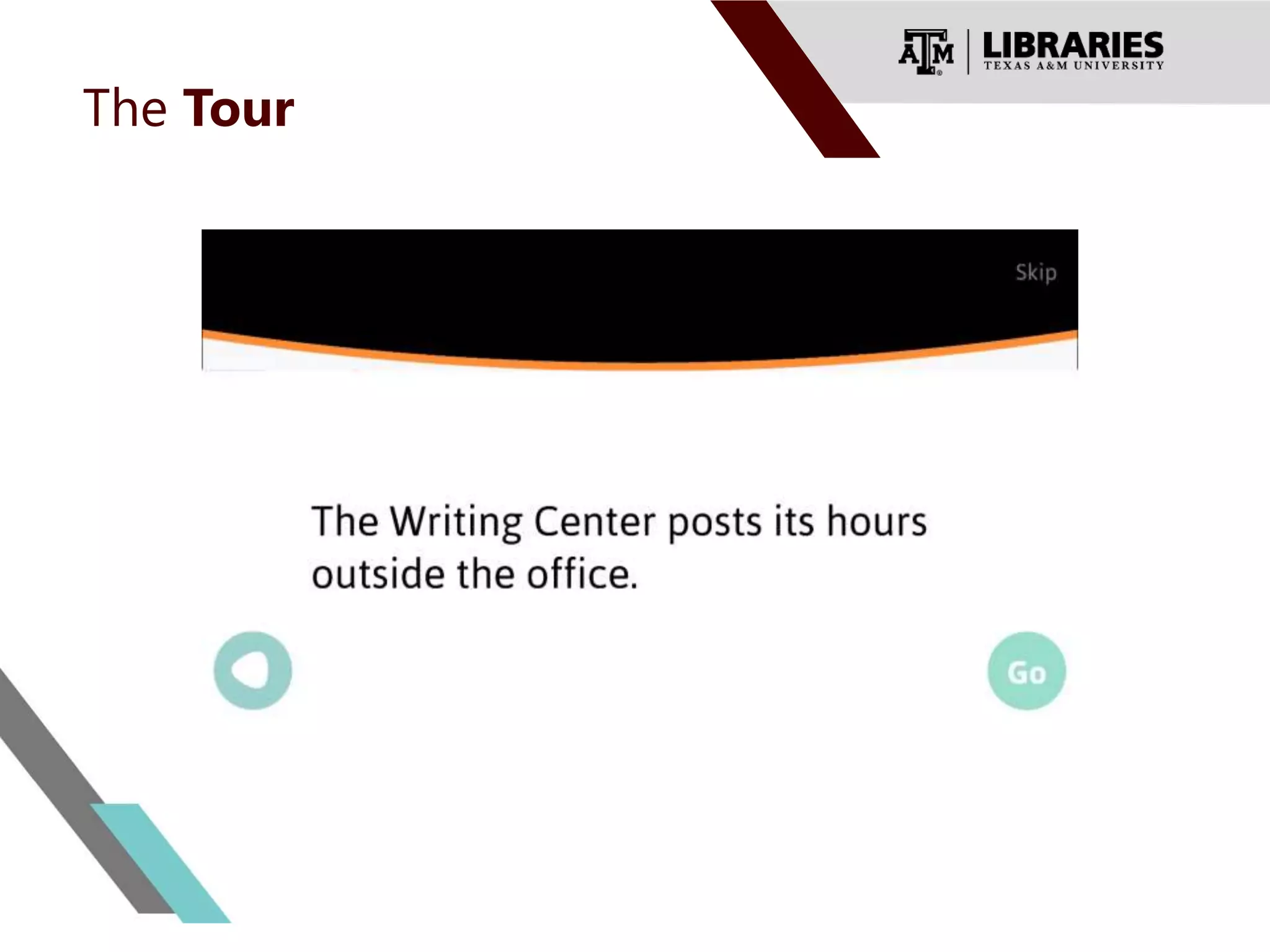
• Solution – Unmediated Library Tour
Citations
LeMire, Sarah, Elizabeth German, Shweta Kailani,
Rhonda Newton, Stephanie J. Graves, and Michael
Hawkins. “Finding Tech-achu: Explore the Potential of
Augmented Reality.” Texas A&M University Tech
Summit. Galveston, TX, February 22, 2017.
.
LeMire, Sarah, Stephanie J. Graves, Michael
Hawkins, and Shweta Kailani. “Libr-AR-y Tours:
Increasing Engagement and Scalability of Library
Tours Using Augmented Reality.” College &
Undergraduate Libraries,
25:3(2018). doi:10.1080/10691316.2018.1480445 In
Press.
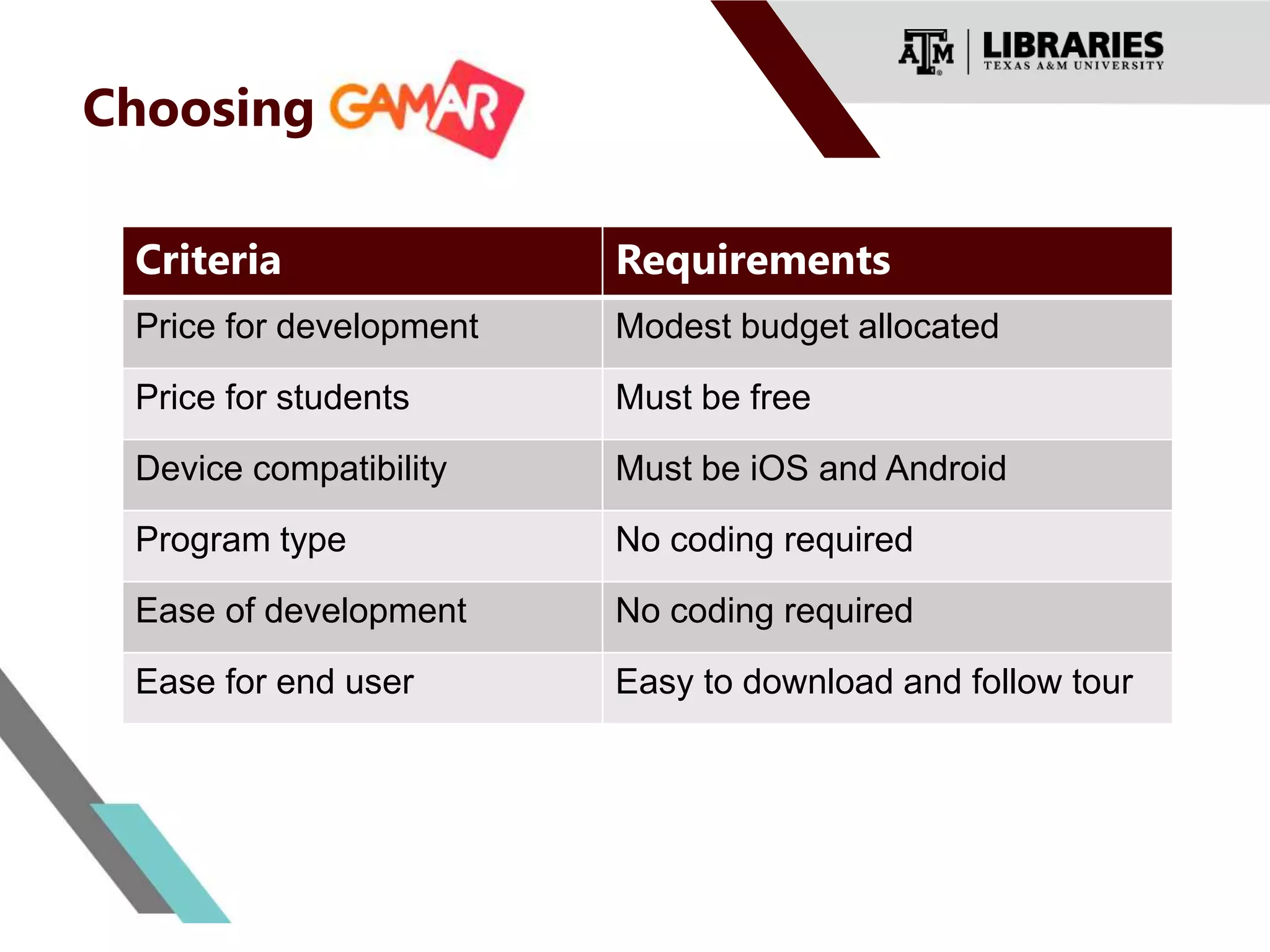
Choosing
Criteria Requirements
Price for development Modest budget allocated
Price for students Must be free
Device compatibility Must be iOS and Android
Program type No coding required
Ease of development No coding required
Ease for end user Easy to download and follow tour
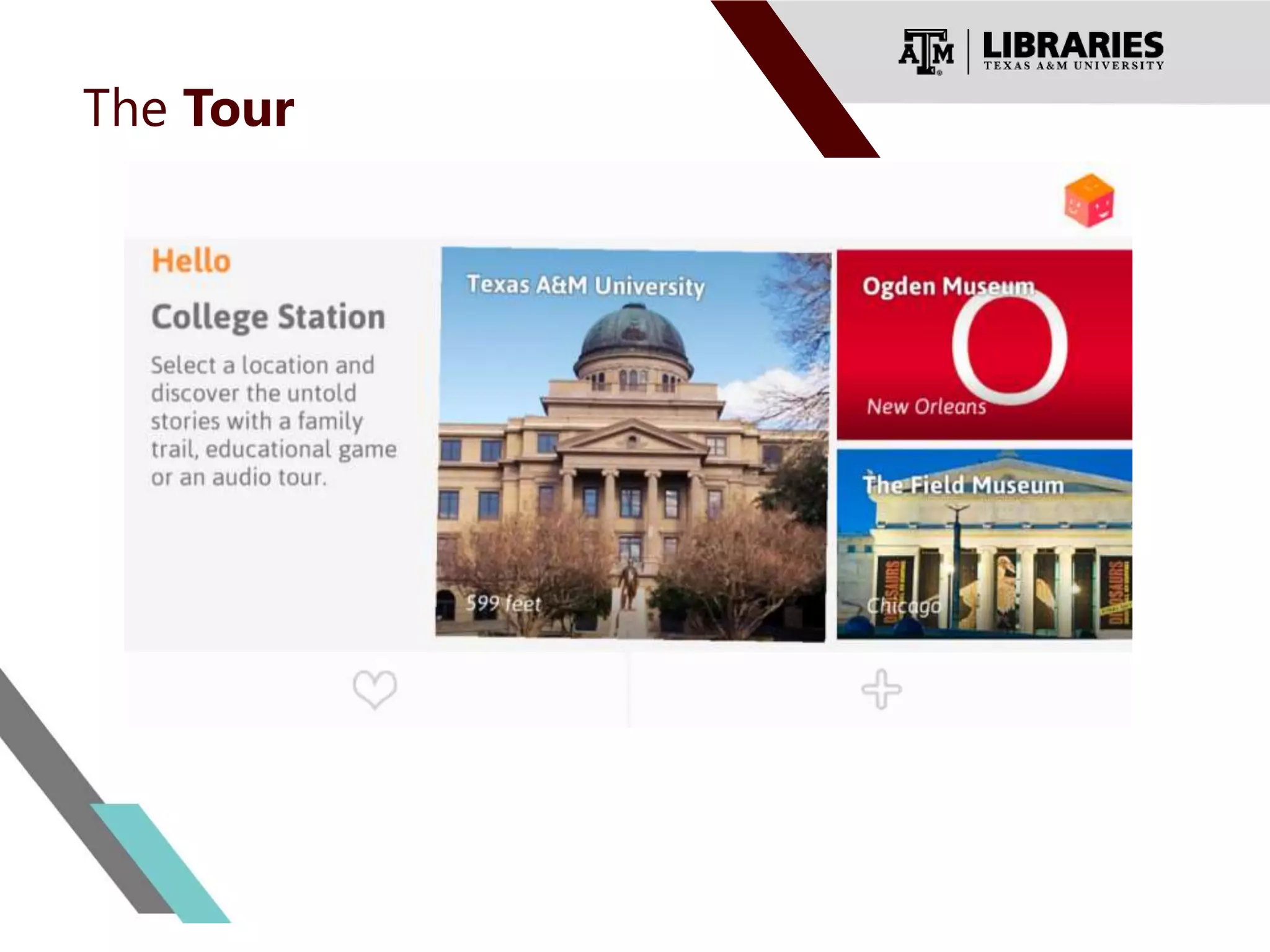
The Tour
The Tour
The Tour
The Tour
The Tour
The Tour
The Tour
The Tour
The Tour
The Tour
The Tour
The Tour
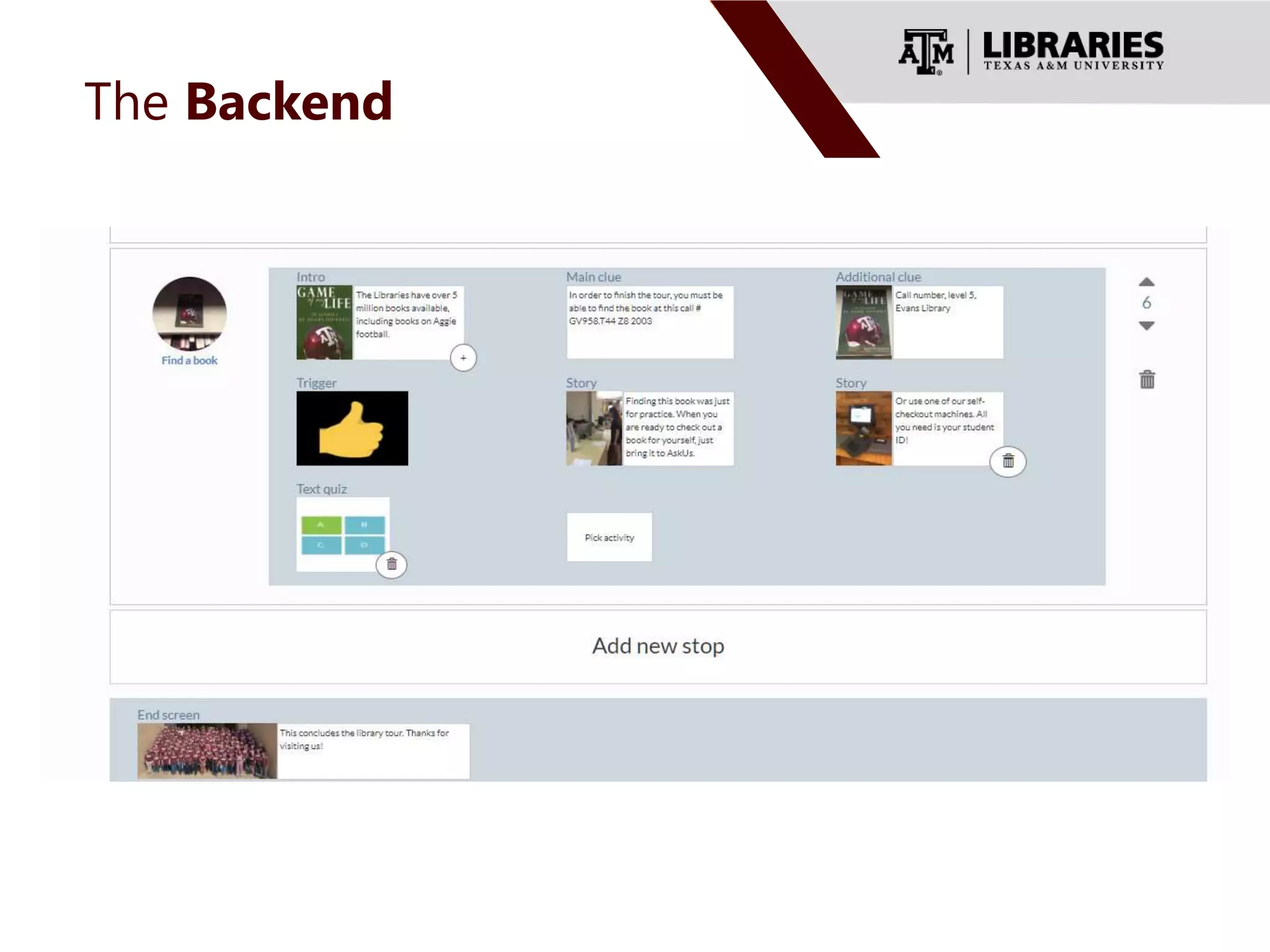
The Backend
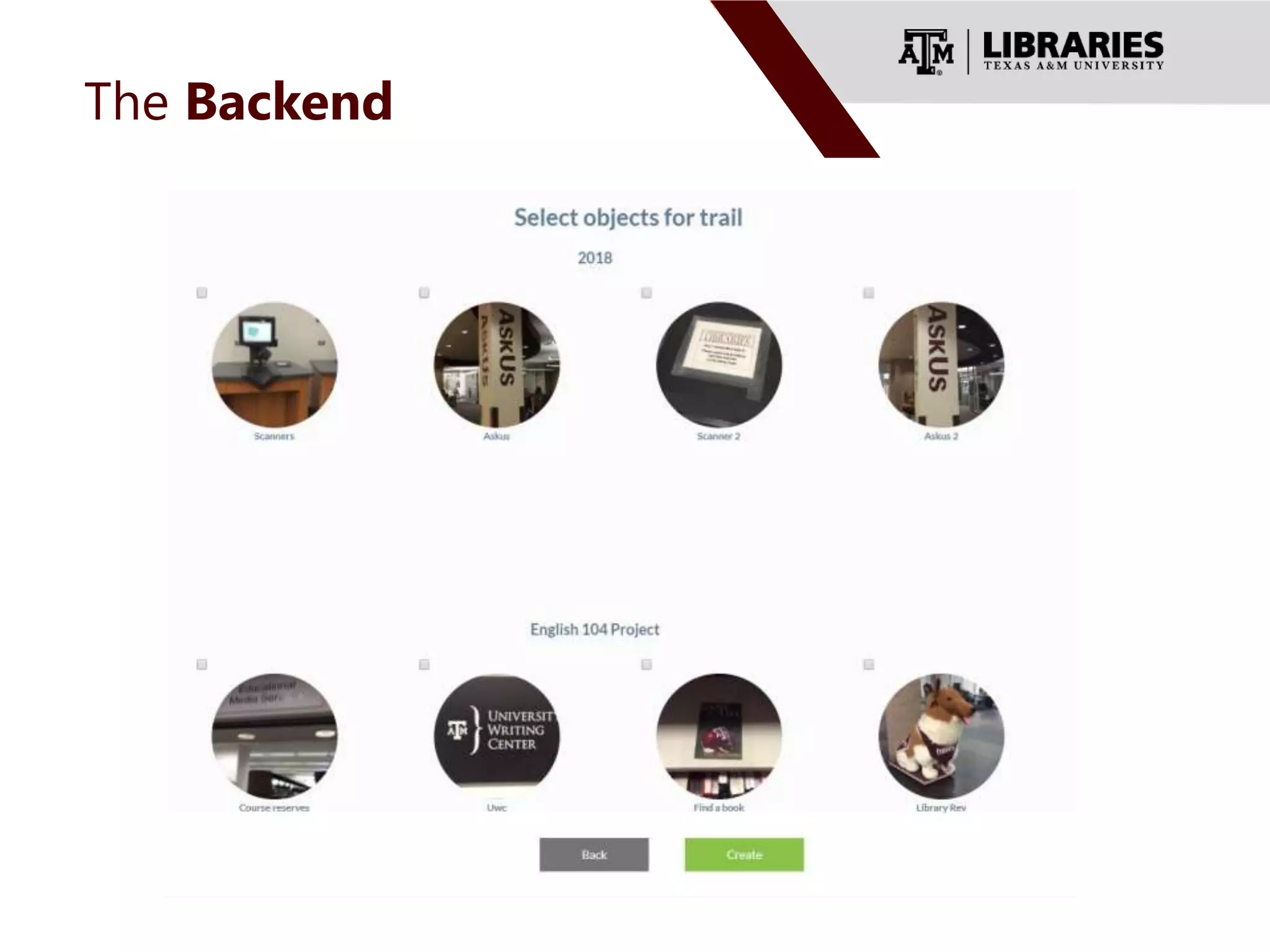
The Backend
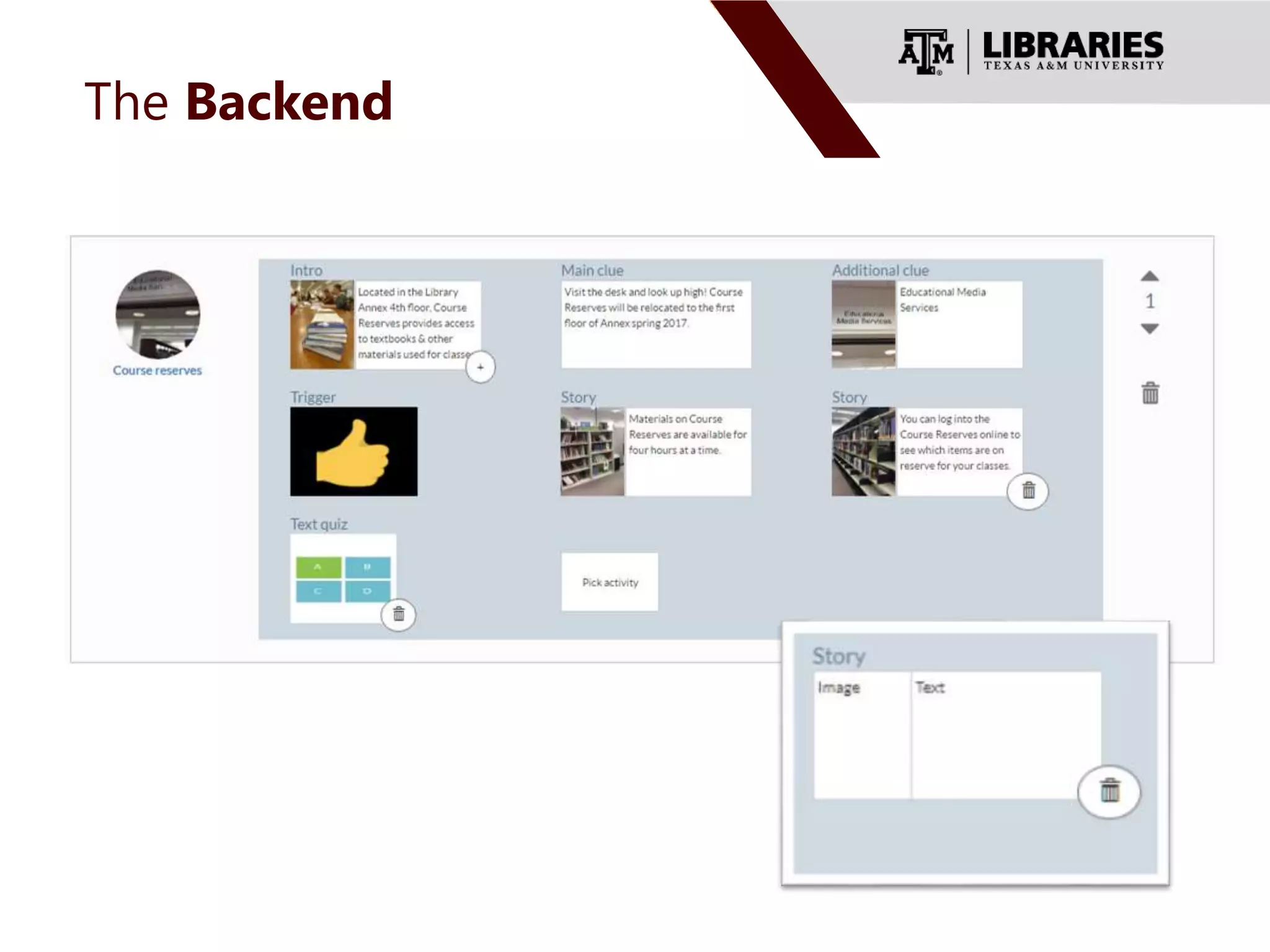
The Backend
The Backend
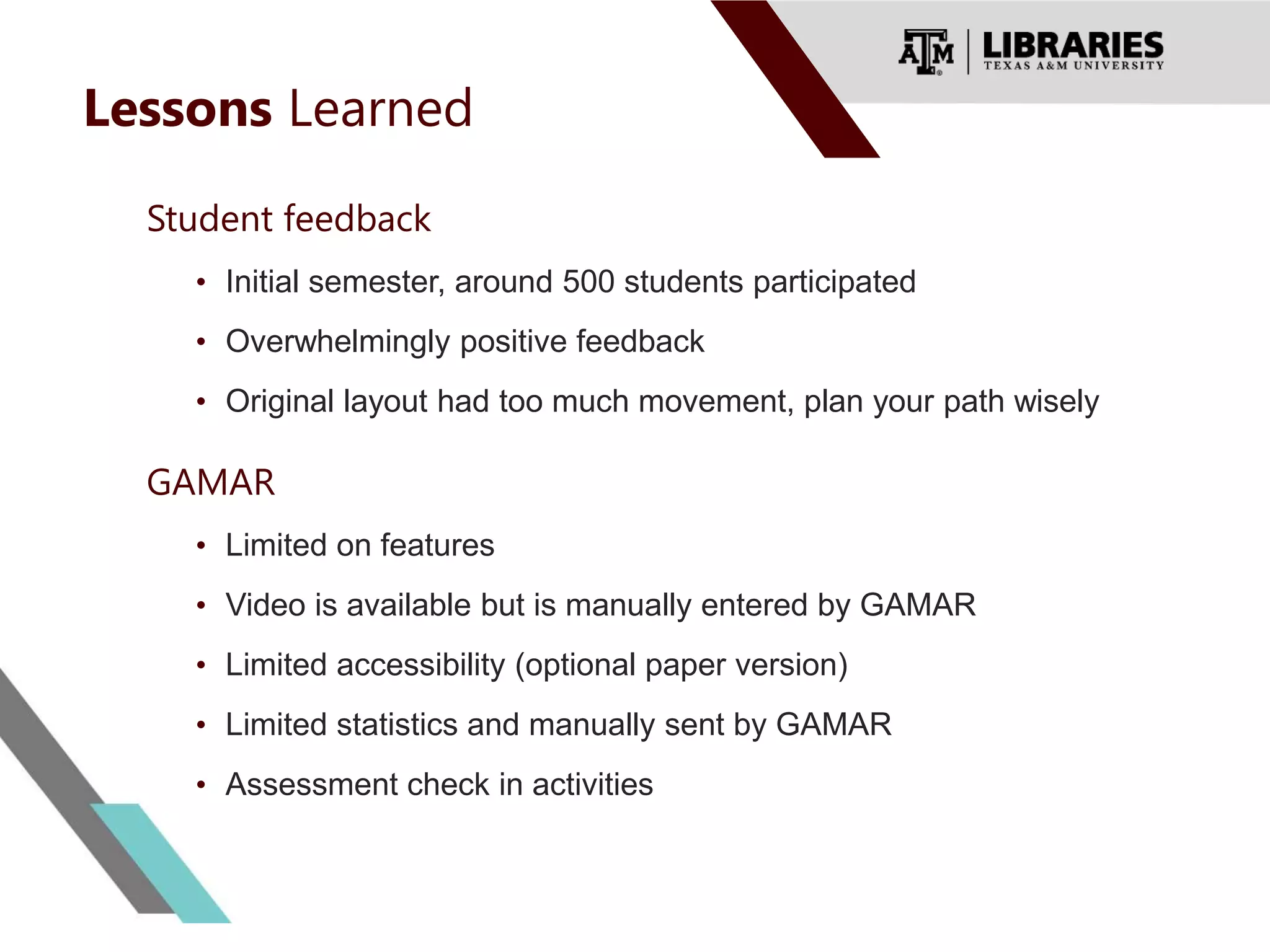
Lessons Learned
Student feedback
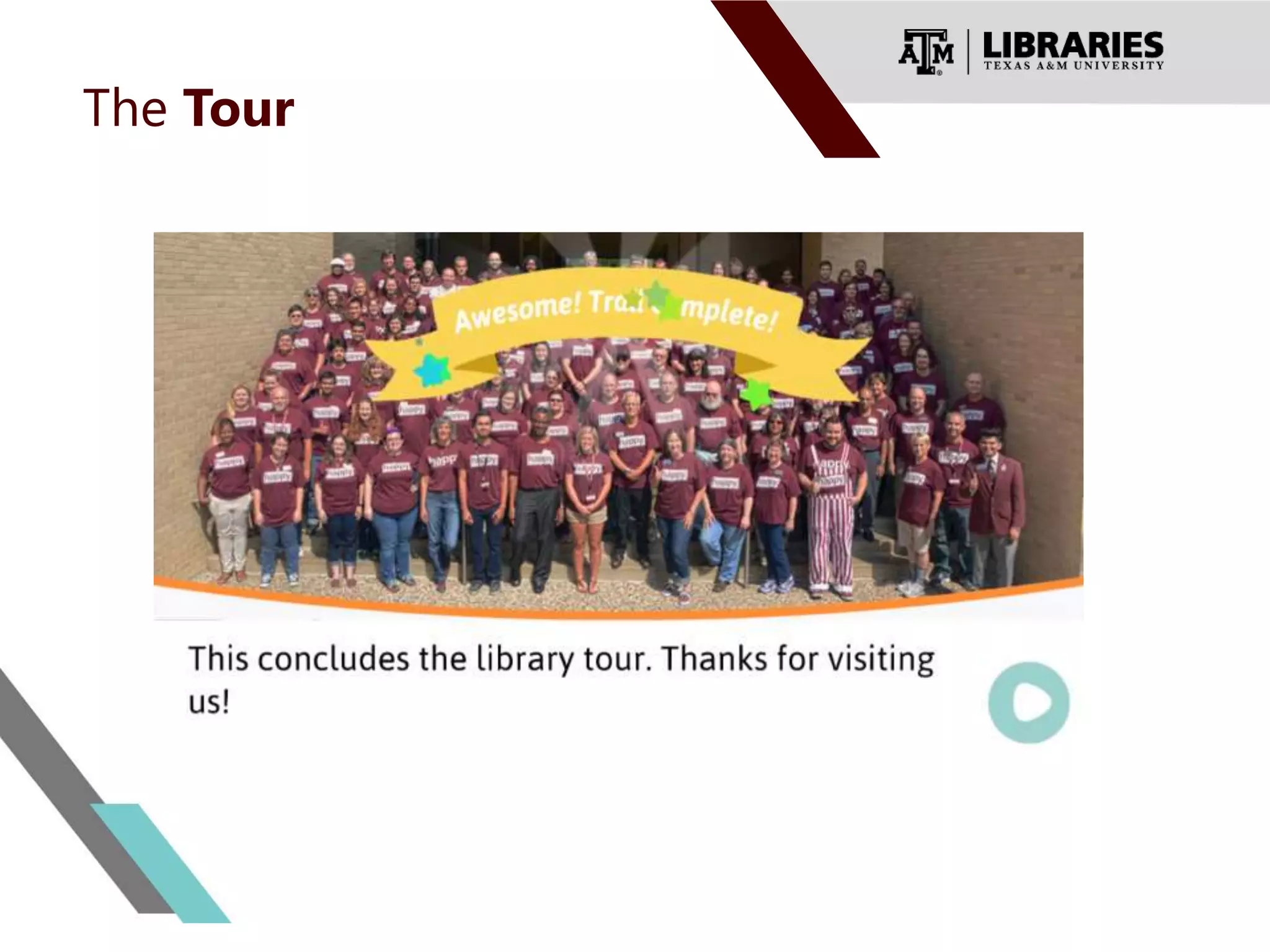
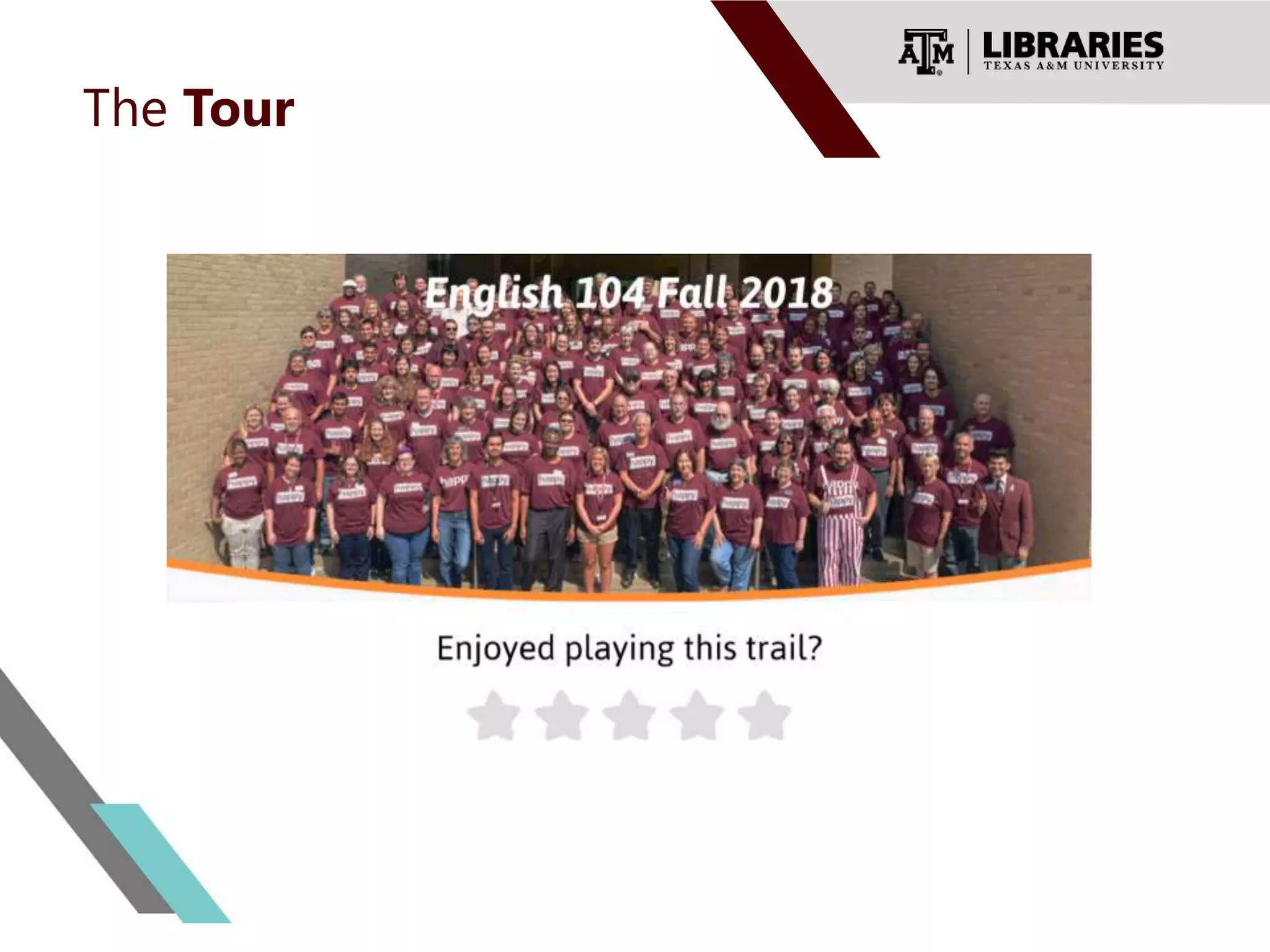
• Initial semester, around 500 students participated
• Overwhelmingly positive feedback
• Original layout had too much movement, plan your path wisely
GAMAR
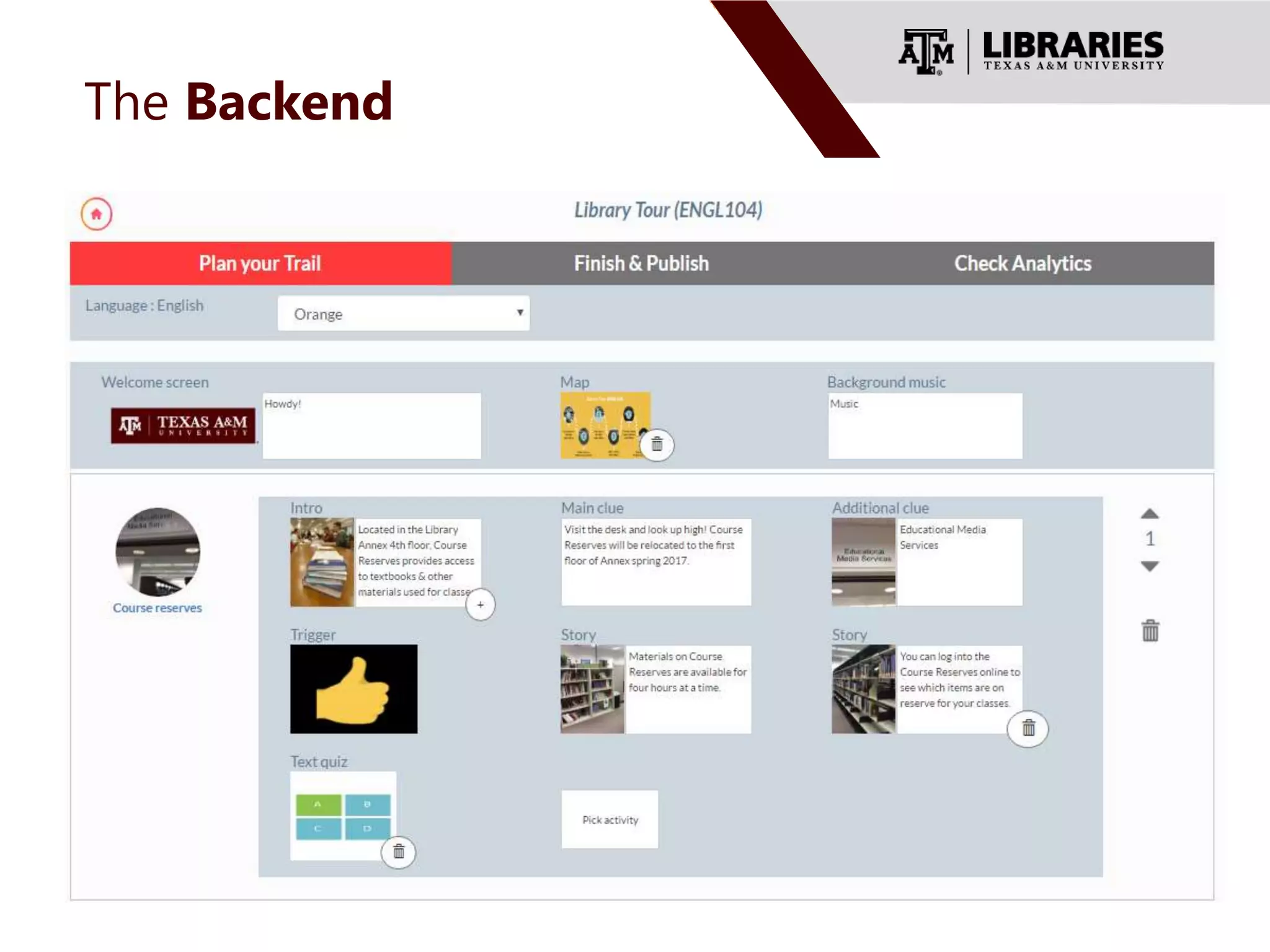
• Limited on features
• Video is available but is manually entered by GAMAR
• Limited accessibility (optional paper version)
• Limited statistics and manually sent by GAMAR
• Assessment check in activities

German GAMAR: Adding layers to library instruction through augmented reality

  • 1.
    GAMAR: Adding layersto library instruction through augmented reality Innovative Tools and Apps: What's Hot Elizabeth German NISO Webinar June 6, 2018
  • 2.
    About Augmented Reality “Augmentedreality (AR) refers to a wide spectrum of technologies that project computer generated materials, such as text, images, and video, onto users’ perceptions of the real world.” Yuen, S., Gallayanee Yaoyuneyong, and Erik Johnson. "Augmented reality: An overview and five directions for AR in education." Journal of Educational Technology Development and Exchange 4.1 (2011): 119-140.
  • 3.
  • 4.
    AR for Learning Experientiallearning Gamification Personal Technology Data and Assessment Pulling together trends in education
  • 5.
  • 6.
    Texas A&M Project ProjectTeam • Sarah LeMire Coordinator of First Year Programs • Stephanie Graves Director of Learning and Outreach • Michael Hawkins Education Technology Support • Beth German Service Design Librarian English 104 • Learning objective – Academic Resource awareness • Constraint – 57 English 104 Sections, 25 students each = 1,425 students • Solution – Unmediated Library Tour Citations LeMire, Sarah, Elizabeth German, Shweta Kailani, Rhonda Newton, Stephanie J. Graves, and Michael Hawkins. “Finding Tech-achu: Explore the Potential of Augmented Reality.” Texas A&M University Tech Summit. Galveston, TX, February 22, 2017. . LeMire, Sarah, Stephanie J. Graves, Michael Hawkins, and Shweta Kailani. “Libr-AR-y Tours: Increasing Engagement and Scalability of Library Tours Using Augmented Reality.” College & Undergraduate Libraries, 25:3(2018). doi:10.1080/10691316.2018.1480445 In Press.
  • 7.
    Choosing Criteria Requirements Price fordevelopment Modest budget allocated Price for students Must be free Device compatibility Must be iOS and Android Program type No coding required Ease of development No coding required Ease for end user Easy to download and follow tour
  • 8.
  • 9.
  • 10.
  • 11.
  • 12.
  • 13.
  • 14.
  • 15.
  • 16.
  • 17.
  • 18.
  • 19.
  • 20.
  • 21.
  • 22.
  • 23.
  • 24.
    Lessons Learned Student feedback •Initial semester, around 500 students participated • Overwhelmingly positive feedback • Original layout had too much movement, plan your path wisely GAMAR • Limited on features • Video is available but is manually entered by GAMAR • Limited accessibility (optional paper version) • Limited statistics and manually sent by GAMAR • Assessment check in activities