Geriatric Hip Fracture
Muhammad Azrin Mohd Asihin
Content
1. Type of fracture
2. Stable vs unstable
3. Treatment options
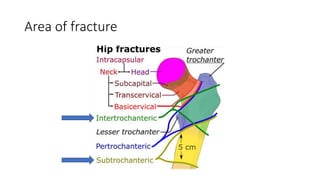
Area of fracture
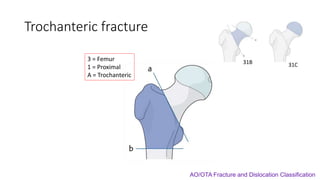
Trochanteric fracture
3 = Femur
1 = Proximal
A = Trochanteric
31B 31C
AO/OTA Fracture and Dislocation Classification
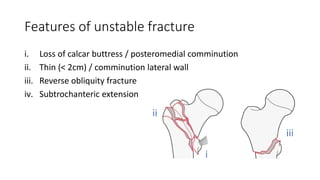
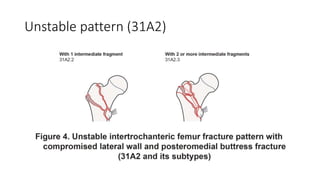
Features of unstable fracture
i. Loss of calcar buttress / posteromedial comminution
ii. Thin (< 2cm) / comminution lateral wall
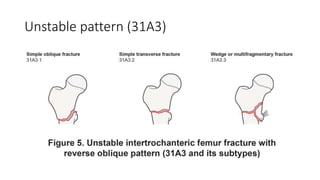
iii. Reverse obliquity fracture
iv. Subtrochanteric extension
ii
i
iii
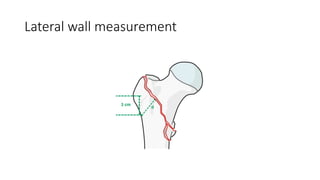
Lateral wall measurement
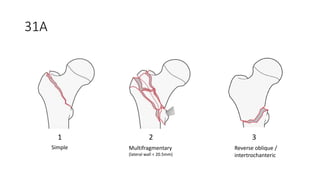
1 2 3
Simple Multifragmentary
(lateral wall < 20.5mm)
Reverse oblique /
intertrochanteric
31A
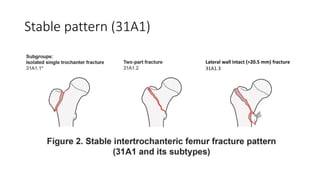
Stable pattern (31A1)
Lateral wall intact (>20.5 mm) fracture
31A1.3
Unstable pattern (31A2)
Unstable pattern (31A3)
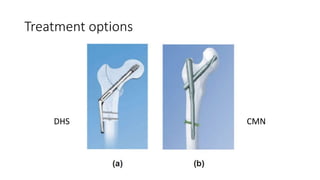
Treatment options
DHS CMN
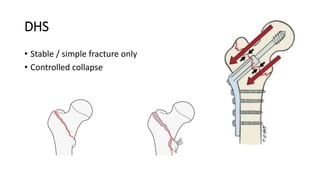
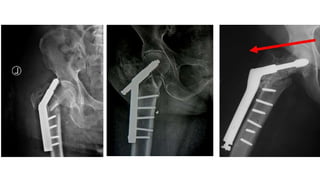
DHS
• Stable / simple fracture only
• Controlled collapse
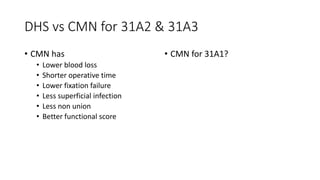
DHS vs CMN for 31A2 & 31A3
• CMN has
• Lower blood loss
• Shorter operative time
• Lower fixation failure
• Less superficial infection
• Less non union
• Better functional score
• CMN for 31A1?
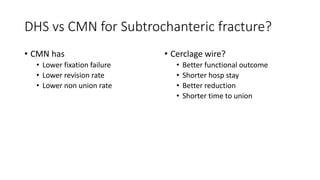
DHS vs CMN for Subtrochanteric fracture?
• CMN has
• Lower fixation failure
• Lower revision rate
• Lower non union rate
• Cerclage wire?
• Better functional outcome
• Shorter hosp stay
• Better reduction
• Shorter time to union
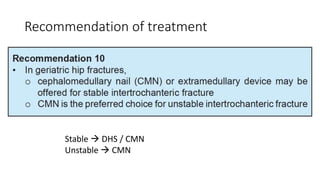
Recommendation of treatment
Stable  DHS / CMN
Unstable  CMN
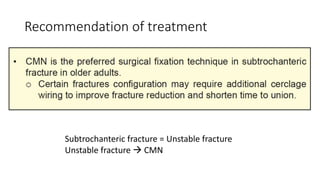
Recommendation of treatment
Subtrochanteric fracture = Unstable fracture
Unstable fracture  CMN
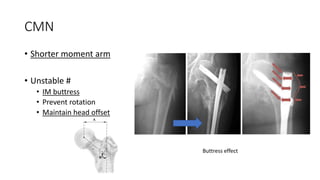
CMN
• Shorter moment arm
• Unstable #
• IM buttress
• Prevent rotation
• Maintain head offset
Buttress effect
Thank you

geriatric hip fracture management for elderly