PROXIMAL
FEMORAL
FRACTURES
SHIFA MOHAMED RAFI
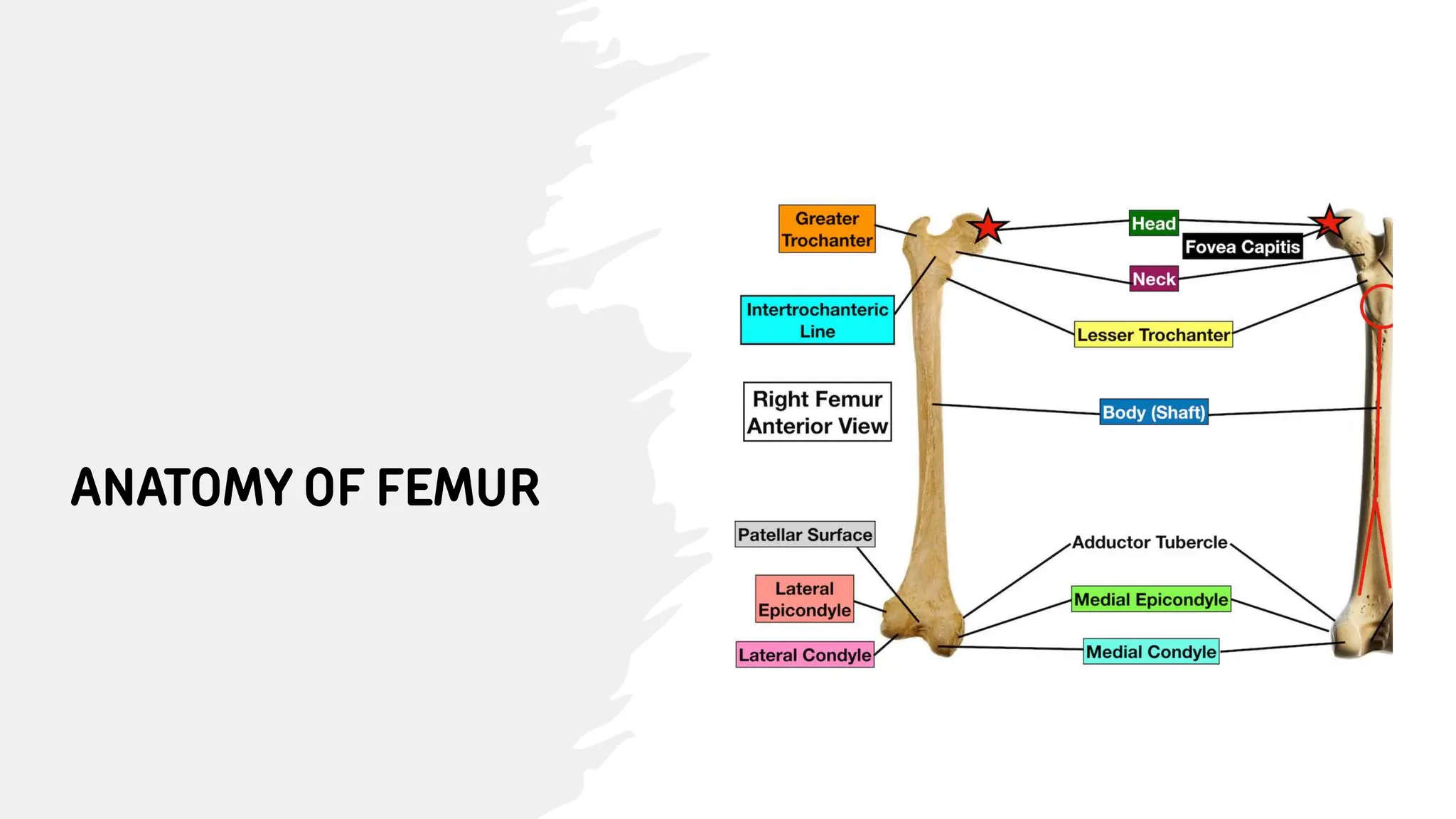
ANATOMY OF FEMUR
ANATOMY OF HIP JOINT
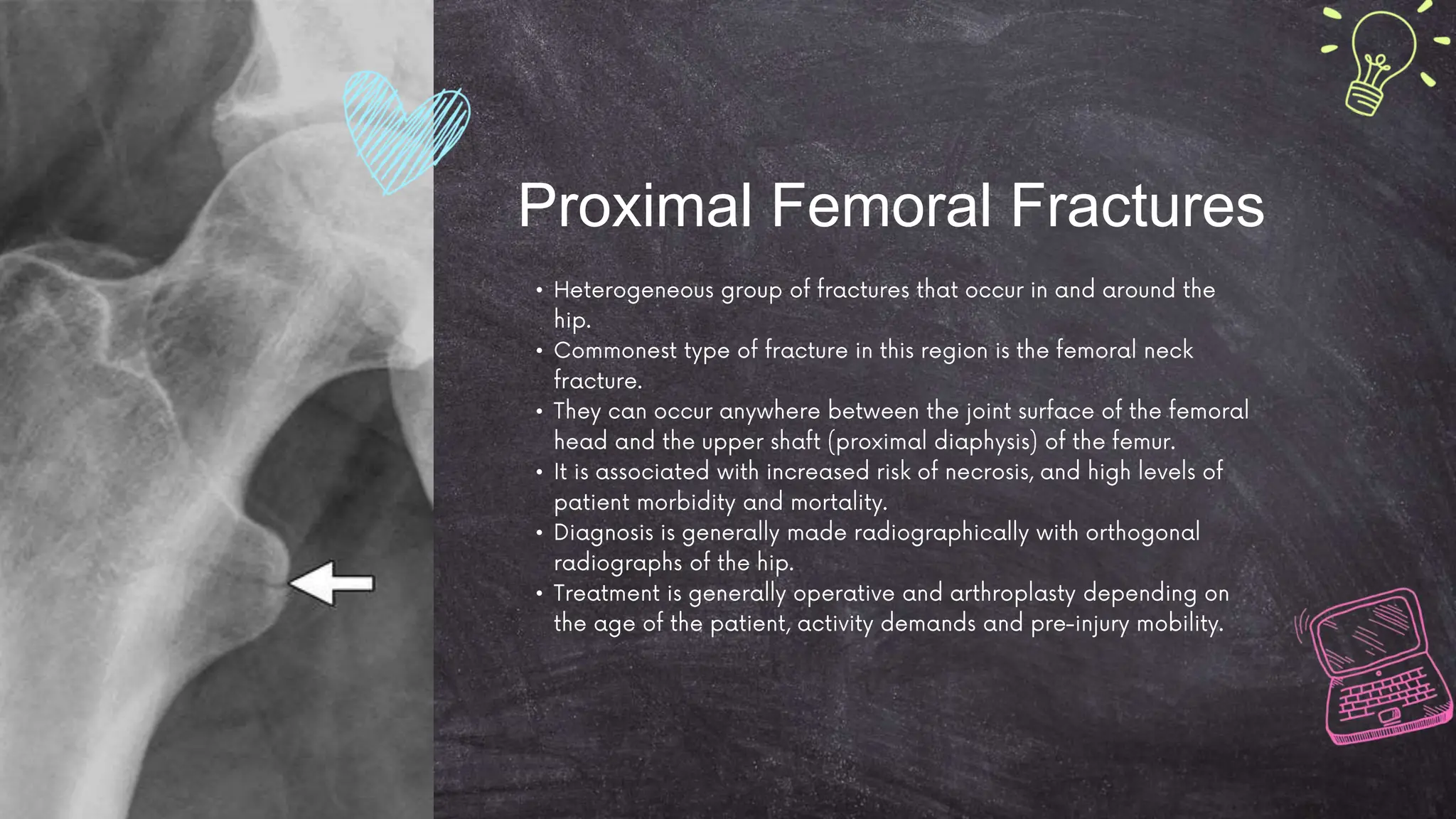
Proximal Femoral Fractures
•
•
•
•
•
•
CAUSES AND RISK
FACTORS
Mechanism of injury
• Fall onto greater trochanter/lateral hip
• Forced lateral rotation (e.g., from tripping)
• Chronic overburdening can lead to
insufficiency fracture which can then
completely fracture spontaneously
• Pathological fracture due to metastases
• motor vehicle accidents or falls from great
heights or underlying disease (e.g., fibrous
dysplasia)
• Risk factors
⚬ Osteoporosis(especially postmen
opausal women and older
individuals)
⚬ Muscle weakness
⚬ Difficulty walking and impaired
coordination
⚬ Estrogen deficiency
⚬ Low body weight
⚬ Poor nutrition (vitamin D
deficiency or calcium deficiency)
⚬ Smoking, alcohol use
INTRACPSULAR AND
EXTRACAPSULAR
The terms hip fracture and femoral neck fracture
both relate to the same type of injury. Both terms
describe a fracture of the proximal femur
between the femoral head and 5 cm distal to the
lesser trochanter. A hip fracture occurs just below
the head of femur (HOF), the region of the femur
called the femoral neck. A femoral neck fracture
disconnects the HOF from the rest of the femur.
Femoral neck fracture both relate to the same
type of injury. Both terms describe a fracture of
the proximal femur between the femoral head and
5 cm distal to the lesser trochanter
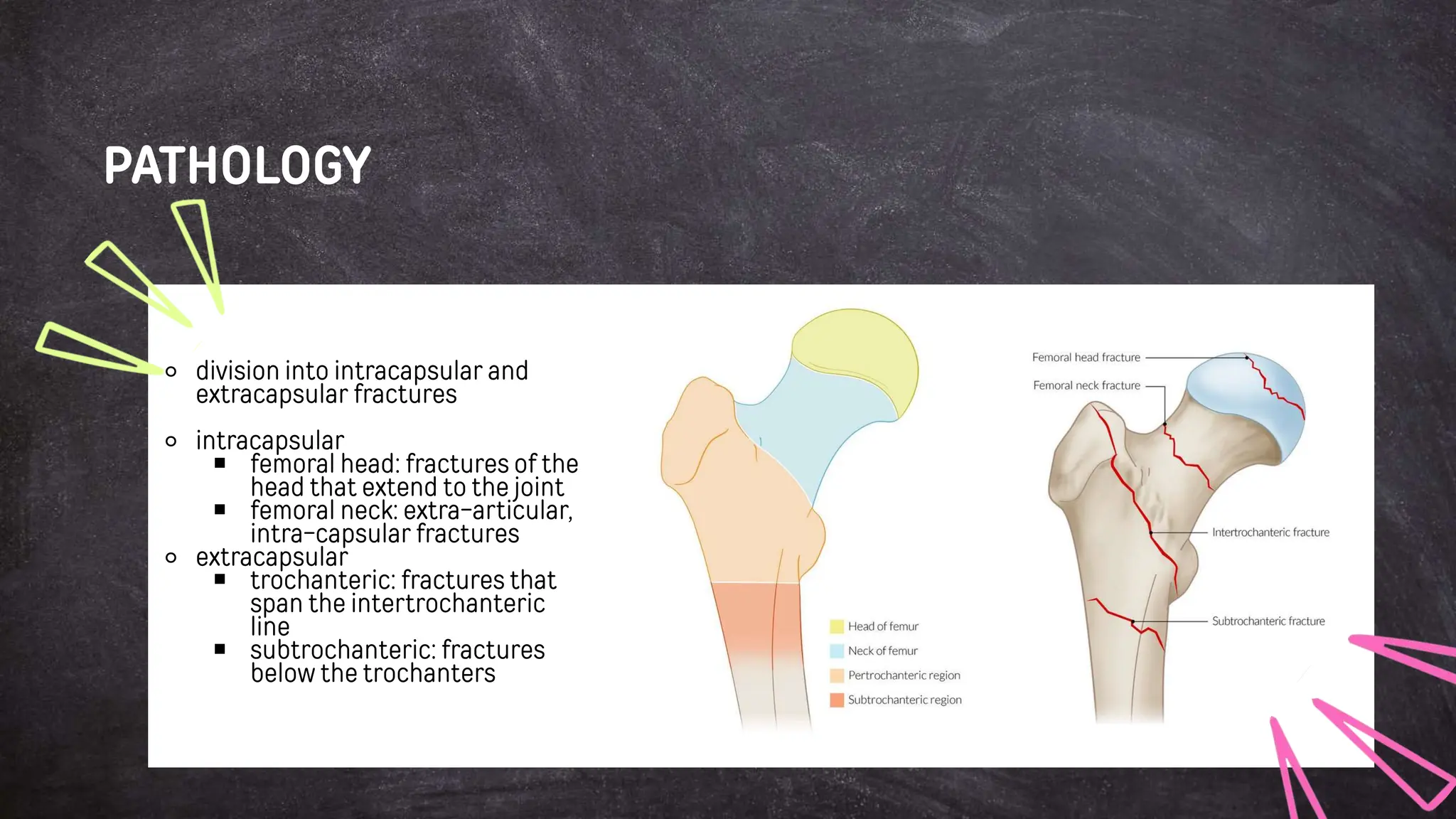
PATHOLOGY
⚬ division into intracapsular and
extracapsular fractures
⚬ intracapsular
■ femoral head: fractures of the
head that extend to the joint
■ femoral neck: extra-articular,
intra-capsular fractures
⚬ extracapsular
■ trochanteric: fractures that
span the intertrochanteric
line
■ subtrochanteric: fractures
below the trochanters
FEMORAL HEAD FRACTURE
•Occurrence: uncommon but often associated with a posterior hip dislocation following a
dashboard injury
•Clinical features
⚬ Groin pain
⚬ Local swelling and ecchymosis
•Diagnostics
⚬ Hip x-ray (AP with internal rotation and lateral view; should include the proximal thigh) MRI
if findings are unclear or if an occult fracture is suspected
• Surgical
⚬ Children and young adults:
open reduction internal fixation with maintenance of the femoral head
⚬ Older adults or those with predispositions or instabilities: total hip replacement
FEMORAL NECK
FRACTURE
•Clinical features
⚬ Groin pain
⚬ Shortened and externally rotated leg
⚬ Minimal bruising
•Diagnostics
⚬ X-ray
⚬ MRI or bone scan if clinical suspicion is high despite absent findings on x-ray
Treatment
⚬ Temporary bed rest; or use of crutches followed by mobilization with physical
therapy
⚬ Venous thromboembolism prophylaxis
⚬ Surgery (usually within 72 hours
⚬ For children and young adults:
⚬ Early open reduction internal fixation (ORIF) (within 6 hours)
⚬ For older adults: total hip replacement (THR) or hip hemiarthroplasty
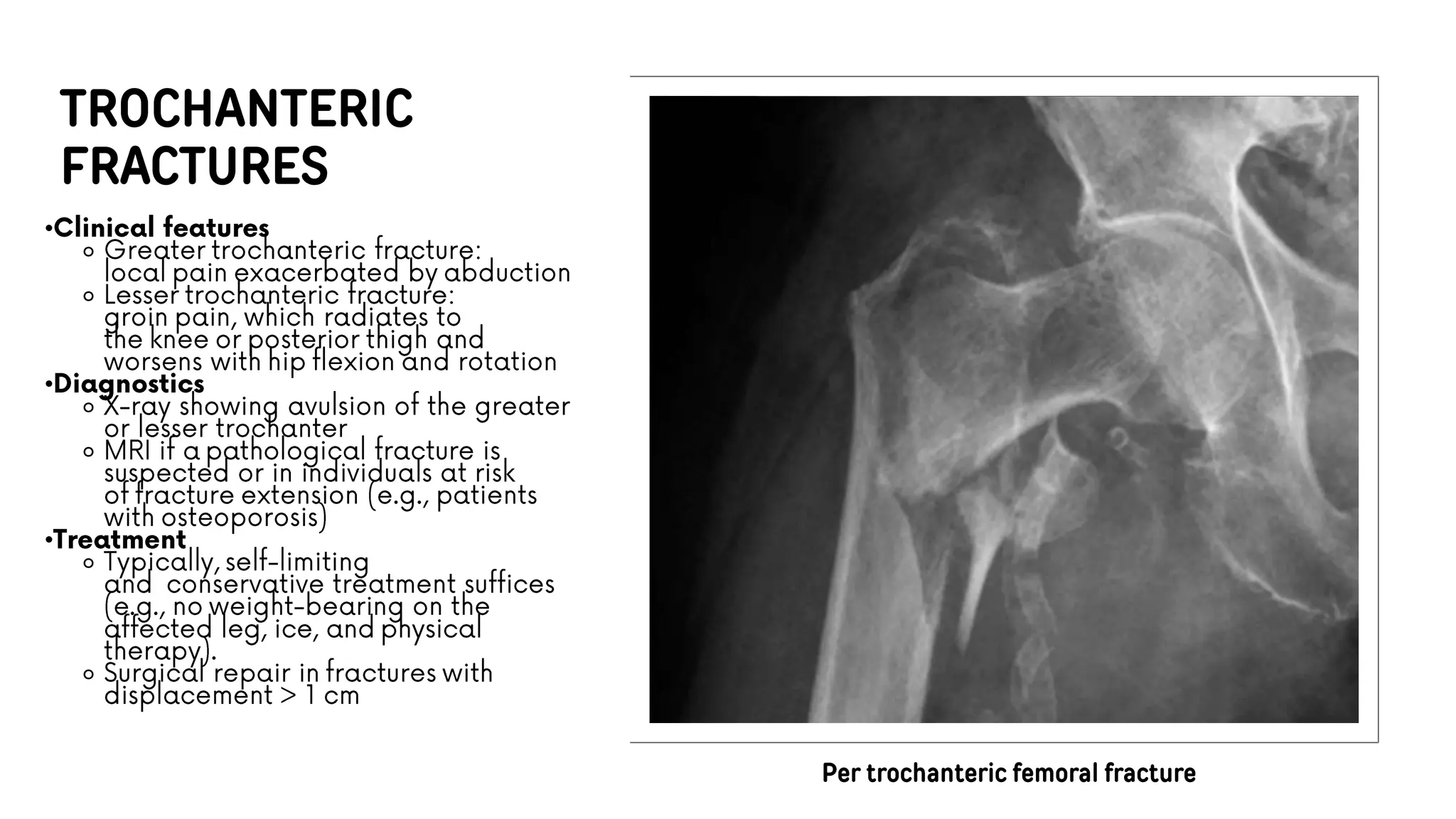
TROCHANTERIC
FRACTURES
•
⚬
⚬
•
⚬
⚬
•
⚬
⚬
Per trochanteric femoral fracture
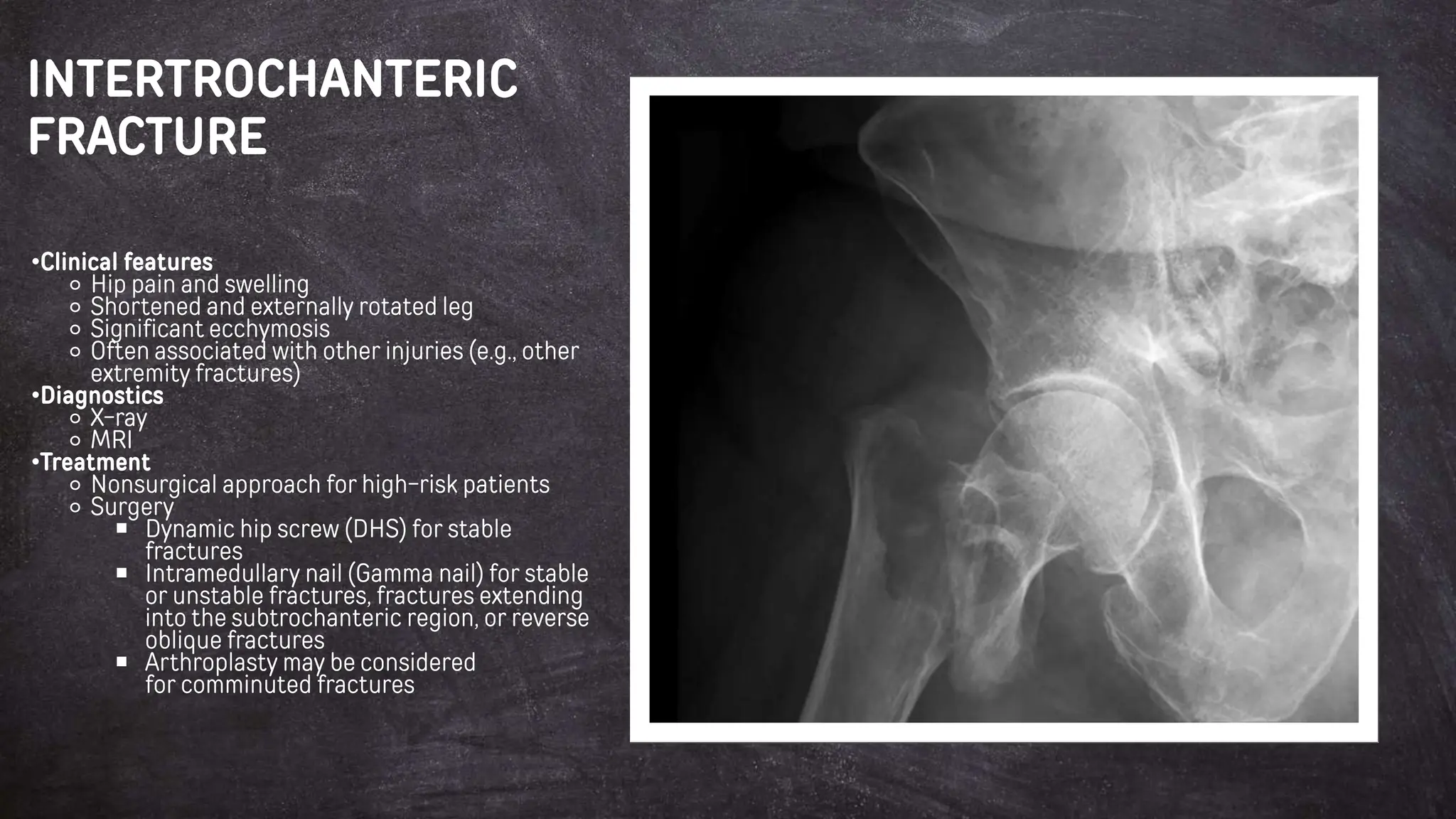
INTERTROCHANTERIC
FRACTURE
•Clinical features
⚬ Hip pain and swelling
⚬ Shortened and externally rotated leg
⚬ Significant ecchymosis
⚬ Often associated with other injuries (e.g., other
extremity fractures)
•Diagnostics
⚬ X-ray
⚬ MRI
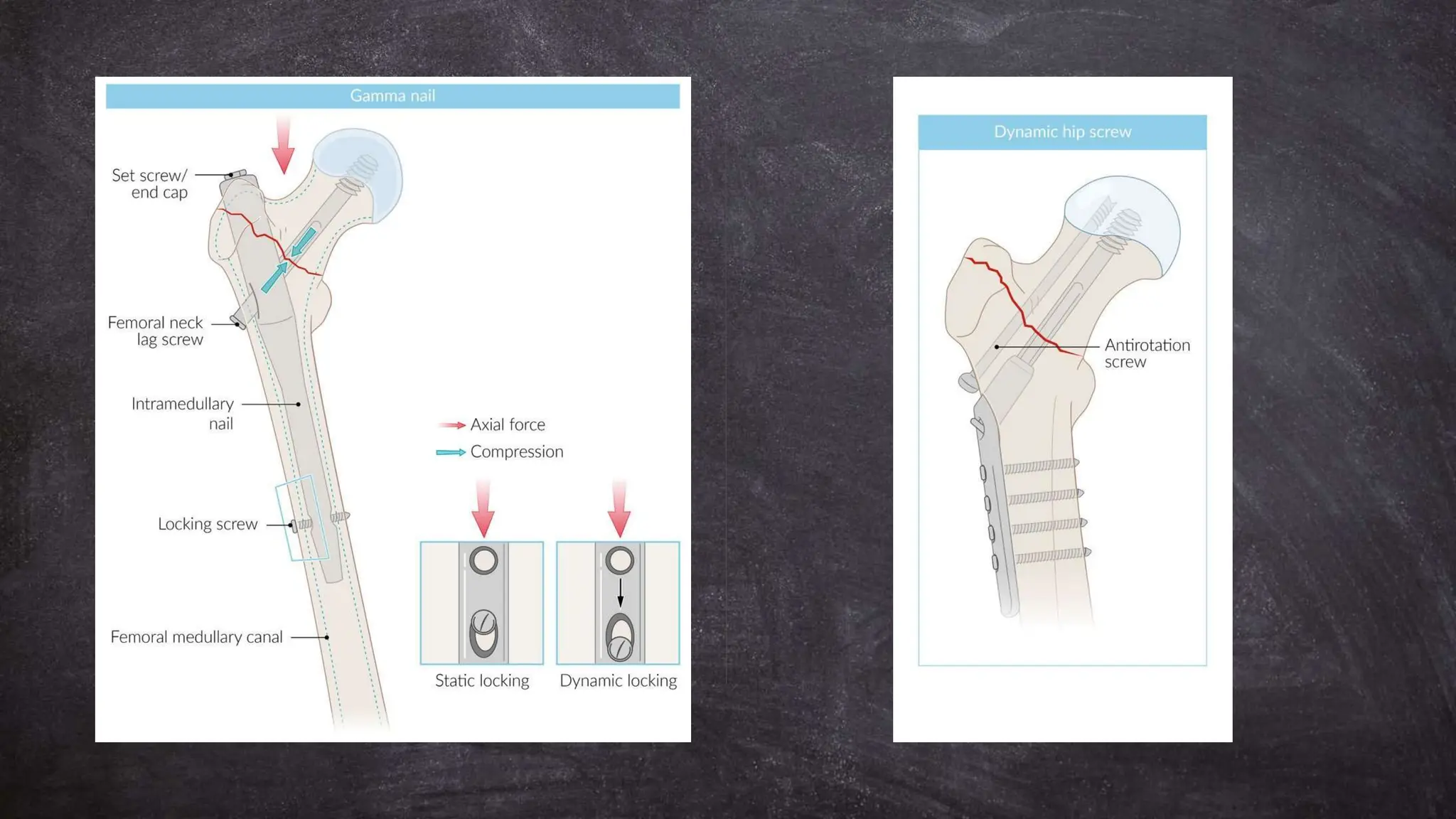
•Treatment
⚬ Nonsurgical approach for high-risk patients
⚬ Surgery
■ Dynamic hip screw (DHS) for stable
fractures
■ Intramedullary nail (Gamma nail) for stable
or unstable fractures, fractures extending
into the subtrochanteric region, or reverse
oblique fractures
■ Arthroplasty may be considered
for comminuted fractures
SUBTROCHANTERIC
FRACTURE
•Clinical features
⚬ Hip pain with swelling
⚬ Shortened and externally rotated leg
⚬ Significant ecchymosis
•Diagnostics
⚬ X- Ray
⚬ MRI
•Treatment
⚬ Consider conservative approach (e.g., traction)
in surgically unstable patients
⚬ Surgery is indicated in
displaced/nondisplaced fractures in adults,
especially if associated with multiple trauma,
an open fracture, or pathological fractures
■ Long intramedullary nail with a lag screw
■ Locking plate may be considered for
complicated fractures (e.g., pre-
existing femoral deformity,
associated femoral neck fracture)
Subtrochanteric fracture of the left femur, type C
REFERENCES
• http://www.orthobullets.com/trauma/1037/femoral-neck-
fractures
• https://radiopaedia.org/articles/proximal-femoral-fractures-
summary
• https://www.amboss.com/us/knowledge/Hip_fractures/
• https://www.orthobullets.com/trauma/1037/femoral-neck-
fractures
• https://radiology.expert/x-hip/pathology/proximal-
femoralfractures/
• https://radiopaedia.org/articles/proximal-femoral-fractures

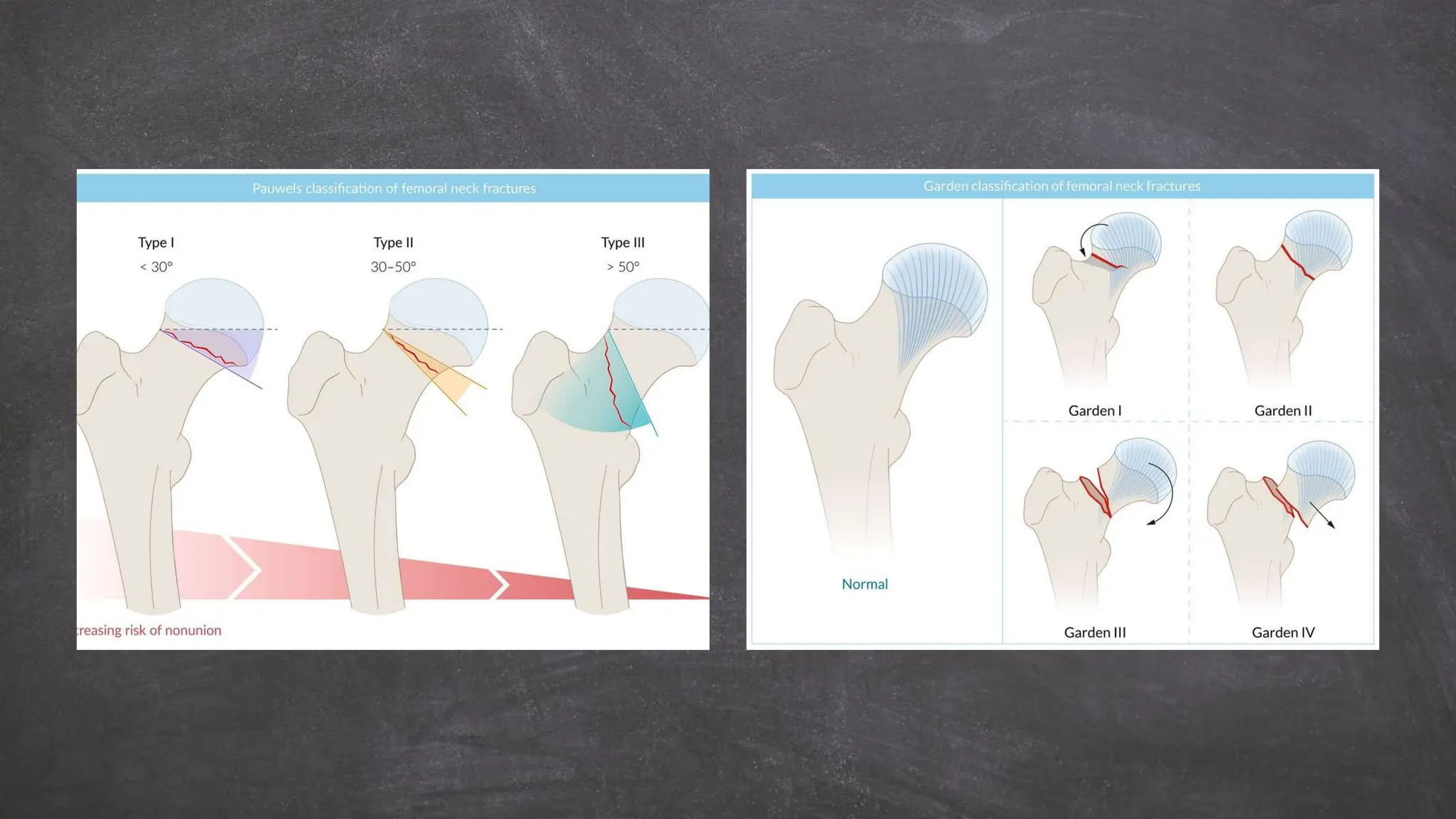
Proximal femur fracture classification ppt

  • 1.
  • 2.
  • 3.
  • 4.
  • 5.
    CAUSES AND RISK FACTORS Mechanismof injury • Fall onto greater trochanter/lateral hip • Forced lateral rotation (e.g., from tripping) • Chronic overburdening can lead to insufficiency fracture which can then completely fracture spontaneously • Pathological fracture due to metastases • motor vehicle accidents or falls from great heights or underlying disease (e.g., fibrous dysplasia) • Risk factors ⚬ Osteoporosis(especially postmen opausal women and older individuals) ⚬ Muscle weakness ⚬ Difficulty walking and impaired coordination ⚬ Estrogen deficiency ⚬ Low body weight ⚬ Poor nutrition (vitamin D deficiency or calcium deficiency) ⚬ Smoking, alcohol use
  • 6.
    INTRACPSULAR AND EXTRACAPSULAR The termship fracture and femoral neck fracture both relate to the same type of injury. Both terms describe a fracture of the proximal femur between the femoral head and 5 cm distal to the lesser trochanter. A hip fracture occurs just below the head of femur (HOF), the region of the femur called the femoral neck. A femoral neck fracture disconnects the HOF from the rest of the femur. Femoral neck fracture both relate to the same type of injury. Both terms describe a fracture of the proximal femur between the femoral head and 5 cm distal to the lesser trochanter
  • 7.
    PATHOLOGY ⚬ division intointracapsular and extracapsular fractures ⚬ intracapsular ■ femoral head: fractures of the head that extend to the joint ■ femoral neck: extra-articular, intra-capsular fractures ⚬ extracapsular ■ trochanteric: fractures that span the intertrochanteric line ■ subtrochanteric: fractures below the trochanters
  • 8.
    FEMORAL HEAD FRACTURE •Occurrence:uncommon but often associated with a posterior hip dislocation following a dashboard injury •Clinical features ⚬ Groin pain ⚬ Local swelling and ecchymosis •Diagnostics ⚬ Hip x-ray (AP with internal rotation and lateral view; should include the proximal thigh) MRI if findings are unclear or if an occult fracture is suspected • Surgical ⚬ Children and young adults: open reduction internal fixation with maintenance of the femoral head ⚬ Older adults or those with predispositions or instabilities: total hip replacement
  • 9.
    FEMORAL NECK FRACTURE •Clinical features ⚬Groin pain ⚬ Shortened and externally rotated leg ⚬ Minimal bruising •Diagnostics ⚬ X-ray ⚬ MRI or bone scan if clinical suspicion is high despite absent findings on x-ray Treatment ⚬ Temporary bed rest; or use of crutches followed by mobilization with physical therapy ⚬ Venous thromboembolism prophylaxis ⚬ Surgery (usually within 72 hours ⚬ For children and young adults: ⚬ Early open reduction internal fixation (ORIF) (within 6 hours) ⚬ For older adults: total hip replacement (THR) or hip hemiarthroplasty
  • 11.
  • 12.
    INTERTROCHANTERIC FRACTURE •Clinical features ⚬ Hippain and swelling ⚬ Shortened and externally rotated leg ⚬ Significant ecchymosis ⚬ Often associated with other injuries (e.g., other extremity fractures) •Diagnostics ⚬ X-ray ⚬ MRI •Treatment ⚬ Nonsurgical approach for high-risk patients ⚬ Surgery ■ Dynamic hip screw (DHS) for stable fractures ■ Intramedullary nail (Gamma nail) for stable or unstable fractures, fractures extending into the subtrochanteric region, or reverse oblique fractures ■ Arthroplasty may be considered for comminuted fractures
  • 14.
    SUBTROCHANTERIC FRACTURE •Clinical features ⚬ Hippain with swelling ⚬ Shortened and externally rotated leg ⚬ Significant ecchymosis •Diagnostics ⚬ X- Ray ⚬ MRI •Treatment ⚬ Consider conservative approach (e.g., traction) in surgically unstable patients ⚬ Surgery is indicated in displaced/nondisplaced fractures in adults, especially if associated with multiple trauma, an open fracture, or pathological fractures ■ Long intramedullary nail with a lag screw ■ Locking plate may be considered for complicated fractures (e.g., pre- existing femoral deformity, associated femoral neck fracture) Subtrochanteric fracture of the left femur, type C
  • 15.
    REFERENCES • http://www.orthobullets.com/trauma/1037/femoral-neck- fractures • https://radiopaedia.org/articles/proximal-femoral-fractures- summary •https://www.amboss.com/us/knowledge/Hip_fractures/ • https://www.orthobullets.com/trauma/1037/femoral-neck- fractures • https://radiology.expert/x-hip/pathology/proximal- femoralfractures/ • https://radiopaedia.org/articles/proximal-femoral-fractures