Generational Management and Employee Retention Rohini Gandhotra Tom Smith
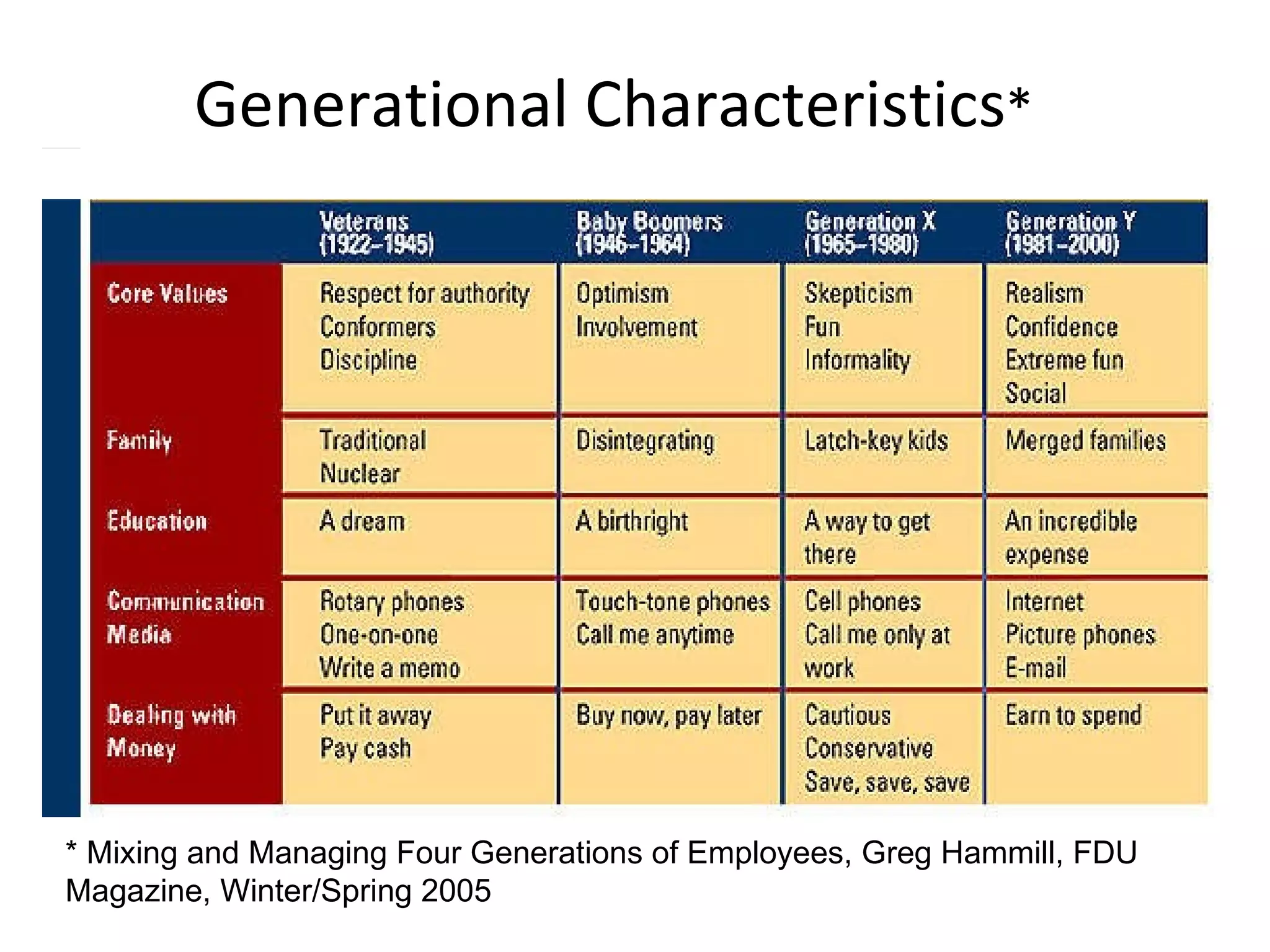
Generational Characteristics * * Mixing and Managing Four Generations of Employees, Greg Hammill, FDU Magazine, Winter/Spring 2005
Research Question: Are management employees content with management to continue working for the company for a long period of time Relevant factors: Employee trust, fulfillment, recognition, salary/benefits, career Target audience: Employees of a single facility/company
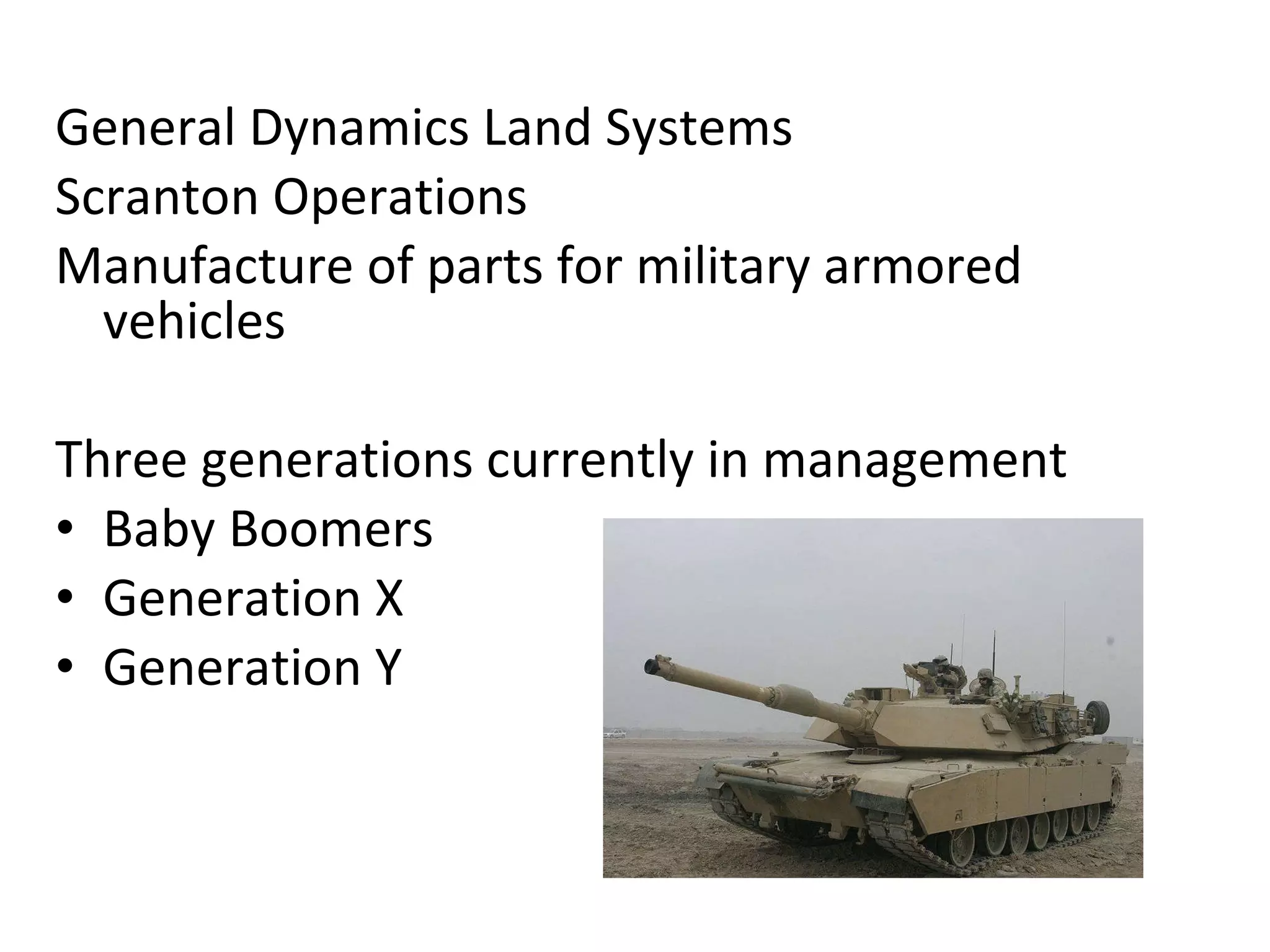
General Dynamics Land Systems Scranton Operations Manufacture of parts for military armored vehicles Three generations currently in management  Baby Boomers Generation X Generation Y
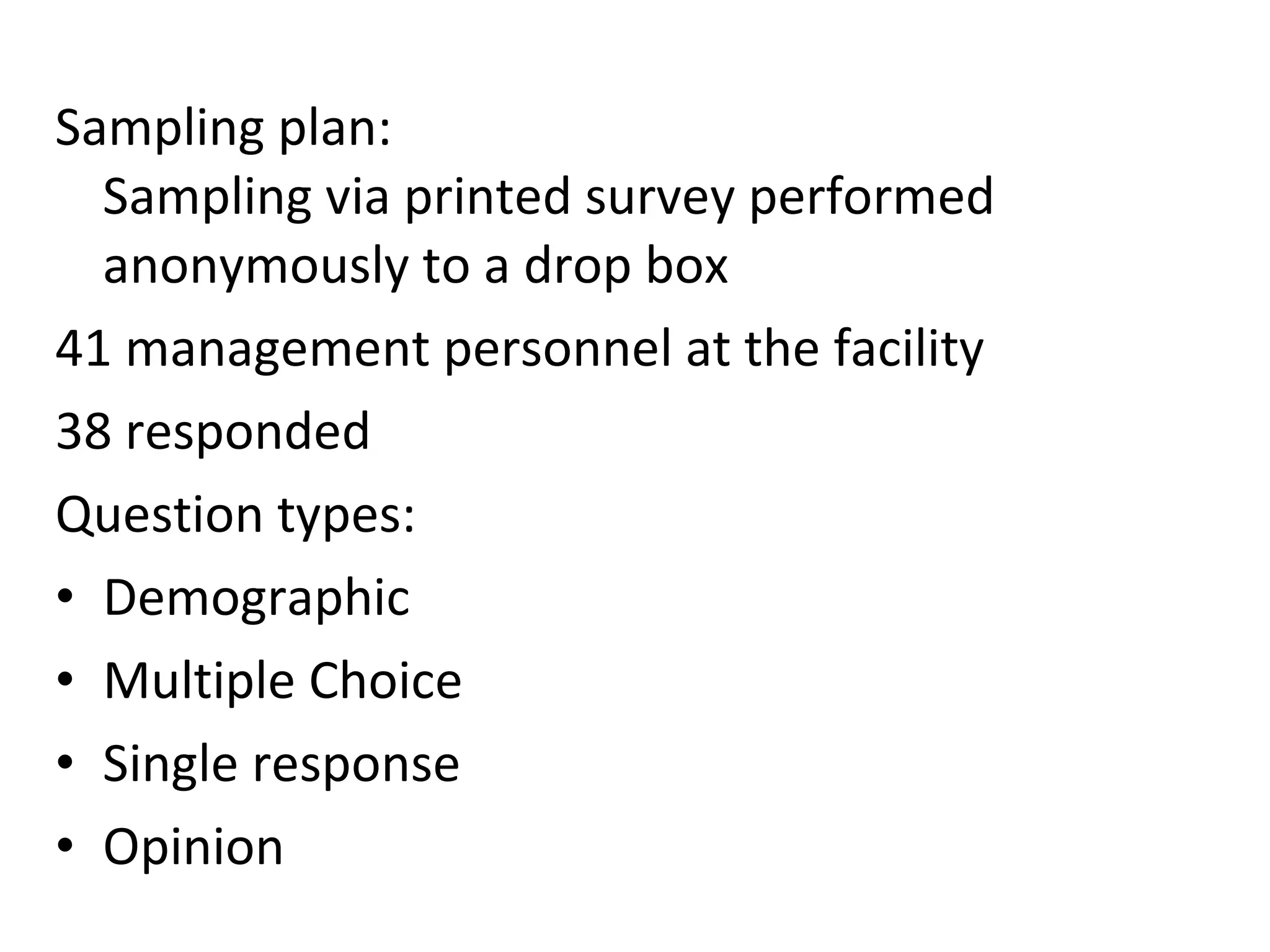
Sampling plan: Sampling via printed survey performed anonymously to a drop box 41 management personnel at the facility 38 responded Question types: Demographic Multiple Choice  Single response Opinion
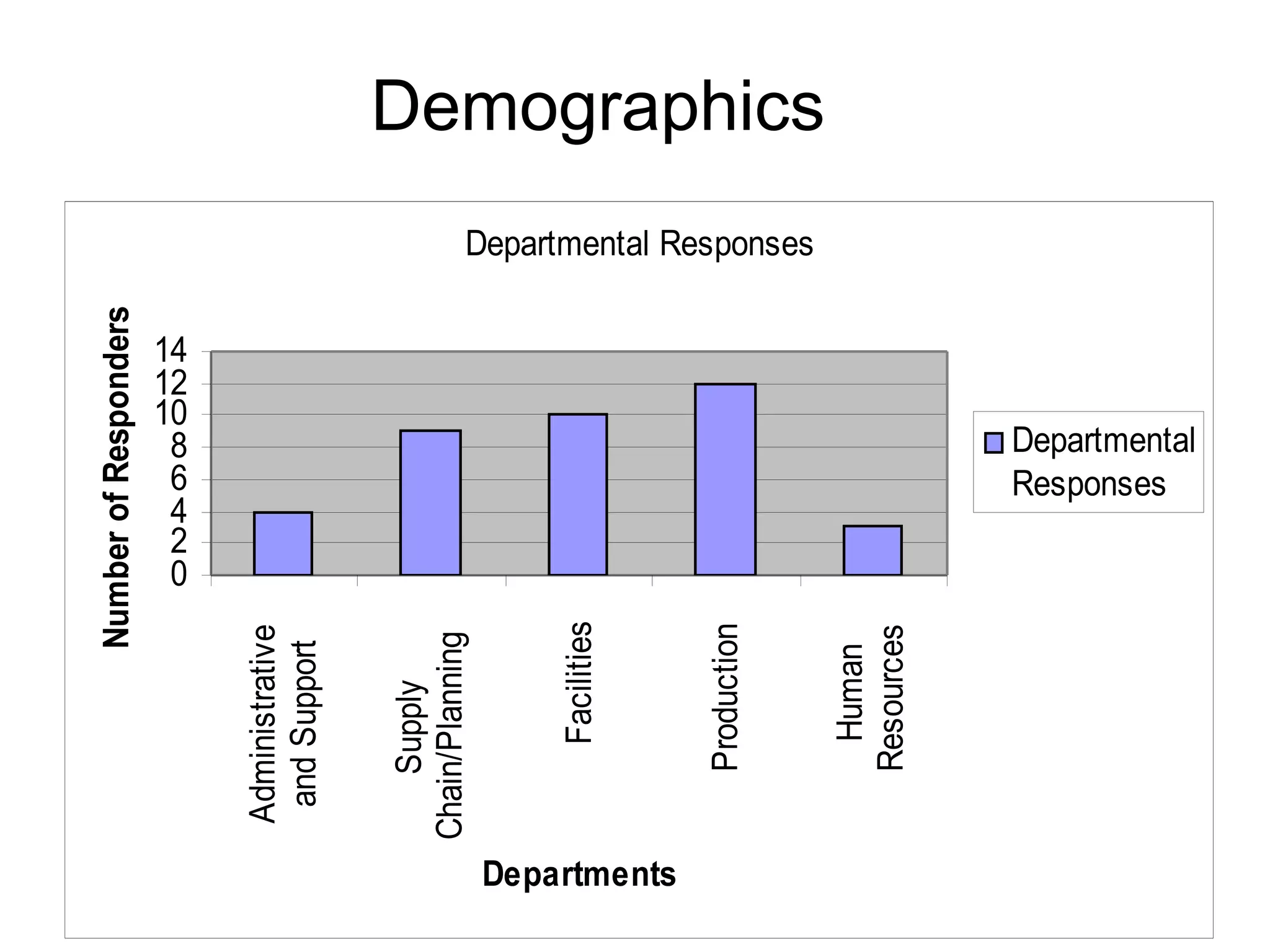
Demographics
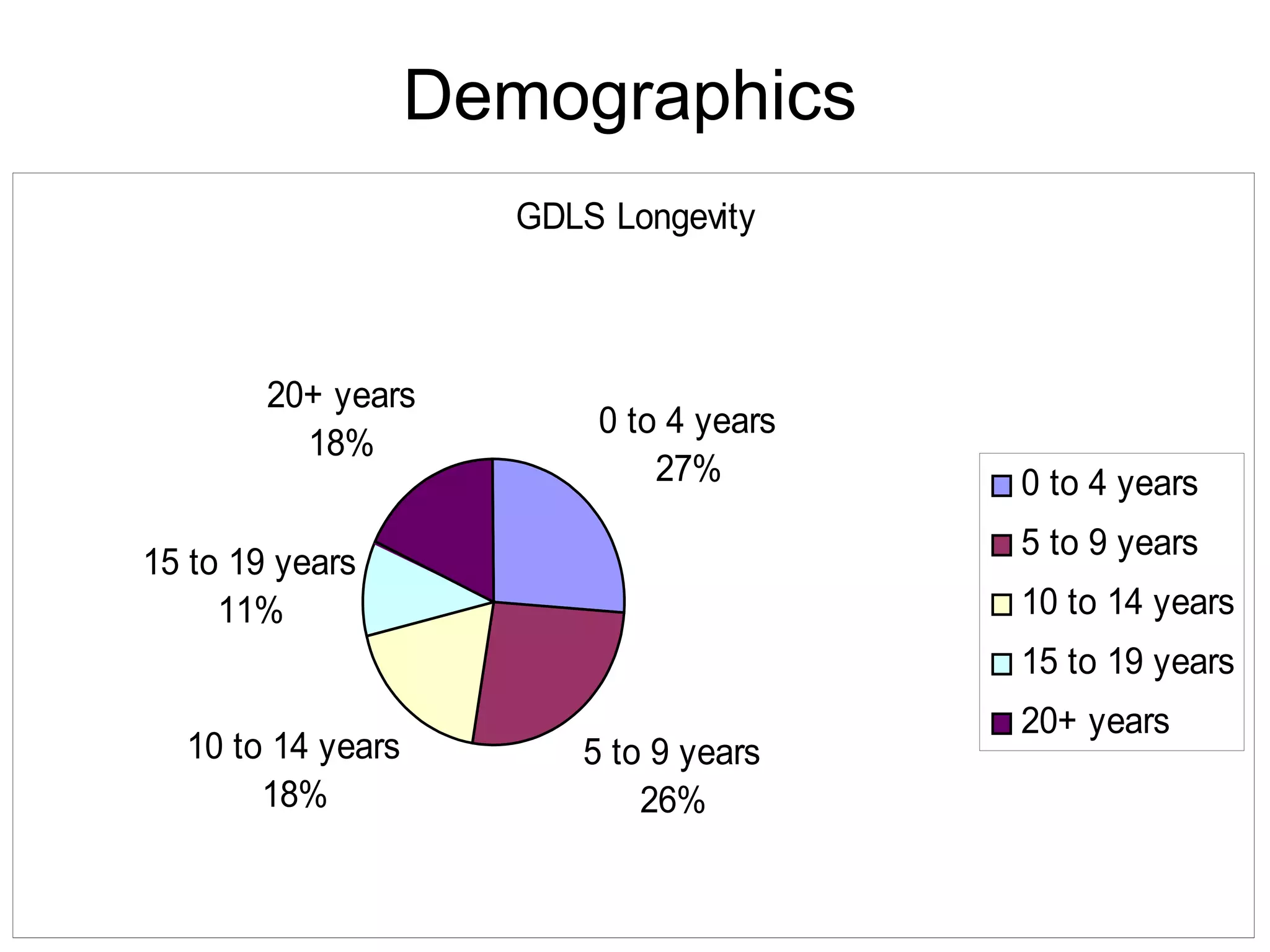
Demographics
Demographics
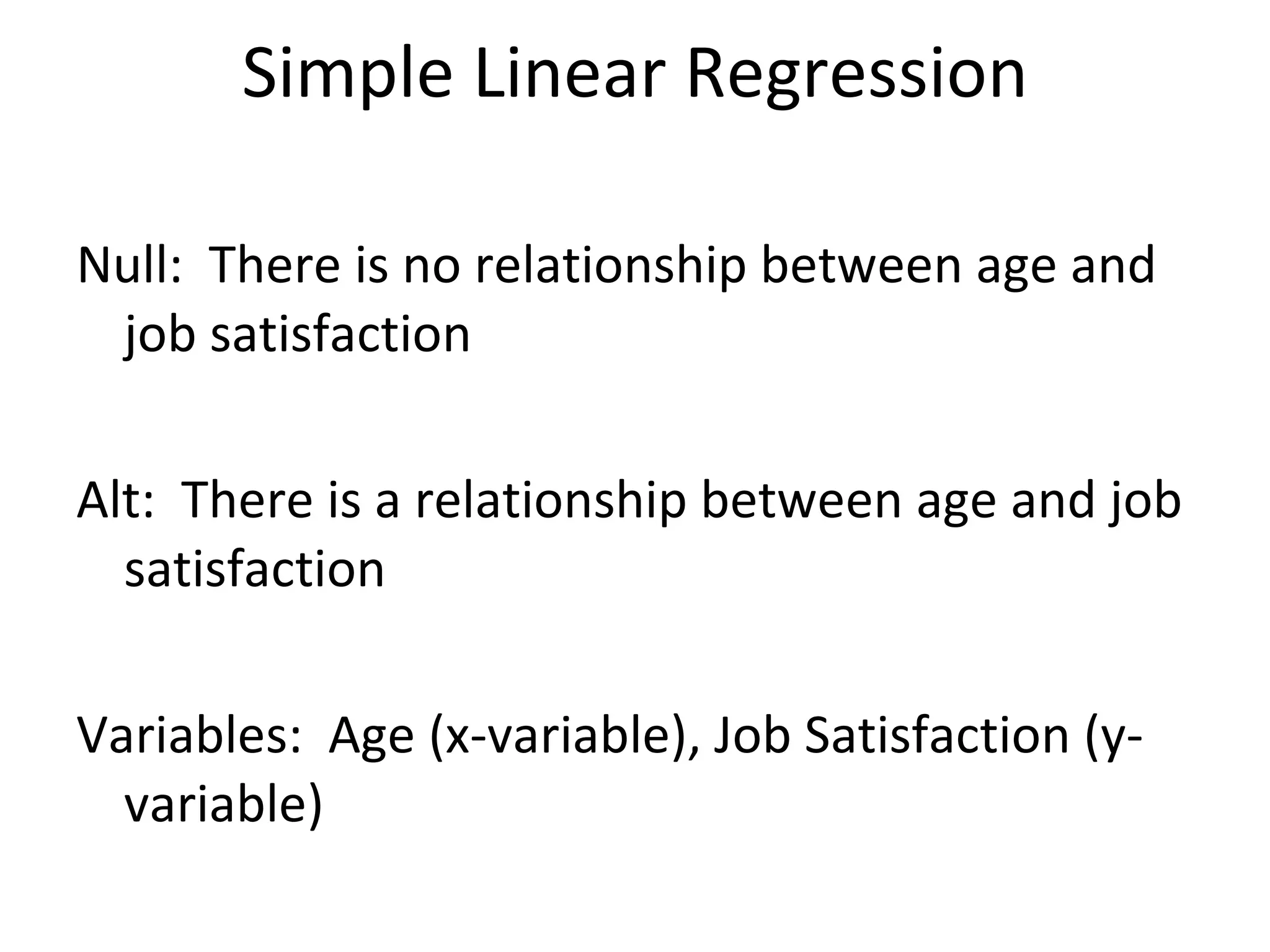
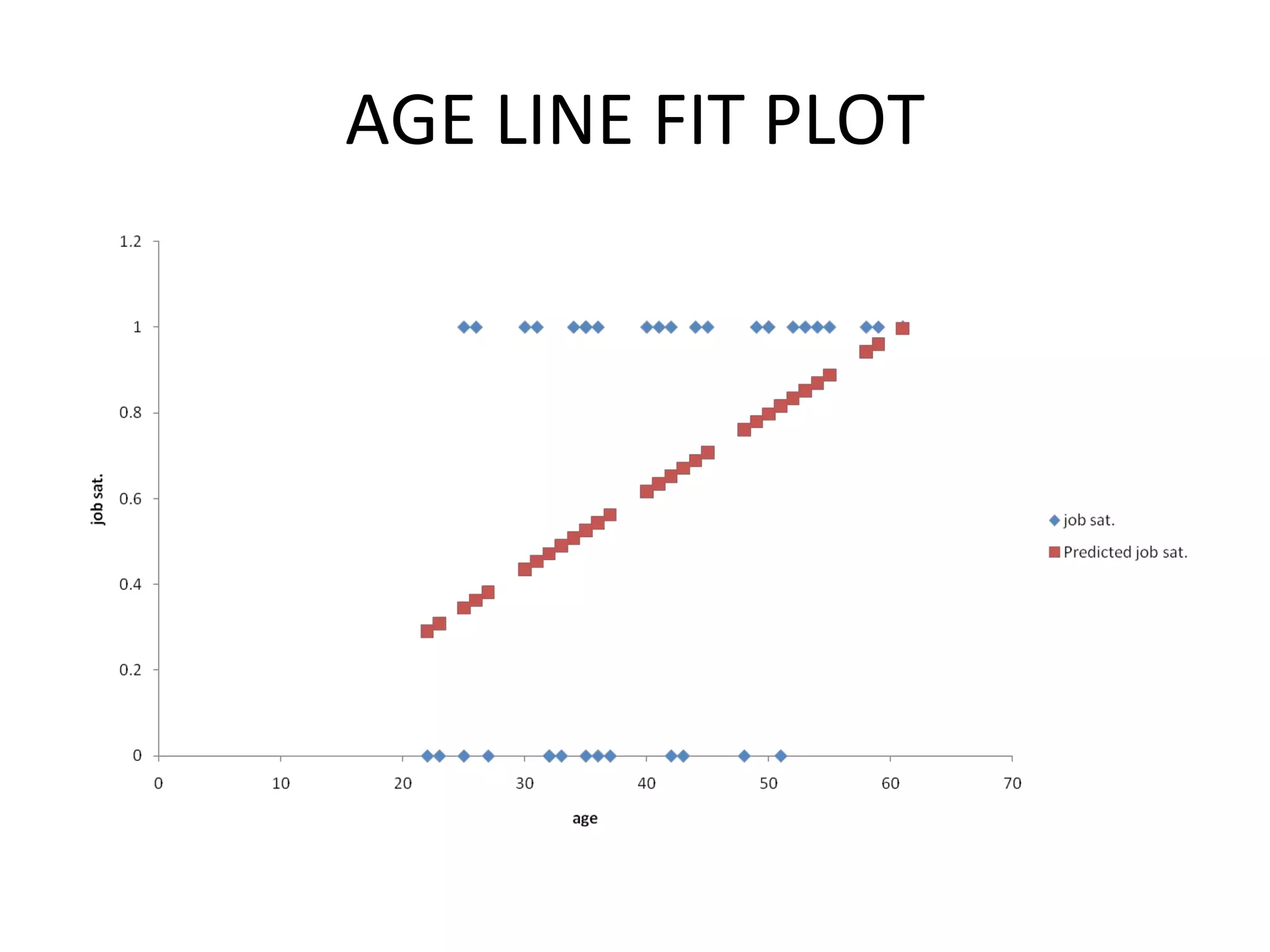
Simple Linear Regression Null:  There is no relationship between age and job satisfaction Alt:  There is a relationship between age and job satisfaction Variables:  Age (x-variable), Job Satisfaction (y-variable)
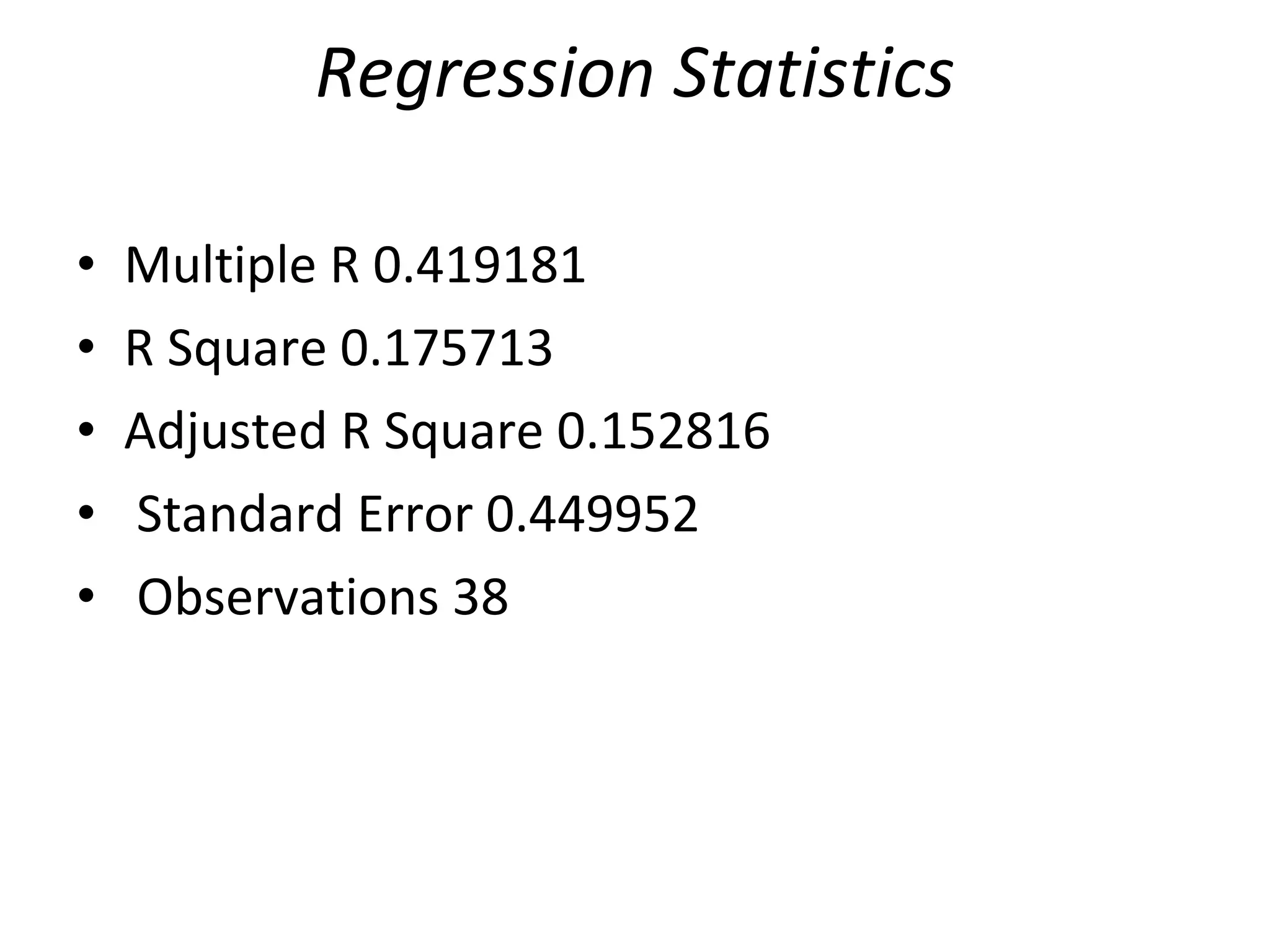
Regression Statistics Multiple R 0.419181  R Square 0.175713  Adjusted R Square 0.152816 Standard Error 0.449952 Observations 38
AGE LINE FIT PLOT
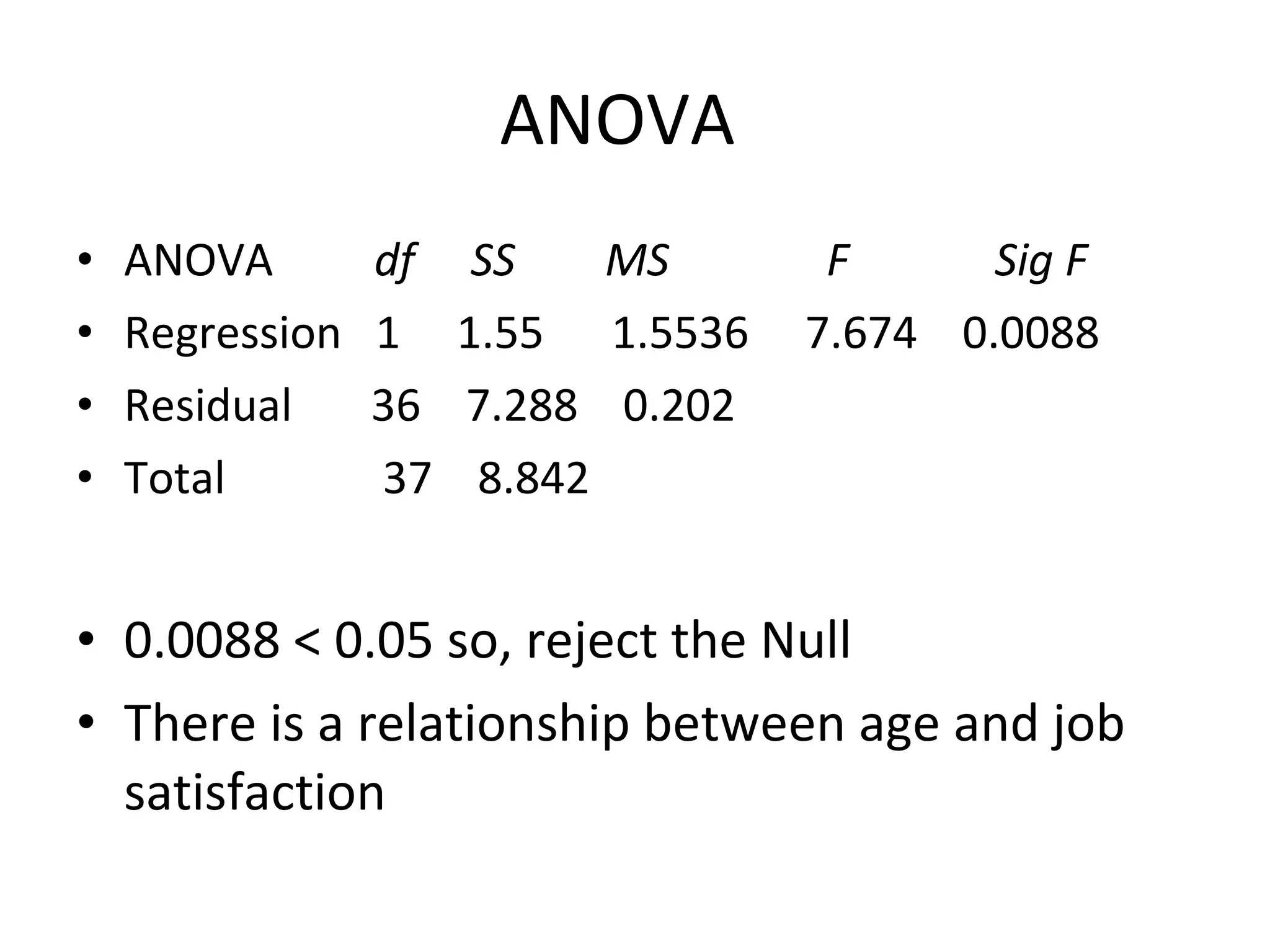
ANOVA    ANOVA     df  SS   MS   F   Sig F Regression  1  1.55  1.5536  7.674  0.0088 Residual  36  7.288  0.202 Total  37  8.842 0.0088 < 0.05 so, reject the Null There is a relationship between age and job satisfaction      
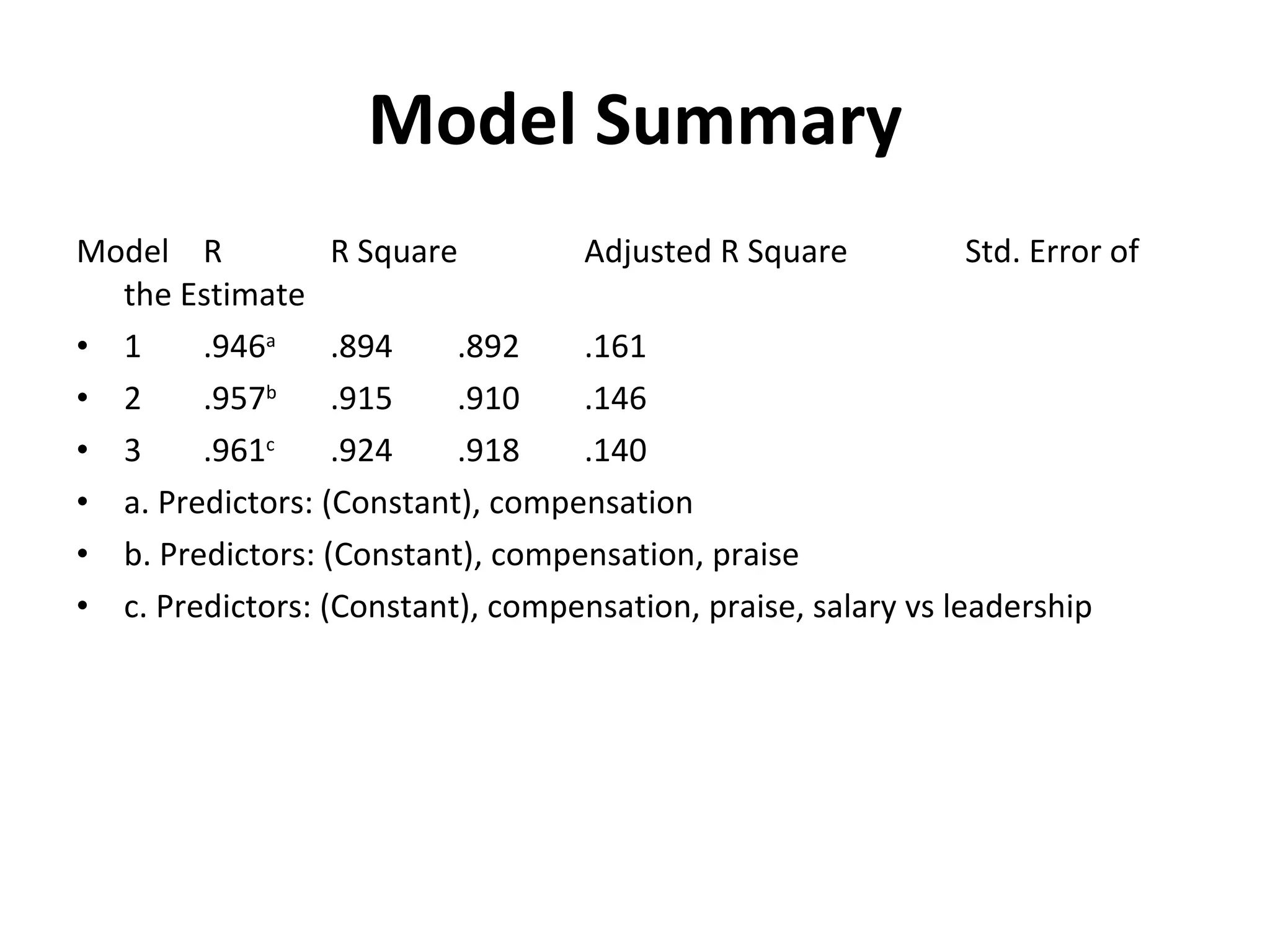
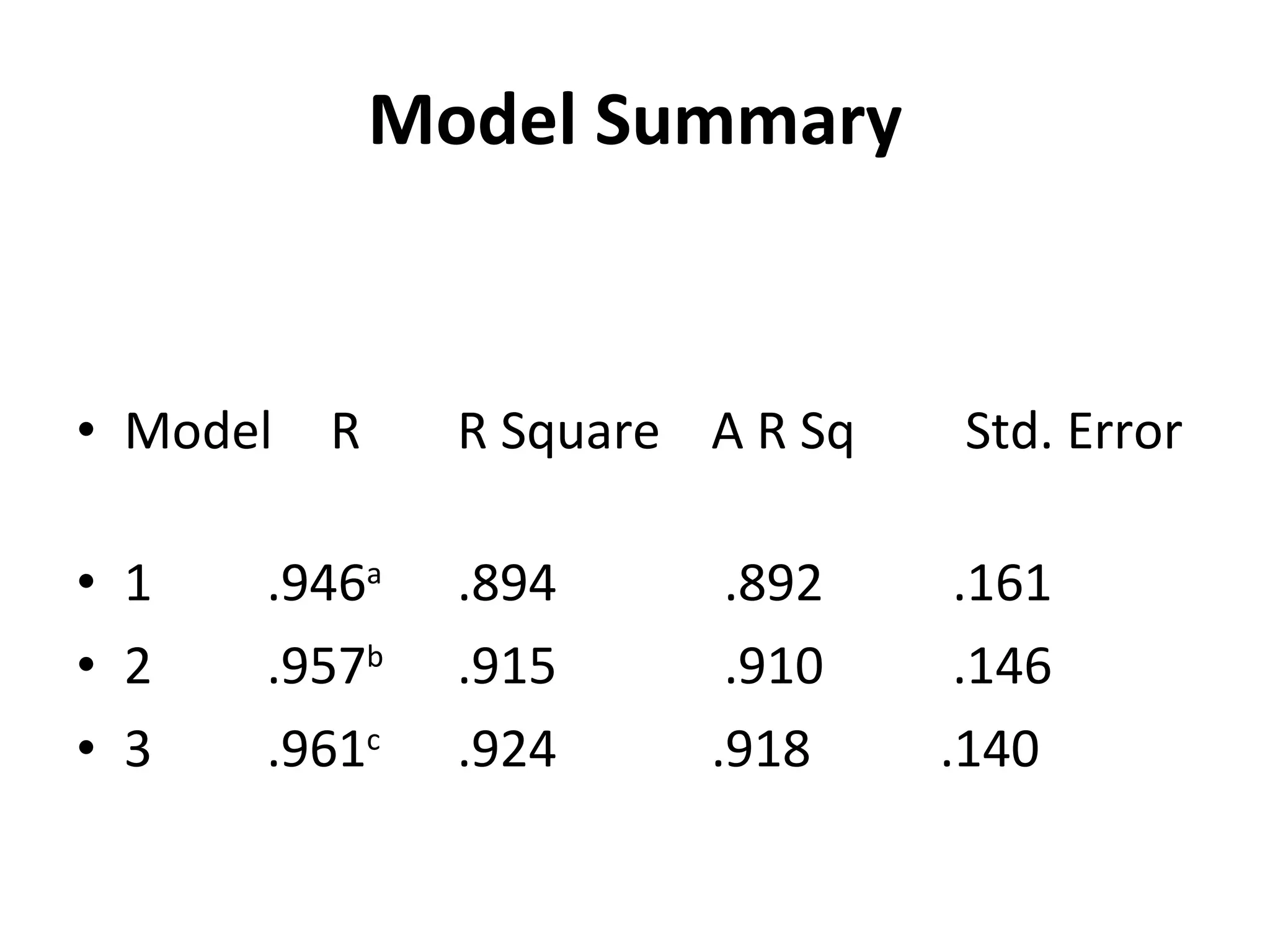
Model Summary Model R R Square Adjusted R Square Std. Error of the Estimate 1 .946 a .894 .892 .161 2 .957 b .915 .910 .146 3 .961 c .924 .918 .140 a. Predictors: (Constant), compensation b. Predictors: (Constant), compensation, praise c. Predictors: (Constant), compensation, praise, salary vs leadership
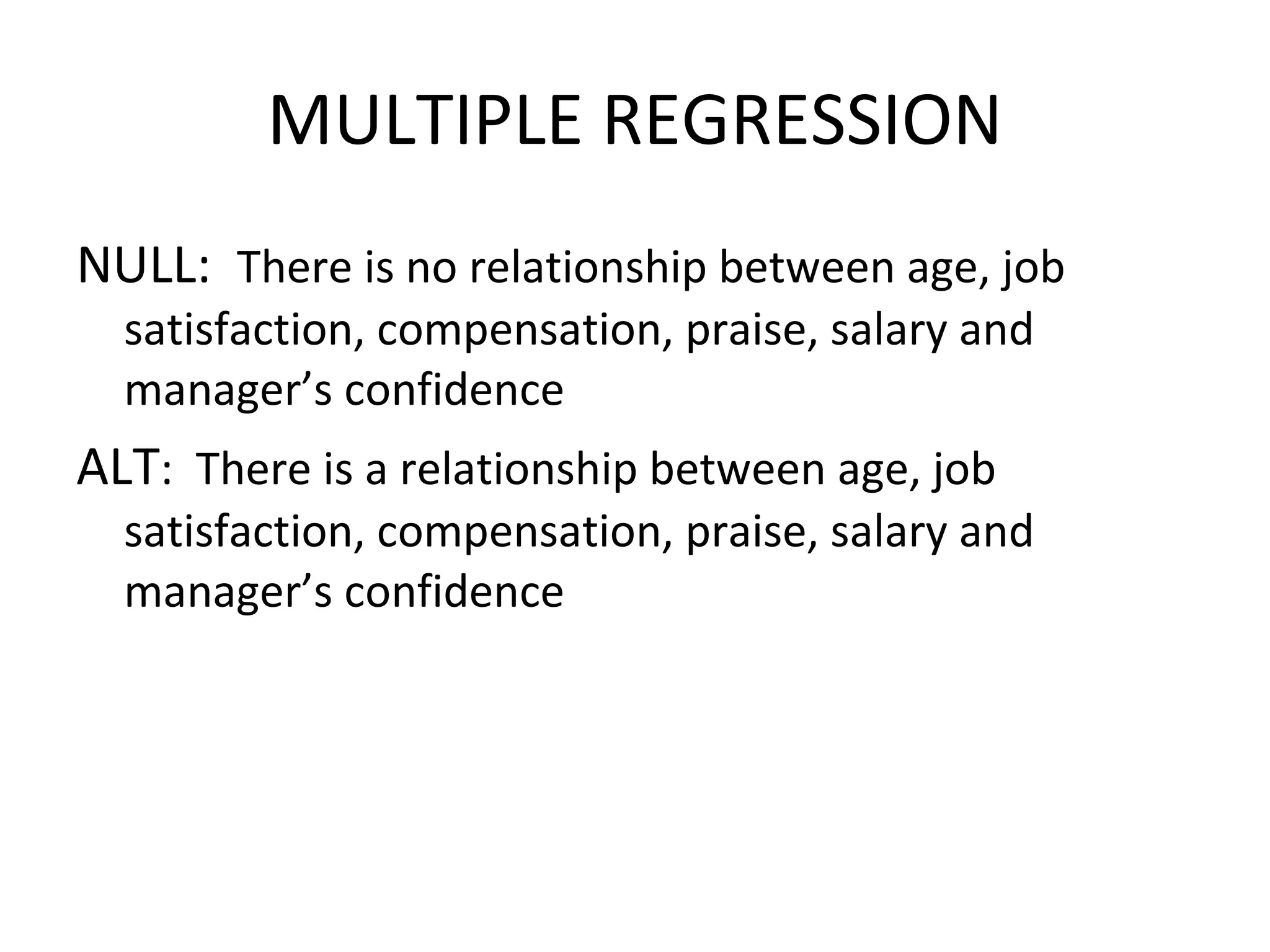
MULTIPLE REGRESSION NULL:  There is no relationship between age, job satisfaction, compensation, praise, salary and manager’s confidence ALT :  There is a relationship between age, job satisfaction, compensation, praise, salary and manager’s confidence
Model Summary Model R R Square A R Sq Std. Error  1   .946 a .894   .892   .161 2   .957 b .915   .910   .146 3   .961 c .924   .918   .140
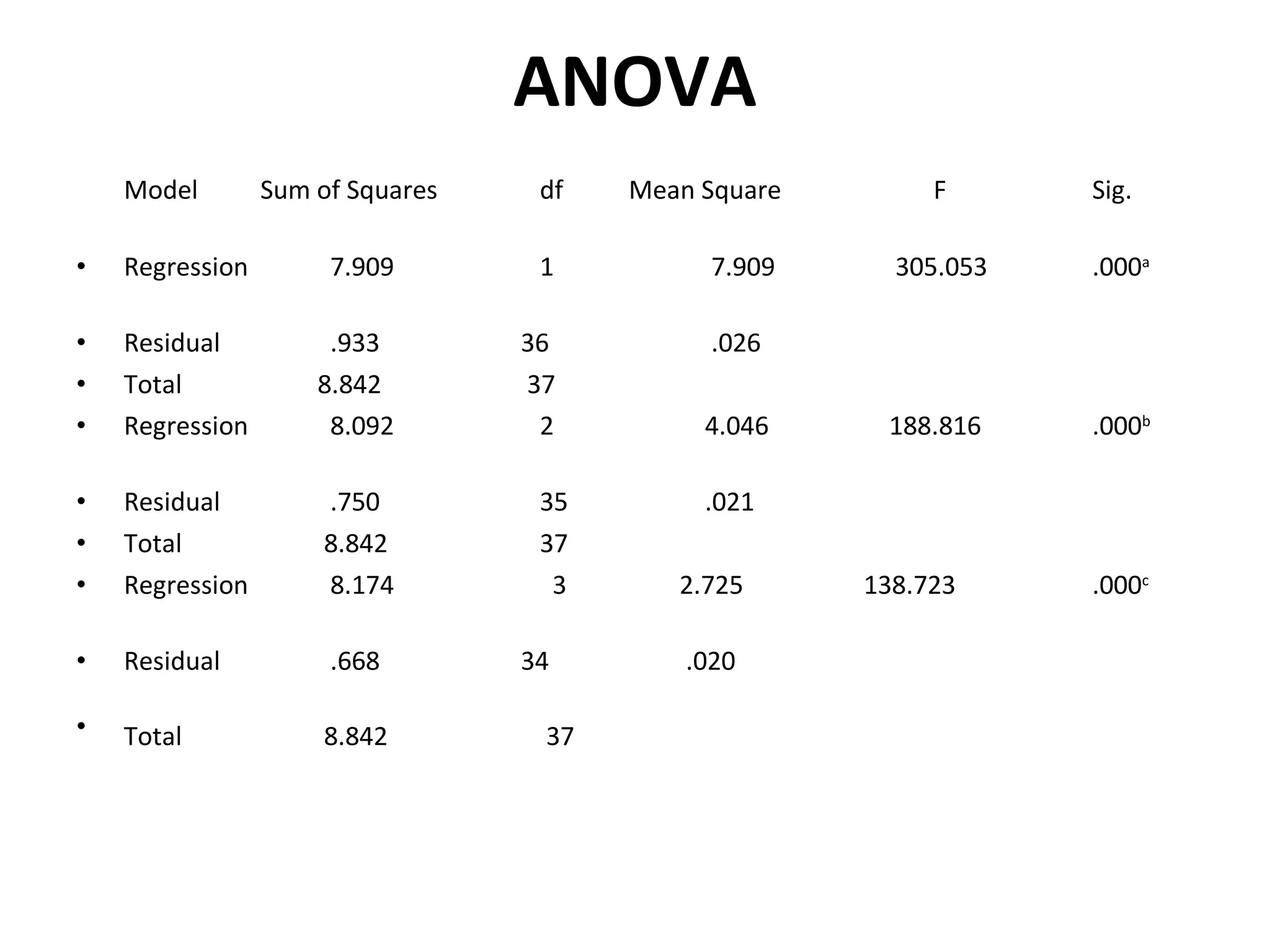
ANOVA Model   Sum of Squares   df   Mean Square   F   Sig. Regression 7.909   1   7.909    305.053  .000 a Residual .933   36   .026 Total   8.842   37 Regression 8.092   2   4.046   188.816 .000 b Residual .750   35   .021 Total   8.842   37 Regression 8.174   3    2.725   138.723  .000 c Residual .668   34   .020 Total   8.842   37
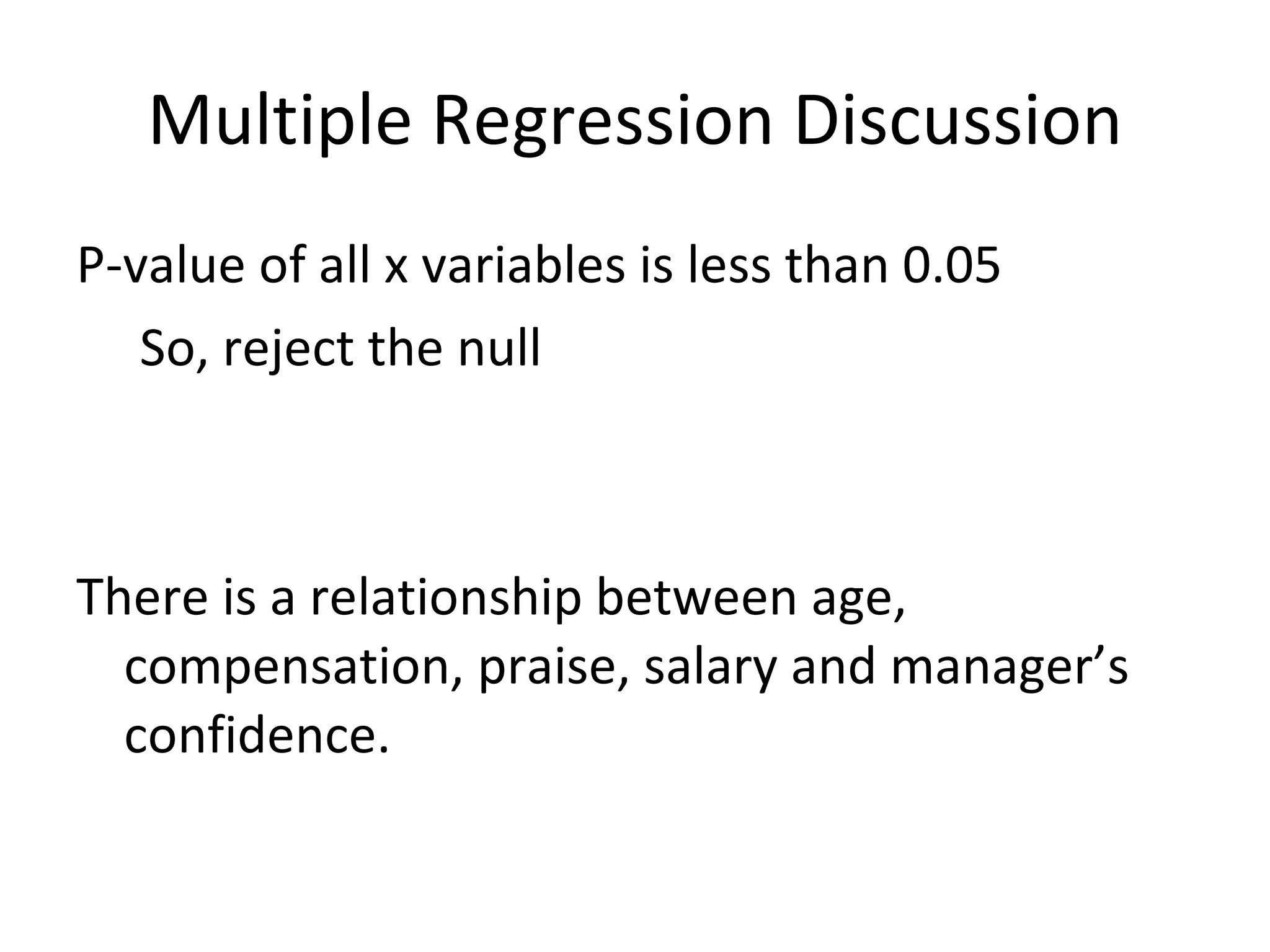
Multiple Regression Discussion P-value of all x variables is less than 0.05 So, reject the null There is a relationship between age, compensation, praise, salary and manager’s confidence.
Conclusions:  Managers must make a greater effort to earn the confidence of younger employees Improvements:  Greater focus on what motivates employees and a more thorough survey Recommendations:  Examine more simple and multiple regression analyses to potentially prioritize a manger’s focus on their employees motivations

generational management

  • 1.
    Generational Management andEmployee Retention Rohini Gandhotra Tom Smith
  • 2.
    Generational Characteristics ** Mixing and Managing Four Generations of Employees, Greg Hammill, FDU Magazine, Winter/Spring 2005
  • 3.
    Research Question: Aremanagement employees content with management to continue working for the company for a long period of time Relevant factors: Employee trust, fulfillment, recognition, salary/benefits, career Target audience: Employees of a single facility/company
  • 4.
    General Dynamics LandSystems Scranton Operations Manufacture of parts for military armored vehicles Three generations currently in management Baby Boomers Generation X Generation Y
  • 5.
    Sampling plan: Samplingvia printed survey performed anonymously to a drop box 41 management personnel at the facility 38 responded Question types: Demographic Multiple Choice Single response Opinion
  • 6.
  • 7.
  • 8.
  • 9.
    Simple Linear RegressionNull: There is no relationship between age and job satisfaction Alt: There is a relationship between age and job satisfaction Variables: Age (x-variable), Job Satisfaction (y-variable)
  • 10.
    Regression Statistics MultipleR 0.419181 R Square 0.175713 Adjusted R Square 0.152816 Standard Error 0.449952 Observations 38
  • 11.
  • 12.
    ANOVA  ANOVA   df SS MS F Sig F Regression 1 1.55 1.5536 7.674 0.0088 Residual 36 7.288 0.202 Total 37 8.842 0.0088 < 0.05 so, reject the Null There is a relationship between age and job satisfaction      
  • 13.
    Model Summary ModelR R Square Adjusted R Square Std. Error of the Estimate 1 .946 a .894 .892 .161 2 .957 b .915 .910 .146 3 .961 c .924 .918 .140 a. Predictors: (Constant), compensation b. Predictors: (Constant), compensation, praise c. Predictors: (Constant), compensation, praise, salary vs leadership
  • 14.
    MULTIPLE REGRESSION NULL: There is no relationship between age, job satisfaction, compensation, praise, salary and manager’s confidence ALT : There is a relationship between age, job satisfaction, compensation, praise, salary and manager’s confidence
  • 15.
    Model Summary ModelR R Square A R Sq Std. Error 1 .946 a .894 .892 .161 2 .957 b .915 .910 .146 3 .961 c .924 .918 .140
  • 16.
    ANOVA Model Sum of Squares df Mean Square F Sig. Regression 7.909 1 7.909 305.053 .000 a Residual .933 36 .026 Total 8.842 37 Regression 8.092 2 4.046 188.816 .000 b Residual .750 35 .021 Total 8.842 37 Regression 8.174 3 2.725 138.723 .000 c Residual .668 34 .020 Total 8.842 37
  • 17.
    Multiple Regression DiscussionP-value of all x variables is less than 0.05 So, reject the null There is a relationship between age, compensation, praise, salary and manager’s confidence.
  • 18.
    Conclusions: Managersmust make a greater effort to earn the confidence of younger employees Improvements: Greater focus on what motivates employees and a more thorough survey Recommendations: Examine more simple and multiple regression analyses to potentially prioritize a manger’s focus on their employees motivations