Genes and Our Food
Past, present and future
Science is used to improve
our food supply
 “And he gave it for his opinion, that whoever
could make two ears of corn, or two blades of
grass, to grow upon a spot of ground where
only one grew before, would deserve better of
mankind, and do more essential service to his
country, than the whole race of politicians put
together. “
Jonathan Swift in Gulliver’s Travels
Science is used to improve
our food supply
 All food comes from living organisms
 Genetics can be used to improve the
plants and animals we eat
 Many people are not aware of these
facts
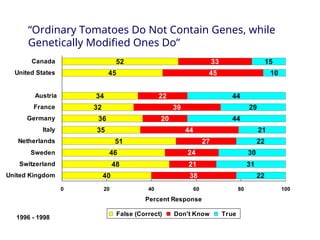
 “Ordinary Tomatoes Do Not Contain
Genes, while Genetically Modified
Ones Do”
“Ordinary Tomatoes Do Not Contain Genes, while
Genetically Modified Ones Do”
1996 - 1998
40
48
46
51
35
36
32
34
45
52
38
21
24
27
44
20
39
22
45
33
22
31
30
22
21
44
29
44
10
15
0 20 40 60 80 100
United Kingdom
Switzerland
Sweden
Netherlands
Italy
Germany
France
Austria
United States
Canada
Percent Response
False (Correct) Don't Know True
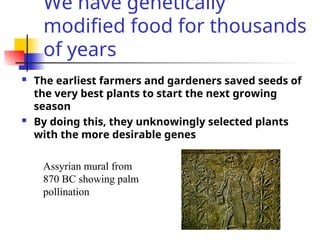
We have genetically
modified food for thousands
of years
 The earliest farmers and gardeners saved seeds of
the very best plants to start the next growing
season
 By doing this, they unknowingly selected plants
with the more desirable genes
Assyrian mural from
870 BC showing palm
pollination
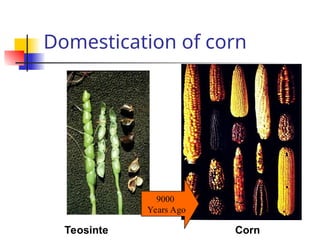
Domestication of corn
Teosinte Corn
9000
Years Ago
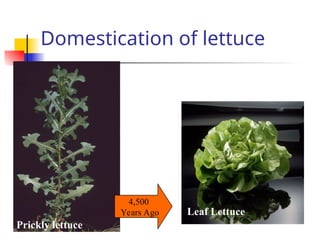
Domestication of lettuce
Leaf Lettuce
Prickly lettuce
4,500
Years Ago
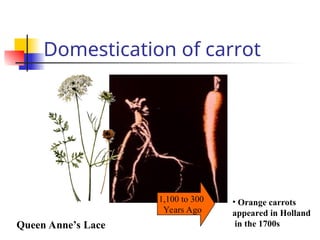
Domestication of carrot
1,100 to 300
Years Ago
Queen Anne’s Lace
• Orange carrots
appeared in Holland
in the 1700s
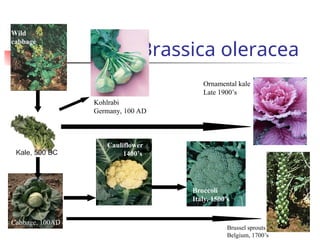
Brassica oleracea
Wild
cabbage
Kohlrabi
Germany, 100 AD
Kale, 500 BC
Cabbage, 100AD
Cauliflower
1400’s
Broccoli
Italy, 1500’s
Brussel sprouts
Belgium, 1700’s
Ornamental kale
Late 1900’s
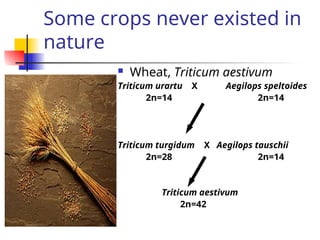
Some crops never existed in
nature
 Wheat, Triticum aestivum
Triticum urartu X Aegilops speltoides
2n=14 2n=14
Triticum turgidum X Aegilops tauschii
2n=28 2n=14
Triticum aestivum
2n=42
Biotechnology
Biotechnology
In
In
Agriculture
Agriculture
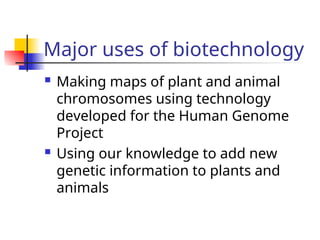
Major uses of biotechnology
 Making maps of plant and animal
chromosomes using technology
developed for the Human Genome
Project
 Using our knowledge to add new
genetic information to plants and
animals
How is this information
obtained?
 Set of techniques that allow us to "rea
d" genes
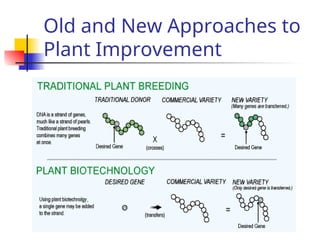
Old and New Approaches to
Plant Improvement
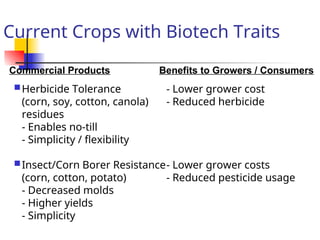
Current Crops with Biotech Traits
Herbicide Tolerance - Lower grower cost
(corn, soy, cotton, canola) - Reduced herbicide
residues
- Enables no-till
- Simplicity / flexibility
Insect/Corn Borer Resistance- Lower grower costs
(corn, cotton, potato) - Reduced pesticide usage
- Decreased molds
- Higher yields
- Simplicity
Commercial Products Benefits to Growers / Consumers
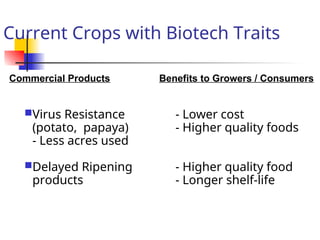
Current Crops with Biotech Traits
Virus Resistance - Lower cost
(potato, papaya) - Higher quality foods
- Less acres used
Delayed Ripening - Higher quality food
products - Longer shelf-life
Commercial Products Benefits to Growers / Consumers
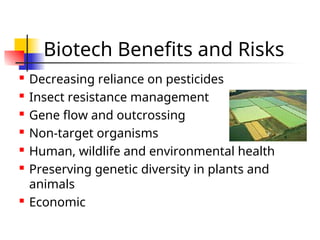
Biotech Benefits and Risks
 Decreasing reliance on pesticides
 Insect resistance management
 Gene flow and outcrossing
 Non-target organisms
 Human, wildlife and environmental health
 Preserving genetic diversity in plants and
animals
 Economic
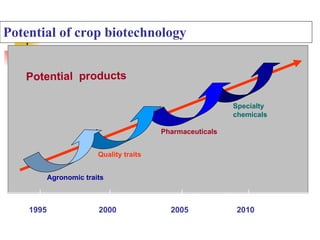
Potential of crop biotechnology
1995 2000 2005 2010
Agronomic traits
Potential products
Quality traits
Pharmaceuticals
Specialty
chemicals
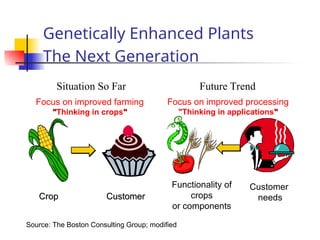
Genetically Enhanced Plants
The Next Generation
Crop
Crop Customer
Customer
Focus on improved farming
"
"Thinking in crops"
"
Focus on improved processing
"Thinking in applications"
"
Functionality of
crops
or components
Customer
needs
Source: The Boston Consulting Group; modified
Situation So Far Future Trend
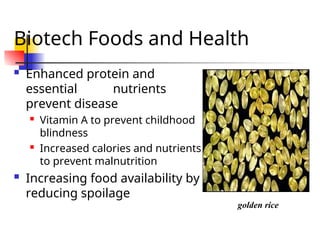
Biotech Foods and Health
 Enhanced protein and
essential nutrients
prevent disease
 Vitamin A to prevent childhood
blindness
 Increased calories and nutrients
to prevent malnutrition
 Increasing food availability by
reducing spoilage
golden rice
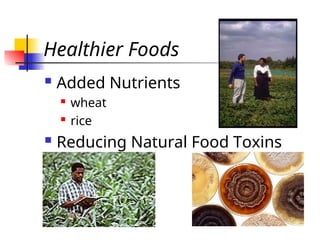
Healthier Foods
 Added Nutrients
 wheat
 rice
 Reducing Natural Food Toxins
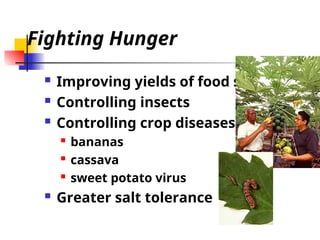
Fighting Hunger
 Improving yields of food staples
 Controlling insects
 Controlling crop diseases
 bananas
 cassava
 sweet potato virus
 Greater salt tolerance
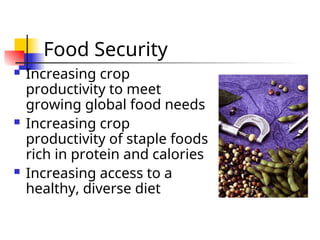
Food Security
 Increasing crop
productivity to meet
growing global food needs
 Increasing crop
productivity of staple foods
rich in protein and calories
 Increasing access to a
healthy, diverse diet
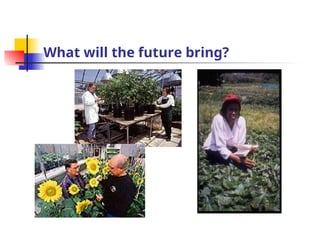
What will the future bring?
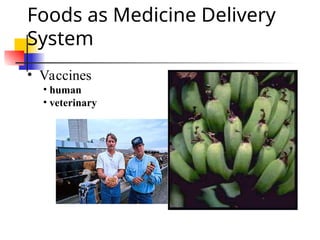
Foods as Medicine Delivery
System
• Vaccines
• human
• veterinary
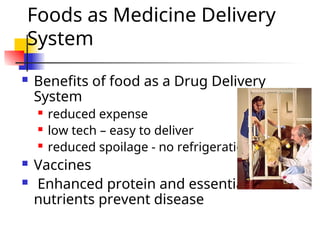
Foods as Medicine Delivery
System
 Benefits of food as a Drug Delivery
System
 reduced expense
 low tech – easy to deliver
 reduced spoilage - no refrigeration
 Vaccines
 Enhanced protein and essential
nutrients prevent disease
Other uses of biotech
 Over 100 drugs on the market developed
with biotech
 Bioremediation
 Industrial biotech
 Improved enzymes in chemical, textile,
pharmaceutical, metal, and energy industries
 Starch and grain processing
 Sweeteners
 Ethanol
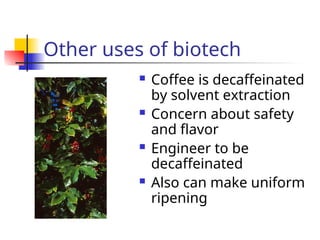
Other uses of biotech
 Coffee is decaffeinated
by solvent extraction
 Concern about safety
and flavor
 Engineer to be
decaffeinated
 Also can make uniform
ripening
Other uses of biotech
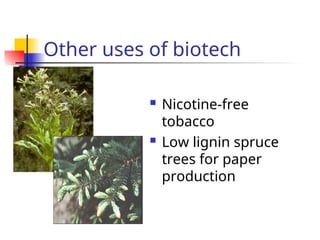
 Nicotine-free
tobacco
 Low lignin spruce
trees for paper
production
Industrial uses
 Cleaning industry
 Detergent proteases
 Textile industry
 Finishing cloth
 Better cotton fibers
 Paper and pulp industry
 Processing with biotech,
environmentally friendly chemicals

GeneandOurFood.ppt...........................

  • 1.
    Genes and OurFood Past, present and future
  • 2.
    Science is usedto improve our food supply  “And he gave it for his opinion, that whoever could make two ears of corn, or two blades of grass, to grow upon a spot of ground where only one grew before, would deserve better of mankind, and do more essential service to his country, than the whole race of politicians put together. “ Jonathan Swift in Gulliver’s Travels
  • 3.
    Science is usedto improve our food supply  All food comes from living organisms  Genetics can be used to improve the plants and animals we eat  Many people are not aware of these facts  “Ordinary Tomatoes Do Not Contain Genes, while Genetically Modified Ones Do”
  • 4.
    “Ordinary Tomatoes DoNot Contain Genes, while Genetically Modified Ones Do” 1996 - 1998 40 48 46 51 35 36 32 34 45 52 38 21 24 27 44 20 39 22 45 33 22 31 30 22 21 44 29 44 10 15 0 20 40 60 80 100 United Kingdom Switzerland Sweden Netherlands Italy Germany France Austria United States Canada Percent Response False (Correct) Don't Know True
  • 5.
    We have genetically modifiedfood for thousands of years  The earliest farmers and gardeners saved seeds of the very best plants to start the next growing season  By doing this, they unknowingly selected plants with the more desirable genes Assyrian mural from 870 BC showing palm pollination
  • 6.
    Domestication of corn TeosinteCorn 9000 Years Ago
  • 7.
    Domestication of lettuce LeafLettuce Prickly lettuce 4,500 Years Ago
  • 8.
    Domestication of carrot 1,100to 300 Years Ago Queen Anne’s Lace • Orange carrots appeared in Holland in the 1700s
  • 9.
    Brassica oleracea Wild cabbage Kohlrabi Germany, 100AD Kale, 500 BC Cabbage, 100AD Cauliflower 1400’s Broccoli Italy, 1500’s Brussel sprouts Belgium, 1700’s Ornamental kale Late 1900’s
  • 10.
    Some crops neverexisted in nature  Wheat, Triticum aestivum Triticum urartu X Aegilops speltoides 2n=14 2n=14 Triticum turgidum X Aegilops tauschii 2n=28 2n=14 Triticum aestivum 2n=42
  • 12.
  • 13.
    Major uses ofbiotechnology  Making maps of plant and animal chromosomes using technology developed for the Human Genome Project  Using our knowledge to add new genetic information to plants and animals
  • 14.
    How is thisinformation obtained?  Set of techniques that allow us to "rea d" genes
  • 15.
    Old and NewApproaches to Plant Improvement
  • 16.
    Current Crops withBiotech Traits Herbicide Tolerance - Lower grower cost (corn, soy, cotton, canola) - Reduced herbicide residues - Enables no-till - Simplicity / flexibility Insect/Corn Borer Resistance- Lower grower costs (corn, cotton, potato) - Reduced pesticide usage - Decreased molds - Higher yields - Simplicity Commercial Products Benefits to Growers / Consumers
  • 17.
    Current Crops withBiotech Traits Virus Resistance - Lower cost (potato, papaya) - Higher quality foods - Less acres used Delayed Ripening - Higher quality food products - Longer shelf-life Commercial Products Benefits to Growers / Consumers
  • 18.
    Biotech Benefits andRisks  Decreasing reliance on pesticides  Insect resistance management  Gene flow and outcrossing  Non-target organisms  Human, wildlife and environmental health  Preserving genetic diversity in plants and animals  Economic
  • 19.
    Potential of cropbiotechnology 1995 2000 2005 2010 Agronomic traits Potential products Quality traits Pharmaceuticals Specialty chemicals
  • 20.
    Genetically Enhanced Plants TheNext Generation Crop Crop Customer Customer Focus on improved farming " "Thinking in crops" " Focus on improved processing "Thinking in applications" " Functionality of crops or components Customer needs Source: The Boston Consulting Group; modified Situation So Far Future Trend
  • 21.
    Biotech Foods andHealth  Enhanced protein and essential nutrients prevent disease  Vitamin A to prevent childhood blindness  Increased calories and nutrients to prevent malnutrition  Increasing food availability by reducing spoilage golden rice
  • 22.
    Healthier Foods  AddedNutrients  wheat  rice  Reducing Natural Food Toxins
  • 23.
    Fighting Hunger  Improvingyields of food staples  Controlling insects  Controlling crop diseases  bananas  cassava  sweet potato virus  Greater salt tolerance
  • 24.
    Food Security  Increasingcrop productivity to meet growing global food needs  Increasing crop productivity of staple foods rich in protein and calories  Increasing access to a healthy, diverse diet
  • 25.
    What will thefuture bring?
  • 26.
    Foods as MedicineDelivery System • Vaccines • human • veterinary
  • 27.
    Foods as MedicineDelivery System  Benefits of food as a Drug Delivery System  reduced expense  low tech – easy to deliver  reduced spoilage - no refrigeration  Vaccines  Enhanced protein and essential nutrients prevent disease
  • 28.
    Other uses ofbiotech  Over 100 drugs on the market developed with biotech  Bioremediation  Industrial biotech  Improved enzymes in chemical, textile, pharmaceutical, metal, and energy industries  Starch and grain processing  Sweeteners  Ethanol
  • 29.
    Other uses ofbiotech  Coffee is decaffeinated by solvent extraction  Concern about safety and flavor  Engineer to be decaffeinated  Also can make uniform ripening
  • 30.
    Other uses ofbiotech  Nicotine-free tobacco  Low lignin spruce trees for paper production
  • 31.
    Industrial uses  Cleaningindustry  Detergent proteases  Textile industry  Finishing cloth  Better cotton fibers  Paper and pulp industry  Processing with biotech, environmentally friendly chemicals