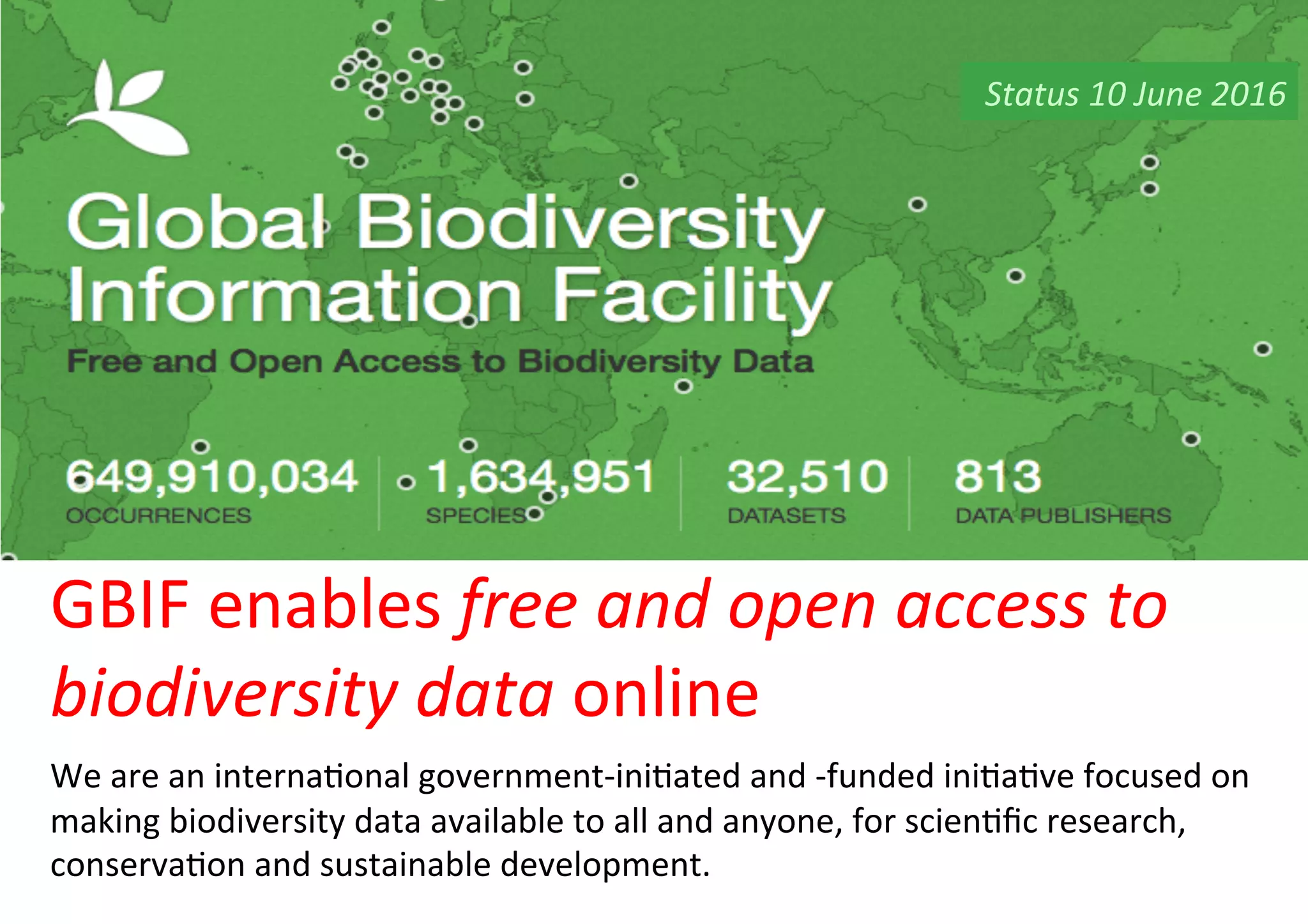
GBIF	enables	free	and	open	access	to	
biodiversity	data	online		
We	are	an	interna1onal	government-ini1ated	and	-funded	ini1a1ve	focused	on	
making	biodiversity	data	available	to	all	and	anyone,	for	scien1fic	research,	
conserva1on	and	sustainable	development.	
Status	10	June	2016
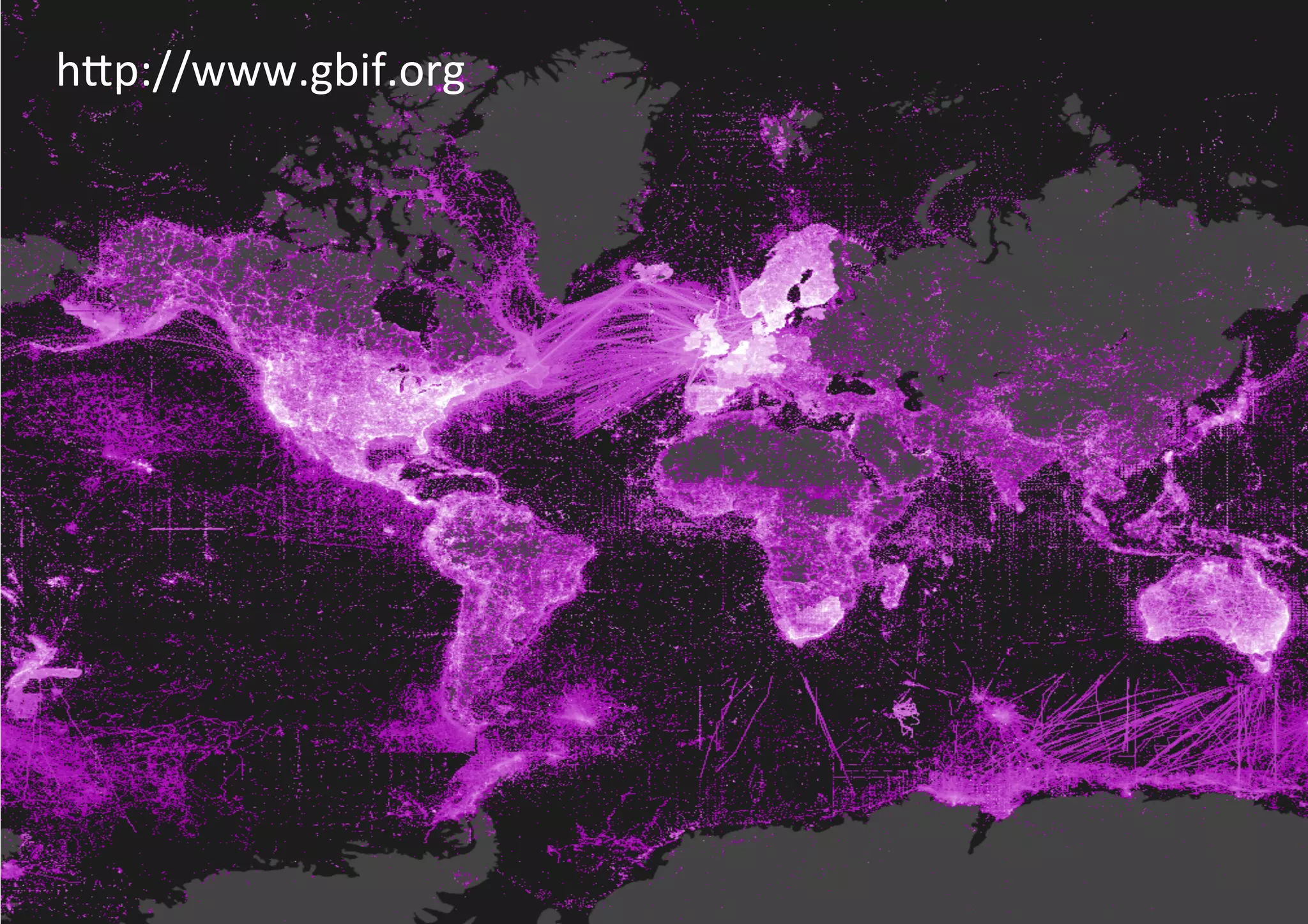
hAp://www.gbif.org
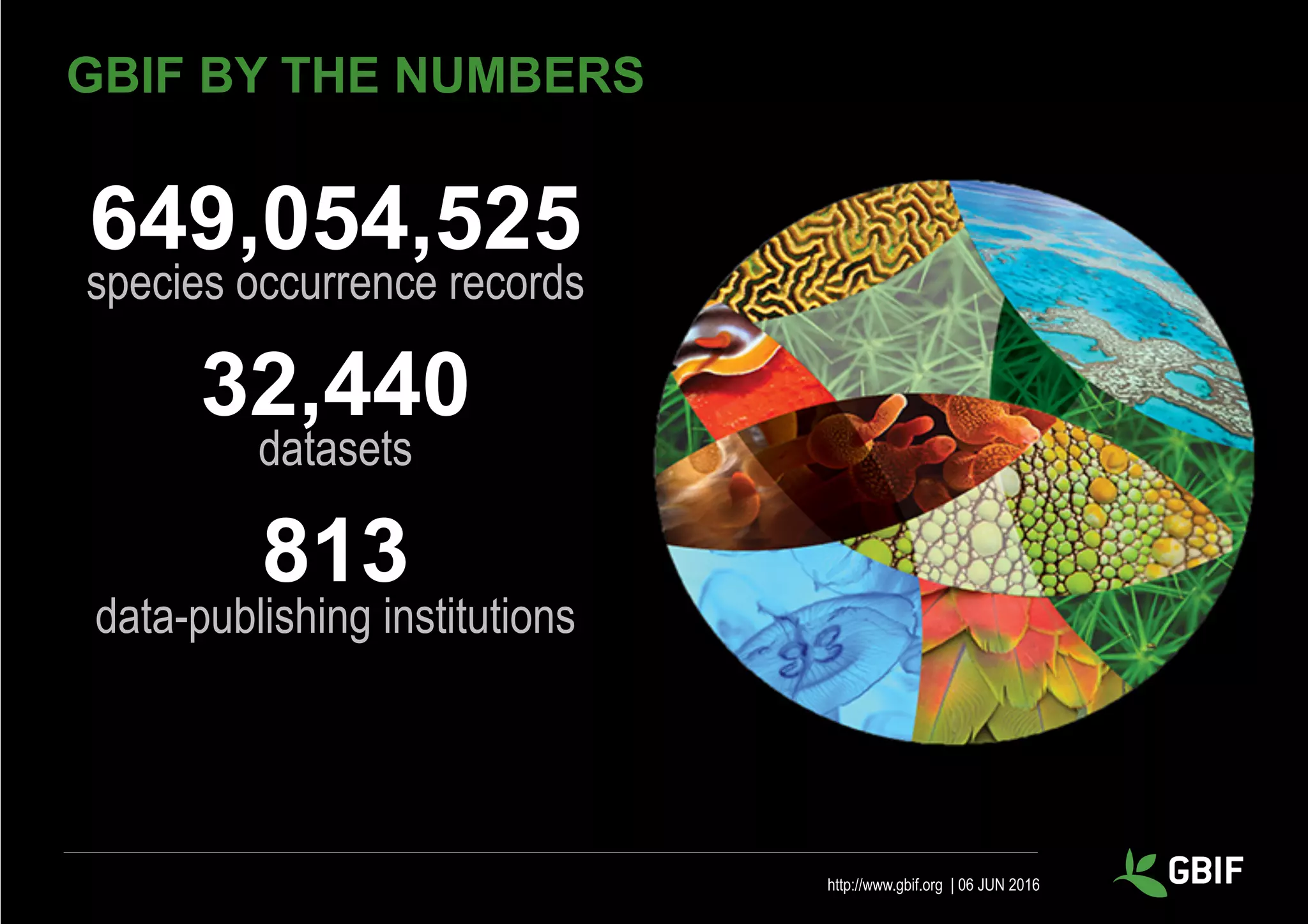
GBIF BY THE NUMBERS
649,054,525
species occurrence records
32,440
datasets
813
data-publishing institutions
http://www.gbif.org | 06 JUN 2016
http://www.gbif.org | 6 JUN 2016
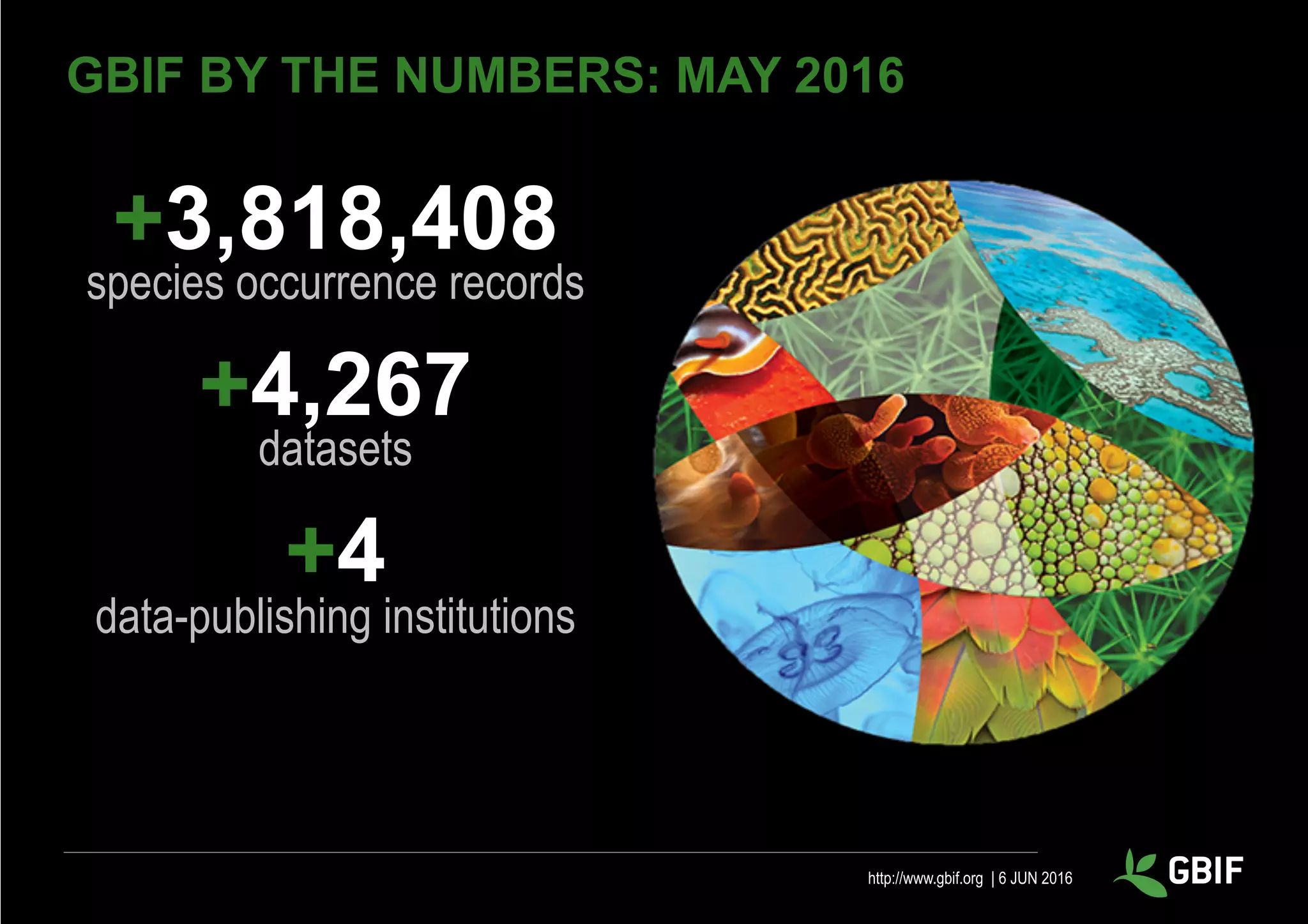
GBIF BY THE NUMBERS: MAY 2016
+3,818,408
species occurrence records
+4,267
datasets
+4
data-publishing institutions
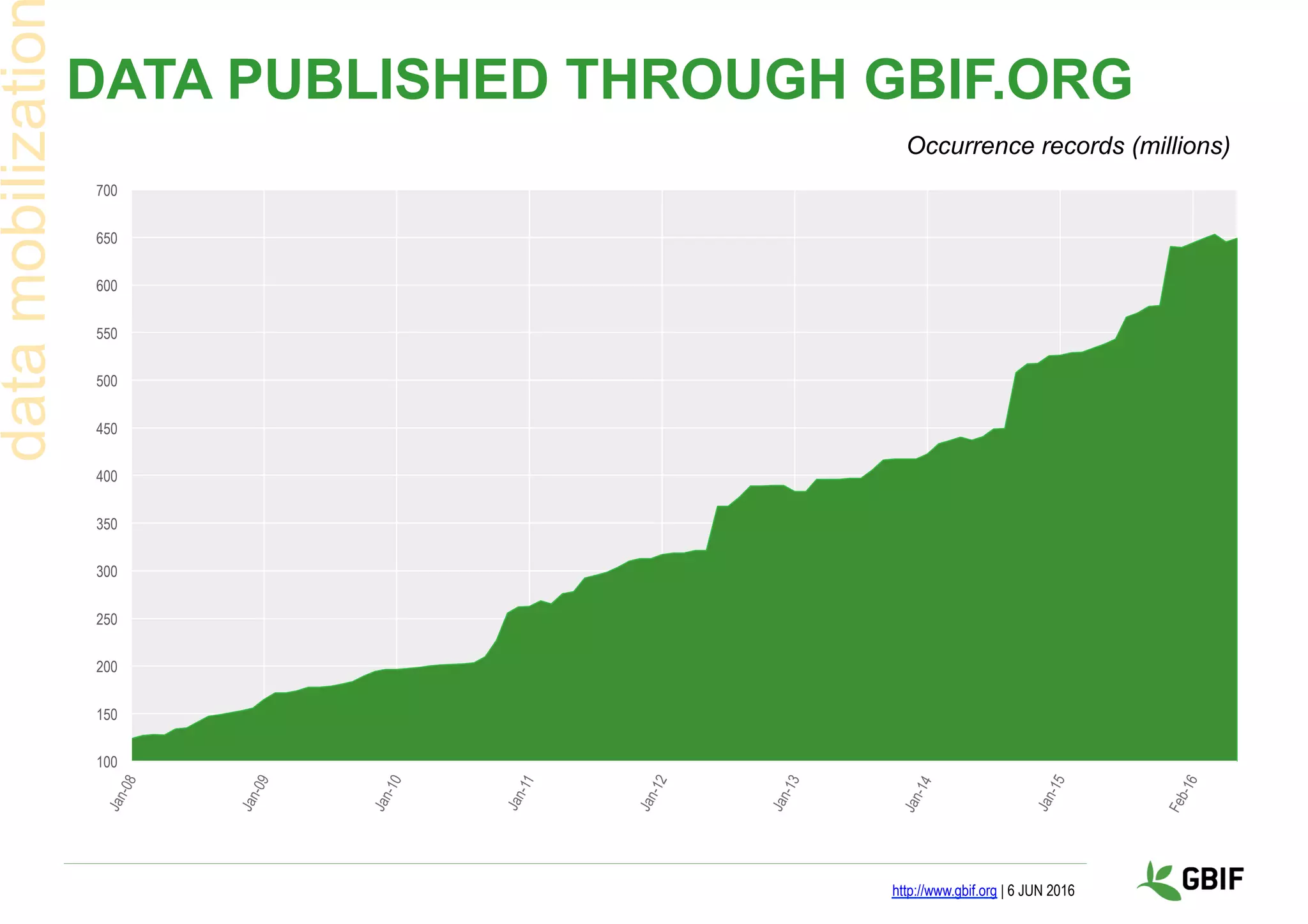
DATA PUBLISHED THROUGH GBIF.ORG
Occurrence records (millions)
datamobilizatio
http://www.gbif.org | 6 JUN 2016
100
150
200
250
300
350
400
450
500
550
600
650
700
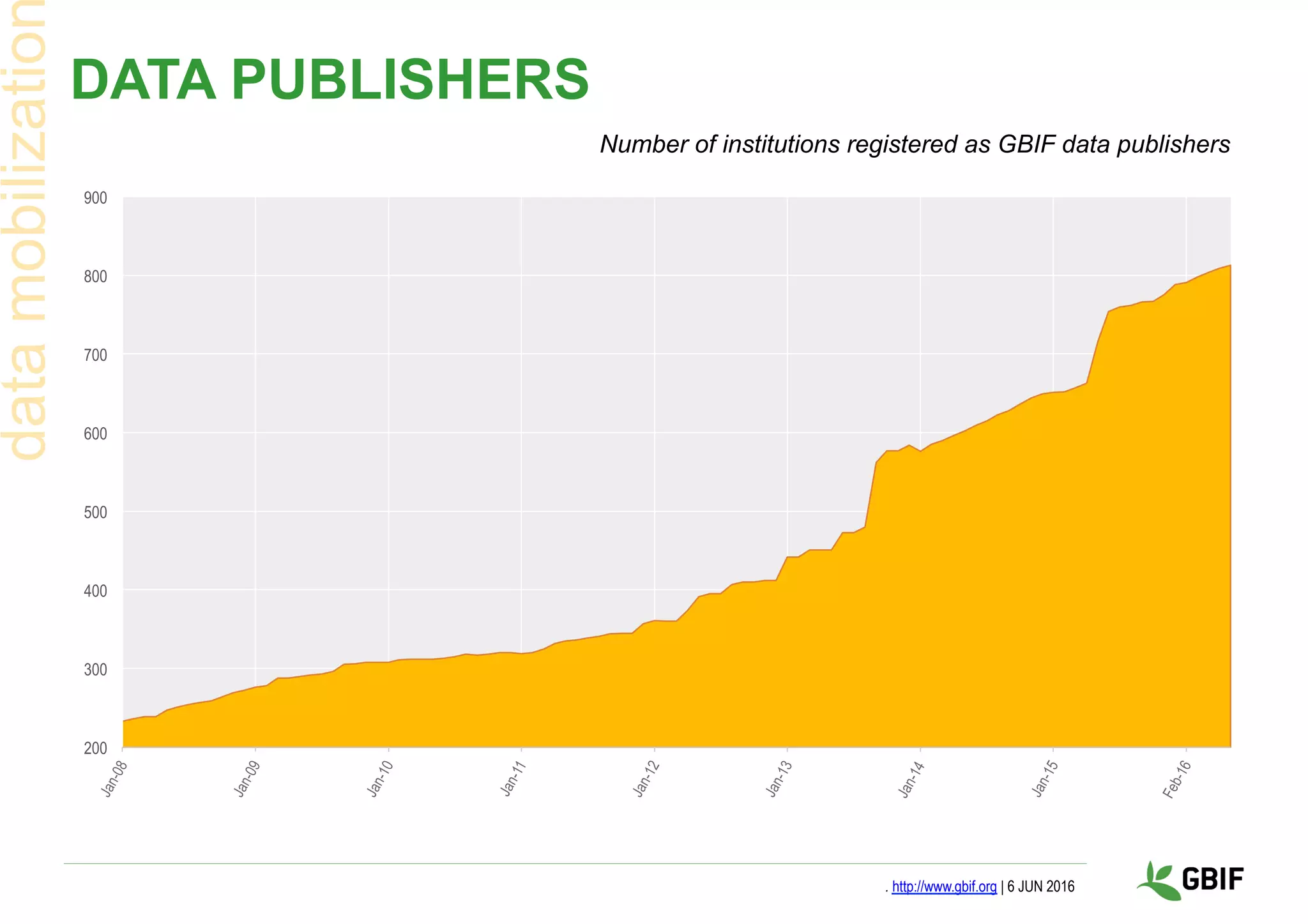
DATA PUBLISHERS
datamobilizatio
Number of institutions registered as GBIF data publishers
. http://www.gbif.org | 6 JUN 2016
200
300
400
500
600
700
800
900
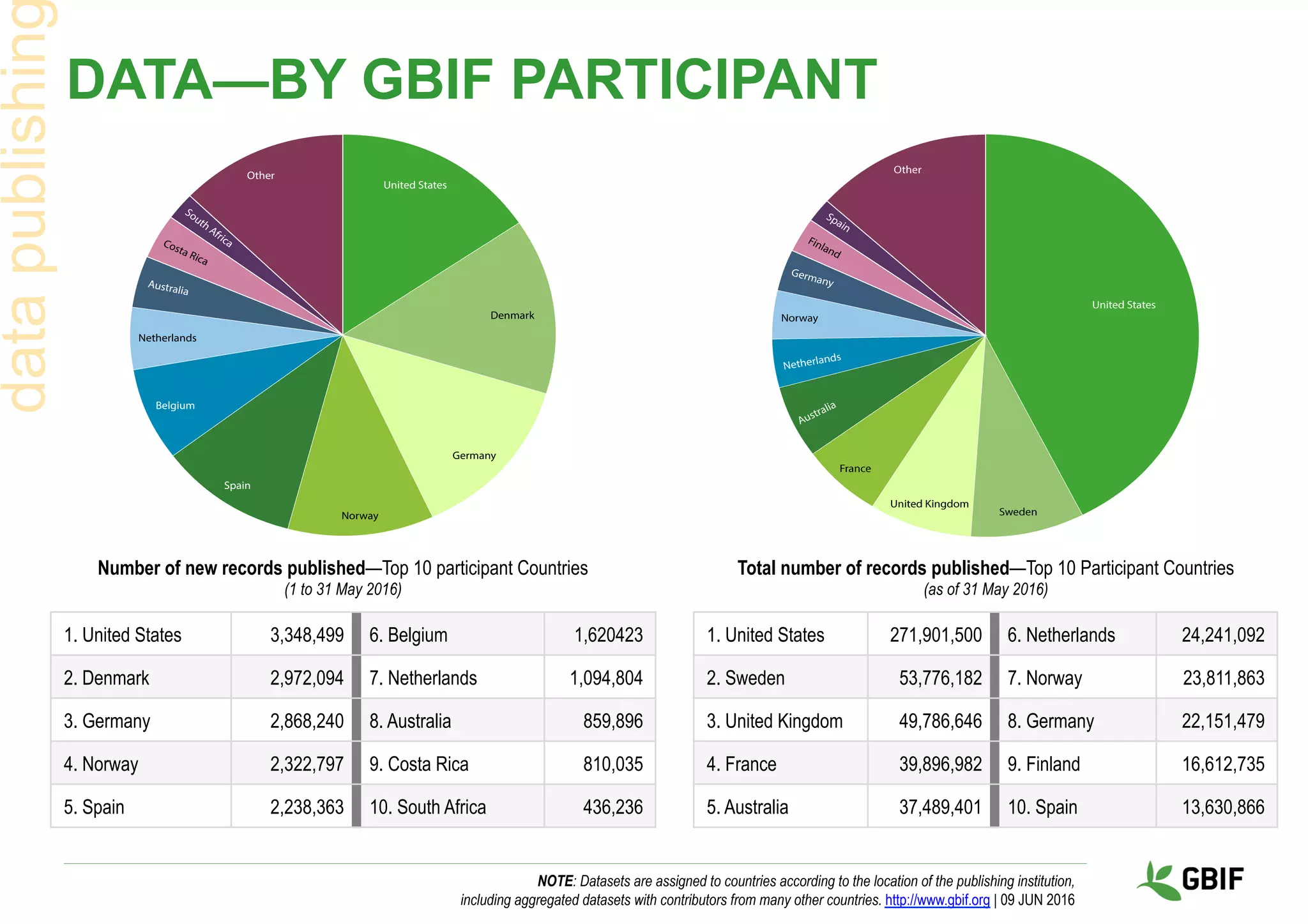
DATA—BY GBIF PARTICIPANT
NOTE: Datasets are assigned to countries according to the location of the publishing institution,
including aggregated datasets with contributors from many other countries. http://www.gbif.org | 09 JUN 2016
datapublishin
1. United States 3,348,499 6. Belgium 1,620423
2. Denmark 2,972,094 7. Netherlands 1,094,804
3. Germany 2,868,240 8. Australia 859,896
4. Norway 2,322,797 9. Costa Rica 810,035
5. Spain 2,238,363 10. South Africa 436,236
1. United States 271,901,500 6. Netherlands 24,241,092
2. Sweden 53,776,182 7. Norway 23,811,863
3. United Kingdom 49,786,646 8. Germany 22,151,479
4. France 39,896,982 9. Finland 16,612,735
5. Australia 37,489,401 10. Spain 13,630,866
Number of new records published—Top 10 participant Countries
(1 to 31 May 2016)
Total number of records published—Top 10 Participant Countries
(as of 31 May 2016)
Other
South AfricaCosta Rica
Australia
Netherlands
Belgium
Spain
Norway
Germany
Denmark
United States
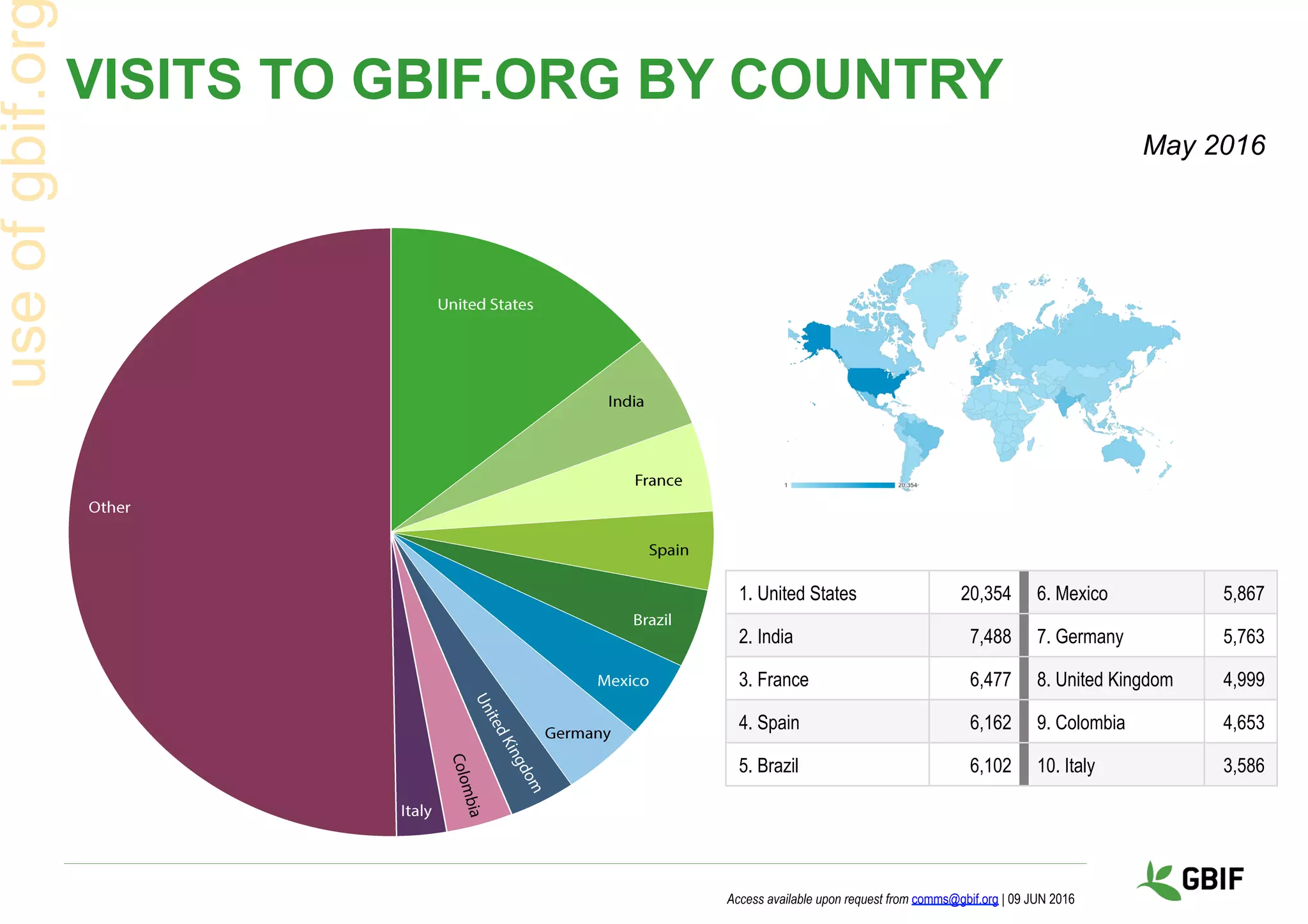
VISITS TO GBIF.ORG BY COUNTRY
Access available upon request from comms@gbif.org | 09 JUN 2016
useofgbif.or
1. United States 20,354 6. Mexico 5,867
2. India 7,488 7. Germany 5,763
3. France 6,477 8. United Kingdom 4,999
4. Spain 6,162 9. Colombia 4,653
5. Brazil 6,102 10. Italy 3,586
May 2016
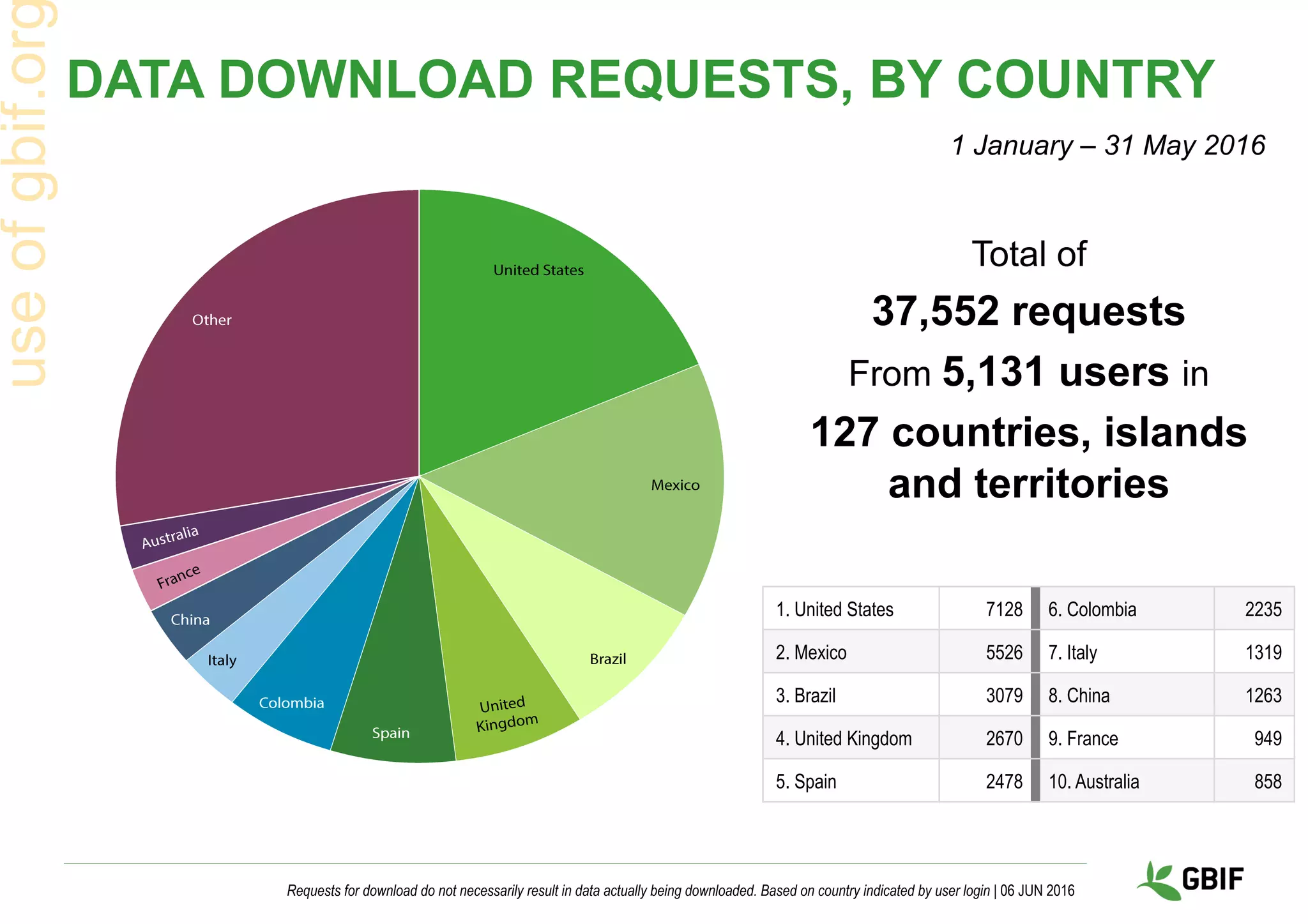
DATA DOWNLOAD REQUESTS, BY COUNTRY
Requests for download do not necessarily result in data actually being downloaded. Based on country indicated by user login | 06 JUN 2016
useofgbif.or
1. United States 7128 6. Colombia 2235
2. Mexico 5526 7. Italy 1319
3. Brazil 3079 8. China 1263
4. United Kingdom 2670 9. France 949
5. Spain 2478 10. Australia 858
Total of
37,552 requests
From 5,131 users in
127 countries, islands
and territories
1 January – 31 May 2016
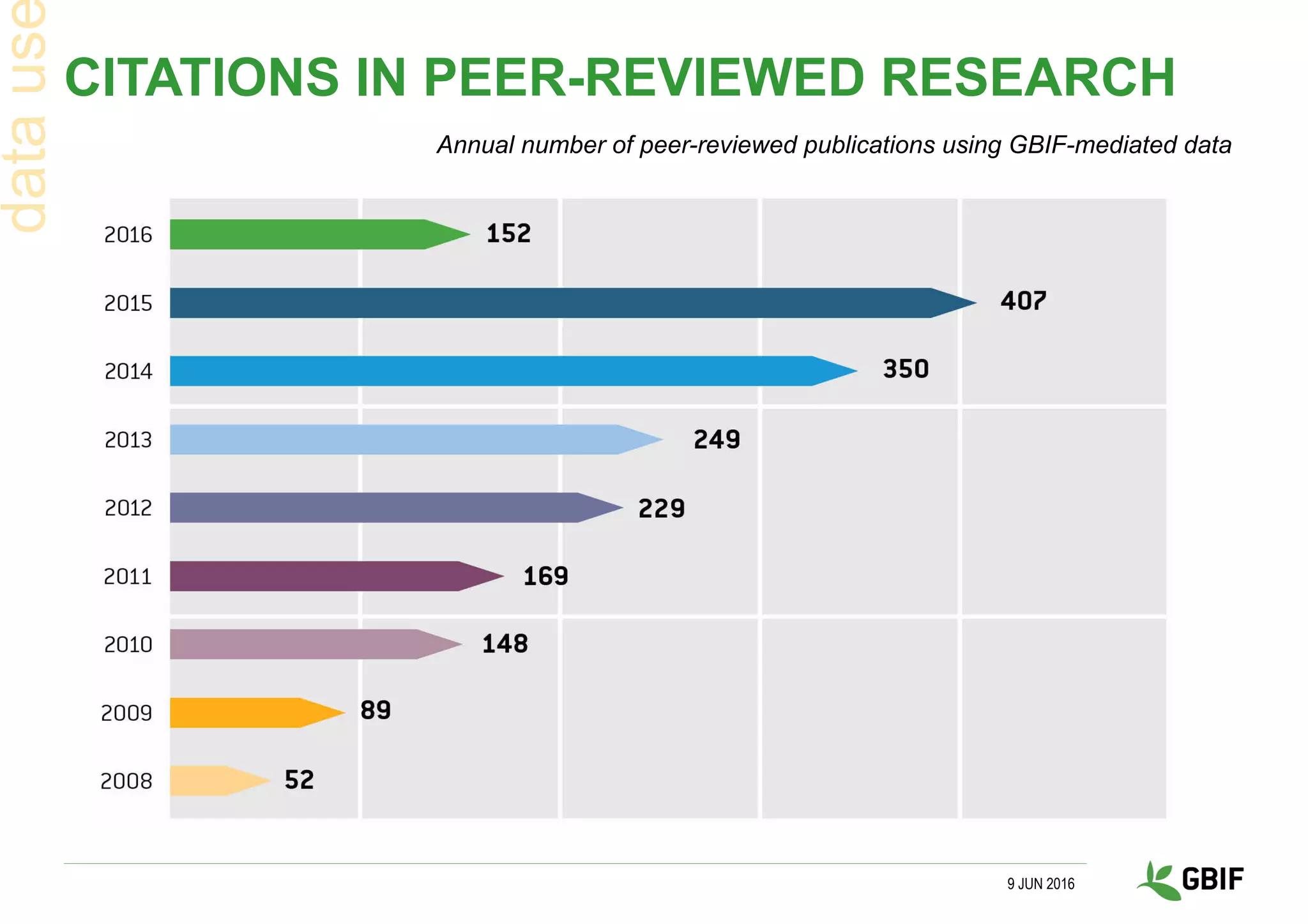
CITATIONS IN PEER-REVIEWED RESEARCH
9 JUN 2016
dataus
Annual number of peer-reviewed publications using GBIF-mediated data
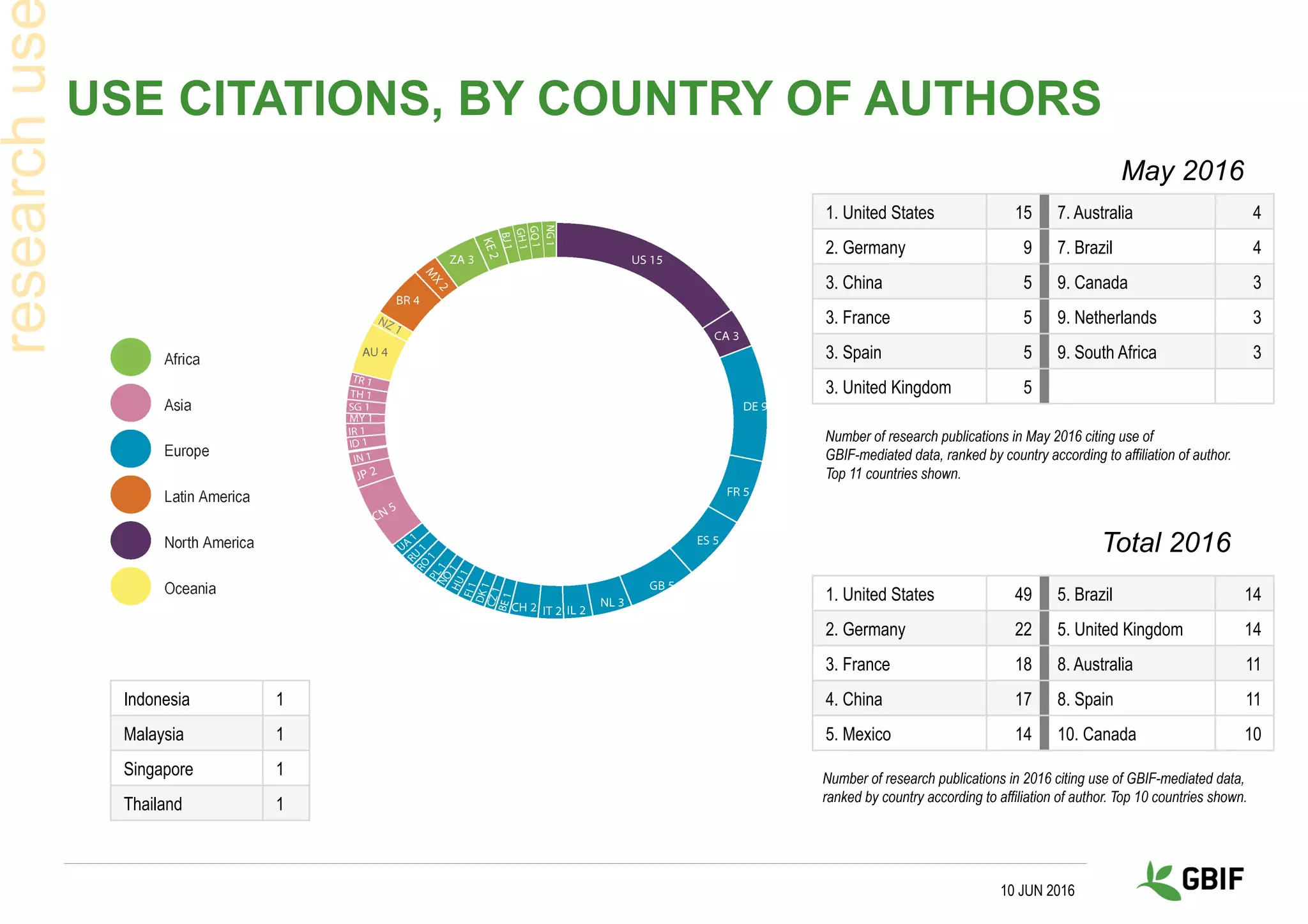
USE CITATIONS, BY COUNTRY OF AUTHORS
10 JUN 2016
researchus
Total 2016
Number of research publications in 2016 citing use of GBIF-mediated data,
ranked by country according to affiliation of author. Top 10 countries shown.
May 2016
Number of research publications in May 2016 citing use of
GBIF-mediated data, ranked by country according to affiliation of author.
Top 11 countries shown.
1. United States 49 5. Brazil 14
2. Germany 22 5. United Kingdom 14
3. France 18 8. Australia 11
4. China 17 8. Spain 11
5. Mexico 14 10. Canada 10
1. United States 15 7. Australia 4
2. Germany 9 7. Brazil 4
3. China 5 9. Canada 3
3. France 5 9. Netherlands 3
3. Spain 5 9. South Africa 3
3. United Kingdom 5
Indonesia 1
Malaysia 1
Singapore 1
Thailand 1
About GBIF
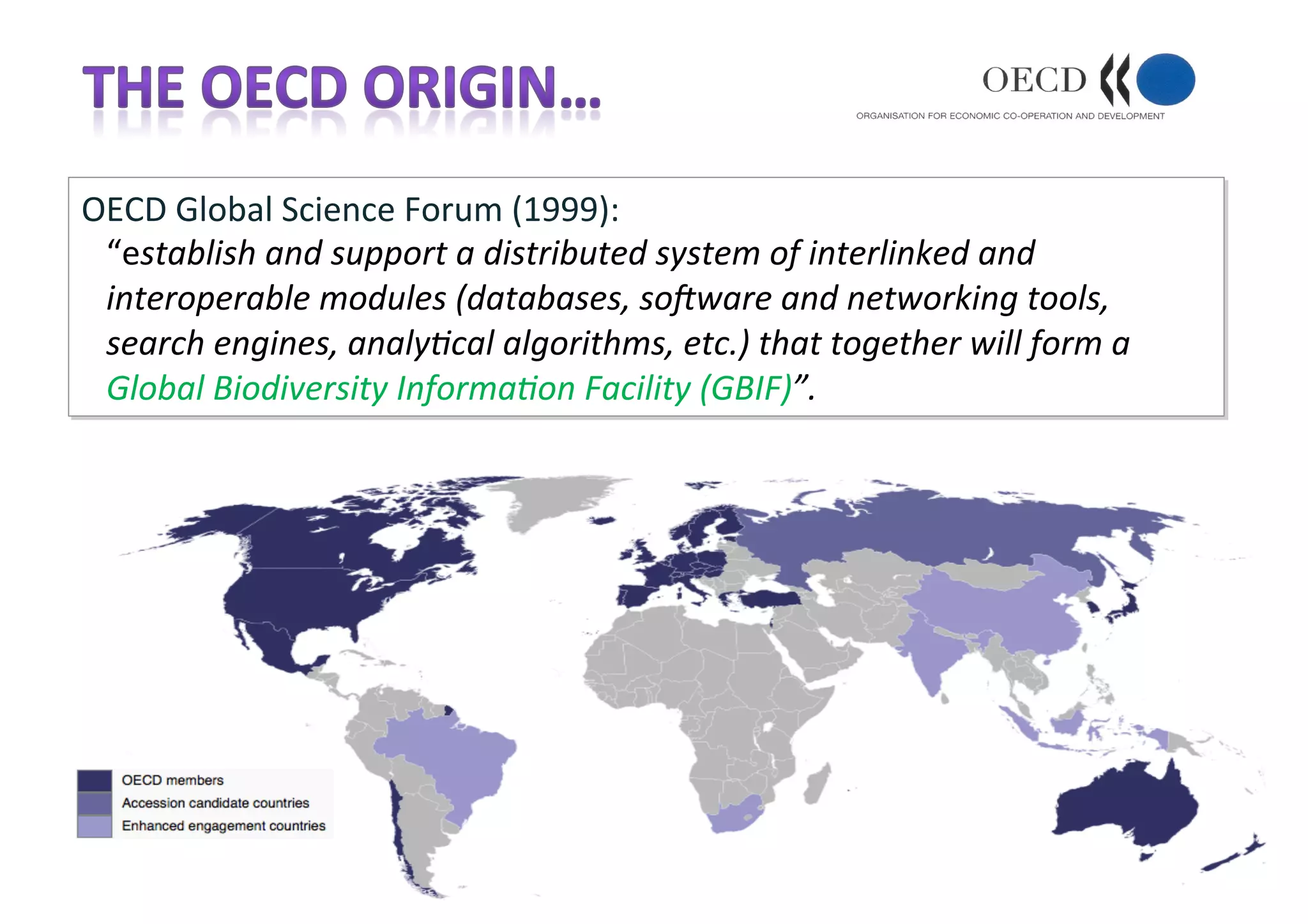
OECD	Global	Science	Forum	(1999):	
“establish	and	support	a	distributed	system	of	interlinked	and	
interoperable	modules	(databases,	so>ware	and	networking	tools,	
search	engines,	analyAcal	algorithms,	etc.)	that	together	will	form	a	
Global	Biodiversity	InformaAon	Facility	(GBIF)”.
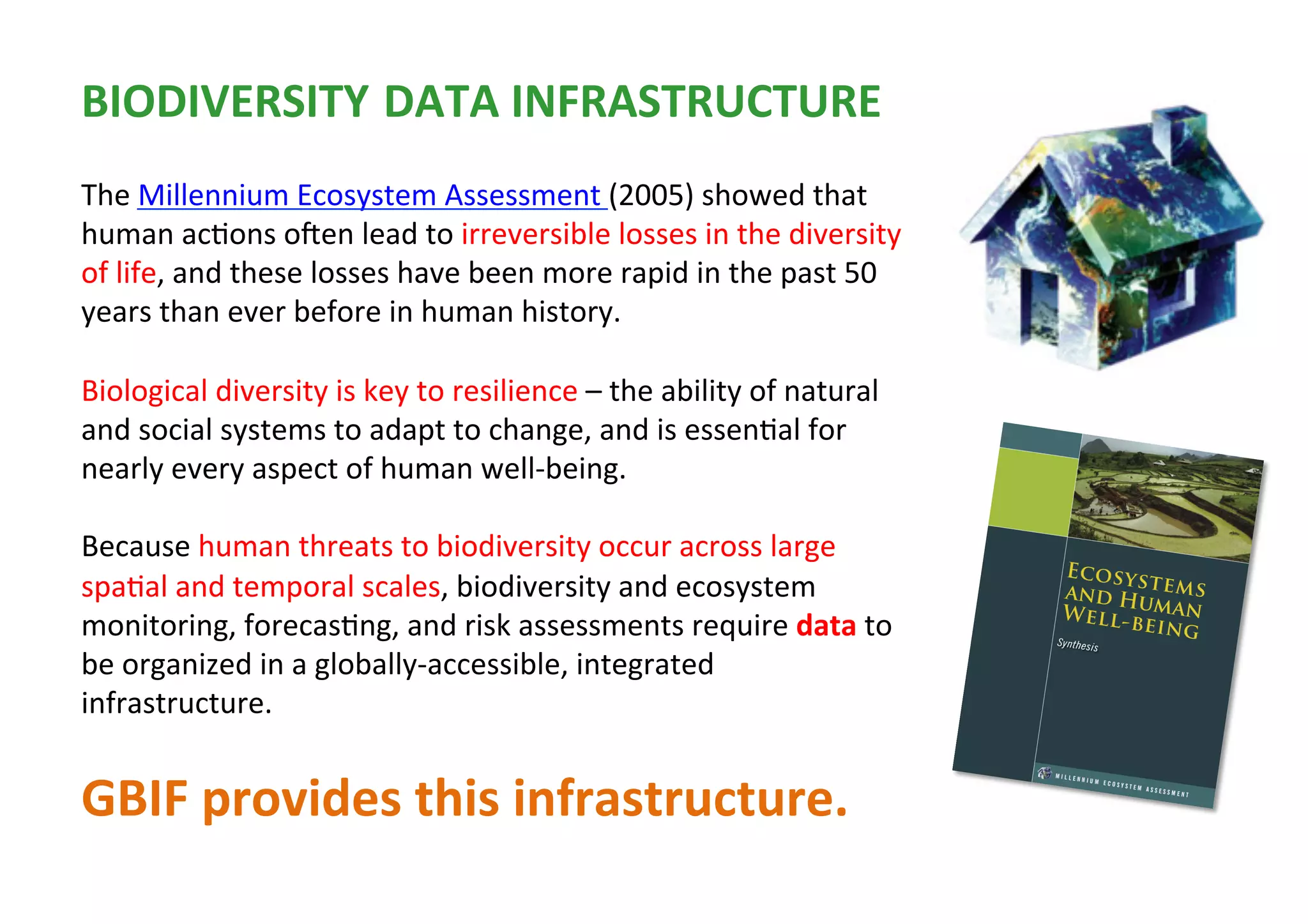
The	Millennium	Ecosystem	Assessment	(2005)	showed	that	
human	ac1ons	oUen	lead	to	irreversible	losses	in	the	diversity	
of	life,	and	these	losses	have	been	more	rapid	in	the	past	50	
years	than	ever	before	in	human	history.		
	
Biological	diversity	is	key	to	resilience	–	the	ability	of	natural	
and	social	systems	to	adapt	to	change,	and	is	essen1al	for	
nearly	every	aspect	of	human	well-being.	
	
Because	human	threats	to	biodiversity	occur	across	large	
spa1al	and	temporal	scales,	biodiversity	and	ecosystem	
monitoring,	forecas1ng,	and	risk	assessments	require	data	to	
be	organized	in	a	globally-accessible,	integrated	
infrastructure.		
	
GBIF	provides	this	infrastructure.		
BIODIVERSITY DATA	INFRASTRUCTURE
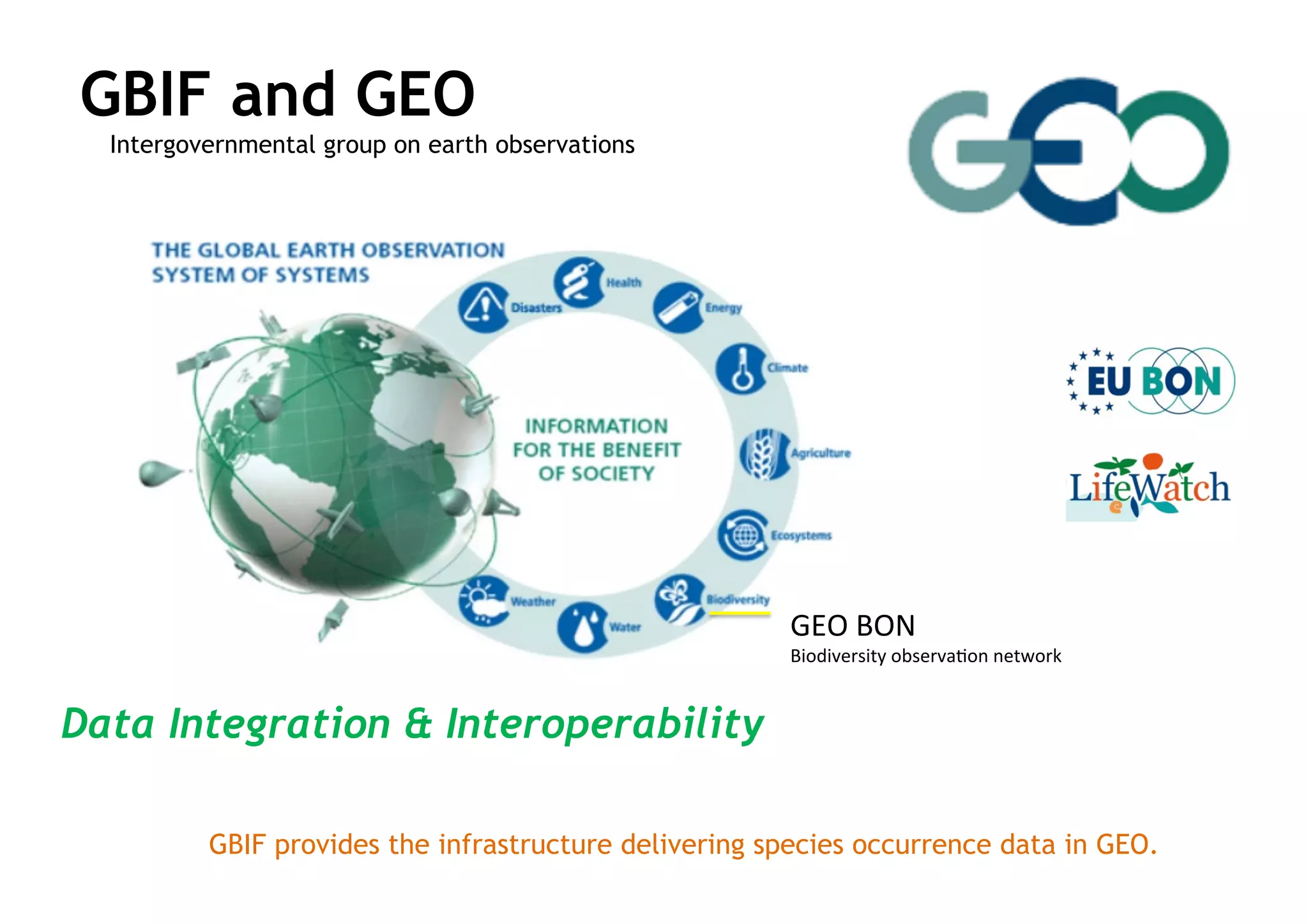
GBIF and GEO
Intergovernmental group on earth observations
Data Integration & Interoperability
GBIF provides the infrastructure delivering species occurrence data in GEO.
GEO	BON	
Biodiversity	observa1on	network
ORGANIZATIONAL	PARTNERSHIPS	
– Taxon	names	and	nomenclature	
•  Catalog	of	Life	(CoL)	
•  IPT	to	publish	global	and	regional	species	checklists	
•  GBIF	infrastructure	to	support	construc1on	of	CoL	
– Biodiversity	literature	
•  Biodiversity	Heritage	Library	(BHL)	
•  User	annota1ons	to	extract	occurrence	records	
•  Link	original	(and	other)	descrip1ons	to	taxonomy	
– Species	informa1on	and	traits	
•  Encyclopedia	of	Life	(EoL)	
•  Support	EOL	as	global	species	informa1on	aggregator	
•  Include	EOL	summary	box	on	each	GBIF	species	page	
Modified	from	slide	by	Donald	Hobern
GBIF’S	UNIQUE	ROLE	
•  Registry	of	biodiversity	data	resources.	
•  Tools	and	support	for	biodiversity	data	publica1on.	
•  Network	development	at	na1onal,	regional	and	global	levels.	
•  Global	virtual	natural	history	collec1on.	
•  Cross-domain	linkage	between	data	from	collec1ons,	ecology	
and	genomics.	
•  Access	to	global	biodiversity	data	for	GIS	analysis	and	
environmental	monitoring.	
Modified	from	slide	by	Donald	Hobern
GBIF participation
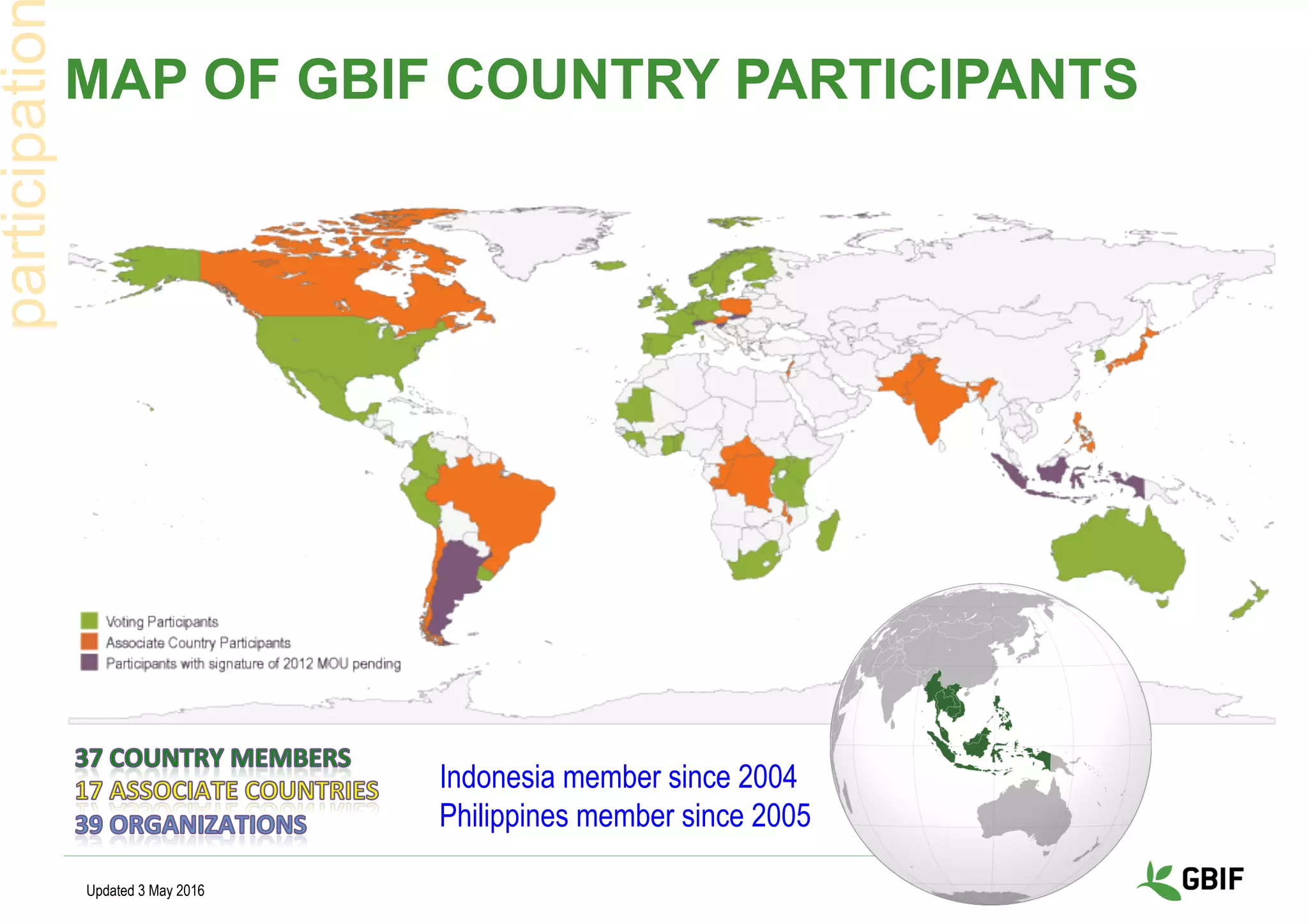
MAP OF GBIF COUNTRY PARTICIPANTS
Updated 3 May 2016
participatio
Indonesia member since 2004
Philippines member since 2005
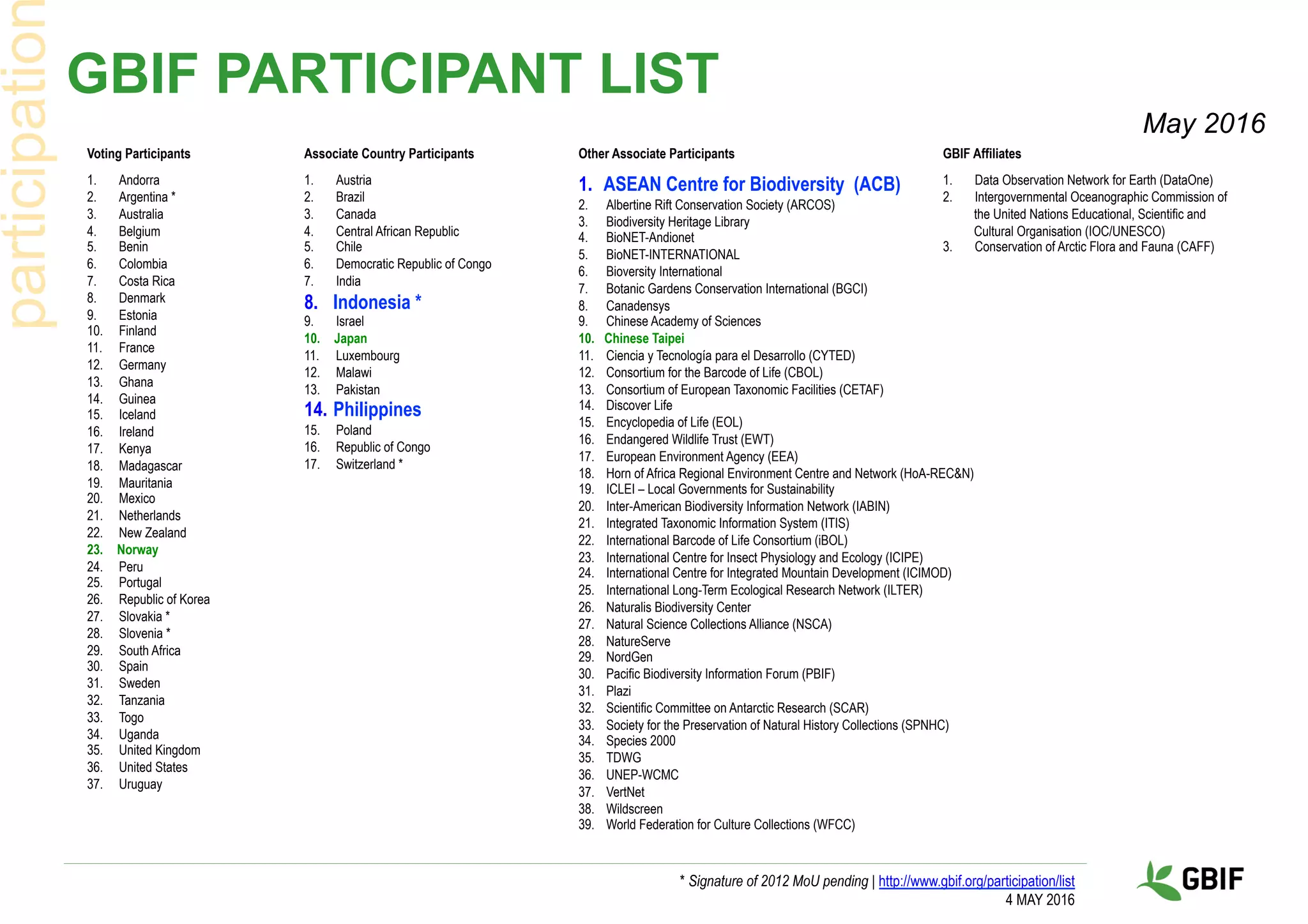
GBIF PARTICIPANT LIST
* Signature of 2012 MoU pending | http://www.gbif.org/participation/list
4 MAY 2016
participatio
Voting Participants
1.  Andorra
2.  Argentina *
3.  Australia
4.  Belgium
5.  Benin
6.  Colombia
7.  Costa Rica
8.  Denmark
9.  Estonia
10.  Finland
11.  France
12.  Germany
13.  Ghana
14.  Guinea
15.  Iceland
16.  Ireland
17.  Kenya
18.  Madagascar
19.  Mauritania
20.  Mexico
21.  Netherlands
22.  New Zealand
23.  Norway
24.  Peru
25.  Portugal
26.  Republic of Korea
27.  Slovakia *
28.  Slovenia *
29.  South Africa
30.  Spain
31.  Sweden
32.  Tanzania
33.  Togo
34.  Uganda
35.  United Kingdom
36.  United States
37.  Uruguay
Associate Country Participants
1.  Austria
2.  Brazil
3.  Canada
4.  Central African Republic
5.  Chile
6.  Democratic Republic of Congo
7.  India
8.  Indonesia *
9.  Israel
10.  Japan
11.  Luxembourg
12.  Malawi
13.  Pakistan
14.  Philippines
15.  Poland
16.  Republic of Congo
17.  Switzerland *
Other Associate Participants
1.  ASEAN Centre for Biodiversity (ACB)
2.  Albertine Rift Conservation Society (ARCOS)
3.  Biodiversity Heritage Library
4.  BioNET-Andionet
5.  BioNET-INTERNATIONAL
6.  Bioversity International
7.  Botanic Gardens Conservation International (BGCI)
8.  Canadensys
9.  Chinese Academy of Sciences
10.  Chinese Taipei
11.  Ciencia y Tecnología para el Desarrollo (CYTED)
12.  Consortium for the Barcode of Life (CBOL)
13.  Consortium of European Taxonomic Facilities (CETAF)
14.  Discover Life
15.  Encyclopedia of Life (EOL)
16.  Endangered Wildlife Trust (EWT)
17.  European Environment Agency (EEA)
18.  Horn of Africa Regional Environment Centre and Network (HoA-REC&N)
19.  ICLEI – Local Governments for Sustainability
20.  Inter-American Biodiversity Information Network (IABIN)
21.  Integrated Taxonomic Information System (ITIS)
22.  International Barcode of Life Consortium (iBOL)
23.  International Centre for Insect Physiology and Ecology (ICIPE)
24.  International Centre for Integrated Mountain Development (ICIMOD)
25.  International Long-Term Ecological Research Network (ILTER)
26.  Naturalis Biodiversity Center
27.  Natural Science Collections Alliance (NSCA)
28.  NatureServe
29.  NordGen
30.  Pacific Biodiversity Information Forum (PBIF)
31.  Plazi
32.  Scientific Committee on Antarctic Research (SCAR)
33.  Society for the Preservation of Natural History Collections (SPNHC)
34.  Species 2000
35.  TDWG
36.  UNEP-WCMC
37.  VertNet
38.  Wildscreen
39.  World Federation for Culture Collections (WFCC)
GBIF Affiliates
1.  Data Observation Network for Earth (DataOne)
2.  Intergovernmental Oceanographic Commission of
the United Nations Educational, Scientific and
Cultural Organisation (IOC/UNESCO)
3.  Conservation of Arctic Flora and Fauna (CAFF)
May 2016
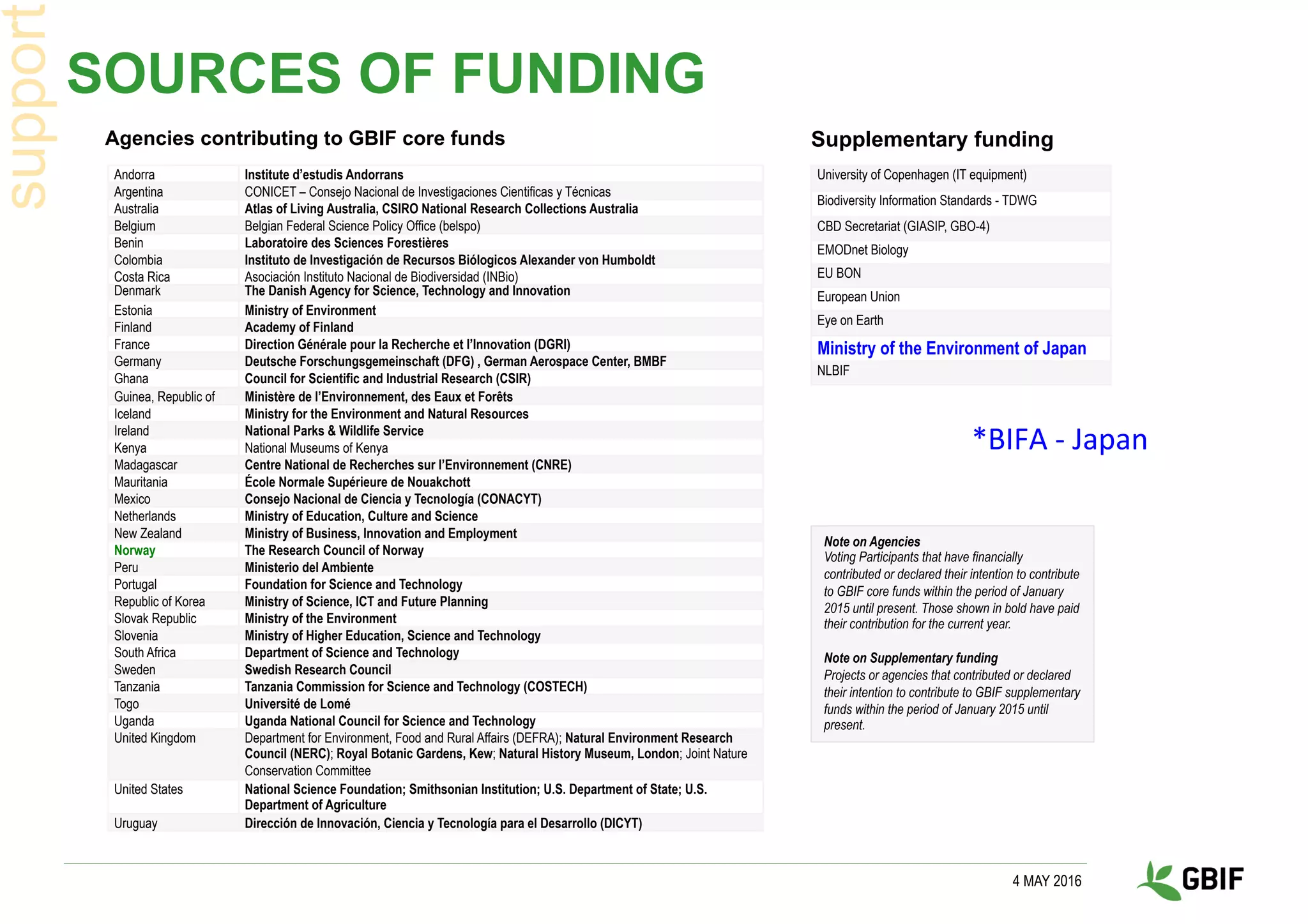
SOURCES OF FUNDING
4 MAY 2016
support
Andorra Institute d’estudis Andorrans
Argentina CONICET – Consejo Nacional de Investigaciones Cientificas y Técnicas
Australia Atlas of Living Australia, CSIRO National Research Collections Australia
Belgium Belgian Federal Science Policy Office (belspo)
Benin Laboratoire des Sciences Forestières
Colombia Instituto de Investigación de Recursos Biólogicos Alexander von Humboldt
Costa Rica Asociación Instituto Nacional de Biodiversidad (INBio)
Denmark The Danish Agency for Science, Technology and Innovation
Estonia Ministry of Environment
Finland Academy of Finland
France Direction Générale pour la Recherche et l’Innovation (DGRI)
Germany Deutsche Forschungsgemeinschaft (DFG) , German Aerospace Center, BMBF
Ghana Council for Scientific and Industrial Research (CSIR)
Guinea, Republic of Ministère de l’Environnement, des Eaux et Forêts
Iceland Ministry for the Environment and Natural Resources
Ireland National Parks & Wildlife Service
Kenya National Museums of Kenya
Madagascar Centre National de Recherches sur l’Environnement (CNRE)
Mauritania École Normale Supérieure de Nouakchott
Mexico Consejo Nacional de Ciencia y Tecnología (CONACYT)
Netherlands Ministry of Education, Culture and Science
New Zealand Ministry of Business, Innovation and Employment
Norway The Research Council of Norway
Peru Ministerio del Ambiente
Portugal Foundation for Science and Technology
Republic of Korea Ministry of Science, ICT and Future Planning
Slovak Republic Ministry of the Environment
Slovenia Ministry of Higher Education, Science and Technology
South Africa Department of Science and Technology
Sweden Swedish Research Council
Tanzania Tanzania Commission for Science and Technology (COSTECH)
Togo Université de Lomé
Uganda Uganda National Council for Science and Technology
United Kingdom Department for Environment, Food and Rural Affairs (DEFRA); Natural Environment Research
Council (NERC); Royal Botanic Gardens, Kew; Natural History Museum, London; Joint Nature
Conservation Committee
United States National Science Foundation; Smithsonian Institution; U.S. Department of State; U.S.
Department of Agriculture
Uruguay Dirección de Innovación, Ciencia y Tecnología para el Desarrollo (DICYT)
Agencies contributing to GBIF core funds Supplementary funding
University of Copenhagen (IT equipment)
Biodiversity Information Standards - TDWG
CBD Secretariat (GIASIP, GBO-4)
EMODnet Biology
EU BON
European Union
Eye on Earth
Ministry of the Environment of Japan
NLBIF
Note on Agencies
Voting Participants that have financially
contributed or declared their intention to contribute
to GBIF core funds within the period of January
2015 until present. Those shown in bold have paid
their contribution for the current year.
Note on Supplementary funding
Projects or agencies that contributed or declared
their intention to contribute to GBIF supplementary
funds within the period of January 2015 until
present.
*BIFA	-	Japan
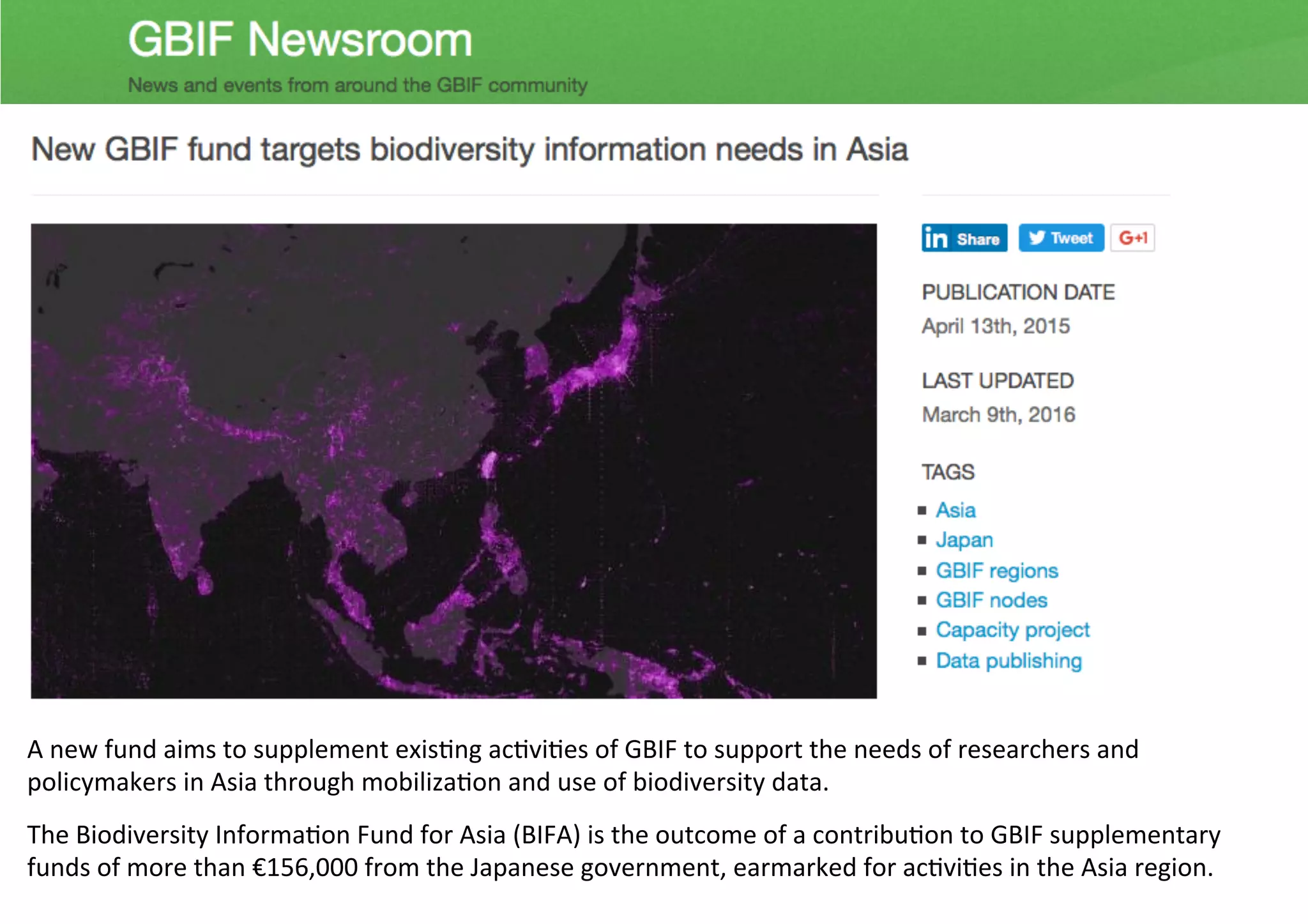
A	new	fund	aims	to	supplement	exis1ng	ac1vi1es	of	GBIF	to	support	the	needs	of	researchers	and	
policymakers	in	Asia	through	mobiliza1on	and	use	of	biodiversity	data.	
The	Biodiversity	Informa1on	Fund	for	Asia	(BIFA)	is	the	outcome	of	a	contribu1on	to	GBIF	supplementary	
funds	of	more	than	€156,000	from	the	Japanese	government,	earmarked	for	ac1vi1es	in	the	Asia	region.
ASEAN and GBIF
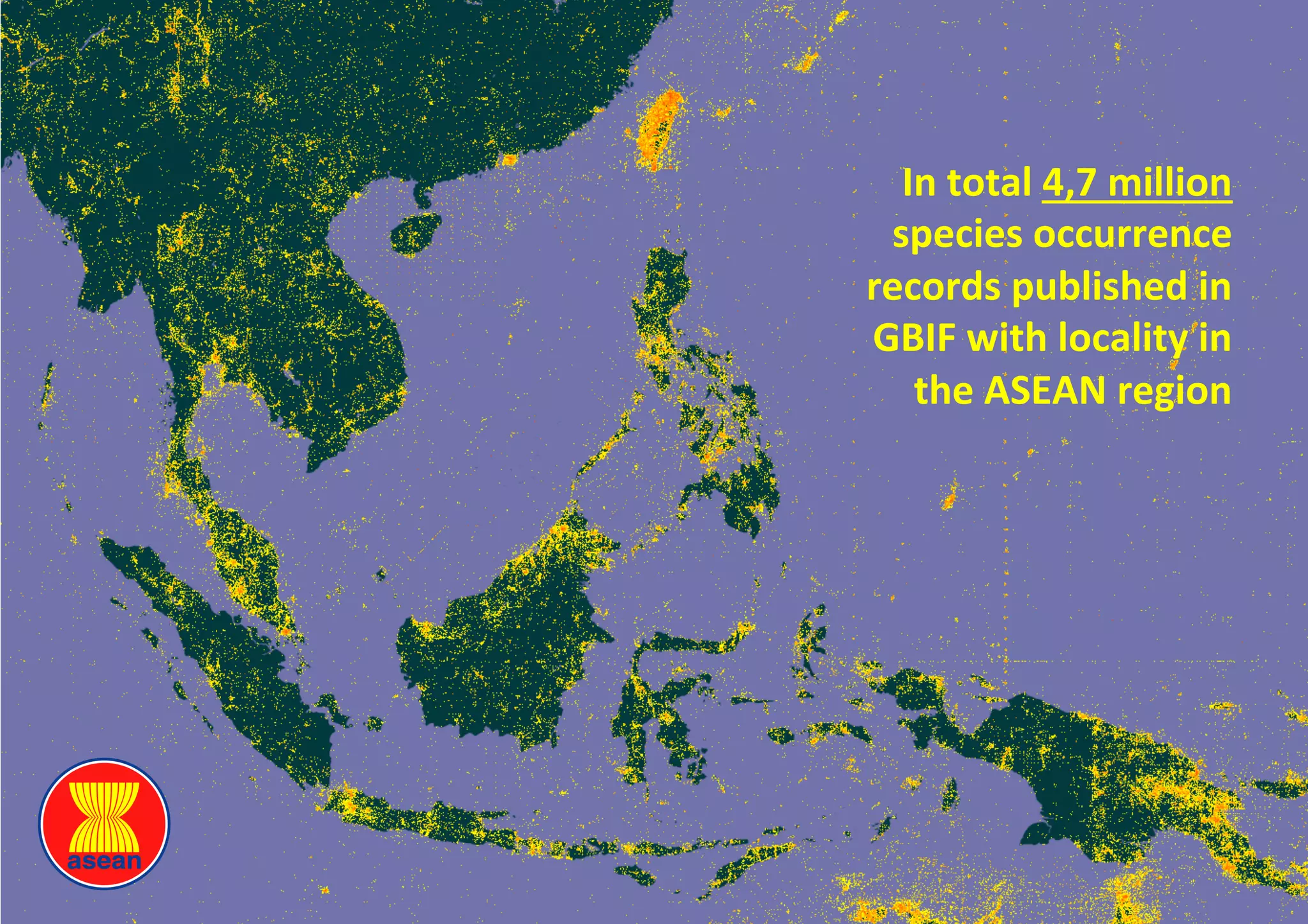
In	total	4,7	million	
species	occurrence	
records	published	in	
GBIF	with	locality	in	
the	ASEAN	region
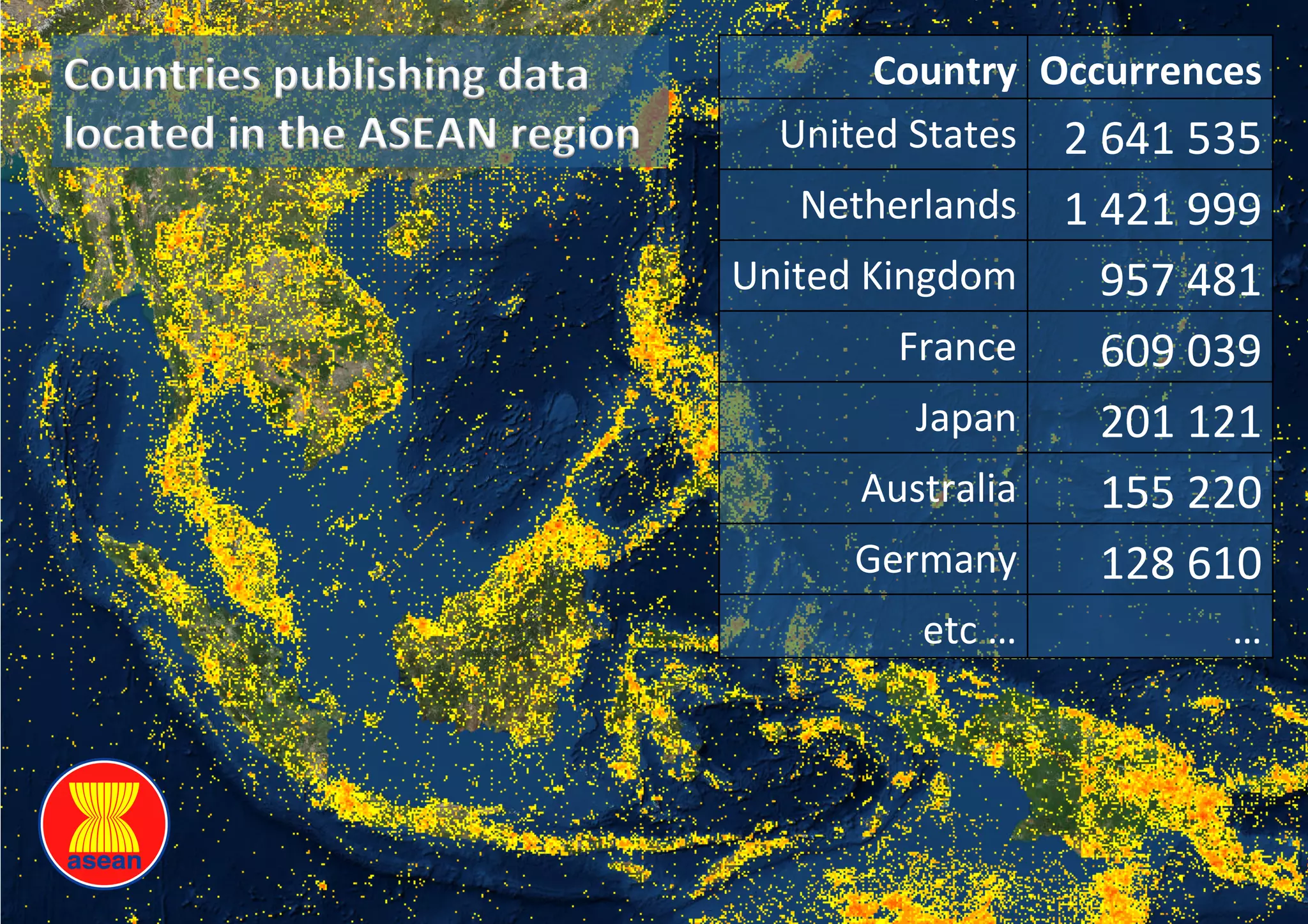
Countries	publishing	data	
located	in	the	ASEAN	region	
Country	 Occurrences	
United	States	 2	641	535	
Netherlands	 1	421	999		
United	Kingdom	 957	481		
France	 609	039		
Japan	 201	121		
Australia	 155	220		
Germany	 128	610		
etc	…	 …
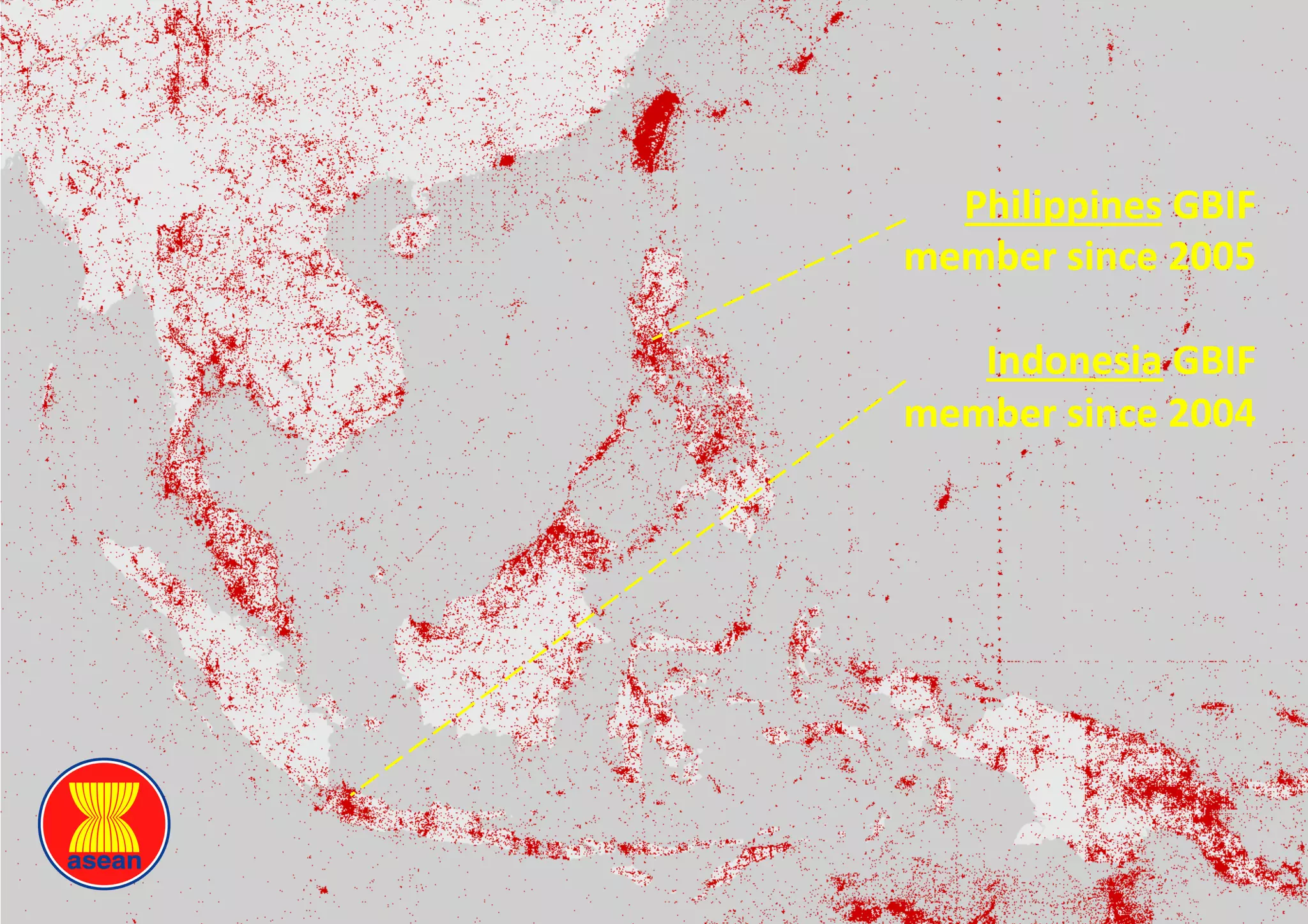
Philippines	GBIF	
member	since	2005	
	
Indonesia	GBIF	
member	since	2004
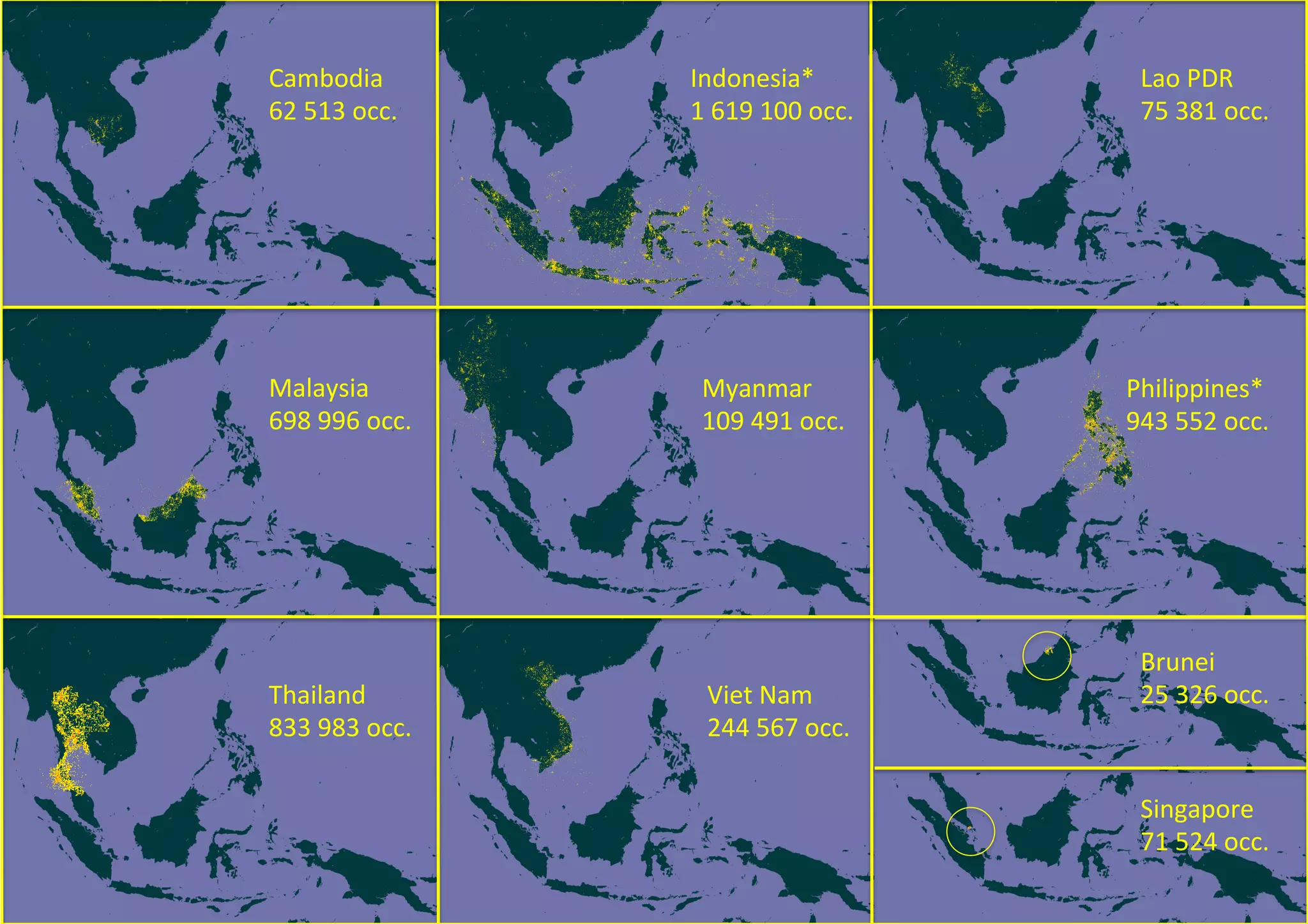
Cambodia	
62	513	occ.	
Indonesia*	
1	619	100	occ.	
Lao	PDR	
75	381	occ.	
Malaysia	
698	996	occ.	
Myanmar	
109	491	occ.	
Philippines*	
943	552	occ.	
Thailand	
833	983	occ.	
Viet	Nam	
244	567	occ.	
Singapore	
71	524	occ.	
Brunei	
25	326	occ.
GBIF BIFA mentoring, Day 1 GBIF intro, July 2016

GBIF BIFA mentoring, Day 1 GBIF intro, July 2016