The oral cavity and the Gastrointestinal
tract
pathology
Dr. Jabessa Gemechu
(MD, Assistant professor of pathology)
Oral cavity
Salivary glands
Esophagus
Stomach
Small and large intestine
Appendix
Peritoneum
ORAL CAVITY
Inflammations
Herpes simplex virus infection
- most are caused by HSV-I
- Usually trivial “cold sores”
- Primary infection commonly in children 2-4 yrs
- severe and diffuse involvement of oral mucosa,
tongue and pharyngeal mucosa may occur acute
herpetic gingivostomatitis
- xized by formation of clear vesicles
- vesicles rupture to yield extremely painful shallow
ulcers.
• histologically intranuclear inclusions and
multinucleate giant cells
• lesions resolve spontaneously within 3-4
weeks
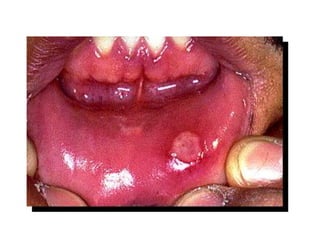
Aphthous ulcers ( canker sores)
• very common superficial ulcerations of the oral
mucosa
• more common in the first two decades
• appear as single or multiple shallow hyperemic
ulcerations covered by thin exudate and
rimmed by a narrow zone of erythema
• lesions spontaneously resolve within a week
Oral candidiasis ( trush)
• take the form of a superficial curdy, gray to
white inflammatory membrane
• scraping reveals an underlying erythematous
inflammatory base
• the fungus is a normal inhabitat of the oral
cavity
• causes disease only in individuals who are
diabetic ,neutropenic or
immunocompromised like in AIDS
Glossitis
• implies to inflammation of the tongue
• also applied to the beafy- red tongue
encountered in certain deficiency states like
vit.B12, Riboflavin, niacin pyridoxine iron
Xerostomia
• dry mouth, a major feature of sjogren
syndrome
Hairy leukoplakia
- Uncommon oral lesion virtually restricted to
HIV patients
- appears as white confluent patches of fluffy
(“ hairy”) hyperkeratotic thickening
- microscopically appear as piled up layers of
keratotic squames based on mucosal
acanthosis
- EBV is now accepted as a major cause
Tumors and precancerous lesions
Leukoplakia and Erythroplakia
• Leukoplakia is a white plaque on the oral
mucous membranes that cannot be removed
by scraping and classified clinically or
microscopically as another disease entity
• is a clinical term: until it is proved otherwise
it must be considered precancerous
Eryethroplakia ( dysplastic leukoplakia)
• represents a red ,velvety possibly eroded area
within the oral cavity
• epithelial changes are markedly atypical
• associated factors with these lesions
• Cigarettes, pipes cigars, alcohol, ill filling
denture…
• HPV particularly type 16 have been identified in
tobacco- related lesions
Squamous cell carcinoma
-represents ~ 95% of cancers of oral cavity
-most common ages 50-70 yrs
-commonly associated with tobacco and alcohol
-HPV serotypes 6, 16, and 18 are associated
-may occur anywhere in the oral cavity but
favored locations are floor of the mouth ,
tongue , hard palate and base of tongue
-prognosis is best with lip lesions , 5 year
recurrence –free rate approaching 90%
-poorest outcome is with tumors in the floor of
the mouth and base of tongue
Odontogenic cysts and tumors
Ameloblastoma
• Tumor arising from odontogenic epithelium
• Commonly cystic , locally invasive but has benign
course
Odontoma
• The most common type of odontogenic tumor
• Arise from epithelium but show extensive
deposition of enamel and dentin
Salivary glands
Inflammation
• May be of viral, bacterial or autoimmune origin
• Most common form of viral adenitis is mumps which
particularly affects the parotids
• Other glands like pancreas and testes may also be involved
• Inflammatory changes also occur in autoimmune diseases like
Sjögren syndrome
• Nonspecific bacterial sialadenitis particularly involving
submandibular gland usually occur secondary to ductal
obstruction by stones (sialolithiasis)
• The most common offenders are S.aureus and S.viridans
Neoplasms
• About 65% - 80% arise within the parotid
• 10% in the submandibular and the remainder
in the minor salivary glands
• The likelihood of a salivary gland tumor being
malignant is more or less inversely
proportional to the size of the gland.
• the benign tumors most often appear in the
5th -7th decade and the malignant ones
somewhat latter
Benign
Pleomorphic adenoma
• Also called mixed tumor
• ~60% occur in the parotid
• Are composed of epithelial elements and
mesenchymal elements
• Mesenchymal elements take the form of
myxoid or chondroid background
• Usually present as painless slow growing ,
mobile descrete mass
 A carcinoma infrequently arises in a pleomorphic adenoma-
Carcinoma ex pleomorphic adenoma or a malignant mixed
tumor
 Incidence of malignant transformation increases with the
duration of the tumor
Warthin tumor (papillary cystadenoma
lymphomatosum)
 The second most common salivary gland neoplasm
 Arise almost always in the parotids and are benign
 Composed of cysts lined by double layer of epithelial cells
resting on a dense lymphoid stroma
 More common in males
Mucoepidermoid carcinoma
• Represent about 15% of all salivary gland
tumors
• Most common form of malignant salivary
gland tumor
Other salivary gland tumors include
• Adenoid cystic carcinoma
• Acinic cell tumor
Esophagus
Congenital anomalies
Atresia and fistula
A. Blind upper and lower esophageal segment
B. Fistula between blind upper segment and
trachea
C. Blind upper segment ,fistula between blind
lower segment and trachea
D. Blind upper segment only
E. Fistula between patent esophagus and
trachea
Stenosis- fibrous thickening of the esophageal
wall with atrophy of the muscularis
Mucosal webs - semicircumferential
protrusions of the mucosa into the
esophageal lumen
Those in the upper esophagus are often
designated as webs : those in the lower
esophagus are often designated as Schatzki
rings
Lesions associated with motor dysfunction
Achalasia
-characterized by
1. Aperstalisis
2. Partial or incomplete relaxation of the LES
3. Increased resting tone of the LES
Pathogenesis of primary achalasia is poorly
understood
• Secondary achalasia may arise in Chagas
disease in which Trypanosoma cruzi causes
destruction of the myenteric plexus
• Classic clinical symptom is progressive
dysphagia
• Regurgitation and aspiration may occur
In about 5%, possibility of developing SCC
Other complications include candidal
esophagitis, diverticula and aspiration with
pneumonia
Hiatal hernia
Is characterized by separation of the
diaphragmatic crura and widening of the
space between the muscular crura and
esophageal wall.
Two patterns
• Sliding
-constitutes 95% of the cases
-is protrusion of the stomach above the
diaphragm creating a bell shaped dilation
• Paraesophageal
-a separate portion of the stomach usually along
the greater curvature enters the thorax
Diverticula
• An outpouching of the alimentary tract that
contains all visceral layers
• False diverticulum is an outpouching of
mucosa and submucosa only.
Typical symptoms are regurgitation and a
mass in the neck
Aspiration with resultant pneumonia is a
significant risk
Laceration (Mallory-Weiss syndrome)
 longitudinal tears in the esophagus at the
esophagogastric junction
 a consequence of severe retching
Occur most commonly in alcoholics
Tears may involve only the mucosa or may
penetrate deeply enough to perforate the
wall.
Account for 5-10% of upper GI bleeding
Boerhave syndrome is rupture of the
oesophagus and is a rare and catastrophic
event.
Esophagitis
Reflux esophagitis
-reflux of gastric contents into the lower esophagus
is the first and foremost cause of esophagitis
Associated causative factors
-decreased efficacy of esophageal antireflux
mechanisms
-presence of a sliding hiatal hernia
-inadequate or slowed esophageal clearance of
refluxed material
-delayed gastric emptying
-reduction in the reparative capacity of the
esophageal mucosa
Morphologic changes include
-simple hyperemia
-inflammatory infiltrate
-basal zone hyperplasia
-elongation of lamina propria occur
• Clinical manifestation consist of dysphagia ,
heart burn, regurgitation of sour brash,
hematemesis or melena
• Consequences include
– Bleeding
– Stricture
– Tendency to develop Barrett esophagus
Barrett Esophagus
 a complication of longstanding
gastroesophageal reflux
 Characterized by replacement of the distal
esophageal mucosa by metaplastic columnar
epithelium as a response to prolonged injury
 Grossly or endoscopically appear as a red
velvety mucosa
 Microscopically the squamous epithelium is
replaced by metaplastic columnar epithelium
complete with mucosal glands
• Dysplasia may be presnet
• Is associated with 30-40 fold increased risk of
developing adenocarcinoma then the general
population
Infectious and chemical esophagitis
Can occur due to
• Ingestion of mucosal irritants such as alcohol,
corrosive , acids or alkali
• Cytotoxic anticancer therapy
 Infection after bacteremia or viremia , HSV
and CMV in immunocompromised
 Fungal infections in immunocompromised or
debilitated patients – candida
 Uremia
Esophageal varices
 Collaterals that develop in the region of the
lower esophagus during portal hypertension
 The increased pressure in the esophageal
plexus produces dilated tortuous vessels
called varices
• Varices develop in 90% of cirrhotic patients
and are most often associated with alcoholic
cirrhosis
• Schistosomiasis is the second most common
cause
• Variceal rupture produces massive
hemorrhage
• Clinically varices produce no symptoms until
they rupture
Tumors
Benign tumors
 Mostly mesenchymal in origin and include
leiomyomas , fibromas , lipomas
hemangioma . . . .
 Epithelial – squamous papilloma
Malignant tumors
 Squamous cell carcinoma represent the
largest majority , recently incidence is
declining and adenocarcinomas are
increasing
Squamous cell carcinoma
• Occur in adults over 50
• Has male preponderance
• Has higher incidence in east Asia
Associated factors include
– Alcoholic drinks
– Tobacco
– HPV
– Chronic esophagitis
About 20% are located in the upper third
50% in the middle third
30% in the lower third
Three morphologic patterns are described
1. Protruded (60%) –polypoid exophytic
lesion
2. Flat (15%)- a diffuse infiltrative form that
spreads within the wall of the esophagus
causing thickening , rigidity and narrowing
3.Excavated (25%) – a necrotic cancerous
ulceration that excavates deeply into
surrounding structures
• Most are moderately to well differentiated
• Local extension into adjacent mediastinal
structures occur early
• Tumors in the upper third metastasize to
cervical lymph nodes
• Those in the middle to mediastinal ,
paratracheal and tracheobronchial nodes
• Those in the lower third most often to
gastric and celiac groups of nodes
Clinical presentation includes
 Dysphagia
 Weight loss
 Hemorrhage
Adenocarcinoma
 Increasing in incidence
 Associated with Barrett esophagus
 Usually located in the distal esophagus and may
invade the adjacent gastric cardia
 May develop nodular masses or may exhibit
diffusly infiltrative or ulcerative features
 Histologically most are mucin producing glandular
tumors
Stomach
Congenital anomalies
Heterotopia
-rests of normal tissue may be present at any
site in the GI tract
-nodules of normal pancreatic tissue up to
1cm may be present in the gastric or
intestinal submucosa
-gastric heterotopia – small patches of
ectopic gastric mucosa in the duodenum
or in more distal sites
Pyloric stenosis
-congenital hypertrophic pyloric stenosis
-M:F – 4:1
-present with regurgitation and projectile
vomiting
-physical examination reveals visible peristalsis
and ovoid palpable mass in the region of the
pylorus
Gastritis
Inflammation of the gastric mucosa
Acute gastritis
Acute mucosal inflammatory process ,
usually of transient nature
Is frequently associated with
 Heavy use of NSAIDs
 Excessive alcohol consumption
 Heavy smoking
 Uremia
– Systmic infections
– Severe stress (e.g. trauma, burn, surgery)
– Ischemia and shock
Mechanisms include
- Increased acid secretion with back diffusion
- Decreased production of bicarbonate buffer
- Reduced blood flow
- Disruption of the adherent mucus layer
- Direct damage to the epithelium
• Morphologic changes include edema
,vascular congestion ,neutrophilic infiltrate
erosion
• Clinically may be asymptomatic or may
cause variable epigastric pain, nausea and
vomiting or may cause hemorrhage
Chronic gastritis
• Defined as the presence of chronic mucosal
inflammatory changes leading eventually to
mucosal atrophy and epithelial metaplasia
usually in the absence of erosion
 Major etiologic associations are
 Chronic H.pylori infection
 Autoimmune
 Toxic (alcohol, cigarette )
 Radiation
 postsurgical
 Granulomatous conditions (e.g. Crohn disease)
H. Pylori
-most important etiologic agent
-present in 90% of patients with chronic gastritis
affecting the antrum
-H.pylori is a nonsporing ,gram negative rod
 Specialized traits that allow H.pylori to
flourish include
 Motility
 Urease
 Adhesin
Autoimmune gastritis
-10% of chronic gastritis
-autoantibodies to gastric gland parietal cells
and intrinsic factor
-leads to loss of acid production
-seen in association with other autoimmune
disorders such as Hashimotos thyroiditis
Morphology
 Autoimmune gastritis is characterized by
difuse mucosal damage of the body fundic
mucosa with less intense-to-absent antral
damage
 Gastritis in the setting of environmental
causes (including infection by H.pylori )
tends to affect the antral and body fundic
mucosa
 Inflammatory infiltrate composed of
lymphocytes and plasma cells in the lamina
propria
Regenerative changes
-Metaplasia usually intestinal type
-Atrophy
-Hyperplasia (of gastrin producing cells)
-Dysplasia
• Clinical
-usually cause few symptoms like nausea,
vomiting and upper abdominal discomfort
Peptic ulcer disease
• peptic ulcers are chronic most often
solitary lesions that occur in any portion of
the GI tract exposed to the aggressive
action of acid-peptic juices
• Occurs in the following sites in order of
decreasing frequency
– Duodenum first portion
– Stomach usually antrum
– Gastroesophageal junction
 Within the margins of gastrojejunostomy
 Duedenum, stomach, or jejunum of patients
with Zollinger-Ellison syndrome
 Meckel diverticulum that contains ectopic
gastric mucosa
Pathogenesis
Imbalance between the gastroduodenal
mucosal defence mechanisms and the
damaging forces
Gastric acid and pepsin are requisite for all
peptic ulcerations
H. pylori can cause PUD by different
mechanisms
 Production of urease ,protease and
phospholipase which damages gastric mucus
and surface epithelial cells
 Recruitment of inflammatory cells
Other factors include
 hyperacidity
e.g. Z-E syndrome exhibit multiple
ulcerations due to excess gastrin secretion
by a tumor and hence excess gastric acid
 NSAIDs supress mucosal prostaglandin synthesis
 Cigarette smoking impairs mucosal blood flow
 At least 98% of peptic ulcers are located in
the first portion of the duodenum or in the
stomach
 Gastric ulcers are located predominantly
along the lesser curvature
 Majority are single
 More than 50% have a diameter <2cm,
about 10% are greater than 4cm
 Carcinomatous ulcers may be less than 4cm
and size does not differentiate a benign from
malignant ulcer
• Appear as round to oval sharply punched
out defect with relatively straight walls
• Depth may vary from superficial lesions to
deeply excavated ulcers
• Perforation or erosion of a vessel may occur
• Histologic appearance varies from active
necrosis to chronic inflammation, scarring
and healing
• Chronic gastritis is virtually universal among
patients with PUD
C/F
Epigastric burning or aching pain
Few present with complications such as
anemia, frank hemorrhage or perforation
Pain tends to be worse at night and occurs
usually 1 to 3 hrs after meal
Main complications are
 Bleeding
 Perforation
 Obstruction from edema or scarring
Acute gastric ulceration
Stress erosions and ulcers
• Encountered in patients with shock,
extensive burn ,sepsis or severe trauma
,increased intracranial pressure and after
intracranial surgery
• Those occurring in the proximal duodenum
and associated with severe burn or trauma
are called Curling ulcers
• Gastric ,duodenal and esophageal ulcers
arising in patients with intracranial surgery
injury or tumors are designated as Cushing
ulcer carry a high incidence of perforation
Tumors
Benign tumors
 Polyps – any nodule or mass that projects above
the level of the surrounding mucosa
 Greater than 90% are of hyperplastic nature
 5-10% are adenomas which are true neoplasms
 Adenoma contains proliferative dysplastic
epithelium and thereby has malignant potential
 Can be sessile or pedunculated
Gastric carcinoma
• 90-95% of malignant tumors of the
stomach
• Next in order are lymphoma (4%),
carcinoids (3%) and stromal tumors(2%)
• Incidence varies widely being particularly
high in countries like Japan, Chile, China. .
• M:F – 2:1
• Three major factors are thought to affect
the genesis of gastric cancer
1. Environmental- infection by H.pylori, Diet
(lack of refrigration, consumption of
preserved , smoked and salted foods , lack
of fresh fruit), cigarette smoking
2. Host factors – chronic gastritis, infection
by H. pylori ,partial gastrectomy, gastric
adenomas , Barrett esophagus
3. Genetic – blood type A, family history,
familial gastric carcinoma
Morphology
 Location
 Pylorus and antrum (50-60%), cardia 25%,
remaining in the body and fundus
 Lesser curvature is involved in about 40% and
greater curvature in 12%
 Gastric carcinoma can be classified on the
basis of
1. Depth of invasion
2. Macroscopic growth pattern
3. Histologic subtype
1.Depth of invasion
Early carcinomas – lesion confined to mucosa
and submucosa
Advanced carcinomas – that has extended
below the submucosa into the muscular wall
2. Macroscopic growth pattern
– Exophytic
– Flat or depressed
– Excavated
Morphologic types of
Carcinoma Stomach
Fungating
Ulcerating
Diffuse
3. Histologic subtype
Intestinal type – composed of neoplastic
intestinal glands resembling those of
colonic adenocarcinoma
Diffuse type – composed of gastric type
mucus cells which do not form glands but
permeate the wall as scattered individual
cells or clusters
these cells contain abundant mucin and
form signet ring configuration
• For obscure reasons gastric carcinomas
frequently metastasize to supraclavicular
LN (Virchows node)
• A notable site of visceral metastasis is to
one or both ovaries- Krukenberg tumor
Clinical feature
• Wt. loss , abdominal pain ,anorexia
,vomiting , altered bowel habit , anemia ,
hemorrhage , dysphagia . .
Less common gastric tumors
• Gastric lymphoma – represent 5% of all
gastric malignancies
is related to H. Pylori
• GI neuroendocrine cell tumors ( carcinoids)
• Mesenchymal tumors
– Leiomyoma , leiomyosarcoma , . .
– GI stromal tumors
Small and Large intestines
Congenital anomalies
Duplication
Malrotation
Omphalocele – failure of formation of
abdominal musculature with herniation of
abdominal contents into a membraneous
sac
Gastroschisis – portion of the abdominal
wall fails to form with extrusion of the
intestine
Atresia and stenosis
 Meckel Diverticulum
-failure of the vitelline duct ,which connects the
lumen of the developing gut to the Yolk sac
produce a Meckel Diverticulum
-is a true diverticulum
-heterotopic rests of gastric mucosa (or
pancreatic tissue) are found in about 50%
-occur in 2% of the population but most remain
asymptomatic
-when peptic ulceration occurs in the small
intestinal mucosa adjacent to the gastric
mucosa bleeding occur
Congenital aganglionic Megacolon
(Hirschsprung disease)
• Characterized by the absence of ganglionic
cells in large bowel leading to functional
obstruction and colonic dilation proximal to
the affected segment
• Histologically there is absence of ganglionic
cells in the muscle wall(Auerbach plexus)
and submucosa (Meissner plexus)
• Most cases involve the rectum and sigmoid
only
• Proximal to the aganglionic segment , the
colon undergoes progressive dilation and
hypertrophy
• Dilation may achieve large sizes (15-20cm)
Clinical features
• M:F – 4:1
• 10% occur in children with Down syndrome
• Usually manifest in the immediate neonatal
period by failure to pass meconium followed
by obstructive constipation
• Acquired magacolon can occur at any age and
results from Chagas disease, organic
obstruction of bowel , toxic megacolon
complicating UC or CD, functional
psychosomatic disorder
Enterocolitis
Diarrhoea and dysentry
• Diarrhoea –an increase in stool mass, stool
frequency or stool fluidity is perceived as
diarrhoea by most patients
• The principal mechanisms of diarrhoea are
– Secretory diarroea – intestinal fluid secretion
– Osmotic diarrhoea – osmotic forces exerted by
luminal solutes leads to diarrhoea
– Exudative diseases – mucosal destruction leads
to output of purulent bloody stool
– Malabsorption – improper absorption of gut
nutrients produce voluminous bulky stool
– Deranged motility – improper gut
neuromuscular function may produce
increased stool
Infectious enterocolitis
Viral gastroenteritis
• Rota virus is the most common cause
• Clinically has incubation period of about 2
days followed by vomiting and diarrhoea
for days
• Mostly in children
• Norwalk virus cause the majority of cases of
non-bacterial food-borne epidemic
gastroenteritis in older children and adults
• It has incubation period of 1-2days followed
by 12-60hrs of nausea vomiting watery
diarrhoea and abdominal pain
Bacterial enterocolitis
Pathogenetic mechanisms
 Ingestion of preformed toxin present in
contaminated food (S.aureus, Vibrios,
C.perfringens)
 Infection by toxigenic organisms which
proliferate within the gut lumen and elaborate
an enterotoxin
 Infection by enteroinvasive organisms which
proliferate invade and destroy mucosal
epithelial cells
In case of infection key bacterial
properties are
1. Ability to adhere
2. Ability to elaborate enterotoxins
3. The capacity to invade
 Adherence is usually mediated by
adhesins
 Enterotoxins are polypeptides that cause
diarroea e.g. V.cholerae
 Invasion e.g. enteroinvasive E.coli and
shigella possess a virulence plasmid that
confers capacity for invasion
Morphology
• Most bacterial infections exhibit a general non
specific pattern of damage to the surface
epithelium
– Decrease epithelial cell maturation
– Increased mitotic rate (regenerative changes)
– Hyperemia and edema of lamina propria
– Neutrophilic infiltration
Clinical features
• Ingestion of preformed bacterial toxins –
symptoms develop within hours ,explosive
diarrhoea, acute abdominal distress . . .
• Infection with enteric pathogens : after
incubation period of several hours to days
diarrhoea , dehydration . ..
• Insideous infection : e.g. yersinia and
mycobacterium
Antibiotic associated colitis
(pseudomembraneous colitis)
Acute colitis characterized by formation of
an adherent inflammatory exudate
(pseudomembrane) overlying site of
mucosal injury
Usually caused by two protein exotoxins
(A&B) of C.difficile ,a normal gut comensal
Disease occurs in patients with a
background of chronic enteric disease
after a course of broad spectrum
antibiotic therapy
 Thought to result due to the flourish of toxin
forming strains after alteration of normal
intestinal floura
Parasites and protozoa
 E.histolytica
 G.lamblia
 AIDS
-diarrheal illness occur in 30-60% of HIV
infected pts
-most cases are due to microorganisms
-AIDS enteropathy is thought to represent some
proportion
Malabsorption syndrome
• Malabsorption is characterized by
suboptimal absorption of fats, fat-soluble
and other vitamins ,proteins ,carbohydrates
,electrolytes minerals and water
• Results from disturbance of
– Intraluminal digestion
– Terminal digestion
– Transepithelial transport
Consequences of malabsorption affect many
organ systems
Alimentary tract –diarrhea , flatus,
abdominal pain, weight loss. . .
Hematopoetic system – anemia from
,pyridoxine ,folate, VB12 ,deficiency ,
bleeding from v.k deficiency
Musculoekeletal system – osteopenia and
tetany from calcium, Mg . . .deficiency
Epidermis – purpura and petechiae from
vitamin K deficiency, edema from protein ,
dermatitis from vit. A, Zink deficiency
• Nervous system – peripheral neuropathy from
vitamin A and B12 deficiency
Features
• Steatorrhea –passage of abnormally bulky,
frothy , greasy stool is a prominent feature
• Other features are wt loss, abdominal
distension.
Celiac sprue
• Rare chronic disease
• Characteristic mucosal lesion of the small
intestine and impaired absorption which
improves on withdrawal of wheat gliadins
and related grains
• A.k.a. glutein sensitive enteropathy , non-
tropical sprue
• Mucosa appears flat or scalloped or may be
visually normal
• Biopsy show diffuse enteritis with marked
atrophy or total loss ov villi
• Clinical manifestations include diarrhea ,
flatulence ,wt. loss and fatigue
• There is a long term risk of malignanct disease
(more than half of these are intestinal
lymphomas)
Tropical Sprue(post infectious sprue)
• Occurs almost exclusively in people living in
or visiting the tropics
• May occur in endemic form and epidemic
outbreaks have occurred
• No specific causal agent has been
associated but bacterial overgrowth by
enterotoxigenic organisms(e.g. E. coli and
Hemophylus has been implicated)
• Intestinal changes are extremely variable
ranging from near normal to severe diffuse
enteritis
• Clinically malabsorption becomes apparent
within days or a week of an acute enteric
infection in visistors to endemic locales
• Mainstay of treatment is broadspectrum
antibiotics
Whipple isease
• Systemic disease which may involve any organ
of the body but principally affects the
intestine ,CNS and joints
• Cause is gram-positive actinomycete
Tropheryma Whippeli
• Hallmark of Whipple disease is a small
intestinal mucosa laden with distended
macrophages in the lamina propria
• The macrophages contain PAS positive granule
and rod-shaped bacilli by electronmicroscopy
• More common in whites in their thirties to
fourties
• M:E 10:1
• Usually present with diarrhea and wt loss
sometimes of years duration
Disaccharidase(Lactase ) deficiency
• The acquired one is more common
• Incomplete breakdown of the disacchride
lactose into glucose and galactose leads to
osmotic diarrhea
• IDIOPATHIC INFLAMMATORY BOWEL
DISEASE
Crohn disease and ulcerative colitis
• Are chronic, relapsing inflammatory
disorders of obscure origin
Etiology and pathogenesis
• Genetic predisposition
• Infections cause
Incriminated agents include Chlamydia atypical
bacteria and mycobacteria…
• Abnormal Host immunreactivity
– Inflammation as the final common pathway
CROHN DISEASE
a.k.a terminal ileitis ,regional enteritis ,
granulomatous colitis
- When fully developed it is characterized
pathologically by
1. sharply delimited and typically transmural
involvement of the bowel by an
inflammatory process
2. the presence of non caseating granuloma
3. fissuring with formation of fistulas
Epidemiology
occurs at any age, but peak is teens and
twenties with a minor peak in fifties and
sixties
Females are slightly more affected
Smoking is a strong exogenous risk factor
Morphology
Small intestine alone -40%
Small intestine + colon -30%
Colon alone -30%
• may involve duodenum, stomach,
esophagus and even mouth but very rarely
• the intestinal wall is rubbery and thick the
result of edema inflammation fibrosis and
hypertrophy
• classic feature is the sharp demarcation of
diseased bowel segments from adjacent
uninvolved bowel
• When multiple bowel segments are
involved the intervening bowel is
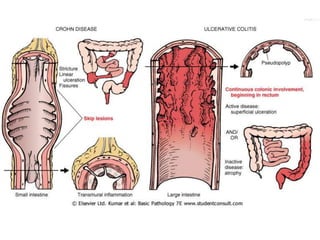
essentially normal ( skip lesions) and the
mucosa acquires a coarsely textured
cobblestone appearance
• linear ulcers develop
• narrow fissures develop between the folds
of the mucosa often penetrating deeply
leading to fistula or sinus tract formation
• Mucosal inflammation
 Chronic mucosal damage
 Ulceration
 Trans mural inflammation affecting all layers
 Non caseating granulomas
Clinical features
 Variable but disease usually begins with
intermittent attacks of mild diarrhea fever
and abdominal pain
 In some patients the onset is more abrupt
with acute right lower quadrant pain fever
and diarrhea
• Complications include strictures, fistulas,
malabsorption
• Extra intestinal manifestations include
migratory poly arthritis, sacroilitis ,ankylosing
spondylitis, erythema nodosum, uveitis
• There is an increased incidence of cancer of
the Gl tract ,but is considerably less than
ulcerative colitis
ULCERATIVE COLITIS
• an ulceroinflammatory disease limited to
the colon and affecting only the mucosa
and submucosa except in the most severe
cases
• incidence is slightly greater than Crohn
disease
• onset peaks between 20 and 25 years
• UC involves the rectum and extends
proximally in a retrograde fashion to involve
the entire colon in the more severe cases
• It is a disease of continuity and skip lesions
like crohn disease are not found
• In10% of patients the distal ileum may
develop mild mucosal inflammation (
backwash ileitis)
• Isolated islands of regenerating mucosa
bulge upward to create pseudopolyps
• Mural thickening does not occur in UC and
the serosal surface is usually completely
normal
Clinical features
• present as a relapsing disorder marked by
attacks of bloody mucoid diarrhea that may
persist for days weeks or months, then
subside & recur
• abdominal pain and in minority constipation
• the most feared long term complication of UC
is cancer
Hemorrhoids
variceal dilations of the anal and perianal
venous plexuses
common problems which develop
secondary to persistently elevated venous
pressure within the hemorrhoidal plexus
most frequent predisposing influences are
constipation with straining at stool and
the venous stasis of pregnancy
much more importantly but rarely develop
as result of portal hypertension
they may develop in the inferior
hemorrhoidal plexus located below
anorectal line –external hemorrhoid
they may also develop in the superior
hemorroial plexus and produce internal
hemorroids
commonly both are affected
secondary effects include thrombosis
,ulceration ,fissure formation and
infarction with strangulation
INTESTINAL OBSTRUCTION
 may occur at any level
 patients present with abdominal pain and
distension vomiting failure to pass flatus…
 Major causes of intestinal obstruction
Mechanical obstruction
 Adhesions
 Hernias
 Volvulus
 Intussusception
 Tumors
 Inflammatory strictures
 Obstuctire gall stones, fecalith, ,foreign body
 Congenital strictures, atresias
 Bands
 Imperforate anus
Pseudo-obstruction
 Paralytic ileus
 Vascular-bowel in farction
 Myopathies and neuropathies ( eg
Hirschsprung)
Small intestine tumors
Adenomas
 most occur in the region of the ampulla of
Vater
 patients with familial polyposis coli are
particularly prone
Adenocarcinoma
 majority occur in the duodenum and jejunum
 grow as napkin ring encircling pattern or as
polypoid fungating mass
 those involving ampulla of Vater may present
with obstructive jaundice
 at time of diagnosis most tumors have locally
Tumors of the colon and Rectum
Non neoplastic polyps
• non neoplastic polyps ( mostly hyperplastic )
represent about 90% of all epithelial polyps in
large bowel
• inflammatory ( pseudo) polyps represent
islands of inflamed regenerating mucosa
surrounded by ulceration are seen in patients
with longstanding IBD
Hyperplastic polyps
• small epithelial polyps
• often multiple and more than half are
found in the rectosigmoid
• histologically they are composed of well
formed glands and crypts lined by non
neoplastic epithelium
• the usual small hyperplastic polyp has
virtually no malignant potential
Juvenile polyps
 focal hamartomatous malformations of the
mucosal elements
 most frequently occur in the rectum
 mainly sporadic lesions ,majority occurring in
children younger than 5
 in adults they are referred to as retention
polyps
 tends to be large ( 1 to 3cm)
 Histology show abundant cystically dilated
glands
 Generally occur singly and have no malignant
potential
 A rare autosomal dominant juvenile polyposis
syndrome does carry a risk of adenomas and
Peutz- Jeghers polyp
• autosomal dominant syndrome characterized
by multiple hamartomatous polyps scattered
throughout the entire GIT and melanotic
mucosal and cutaneous pigmentation around
oral mucosa face genitalia palms .
• patients with the syndrome have an increased
risk of developing carcinomas of the pancreas
breast lung ovary and uterus
Adenomas
 Intraepithelial neoplasms that range from
small, often pedunculated to large that are
sessile
 occur in 20-30% before40,rising to 40-50%
after age 60
 there is well defined familial predisposition
Three subtypes
 Tubular adenomas-Tubular glands
 Villous adenomas- villous projections
 Tubulovillous adenoma-a mixture of the two
 adenomatous lesions arise as the result of
epithelial proliferative dysplasia, which may
range from mild to so severe as to constitute
• most tubular adenomas are small and
pedunculated : conversely most pedunculated
polyps are tubular
• villous adenomas tend to be large and sessile
and sessile polyps usually exhibit villous
features
• the malignant risk with an adenomatous polyp
is correlated with three independent features
– polyp size ,
– histologic architecture and
– severity of epithelial dysplasia
• cancer is rare in tubular adenomas smaller
than 1cm
• the risk of cancer is high ( ~40%) in sessile
villous adenomas greater than 4cm
Clinical features
• may be asymptomatic ,but many are
discovered during evaluation of anemia or
occult bleeding
Familial syndromes
 Uncommon autosomal dominant disorders
Familial adenomatous polyposis (FAP)
 genetic defect is in the APC gene on 5q21
 patients typically develop 500-2500 colonic
adenomas
 multiple adenomas may also be present
elsewhere in the alimentary tract
 the majority are tubular
 progression to colon adenocarcinoma
approach 100%
 cancer-preventive measures include
Gardner syndrome
also autosomal dominant
patients exhibit intestinal polyps identical
to those in FAP combined with multiple
osteomas, epidermal cysts and
fibromatosis
Turcot syndrome is a rare variant marked by
the combination of adenomatous colonic
polyposis and tumors of CNS
Hereditary non polyposis colorectal
cancer(HNPCC)
Is characterized by an increased risk of
colorectal cancer and extraintestinal
Colorectal carcinoma
98% of all cancers in the large intestine
are adenocarcinoma
Peak incidence is 60 to 79 years
If found in young person preexisting
ulcerative colitis or one of the polyposis
syndromes must be suspected
Dietary factors like excess calorie intake,
low unabsorbable vegitable fiber, intake of
red meat and decreased intake of
protective micronutrients
Distribution is as follows
Ascending colon 38%
Transverse colon 18%
Descending colon 8%
Sigmoid 56%
Multiple site 1%
 about 1-3% occur in patients with familial
syndromes
 tumors in the proximal colon tend to grow as
polypoid exophytic masses and obstruction is
uncommon
• carcinomas in the distal colon tend to be
annular encircling lesions
• microscopically all are adenocarcinomas
• when symptomatic produce anemia fatigue
weakness bowel habit change…
• spread by direct extension into adjacent
structures and by metastasis through the
lymphatics and blood vessels
• the most important prognostic indicator of
colorectal carcinoma is the extent of tumor
at time of diagnosis
Carcinoid Tumors
• tumors of neuroendocrine cells
• arise in the pancreas or peripancreatic
tissue lungs, biliary tree, liver and mainly in
GIT
• constitute less than 2% of colorectal
malignancies but almost half of small
intestinal malignant tumors
• tendency for aggressive behavior correlates
with the site of origin, depth of local
• appendiceal and rectal carcinoids
infrequently metastasize, by contrast ileal
,gastric and colonic carcinoids have higher
chance of spread especially those that have
penetrated halfway through the muscle
wall and >2cm
• depending on the predominant product
they can be called gastrinoma,
somatostatinoma , insulinoma . . .
• appendix is the most common site of gut
followed by small intestine ,rectum,
stomach and colon
• clinically may produce local symptoms
owing to angulation or obstruction of the
small intestine
• may produce Zollinger-Ellison syndrome,
Cushing syndrome ,hyperinsulinism
• some neoplasms are associated with a
distinctive carcinoid syndrome( occurs in
1% of patients with carcinoids and in 20%
of those with widespread metastasis)
• most manifestations are thought to arise
from serotonin
• manifestations include cutaneous flushes,
Gastrointestinal lymphoma
1-4% of all GI malignancies
Primary GI lymphomas sometimes arise as
sporadic but occur more frequently in certain
populations
1. patients with Helicobacter gastritis
2. Natives of the Mediterranean region
3. patients with congenital immunodeficiency
states
4. HIV- infected individuals
5. individuals undergoing immunosuppressive
therapy
• sporadic lymphomas are the most common
form in western hemisphere
• arise from the B cells of the mucosa
associated lymphoid tissue ( MALT)
Appendix
Acute appendicitis
 usually ( 50-80%) associated with
obstruction ( fecalith , less commonly gall
stone, tumor, or ball of worms ( oxyuriasis
vermicularis )
Obstruction can cause ischemic injury which
favors bacterial proliferation with additional
inflammatory exudate and edema
Nevertheless a significant minority of
inflamed appendices have no
demonstrable luminal obstruction
Morphology
initially serosa will be transformed to dull
granular red membrane
later fibrinopurulent exudate covers the
serosa
abscess formation leads to acute
suppurative appendicitis
• further progress leads to acute gangrenous
appendicitis
• histologic criterion for the diagnosis of
acute appendicitis is neutrophilic
infiltration of the muscularis
• clinical features include
– abdominal pain
– nausea
– vomiting
– tenderness
– Fever…
Tumors of the appendix
Carcinoids
Mucocele and pseudomyxoma peritonei
Mucocele is globular enlargement of the
appendix by inspissated mucus usually the
result of obstruction
Mucinous cystadenoma is the most
common mucinous neoplasm
Malignant mucinous cystadenocarcinoma
penetration of the appendiceal wall by
invasive cells and spread beyond the
appendix in the form of localized or
disseminated implants produce cellular
proliferation and mucin secretion
pseudomyxoma peritonei
Peritoneum
Inflammation
may result from bacterial invasion or
chemical irritation the most common
causes are
sterile peritonitis
 –from mild leakage of bile or pancreatic
enzymes
 perforation or rupture of the biliary system
 hemorrhagic poncreatitis, with leadkage of
pancreatic enzymes and digestion of adipose
tissue to produce fatty acids
 surgical procedures, reaction to surgically
Infection
the most common disorders leading to
such bacterial dissemination are
appendicitis, ruptured peptic ulcer
,cholecystitis, diverticulitis, strangulation
of bowel, acute salpingitis, abdominal
trauma…
A wide variety of bacterial organisms are
implicated in peritonitis
spontaneous bacterial peritonitis is an
uncommon condition which occurs in the
absence of an obvious source of
• in generalized peritonitis an exudate may
accumulate under and above the liver to form
subhepatic ,subdiaphragmatic abscess.
Miscellaneous conditions
• Sclerosing Retroperitonitis
• Mesenteric cysts
TUMORS
virtually all tumors of the peritoneum are
malignant and can be divided into primary
tumors(mesotheliomas) and secondary
tumors
peritoneal mesotheliomas are associated
with asbestos exposure in at least 80% of
the cases
secondary tumors are common and can
occur in any form of advanced cancer

GASTROINTESTINAL TRACT.PPTbbbbbbbbbbbbbbb

  • 1.
    The oral cavityand the Gastrointestinal tract pathology Dr. Jabessa Gemechu (MD, Assistant professor of pathology)
  • 2.
    Oral cavity Salivary glands Esophagus Stomach Smalland large intestine Appendix Peritoneum
  • 3.
    ORAL CAVITY Inflammations Herpes simplexvirus infection - most are caused by HSV-I - Usually trivial “cold sores” - Primary infection commonly in children 2-4 yrs - severe and diffuse involvement of oral mucosa, tongue and pharyngeal mucosa may occur acute herpetic gingivostomatitis - xized by formation of clear vesicles - vesicles rupture to yield extremely painful shallow ulcers.
  • 7.
    • histologically intranuclearinclusions and multinucleate giant cells • lesions resolve spontaneously within 3-4 weeks Aphthous ulcers ( canker sores) • very common superficial ulcerations of the oral mucosa • more common in the first two decades • appear as single or multiple shallow hyperemic ulcerations covered by thin exudate and rimmed by a narrow zone of erythema • lesions spontaneously resolve within a week
  • 10.
    Oral candidiasis (trush) • take the form of a superficial curdy, gray to white inflammatory membrane • scraping reveals an underlying erythematous inflammatory base • the fungus is a normal inhabitat of the oral cavity • causes disease only in individuals who are diabetic ,neutropenic or immunocompromised like in AIDS
  • 12.
    Glossitis • implies toinflammation of the tongue • also applied to the beafy- red tongue encountered in certain deficiency states like vit.B12, Riboflavin, niacin pyridoxine iron Xerostomia • dry mouth, a major feature of sjogren syndrome
  • 13.
    Hairy leukoplakia - Uncommonoral lesion virtually restricted to HIV patients - appears as white confluent patches of fluffy (“ hairy”) hyperkeratotic thickening - microscopically appear as piled up layers of keratotic squames based on mucosal acanthosis - EBV is now accepted as a major cause
  • 14.
    Tumors and precancerouslesions Leukoplakia and Erythroplakia • Leukoplakia is a white plaque on the oral mucous membranes that cannot be removed by scraping and classified clinically or microscopically as another disease entity • is a clinical term: until it is proved otherwise it must be considered precancerous
  • 17.
    Eryethroplakia ( dysplasticleukoplakia) • represents a red ,velvety possibly eroded area within the oral cavity • epithelial changes are markedly atypical • associated factors with these lesions • Cigarettes, pipes cigars, alcohol, ill filling denture… • HPV particularly type 16 have been identified in tobacco- related lesions
  • 18.
    Squamous cell carcinoma -represents~ 95% of cancers of oral cavity -most common ages 50-70 yrs -commonly associated with tobacco and alcohol -HPV serotypes 6, 16, and 18 are associated -may occur anywhere in the oral cavity but favored locations are floor of the mouth , tongue , hard palate and base of tongue -prognosis is best with lip lesions , 5 year recurrence –free rate approaching 90% -poorest outcome is with tumors in the floor of the mouth and base of tongue
  • 20.
    Odontogenic cysts andtumors Ameloblastoma • Tumor arising from odontogenic epithelium • Commonly cystic , locally invasive but has benign course Odontoma • The most common type of odontogenic tumor • Arise from epithelium but show extensive deposition of enamel and dentin
  • 21.
    Salivary glands Inflammation • Maybe of viral, bacterial or autoimmune origin • Most common form of viral adenitis is mumps which particularly affects the parotids • Other glands like pancreas and testes may also be involved • Inflammatory changes also occur in autoimmune diseases like Sjögren syndrome • Nonspecific bacterial sialadenitis particularly involving submandibular gland usually occur secondary to ductal obstruction by stones (sialolithiasis) • The most common offenders are S.aureus and S.viridans
  • 22.
    Neoplasms • About 65%- 80% arise within the parotid • 10% in the submandibular and the remainder in the minor salivary glands • The likelihood of a salivary gland tumor being malignant is more or less inversely proportional to the size of the gland. • the benign tumors most often appear in the 5th -7th decade and the malignant ones somewhat latter
  • 23.
    Benign Pleomorphic adenoma • Alsocalled mixed tumor • ~60% occur in the parotid • Are composed of epithelial elements and mesenchymal elements • Mesenchymal elements take the form of myxoid or chondroid background • Usually present as painless slow growing , mobile descrete mass
  • 26.
     A carcinomainfrequently arises in a pleomorphic adenoma- Carcinoma ex pleomorphic adenoma or a malignant mixed tumor  Incidence of malignant transformation increases with the duration of the tumor Warthin tumor (papillary cystadenoma lymphomatosum)  The second most common salivary gland neoplasm  Arise almost always in the parotids and are benign  Composed of cysts lined by double layer of epithelial cells resting on a dense lymphoid stroma  More common in males
  • 27.
    Mucoepidermoid carcinoma • Representabout 15% of all salivary gland tumors • Most common form of malignant salivary gland tumor Other salivary gland tumors include • Adenoid cystic carcinoma • Acinic cell tumor
  • 28.
    Esophagus Congenital anomalies Atresia andfistula A. Blind upper and lower esophageal segment B. Fistula between blind upper segment and trachea C. Blind upper segment ,fistula between blind lower segment and trachea D. Blind upper segment only E. Fistula between patent esophagus and trachea
  • 29.
    Stenosis- fibrous thickeningof the esophageal wall with atrophy of the muscularis Mucosal webs - semicircumferential protrusions of the mucosa into the esophageal lumen Those in the upper esophagus are often designated as webs : those in the lower esophagus are often designated as Schatzki rings
  • 30.
    Lesions associated withmotor dysfunction Achalasia -characterized by 1. Aperstalisis 2. Partial or incomplete relaxation of the LES 3. Increased resting tone of the LES Pathogenesis of primary achalasia is poorly understood
  • 31.
    • Secondary achalasiamay arise in Chagas disease in which Trypanosoma cruzi causes destruction of the myenteric plexus • Classic clinical symptom is progressive dysphagia • Regurgitation and aspiration may occur
  • 32.
    In about 5%,possibility of developing SCC Other complications include candidal esophagitis, diverticula and aspiration with pneumonia Hiatal hernia Is characterized by separation of the diaphragmatic crura and widening of the space between the muscular crura and esophageal wall.
  • 33.
    Two patterns • Sliding -constitutes95% of the cases -is protrusion of the stomach above the diaphragm creating a bell shaped dilation • Paraesophageal -a separate portion of the stomach usually along the greater curvature enters the thorax
  • 35.
    Diverticula • An outpouchingof the alimentary tract that contains all visceral layers • False diverticulum is an outpouching of mucosa and submucosa only.
  • 36.
    Typical symptoms areregurgitation and a mass in the neck Aspiration with resultant pneumonia is a significant risk Laceration (Mallory-Weiss syndrome)  longitudinal tears in the esophagus at the esophagogastric junction  a consequence of severe retching Occur most commonly in alcoholics
  • 37.
    Tears may involveonly the mucosa or may penetrate deeply enough to perforate the wall. Account for 5-10% of upper GI bleeding Boerhave syndrome is rupture of the oesophagus and is a rare and catastrophic event.
  • 38.
    Esophagitis Reflux esophagitis -reflux ofgastric contents into the lower esophagus is the first and foremost cause of esophagitis Associated causative factors -decreased efficacy of esophageal antireflux mechanisms -presence of a sliding hiatal hernia
  • 39.
    -inadequate or slowedesophageal clearance of refluxed material -delayed gastric emptying -reduction in the reparative capacity of the esophageal mucosa Morphologic changes include -simple hyperemia -inflammatory infiltrate -basal zone hyperplasia -elongation of lamina propria occur
  • 40.
    • Clinical manifestationconsist of dysphagia , heart burn, regurgitation of sour brash, hematemesis or melena • Consequences include – Bleeding – Stricture – Tendency to develop Barrett esophagus
  • 41.
    Barrett Esophagus  acomplication of longstanding gastroesophageal reflux  Characterized by replacement of the distal esophageal mucosa by metaplastic columnar epithelium as a response to prolonged injury  Grossly or endoscopically appear as a red velvety mucosa  Microscopically the squamous epithelium is replaced by metaplastic columnar epithelium complete with mucosal glands
  • 44.
    • Dysplasia maybe presnet • Is associated with 30-40 fold increased risk of developing adenocarcinoma then the general population Infectious and chemical esophagitis Can occur due to • Ingestion of mucosal irritants such as alcohol, corrosive , acids or alkali • Cytotoxic anticancer therapy
  • 45.
     Infection afterbacteremia or viremia , HSV and CMV in immunocompromised  Fungal infections in immunocompromised or debilitated patients – candida  Uremia Esophageal varices  Collaterals that develop in the region of the lower esophagus during portal hypertension  The increased pressure in the esophageal plexus produces dilated tortuous vessels called varices
  • 46.
    • Varices developin 90% of cirrhotic patients and are most often associated with alcoholic cirrhosis • Schistosomiasis is the second most common cause • Variceal rupture produces massive hemorrhage • Clinically varices produce no symptoms until they rupture
  • 47.
    Tumors Benign tumors  Mostlymesenchymal in origin and include leiomyomas , fibromas , lipomas hemangioma . . . .  Epithelial – squamous papilloma Malignant tumors  Squamous cell carcinoma represent the largest majority , recently incidence is declining and adenocarcinomas are increasing
  • 48.
    Squamous cell carcinoma •Occur in adults over 50 • Has male preponderance • Has higher incidence in east Asia Associated factors include – Alcoholic drinks – Tobacco – HPV – Chronic esophagitis
  • 49.
    About 20% arelocated in the upper third 50% in the middle third 30% in the lower third Three morphologic patterns are described 1. Protruded (60%) –polypoid exophytic lesion 2. Flat (15%)- a diffuse infiltrative form that spreads within the wall of the esophagus causing thickening , rigidity and narrowing
  • 50.
    3.Excavated (25%) –a necrotic cancerous ulceration that excavates deeply into surrounding structures
  • 52.
    • Most aremoderately to well differentiated • Local extension into adjacent mediastinal structures occur early • Tumors in the upper third metastasize to cervical lymph nodes • Those in the middle to mediastinal , paratracheal and tracheobronchial nodes • Those in the lower third most often to gastric and celiac groups of nodes
  • 53.
    Clinical presentation includes Dysphagia  Weight loss  Hemorrhage Adenocarcinoma  Increasing in incidence  Associated with Barrett esophagus  Usually located in the distal esophagus and may invade the adjacent gastric cardia  May develop nodular masses or may exhibit diffusly infiltrative or ulcerative features  Histologically most are mucin producing glandular tumors
  • 54.
    Stomach Congenital anomalies Heterotopia -rests ofnormal tissue may be present at any site in the GI tract -nodules of normal pancreatic tissue up to 1cm may be present in the gastric or intestinal submucosa -gastric heterotopia – small patches of ectopic gastric mucosa in the duodenum or in more distal sites
  • 55.
    Pyloric stenosis -congenital hypertrophicpyloric stenosis -M:F – 4:1 -present with regurgitation and projectile vomiting -physical examination reveals visible peristalsis and ovoid palpable mass in the region of the pylorus
  • 56.
    Gastritis Inflammation of thegastric mucosa Acute gastritis Acute mucosal inflammatory process , usually of transient nature Is frequently associated with  Heavy use of NSAIDs  Excessive alcohol consumption  Heavy smoking  Uremia
  • 57.
    – Systmic infections –Severe stress (e.g. trauma, burn, surgery) – Ischemia and shock Mechanisms include - Increased acid secretion with back diffusion - Decreased production of bicarbonate buffer - Reduced blood flow - Disruption of the adherent mucus layer - Direct damage to the epithelium
  • 58.
    • Morphologic changesinclude edema ,vascular congestion ,neutrophilic infiltrate erosion • Clinically may be asymptomatic or may cause variable epigastric pain, nausea and vomiting or may cause hemorrhage Chronic gastritis • Defined as the presence of chronic mucosal inflammatory changes leading eventually to mucosal atrophy and epithelial metaplasia usually in the absence of erosion
  • 59.
     Major etiologicassociations are  Chronic H.pylori infection  Autoimmune  Toxic (alcohol, cigarette )  Radiation  postsurgical  Granulomatous conditions (e.g. Crohn disease) H. Pylori -most important etiologic agent -present in 90% of patients with chronic gastritis affecting the antrum -H.pylori is a nonsporing ,gram negative rod
  • 60.
     Specialized traitsthat allow H.pylori to flourish include  Motility  Urease  Adhesin Autoimmune gastritis -10% of chronic gastritis -autoantibodies to gastric gland parietal cells and intrinsic factor -leads to loss of acid production -seen in association with other autoimmune disorders such as Hashimotos thyroiditis
  • 61.
    Morphology  Autoimmune gastritisis characterized by difuse mucosal damage of the body fundic mucosa with less intense-to-absent antral damage  Gastritis in the setting of environmental causes (including infection by H.pylori ) tends to affect the antral and body fundic mucosa  Inflammatory infiltrate composed of lymphocytes and plasma cells in the lamina propria
  • 62.
    Regenerative changes -Metaplasia usuallyintestinal type -Atrophy -Hyperplasia (of gastrin producing cells) -Dysplasia • Clinical -usually cause few symptoms like nausea, vomiting and upper abdominal discomfort
  • 63.
    Peptic ulcer disease •peptic ulcers are chronic most often solitary lesions that occur in any portion of the GI tract exposed to the aggressive action of acid-peptic juices • Occurs in the following sites in order of decreasing frequency – Duodenum first portion – Stomach usually antrum – Gastroesophageal junction
  • 64.
     Within themargins of gastrojejunostomy  Duedenum, stomach, or jejunum of patients with Zollinger-Ellison syndrome  Meckel diverticulum that contains ectopic gastric mucosa Pathogenesis Imbalance between the gastroduodenal mucosal defence mechanisms and the damaging forces Gastric acid and pepsin are requisite for all peptic ulcerations
  • 66.
    H. pylori cancause PUD by different mechanisms  Production of urease ,protease and phospholipase which damages gastric mucus and surface epithelial cells  Recruitment of inflammatory cells Other factors include  hyperacidity e.g. Z-E syndrome exhibit multiple ulcerations due to excess gastrin secretion by a tumor and hence excess gastric acid
  • 67.
     NSAIDs supressmucosal prostaglandin synthesis  Cigarette smoking impairs mucosal blood flow  At least 98% of peptic ulcers are located in the first portion of the duodenum or in the stomach  Gastric ulcers are located predominantly along the lesser curvature  Majority are single  More than 50% have a diameter <2cm, about 10% are greater than 4cm  Carcinomatous ulcers may be less than 4cm and size does not differentiate a benign from malignant ulcer
  • 68.
    • Appear asround to oval sharply punched out defect with relatively straight walls • Depth may vary from superficial lesions to deeply excavated ulcers • Perforation or erosion of a vessel may occur • Histologic appearance varies from active necrosis to chronic inflammation, scarring and healing • Chronic gastritis is virtually universal among patients with PUD
  • 70.
    C/F Epigastric burning oraching pain Few present with complications such as anemia, frank hemorrhage or perforation Pain tends to be worse at night and occurs usually 1 to 3 hrs after meal Main complications are  Bleeding  Perforation  Obstruction from edema or scarring
  • 71.
    Acute gastric ulceration Stresserosions and ulcers • Encountered in patients with shock, extensive burn ,sepsis or severe trauma ,increased intracranial pressure and after intracranial surgery • Those occurring in the proximal duodenum and associated with severe burn or trauma are called Curling ulcers
  • 72.
    • Gastric ,duodenaland esophageal ulcers arising in patients with intracranial surgery injury or tumors are designated as Cushing ulcer carry a high incidence of perforation
  • 73.
    Tumors Benign tumors  Polyps– any nodule or mass that projects above the level of the surrounding mucosa  Greater than 90% are of hyperplastic nature  5-10% are adenomas which are true neoplasms  Adenoma contains proliferative dysplastic epithelium and thereby has malignant potential  Can be sessile or pedunculated
  • 74.
    Gastric carcinoma • 90-95%of malignant tumors of the stomach • Next in order are lymphoma (4%), carcinoids (3%) and stromal tumors(2%) • Incidence varies widely being particularly high in countries like Japan, Chile, China. . • M:F – 2:1 • Three major factors are thought to affect the genesis of gastric cancer
  • 75.
    1. Environmental- infectionby H.pylori, Diet (lack of refrigration, consumption of preserved , smoked and salted foods , lack of fresh fruit), cigarette smoking 2. Host factors – chronic gastritis, infection by H. pylori ,partial gastrectomy, gastric adenomas , Barrett esophagus 3. Genetic – blood type A, family history, familial gastric carcinoma
  • 76.
    Morphology  Location  Pylorusand antrum (50-60%), cardia 25%, remaining in the body and fundus  Lesser curvature is involved in about 40% and greater curvature in 12%  Gastric carcinoma can be classified on the basis of 1. Depth of invasion 2. Macroscopic growth pattern 3. Histologic subtype
  • 77.
    1.Depth of invasion Earlycarcinomas – lesion confined to mucosa and submucosa Advanced carcinomas – that has extended below the submucosa into the muscular wall 2. Macroscopic growth pattern – Exophytic – Flat or depressed – Excavated
  • 78.
    Morphologic types of CarcinomaStomach Fungating Ulcerating Diffuse
  • 80.
    3. Histologic subtype Intestinaltype – composed of neoplastic intestinal glands resembling those of colonic adenocarcinoma Diffuse type – composed of gastric type mucus cells which do not form glands but permeate the wall as scattered individual cells or clusters these cells contain abundant mucin and form signet ring configuration
  • 82.
    • For obscurereasons gastric carcinomas frequently metastasize to supraclavicular LN (Virchows node) • A notable site of visceral metastasis is to one or both ovaries- Krukenberg tumor Clinical feature • Wt. loss , abdominal pain ,anorexia ,vomiting , altered bowel habit , anemia , hemorrhage , dysphagia . .
  • 83.
    Less common gastrictumors • Gastric lymphoma – represent 5% of all gastric malignancies is related to H. Pylori • GI neuroendocrine cell tumors ( carcinoids) • Mesenchymal tumors – Leiomyoma , leiomyosarcoma , . . – GI stromal tumors
  • 84.
    Small and Largeintestines Congenital anomalies Duplication Malrotation Omphalocele – failure of formation of abdominal musculature with herniation of abdominal contents into a membraneous sac Gastroschisis – portion of the abdominal wall fails to form with extrusion of the intestine Atresia and stenosis
  • 85.
     Meckel Diverticulum -failureof the vitelline duct ,which connects the lumen of the developing gut to the Yolk sac produce a Meckel Diverticulum -is a true diverticulum -heterotopic rests of gastric mucosa (or pancreatic tissue) are found in about 50% -occur in 2% of the population but most remain asymptomatic -when peptic ulceration occurs in the small intestinal mucosa adjacent to the gastric mucosa bleeding occur
  • 87.
    Congenital aganglionic Megacolon (Hirschsprungdisease) • Characterized by the absence of ganglionic cells in large bowel leading to functional obstruction and colonic dilation proximal to the affected segment • Histologically there is absence of ganglionic cells in the muscle wall(Auerbach plexus) and submucosa (Meissner plexus)
  • 88.
    • Most casesinvolve the rectum and sigmoid only • Proximal to the aganglionic segment , the colon undergoes progressive dilation and hypertrophy • Dilation may achieve large sizes (15-20cm) Clinical features • M:F – 4:1 • 10% occur in children with Down syndrome
  • 89.
    • Usually manifestin the immediate neonatal period by failure to pass meconium followed by obstructive constipation • Acquired magacolon can occur at any age and results from Chagas disease, organic obstruction of bowel , toxic megacolon complicating UC or CD, functional psychosomatic disorder
  • 90.
    Enterocolitis Diarrhoea and dysentry •Diarrhoea –an increase in stool mass, stool frequency or stool fluidity is perceived as diarrhoea by most patients • The principal mechanisms of diarrhoea are – Secretory diarroea – intestinal fluid secretion – Osmotic diarrhoea – osmotic forces exerted by luminal solutes leads to diarrhoea
  • 91.
    – Exudative diseases– mucosal destruction leads to output of purulent bloody stool – Malabsorption – improper absorption of gut nutrients produce voluminous bulky stool – Deranged motility – improper gut neuromuscular function may produce increased stool Infectious enterocolitis Viral gastroenteritis • Rota virus is the most common cause • Clinically has incubation period of about 2 days followed by vomiting and diarrhoea for days
  • 92.
    • Mostly inchildren • Norwalk virus cause the majority of cases of non-bacterial food-borne epidemic gastroenteritis in older children and adults • It has incubation period of 1-2days followed by 12-60hrs of nausea vomiting watery diarrhoea and abdominal pain
  • 93.
    Bacterial enterocolitis Pathogenetic mechanisms Ingestion of preformed toxin present in contaminated food (S.aureus, Vibrios, C.perfringens)  Infection by toxigenic organisms which proliferate within the gut lumen and elaborate an enterotoxin  Infection by enteroinvasive organisms which proliferate invade and destroy mucosal epithelial cells
  • 94.
    In case ofinfection key bacterial properties are 1. Ability to adhere 2. Ability to elaborate enterotoxins 3. The capacity to invade  Adherence is usually mediated by adhesins  Enterotoxins are polypeptides that cause diarroea e.g. V.cholerae  Invasion e.g. enteroinvasive E.coli and shigella possess a virulence plasmid that confers capacity for invasion
  • 95.
    Morphology • Most bacterialinfections exhibit a general non specific pattern of damage to the surface epithelium – Decrease epithelial cell maturation – Increased mitotic rate (regenerative changes) – Hyperemia and edema of lamina propria – Neutrophilic infiltration
  • 96.
    Clinical features • Ingestionof preformed bacterial toxins – symptoms develop within hours ,explosive diarrhoea, acute abdominal distress . . . • Infection with enteric pathogens : after incubation period of several hours to days diarrhoea , dehydration . .. • Insideous infection : e.g. yersinia and mycobacterium
  • 97.
    Antibiotic associated colitis (pseudomembraneouscolitis) Acute colitis characterized by formation of an adherent inflammatory exudate (pseudomembrane) overlying site of mucosal injury Usually caused by two protein exotoxins (A&B) of C.difficile ,a normal gut comensal Disease occurs in patients with a background of chronic enteric disease after a course of broad spectrum antibiotic therapy
  • 98.
     Thought toresult due to the flourish of toxin forming strains after alteration of normal intestinal floura Parasites and protozoa  E.histolytica  G.lamblia  AIDS -diarrheal illness occur in 30-60% of HIV infected pts -most cases are due to microorganisms -AIDS enteropathy is thought to represent some proportion
  • 99.
    Malabsorption syndrome • Malabsorptionis characterized by suboptimal absorption of fats, fat-soluble and other vitamins ,proteins ,carbohydrates ,electrolytes minerals and water • Results from disturbance of – Intraluminal digestion – Terminal digestion – Transepithelial transport
  • 100.
    Consequences of malabsorptionaffect many organ systems Alimentary tract –diarrhea , flatus, abdominal pain, weight loss. . . Hematopoetic system – anemia from ,pyridoxine ,folate, VB12 ,deficiency , bleeding from v.k deficiency Musculoekeletal system – osteopenia and tetany from calcium, Mg . . .deficiency Epidermis – purpura and petechiae from vitamin K deficiency, edema from protein , dermatitis from vit. A, Zink deficiency
  • 101.
    • Nervous system– peripheral neuropathy from vitamin A and B12 deficiency Features • Steatorrhea –passage of abnormally bulky, frothy , greasy stool is a prominent feature • Other features are wt loss, abdominal distension.
  • 102.
    Celiac sprue • Rarechronic disease • Characteristic mucosal lesion of the small intestine and impaired absorption which improves on withdrawal of wheat gliadins and related grains • A.k.a. glutein sensitive enteropathy , non- tropical sprue • Mucosa appears flat or scalloped or may be visually normal
  • 103.
    • Biopsy showdiffuse enteritis with marked atrophy or total loss ov villi • Clinical manifestations include diarrhea , flatulence ,wt. loss and fatigue • There is a long term risk of malignanct disease (more than half of these are intestinal lymphomas)
  • 105.
    Tropical Sprue(post infectioussprue) • Occurs almost exclusively in people living in or visiting the tropics • May occur in endemic form and epidemic outbreaks have occurred • No specific causal agent has been associated but bacterial overgrowth by enterotoxigenic organisms(e.g. E. coli and Hemophylus has been implicated)
  • 106.
    • Intestinal changesare extremely variable ranging from near normal to severe diffuse enteritis • Clinically malabsorption becomes apparent within days or a week of an acute enteric infection in visistors to endemic locales • Mainstay of treatment is broadspectrum antibiotics
  • 107.
    Whipple isease • Systemicdisease which may involve any organ of the body but principally affects the intestine ,CNS and joints • Cause is gram-positive actinomycete Tropheryma Whippeli • Hallmark of Whipple disease is a small intestinal mucosa laden with distended macrophages in the lamina propria
  • 108.
    • The macrophagescontain PAS positive granule and rod-shaped bacilli by electronmicroscopy • More common in whites in their thirties to fourties • M:E 10:1 • Usually present with diarrhea and wt loss sometimes of years duration
  • 109.
    Disaccharidase(Lactase ) deficiency •The acquired one is more common • Incomplete breakdown of the disacchride lactose into glucose and galactose leads to osmotic diarrhea
  • 110.
    • IDIOPATHIC INFLAMMATORYBOWEL DISEASE Crohn disease and ulcerative colitis • Are chronic, relapsing inflammatory disorders of obscure origin Etiology and pathogenesis • Genetic predisposition • Infections cause
  • 111.
    Incriminated agents includeChlamydia atypical bacteria and mycobacteria… • Abnormal Host immunreactivity – Inflammation as the final common pathway
  • 112.
    CROHN DISEASE a.k.a terminalileitis ,regional enteritis , granulomatous colitis - When fully developed it is characterized pathologically by 1. sharply delimited and typically transmural involvement of the bowel by an inflammatory process 2. the presence of non caseating granuloma 3. fissuring with formation of fistulas
  • 114.
    Epidemiology occurs at anyage, but peak is teens and twenties with a minor peak in fifties and sixties Females are slightly more affected Smoking is a strong exogenous risk factor Morphology Small intestine alone -40% Small intestine + colon -30% Colon alone -30%
  • 115.
    • may involveduodenum, stomach, esophagus and even mouth but very rarely • the intestinal wall is rubbery and thick the result of edema inflammation fibrosis and hypertrophy • classic feature is the sharp demarcation of diseased bowel segments from adjacent uninvolved bowel
  • 116.
    • When multiplebowel segments are involved the intervening bowel is essentially normal ( skip lesions) and the mucosa acquires a coarsely textured cobblestone appearance • linear ulcers develop • narrow fissures develop between the folds of the mucosa often penetrating deeply leading to fistula or sinus tract formation • Mucosal inflammation
  • 117.
     Chronic mucosaldamage  Ulceration  Trans mural inflammation affecting all layers  Non caseating granulomas Clinical features  Variable but disease usually begins with intermittent attacks of mild diarrhea fever and abdominal pain  In some patients the onset is more abrupt with acute right lower quadrant pain fever and diarrhea
  • 118.
    • Complications includestrictures, fistulas, malabsorption • Extra intestinal manifestations include migratory poly arthritis, sacroilitis ,ankylosing spondylitis, erythema nodosum, uveitis • There is an increased incidence of cancer of the Gl tract ,but is considerably less than ulcerative colitis
  • 119.
    ULCERATIVE COLITIS • anulceroinflammatory disease limited to the colon and affecting only the mucosa and submucosa except in the most severe cases • incidence is slightly greater than Crohn disease • onset peaks between 20 and 25 years • UC involves the rectum and extends proximally in a retrograde fashion to involve the entire colon in the more severe cases
  • 120.
    • It isa disease of continuity and skip lesions like crohn disease are not found • In10% of patients the distal ileum may develop mild mucosal inflammation ( backwash ileitis) • Isolated islands of regenerating mucosa bulge upward to create pseudopolyps • Mural thickening does not occur in UC and the serosal surface is usually completely normal
  • 122.
    Clinical features • presentas a relapsing disorder marked by attacks of bloody mucoid diarrhea that may persist for days weeks or months, then subside & recur • abdominal pain and in minority constipation • the most feared long term complication of UC is cancer
  • 125.
    Hemorrhoids variceal dilations ofthe anal and perianal venous plexuses common problems which develop secondary to persistently elevated venous pressure within the hemorrhoidal plexus most frequent predisposing influences are constipation with straining at stool and the venous stasis of pregnancy much more importantly but rarely develop as result of portal hypertension
  • 126.
    they may developin the inferior hemorrhoidal plexus located below anorectal line –external hemorrhoid they may also develop in the superior hemorroial plexus and produce internal hemorroids commonly both are affected secondary effects include thrombosis ,ulceration ,fissure formation and infarction with strangulation
  • 127.
    INTESTINAL OBSTRUCTION  mayoccur at any level  patients present with abdominal pain and distension vomiting failure to pass flatus…  Major causes of intestinal obstruction Mechanical obstruction  Adhesions  Hernias  Volvulus  Intussusception  Tumors
  • 128.
     Inflammatory strictures Obstuctire gall stones, fecalith, ,foreign body  Congenital strictures, atresias  Bands  Imperforate anus Pseudo-obstruction  Paralytic ileus  Vascular-bowel in farction  Myopathies and neuropathies ( eg Hirschsprung)
  • 129.
    Small intestine tumors Adenomas most occur in the region of the ampulla of Vater  patients with familial polyposis coli are particularly prone Adenocarcinoma  majority occur in the duodenum and jejunum  grow as napkin ring encircling pattern or as polypoid fungating mass  those involving ampulla of Vater may present with obstructive jaundice  at time of diagnosis most tumors have locally
  • 130.
    Tumors of thecolon and Rectum Non neoplastic polyps • non neoplastic polyps ( mostly hyperplastic ) represent about 90% of all epithelial polyps in large bowel • inflammatory ( pseudo) polyps represent islands of inflamed regenerating mucosa surrounded by ulceration are seen in patients with longstanding IBD
  • 131.
    Hyperplastic polyps • smallepithelial polyps • often multiple and more than half are found in the rectosigmoid • histologically they are composed of well formed glands and crypts lined by non neoplastic epithelium • the usual small hyperplastic polyp has virtually no malignant potential
  • 132.
    Juvenile polyps  focalhamartomatous malformations of the mucosal elements  most frequently occur in the rectum  mainly sporadic lesions ,majority occurring in children younger than 5  in adults they are referred to as retention polyps  tends to be large ( 1 to 3cm)  Histology show abundant cystically dilated glands  Generally occur singly and have no malignant potential  A rare autosomal dominant juvenile polyposis syndrome does carry a risk of adenomas and
  • 134.
    Peutz- Jeghers polyp •autosomal dominant syndrome characterized by multiple hamartomatous polyps scattered throughout the entire GIT and melanotic mucosal and cutaneous pigmentation around oral mucosa face genitalia palms . • patients with the syndrome have an increased risk of developing carcinomas of the pancreas breast lung ovary and uterus
  • 136.
    Adenomas  Intraepithelial neoplasmsthat range from small, often pedunculated to large that are sessile  occur in 20-30% before40,rising to 40-50% after age 60  there is well defined familial predisposition Three subtypes  Tubular adenomas-Tubular glands  Villous adenomas- villous projections  Tubulovillous adenoma-a mixture of the two  adenomatous lesions arise as the result of epithelial proliferative dysplasia, which may range from mild to so severe as to constitute
  • 137.
    • most tubularadenomas are small and pedunculated : conversely most pedunculated polyps are tubular • villous adenomas tend to be large and sessile and sessile polyps usually exhibit villous features • the malignant risk with an adenomatous polyp is correlated with three independent features – polyp size , – histologic architecture and – severity of epithelial dysplasia
  • 139.
    • cancer israre in tubular adenomas smaller than 1cm • the risk of cancer is high ( ~40%) in sessile villous adenomas greater than 4cm Clinical features • may be asymptomatic ,but many are discovered during evaluation of anemia or occult bleeding
  • 141.
    Familial syndromes  Uncommonautosomal dominant disorders Familial adenomatous polyposis (FAP)  genetic defect is in the APC gene on 5q21  patients typically develop 500-2500 colonic adenomas  multiple adenomas may also be present elsewhere in the alimentary tract  the majority are tubular  progression to colon adenocarcinoma approach 100%  cancer-preventive measures include
  • 143.
    Gardner syndrome also autosomaldominant patients exhibit intestinal polyps identical to those in FAP combined with multiple osteomas, epidermal cysts and fibromatosis Turcot syndrome is a rare variant marked by the combination of adenomatous colonic polyposis and tumors of CNS Hereditary non polyposis colorectal cancer(HNPCC) Is characterized by an increased risk of colorectal cancer and extraintestinal
  • 144.
    Colorectal carcinoma 98% ofall cancers in the large intestine are adenocarcinoma Peak incidence is 60 to 79 years If found in young person preexisting ulcerative colitis or one of the polyposis syndromes must be suspected Dietary factors like excess calorie intake, low unabsorbable vegitable fiber, intake of red meat and decreased intake of protective micronutrients
  • 146.
    Distribution is asfollows Ascending colon 38% Transverse colon 18% Descending colon 8% Sigmoid 56% Multiple site 1%  about 1-3% occur in patients with familial syndromes  tumors in the proximal colon tend to grow as polypoid exophytic masses and obstruction is uncommon
  • 147.
    • carcinomas inthe distal colon tend to be annular encircling lesions • microscopically all are adenocarcinomas • when symptomatic produce anemia fatigue weakness bowel habit change… • spread by direct extension into adjacent structures and by metastasis through the lymphatics and blood vessels • the most important prognostic indicator of colorectal carcinoma is the extent of tumor at time of diagnosis
  • 151.
    Carcinoid Tumors • tumorsof neuroendocrine cells • arise in the pancreas or peripancreatic tissue lungs, biliary tree, liver and mainly in GIT • constitute less than 2% of colorectal malignancies but almost half of small intestinal malignant tumors • tendency for aggressive behavior correlates with the site of origin, depth of local
  • 152.
    • appendiceal andrectal carcinoids infrequently metastasize, by contrast ileal ,gastric and colonic carcinoids have higher chance of spread especially those that have penetrated halfway through the muscle wall and >2cm • depending on the predominant product they can be called gastrinoma, somatostatinoma , insulinoma . . . • appendix is the most common site of gut followed by small intestine ,rectum, stomach and colon
  • 153.
    • clinically mayproduce local symptoms owing to angulation or obstruction of the small intestine • may produce Zollinger-Ellison syndrome, Cushing syndrome ,hyperinsulinism • some neoplasms are associated with a distinctive carcinoid syndrome( occurs in 1% of patients with carcinoids and in 20% of those with widespread metastasis) • most manifestations are thought to arise from serotonin • manifestations include cutaneous flushes,
  • 154.
    Gastrointestinal lymphoma 1-4% ofall GI malignancies Primary GI lymphomas sometimes arise as sporadic but occur more frequently in certain populations 1. patients with Helicobacter gastritis 2. Natives of the Mediterranean region 3. patients with congenital immunodeficiency states 4. HIV- infected individuals 5. individuals undergoing immunosuppressive therapy
  • 155.
    • sporadic lymphomasare the most common form in western hemisphere • arise from the B cells of the mucosa associated lymphoid tissue ( MALT)
  • 156.
    Appendix Acute appendicitis  usually( 50-80%) associated with obstruction ( fecalith , less commonly gall stone, tumor, or ball of worms ( oxyuriasis vermicularis ) Obstruction can cause ischemic injury which favors bacterial proliferation with additional inflammatory exudate and edema
  • 157.
    Nevertheless a significantminority of inflamed appendices have no demonstrable luminal obstruction Morphology initially serosa will be transformed to dull granular red membrane later fibrinopurulent exudate covers the serosa abscess formation leads to acute suppurative appendicitis
  • 159.
    • further progressleads to acute gangrenous appendicitis • histologic criterion for the diagnosis of acute appendicitis is neutrophilic infiltration of the muscularis • clinical features include – abdominal pain – nausea – vomiting – tenderness – Fever…
  • 160.
    Tumors of theappendix Carcinoids Mucocele and pseudomyxoma peritonei Mucocele is globular enlargement of the appendix by inspissated mucus usually the result of obstruction
  • 162.
    Mucinous cystadenoma isthe most common mucinous neoplasm Malignant mucinous cystadenocarcinoma penetration of the appendiceal wall by invasive cells and spread beyond the appendix in the form of localized or disseminated implants produce cellular proliferation and mucin secretion pseudomyxoma peritonei
  • 164.
    Peritoneum Inflammation may result frombacterial invasion or chemical irritation the most common causes are sterile peritonitis  –from mild leakage of bile or pancreatic enzymes  perforation or rupture of the biliary system  hemorrhagic poncreatitis, with leadkage of pancreatic enzymes and digestion of adipose tissue to produce fatty acids  surgical procedures, reaction to surgically
  • 165.
    Infection the most commondisorders leading to such bacterial dissemination are appendicitis, ruptured peptic ulcer ,cholecystitis, diverticulitis, strangulation of bowel, acute salpingitis, abdominal trauma… A wide variety of bacterial organisms are implicated in peritonitis spontaneous bacterial peritonitis is an uncommon condition which occurs in the absence of an obvious source of
  • 166.
    • in generalizedperitonitis an exudate may accumulate under and above the liver to form subhepatic ,subdiaphragmatic abscess. Miscellaneous conditions • Sclerosing Retroperitonitis • Mesenteric cysts
  • 167.
    TUMORS virtually all tumorsof the peritoneum are malignant and can be divided into primary tumors(mesotheliomas) and secondary tumors peritoneal mesotheliomas are associated with asbestos exposure in at least 80% of the cases secondary tumors are common and can occur in any form of advanced cancer