Garbage Problems and Solutions
A l e x
Research Analyst
Introduction to
Garbage Problems
ReduceWaste
Implementing waste reduction strategies such as
promoting reusable products can significantly decrease
the amount of garbage produced by households and
businesses.
Improve Recycling
Enhancing recycling programs and awareness campaigns
can lead to better waste management and can help
divert significant quantities of materials from landfills.
Waste Generated
2 billion
Recycling Rate
20%
Landfill Capacity
70%
Incineration Rate
10%
This is a sample dashboard. Please edit the metrics according to your message
May June July August
0
20
40
60
80
100
120
26
53
100
75
44
70
90
80
Global Waste Over the Years
Year
Waste
(Million
Tons)
50
30
10
10
Composition of Global Waste
Organic Plastic Metal Paper
Current State of GlobalWaste Management
Types ofWaste andTheir Impacts
PlasticWaste
Contributes significantly to
ocean pollution and ecosystem
damage.
01 FoodWaste
Leads to greenhouse gas
emissions and resource wastage
in landfills.
02
E-Waste
Contains hazardous materials,
risking human health and
environment.
03 PaperWaste
Drains forest resources and
increases landfill bulk and
methane output.
04
GlassWaste
While recyclable, it often
generates energy-intensive
disposal challenges.
05 MetalWaste
Recycling is vital, as mining new
ores is more energy-consuming.
06
Problem 1 Problem 2
Inefficient collection methods lead to
overflowing garbage bins at times
Collection schedules are often irregular and unclear
Overflowing bins cause unsanitary conditions for
residents
Lack of recycling education contributes to
increased landfill waste levels
Many individuals do not know what can be recycled
Education programs can significantly reduce waste
generation
Improper waste disposal leads to significant
environmental pollution effects
Littering is a rampant issue in urban areas
Pollution from waste affects local wildlife and
ecosystems
Challenges inWaste Management Systems
Problem 3
Municipal SolidWaste Challenges
Challenges Week 1 Week 2 Week 3 Week 4 Week 5 Week 6 Week 7 Week 8 Week 9
Week
10
Week
11
Week
12
Littering
Recycling
Landfill
Incineration
Pollution
Awareness
This is a sample Gantt Chart. Please edit the timeframe above according to your schedule
PlasticWaste Crisis and
Solutions
Problem Faced
Plastic waste pollutes
oceans and harms wildlife.
Solution Offered
Implementing widespread
recycling and reduction
programs.
Benefits
Cleaner oceans and
healthier ecosystems for all.
E-Waste: Issues and Management
What are the risks associated with e-waste?
Impact Minor Moderate Major Severe
Rare Low-level disposal issues Insignificant data loss Minimal health impacts
Inconsequential environmental
harm
Unlikely Slight increase in exposure Limited system failures Noticeable health concerns Significant resource depletion
Possible Occasional recycling errors Some environmental degradation Increased health risks Critical ecosystem disruption
Likely Frequent toxic leaks Regular power losses Widespread health crises Severe legal repercussions
HealthcareWaste: Risks and Regulations
Weaknesses
• Improper segregation can lead to increased
health and environmental risks over time.
• High costs associated with waste
management and compliance often deter
effective practices.
Strengths
• Strict regulations ensure that hazardous
waste is handled in a safe and effective
manner.
• Innovation in waste management
technologies can greatly reduce
environmental impact.
Threats
• Increased illegal dumping poses severe
consequences for public health and safety.
• Growing population and waste generation
threatens existing waste management
systems.
Opportunities
• Emerging technologies can streamline
healthcare waste management processes
significantly.
• Public awareness campaigns could lead to
improved waste disposal practices across
communities.
Challenges of Landfill Overflow
Flow Chart
Start
Assess
Yes Recycle
Dispose
End
No
Yes
This is a sample flowchart for this slide. Please rearrange the flowchart to convey your message.
Incinerate
Energy
Yes
No
Waste Collection Strategies and Effectiveness
Efficiency Cost Community Impact Environmental Benefit
Residential Text Here Text Here Text Here Text Here
Commercial Text Here Text Here Text Here Text Here
Recycling Text Here Text Here Text Here Text Here
Hazardous Text Here Text Here Text Here Text Here
Insights
01
Collection Rate
85% of waste collected in urban areas.
02
Recycling Impact
20% increase in recycling rates annually.
03
Cost Reduction
30% lower costs with efficient strategies.
Recycling: Opportunities and Obstacles
Pros
01
Saves Resources
Recycling conserves natural resources by reducing the need for new raw
materials.
02
Reduces LandfillWaste
Recycling conserves natural resources by reducing the need for new raw
materials.
03
Energy Efficient
Recycling often uses less energy than producing new products from virgin
materials.
04
Job Creation
The recycling industry can create numerous jobs in collection, processing,
and resale.
01
Contamination Issues
Improperly sorted materials can contaminate recycling streams and hinder
processing.
Cons
02
Costly Processes
Recycling can be expensive, requiring investment in facilities and
technology.
03
Limited Markets
Not all recyclable materials have a consistent market demand, affecting
profitability.
04
Public Awareness
Lack of knowledge about recycling can lead to participation and
adherence issues.
Composting as a Sustainable Practice
ReduceWaste
Composting diverts
organic waste from
landfills effectively.
01 Nutrient-Rich Soil
Creates high-quality
compost enhancing soil
fertility for gardens.
02
Community
Programs
Establish local composting
initiatives encouraging
community participation.
03
Home Composting
Implement backyard or bin
compost systems for
household waste.
04 Education Outreach
Conduct workshops to
educate on composting
benefits and techniques.
05
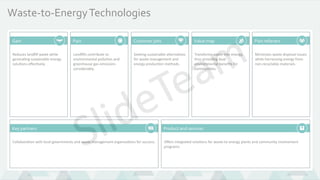
Waste-to-EnergyTechnologies
Gain
Reduces landfill waste while
generating sustainable energy
solutions effectively.
Pain
Landfills contribute to
environmental pollution and
greenhouse gas emissions
considerably.
Customer jobs
Seeking sustainable alternatives
for waste management and
energy production methods.
Value map
Transforms waste into energy,
thus providing dual
environmental benefits for
communities.
Pain relievers
Minimizes waste disposal issues
while harnessing energy from
non-recyclable materials.
Key partners
Collaboration with local governments and waste management organizations for success.
Product and services
Offers integrated solutions for waste-to-energy plants and community involvement
programs.
Community Engagement inWaste Management
John
Project Manager
Sarah
Community Liaison
Mike
Waste Analyst
Anna
Volunteer
Coordinator
Tom
Outreach Specialist
Lucy
Education Officer
Derek
Research Associate
Policy Frameworks for EffectiveWaste Management
EffectiveWaste Management
Strategies
Regulations
Governments must enforce
strict waste regulations.
Incentives
Provide financial incentives
for recycling programs.
Education
Public education campaigns to
promote waste reduction.
Collaboration
Encourage partnerships
between local governments
and businesses.
International Case Studies in
Waste Management
Problem Faced
Cities struggle with increasing waste generation rates.
Solution Offered
Implementing recycling programs and waste segregation.
Benefits
Reduced landfill waste and increased material recovery.
Approach 01
Assess
Evaluate current waste
management practices in
cities.
02
Engage
Involve community in waste
reduction initiatives.
03
Implement
Launch recycling and
composting programs
effectively.
04
Monitor
Track progress and adjust
strategies as necessary.
Innovative Solutions inWaste
Reduction
Reduce
Implementing the 5Rs framework encourages households to refuse, reduce,
reuse, recycle, and rot, minimizing overall waste generation and promoting
sustainable practices within communities.
Compost
Community composting programs transform organic waste into valuable
fertilizer, enriching soil health while diverting food scraps from landfills and
reducing greenhouse gas emissions.
Educate
Awareness campaigns focused on waste management strategies help educate
individuals and businesses about sustainable practices, fostering a culture of
environmental responsibility and reducing litter.
Role ofTechnology in
Waste Management
Vision
Empowering sustainable communities through innovative waste
management technologies and solutions for a cleaner environment.
Mission
To revolutionize waste management practices using advanced technology,
enhancing efficiency and promoting environmental sustainability.
Value
Commitment to innovation, sustainability, and collaboration in reducing
waste and improving resource recovery efforts.
Behavioral Change forWaste Reduction
01
Individuals
Empowering people to make conscious
choices daily.
02
Communities
Collaborating to promote local recycling
initiatives effectively.
03
Engaging businesses to adopt sustainable waste
management practices.
Organizations
04
Governments
Implementing policies that encourage waste reduction
initiatives large-scale.
05
Education
Integrating environmental education into school
curriculums routinely.
06
Media
Raising awareness through campaigns focused on waste
reduction.
Technology
07
Leveraging apps that help monitor waste production effectively.
Corporate Responsibility andWaste
Policies
ReduceWaste
Implement strategies to minimize
waste generation through efficient
resource usage and planning.
Sustainable Practices
Adopt eco-friendly practices that
promote sustainability in all aspects of
corporate operations.
EmployeeTraining
Educate employees about waste
reduction methods and the importance
of corporate responsibility.
Waste Audits
Conduct regular audits to assess waste
management practices and identify
areas for improvement.
Public Awareness Campaigns
and Education
Educate Public
Educate the community about proper waste disposal techniques.
Reduce Waste
Encourage citizens to reduce waste through effective recycling
methods.
LocalWorkshops
Organize workshops focusing on sustainability and environmental
care.
Social Media
Utilize social media platforms for awareness and informative
campaigns.
School Programs
Implement programs in schools educating children on waste
management.
Community Events
Hold community clean-up events to engage locals in waste
reduction.
Partnerships
Form partnerships with local organizations to enhance outreach
efforts.
Feedback Surveys
Conduct surveys to gather community feedback on waste
management practices.
Economic Impacts ofWaste Management
This is a sample graph with some sample data. Replace it with your own graph with your relevant message.
Year 1 Year 2 Year 3 Year 4 Year 5 Year 6
0
50
100
150
200
250
300
Economic Trends in Waste Management
Waste Management Costs Revenue from Recycling
Years
Amount
(in
USD)
Highlights
01
Cost Increase
Waste management costs rise 20% annually.
02
Recycling Revenue
Recycling projects yield 20% more revenue.
03
Job Creation
Waste management sector creates 10,000 jobs yearly.
Financial Models for SustainableWaste Solutions
2020 2021 2022 2023 2024
Year $500K $600K $700K $800K $900K
Revenue $300K $350K $400K $450K $500K
Cost $200K $250K $300K $350K $400K
Profit Text Here Text Here Text Here Text Here Text Here
Highlights
01
Waste Reduction
Recycling achieves 35% less landfill waste.
02
Revenue Increase
Sustainable practices boost revenue by
25%.
03
Community Engagement
Engaged communities reduce waste by
30%.
Local Government Initiatives forWaste Reduction
Assess
Evaluate current
waste
management
practices and
statistics.
01
Plan
Develop
strategies to
minimize waste
generation
effectively.
02
Educate
Inform
community
members about
waste reduction
benefits.
03 04
Implement
Launch programs
aimed at
reducing waste
disposal rates.
05
Monitor
Track and
analyze waste
management
program
performance.
06
Revise
Make necessary
adjustments
based on
collected data
insights.
Best Practices inWaste
Management
01
ReduceWaste
Implement strategies to minimize waste
production by encouraging practices like
using reusable bags, containers, and
reducing single-use plastics within
households and businesses effectively.
02
Recycle Properly
Establish clear recycling guidelines and
educate the community about sorting
materials correctly to enhance recycling
rates and reduce contamination in
recycling streams.
Future ofWaste Management
Vision
To create a sustainable future by innovating
waste management technologies and reducing
landfill use globally.
Mission
To educate communities on waste reduction
and promote recycling practices for a cleaner,
healthier environment.
Values
Commitment to sustainability, innovation, and
community engagement are at the core of our
waste management strategies.
Waste Management in Urban Planning
Flow Chart
Start
Identify waste
Yes
No Implement strategies
End
No Yes
This is a sample flowchart for this slide. Please rearrange the flowchart to convey your message.
Sustainable Materials Management Strategies
01
Reduce
Minimize waste generation by reducing the amount of materials used
in production.
02
Reuse
Encourage the utilization of previously used materials to
extend their lifecycle and reduce waste.
03
Recycle
Process used materials into new products to conserve resources and
reduce landfill waste.
04
Educate
Promote awareness about sustainable practices to
encourage community participation and engagement.
Challenges in Developing Countries
Waste Management
Limited infrastructure leads to
inefficient waste collection, resulting in
increased pollution in urban areas.
Public Awareness
Lack of education on proper waste
disposal practices exacerbates garbage
issues in communities.
Regulatory Challenges
Weak enforcement of environmental
regulations allows illegal dumping,
contributing to public health hazards.
Funding Issues
Insufficient funding for waste
management programs hampers efforts
to improve sanitation facilities.
Legal and Regulatory Aspects ofWaste
L Jan Feb Mar Apr May Jun Jul Aug Sep Oct Nov Dec
Laws
Rules
Acts
Guides
Codes
This is a sample Gantt Chart. Please edit the timeframe above according to your schedule
Environmental Impact Assessments
Weaknesses
• Limited public engagement can lead to
community resistance or apathy towards
projects.
• Assessments may require significant time and
resources, delaying necessary action.
Strengths
• Provides a systematic approach to evaluating
potential environmental impacts of garbage
projects.
• Can identify mitigation strategies to reduce
negative environmental impacts effectively.
Threats
• Political and economic pressures can
undermine the effectiveness of
environmental assessments.
• Increasing public distrust may lead to
opposition against proposed waste
management solutions.
Opportunities
• Opportunity to innovate in waste
management practices through stakeholder
engagement and collaboration.
• Can promote sustainable alternatives and
educate the community on waste reduction
efforts.
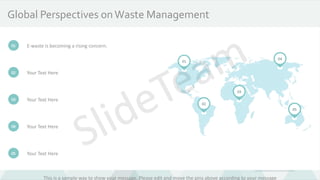
Global Perspectives onWaste Management
This is a sample way to show your message. Please edit and move the pins above according to your message
01 E-waste is becoming a rising concern.
02 Your Text Here
03 Your Text Here
04 Your Text Here
05 Your Text Here
01
02
03
04
05
Feedback and Recommendations for Improvement
01
Increase PublicAwareness
Educate communities on proper
waste disposal and recycling
processes.
02
Enhance Recycling Programs
Implement more accessible recycling
facilities and encourage
participation.
03
InnovateWaste Management
Adopt advanced technologies for
efficient waste collection and
processing.
04
Promote Composting Initiatives
Encourage households to compost
organic waste to reduce landfill
burden.
05
Strengthen Legislation
Enforce stricter laws on littering and
illegal dumping of waste.
06
Collaborate with Stakeholders
Partner with businesses and NGOs
to tackle garbage problems
collectively.
Conclusion and Next Steps
Emphasize Recycling Efforts
Promote recycling initiatives to reduce waste and conserve resources.
Educate the Community
Increase awareness about garbage problems and encourage
responsible waste management.
Implement Strict Regulations
Enforce policies that limit waste generation and promote sustainable
practices.
Encourage Innovations
Support technological advancements that enhance waste
management and recycling processes.
Thank
you
Address
1234 Garbage Lane, Clean City, CA
Email Address
contact@garbageproblems.com
Contact Number
(555) 123-4567
Instructions to Change Color of Shapes
Some shapes in this deck need to be ungrouped to
change colors
Step 1:
Select the shape,
and right click on it
Step 2:
Select Group ->
Ungroup.
Step 3:
Once ungrouped,
you will be able to
change colors
using the “Format
Shape” option

garbage problems and their solutions.pdf

  • 1.
    Garbage Problems andSolutions A l e x Research Analyst
  • 2.
    Introduction to Garbage Problems ReduceWaste Implementingwaste reduction strategies such as promoting reusable products can significantly decrease the amount of garbage produced by households and businesses. Improve Recycling Enhancing recycling programs and awareness campaigns can lead to better waste management and can help divert significant quantities of materials from landfills.
  • 3.
    Waste Generated 2 billion RecyclingRate 20% Landfill Capacity 70% Incineration Rate 10% This is a sample dashboard. Please edit the metrics according to your message May June July August 0 20 40 60 80 100 120 26 53 100 75 44 70 90 80 Global Waste Over the Years Year Waste (Million Tons) 50 30 10 10 Composition of Global Waste Organic Plastic Metal Paper Current State of GlobalWaste Management
  • 4.
    Types ofWaste andTheirImpacts PlasticWaste Contributes significantly to ocean pollution and ecosystem damage. 01 FoodWaste Leads to greenhouse gas emissions and resource wastage in landfills. 02 E-Waste Contains hazardous materials, risking human health and environment. 03 PaperWaste Drains forest resources and increases landfill bulk and methane output. 04 GlassWaste While recyclable, it often generates energy-intensive disposal challenges. 05 MetalWaste Recycling is vital, as mining new ores is more energy-consuming. 06
  • 5.
    Problem 1 Problem2 Inefficient collection methods lead to overflowing garbage bins at times Collection schedules are often irregular and unclear Overflowing bins cause unsanitary conditions for residents Lack of recycling education contributes to increased landfill waste levels Many individuals do not know what can be recycled Education programs can significantly reduce waste generation Improper waste disposal leads to significant environmental pollution effects Littering is a rampant issue in urban areas Pollution from waste affects local wildlife and ecosystems Challenges inWaste Management Systems Problem 3
  • 6.
    Municipal SolidWaste Challenges ChallengesWeek 1 Week 2 Week 3 Week 4 Week 5 Week 6 Week 7 Week 8 Week 9 Week 10 Week 11 Week 12 Littering Recycling Landfill Incineration Pollution Awareness This is a sample Gantt Chart. Please edit the timeframe above according to your schedule
  • 7.
    PlasticWaste Crisis and Solutions ProblemFaced Plastic waste pollutes oceans and harms wildlife. Solution Offered Implementing widespread recycling and reduction programs. Benefits Cleaner oceans and healthier ecosystems for all.
  • 8.
    E-Waste: Issues andManagement What are the risks associated with e-waste? Impact Minor Moderate Major Severe Rare Low-level disposal issues Insignificant data loss Minimal health impacts Inconsequential environmental harm Unlikely Slight increase in exposure Limited system failures Noticeable health concerns Significant resource depletion Possible Occasional recycling errors Some environmental degradation Increased health risks Critical ecosystem disruption Likely Frequent toxic leaks Regular power losses Widespread health crises Severe legal repercussions
  • 9.
    HealthcareWaste: Risks andRegulations Weaknesses • Improper segregation can lead to increased health and environmental risks over time. • High costs associated with waste management and compliance often deter effective practices. Strengths • Strict regulations ensure that hazardous waste is handled in a safe and effective manner. • Innovation in waste management technologies can greatly reduce environmental impact. Threats • Increased illegal dumping poses severe consequences for public health and safety. • Growing population and waste generation threatens existing waste management systems. Opportunities • Emerging technologies can streamline healthcare waste management processes significantly. • Public awareness campaigns could lead to improved waste disposal practices across communities.
  • 10.
    Challenges of LandfillOverflow Flow Chart Start Assess Yes Recycle Dispose End No Yes This is a sample flowchart for this slide. Please rearrange the flowchart to convey your message. Incinerate Energy Yes No
  • 11.
    Waste Collection Strategiesand Effectiveness Efficiency Cost Community Impact Environmental Benefit Residential Text Here Text Here Text Here Text Here Commercial Text Here Text Here Text Here Text Here Recycling Text Here Text Here Text Here Text Here Hazardous Text Here Text Here Text Here Text Here Insights 01 Collection Rate 85% of waste collected in urban areas. 02 Recycling Impact 20% increase in recycling rates annually. 03 Cost Reduction 30% lower costs with efficient strategies.
  • 12.
    Recycling: Opportunities andObstacles Pros 01 Saves Resources Recycling conserves natural resources by reducing the need for new raw materials. 02 Reduces LandfillWaste Recycling conserves natural resources by reducing the need for new raw materials. 03 Energy Efficient Recycling often uses less energy than producing new products from virgin materials. 04 Job Creation The recycling industry can create numerous jobs in collection, processing, and resale. 01 Contamination Issues Improperly sorted materials can contaminate recycling streams and hinder processing. Cons 02 Costly Processes Recycling can be expensive, requiring investment in facilities and technology. 03 Limited Markets Not all recyclable materials have a consistent market demand, affecting profitability. 04 Public Awareness Lack of knowledge about recycling can lead to participation and adherence issues.
  • 13.
    Composting as aSustainable Practice ReduceWaste Composting diverts organic waste from landfills effectively. 01 Nutrient-Rich Soil Creates high-quality compost enhancing soil fertility for gardens. 02 Community Programs Establish local composting initiatives encouraging community participation. 03 Home Composting Implement backyard or bin compost systems for household waste. 04 Education Outreach Conduct workshops to educate on composting benefits and techniques. 05
  • 14.
    Waste-to-EnergyTechnologies Gain Reduces landfill wastewhile generating sustainable energy solutions effectively. Pain Landfills contribute to environmental pollution and greenhouse gas emissions considerably. Customer jobs Seeking sustainable alternatives for waste management and energy production methods. Value map Transforms waste into energy, thus providing dual environmental benefits for communities. Pain relievers Minimizes waste disposal issues while harnessing energy from non-recyclable materials. Key partners Collaboration with local governments and waste management organizations for success. Product and services Offers integrated solutions for waste-to-energy plants and community involvement programs.
  • 15.
    Community Engagement inWasteManagement John Project Manager Sarah Community Liaison Mike Waste Analyst Anna Volunteer Coordinator Tom Outreach Specialist Lucy Education Officer Derek Research Associate
  • 16.
    Policy Frameworks forEffectiveWaste Management EffectiveWaste Management Strategies Regulations Governments must enforce strict waste regulations. Incentives Provide financial incentives for recycling programs. Education Public education campaigns to promote waste reduction. Collaboration Encourage partnerships between local governments and businesses.
  • 17.
    International Case Studiesin Waste Management Problem Faced Cities struggle with increasing waste generation rates. Solution Offered Implementing recycling programs and waste segregation. Benefits Reduced landfill waste and increased material recovery. Approach 01 Assess Evaluate current waste management practices in cities. 02 Engage Involve community in waste reduction initiatives. 03 Implement Launch recycling and composting programs effectively. 04 Monitor Track progress and adjust strategies as necessary.
  • 18.
    Innovative Solutions inWaste Reduction Reduce Implementingthe 5Rs framework encourages households to refuse, reduce, reuse, recycle, and rot, minimizing overall waste generation and promoting sustainable practices within communities. Compost Community composting programs transform organic waste into valuable fertilizer, enriching soil health while diverting food scraps from landfills and reducing greenhouse gas emissions. Educate Awareness campaigns focused on waste management strategies help educate individuals and businesses about sustainable practices, fostering a culture of environmental responsibility and reducing litter.
  • 19.
    Role ofTechnology in WasteManagement Vision Empowering sustainable communities through innovative waste management technologies and solutions for a cleaner environment. Mission To revolutionize waste management practices using advanced technology, enhancing efficiency and promoting environmental sustainability. Value Commitment to innovation, sustainability, and collaboration in reducing waste and improving resource recovery efforts.
  • 20.
    Behavioral Change forWasteReduction 01 Individuals Empowering people to make conscious choices daily. 02 Communities Collaborating to promote local recycling initiatives effectively. 03 Engaging businesses to adopt sustainable waste management practices. Organizations 04 Governments Implementing policies that encourage waste reduction initiatives large-scale. 05 Education Integrating environmental education into school curriculums routinely. 06 Media Raising awareness through campaigns focused on waste reduction. Technology 07 Leveraging apps that help monitor waste production effectively.
  • 21.
    Corporate Responsibility andWaste Policies ReduceWaste Implementstrategies to minimize waste generation through efficient resource usage and planning. Sustainable Practices Adopt eco-friendly practices that promote sustainability in all aspects of corporate operations. EmployeeTraining Educate employees about waste reduction methods and the importance of corporate responsibility. Waste Audits Conduct regular audits to assess waste management practices and identify areas for improvement.
  • 22.
    Public Awareness Campaigns andEducation Educate Public Educate the community about proper waste disposal techniques. Reduce Waste Encourage citizens to reduce waste through effective recycling methods. LocalWorkshops Organize workshops focusing on sustainability and environmental care. Social Media Utilize social media platforms for awareness and informative campaigns. School Programs Implement programs in schools educating children on waste management. Community Events Hold community clean-up events to engage locals in waste reduction. Partnerships Form partnerships with local organizations to enhance outreach efforts. Feedback Surveys Conduct surveys to gather community feedback on waste management practices.
  • 23.
    Economic Impacts ofWasteManagement This is a sample graph with some sample data. Replace it with your own graph with your relevant message. Year 1 Year 2 Year 3 Year 4 Year 5 Year 6 0 50 100 150 200 250 300 Economic Trends in Waste Management Waste Management Costs Revenue from Recycling Years Amount (in USD) Highlights 01 Cost Increase Waste management costs rise 20% annually. 02 Recycling Revenue Recycling projects yield 20% more revenue. 03 Job Creation Waste management sector creates 10,000 jobs yearly.
  • 24.
    Financial Models forSustainableWaste Solutions 2020 2021 2022 2023 2024 Year $500K $600K $700K $800K $900K Revenue $300K $350K $400K $450K $500K Cost $200K $250K $300K $350K $400K Profit Text Here Text Here Text Here Text Here Text Here Highlights 01 Waste Reduction Recycling achieves 35% less landfill waste. 02 Revenue Increase Sustainable practices boost revenue by 25%. 03 Community Engagement Engaged communities reduce waste by 30%.
  • 25.
    Local Government InitiativesforWaste Reduction Assess Evaluate current waste management practices and statistics. 01 Plan Develop strategies to minimize waste generation effectively. 02 Educate Inform community members about waste reduction benefits. 03 04 Implement Launch programs aimed at reducing waste disposal rates. 05 Monitor Track and analyze waste management program performance. 06 Revise Make necessary adjustments based on collected data insights.
  • 26.
    Best Practices inWaste Management 01 ReduceWaste Implementstrategies to minimize waste production by encouraging practices like using reusable bags, containers, and reducing single-use plastics within households and businesses effectively. 02 Recycle Properly Establish clear recycling guidelines and educate the community about sorting materials correctly to enhance recycling rates and reduce contamination in recycling streams.
  • 27.
    Future ofWaste Management Vision Tocreate a sustainable future by innovating waste management technologies and reducing landfill use globally. Mission To educate communities on waste reduction and promote recycling practices for a cleaner, healthier environment. Values Commitment to sustainability, innovation, and community engagement are at the core of our waste management strategies.
  • 28.
    Waste Management inUrban Planning Flow Chart Start Identify waste Yes No Implement strategies End No Yes This is a sample flowchart for this slide. Please rearrange the flowchart to convey your message.
  • 29.
    Sustainable Materials ManagementStrategies 01 Reduce Minimize waste generation by reducing the amount of materials used in production. 02 Reuse Encourage the utilization of previously used materials to extend their lifecycle and reduce waste. 03 Recycle Process used materials into new products to conserve resources and reduce landfill waste. 04 Educate Promote awareness about sustainable practices to encourage community participation and engagement.
  • 30.
    Challenges in DevelopingCountries Waste Management Limited infrastructure leads to inefficient waste collection, resulting in increased pollution in urban areas. Public Awareness Lack of education on proper waste disposal practices exacerbates garbage issues in communities. Regulatory Challenges Weak enforcement of environmental regulations allows illegal dumping, contributing to public health hazards. Funding Issues Insufficient funding for waste management programs hampers efforts to improve sanitation facilities.
  • 31.
    Legal and RegulatoryAspects ofWaste L Jan Feb Mar Apr May Jun Jul Aug Sep Oct Nov Dec Laws Rules Acts Guides Codes This is a sample Gantt Chart. Please edit the timeframe above according to your schedule
  • 32.
    Environmental Impact Assessments Weaknesses •Limited public engagement can lead to community resistance or apathy towards projects. • Assessments may require significant time and resources, delaying necessary action. Strengths • Provides a systematic approach to evaluating potential environmental impacts of garbage projects. • Can identify mitigation strategies to reduce negative environmental impacts effectively. Threats • Political and economic pressures can undermine the effectiveness of environmental assessments. • Increasing public distrust may lead to opposition against proposed waste management solutions. Opportunities • Opportunity to innovate in waste management practices through stakeholder engagement and collaboration. • Can promote sustainable alternatives and educate the community on waste reduction efforts.
  • 33.
    Global Perspectives onWasteManagement This is a sample way to show your message. Please edit and move the pins above according to your message 01 E-waste is becoming a rising concern. 02 Your Text Here 03 Your Text Here 04 Your Text Here 05 Your Text Here 01 02 03 04 05
  • 34.
    Feedback and Recommendationsfor Improvement 01 Increase PublicAwareness Educate communities on proper waste disposal and recycling processes. 02 Enhance Recycling Programs Implement more accessible recycling facilities and encourage participation. 03 InnovateWaste Management Adopt advanced technologies for efficient waste collection and processing. 04 Promote Composting Initiatives Encourage households to compost organic waste to reduce landfill burden. 05 Strengthen Legislation Enforce stricter laws on littering and illegal dumping of waste. 06 Collaborate with Stakeholders Partner with businesses and NGOs to tackle garbage problems collectively.
  • 35.
    Conclusion and NextSteps Emphasize Recycling Efforts Promote recycling initiatives to reduce waste and conserve resources. Educate the Community Increase awareness about garbage problems and encourage responsible waste management. Implement Strict Regulations Enforce policies that limit waste generation and promote sustainable practices. Encourage Innovations Support technological advancements that enhance waste management and recycling processes.
  • 36.
    Thank you Address 1234 Garbage Lane,Clean City, CA Email Address contact@garbageproblems.com Contact Number (555) 123-4567
  • 37.
    Instructions to ChangeColor of Shapes Some shapes in this deck need to be ungrouped to change colors Step 1: Select the shape, and right click on it Step 2: Select Group -> Ungroup. Step 3: Once ungrouped, you will be able to change colors using the “Format Shape” option