Game
Balancing
Compiled by
Arun Babu J S
Game Balancing
Over Power
Dominating
Too Many
So Easy
Boring
Playable
Under Power
Surrendering
Too Less
So Difficult
Frustrating
Not Playable
Game Balancing - Misconceptions
Not all Games are Balanced
Attaining perfection in Balance
It is okay for a Game to not be Balanced.
Balancing can be achieved by tweaking few variables and hence can be done at the
after implementation
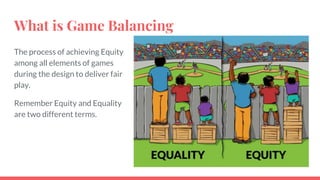
What is Game Balancing
The process of achieving Equity
among all elements of games
during the design to deliver fair
play.
Remember Equity and Equality
are two different terms.
Determinism
Chess and Checkers like Games
No Randomization
Abide by strict movement and
strategies
Involves a Pattern
If you crack the pattern - you are the
master - Rubik’s Cube
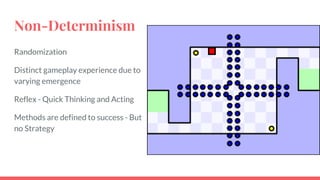
Non-Determinism
Randomization
Distinct gameplay experience due to
varying emergence
Reflex - Quick Thinking and Acting
Methods are defined to success - But
no Strategy
Symmetric or Asymmetric
Symmetric Games - Game where all players will have same starting position, rules
and equal capabilities.
Achieving symmetry is an easy way to achieve Balance
Asymmetric Games - Different starting points and character traits for each player.
Complex in design.
Solvability
Make sure your game is solvable.
And Don’t keep it too obvious.
Trivial Solvability- Easy - Simple Solutions to solve the Game
Theoretical Solvability - Complex - Beyond Human Mind - Involves long play time to
solve
Intransitive Game
Games based on random choices on certain options.
Involves Luck Factor
Simultaneous decision making
No optimal move based out of the game.
Equal Probability to Win or Lose.
Build Conflicting relationships
Game State Information - Solvability
Deterministic Game reveals complete information of game states
Non-deterministic - partially
Intransitive - No Clue
Meta Game
Game Surrounding the Game
Formed by Leisure activity in Game not focussing on the core mission or the goal.
Involves collecting resources, Strengthen their profile.
To have advantage to win the game.
Imbalance in Game effects Meta Game and vice versa.
Things to Note
Balance vs Fun
Balance with respect to the Scope
Competing equally skilled players
Patches - Not an excuse for not doing early balancing
Mods - Encouraged carefully
Balance in Single Player Games
Maintain the Challenge Level Appropriate
Easy or Hard
Pacing
Handling Varying Player Curve
Balance in Symmetric Games
No Dominant Strategies
Game Objects Balanced
Balance in Asymmetric Games
Harder to Balance
Achieve Equity in Resources
Compare Players
Balancing Conflicts ?
Strategies in Games
Dominant Strategies will turn other strategies meaningless
Players don't choose sub optimal strategies once the dominant one is discovered.
Suboptimal strategies can be removed.
Or All Strategies can be balanced.
Balance in Game Objects
Becoming too Strong or Too Weak
No element should become a Dominant one
Be proportional
Present a Cost / Benefit Ratio.
How to Balance
Playtest
Use Math - in places required
Start from beginning
Opinion from Focus Groups - Designers
Record Decisions
Thank you

Game balancing

  • 1.
  • 2.
    Game Balancing Over Power Dominating TooMany So Easy Boring Playable Under Power Surrendering Too Less So Difficult Frustrating Not Playable
  • 3.
    Game Balancing -Misconceptions Not all Games are Balanced Attaining perfection in Balance It is okay for a Game to not be Balanced. Balancing can be achieved by tweaking few variables and hence can be done at the after implementation
  • 4.
    What is GameBalancing The process of achieving Equity among all elements of games during the design to deliver fair play. Remember Equity and Equality are two different terms.
  • 5.
    Determinism Chess and Checkerslike Games No Randomization Abide by strict movement and strategies Involves a Pattern If you crack the pattern - you are the master - Rubik’s Cube
  • 6.
    Non-Determinism Randomization Distinct gameplay experiencedue to varying emergence Reflex - Quick Thinking and Acting Methods are defined to success - But no Strategy
  • 7.
    Symmetric or Asymmetric SymmetricGames - Game where all players will have same starting position, rules and equal capabilities. Achieving symmetry is an easy way to achieve Balance Asymmetric Games - Different starting points and character traits for each player. Complex in design.
  • 8.
    Solvability Make sure yourgame is solvable. And Don’t keep it too obvious. Trivial Solvability- Easy - Simple Solutions to solve the Game Theoretical Solvability - Complex - Beyond Human Mind - Involves long play time to solve
  • 9.
    Intransitive Game Games basedon random choices on certain options. Involves Luck Factor Simultaneous decision making No optimal move based out of the game. Equal Probability to Win or Lose. Build Conflicting relationships
  • 10.
    Game State Information- Solvability Deterministic Game reveals complete information of game states Non-deterministic - partially Intransitive - No Clue
  • 11.
    Meta Game Game Surroundingthe Game Formed by Leisure activity in Game not focussing on the core mission or the goal. Involves collecting resources, Strengthen their profile. To have advantage to win the game. Imbalance in Game effects Meta Game and vice versa.
  • 12.
    Things to Note Balancevs Fun Balance with respect to the Scope Competing equally skilled players Patches - Not an excuse for not doing early balancing Mods - Encouraged carefully
  • 13.
    Balance in SinglePlayer Games Maintain the Challenge Level Appropriate Easy or Hard Pacing Handling Varying Player Curve
  • 14.
    Balance in SymmetricGames No Dominant Strategies Game Objects Balanced
  • 15.
    Balance in AsymmetricGames Harder to Balance Achieve Equity in Resources Compare Players Balancing Conflicts ?
  • 16.
    Strategies in Games DominantStrategies will turn other strategies meaningless Players don't choose sub optimal strategies once the dominant one is discovered. Suboptimal strategies can be removed. Or All Strategies can be balanced.
  • 17.
    Balance in GameObjects Becoming too Strong or Too Weak No element should become a Dominant one Be proportional Present a Cost / Benefit Ratio.
  • 18.
    How to Balance Playtest UseMath - in places required Start from beginning Opinion from Focus Groups - Designers Record Decisions
  • 19.