Traditions
Polish customs, especially at Christmas time, are 
both beautiful and meaningful. The preparations 
for Christmas begin many days before the actual 
celebration Christmas. The insides of the houses 
are also cleaned thoroughly. It is believed that if a 
house is dirty on Christmas Eve, it will remain 
dirty all next year. A white Christmas is 
considered a real Christmas; therefore, everybody 
is happy when there is fresh snow outside. It is 
also believed that animals can speak with a 
human voice.
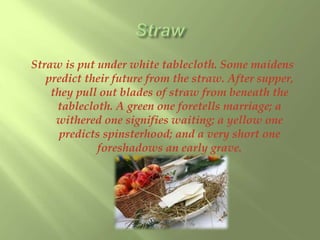
Christmas and Santa Claus Day are not celebrated at 
the same time in Poland, but rather three weeks 
apart. Santa Claus Day is celebrated on December 
6th, the name day of St. Nicholas. This is when St. 
Nicholas visits some children in person or secretly 
during the night.
Straw is put under white tablecloth. Some maidens 
predict their future from the straw. After supper, 
they pull out blades of straw from beneath the 
tablecloth. A green one foretells marriage; a 
withered one signifies waiting; a yellow one 
predicts spinsterhood; and a very short one 
foreshadows an early grave.
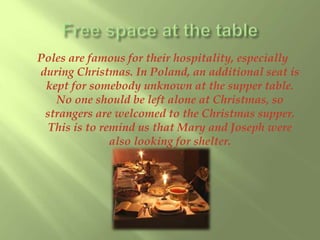
Poles are famous for their hospitality, especially 
during Christmas. In Poland, an additional seat is 
kept for somebody unknown at the supper table. 
No one should be left alone at Christmas, so 
strangers are welcomed to the Christmas supper. 
This is to remind us that Mary and Joseph were 
also looking for shelter.
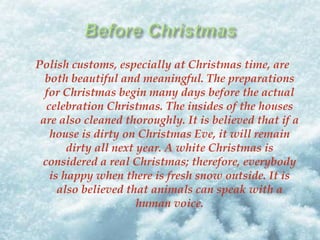
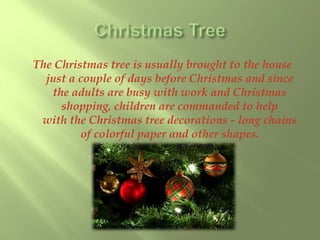
The Christmas tree is usually brought to the house 
just a couple of days before Christmas and since 
the adults are busy with work and Christmas 
shopping, children are commanded to help 
with the Christmas tree decorations - long chains 
of colorful paper and other shapes.
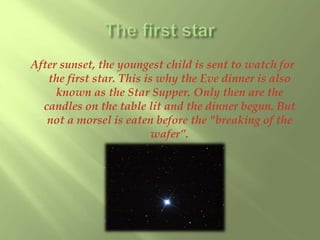
After sunset, the youngest child is sent to watch for 
the first star. This is why the Eve dinner is also 
known as the Star Supper. Only then are the 
candles on the table lit and the dinner begun. But 
not a morsel is eaten before the "breaking of the 
wafer”.
The family member takes the wafer, breaks it and shares 
it with the next eldest with wishes for good health and 
prosperity, and a kiss on each cheek. Each person then 
exchanges wafer with everyone else at the table. It can 
be a very emotional time as grudges are forgotten and 
deceased family members are remembered. Some Poles 
share a pink-colored wafers with the household (and 
barnyard) animals because they were the first to greet 
the Baby Jesus at midnight. The animals also receive a 
taste of every course of the meal mixed in with their 
feed. Instead of sending Christmas cards to friends and 
family not present, Poles send wafers, first tearing off 
a small corner to show that the donor has broken it 
with them as a token of affection.
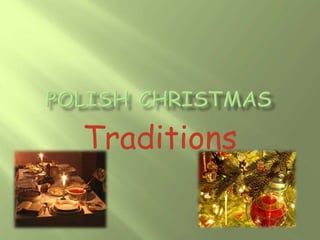
Christmas Eve is a meatless meal because, years ago, Roman Catholics 
fasted for the four weeks of Advent, including Christmas Eve. In 
the past there were thirteen main dishes (representing the 
Apostles and Christ), but, these days, many families have replaced 
this tradition with a twelve-fruit compote for dessert. The foods 
are to represent the four corners of the earth -- mushrooms from 
the forest, grain from the fields, fruit from the orchards, and fish 
from the lakes and sea. Meals vary from family to family but 
usually include a special soup followed by many elegant fish 
preparations, vegetables, and dumplings. Typical dishes include 
borscht with mushroom dumplings, carp in aspic, herring, 
breaded whitefish, meatless cabbage rolls, and noodles with 
poppyseed. Desserts might include nuts, tangerines, chocolates, 
poppyseed roll, a jam-filled flat pastry, honey-spice cake, 
gingerbread cookies, fruit compote.
When night begins to fall, you can hear stamping and jingling, 
followed by Christmas carol singing outside. Carolers begin 
their wandering from home to home. Herody, a popular 
form of caroling, is a live performance usually played by 
twelve young boys. Dressed in special costumes, they 
include King Herod, a field marshal, a knight, a soldier, an 
angel, a devil, death, a Jew, Mary, shepherds, and 
sometimes the Three Kings and an accordionist. They sing 
pastoral songs and carols, and when let into a house, 
perform scenes from King Herod's life. Oration and songs 
vary and depend upon to whom they are being addressed: 
the owner of the house, a young woman about to be 
married, a widow, etc. At the conclusion, the performers are 
offered refreshments and some money. Also popular is 
caroling with a crib and with a star. Usually, those are 
items are carried by three caroling teenagers. They, too, are 
given some money.
Gabriela Bagnicka 
2 c

Gabrysia Bagnicka

  • 1.
  • 2.
    Polish customs, especiallyat Christmas time, are both beautiful and meaningful. The preparations for Christmas begin many days before the actual celebration Christmas. The insides of the houses are also cleaned thoroughly. It is believed that if a house is dirty on Christmas Eve, it will remain dirty all next year. A white Christmas is considered a real Christmas; therefore, everybody is happy when there is fresh snow outside. It is also believed that animals can speak with a human voice.
  • 3.
    Christmas and SantaClaus Day are not celebrated at the same time in Poland, but rather three weeks apart. Santa Claus Day is celebrated on December 6th, the name day of St. Nicholas. This is when St. Nicholas visits some children in person or secretly during the night.
  • 4.
    Straw is putunder white tablecloth. Some maidens predict their future from the straw. After supper, they pull out blades of straw from beneath the tablecloth. A green one foretells marriage; a withered one signifies waiting; a yellow one predicts spinsterhood; and a very short one foreshadows an early grave.
  • 5.
    Poles are famousfor their hospitality, especially during Christmas. In Poland, an additional seat is kept for somebody unknown at the supper table. No one should be left alone at Christmas, so strangers are welcomed to the Christmas supper. This is to remind us that Mary and Joseph were also looking for shelter.
  • 6.
    The Christmas treeis usually brought to the house just a couple of days before Christmas and since the adults are busy with work and Christmas shopping, children are commanded to help with the Christmas tree decorations - long chains of colorful paper and other shapes.
  • 7.
    After sunset, theyoungest child is sent to watch for the first star. This is why the Eve dinner is also known as the Star Supper. Only then are the candles on the table lit and the dinner begun. But not a morsel is eaten before the "breaking of the wafer”.
  • 8.
    The family membertakes the wafer, breaks it and shares it with the next eldest with wishes for good health and prosperity, and a kiss on each cheek. Each person then exchanges wafer with everyone else at the table. It can be a very emotional time as grudges are forgotten and deceased family members are remembered. Some Poles share a pink-colored wafers with the household (and barnyard) animals because they were the first to greet the Baby Jesus at midnight. The animals also receive a taste of every course of the meal mixed in with their feed. Instead of sending Christmas cards to friends and family not present, Poles send wafers, first tearing off a small corner to show that the donor has broken it with them as a token of affection.
  • 9.
    Christmas Eve isa meatless meal because, years ago, Roman Catholics fasted for the four weeks of Advent, including Christmas Eve. In the past there were thirteen main dishes (representing the Apostles and Christ), but, these days, many families have replaced this tradition with a twelve-fruit compote for dessert. The foods are to represent the four corners of the earth -- mushrooms from the forest, grain from the fields, fruit from the orchards, and fish from the lakes and sea. Meals vary from family to family but usually include a special soup followed by many elegant fish preparations, vegetables, and dumplings. Typical dishes include borscht with mushroom dumplings, carp in aspic, herring, breaded whitefish, meatless cabbage rolls, and noodles with poppyseed. Desserts might include nuts, tangerines, chocolates, poppyseed roll, a jam-filled flat pastry, honey-spice cake, gingerbread cookies, fruit compote.
  • 10.
    When night beginsto fall, you can hear stamping and jingling, followed by Christmas carol singing outside. Carolers begin their wandering from home to home. Herody, a popular form of caroling, is a live performance usually played by twelve young boys. Dressed in special costumes, they include King Herod, a field marshal, a knight, a soldier, an angel, a devil, death, a Jew, Mary, shepherds, and sometimes the Three Kings and an accordionist. They sing pastoral songs and carols, and when let into a house, perform scenes from King Herod's life. Oration and songs vary and depend upon to whom they are being addressed: the owner of the house, a young woman about to be married, a widow, etc. At the conclusion, the performers are offered refreshments and some money. Also popular is caroling with a crib and with a star. Usually, those are items are carried by three caroling teenagers. They, too, are given some money.
  • 11.