FUTURE TENSES
WILL / BE GOING TO
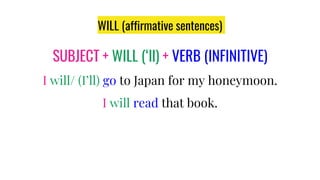
WILL (affirmative sentences)
SUBJECT + WILL (‘ll) + VERB (INFINITIVE)
I will/ (I’ll) go to Japan for my honeymoon.
I will read that book.
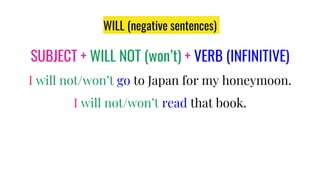
WILL (negative sentences)
SUBJECT + WILL NOT (won’t) + VERB (INFINITIVE)
I will not/won’t go to Japan for my honeymoon.
I will not/won’t read that book.
WILL (questions)
WILL/WON’T + SUBJECT + VERB (INFINITIVE)...?
Will you go to Japan?
Will you read that book?
Won’t you come home?
*In formal English, we can say Will + subject +
not…? Will you not go to Japan?
BE GOING TO (affirmative sentences)
SUBJECT + VERB TO BE + GOING TO + VERB
(INFINITIVE)
I am going to sleep well tonight.
You are going to make me cry.
BE GOING TO (negative sentences)
SUBJECT + VERB TO BE (NEGATIVE) + GOING TO + VERB
(INFINITIVE)
I am NOT / I’m not going to sleep well tonight.
You are NOT / You aren’t going to make me cry.
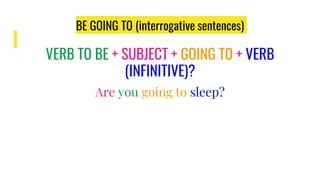
BE GOING TO (interrogative sentences)
VERB TO BE + SUBJECT + GOING TO + VERB
(INFINITIVE)?
Are you going to sleep?
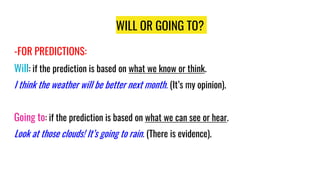
WILL OR GOING TO?
-FOR PREDICTIONS:
Will: if the prediction is based on what we know or think.
I think the weather will be better next month. (It’s my opinion).
Going to: if the prediction is based on what we can see or hear.
Look at those clouds! It’s going to rain. (There is evidence).
WILL OR GOING TO?
-FOR PLANS:
Will: when we are deciding what to do as we speak.
I think I’ll have the pesto salad. (I’m deciding right now).
Going to: when we have already decided what to do, it is planned.
I’m going to Paris tomorrow, everything is ready! (I have planned it).
EXTRA INFORMATION
-FOR PROMISES AND OFFERS → WILL
● Do you have a headache? I’ll get an aspirin for you.
● I’ll phone you later, I won’t forget.
● Yes, I’ll do my homework.

FUTURE TENSES GRAMMAR PRESENTATION B1 LEVEL

  • 1.
  • 2.
    WILL (affirmative sentences) SUBJECT+ WILL (‘ll) + VERB (INFINITIVE) I will/ (I’ll) go to Japan for my honeymoon. I will read that book.
  • 3.
    WILL (negative sentences) SUBJECT+ WILL NOT (won’t) + VERB (INFINITIVE) I will not/won’t go to Japan for my honeymoon. I will not/won’t read that book.
  • 4.
    WILL (questions) WILL/WON’T +SUBJECT + VERB (INFINITIVE)...? Will you go to Japan? Will you read that book? Won’t you come home? *In formal English, we can say Will + subject + not…? Will you not go to Japan?
  • 5.
    BE GOING TO(affirmative sentences) SUBJECT + VERB TO BE + GOING TO + VERB (INFINITIVE) I am going to sleep well tonight. You are going to make me cry.
  • 6.
    BE GOING TO(negative sentences) SUBJECT + VERB TO BE (NEGATIVE) + GOING TO + VERB (INFINITIVE) I am NOT / I’m not going to sleep well tonight. You are NOT / You aren’t going to make me cry.
  • 7.
    BE GOING TO(interrogative sentences) VERB TO BE + SUBJECT + GOING TO + VERB (INFINITIVE)? Are you going to sleep?
  • 8.
    WILL OR GOINGTO? -FOR PREDICTIONS: Will: if the prediction is based on what we know or think. I think the weather will be better next month. (It’s my opinion). Going to: if the prediction is based on what we can see or hear. Look at those clouds! It’s going to rain. (There is evidence).
  • 9.
    WILL OR GOINGTO? -FOR PLANS: Will: when we are deciding what to do as we speak. I think I’ll have the pesto salad. (I’m deciding right now). Going to: when we have already decided what to do, it is planned. I’m going to Paris tomorrow, everything is ready! (I have planned it).
  • 10.
    EXTRA INFORMATION -FOR PROMISESAND OFFERS → WILL ● Do you have a headache? I’ll get an aspirin for you. ● I’ll phone you later, I won’t forget. ● Yes, I’ll do my homework.