FUNDAMENTALS OF COMPUTER SYSTEMS
Basic Computer System Model
WHAT IS A COMPUTER SYSTEM?
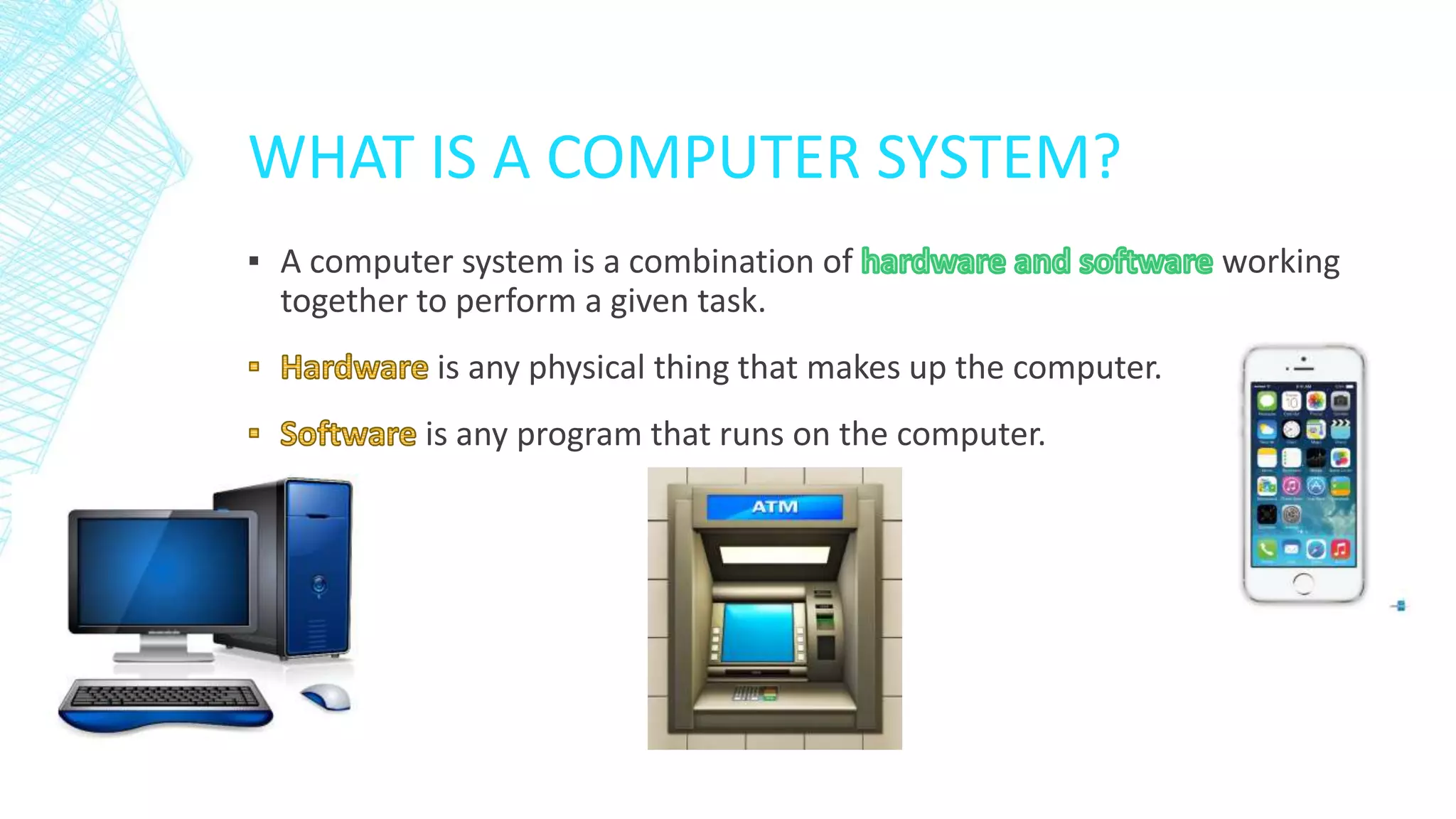
▪ A computer system is a combination of working
together to perform a given task.
is any physical thing that makes up the computer.
is any program that runs on the computer.
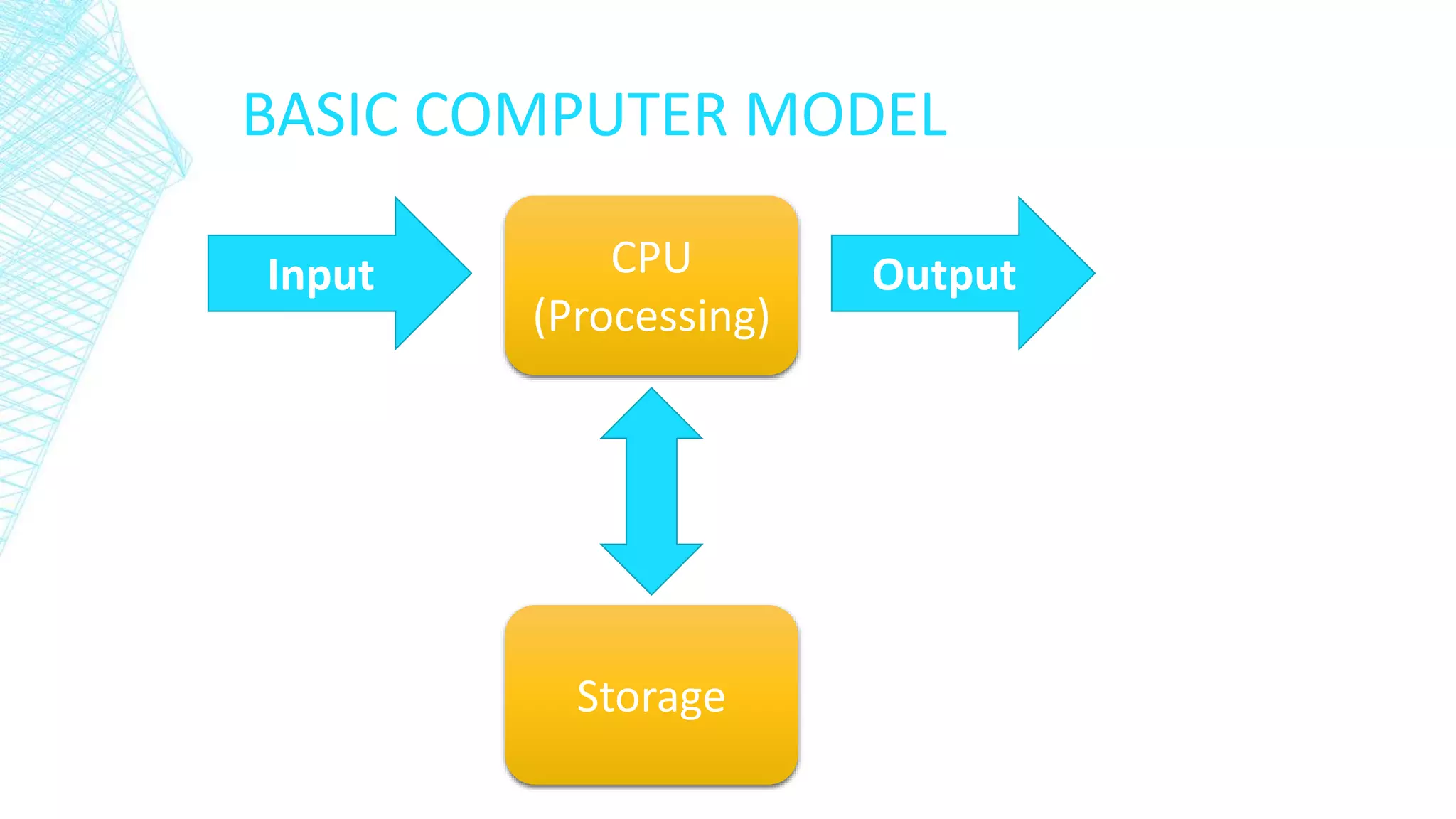
BASIC COMPUTER MODEL
Input Output
CPU
(Processing)
Storage
IMPORTANCE OF COMPUTERS
▪ Where do you see computers?
▪ How to measure the reliability?
▪ Availability – Up time
▪ MTBF – Mean Time Between Failure
PROTECTING AGAINST SYSTEM FAILURES
▪ Hardware redundancy - having more than one of a critical component
▪ Disaster recovery – eg: use of raid systems
what is is
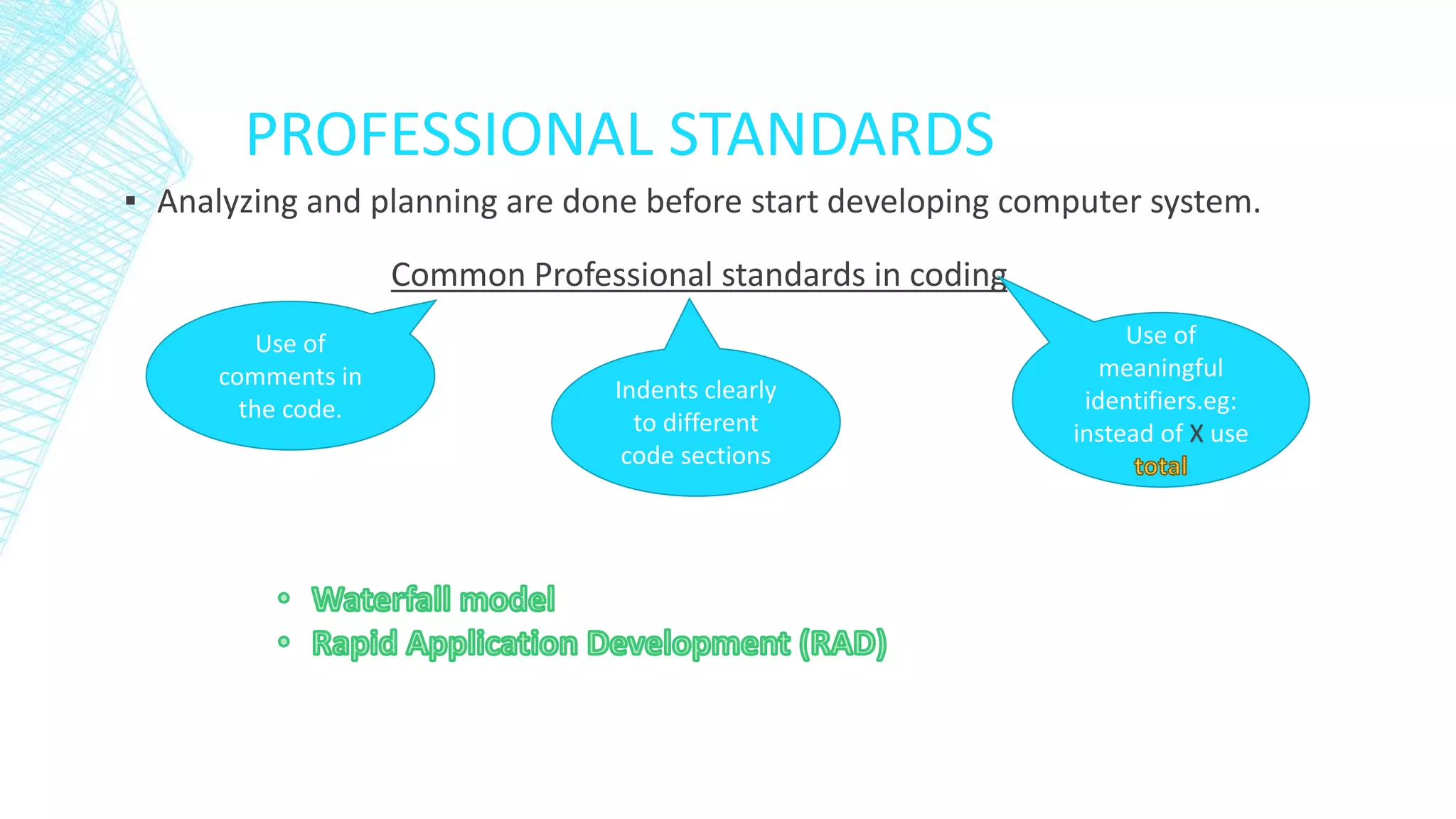
PROFESSIONAL STANDARDS
▪ Analyzing and planning are done before start developing computer system.
Common Professional standards in coding
Use of
comments in
the code.
Indents clearly
to different
code sections
Use of
meaningful
identifiers.eg:
instead of X use
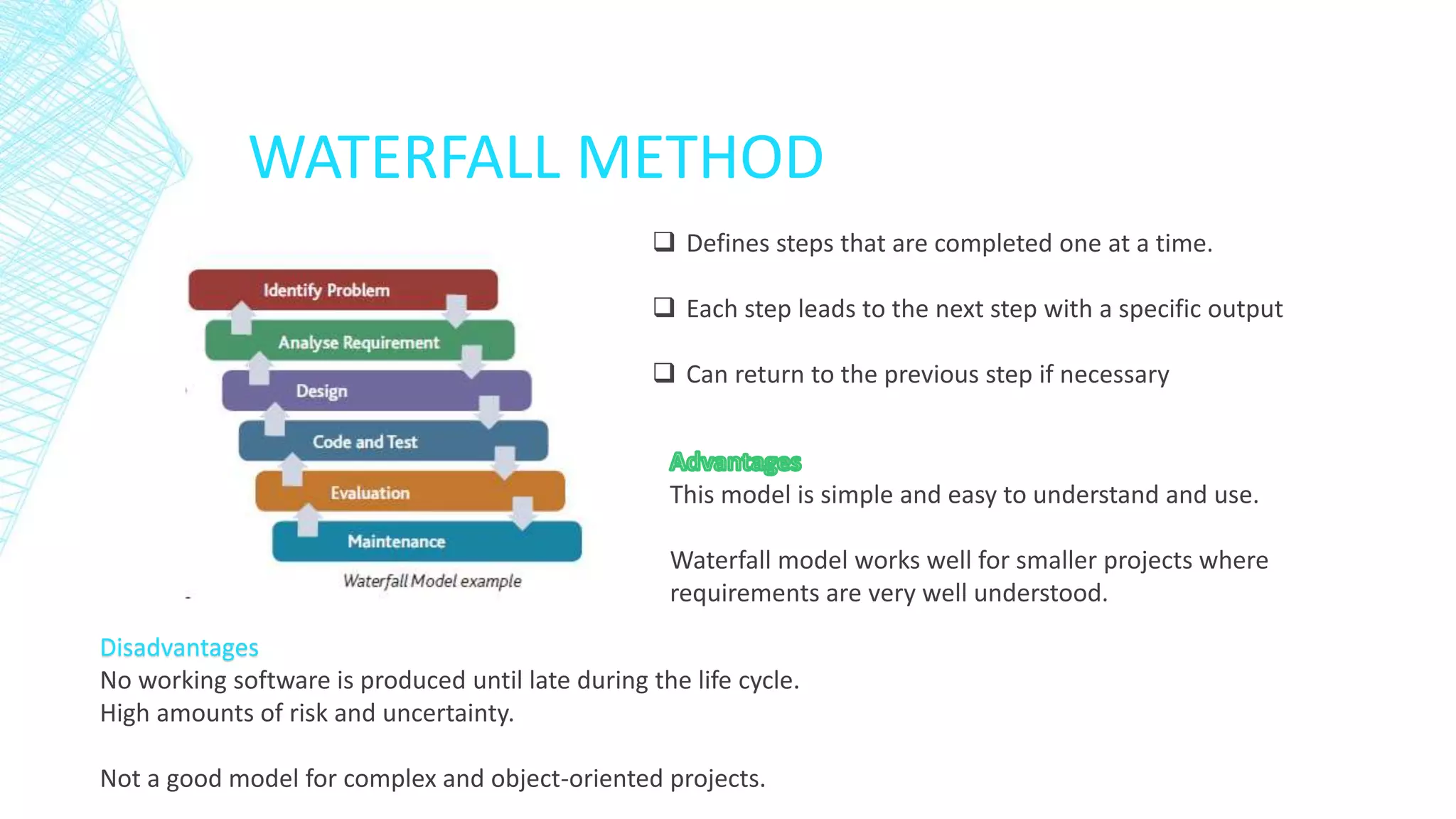
WATERFALL METHOD
 Defines steps that are completed one at a time.
 Each step leads to the next step with a specific output
 Can return to the previous step if necessary
This model is simple and easy to understand and use.
Waterfall model works well for smaller projects where
requirements are very well understood.
Disadvantages
No working software is produced until late during the life cycle.
High amounts of risk and uncertainty.
Not a good model for complex and object-oriented projects.
RAPID APPLICATION DEVELOPMENT (RAD)
• Mostly client involves in the development process
• Starts with a prototype which is developed to a full solution
• Reduced development time.
• Increases reusability of components
• Quick initial reviews occur
• Encourages customer feedback
• Requires highly skilled developers/designers.
• High dependency on modelling skills
• Inapplicable to cheaper projects as cost of modelling
and automated code generation is very high.
WHY DO WE NEED STANDARDS
LEGAL CONSIDERATION
Companies with computer systems that store any personal data must have
processes and security mechanisms designed into the system to meet this requirement
Designers should consider how easy systems will be to use and
any health implications there might be based on their choices of software, screen layout, input
methods and the hardware used.
makes it illegal to use software without buying the
appropriate licence.
ENVIRONMENTAL CONSIDERATION
Fundamentals of computer systems

Fundamentals of computer systems

  • 1.
    FUNDAMENTALS OF COMPUTERSYSTEMS Basic Computer System Model
  • 2.
    WHAT IS ACOMPUTER SYSTEM? ▪ A computer system is a combination of working together to perform a given task. is any physical thing that makes up the computer. is any program that runs on the computer.
  • 3.
    BASIC COMPUTER MODEL InputOutput CPU (Processing) Storage
  • 4.
    IMPORTANCE OF COMPUTERS ▪Where do you see computers? ▪ How to measure the reliability? ▪ Availability – Up time ▪ MTBF – Mean Time Between Failure
  • 5.
    PROTECTING AGAINST SYSTEMFAILURES ▪ Hardware redundancy - having more than one of a critical component ▪ Disaster recovery – eg: use of raid systems what is is
  • 7.
    PROFESSIONAL STANDARDS ▪ Analyzingand planning are done before start developing computer system. Common Professional standards in coding Use of comments in the code. Indents clearly to different code sections Use of meaningful identifiers.eg: instead of X use
  • 8.
    WATERFALL METHOD  Definessteps that are completed one at a time.  Each step leads to the next step with a specific output  Can return to the previous step if necessary This model is simple and easy to understand and use. Waterfall model works well for smaller projects where requirements are very well understood. Disadvantages No working software is produced until late during the life cycle. High amounts of risk and uncertainty. Not a good model for complex and object-oriented projects.
  • 9.
    RAPID APPLICATION DEVELOPMENT(RAD) • Mostly client involves in the development process • Starts with a prototype which is developed to a full solution • Reduced development time. • Increases reusability of components • Quick initial reviews occur • Encourages customer feedback • Requires highly skilled developers/designers. • High dependency on modelling skills • Inapplicable to cheaper projects as cost of modelling and automated code generation is very high.
  • 10.
    WHY DO WENEED STANDARDS
  • 11.
    LEGAL CONSIDERATION Companies withcomputer systems that store any personal data must have processes and security mechanisms designed into the system to meet this requirement Designers should consider how easy systems will be to use and any health implications there might be based on their choices of software, screen layout, input methods and the hardware used. makes it illegal to use software without buying the appropriate licence.
  • 12.