Download the fullversion and explore a variety of ebooks
or textbooks at https://ebookultra.com
Fundamental neuroscience 3ed Edition Squire L.R.
_____ Follow the link below to get your download now _____
https://ebookultra.com/download/fundamental-
neuroscience-3ed-edition-squire-l-r/
Access ebookultra.com now to download high-quality
ebooks or textbooks
2.
Here are somerecommended products for you. Click the link to
download, or explore more at ebookultra.com
Fundamental food microbiology 3ed Edition Ray B.
https://ebookultra.com/download/fundamental-food-microbiology-3ed-
edition-ray-b/
Squire s Fundamentals of Radiology 6th Edition Robert A.
Novelline
https://ebookultra.com/download/squire-s-fundamentals-of-
radiology-6th-edition-robert-a-novelline/
Minerals in Animal and Human Nutrition 2nd Edition L.R.
Mcdowell
https://ebookultra.com/download/minerals-in-animal-and-human-
nutrition-2nd-edition-l-r-mcdowell/
An Elementary Approach to Homological Algebra 1st Edition
L.R. Vermani
https://ebookultra.com/download/an-elementary-approach-to-homological-
algebra-1st-edition-l-r-vermani/
3.
Sampling 3ed. EditionSteven K. Thompson
https://ebookultra.com/download/sampling-3ed-edition-steven-k-
thompson/
Python cookbook 3ed. Edition Beazley D.
https://ebookultra.com/download/python-cookbook-3ed-edition-beazley-d/
Erp Demystified 3Ed 3rd Edition Leon
https://ebookultra.com/download/erp-demystified-3ed-3rd-edition-leon/
Introduction to biomedical engineering 3ed. Edition
Enderle J.
https://ebookultra.com/download/introduction-to-biomedical-
engineering-3ed-edition-enderle-j/
Encyclopedia of Chromatography 3ed. Edition Cazes J. (Ed.)
https://ebookultra.com/download/encyclopedia-of-chromatography-3ed-
edition-cazes-j-ed/
5.
Fundamental neuroscience 3edEdition Squire L.R.
Digital Instant Download
Author(s): Squire L.R., et al. (eds.)
ISBN(s): 9780123740199, 0123740193
Edition: 3ed
File Details: PDF, 38.22 MB
Year: 2008
Language: english
FUNDAMENTAL
NEUROSCIENCE
THIRD EDITION
Edited by
LarrySquire
VA Medical Center San Diego, California
University of California, San Diego, La Jolla, California
Darwin Berg
University of California, San Diego
La Jolla, California
Floyd Bloom
The Scripps Research Institute
La Jolla, California
Sascha du Lac
The Salk Institute
La Jolla, California
Anirvan Ghosh
University of California, San Diego
La Jolla, California
Nicholas Spitzer
University of California, San Diego
La Jolla, California
AMSTERDAM • BOSTON • HEIDELBERG • LONDON
NEW YORK • OXFORD • PARIS • SAN DIEGO
SAN FRANCISCO • SINGAPORE • SYDNEY • TOKYO
Academic Press is an imprint of Elsevier
Short Contents
v
I
NEUROSCIENCE
1. Fundamentalsof Neuroscience 3
2. Basic Plan of the Nervous System 15
II
CELLULAR AND MOLECULAR
NEUROSCIENCE
3. Cellular Components of Nervous Tissue 41
4. Subcellular Organization of the Nervous System:
Organelles and Their Functions 59
5. Electrotonic Properties of Axons and Dendrites 87
6. Membrane Potential and Action Potential 111
7. Neurotransmitters 133
8. Release of Neurotransmitters 157
9. Neurotransmitter Receptors 181
10. Intracellular Signaling 205
11. Postsynaptic Potentials and Synaptic
Integration 227
12. Complex Information Processing in Dendrites 247
13. Brain Energy Metabolism 271
III
NERVOUS SYSTEM
DEVELOPMENT
14. Neural Induction and Pattern Formation 297
15. Cellular Determination 321
16. Neurogenesis and Migration 351
17. Growth Cones and Axon Pathfinding 377
18. Target Selection, Topographic Maps, and Synapse
Formation 401
19. Programmed Cell Death and Neurotrophic
Factors 437
20. Synapse Elimination 469
21. Dendritic Development 491
22. Early Experience and Sensitive Periods 517
IV
SENSORY SYSTEMS
23. Fundamentals of Sensory Systems 535
24. Chemical Senses: Taste and Olfaction 549
25. Somatosensory System 581
26. Audition 609
27. Vision 637
V
MOTOR SYSTEMS
28. Fundamentals of Motor Systems 663
29. The Spinal and Peripheral Motor System 677
30. Descending Control of Movement 699
31. The Basal Ganglia 725
32. Cerebellum 751
33. Eye Movements 775
VI
REGULATORY SYSTEMS
34. The Hypothalamus: An Overview of Regulatory
Systems 795
12.
35. Central Controlof Autonomic Functions:
Organization of the Autonomic Nervous
System 807
36. Neural Regulation of the Cardiovascular
System 829
37. Neural Control of Breathing 855
38. Food Intake and Metabolism 873
39. Water Intake and Body Fluids 889
40. Neuroendocrine Systems 905
41. Circadian Timekeeping 931
42. Sleep, Dreaming, and Wakefulness 959
43. Reward, Motivation, and Addiction 987
VII
BEHAVIORAL AND COGNITIVE
NEUROSCIENCE
44. Human Brain Evolution 1019
45. Cognitive Development and Aging 1039
46. Visual Perception of Objects 1067
47. Spatial Cognition 1091
48. Attention 1113
49. Learning and Memory: Basic Mechanisms 1133
50. Learning and Memory: Brain Systems 1153
51. Language and Communication 1179
52. The Prefrontal Cortex and Executive Brain
Functions 1199
53. The Neuroscience of Consciousness 1223
vi SHORT CONTENTS
13.
Full Contents
vii
Preface xv
Aboutthe Editors xvii
List of Contributors xix
I
NEUROSCIENCE
1. Fundamentals of Neuroscience
FLOYD E. BLOOM
A Brief History of Neuroscience 3
The Terminology of Nervous Systems Is Hierarchical,
Distributed, Descriptive, and Historically Based 3
Neurons and Glia Are Cellular Building Blocks of the
Nervous System 4
The Operative Processes of Nervous Systems Are also
Hierarchical 5
Cellular Organization of the Brain 6
Organization of this Text 7
This Book Is Intended for a Broad Range of Scholars of
the Neurosciences 8
Clinical Issues in the Neurosciences 8
The Spirit of Exploration Continues 9
The Genomic Inventory Is a Giant Step Forward 9
Neuroscience Today: A Communal Endeavor 10
The Creation of Knowledge 10
Responsible Conduct 11
Summary 13
References 13
2. Basic Plan of the Nervous System
LARRY W. SWANSON
Introduction 15
Evolution Highlights: General Organizing Principles 15
Development Reveals Basic Vertebrate Parts 22
The Basic Plan of Nervous System Connectivity 27
Overview of the Adult Mammalian Nervous
System 31
References 37
Suggested Readings 38
II
CELLULAR AND MOLECULAR
NEUROSCIENCE
3. Cellular Components of
Nervous Tissue
PATRICK R. HOF, JEAN DE VELLIS, ESTHER A. NIMCHINSKY,
GRAHAME KIDD, LUZ CLAUDIO, AND BRUCE D. TRAPP
Neurons 41
Specific Examples of Different Neuronal Types 45
Neuroglia 47
Cerebral Vasculature 54
References 57
Suggested Readings 58
4. Subcellular Organization of the
Nervous System: Organelles and
Their Functions
SCOTT T. BRADY, DAVID R. COLMAN, AND PETER J. BROPHY
Axons and Dendrites: Unique Structural Components of
Neurons 59
Protein Synthesis in Nervous Tissue 63
Cytoskeletons of Neurons and Glial Cells 70
Molecular Motors in the Nervous System 77
Building and Maintaining Nervous System Cells 80
References 85
14.
viii FULL CONTENTS
5.Electrotonic Properties of Axons and
Dendrites
GORDON M. SHEPHERD
Toward a Theory of Neuronal Information
Processing 87
Basic Tools: Cable Theory and Compartmental
Models 88
Spread of Steady-State Signals 88
Spread of Transient Signals 93
Electrotonic Properties Underlying Propagation in
Axons 95
Electrotonic Spread in Dendrites 98
Dynamic Properties of Passive Electrotonic
Structure 101
Relating Passive to Active Potentials 106
References 108
6. Membrane Potential and
Action Potential
DAVID A. MCCORMICK
Membrane Potential 112
Action Potential 117
References 131
Suggested Readings 132
7. Neurotransmitters
ARIEL Y. DEUTCH AND ROBERT H. ROTH
Several Modes of Neuronal Communication
Exist 133
Chemical Transmission 134
Classical Neurotransmitters 136
Nonclassical Neurotransmitters 147
Peptide Transmitters 148
Unconventional Transmitters 149
Synaptic Transmission in Perspective 154
References 154
8. Release of Neurotransmitters
THOMAS L. SCHWARZ
Transmitter Release Is Quantal 157
Excitation–Secretion Coupling 160
Molecular Mechanisms of the Nerve
Terminal 163
Quantal Analysis: Probing Synaptic
Physiology 173
Short-Term Synaptic Plasticity 176
References 180
Suggested Readings 180
9. Neurotransmitter Receptors
M. NEAL WAXHAM
Ionotropic Receptors 181
G-Protein Coupled Receptors 193
References 203
10. Intracellular Signaling
HOWARD SCHULMAN AND JAMES L. ROBERTS
Signaling Through G-Protein-Linked Receptors 205
Modulation of Neuronal Function by Protein Kinases and
Phosphatases 214
Intracellular Signaling Affects Nuclear Gene
Expression 222
References 226
Suggested Readings 226
11. Postsynaptic Potentials and Synaptic
Integration
JOHN H. BYRNE
Ionotropic Receptors: Mediators of Fast Excitatory and
Inhibitory Synaptic Potentials 227
Metabotropic Receptors: Mediators of Slow Synaptic
Potentials 239
Integration of Synaptic Potentials 242
References 245
Suggested Readings 245
12. Complex Information Processing in
Dendrites
GORDON M. SHEPHERD
Strategies for Studying Complex Dendrites 247
Building Principles Step by Step 248
An Axon Places Constraints on Dendritic
Processing 249
Dendrodendritic Interactions between Axonal Cells 250
Passive Dendritic Trees Can Perform Complex
Computations 251
Separation of Dendritic Fields Enhances Complex
Information Processing 252
Distal Dendrites Can be Closely Linked to Axonal
Output 253
Depolarizing and Hyperpolarizing Dendritic Conductances
Interact Dynamically 255
The Axon Hillock-Initial Segment Encodes Global
Output 256
Multiple Impulse Initiation Sites Are under Dynamic
Control 256
Retrograde Impulse Spread into Dendrites Can have
Many Functions 258
15.
FULL CONTENTS ix
Examplesof How Voltage-gated Channels Enhance
Dendritic Information Processing 261
Dendritic Spines Are Multifunctional Microintegrative
Units 263
Summary: The Dendritic Tree as a Complex Information
Processing System 266
References 268
13. Brain Energy Metabolism
PIERRE J. MAGISTRETTI
Energy Metabolism of the Brain as a Whole Organ 271
Tight Coupling of Neuronal Activity, Blood Flow, and
Energy Metabolism 274
Energy-Producing and Energy-Consuming Processes in the
Brain 277
Brain Energy Metabolism at the Cellular Level 282
Glutamate and Nitrogen Metabolism: a Coordinated
Shuttle Between Astrocytes and Neurons 289
The Astrocyte-Neuron Metabolic Unit 292
References 292
III
NERVOUS SYSTEM
DEVELOPMENT
14. Neural Induction and Pattern Formation
ANDREW LUMSDEN AND CHRIS KINTNER
Neural Induction 297
Early Neural Patterning 303
Regionalization of the Central Nervous System 307
Conclusions 318
References 319
15. Cellular Determination
WILLIAM A. HARRIS AND VOLKER HARTENSTEIN
Origins and Generation of Neuronal Progenitors 321
Spatial and Temporal Coordinates of Neuronal
Specification 323
The Proneural and Neurogenic Genes 326
Asymmetric Cell Division and Cell Fate 328
Central Neurons and Glia 330
Sensory Neurons of the Peripheral Nervous System 330
The Retina: a Collaboration of Intrinsic and Extrinsic
Cues 336
Combinatorial Coding in Motor Neurons
Determination 342
Cells of the Cerebral Cortex 344
Conclusions 348
References 348
16. Neurogenesis and Migration
MARIANNE BRONNER-FRASER AND MARY E. HATTEN
Introduction 351
Development of the Peripheral Nervous System 352
Cell Migration in the CNS 361
References 372
Suggested Readings 375
17. Growth Cones and Axon Pathfinding
ALEX L. KOLODKIN AND MARC TESSIER-LAVIGNE
Growth Cones Are Actively Guided 377
Guidance Cues for Developing Axons 380
Guidance Cues and the Control of Cytoskeletal
Dynamics 391
Guidance at the Midline: Changing Responses to
Multiple Cues 395
References 399
18. Target Selection, Topographic Maps, and
Synapse Formation
STEVEN J. BURDEN, DENNIS D.M. O’LEARY, AND
PETER SCHEIFFELE
Target Selection 401
Development of the Neuromuscular Synapse 416
Synapse Formation in the Central Nervous System 426
References 434
Suggested Readings 435
19. Programmed Cell Death and Neurotrophic
Factors
RONALD W. OPPENHEIM AND
CHRISTOPHER S. VON BARTHELD
Cell Death and the Neurotrophic Hypothesis 438
The Origins of Programmed Cell Death and its
Widespread Occurrence in the Developing Nervous
System 438
Functions of Neuronal Programmed Cell Death 444
Modes of Cell Death in Developing Neurons 445
The Mode of Neuronal Cell Death Reflects the
Activation of Distinct Biochemical and Molecular
Mechanisms 447
Nerve Growth Factor: The Prototype Target-Derived
Neuronal Survival Factor 450
The Neurotrophin Family 452
Neurotrophin Receptors 453
Secretion and Axonal Transport of Neurotrophins and
Pro-Neurotrophins 455
Signal Transduction Through TRK Receptors 457
Cytokines and Growth Factors have Multiple
Activities 458
16.
x FULL CONTENTS
ProgrammedCell Death Is Regulated by Interactions with
Targets, Afferents, and Nonneuronal Cells 463
The Role of Programmed Cell Death in
Neuropathology 464
References 466
Suggested Readings 467
20. Synapse Elimination
JUAN C. TAPIA AND JEFF W. LICHTMAN
Overview 469
The Purpose of Synapse Elimination 472
A Structural Analysis of Synapse Elimination at The
Neuromuscular Junction 475
A Role for Interaxonal Competition and Activity 478
Is Synapse Elimination Strictly A Developmental
Phenomenon? 488
Summary 488
References 489
21. Dendritic Development
HOLLIS CLINE, ANIRVAN GHOSH, AND YUH-NUNG JAN
Dynamics of Dendritic Arbor Development 491
Genetic Control of Dendrite Development in
Drosophila 492
Extracellular Regulation of Dendritic Development in
The Mammalian Brain 496
Effect of Experience on Dendritic Development 504
Mechanisms that Mediate Activity-Dependent Dendritic
Growth 507
Convergence and Divergence 508
Conclusion 510
References 510
22. Early Experience and Sensitive Periods
ERIC I. KNUDSEN
Birdsong: Learned by Experience 517
Sound Localization: Calibrated by Early Experience in the
Owl 520
Principles of Developmental Learning 529
References 532
IV
SENSORY SYSTEMS
23. Fundamentals of Sensory Systems
STEWART H. HENDRY, STEVEN S. HSIAO, AND
M. CHRISTIAN BROWN
Sensation and Perception 535
Receptors 537
Peripheral Organization and Processing 540
Central Pathways and Processing 542
Sensory Cortex 544
Summary 548
References 548
Suggested Readings 548
24. Chemical Senses: Taste
and Olfaction
KRISTIN SCOTT
Taste 549
Olfaction 560
Pheromone Detection 576
References 578
Suggested Readings 579
25. Somatosensory System
STEWART HENDRY AND STEVEN HSIAO
Peripheral Mechanisms of Somatic
Sensation 581
Nociception, Thermoreception, and
Itch 589
Cns Components of Somatic Sensation 592
Thalamic Mechanisms of Somatic
Sensation 598
The Path From Nociception to Pain 598
The Trigeminal System 602
Cortical Representation of Touch 604
References 607
Suggested Readings 608
26. Audition
M. CHRISTIAN BROWN AND JOSEPH SANTOS-SACCHI
External and Middle Ear 609
The Cochlea 610
The Auditory Nerve 618
Central Nervous System 624
References 635
Suggested Readings 636
27. Vision
R. CLAY REID AND W. MARTIN USREY
Overview 637
The Eye and the Retina 639
The Retinogeniculocortical Pathway 649
References 658
Suggested Readings 659
17.
FULL CONTENTS xi
V
MOTORSYSTEMS
28. Fundamentals of Motor Systems
STEN GRILLNER
Basic Components of the Motor System 665
Motor Programs Coordinate Basic Motor Patterns 667
Roles of Different Parts of the Nervous System in the
Control of Movement 668
Conclusion 676
References 676
29. The Spinal and Peripheral Motor System
MARY KAY FLOETER AND GEORGE Z. MENTIS
Locomotion is a Cycle 677
Connecting the Spinal Cord to the Periphery 680
Spinal Interneuron Networks 686
Descending Control of Spinal Circuits 693
Sensory Modulation 693
References 697
Suggested Readings 697
30. Descending Control of Movement
MARC H. SCHIEBER AND JAMES F. BAKER
The Medial Postural System 699
The Lateral Voluntary System 710
Summary 723
References 724
31. The Basal Ganglia
JONATHAN W. MINK
Basal Ganglia Anatomy 725
Signaling in Basal Ganglia 734
The Effect of Basal Ganglia Damage on Movement 737
Fundamental Principles of Basal Ganglia Operation for
Motor Control 742
Basal Ganglia Participation in Nonmotor
Functions 744
References 749
Suggested Readings 750
32. Cerebellum
MICHAEL D. MAUK AND W. THOMAS THACH
Anatomy and Phylogenetic Development of the
Cerebellum 751
Assessing Cerebellar Function 758
References 770
33. Eye Movements
RICHARD J. KRAUZLIS
Eye Movements are Used to Stabilize Gaze or to Shift
Gaze 775
The Mechanics of Moving the Eyes 778
The Fundamental Circuits for Stabilizing Gaze 780
The Commands for Shifting Gaze are Formed in the
Brain Stem 782
Gaze Shifts are Controlled by the Midbrain and
Forebrain 785
The Control of Gaze Shifts Involves Higher-Order
Processes 788
The Control of Eye Movements Changes Over Time 790
Conclusions 791
References 792
Suggested Readings 792
VI
REGULATORY SYSTEMS
34. The Hypothalamus: An Overview of
Regulatory Systems
J. PATRICK CARD, LARRY W. SWANSON, AND
ROBERT Y. MOORE
Historical Perspective 795
Hypothalamic Cytoarchitecture 796
Functional Organization of the Hypothalamus 797
Effector Systems of the Hypothalamus are Hormonal and
Synaptic 800
References 805
Suggested Readings 806
35. Central Control of Autonomic Functions:
Organization of the Autonomic
Nervous System
TERRY L. POWLEY
Sympathetic Division: Organized to Mobilize the Body for
Activity 809
Parasympathetic Division: Organized for Energy
Conservation 812
The Enteric Division of the ANS: The Nerve Net Found
in the Walls of Visceral Organs 816
Ans Pharmacology: Transmitter and Receptor
Coding 816
Autonomic Coordination of Homeostasis 819
Hierarchically Organized ANS Circuits in the CNS 823
Perspective: Future of the Autonomic Nervous
System 825
Summary and General Conclusions 827
18.
xii FULL CONTENTS
References827
Suggested Readings 828
36. Neural Regulation of the
Cardiovascular System
JOHN LONGHURST
An Anatomical Framework 829
Anatomy and Chemical Properties of Autonomic
Pathways 834
Network Generators 837
Short-Term Control Mechanisms 838
Reflex Control of the Cardiovascular System 838
Arterial Baroreceptors 838
Peripheral Arterial Chemoreceptors 844
Cardiac Receptors 847
Abdominal Visceral Reflexes 849
References 852
37. Neural Control of Breathing
JACK L. FELDMAN AND DONALD R. MCCRIMMON
Early Neuroscience and the Brain Stem 855
Central Nervous System and Breathing 856
Where are the Neurons Generating Respiratory
Pattern? 857
Discharge Patterns of Respiratory Neurons 859
Where are the Neurons that Generate the Breathing
Rhythm? 862
Sensory Inputs and Altered Breathing 865
Mechanoreceptors in the Lungs Adjust Breathing Pattern
and Initiate Protective Reflexes 867
Modulation and Plasticity of Respiratory Motor
Output 868
Suprapontine Structures and Breathing 870
References 872
38. Food Intake and Metabolism
STEPHEN C. WOODS AND EDWARD M. STRICKER
Caloric Homeostasis 873
Role of Caloric Homeostasis in Control of Food
Intake 875
Central Control of Food Intake 882
Neuropeptides and the Control of Food Intake 884
References 888
Suggested Readings 888
39. Water Intake and Body Fluids
EDWARD M. STRICKER AND JOSEPH G. VERBALIS
Body Fluid Physiology 889
Osmotic Homeostasis 890
Volume Homeostasis 898
References 902
Suggested Readings 903
40. Neuroendocrine Systems
ANDREA C. GORE
The Hypothalamus Is a Neuroendocrine Organ 905
Hypothalamic Releasing/Inhibiting Hormones and their
Targets 906
The Hypothalamic–Adenohypophysial Neuroendocrine
Systems 909
The Hypothalamic-Neurohypophysial Systems 925
Hormones and the Brain 926
References 929
41. Circadian Timekeeping
DAVID R. WEAVER AND STEVEN M. REPPERT
Overview of the Mammalian Circadian Timing
System 931
The Suprachiasmatic Nuclei Are the Site of the Primary
Circadian Pacemaker in Mammals 933
A Hierarchy of Cell-Autonomous Circadian
Oscillators 934
The Molecular Basis for Circadian Oscillation Is a
Transcriptional Feedback Loop 936
Circadian Photoreception 943
Circadian Output Mechanisms 949
Diversity of Output Pathways Leading to Physiological
Rhythms 950
General Summary 955
References 956
Suggested Readings 957
42. Sleep, Dreaming, and Wakefulness
EDWARD F. PACE-SCHOTT, J. ALLAN HOBSON AND
ROBERT STICKGOLD
The Two States of Sleep: Rapid Eye Movement and
Nonrapid Eye Movement 959
Sleep in the Modern Era of Neuroscience 962
Anatomy and Physiology of Brain Stem Regulatory
Systems 965
Modeling the Control of Behavioral State 975
Sleep has Multiple Functions 980
References 982
Suggested Readings 985
43. Reward, Motivation, and Addiction
GEORGE F. KOOB, BARRY J. EVERITT, AND
TREVOR W. ROBBINS
Reward and Motivation 987
Addiction 999
References 1014
19.
FULL CONTENTS xiii
VII
BEHAVIORALand COGNITIVE
NEUROSCIENCE
44. Human Brain Evolution
JON H. KAAS AND TODD M. PREUSS
Evolutionary and Comparative Principles 1019
Evolution of Primate Brains 1027
Why Brain Size Is Important 1034
Conclusions 1036
References 1037
Suggested Readings 1037
45. Cognitive Development and Aging
PETER R. RAPP AND JOCELYNE BACHEVALIER
Brain Development 1039
Cognitive Development and Aging: A Life Span
Perspective 1043
Pathological Processes In Cognitive Development and
Aging 1055
References 1065
Suggested Readings 1066
46. Visual Perception of Objects
LUIZ PESSOA, ROGER B. H. TOOTELL, AND
LESLIE G. UNGERLEIDER
The Problem of Object Recognition 1067
Substrates for Object Perception and Recognition: Early
Evidence from Brain Damage 1068
Visual Pathways for Object Processing in Nonhuman
Primates 1071
Neuronal Properties Within the Object Recognition
Pathway 1074
Functional Neuroimaging and Electrophysiology of
Object Recognition in Humans 1080
Perception and Recognition of Specific Classes of
Objects 1083
Overall Summary 1088
References 1088
Suggested Readings 1089
47. Spatial Cognition
CAROL L. COLBY AND CARL R. OLSON
Neural Systems for Spatial Cognition 1091
Parietal Cortex 1092
Frontal Cortex 1102
Hippocampus and Adjacent Cortex 1107
Spatial Cognition and Spatial Action 1109
References 1110
Suggested Readings 1111
48. Attention
JOHN H. REYNOLDS, JACQUELINE P. GOTTLIEB,
AND SABINE KASTNER
Introduction 1113
Varieties of Attention 1113
Neglect Syndrome: A Deficit of Spatial Attention 1114
Single Unit Recording Studies in Nonhuman Primates
Provide Convergent Evidence for A Fronto-Parietal
Attentional Control System 1116
Attention Affects Neural Activity in the Human Visual
Cortex in the Presence and Absence of Visual
Stimulation 1121
Attention Increases Sensitivity and Boosts the Clarity of
Signals Generated by Neurons in Parts of the Visual
System Devoted to Processing Information about
Objects 1122
Attention Modulates Neural Responses in the Human
Lateral Geniculate Nucleus 1123
The Visual Search Paradigm has been Used to Study the
Role of Attention in Selecting Relevant Stimuli from
Within a Cluttered Visual Environment 1124
Where Is the Computational Bottleneck as Revealed by
Search Tasks? 1126
Neuronal Receptive Fields Are a Possible Neural
Correlate of Limited Capacity 1126
Competition Can Be Biased by Nonspatial
Feedback 1127
Filtering of Unwanted Information in Humans 1129
Conclusions 1130
References 1131
Suggested Readings 1131
49. Learning and Memory: Basic Mechanisms
JOHN H. BYRNE
Paradigms have been Developed to Study Associative and
Nonassociative Learning 1133
Invertebrate Studies: Key Insights From Aplysia Into Basic
Mechanisms of Learning 1134
Vertebrate Studies: Long-Term Potentiation 1140
Long-Term Depression 1148
How Does a Change in Synaptic Strength Store a
Complex Memory? 1149
References 1151
Suggested Readings 1152
50. Learning and Memory: Brain Systems
JOSEPH R. MANNS AND HOWARD EICHENBAUM
Introduction 1153
History of Memory Systems 1153
20.
xiv FULL CONTENTS
MajorMemory Systems of the Mammalian Brain 1156
Behavior Supported by Multiple Memory Systems 1174
Conclusion 1175
References 1175
Suggested Readings 1177
51. Language and Communication
DAVID N. CAPLAN AND JAMES L. GOULD
Animal Communication 1179
Human Language 1184
Conclusions 1196
References 1197
Suggested Readings 1198
52. The Prefrontal Cortex and Executive Brain
Functions
EARL MILLER AND JONATHAN WALLIS
Introduction 1199
Controlled Processing 1199
Anatomy and Organization of the Prefrontal
Cortex 1201
Effects of Damage to the Prefrontal Cortex in
Humans 1203
Neuroimaging Studies and PFC 1207
Effects of Damage to the Prefrontal Cortex in
Monkeys 1208
Neurophysiology of the Prefrontal Cortex 1211
Theories of Prefrontal Cortex Function 1217
Further Readings 1221
References 1221
Suggested Readings 1221
53. Consciousness
CHRISTOF KOCH
What Phenomena Does Consciousness Encompass? 1224
The Neurobiology of Free Will 1224
Consciousness in Other Species 1225
Arousal and States of Consciousness 1225
The Neuronal Correlates of Consciousness 1228
The Neuronal Basis of Perceptual Illusions 1229
Other Perceptual Puzzles of Contemporary Interest 1231
Forward versus Feedback Projections 1232
An Information-Theoretical Theory of
Consciousness 1233
Conclusion 1234
References 1234
Index 1237
43
IV
ST. DENIS ANDTHE SPANISH
In 1724 St. Denis and Almazon affixed the Arroyo Hondo as the
boundary between the French and the Spanish. There was also an
agreement to allow the French traders, who were to go to the Upper
Caddos during the wet season, to pass through the Los Adais area. In
this same year Jean Muller was permitted to establish La Post du
Bayou Pierre
[6]
.
By 1725 St. Denis had won the Spanish commandant over to his
point of view and persuaded him to allow free trade in the area. The
French were also allowed at Los Adais on Sundays to attend religious
services. (The French, up until a few years later, were without the
services of a priest at Natchitoches).
Word reached the Viceroy in Mexico City that Almazon was too
lenient with the French and that he was actually encouraging open
trade with them. In 1730 Almazon was replaced by Don Juan Antonio
de Bustillio y Zavalles, who was quick to realize that La Presidio de
Los Adais was entirely dependent on the French for its very
existence. He sent a letter to the Viceroy to that effect, further
advising that the Spanish settlers of the area scarcely produced
enough crops to sustain themselves and their families. Zavalles was
an experienced military officer and understood the importance of
maintaining a modicum of friendship on the frontier with the
French and the Indians. Zavalles in 1730 issued a land grant to
Juan de Mora.
[7]
23.
44
In 1730 Natchitocheswelcomed the arrival of its first French priest,
Father Vietry.
In April of 1731 Zavalles received an urgent message from St. Denis
saying that the Natchez Indians were on their way to attack the
French Post and asked for assistance. Zavalles sent fifteen men,
which may just have been enough to help St. Denis gain a victory
over the Natchez Indians. One Spaniard lost his life in the battle.
Zavalles was criticized by his Spanish superiors at San Antonio and
Mexico City for assisting the French, but Zavalles reasoned that if the
French Post had fallen to the Natchez Indians nothing would have
prevented the Natchez from attacking the Spanish presidio. There
was also the possibility of the Caddos aligning themselves with the
Natchez. Such a procedure had often happened among warring
Indian tribes against the white man. It is far better, if a battle is to be
fought, that it take place in foreign territory. He reasoned that even if
the French lost, there would be other Frenchmen to return and settle
the land. If the Spanish had gained control of the Adais-Natchitoches
frontier their dominance would not have been for long. As a result of
this assistance of the Spanish, food and trade-goods from the French
became more plentiful and cheaper in price.
Manuel de Sandoval in 1734 replaced Zavalles as Governor of Los
Adais. After a few months on the frontier he left and assigned Jose
Gonzales as Governor of Los Adais. Zavalles in the meanwhile was
being prosecuted at San Antonio de Bexar because of his leniency
with the French. An investigation of the conditions on the Spanish
frontier proved that Zavalles was correct in his actions. His rank and
prestige were restored. St. Denis took advantage of the unrest
of the Spanish, and in the midst of protests and letter writing,
he moved the Post St. Jean Baptiste “one pistol shot” distance to the
west bank of the Red River.
Jose Gonzales was commandante of an ill-equipped presidio, the
crops were failures and the French had control of the food, but the
Spanish always had time for fiesta. And the French came to visit and
24.
45
trade. Much tothe discomfort of Gonzales, fraternization became the
order of the day.
It was the year 1735, when Chamard erected his home and added a
chapel so that civil marriages could be blessed by the priests from
Los Adais on their monthly visits. Natchitoches was quite often
without the services of a priest at this time. Chamard came to the
Natchitoches area in 1730 as an agent and notary for the Company
of the Indies. Chamard was a very devout Catholic and was a leader
in rebuilding the church which had burned in 1734. He set an
excellent example on the frontier for those who were not inclined to
attend religious services regularly.
25.
46
V
DOCTORS AND EARLYMEDICINE—1722 TO
1744
Medar Jalot had some learning under the direction of Dr. Ambroise
Benoist Gendron of Quebec, Canada. Jalot became a member of a
party under the guidance of Henri De Tonty (The Iron Hand) that left
Quebec in 1710. They came to Biloxi via the Great Lakes, the Illinois
River, the Mississippi River, Lake Manchac and Lake Pontchartrain.
Jalot was with the St. Denis expedition to Mexico in 1714 as the valet
to St. Denis, and in 1722 was listed in the Natchitoches census. Jalot,
although not a doctor by title, served the Natchitoches Post in that
capacity because of his skill in treating wounds and body sores. Jalot
also had knowledge of many Indian remedies for the sicknesses of
the country.
It was the custom at this time for Kings to issue certificates to men of
the medical profession, designating them as Docteur du Roi, Doctor
of the King. Doctors who would accept such a commission for frontier
duty would receive a year’s salary in advance, clothing, a chest of
medicine, an allotment of paper, note books and the personal best
wishes of the King. The physician would then in turn be obliged to
render his services free to the militia and others connected with the
service of a post and the Indians of the surrounding area. The post of
his designated-location would place at the doctor’s disposal, an office,
lodging and food at the officers’ table. Transportation was obligingly
supplied by the King, “a one way ticket.”
To the young Doctor who had thus qualified himself this would seem
to be a golden opportunity. Dr. Le Beau was the first to arrive
at the Natchitoches post. He was the first Doctor to realize that
26.
this golden opportunitydid not supply medium-of-exchange. The post
personnel, their wives and children were exempt from payment for
his services. All of the inhabitants and their families supplied the post
with food and produce, so they were also exempt as were the
Indians. The doctor knew that he would have to wait two years
before he would receive his next salary from the King. He could
receive payment for his services to the Spanish at Los Adais, but
traffic with the Spanish was forbidden. He was soon to realize that
the first year’s pay that had been issued would only buy three pairs
of pants at Rambin’s Tailor shop ... and that Rambin was making his
livelihood by redoing old clothing rather than tailoring new garments.
Too, he was duty bound to stay one year in the service to fulfill his
obligation to the Crown. By not doing so he was subject to arrest.
Needless to say, after his year was up Dr. Le Beau resigned his
commission and struck out on his own.
In 1727 Dr. Alexander was the next “Docteur du Roi” to arrive in
Natchitoches. He was killed in a duel by Captain Jentzen, a Swedish
officer in the service of the King of France.
In 1730 Dr. Godeau arrived with a King’s Commission. He wed the
Widow Brossilier, and adopted his two-year-old stepdaughter. The
Widow Brossilier had land, and so this doctor became a farmer and
notary, with his medical profession becoming a sideline.
The people of the Natchitoches area did not like the idea of having to
pay for doctor’s services. Doctor Godeau had, after his first year
resigned his commission, and now could charge legally for his
services. They waited but no new Docteur du Roi arrived.
Dr. Godeau was at the Natchitoches Post at the time of the Natchez
Indian attack. In this two-months war on the Natchitoches frontier
the Doctor won the friendship of the fifteen Spaniards who assisted
in the defense of the French Post. In 1733 Dr. Godeau travelled to the
Adais Post on Saturdays and Sundays to render his services to the
Spanish, and to attend mass on Sunday. Thus, in the Robeline area
was set up the first form of medical clinic in all the territory later
27.
47
comprised in theLouisiana Purchase. The Spanish had money
to pay for professional services which naturally attracted men
of any profession.
The people’s voice must have been heard, for the Good King Louis XV
sent in 1737 Dr. Tontin. By this time King Louis must have decided
that it was easier to send new doctors each year as soon as they
were qualified medecins. He realized that the “one way ticket” was
just another way to populate Louisiana with learned men. Doctor Pain
(or Payne) was sent in 1738, Doctor Jaubaer in 1739, and Doctor
Bonnafons in 1740.
So now it was Dr. Bonnafons’ turn to match his wits with this French
frontier. In sizing up his predicament Dr. Bonnafons found that the
recognized occupations listed on the post roster as ones that were to
obtain free medical service were: Trappers, Traders, Commercial
Hunters and Fishermen, Druggists, Farmers, Blacksmiths, Store
owners, Tailors, Bakers, Carpenters, Gunsmiths, Butchers, Soldiers
and the Indians. The good commandante, Louis Juchereau de St.
Denis, saw to it that all of these men obtained their just share of the
Post business. I feel sure, too, that the doctors, Pain, Jambare and
Tontin advised Doctor Bonnafons what to expect. This doctor,
however, had the wits to fit the occasion. He demanded of St. Denis
that because the office space inside the fort was too small, that a
building be erected outside the fort for his home and office. He
showed the commandante that according to the rights enumerated in
his commission that the Post Commander must furnish him with
these suitable conveniences. St. Denis complied with the doctor’s
demands.
Dr. Bonnafons became a barber and for this privilege he paid a
license. Being a barber he was allowed to sell drugs. The druggist
was part of the Grocery Guild, so that he was now qualified to sell
“stuffs” (bolts of uncut cloth). Sieur Ignace Antee, a farmer and part-
time cobbler, was encouraged to erect a lean-to on the opposite side
of the doctor’s building. Because he had assisted Laignon and Antee
28.
48
to erect theirlean-tos, Dr. Bonnafons considered himself a carpenter.
He informed Jacques Turpeax, a soldier and baker at the
Natchitoches Post, that he would purchase the surplus bread
which was baked and not used by the militia, thus furnishing quick
lunches for weary, hungry travelers. Because the Doctor was in the
grocery business, he could sell wine which went well with the cheese
brought to the French Post by the inhabitants of Campti.
One must realize that we are at a time between the dates 1740 and
1744, because St. Denis died in 1744, and that the location of Dr.
Bonnafons’ building would have been near the new fort which had
been erected by St. Denis “one pistol shot to the west” from the
location of the Fort St. Jean Baptiste as shown on Breutin’s Map of
1722. This placed the new fort in the environs of what was later the
American cemetery. As to the location of Dr. Bonnafons’ building we
have this clue. In his ledger he states that he obtained land adjoining
his from Duplessis. On Breutin’s map the Duplessis land would have
been in the vicinity of the south bank of Bayou Amulet near G. W.
Black’s Grocery and Market. Also, in this same area along Bayou
Amulet the traders coming to Natchitoches tethered their mules.
Having obtained this land adjoining his building, Dr. Bonnafons
erected a blacksmith shop for Jean Baptist Marin. As the doctor’s
business grew, so did the buildings and the good doctor had his eye
out for more business and reasoned that “where their is a demand,
there should be a supply”.
About 20 years preceding Dr. Bonnafons’ arrival in Natchitoches,
some of the farmers had obtained slaves from New Orleans. The
slaves, coming directly from Africa, believed in voodoo, and for a
generation had sold their charms, amulets, love potions and cure-all
charms to the Indians, as well as the white inhabitants.
Dr. Bonnafons, being a druggist and grocer was allowed, according to
the Drug Guild, to sell notions. So he added a trinket department to
his store which had such items as earrings, necklaces, mirrors and of
course the voodoo charms. Bonnafons reasoned that the local natives
29.
49
and inhabitants mightjust as well have the imported kind from New
Orleans where the voodoo charm-makers were more skilled and the
charms had more power. He reasoned with himself that
according to law, slaves were not allowed to have money or
engage in a business which would supply them with money. So he
decided to put them out of business. Naturally Dr. Bonnafons told his
customers that he did not believe in voodoo, that he was a doctor
and that only a doctor could cure illnesses—that the charms were
just novelties and that some people bought them in ignorance.
Commercial traders with the Indians who bought such trinkets from
Dr. Bonnafons at a discount were Jean Camion, Nicholas and Jean
Lassard, Pierre Gaigne, Lantallac, Nicholas Tibaud, Francois Gueno,
De Lima of Los Adais, Francois Moreau, Jean Robalet, Louis Barme,
Joseph Le Douc, Jean Baptiste Derbonne, Le Bomme, Henri Vidol and
Pierre Bossier. By supplying these traders Dr. Bonnafons became the
first wholesaler of merchandise in the Natchitoches section.
As the following bill testifies, Dr. Louis Bonnafons served the
Natchitoches area well. The bill concerns the services rendered to
Pierre Fausse’s young son.
1. Pour 6 bouttiles de quillendive
[8]
per l’order du chirurgiens.
2. Pour 6 denier (6 articles of merchandise.)
3. Pour 12 boutilles d’eau de vie. (Brandy used as a sedative to settle
nerves and upset stomach.)
4. Pour 6 bouttiles de medecine laxatif (laxatives).
5. Pour le cerceuil de defuma. (For making the coffin.)
The child was given 6 bottles of nausea medicine, 12 bottles of
brandy (that is, if the child was given all of the brandy—he may have
had help in disposing of this medicine) and 6 bottles of laxatives. This
was enough of such medicine to kill any patient. Dr. Bonnafons, being
the doctor in attendance, would also be the first to know of the
child’s death. Thus being a carpenter he was also a cabinet maker
30.
50
51
which made hima coffin-maker. Thus Dr. Bonnafons was also an
undertaker.
From Dr. Louis Bonnafons’ ledger, covering a six-year period
from 1741 to 1747, come these names and families: Joseph
Lattier, soldier; Claud Bertrand, soldier; Jean La Berry, soldier; Louis
Juchereau de St. Denis family; Antoine Chesneau family; Michel
Chesneau family; Pierre Baillio, soldier; Vencient Perrier family; Remi
Possiot family; Louis Rachal family; Gaspard Barbier, brother of
Madam Cheveret—“bought violin sold to me by Bartholmey Rachal”;
Joseph Robideux (Robeaux), one powder horn; Jean Baptiste Gonnin,
carpenter; Francois Gurno, carpenter; Pierre Allarg, carpenter; Pierre
Mercer, farmer; Andre Barringer, farmer; Remi Possiot, soldier;
Fancois Langlois, soldier; Edwardo Lattier, soldier-farmer; Louis Badin,
farmer; Andries Rambin family; Louis Rambin family; Madam de La
Chaise. There were many more, but to list them would be a repetition
of names mentioned earlier in this book.
Dr. Louis Bonnafons died in 1759. He never married. His ledger brings
out but one important fact: Natchitoches and El Camino Real area
has always had possibilities for the right sort of man. Likewise, these
so-called, one-stop, shopping centers are nothing new to our country.
Too, during this early period of the Natchitoches community there
was a form of socialized medicine, which proved even at this early
period a doctor could not exist by merely depending on his chosen
profession for a livelihood when controlled or limited by the state.
31.
52
VI
ROMANCE AT LOSADAIS
There was quite a stir on the fine spring morning of April 8, 1735 at
Los Adais. Senorita Victoria Gonzales, daughter of the Lieutenant
Governor of this Spanish presidio, had eloped with a Frenchman,
Jean Baptista DerBonne, assisted by two other Frenchmen of the Post
St. Jean Baptiste des Natchitoches after the High Mass that Sunday.
Governor Gonzales, holding office during the absence of Governor
Manuel de Sandoval, and Reverend Padre Ignacio Certa were talking
when word of the elopement was brought. A searching party was
immediately organized but was unsuccessful in capturing the culprits.
The next day Gonzales wrote a letter to his superiors, stating the
above details and adding that, even though DerBonne was a French
officer and a gentleman, he had refused permission for the marriage.
He was so infuriated that he disowned his daughter, thereby wishing
to show to the officials over him that he had nothing to do with this
matter. However, he did suspect Padre Certa and his brother-in-law
Juan de Mora, because both had intervened in DerBonne’s behalf. He
also added that de Mora was in jail and at present he had not
decided what to do with him. He received word that the party arrived
in Natchitoches at midnight, and Father Pierre Vietry, a priest of the
Jesuit Order, had married Victoria and DerBonne immediately, thus
violating the laws of the Catholic Faith. He wrote: “As you know the
banns of betrothed have to be announced at three Sunday Services
before the wedding. I am told that the elopers traveled by pirogue,
going from arroyo to arroyo and finally reaching the Red River
and then on to Natchitoches, which explains why our land
searching-party did not find them. Padre Vallejo of the Mission Margil
de Los Adais is going to Natchitoches to request wine so necessary in
32.
53
the procedure ofthe Mass. I am sure Victoria will accompany him
back to Los Adais to get her things and the family blessing. Now that
she has been married by the Church there is nothing I can do. She is
seventeen and of marriageable age.”
The two nationalities had much to say to each other about this
wonderful new topic of conversation. The Spanish would give credit
to Victoria for planning the whole thing, after all a woman of
Victoria’s intelligence must have planned it because certainly a
Frenchman could not have had the head for such clever thinking—
DerBonne was just the lucky one who won her heart. The French
would say that DerBonne was a sly one, that he had stolen Victoria
from under their very eyes. The stupid Spanish bachelors, allowing
such a pretty prize as Victoria to slip away from them. And so the talk
went, but there has to be a formula for each and every elopement
that is successful.
Now in this case, take three bayous, a little river and a larger river,
mix with one uncle, a willing duenna, two willing assistants, two
understanding priests, a friend. Add a handsome French officer, a
beautiful senorita and an irate father. Then allow a certain amount of
time for observation to turn into fascination, watch closely as
fascination develops into desire and desire materializes into love,
then you will have the correct ingredients for a successful elopement.
So explains the material gathered from John Eskew, Belisle, J. Fair
Hardin, Ross Phares and Poitre-Babinsik. All of these authors have
shed some light on this incident.
Now, as a certain character would say, let’s add up the facts.
Jean Baptist Der Bonne or Derbonne as the French would write it,
was an officer at the French Post, Jean Baptist Des Natchitoches. The
Spanish Post, Del Presidio Nuestra Senora del Pilar de Los Adais, was
roughly 17 miles due west. The dividing boundary was the Arroyo
Hondo, a small stream that ran roughly north and south midway
between these two outposts. True, both nationalities respected
33.
this boundary toa certain extent, that is they visited openly but hid
their trading with each other.
The Spanish had use of the good Doctor Payne (Pain), the post
Doctor at Natchitoches, in return the Spanish Fiesta was open to all.
If a Frenchman visited the Spanish Church for Mass or Confession he
was very welcome.
Father Ignacio Certa admitted in one of his letters that he had spoken
to Gonzales in behalf of Der Bonne. Certainly this priest must have
approved of the Frenchman or he would not have intervened for him.
The foster brother of Gonzales’s wife, Juan de Mora, was a very good
friend of Der Bonne because he helped and was put into prison
because of the incident. Even this imprisonment was a sham, as de
Mora could have gone to the post at Natchitoches a guest of
DerBonne. He could have left immediately after the two eloped and
with a fast horse, reached Natchitoches well ahead of any searchers.
I believe de Mora remained at Los Adais and allowed himself to be
imprisoned so that his brother-in-law, Gonzales, might save face with
his superiors in Mexico and the Tejas country. There are no records
revealing a trial or punishment of Juan de Mora. One thing is certain,
there was a food and clothing shortage at Los Adais and de Mora was
one of the Spaniards who was on very good terms with the French
officer, DerBonne. And DerBonne, being an officer, would have
enough influence at the French post at Natchitoches to assist the
Spanish traders in getting more reasonable bargains when purchasing
food and clothing there. Too, DerBonne being a French officer, as a
side line, also was a trader among the Indians and certainly with the
Spanish. Now that the Frenchman had taken a Spanish wife and she
being the daughter of Gonzalez, the Gonzalez family would certainly
profit by this marriage. The deals, however, having been transacted
through DerBonne and de Mora and both men now being of the
Gonzalez family would leave the Lieutenant Governor in the clear as
far as his superiors were concerned.
34.
54
The duenna (chaperone)of Victoria Gonzalez must have
assisted the two lovers, reasoning that the duties of a duenna,
are to look after her charge’s morals and religious training and to
teach her things she must know concerning her social standing and
her responsibilities to her family in respect to marriage. A duenna,
therefore accepted or rejected those who wished to court her charge.
Quite often the duenna had to be won as well as the young senorita.
The chaperone’s duty was to channel her young charge’s affections
and thoughts toward the suitor considered most able to support the
young lady in the manner to which she was accustomed; but the
duenna would also observe the suitors that the senorita liked best,
and by elimination, to these she thought most suitable, certain
privileges would be allowed. In this case the suitor was DerBonne.
Now came the time for observation to turn into fascination. To watch
closely as fascination develops into desire, and then when desire
materializes into love, arrangements must be made so that the
wedding can be solemnized. The duenna or chaperone was also a
match-maker.
Now for allowing those certain privileges. At a fiesta at Los Adais,
DerBonne and Victoria danced, and after a while walked out into the
patio for a breath of fresh air. The man, being a gentleman, would
not on first meeting attempt to guide his companion to a darkened
shadowy spot for closer conversation. The duenna naturally followed
and observed at a discreet distance. She would locate herself at such
vantage point where she could see and yet not be seen.
At Church on Sunday, DerBonne having received an invitation from de
Mora, with de Mora advising DerBonne to be there early,
arrangements were made so that DerBonne sat next to Victoria, with
the duenna on one side of the couple and de Mora on the other.
Perhaps at sometime during the services of the Mass the duenna
suggested a walk in a certain direction, making sure that DerBonne
overheard the suggestion intended for Victoria. Just to be sure,
immediately after the Church Services de Mora would suggest a stroll
before eating the noon meal, and, as if by chance both parties met at
35.
55
some point ona secluded footpath, the young couple would
find that for the moment they were alone and unobserved,
while the elderly couple was engaged in some topic of conversation.
Now for a quick embrace and kiss while the old duenna was not
looking. To these well planned, or chance meetings as the young
couple thought, surely fate was lending a helping hand. So
fascination turns into desire and desire into love. Now to ask for her
hand in marriage (the old duenna and de Mora must have felt proud
of themselves.) DerBonne asked the father, Jose Gonzalez, but the
irate father refused. Then the priest, Father Ignacio Certa, interceded
on behalf of DerBonne. Another refusal as the obdurate father
explained that the Spanish authorities would not permit such a thing
on the frontier. After all, the Spanish and the French were rivals here,
and such a marriage might even lead to war among the two
nationalities at these outposts of empire.
DerBonne was well aware of the dire consequences that might result
from the marriage and without a doubt had discussed the situation
with his Commandante, St. Denis. Now, Louis Juchereau de St. Denis
was one of the slyest and most commercial-minded men who ever
trod the soil of Natchitoches, certainly the most adventurous. Without
accusing him of entering into a conspiracy, he evaluated the
circumstances concerning this elopement, and weighed the risks of
the outcome.
First, DerBonne was a good French soldier and officer and if he were
to get married this would bring about family ties on the frontier,
which would keep him in the Natchitoches district (quite often when
a soldier’s enlistment expired he left the Natchitoches area for
greener pastures). DerBonne would settle land nearby so that his
wife to be would be near her own people. Eventually when his
enlistment expired, the French would have an experienced officer in
this area without having to pay for his services. DerBonne was also a
trader, and his supplies were furnished by the store at the
Natchitoches post and St. Denis received a commission on all
merchandise sold at the post as well as on all trade merchandise sent
36.
56
back to NewOrleans. This marriage between DerBonne and the
daughter of a high ranking official at Los Adais would naturally
bring on better trade relations, even if it was to be effected in a
slightly underhand way.
Secondly, St. Denis understood the love of a Spanish parent wishing
to see his offspring happily married. He probably thought of his own
marriage to Manuella and how her family risked all their worldly
possessions and position of office to protect his marriage into the
Don Diego Ramone family. The Spanish, to be sure, had their faults,
but also they must be commended for their forgiving and
understanding nature when the welfare of their families was
concerned. In this respect Jose Gonzalez, the Lieutenant Governor of
Los Adais, would be no exception. He knew that this man would have
to do a great deal of letter writing and pretending but in the end
would be a forgiving father-in-law. St. Denis, after weighing the risks,
secretly consented to lend his support to this marriage. Even if the
risks had been greater St. Denis would have given his consent
because his whole life, if one studies it carefully, was full of risks and
intrigue. One more incident would have made no difference to him.
The fact is that he probably enjoyed the entire situation, for this affair
would bring a new topic of interest and conversation to the dull life of
the frontier.
The whole procedure of the successful elopement suggests the cool,
calculating mind of one such as St. Denis possessed, not the
flustrated mind of a young lover.
Let us examine the water-route that these two elopers traveled: The
Arroyo Adais, a small stream of water that ran near the Presidio De
Los Adais and then into the Bayou Mayoux. This bayou ran into La
Petite Rigolet (Little River, as it is known today) in turn ran into Bayou
Pierre, which drained into Red River (just above Grande Ecore)
flowed past the French fort at Natchitoches. The distance traveled
would be about twenty-four miles.
37.
57
Governor Gonzalez’s letterstates that DerBonne and two Frenchmen
ran off with his daughter. These two Frenchmen would have to be
hand-picked men capable of carrying out an assignment without a
flaw. Men who could stand the rigors of twenty-four miles of
continuous paddling, part of the time being in the black of the
night, men who could be trusted to keep their mouths shut,
and above all men who were not afraid of danger for which there
would be no profit to them and certain imprisonment if they were
caught. Evidently the post at Natchitoches had two such men.
However, their names are not mentioned. So by process of
elimination of the known inhabitants of Natchitoches at this time let’s
see if we can determine who these two men were. But first, one most
important point that should be brought out, because as they were to
travel by water there could be no risk of a drowning, especially of the
girl—if this were to happen war would certainly follow. The
inhabitants of Natchitoches in 1736 were: St. Denis, Commandante,
his wife, Manuella and his children; Pierre Largen, trader, married to
an Ais Indian maiden; Lt. Basset next in command; Lobotiniere,
trader and farmer, married; Duterpints, soldier and baker for the
post; Jean Lagross, trader and merchant, settled across the river
from Campti; Dr. Payne (Pain), Doctor and Notary, married; Jean
Baptista Deherbonne (BerBonne, Derbon, Derbonne); Lt. Gautren,
married; Lafreniere, soldier; Joseph La Duc, soldier; Prudhomme,
planter and trader, married; Sieur Barme, store keeper, married;
Jacques De La Chase, government storekeeper, married; P. Duplessis,
Notary, married; Father Pierre Vietry, Jesuit Priest; Sieur Bacque,
farmer, married; Pierre Mercer, farmer; Andre Berrange, farmer;
Antoine Germaine, soldier; Juan Biseros, merchant, married; Antonio
Charbonnet, merchant; Gilbert Maxent, merchant; Pierre Gaignie,
trader, married; Nicholas Tibaud, trader; Paul Muller, soldier; the two
Barberousses, hunters contracted to supply meat for the Post;
LaRenaudiere, a miller; Rambin, a tailor, married; the Dupress
brothers, hunters and trappers; DeLame, storekeeper and trader;
Jean Layssard and Nicholas Layssard, brothers, soldiers and traders;
Lantallic, farmer and trader; Sieur Badin, farmer, trader and
38.
58
storekeeper; Francois Lemoine,soldier in love with Victoria Emanuella
Garcia; Sieur Jambare, doctor.
According to a 1735 census there were only 32 people at
Natchitoches, however, this must have meant the personnel of the
Post St. Jean Baptist. It will be noticed that there were many
traders listed, undoubtedly many of these were also soldiers,
but not listed as soldiers, because a soldier’s pay was so small, and
that they were paid only once a year, if at all. Many of them drew
from the Army Post Exchange and sold this merchandise either to the
Indians or the Spaniards, who seemed to have many gold coins, but
there the army post had nothing to sell them. The reason being that
Los Adais was too remote from its base of supplies.
Of all the names listed, the two most likely to have assisted
DerBonne would have been Francois Lemoine and Jean Lagrosse. I
give these reasons—Francois Lemoine was young, strong and
ablebodied or he would not have been a soldier. He was in love with
a Spaniard, Victoria Emanuello Garcia. Therefore, if someone was
willing to break the barrier between the two nations he might profit
by assisting and observing the outcome. Jean Lagross, Indian trader
had married a Caddo maiden of the Ais tribe. By so doing he was
recognized as a member and friend of the Caddo federation of which
the Adais Indians at Los Adais was also a tribe of this federation. This
being the case the Adais would not take part in a search for a
member of their own nation if their assistance was requested by the
Governor of the Spanish Fort. Lagross had been with St. Denis during
his stay in Mexico, he had a good knowledge of the Spaniard’s
abilities, and too, Lagross had many friends among the Spanish.
Being a trader he had traveled this water route many times. His
skilled hands would surely be the ones to steer the pirogue safely
back to Natchitoches.
The good friends, St. Denis and Manuella, would have met the boat
when it arrived at Natchitoches. Manuella would not have missed this
39.
59
wedding for anything.After all Victoria was of her own people and
who in Natchitoches could best represent her.
Now for the part of Gonzalez’s letter stating that a priest could not
marry a couple without the proper notices of the betrothal being read
on three consecutive Sundays. This is true in most cases, but, there
is an old saying that the French always had a way for everything, and
so in this case they had a way which was recognized by the
Church. Due to the shortage of priests in Louisiana there was a
ceremony of marriage called “jumping the broom” and in the eyes of
witnesses this was considered a just and true marriage. The couple
vowed that the wedding would be solemnized as soon as a priest was
available (Quite often in recent years this procedure was looked upon
as a joke but in the year 1735 in Louisiana it was no joking matter).
Here, too, a time element was necessary. Possibly somewhere en-
route to Natchitoches this party pulled the boat onto the bank long
enough to make a broom of switch cane and the two witnesses,
Lagrosse and Lemoine, watched as DerBonne and Victoria jumped
the broom. This was necessary. You will note that the wedding took
place after mid-night or right at mid-night, the beginning of another
day. When the couple told Father Vietry that they had jumped the
broom yesterday they did not lie, they had witnesses to prove it.
Father Pierre Vietry had no choice but to marry them.
Just so you do not get the wrong impression of Jose Gonzalez you
should know that in his letter he states that Padre Vallejo was going
to Natchitoches the next day and that Victoria would return with him
to receive blessings of her family. Later maps of Natchitoches show
that DerBonne owned more land than St. Denis, the Commandante of
the Natchitoches Post. Gonzalez could have refused Victoria her
dowry because she eloped. Either she got the dowry or DerBonne
was an excellent trader. With twenty eight known competitors in the
same profession, I believe he got the dowry, and Papa Gonzalez
saved face and his position by the elopement happening as it did.
And, too, I believe Jose could have written that letter before the
elopement and put down the facts just as they occurred.
40.
60
In July ofthe same year Francois Lemoine married Victoria Manuella
Garcia. And so ... the Arroyo Honda barrier came down.
41.
61
VII
INCIDENTS OF THEYEARS, 1735-1742
In 1735 Justine de Louche was the first to settle in the area of
Cloutierville, Louisiana.
In 1736 Manuel Flores and Carlos Bustimento demanded the same
privileges allowed Sanchez, that the Spanish Governor of Los Adais
give them title to their land. This was granted and soon to follow
were grants to Solice, Toro, Rodriguez, Martinez and Garcia. These
family men soon became independent and also became traders
among the Indians.
In this same year Benites Franquis de Lugo replaced Sandoval as
Governor of Los Adais. An old enemy of Sandoval, he placed him
under arrest and stripped the ex-governor of his wealth and rank. He
was charged with deserting the post at Los Adais and going to live at
San Antonio de Bexar, thereby neglecting the duties of his office; and
for recognizing the Arroyo Hondo boundary instead of the west bank
of the Red River, thus allowing the French to build a new fort on that
side of the Red River.
The friends of Sandoval appealed to the Viceroy to send witnesses to
Los Adais to investigate the charges of Governor Lugo.
In 1737 Fernandez de Jauregui y Urritgua, who was at that time
Governor of Nueva Leon, a region which adjoined the Coahuila and
Tejas country, came to Los Adais as a visatador (witness). He
questioned the population, visited the post at Natchitoches and made
inquiries there. Lieutenant Gonzalez explained the conditions of the
presidio, the shortage of manpower and food and how nearly
42.
all the necessitiesnecessary to sustain life had to be obtained from
the French.
Urritgua left Prudincio de Orbito as temporary governor, arrested
Lugo, sent a message back to the Viceroy clearing Sandavol of all
charges and requesting that the prisoner be restored to his position.
In the same year San Antonious Bazaterra was sent as Governor of
Los Adais and all of the Texas Region. Bazaterra was a merchant
from Saltillo in Mexico, and he used his new position to transport his
personal merchandise to the Adais frontier. He demanded that the
Spanish cease trading with the French.
In April, 1738, he detained and arrested Jean Lagross, a French
trader en-route to the Upper Caddos on the big bend of the Red
River. According to the Arroyo Hondo agreement between Sandavol
and St. Denis, the French traders were to be allowed to pass through
the Spanish held Adais land during the wet season. Jean Lagross had
a passport to that effect, but Bazaterra refused to recognize the
passport and had Lagross’ merchandise burned in front of witnesses.
Word of his action soon reached St. Denis and messages were sent to
Los Adais, to San Antonio and to Mexico City, by means of Indian
carriers. Bazaterra was accused of trouble making and charged with
making advances toward Lagross’ wife, who, although an Indian, had
been legally wed to Lagross at La Mission Senora de Guadelupe at
Nacogdoches. Therefore she was a French woman and had been
recognized as such by the French at Natchitoches and by the Spanish
at Los Adais since her wedding. St. Denis also reminded the Spanish
officials that due to the fact that Lagross had taken an Ais maiden for
his wife, in the eyes of the Caddo Federation of Indians, Lagross was
a Caddo according to the Indian’s viewpoint, therefore, this injustice
could lead to serious trouble if the Frenchman were not compensated
for his loss. Much to the disappointment of Bazaterra, he was ordered
to pay Lagross for his merchandise out of his own pocket. “Such”,
remarked St. Denis, “is the power of the pen”.
43.
62
63
Bazaterra, however, inspite of his difficulties, piled up the
equivalent of forty thousand dollars during his nearly four-year
tenure as Governor on the Adais frontier. It must be said on his
behalf that he was an excellent tradesman. St. Denis admitted that
he was glad to see him leave.
In 1741 Thomas Phillip Winthuisin replaced Bazaterra as Governor of
Los Adais. The new governor was a civilian and lacking in the
knowledge of the military. This in itself presented a dangerous
situation on the Adais frontier. The inhabitants requested that a man
of the military be sent to Los Adais.
And in 1742 the talk of the year was how two ex-French soldiers,
Lavespere and Brossilier, maintained travasser (a kind of flat boat)
service from New Orleans to Natchitoches, bringing additional
medical supplies to Dr. Bonnafons. These two men had rigged their
boat with pulleys which enabled them to pull the boat through the
shallow places in the river at low-water stage.
44.
64
VIII
THE THREE CABINS
JoseGuiterez, a mestizo (a person of mixed Indian and Spanish
blood) was returning from Natchitoches after having visited the store
of Dr. Bonnafons. As he descended the trail down the side of Grand
Montania he allowed his horse to pick its way. At the foot of this high
hill a small creek flowed called the Arroyo Hondo and at the bank of
the small creek he must rest his animal for a while before continuing
on to his home near the Presidio de Los Adais. The spring of the year
1742 had been a very trying and wet year, the Arroyo Hondo would
be wider now because of so much rainfall. He always felt good when
he reached this small rivulet, considered the half-way distance from
Los Adais to Natchitoches, for in his mind he felt he was more than
half-way home.
As Guiterez rested he thought of his horse, a beautiful stallion. He
often wondered if the Indian who had traded the mare, which was
with foal at the time and later delivered this colt, envied him now
because of the trade. Certainly many of the French officers at
Natchitoches and Los Adais had tried to buy the animal, but Jose
would always refuse to consider even talking of a trade or sale. Not
only because he was such a fine animal, he loved the horse, El
Trumpitero, named so because of the shrill whinnies the horse voiced
when a female of his species was in his vicinity. And Jose had reaped
generous profits in stud fees. The horse had made quite a name for
himself and for his owner, Jose Guiterez.
The year before the young Spaniard had been sent to the Presidio de
San Antonio de Bexar to deliver a message from the Governor,
Winthusin, to the alvarez of San Antonio de Bexar asking his
45.
opinion about payingthe French trader, Jean Lagross, for goods that
had been confiscated by the former Governor of Los Adais, Bazaterra,
after he had granted a passport to the Frenchman to travel through
the Spanish territory when going to trade with the Caddos on upper
Red River.
The alvarez at San Antonio de Bexar did not see the situation as
clearly as did the Governor of Los Adais and was inclined to advise
against paying Lagross. He first asked Guiterez’s opinion concerning
the contents of the message because he was the only one present
who would know some of the events that led to the new Governor of
Los Adais’ request. Guiterez explained to the alvarez that this
particular situation was important because the French trader had
married an Ais Indian maiden, therefore, in the eyes of all of the
Caddo tribes he was considered a Caddo and the whole Caddo
Federacy might take offense if the goods were not paid for; that on
the Adais frontier it was necessary to maintain friendly relations with
the French in order to purchase much-needed food supplies for the
Spanish troops at el Presidio de Los Adais. Jean Lagross was one of
the Frenchmen with the Ramone Domingo expedition that established
the Spanish missions as far as the Nacogdoches Indians, and from
that year, 1716, he had traded among the Indians of this frontier. For
the last twenty-five years he had been known favorably in all this
country.
“This is no ordinary French trader but one who is loved by the
Spanish, French and the Indians, it is best to pay him for his
merchandise.”
El Trumpitero had carried his master to San Antonio de Bexar and
back to Los Adais in less than three weeks, a distance of over a
thousand miles. Another time the horse went to Natchitoches and
back to Los Adais for medicine for a sick soldier, over thirty miles, in
five hours. Because of his horse Guiterez had become the official
messenger of Los Adais, which had by now realized the importance
of his horse. The children at Los Adais greeted the horse and waved
46.
65
at him asif the animal was a human being. Jose and his horse
were such a common sight at Natchitoches even inside the
post.
On each occasion when he arrived at Natchitoches he always felt
obliged to go by the house of St. Denis, whose wife was Spanish, and
tell her of the news at Los Adais. He was likewise welcomed at the
house of Jean Baptist DerBonne who had wed Victoria Gonzalez, the
daughter of a past governor of Los Adais. Another hospitable friend,
Francois Lemoine, was a cousin of Louis Juchereau de St. Denis of
the Lemoyne family as were Iberville and Bienville. This young French
soldier had married Victoria Emmanuella Garcia, the daughter of a
Spanish sergeant of the Presidio at Los Adais. Thus Jose Guiterez was
most welcome at these three homes of Frenchmen in Natchitoches.
Aside from bringing news to these three Spanish ladies, they in turn
found out through Guiterez what the needs of the women of Los
Adais were and then purchased these necessities for them from the
stores at Natchitoches because trade between the two posts was
forbidden. As a result the Spanish women at Los Adais did their
trading through the Spanish women at Natchitoches, which custom
continued even when trade between the two posts was not
forbidden.
As Jose sat on the bank of the Arroyo Hondo admiring his horse, he
leaned against the trunk of a tall, slender tree and began to think
about his future. For a long time he had felt that there was
something lacking in his life but he had not been able to put his
finger on the cause of his unrest. He questioned himself about his
status in life, concerning his accomplishments and his ability to
support himself and his parents, and came to the conclusion he
needed a wife and property of his own—either a farm or a business
of some kind. He knew that his parents did not need support from
him and that his older brothers actually operated the small rancho
and farm—they were all married and therefore would continue to
remain on the family estate. According to the custom of the times,
the oldest brother would inherit the estate, that is the profits from
47.
66
the operation ofit. He, Jose Guiterez, decided he would strike out for
himself, perhaps engaging in some kind of business for he did not like
rancho or farm work. Being a soldier had too many
disadvantages. True, in the end after an enlistment period, a
soldier was given a certain amount of land, farm animals and
equipment. He could get them from his own family if he needed
them. Being a settler on a frontier was just as important as being a
soldier, each in his own way was serving the purpose of making the
frontier secure.
There was a chatter of birds in the tree tops just above his head
which broke his train of thought and brought him back to reality. As
he looked upward Jose marvelled at the size and the straightness of
the trees from which the chatter of the birds had come. Then he
noticed how nearly all the trees were of uniform size, straight, and all
nearly sixty feet high. Here was definitely cabin material and even in
this small grove there were enough such trees to make several
cabins. Odd, he thought, he had passed this place many times and
did not notice the surroundings as he did this day. As his thoughts
raced ahead he remembered that he had stopped to rest, almost
always everyone else who passed this way also stopped. Here would
be the place to establish some sort of tavern, wine shop or eating
place. Why, he wondered, had not someone thought of this before, to
erect such a place here on the Arroyo Hondo where people must pass
and where they always stop to rest a while. Jose reasoned that the
wine shop, tavern and inn, must be available for the French, Spanish
and Indian trade, and regardless of what would be traded to him,
whether furs or trade goods, sooner or later he could turn them into
gold and silver. Now, for obtaining the land. The east side of the
Arroyo Hondo, where he intended to establish this new business,
belonged to the French. According to an agreement between St.
Denis and Governor Almazon in 1724, the dividing line between the
French and Spanish would be the Arroyo Hondo instead of the west
bank of the Red River as previously claimed by the Spanish. To
acquire this deed would require some tact. First, he would get the
land and then a wife who could be able to help him operate his
48.
67
business. Which nationalityowned this land on the east bank of the
Arroyo Hondo made no difference. Jose decided that he would get a
grant-title from both representatives of their respective
governments. It would be interesting to see if he, a Spaniard,
might obtain a land grant from the French, too, and if this could be
done, it would be quite a feather in his hat, making him more popular
among his Spanish friends.
The grove of trees and the slight rise of the earth there formed a sort
of flat shelf. The land was about ninety toises (540 feet) square and
extended from the Arroyo Hondo to the base of Grand Montania, and
the trail leading up the face of Grand Montania divided the land. This
was a good feature and he would ask for all land on each side of the
trail so that no one else could come in and establish another business
near this resting place and be his competitor.
Guiterez was excited. Even he, with no experience in the operation of
such a tavern, could see the immediate success of it.
El Trumpitero with a loud whinney announced the presence of other
horses in the vicinity, and, as Jose looked across the Arroyo Hondo,
he could see a small pack train composed of eight horses and three
riders. As the train neared and the animals began to ford the stream
he recognized the party of Jean Lagross with his Ais squaw wife,
Isobel, and their daughter, Francine Manuella, named “Manuella” to
honor Madam St. Denis, who was her godmother.
Because of so much rainfall the water of the stream was swift and
deep, and Jose rode El Trumpitero out to the ford to offer assistance
to the party if needed.
One thing that both the French and Spanish had learned from the
Indians was the maintenance of markers on fordable streams such as
the Arroyo Hondo. Slender, cypress poles were placed in a line and at
intervals across the stream, each pole was painted in rings of green,
yellow and red; the red being at the top of the pole. By looking at the
poles and their markings the depth of the water could be ascertained.
49.
68
The markers wereon each side of the crossing marking the now
submerged trail. This ford crossing of the Arroyo Hondo was only
about sixty feet from bank to bank, but on occasion it could be very
dangerous if one were not careful and allowed the current to
get the upper hand. The water at this time had risen past the
red markings on the poles, denoting the stream to be nearly six feet
deep and warning that fording it would be dangerous. Jose had
noticed the markings and this was the reason that he rode his horse
part way out into the water.
Jose shouted across to Lagross to have the women mount the largest
horses, and in the meantime he cast his long rawhide rope to
Lagross. The rope was put around the lead-horse’s neck and other
rawhide ropes were placed around the other horses’ necks and
attached to the packs. In this manner the single file of horses and
their burdens crossed the Arroyo Hondo without mishap.
As is common in the Los Adais-Natchitoches area in the month of
March, rains can come suddenly and frequently and this day was no
exception. While the party was crossing the stream, a cold, peppering
shower began which turned into a steady downpour. Immediately the
two women began unpacking one of the horses. This pack contained
several hides sewn together, the four corners were attached to four
nearby grouped trees, a long pole was quickly cut and placed
beneath this square of hides and a shelter was completed, the pole
raising the center of the square about the four corners and causing
the rain to run down the sides.
Meanwhile, Lagross and Jose had gathered firewood, being careful to
split the branches to expose the dry inside halves of the wood. Soon
a warm, drying fire was going. Jose whistled and El Trumpitero came
to the shelter and Jose removed from the saddle bag two bottles of
wine, some cheese and a loaf of brown, hard bread.
Guiterez spoke as he passed one bottle of the wine to the two
women, “For you Senora and Senorita, one bottle of the priests’ wine,
which is the reason I am here. I had gone to the Post Jean Baptiste
50.
69
des Natchitoches toget wine for the priests, Father Certa and Father
Balligo. The bread from the good miller, Sieur Le Renaudiere, baked
by Jacques Turpeaux, was sold to me by the good Doctor Bonnafons
at Sieur Barme’s Store; I bought the cheese, which was
brought to Nachitoches by Joseph Lattier, from the two
Barberousses who have a trading post among the Yatasse Indians at
El Campti. It is wonderful the Lord has granted man the power to
prepare food in such a way that it is preserved for future
consumption, here we sit on the Arroyo Hondo and enjoy a meal just
as if we were sitting in our own homes.”
While they were eating Guiterez had become conscious of the beauty
of Francine Manuella. She seemed to have inherited all the beauty of
both the Indian and French races. Here thought Jose is the woman
for me, this one I intend to make my wife. Jose thought of the dowry
and wondered if Lagross had provided such for his daughter. He
knew this young maiden would be the ideal helpmate in his future
business because she could speak French, Spanish and the Caddo
languages.
Jose decided that he would make his intentions known to Lagross.
Both the Lagross and Guiterez families had known each other for
many years, and he felt that there was at least a bond of more than
business, so he decided to ask Lagross’ assistance in obtaining this
land east of the Arroyo Hondo. He began explaining his idea to the
French trader about building a kind of trading post, and eating place
which would have accommodations to sleep weary travelers. Lagross
liked the young Spaniard’s idea and told him so, but, said Lagross,
“one would need a wife to make such a venture complete.” At this
Jose made his intentions toward the trader’s daughter clear by
stating that he wished perhaps that he might have permission to pay
court to his daughter. Lagross did not seem surprised of Guiterez’
intentions, as many had asked for his daughter. “My daughter,” said
Lagross, “has had many suitors, some offered marriage and some
only a proposition. You understand how some of the French and
Spanish regard a half breed woman, however, those who offered a
51.
Welcome to ourwebsite – the ideal destination for book lovers and
knowledge seekers. With a mission to inspire endlessly, we offer a
vast collection of books, ranging from classic literary works to
specialized publications, self-development books, and children's
literature. Each book is a new journey of discovery, expanding
knowledge and enriching the soul of the reade
Our website is not just a platform for buying books, but a bridge
connecting readers to the timeless values of culture and wisdom. With
an elegant, user-friendly interface and an intelligent search system,
we are committed to providing a quick and convenient shopping
experience. Additionally, our special promotions and home delivery
services ensure that you save time and fully enjoy the joy of reading.
Let us accompany you on the journey of exploring knowledge and
personal growth!
ebookultra.com




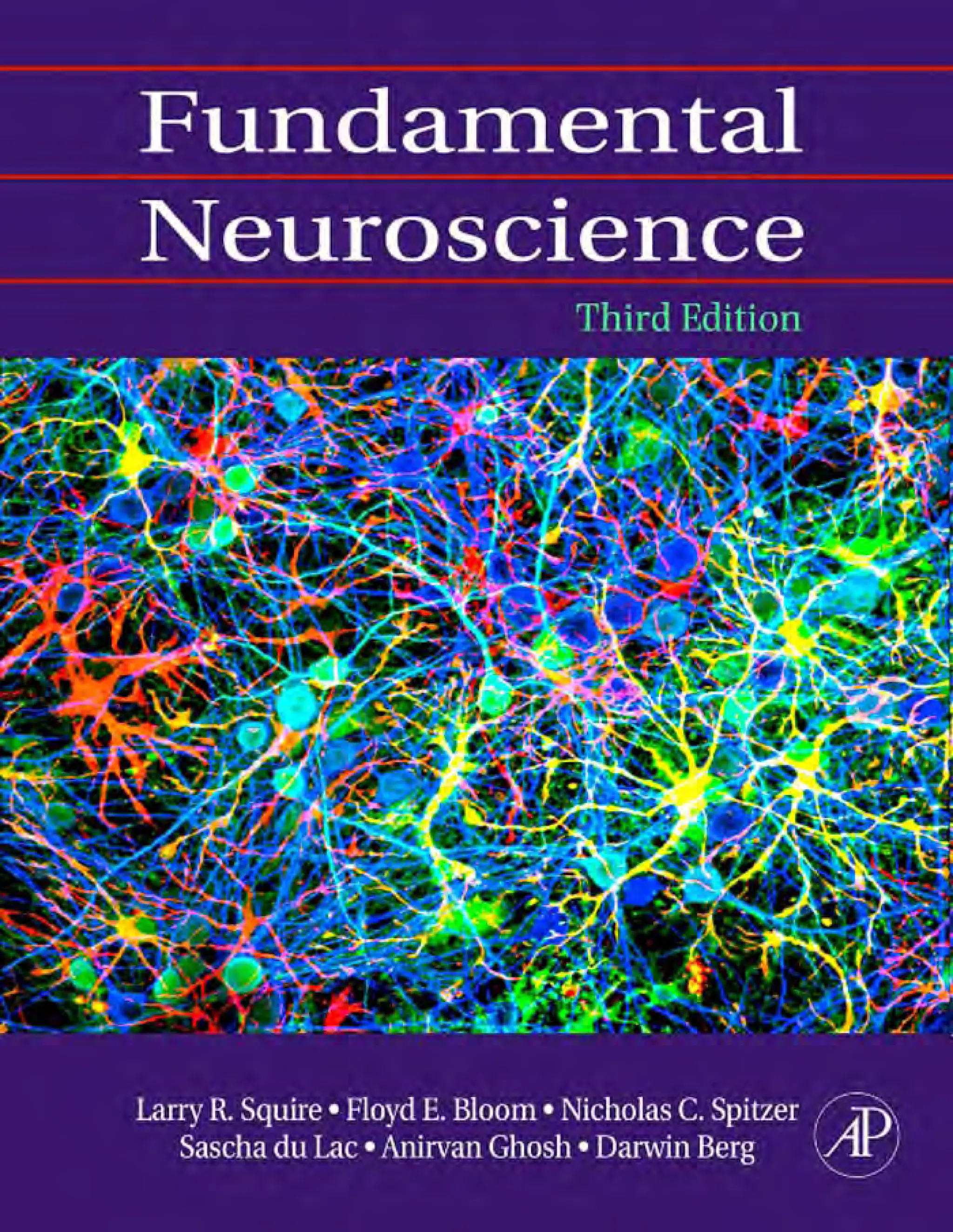


![Academic Press is an imprint of Elsevier
30 Corporate Drive, Suite 400, Burlington, MA 01803, USA
525 B Street, Suite 1900, San Diego, California 92101-4495, USA
84 Theobald’s Road, London WC1X 8RR, UK
This book is printed on acid-free paper.
Copyright © 2008, Elsevier Inc. All rights reserved.
No part of this publication may be reproduced or transmitted in any form or by any means, electronic or
mechanical, including photocopy, recording, or any information storage and retrieval system, without
permission in writing from the publisher.
Permissions may be sought directly from Elsevier’s Science & Technology Rights Department in Oxford,
UK: phone: (+44) 1865 843830, fax: (+44) 1865 853333, E-mail: permissions@elsevier.com. You may also complete
your request online via the Elsevier homepage (http:/
/elsevier.com), by selecting “Support & Contact” then
“Copyright and Permission” and then “Obtaining Permissions.”
Library of Congress Cataloging-in-Publication Data
Fundamental neuroscience / edited by Larry Squire . . . [et al.].—3rd ed.
p. ; cm.
Includes bibliographical references and index.
ISBN 978-0-12-374019-9 (alk. paper)
1. Neurosciences. I. Squire, Larry R.
[DNLM: 1. Nervous System Physiology. 2. Neurosciences. WL 102 F981 2008]
QP355.2.F862 2008
612.8—dc22
2008001747
British Library Cataloguing-in-Publication Data
A catalogue record for this book is available from the British Library.
ISBN: 978-0-12-374019-9
For information on all Academic Press publications
visit our Web site at www.books.elsevier.com
Printed in Canada
08 09 10 9 8 7 6 5 4 3 2 1
Working together to grow
libraries in developing countries
www.elsevier.com | www.bookaid.org | www.sabre.org](https://image.slidesharecdn.com/90698-250329094836-c904cee4/75/Fundamental-neuroscience-3ed-Edition-Squire-L-R-10-2048.jpg)


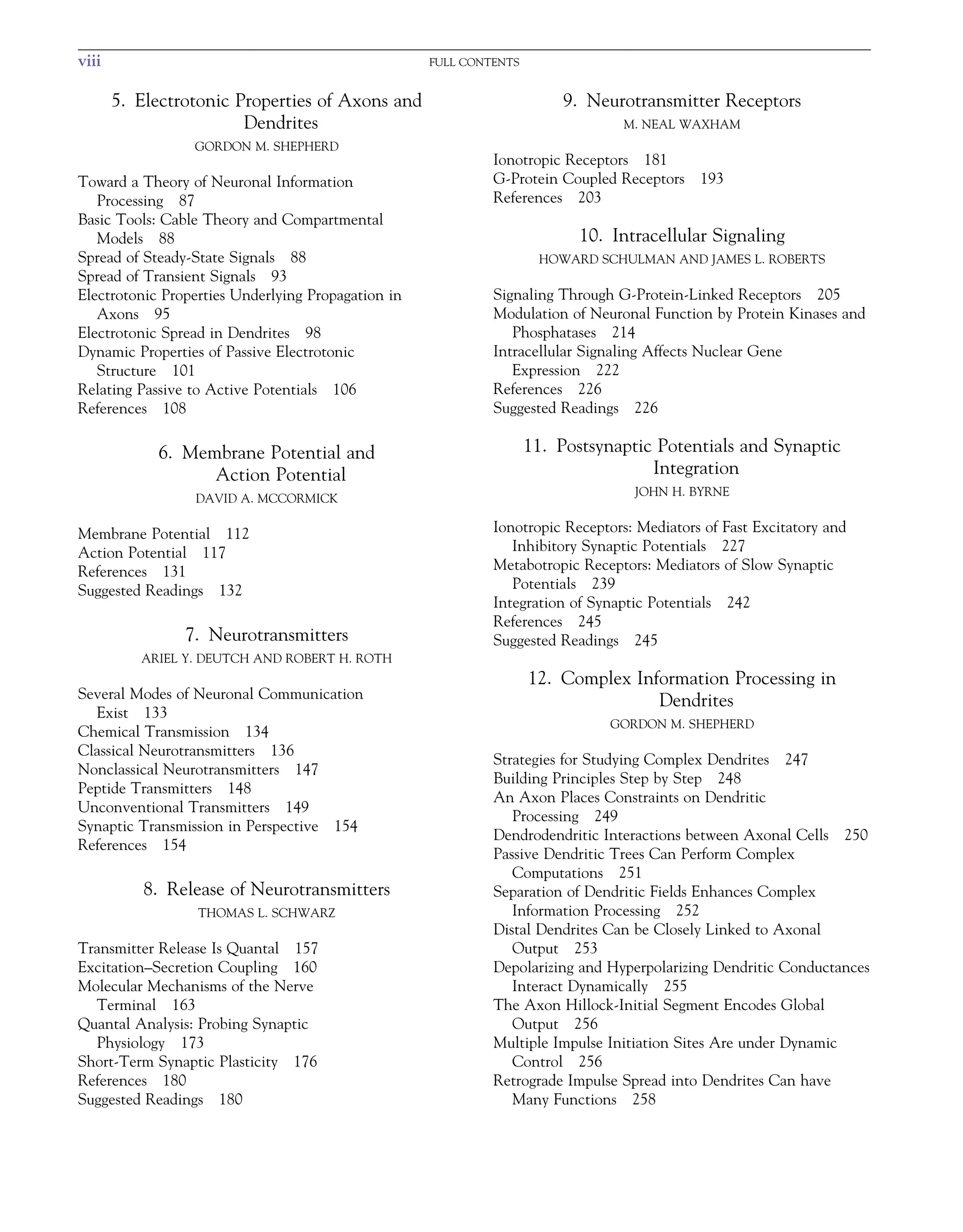

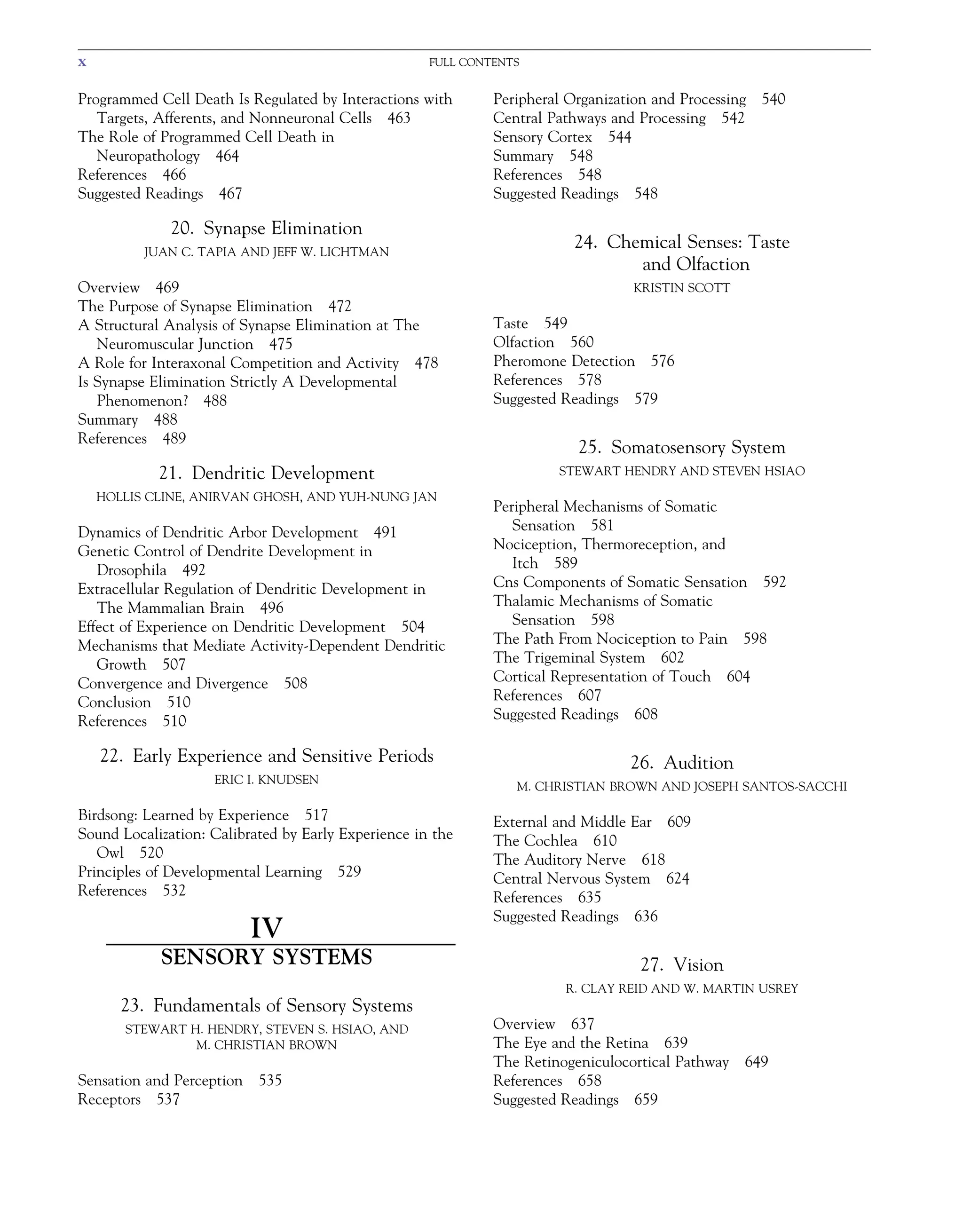


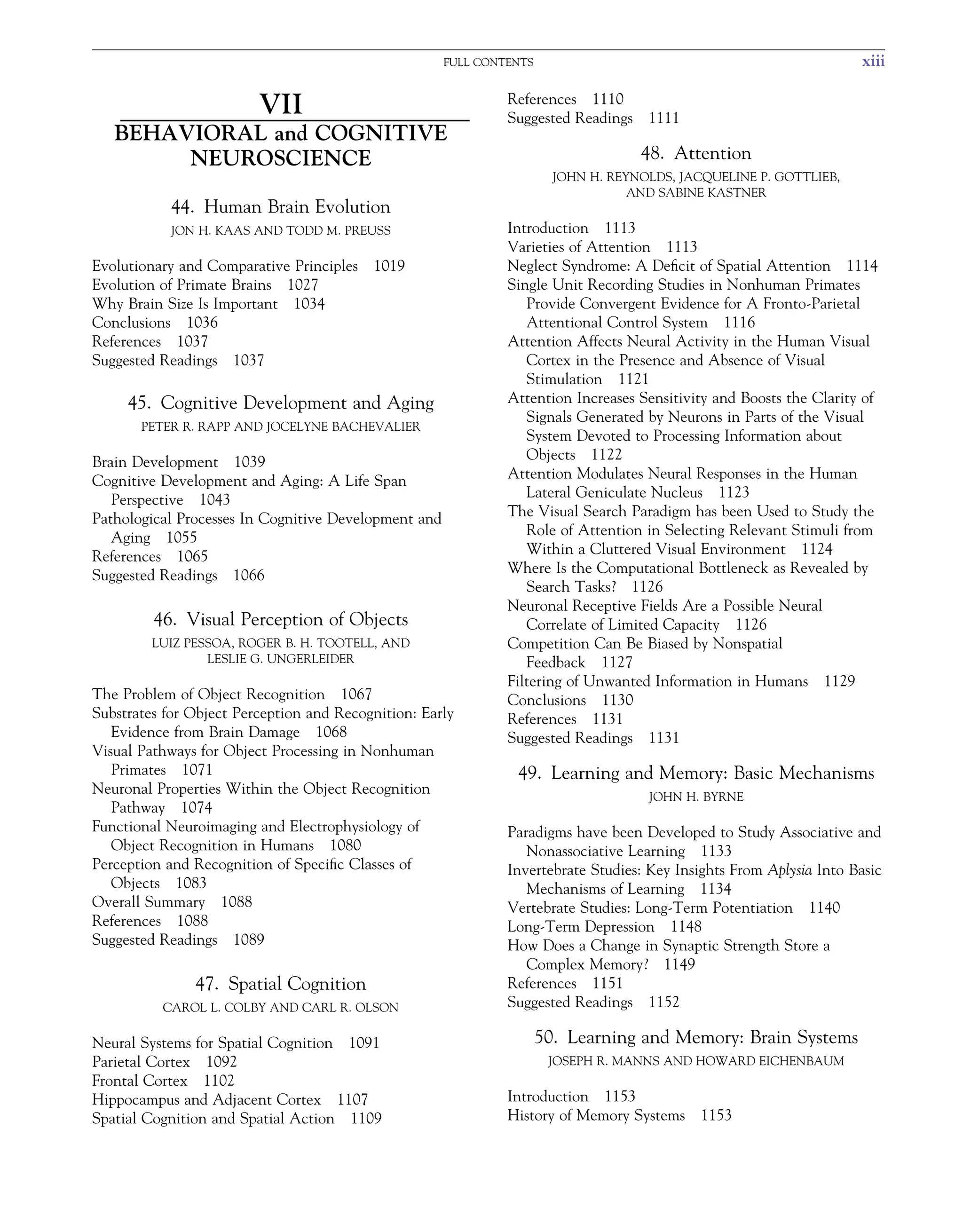


![43
IV
ST. DENIS AND THE SPANISH
In 1724 St. Denis and Almazon affixed the Arroyo Hondo as the
boundary between the French and the Spanish. There was also an
agreement to allow the French traders, who were to go to the Upper
Caddos during the wet season, to pass through the Los Adais area. In
this same year Jean Muller was permitted to establish La Post du
Bayou Pierre
[6]
.
By 1725 St. Denis had won the Spanish commandant over to his
point of view and persuaded him to allow free trade in the area. The
French were also allowed at Los Adais on Sundays to attend religious
services. (The French, up until a few years later, were without the
services of a priest at Natchitoches).
Word reached the Viceroy in Mexico City that Almazon was too
lenient with the French and that he was actually encouraging open
trade with them. In 1730 Almazon was replaced by Don Juan Antonio
de Bustillio y Zavalles, who was quick to realize that La Presidio de
Los Adais was entirely dependent on the French for its very
existence. He sent a letter to the Viceroy to that effect, further
advising that the Spanish settlers of the area scarcely produced
enough crops to sustain themselves and their families. Zavalles was
an experienced military officer and understood the importance of
maintaining a modicum of friendship on the frontier with the
French and the Indians. Zavalles in 1730 issued a land grant to
Juan de Mora.
[7]](https://image.slidesharecdn.com/90698-250329094836-c904cee4/75/Fundamental-neuroscience-3ed-Edition-Squire-L-R-22-2048.jpg)


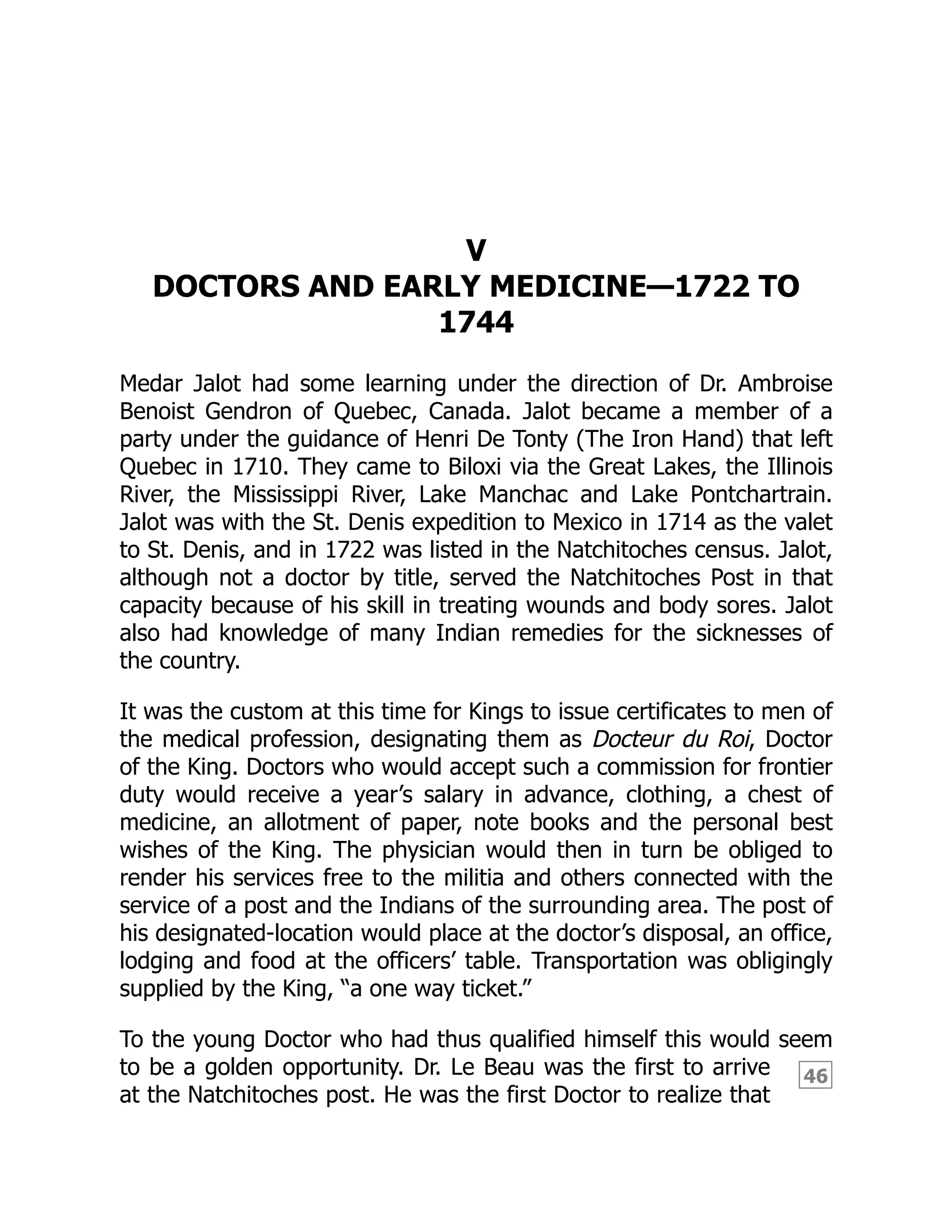


![49
and inhabitants might just as well have the imported kind from New
Orleans where the voodoo charm-makers were more skilled and the
charms had more power. He reasoned with himself that
according to law, slaves were not allowed to have money or
engage in a business which would supply them with money. So he
decided to put them out of business. Naturally Dr. Bonnafons told his
customers that he did not believe in voodoo, that he was a doctor
and that only a doctor could cure illnesses—that the charms were
just novelties and that some people bought them in ignorance.
Commercial traders with the Indians who bought such trinkets from
Dr. Bonnafons at a discount were Jean Camion, Nicholas and Jean
Lassard, Pierre Gaigne, Lantallac, Nicholas Tibaud, Francois Gueno,
De Lima of Los Adais, Francois Moreau, Jean Robalet, Louis Barme,
Joseph Le Douc, Jean Baptiste Derbonne, Le Bomme, Henri Vidol and
Pierre Bossier. By supplying these traders Dr. Bonnafons became the
first wholesaler of merchandise in the Natchitoches section.
As the following bill testifies, Dr. Louis Bonnafons served the
Natchitoches area well. The bill concerns the services rendered to
Pierre Fausse’s young son.
1. Pour 6 bouttiles de quillendive
[8]
per l’order du chirurgiens.
2. Pour 6 denier (6 articles of merchandise.)
3. Pour 12 boutilles d’eau de vie. (Brandy used as a sedative to settle
nerves and upset stomach.)
4. Pour 6 bouttiles de medecine laxatif (laxatives).
5. Pour le cerceuil de defuma. (For making the coffin.)
The child was given 6 bottles of nausea medicine, 12 bottles of
brandy (that is, if the child was given all of the brandy—he may have
had help in disposing of this medicine) and 6 bottles of laxatives. This
was enough of such medicine to kill any patient. Dr. Bonnafons, being
the doctor in attendance, would also be the first to know of the
child’s death. Thus being a carpenter he was also a cabinet maker](https://image.slidesharecdn.com/90698-250329094836-c904cee4/75/Fundamental-neuroscience-3ed-Edition-Squire-L-R-29-2048.jpg)