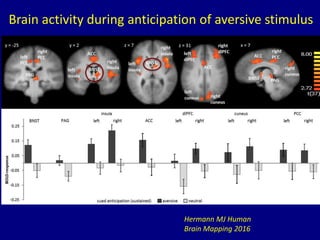
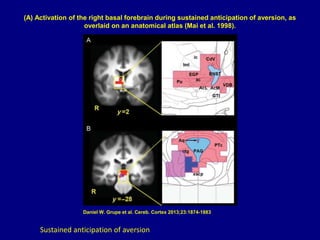
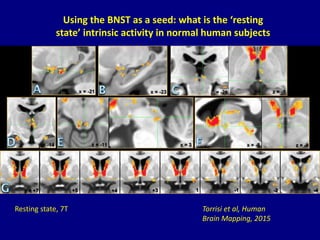
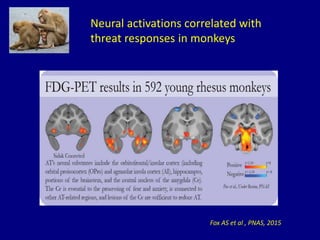
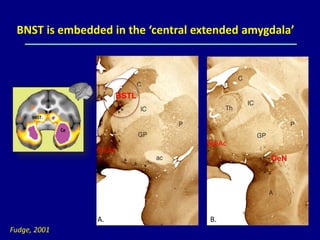
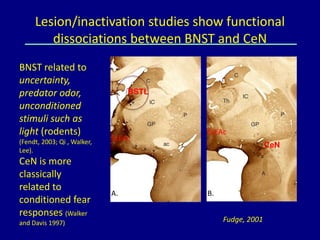
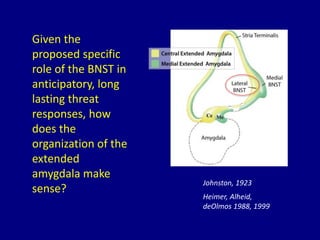
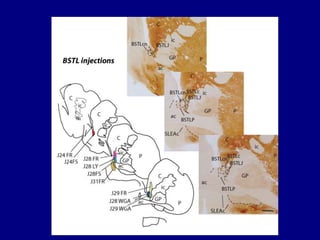
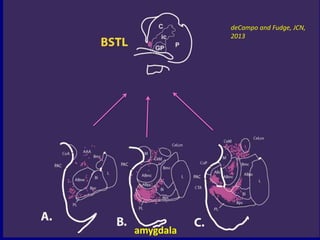
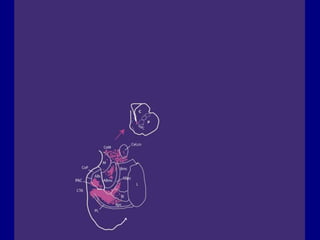
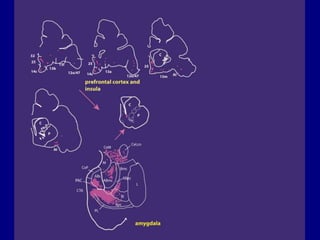
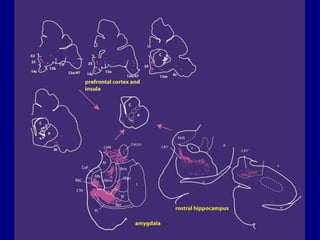
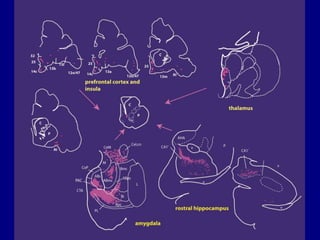
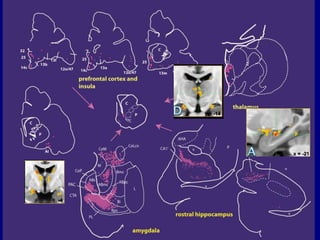
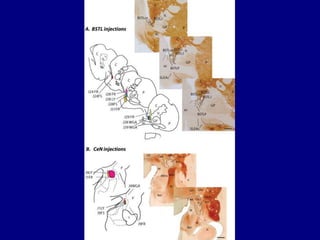
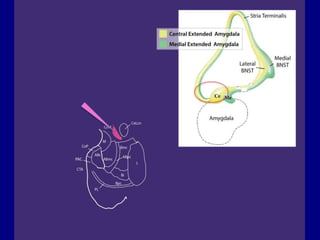
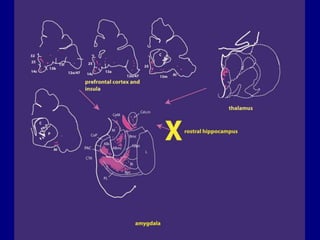
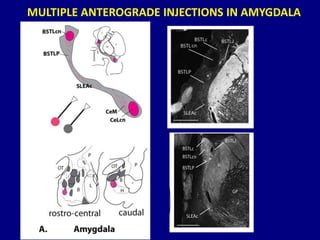
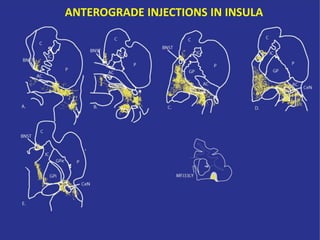
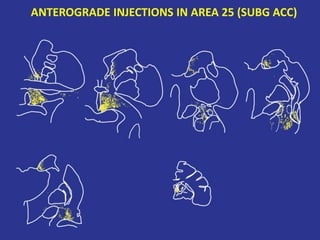
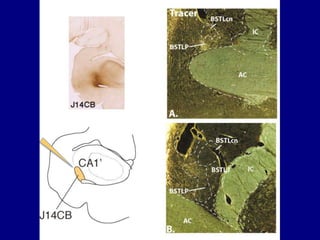
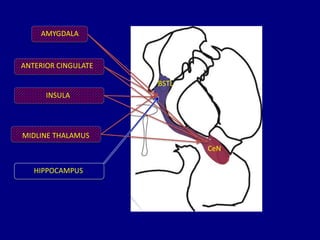
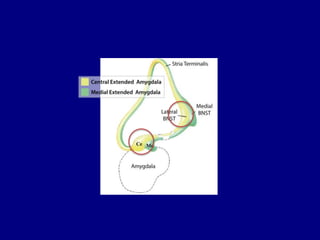
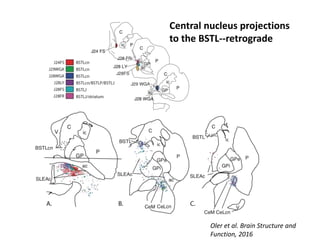
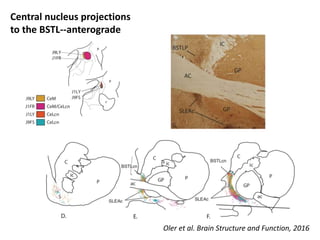
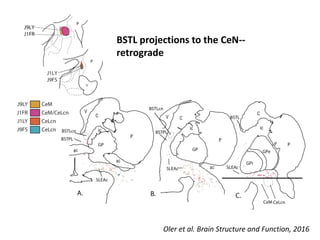
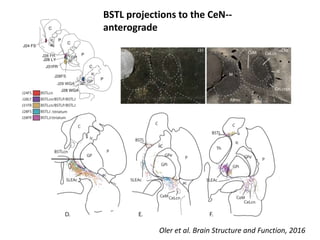
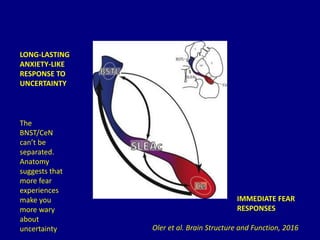
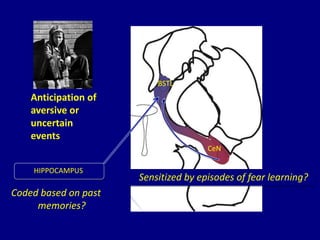
This document summarizes recent research on the role of the bed nucleus of the stria terminalis (BNST) in threat responses. Studies in humans and nonhuman primates have found that the BNST is activated during sustained anticipation of aversive events. Anatomical tracing studies in monkeys reveal complex bidirectional connections between the BNST and central nucleus of the amygdala. This suggests the BNST may be involved in longer-lasting anxiety to uncertainty, while the central amygdala mediates more immediate fear responses. Understanding the organization of the extended amygdala provides insights into how past fear experiences can increase wariness of uncertainty.