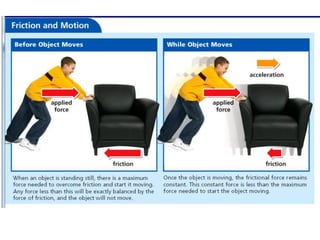
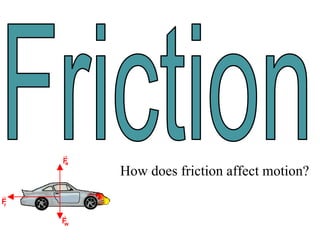
How does friction affect motion?
What Causes Friction?
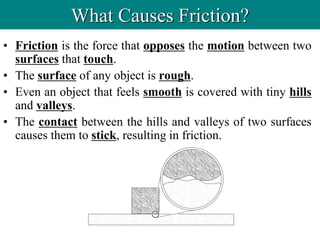
• Friction is the force that opposes the motion between two
surfaces that touch.
• The surface of any object is rough.
• Even an object that feels smooth is covered with tiny hills
and valleys.
• The contact between the hills and valleys of two surfaces
causes them to stick, resulting in friction.
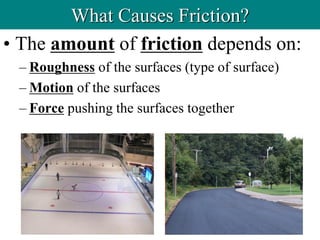
• The amount of friction depends on:
– Roughness of the surfaces (type of surface)
– Motion of the surfaces
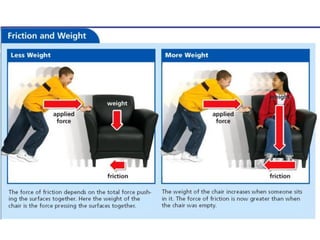
– Force pushing the surfaces together
What Causes Friction?
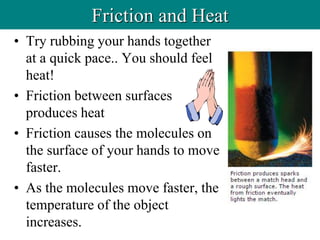
• Try rubbing your hands together
at a quick pace.. You should feel
heat!
• Friction between surfaces
produces heat
• Friction causes the molecules on
the surface of your hands to move
faster.
• As the molecules move faster, the
temperature of the object
increases.
Friction and Heat
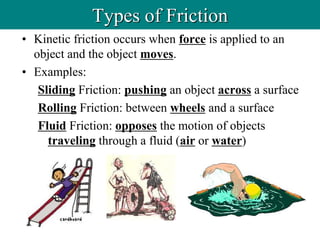
• Kinetic friction occurs when force is applied to an
object and the object moves.
• Examples:
Sliding Friction: pushing an object across a surface
Rolling Friction: between wheels and a surface
Fluid Friction: opposes the motion of objects
traveling through a fluid (air or water)
Types of Friction
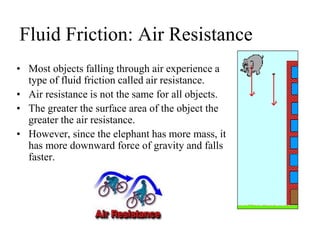
Fluid Friction: Air Resistance
• Most objects falling through air experience a
type of fluid friction called air resistance.
• Air resistance is not the same for all objects.
• The greater the surface area of the object the
greater the air resistance.
• However, since the elephant has more mass, it
has more downward force of gravity and falls
faster.
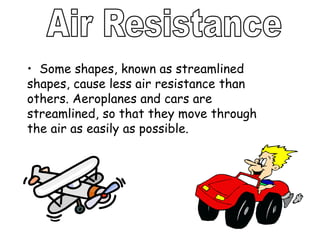
• Some shapes, known as streamlined
shapes, cause less air resistance than
others. Aeroplanes and cars are
streamlined, so that they move through
the air as easily as possible.
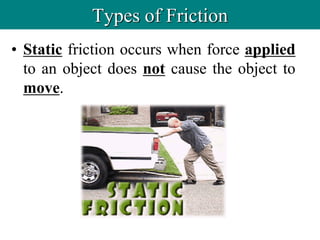
• Static friction occurs when force applied
to an object does not cause the object to
move.
Types of Friction
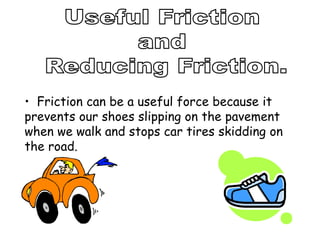
• Friction can be a useful force because it
prevents our shoes slipping on the pavement
when we walk and stops car tires skidding on
the road.
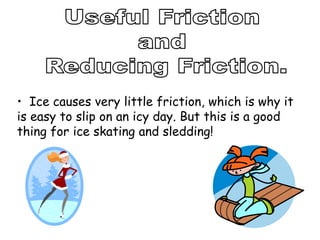
• Ice causes very little friction, which is why it
is easy to slip on an icy day. But this is a good
thing for ice skating and sledding!
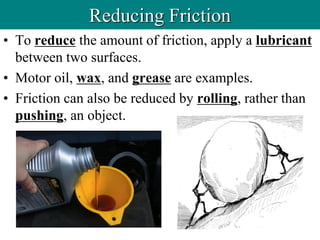
• To reduce the amount of friction, apply a lubricant
between two surfaces.
• Motor oil, wax, and grease are examples.
• Friction can also be reduced by rolling, rather than
pushing, an object.
Reducing Friction
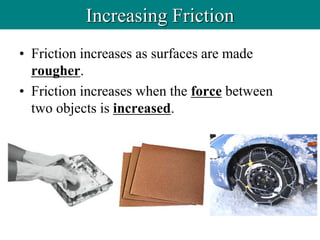
• Friction increases as surfaces are made
rougher.
• Friction increases when the force between
two objects is increased.
Increasing Friction
Friction notes (Basics of general science)

  • 1.
    How does frictionaffect motion?
  • 2.
    What Causes Friction? •Friction is the force that opposes the motion between two surfaces that touch. • The surface of any object is rough. • Even an object that feels smooth is covered with tiny hills and valleys. • The contact between the hills and valleys of two surfaces causes them to stick, resulting in friction.
  • 3.
    • The amountof friction depends on: – Roughness of the surfaces (type of surface) – Motion of the surfaces – Force pushing the surfaces together What Causes Friction?
  • 6.
    • Try rubbingyour hands together at a quick pace.. You should feel heat! • Friction between surfaces produces heat • Friction causes the molecules on the surface of your hands to move faster. • As the molecules move faster, the temperature of the object increases. Friction and Heat
  • 7.
    • Kinetic frictionoccurs when force is applied to an object and the object moves. • Examples: Sliding Friction: pushing an object across a surface Rolling Friction: between wheels and a surface Fluid Friction: opposes the motion of objects traveling through a fluid (air or water) Types of Friction
  • 8.
    Fluid Friction: AirResistance • Most objects falling through air experience a type of fluid friction called air resistance. • Air resistance is not the same for all objects. • The greater the surface area of the object the greater the air resistance. • However, since the elephant has more mass, it has more downward force of gravity and falls faster.
  • 9.
    • Some shapes,known as streamlined shapes, cause less air resistance than others. Aeroplanes and cars are streamlined, so that they move through the air as easily as possible.
  • 10.
    • Static frictionoccurs when force applied to an object does not cause the object to move. Types of Friction
  • 11.
    • Friction canbe a useful force because it prevents our shoes slipping on the pavement when we walk and stops car tires skidding on the road.
  • 12.
    • Ice causesvery little friction, which is why it is easy to slip on an icy day. But this is a good thing for ice skating and sledding!
  • 13.
    • To reducethe amount of friction, apply a lubricant between two surfaces. • Motor oil, wax, and grease are examples. • Friction can also be reduced by rolling, rather than pushing, an object. Reducing Friction
  • 14.
    • Friction increasesas surfaces are made rougher. • Friction increases when the force between two objects is increased. Increasing Friction