Upcoming mobile changes to
Google’s ranking algorithm for
searchers on mobile devices
From 21st April, Google will be expanding
the use of mobile-friendliness as a ranking
signal. This change will have a significant
impact in search results and users will find
it easier to get relevant, high quality search
results that are optimised for their devices.
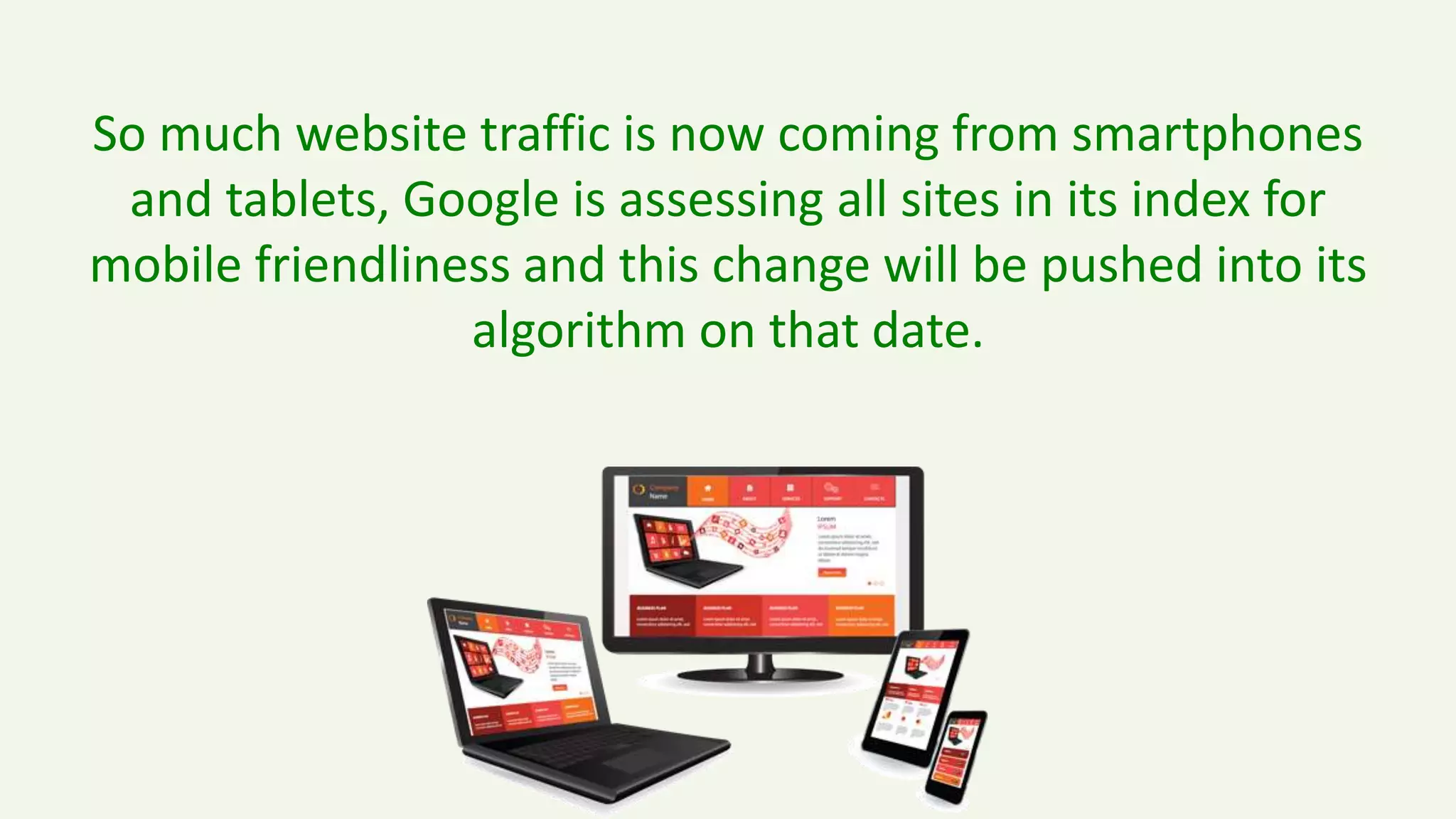
So much website traffic is now coming from smartphones
and tablets, Google is assessing all sites in its index for
mobile friendliness and this change will be pushed into its
algorithm on that date.
When determining if a website is mobile friendly, Google
bases this on a page by page case and all pages must be
mobile friendly. Creating some pages, even the majority of
pages, as mobile friendly will not mean your entire site passes
the check.
Your site must allow Google to crawl CSS & JavaScript
If you are blocking elements such as CSS and JavaScript,
your site will not pass Google’s mobile friendly test, even
if everything else on the site passes.
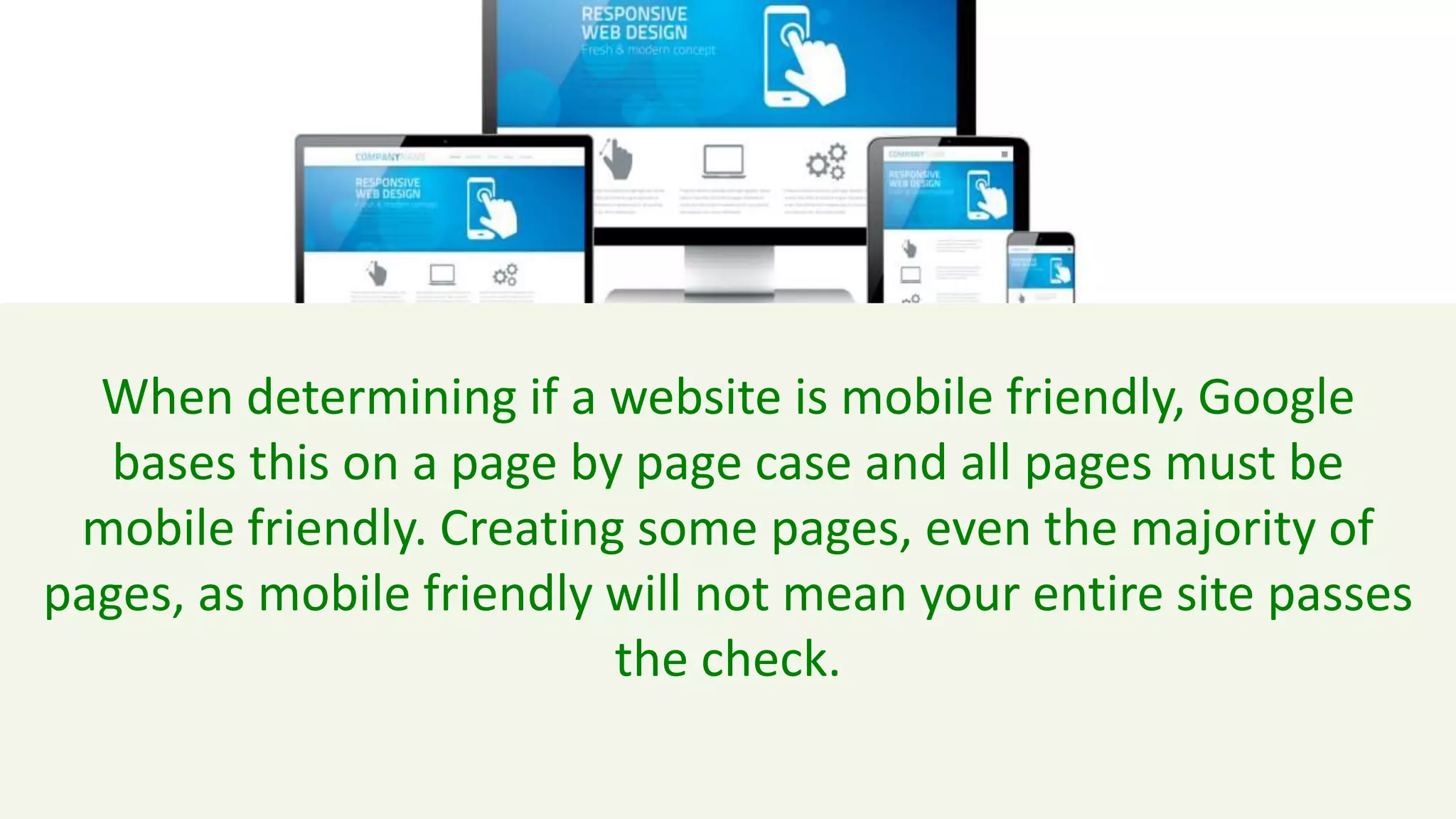
Because Google has been pushing responsive design as a
way to handle mobile traffic, some have speculated that it
will receive a ranking boost over and above other types of
mobile optimisation. However, Google says that they only
recommend it because it works well for Google, so they
believe that solution will work for almost everyone else.
Other systems of mobile adaptation will not be treated as
second class.
You can find out if your site is ready for this change by using
the following tools to see how Googlebot views your pages:
If you want to test a few pages, you can use the mobile
friendly test.
If you have a site, you can use your Webmaster Tools
account to get a full list of mobile usability issues across
your site using the mobile usability report.
For more information please visit
http://www.freshwebz.co.uk/

Upcoming mobile changes to Google’s ranking algorithm for searchers on mobile devices

  • 1.
    Upcoming mobile changesto Google’s ranking algorithm for searchers on mobile devices
  • 2.
    From 21st April,Google will be expanding the use of mobile-friendliness as a ranking signal. This change will have a significant impact in search results and users will find it easier to get relevant, high quality search results that are optimised for their devices.
  • 3.
    So much websitetraffic is now coming from smartphones and tablets, Google is assessing all sites in its index for mobile friendliness and this change will be pushed into its algorithm on that date.
  • 4.
    When determining ifa website is mobile friendly, Google bases this on a page by page case and all pages must be mobile friendly. Creating some pages, even the majority of pages, as mobile friendly will not mean your entire site passes the check.
  • 5.
    Your site mustallow Google to crawl CSS & JavaScript If you are blocking elements such as CSS and JavaScript, your site will not pass Google’s mobile friendly test, even if everything else on the site passes.
  • 6.
    Because Google hasbeen pushing responsive design as a way to handle mobile traffic, some have speculated that it will receive a ranking boost over and above other types of mobile optimisation. However, Google says that they only recommend it because it works well for Google, so they believe that solution will work for almost everyone else. Other systems of mobile adaptation will not be treated as second class.
  • 7.
    You can findout if your site is ready for this change by using the following tools to see how Googlebot views your pages: If you want to test a few pages, you can use the mobile friendly test. If you have a site, you can use your Webmaster Tools account to get a full list of mobile usability issues across your site using the mobile usability report.
  • 8.
    For more informationplease visit http://www.freshwebz.co.uk/