

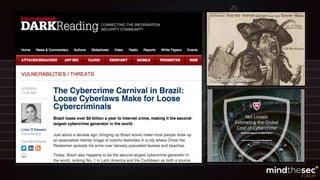
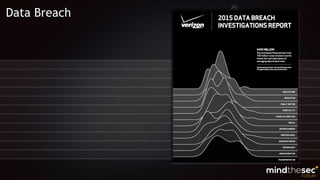
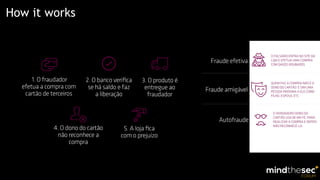
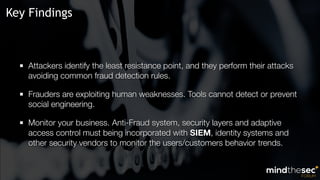

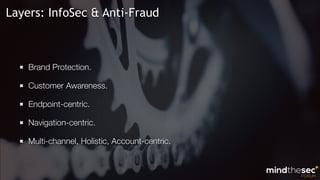
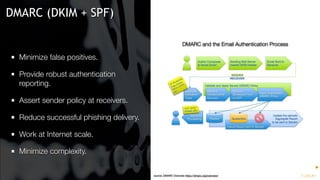



The document discusses the current challenges in fraud analytics and security, emphasizing that 60% of attackers can breach organizations quickly and that phishing remains a significant threat. It highlights the techniques of fraudsters, the importance of combining anti-fraud measures with security layers, and urges businesses to be aware of vulnerabilities and adopt robust authentication processes, such as DMARC. Overall, it stresses the need for a comprehensive approach to fraud prevention that includes customer awareness and continuous monitoring.


![How a Ransomware Infects your Computer [INFOGRAPHIC]](https://cdn.slidesharecdn.com/ss_thumbnails/howransomwaregetintoyoursysteminfographic1-171012110357-thumbnail.jpg?width=640&height=640&fit=bounds)

![[Infographic] How ransomware gets into your system](https://cdn.slidesharecdn.com/ss_thumbnails/howransomwaregetsintoyoursystem-seqrite-171012073257-thumbnail.jpg?width=640&height=640&fit=bounds)


