Franz Lizst
Romantic Composer and Musician
History

Franz Liszt (October 22, 1811 – July 31, 1886) was a
19th-century Hungarian composer, pianist, conductor, and
teacher.
Liszt became renowned throughout Europe during the
nineteenth century for his virtuosic skill as a pianist. He
was said by his contemporaries to have been the most
technically advanced pianist of his age and perhaps the
greatest pianist of all time.
He was also a well-known composer, piano teacher, and
conductor who contributed significantly to the modern
development of the art.
Hungarian Rhapsody No. 2

Hungarian Rhapsody No. 2, is the second in a set of
19 Hungarian Rhapsodies by composer Franz Liszt,
and is by far the most famous of the set.
 Few other piano solos have achieved such
widespread popularity, offering the pianist the
opportunity to reveal exceptional skill as a virtuoso,
while providing the listener with an immediate and
irresistible musical appeal. It is considered one of
the most technically demanding works in the solo
piano repertoire.
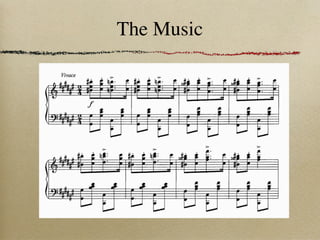
The Music
Listen

Franz liszt

  • 1.
  • 2.
    History Franz Liszt (October22, 1811 – July 31, 1886) was a 19th-century Hungarian composer, pianist, conductor, and teacher. Liszt became renowned throughout Europe during the nineteenth century for his virtuosic skill as a pianist. He was said by his contemporaries to have been the most technically advanced pianist of his age and perhaps the greatest pianist of all time. He was also a well-known composer, piano teacher, and conductor who contributed significantly to the modern development of the art.
  • 3.
    Hungarian Rhapsody No.2 Hungarian Rhapsody No. 2, is the second in a set of 19 Hungarian Rhapsodies by composer Franz Liszt, and is by far the most famous of the set. Few other piano solos have achieved such widespread popularity, offering the pianist the opportunity to reveal exceptional skill as a virtuoso, while providing the listener with an immediate and irresistible musical appeal. It is considered one of the most technically demanding works in the solo piano repertoire.
  • 4.
  • 5.

Editor's Notes