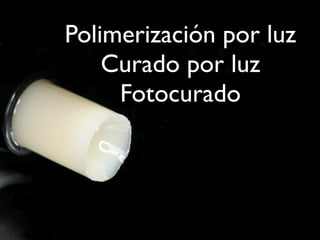






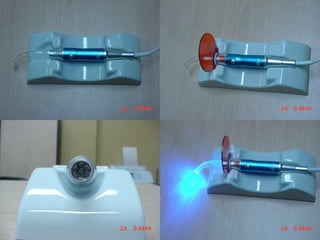
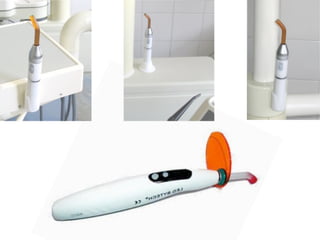
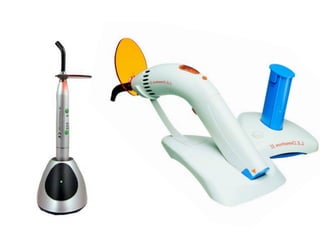
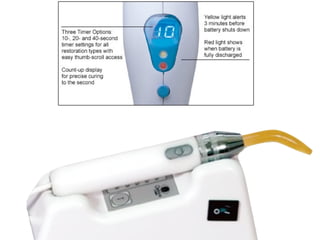




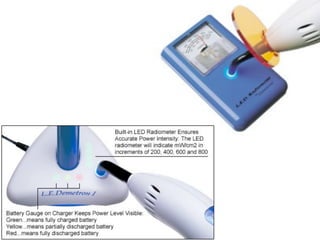
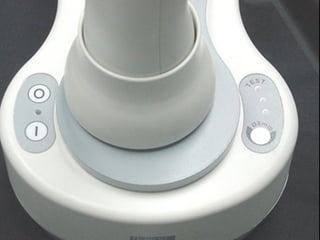



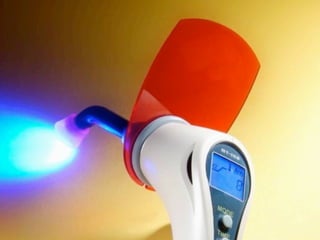
Polimerización por luz
    Curado por luz
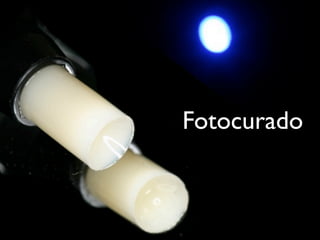
     Fotocurado
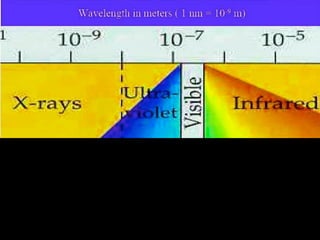
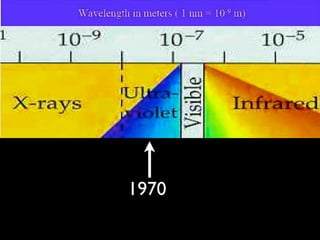
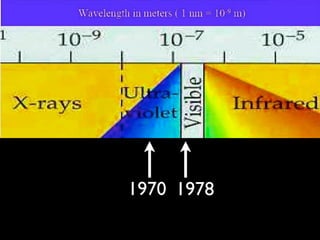
1970
1970 1978
Fotoiniciador
Compuesto capaz de producir una especie reactiva al
                  absorver luz


      Este luego puede catalizar reacciones


         En odontología: polimerización
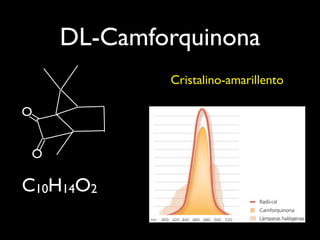
DL-Camforquinona
             Cristalino-amarillento

O


 O

C10H14O2
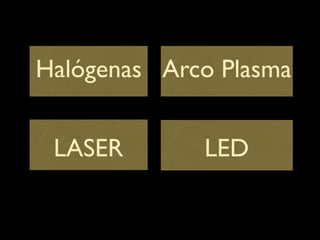
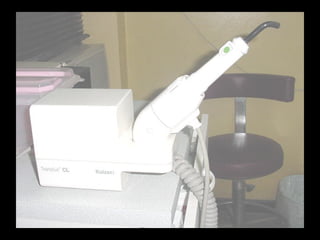
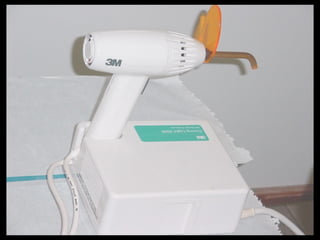
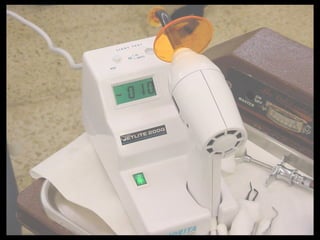
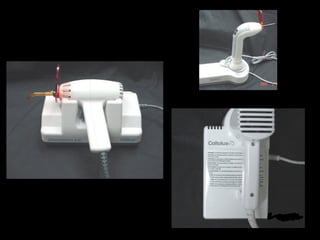
Halógenas
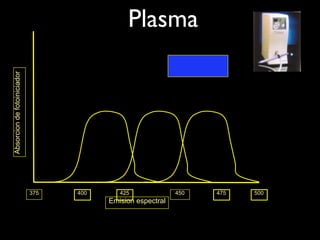
Halógenas Arco Plasma


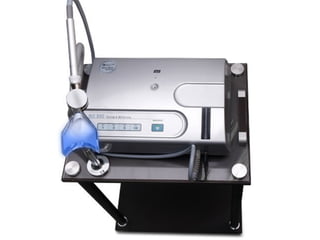
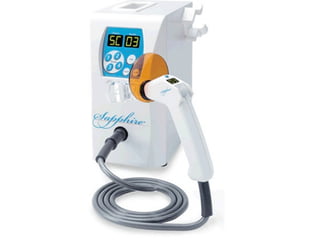
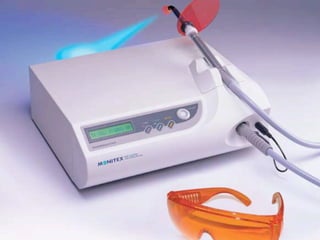
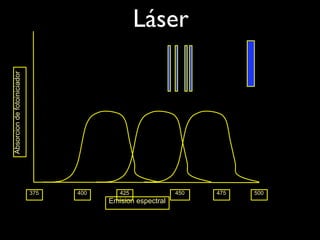
 LASER
Halógenas Arco Plasma


 LASER       LED
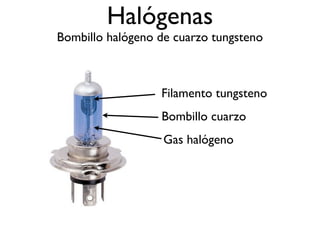
Halógenas
Bombillo halógeno de cuarzo tungsteno


                  Filamento tungsteno
                  Bombillo cuarzo
                   Gas halógeno
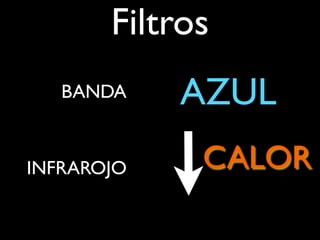
Filtros
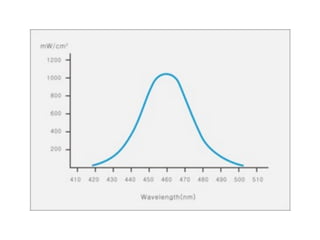
   BANDA    AZUL
INFRAROJO    CALOR
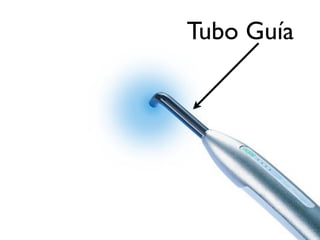
Tubo Guía
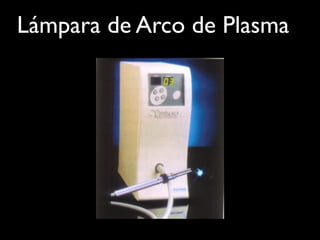
Lámpara de Arco de Plasma
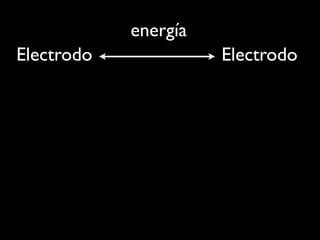
energía
Electrodo             Electrodo
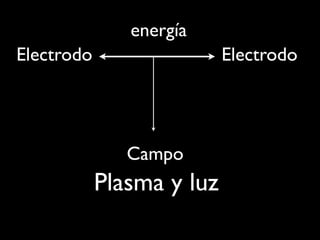
energía
Electrodo                  Electrodo


               Campo
            Plasma y luz
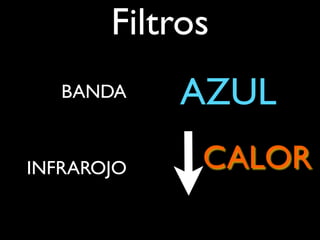
Filtros
   BANDA    AZUL
INFRAROJO    CALOR
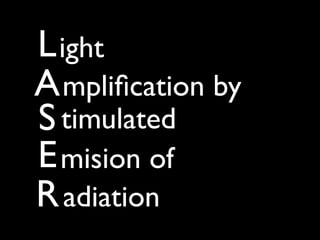
L A SER
L
A
S
E
R
L ight
A mplification by
S timulated
E mision of
R adiation
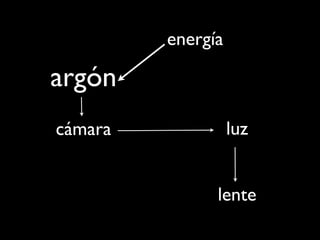
energía

argón
cámara             luz


               lente
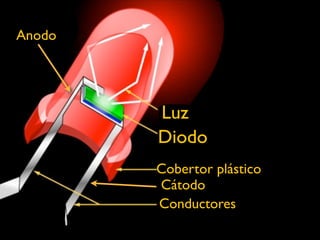
L E D
L ight
Emitting
Diode
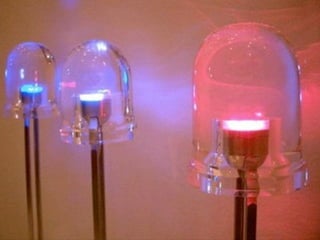
Anodo


        Luz
        Diodo
        Cobertor plástico
        Cátodo
        Conductores
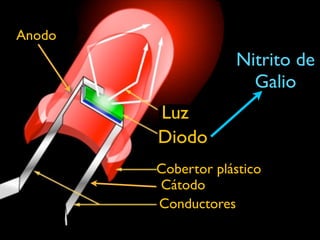
Anodo
                    Nitrito de
                      Galio
        Luz
        Diodo
        Cobertor plástico
        Cátodo
        Conductores
Nitrito de
  Galio
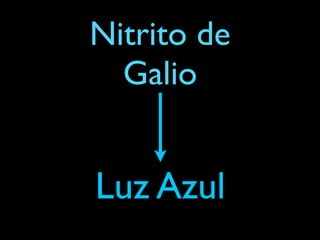
Nitrito de
  Galio


Luz Azul
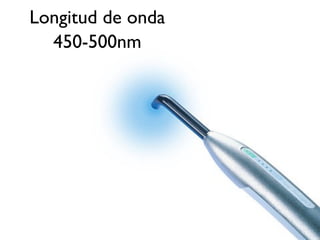
Longitud de onda
  450-500nm
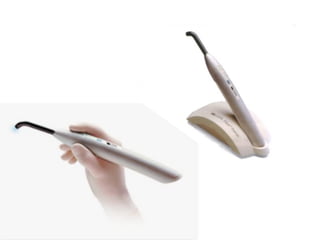
100 veces más
100 veces más
Sin calor
100 veces más
Sin calor
Sin abanico
100 veces más
Sin calor
Sin abanico
Bateria
TÉCNICAS DE
  CURADO
TÉCNICAS DE
      CURADO

Contínua   Discontinua
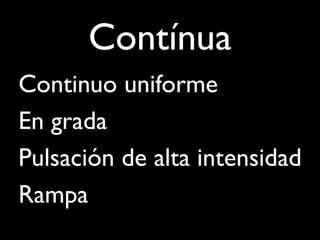
Contínua

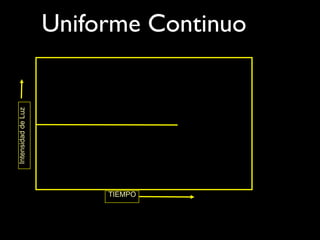
   Continuo uniforme

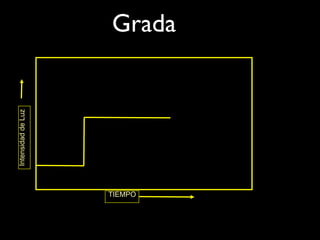
   En grada

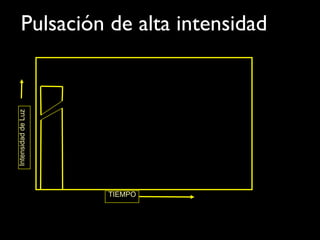
   Pulsación de alta intensidad

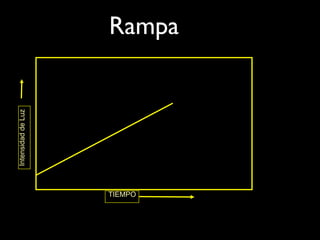
   Rampa
Intensidad de Luz
                    Uniforme Continuo


                         TIEMPO
Intensidad de Luz


TIEMPO
                             Grada
Intensidad de Luz


TIEMPO
                             Rampa
Pulsación de alta intensidad
Intensidad de Luz


                    TIEMPO
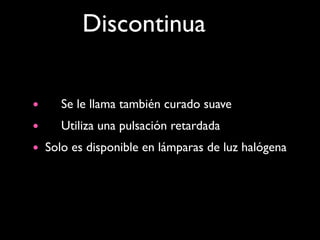
Discontinua


• 
 Se le llama también curado suave
• 
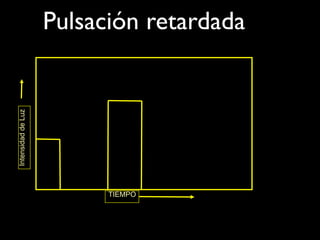
 Utiliza una pulsación retardada
• Solo es disponible en lámparas de luz halógena
Intensidad de Luz
                    Pulsación retardada


                          TIEMPO
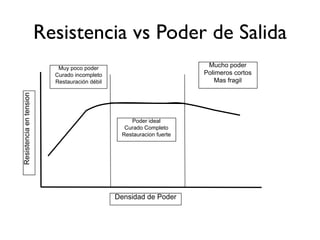
Resistencia vs Poder de Salida
                            Muy poco poder                              Mucho poder
                           Curado incompleto                           Polimeros cortos
                           Restauración débil                              Mas fragil
Resistencia en tension


                                                    Poder ideal
                                                  Curado Completo
                                                 Restauracion fuerte


                                                Densidad de Poder
Fotocurado
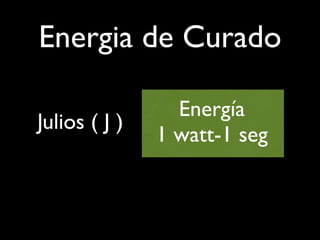
Energia de Curado

                 Energía
Julios ( J )
               1 watt-1 seg
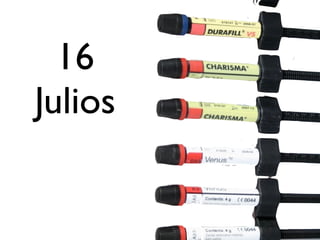
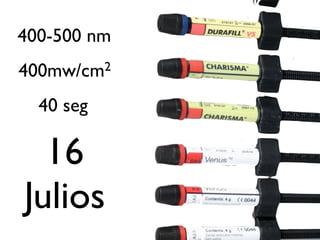
16
Julios
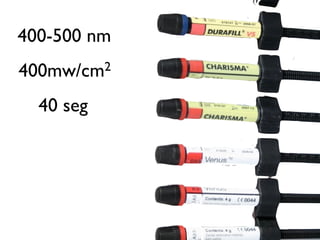
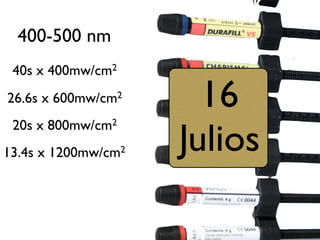
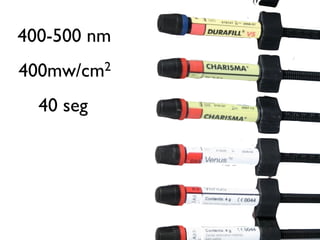
400-500 nm
400mw/cm2
  40 seg
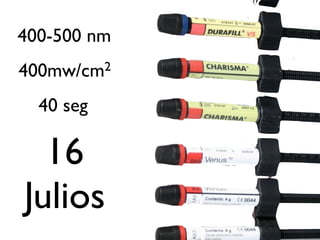
400-500 nm
400mw/cm2
  40 seg

  16
Julios
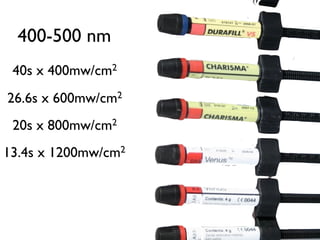
400-500 nm
 40s x 400mw/cm2
26.6s x 600mw/cm2
 20s x 800mw/cm2
13.4s x 1200mw/cm2
400-500 nm
 40s x 400mw/cm2
26.6s x 600mw/cm2      16
                     Julios
 20s x 800mw/cm2
13.4s x 1200mw/cm2
Mayor intensidad
Mayor profundidad
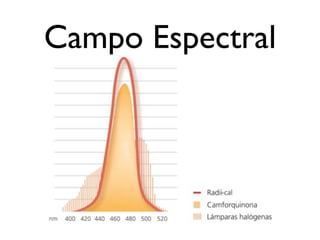
Campo Espectral
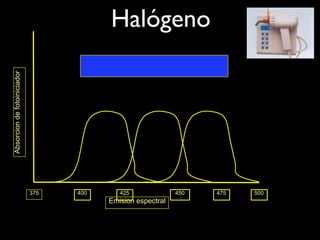
Absorcion de fotoiniciador
                                         Halógeno


                             375   400      425              450   475   500
                                         Emision espectral
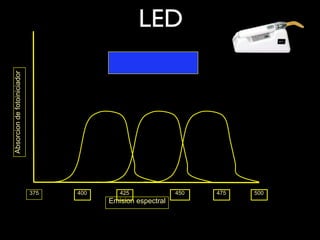
Absorcion de fotoiniciador
                                                  LED


                             375   400      425              450   475   500
                                         Emision espectral
Absorcion de fotoiniciador
                                              Plasma


                             375   400      425              450   475   500
                                         Emision espectral
Absorcion de fotoiniciador
                                                  Láser


                             375   400      425              450   475   500
                                         Emision espectral
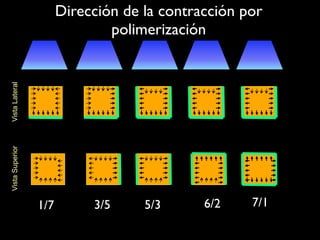
Factor C
Dirección de la contracción por
                               polimerización
Vista Lateral
Vista Superior


                 1/7        3/5     5/3      6/2    7/1
Factores
Exposición
400-500 nm
400mw/cm2
  40 seg
400-500 nm
400mw/cm2
  40 seg

  16
Julios
Intensidad
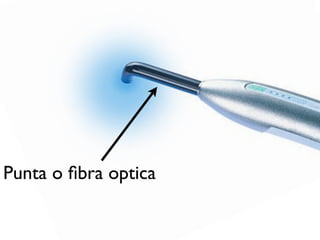
Punta o fibra optica
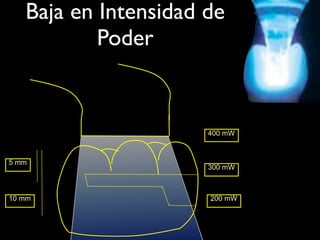
Baja en Intensidad de
           Poder


                      400 mW


5 mm
                      300 mW


10 mm                 200 mW
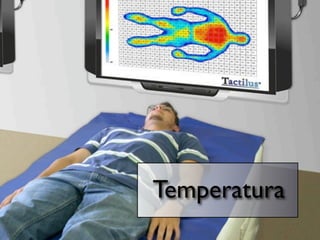
Temperatura
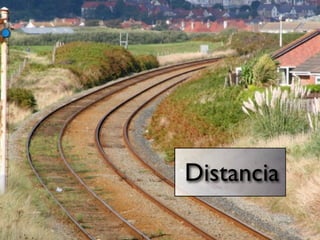
Distancia
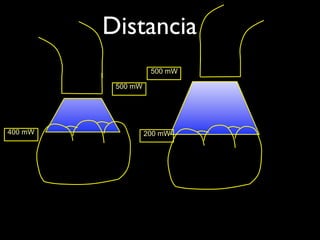
Distancia
                    500 mW

          500 mW


400 mW             200 mW
Angulo
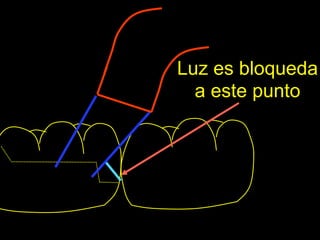
Luz es bloqueda
  a este punto
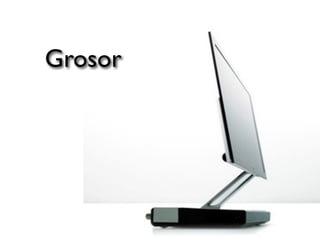
Grosor
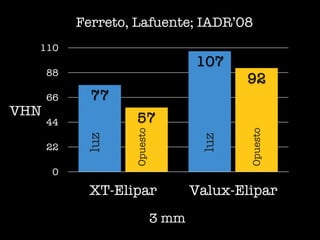
Ferreto, Lafuente; IADR’08
  110
                                    107
      88
                                           92
      66     77
VHN
      44           57
                   Opuesto


                                            Opuesto
            luz


                                     luz
      22

      0

            XT-Elipar               Valux-Elipar
                             3 mm
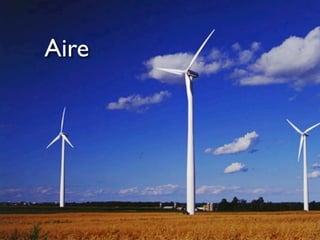
Aire
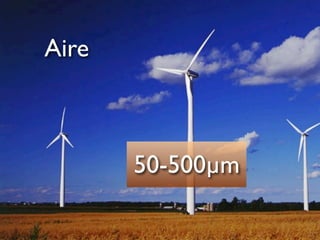
Aire


       50-500µm
Curado a través de
 otra superficie
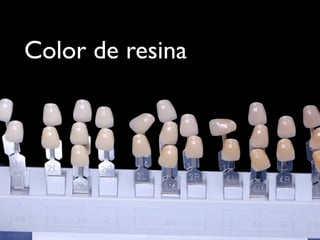
Color de resina
Fotoiniciadores
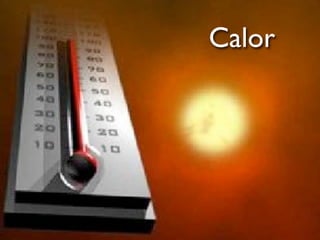
Calor
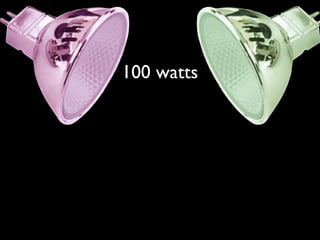
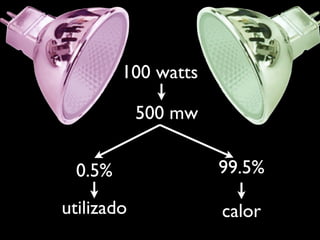
100 watts
100 watts

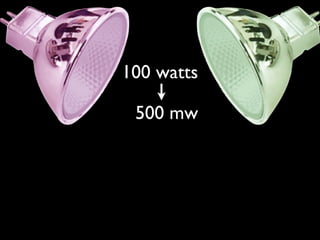
 500 mw
100 watts

        500 mw


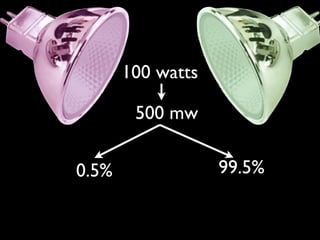
0.5%               99.5%
100 watts

            500 mw


 0.5%                99.5%

utilizado            calor
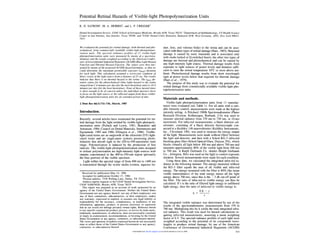
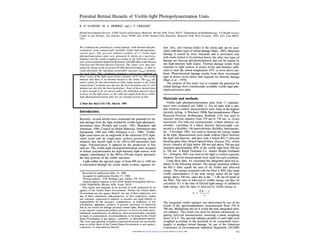
Potential Retinal Hazards of Visible-light Photopolymerization Units
K. D. SATROM1, M. A. MORRIS2, and L. P. CRIGGER3
Dental Investigation Service, USAF School of Aerospace Medicine, Brooks AFB, Texas 78235; 2Department of Ophthalmology, UT Health Science
Center at San Antonio, San Antonio, Texas 78284; and 3USAF Dental Clinic Ramstein, Ramstein AFB, West Germany, APO, New York 09012-
5431

 We evaluated the potential for retinal damage, both thermal and pho-           mor, lens, and vitreous body) to the retina and can be asso-
 tochemical, from commercially available visible-light photopolymer-            ciated with three types of retinal damage (Ham, 1983): Structural
 ization units. The spectral radiance profiles of 11 visible-light              damage is caused by sonic transients and is associated only
photopolymerization units were measured by means of a spectrora-                with mode-locked or Q-switched lasers; the other two types of
diometer and the results weighted according to the American Confer-
ence of Governmental Industrial Hygienists (ACGIH) Blue Light Hazard
                                                                                damage are thermal and photochemical and can be caused by
Function and Thermal Hazard Function. The values were then inte-                any high-intensity light source. Thermal damage results from
grated by means of the proposed ACGIH hazardformulae, so that we                exposure to light sources of power levels and duration suffi-
could determine the maximum permissible exposure (tMAX) duration                cient to raise the retinal temperature 100C or more above am-
for each light. This calculation assumed a worst-case condition of              bient. Photochemical damage results from short wavelength
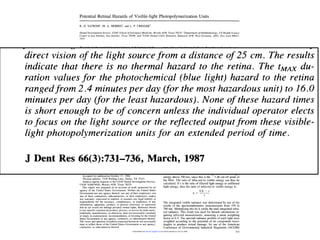
direct vision of the light source from a distance of 25 cm. The results         light at power levels below that required for thermal damage
 indicate that there is no thermal hazard to the retina. The tMAX du-           (Ham et al., 1979).
ration values for the photochemical (blue light) hazard to the retina              The purpose of this study was to evaluate the potential for
rangedfrom 2.4 minutes per day (for the most hazardous unit) to 16.0            retinal damage from commercially available visible-light pho-
minutes per day (for the least hazardous). None of these hazard times
 is short enough to be of concern unless the individual operator elects         topolymerization units.
 to focus on the light source or the reflected output from these visible-
 light photopolymerization units for an extended period of time.
                                                                                Materials and methods.
J Dent Res 66(3):731-736, March, 1987                                              Visible-light photopolymerization units from 11 manufac-
                                                                                turers were evaluated (see Table 1). For all units with a vari-
                                                                                able intensity control, measurements were made at the highest
Introduction.                                                                   intensity setting. A Pritchard 1980b Spectroradiometer (Photo
                                                                                Research Division, Kollmorgen, Burbank, CA) was used to
Recently, several articles have mentioned the potential for ret-                measure spectral radiance from 370 nm to 730 nm, in 10-nm
inal damage from the light emitted by visible-light photopoly-                  increments. For infra-red measurements, a black detector cal-
merization units (Pollack and Lewis, 1981; Benedetto and                        orimeter, consisting of a black detector thermocouple con-
Antonson, 1984; Council on Dental Materials, Instruments and                    nected to a Keithley 148 nanovoltmeter (Keithley Instruments,
Equipment, 1985 and 1986; Ellingson et al., 1986). Visible-                     Inc., Cleveland, OH), was used to measure the energy output
light-cured resins are an outgrowth of the ultraviolet (UV) light-              of the light. Measurements were made without filters between
cured resins and are single-paste systems possessing photo-                     the light and detector, and then with a Schott KG-3 infra-red
initiators that absorb light in the 420-to-450-nanometer (nm)                   blocking glass filter (Schott Optical Glass, Duryea, PA), which
range. Polymerization is induced by the production of free                      blocks virtually all light below 300 nm and above 700 nm and
radicals. The visible-light photopolymerization units designed                  transmits approximately 80% of the visible light from 300 nm
to initiate polymerization are high-intensity light sources with                to 700 nm. A Ralph Gerbands Co. shutter (Ralph Gerbands
outputs concentrated in the 400-to-550-nm region (primarily                     Co., Arlington, MA) was used on the light to control exposure
the blue portion) of the visible spectrum.                                      duration. Several measurements were made for each condition.
   Light within the spectral range of from 400 nm to 1400 nm                       Using these data, we calculated the integrated infra-red ra-
is transmitted through the ocular media (cornea, aqueous hu-                    diance in the following manner: The energy measured without
                                                                                the KG-3 filter equals the sum of all visible and infra-red
                                                                                energy. The energy measured with the filter is 80% (the mean
   Received for publication May 14, 1986                                        visible transmittance) of the total energy minus all the light
   Accepted for publication October 17, 1986                                    energy above 700 nm, since this is the - 3 db cut-off point of
   'Present address: 7338 Walling Lane, Dallas, TX 75231
   Address reprint requests to the USAF Dental Investigation Service,
                                                                                the filter. The ratio of infra-red to visible energy can thus be
USAF SAM/NGD, Brooks AFB, Texas 78235.                                          calculated. If r is the ratio of filtered light energy to unfiltered
   This report was prepared as an account of work sponsored by an               light energy, then the ratio of infra-red to visible energy is:
agency of the United States Government. Neither the United States                                                0.8 - r
Government nor any agency thereof, nor any of their employees, nor                                         k=
any of their contractors, subcontractors, or their employees, makes                                                     r
any warranty, expressed or implied, or assumes any legal liability or
responsibility for the accuracy, completeness, or usefulness of any                        The integrated visible radiance was determined by use of the
information, apparatus, product, or process disclosed, or represents                       results of the spectroradiometric measurements from 370 to
that its use would not infringe privately owned rights. Reference herein
to any specific commercial product, process, or service by trade name,
                                                                                           700 nm. Multiplying this by k yields the total integrated infra-
trademark, manufacturer, or otherwise, does not necessarily constitute                     red radiance. This result was used for hazard calculations re-
or imply its endorsement, recommendation, or favoring by the United                        quiring infra-red measurements, assuming a mean weighting
States Government or any agency, contractor, or subcontractor thereof.                     factor of 0.5. The spectral radiance profiles of each light were
The views and opinions of authors expressed herein do not necessarily                      weighted according to the potential of its component wave-
state or reflect those of the United States Government or any agency,                      lengths to produce retinal damage, by use of the American
contractor, or subcontractor thereof.                                                      Conference of Governmental Industrial Hygienists (ACGIH)
                                                  Downloaded from http://jdr.sagepub.com by David Lafuente on June 10, 2009                             731
Potential Retinal Hazards of Visible-light Photopolymerization Units
K. D. SATROM1, M. A. MORRIS2, and L. P. CRIGGER3
Dental Investigation Service, USAF School of Aerospace Medicine, Brooks AFB, Texas 78235; 2Department of Ophthalmology, UT Health Science
Center at San Antonio, San Antonio, Texas 78284; and 3USAF Dental Clinic Ramstein, Ramstein AFB, West Germany, APO, New York 09012-
5431

 We evaluated the potential for retinal damage, both thermal and pho-           mor, lens, and vitreous body) to the retina and can be asso-
 tochemical, from commercially available visible-light photopolymer-            ciated with three types of retinal damage (Ham, 1983): Structural
 ization units. The spectral radiance profiles of 11 visible-light              damage is caused by sonic transients and is associated only
photopolymerization units were measured by means of a spectrora-                with mode-locked or Q-switched lasers; the other two types of
diometer and the results weighted according to the American Confer-
ence of Governmental Industrial Hygienists (ACGIH) Blue Light Hazard
                                                                                damage are thermal and photochemical and can be caused by
Function and Thermal Hazard Function. The values were then inte-                any high-intensity light source. Thermal damage results from
grated by means of the proposed ACGIH hazardformulae, so that we                exposure to light sources of power levels and duration suffi-
could determine the maximum permissible exposure (tMAX) duration                cient to raise the retinal temperature 100C or more above am-
for each light. This calculation assumed a worst-case condition of              bient. Photochemical damage results from short wavelength
direct vision of the light source from a distance of 25 cm. The results         light at power levels below that required for thermal damage
 indicate that there is no thermal hazard to the retina. The tMAX du-           (Ham et al., 1979).
ration values for the photochemical (blue light) hazard to the retina              The purpose of this study was to evaluate the potential for
rangedfrom 2.4 minutes per day (for the most hazardous unit) to 16.0            retinal damage from commercially available visible-light pho-
minutes per day (for the least hazardous). None of these hazard times
 is short enough to be of concern unless the individual operator elects         topolymerization units.
 to focus on the light source or the reflected output from these visible-
 light photopolymerization units for an extended period of time.
                                                                                Materials and methods.
J Dent Res 66(3):731-736, March, 1987                                              Visible-light photopolymerization units from 11 manufac-
                                                                                turers were evaluated (see Table 1). For all units with a vari-
                                                                                able intensity control, measurements were made at the highest
Introduction.                                                                   intensity setting. A Pritchard 1980b Spectroradiometer (Photo
                                                                                Research Division, Kollmorgen, Burbank, CA) was used to
Recently, several articles have mentioned the potential for ret-                measure spectral radiance from 370 nm to 730 nm, in 10-nm
inal damage from the light emitted by visible-light photopoly-                  increments. For infra-red measurements, a black detector cal-
merization units (Pollack and Lewis, 1981; Benedetto and                        orimeter, consisting of a black detector thermocouple con-
Antonson, 1984; Council on Dental Materials, Instruments and                    nected to a Keithley 148 nanovoltmeter (Keithley Instruments,
Equipment, 1985 and 1986; Ellingson et al., 1986). Visible-                     Inc., Cleveland, OH), was used to measure the energy output
light-cured resins are an outgrowth of the ultraviolet (UV) light-              of the light. Measurements were made without filters between
cured resins and are single-paste systems possessing photo-                     the light and detector, and then with a Schott KG-3 infra-red
initiators that absorb light in the 420-to-450-nanometer (nm)                   blocking glass filter (Schott Optical Glass, Duryea, PA), which
range. Polymerization is induced by the production of free                      blocks virtually all light below 300 nm and above 700 nm and
radicals. The visible-light photopolymerization units designed                  transmits approximately 80% of the visible light from 300 nm
to initiate polymerization are high-intensity light sources with                to 700 nm. A Ralph Gerbands Co. shutter (Ralph Gerbands
outputs concentrated in the 400-to-550-nm region (primarily                     Co., Arlington, MA) was used on the light to control exposure
the blue portion) of the visible spectrum.                                      duration. Several measurements were made for each condition.
   Light within the spectral range of from 400 nm to 1400 nm                       Using these data, we calculated the integrated infra-red ra-
is transmitted through the ocular media (cornea, aqueous hu-                    diance in the following manner: The energy measured without
                                                                                the KG-3 filter equals the sum of all visible and infra-red
                                                                                energy. The energy measured with the filter is 80% (the mean
   Received for publication May 14, 1986                                        visible transmittance) of the total energy minus all the light
   Accepted for publication October 17, 1986                                    energy above 700 nm, since this is the - 3 db cut-off point of
   'Present address: 7338 Walling Lane, Dallas, TX 75231
   Address reprint requests to the USAF Dental Investigation Service,
                                                                                the filter. The ratio of infra-red to visible energy can thus be
USAF SAM/NGD, Brooks AFB, Texas 78235.                                          calculated. If r is the ratio of filtered light energy to unfiltered
   This report was prepared as an account of work sponsored by an               light energy, then the ratio of infra-red to visible energy is:
agency of the United States Government. Neither the United States                                                0.8 - r
Government nor any agency thereof, nor any of their employees, nor                                         k=
any of their contractors, subcontractors, or their employees, makes                                                     r
any warranty, expressed or implied, or assumes any legal liability or
responsibility for the accuracy, completeness, or usefulness of any                        The integrated visible radiance was determined by use of the
information, apparatus, product, or process disclosed, or represents                       results of the spectroradiometric measurements from 370 to
that its use would not infringe privately owned rights. Reference herein
to any specific commercial product, process, or service by trade name,
                                                                                           700 nm. Multiplying this by k yields the total integrated infra-
trademark, manufacturer, or otherwise, does not necessarily constitute                     red radiance. This result was used for hazard calculations re-
or imply its endorsement, recommendation, or favoring by the United                        quiring infra-red measurements, assuming a mean weighting
States Government or any agency, contractor, or subcontractor thereof.                     factor of 0.5. The spectral radiance profiles of each light were
The views and opinions of authors expressed herein do not necessarily                      weighted according to the potential of its component wave-
state or reflect those of the United States Government or any agency,                      lengths to produce retinal damage, by use of the American
contractor, or subcontractor thereof.                                                      Conference of Governmental Industrial Hygienists (ACGIH)
                                                  Downloaded from http://jdr.sagepub.com by David Lafuente on June 10, 2009                             731
ence   of Governmental Industrial Hygienists (ACGIH) Blue Light Hazard
                Thermal Hazard Photopolymerization The
Function andPotential Retinal Hazards of Visible-light Function. Units values were then inte-
grated by means of the proposed ACGIH hazardformulae, so that we
                  K. D. SATROM1, M. A. MORRIS2, and L. P. CRIGGER3

could determine the maximum permissible exposure (tMAX) duration
                 Dental Investigation Service, USAF School of Aerospace Medicine, Brooks AFB, Texas 78235; 2Department of Ophthalmology, UT Health Science
                 Center at San Antonio, San Antonio, Texas 78284; and 3USAF Dental Clinic Ramstein, Ramstein AFB, West Germany, APO, New York 09012-
                 5431

for each light. This calculation assumed a worst-case condition of
                  We evaluated the potential for retinal damage, both thermal and pho-
                  tochemical, from commercially available visible-light photopolymer-
                                                                                                  mor, lens, and vitreous body) to the retina and can be asso-
                                                                                                  ciated with three types of retinal damage (Ham, 1983): Structural
direct vision of the light source from a distance of 25 cm. The results
                  ization units. The spectral radiance profiles of 11 visible-light
                 photopolymerization units were measured by means of a spectrora-
                 diometer and the results weighted according to the American Confer-
                 ence of Governmental Industrial Hygienists (ACGIH) Blue Light Hazard
                                                                                                  damage is caused by sonic transients and is associated only
                                                                                                  with mode-locked or Q-switched lasers; the other two types of
                                                                                                  damage are thermal and photochemical and can be caused by

 indicate that there is no thermal hazard to the retina. The tMAX du-
                 Function and Thermal Hazard Function. The values were then inte-
                 grated by means of the proposed ACGIH hazardformulae, so that we
                 could determine the maximum permissible exposure (tMAX) duration
                                                                                                  any high-intensity light source. Thermal damage results from
                                                                                                  exposure to light sources of power levels and duration suffi-
                                                                                                  cient to raise the retinal temperature 100C or more above am-

ration values for the photochemical (blue light) hazard to the retina
                 for each light. This calculation assumed a worst-case condition of               bient. Photochemical damage results from short wavelength
                 direct vision of the light source from a distance of 25 cm. The results          light at power levels below that required for thermal damage
                  indicate that there is no thermal hazard to the retina. The tMAX du-            (Ham et al., 1979).
                 ration values for the photochemical (blue light) hazard to the retina               The purpose of this study was to evaluate the potential for

rangedfrom 2.4 minutes per day (for the most hazardous unit) to 16.0
                 rangedfrom 2.4 minutes per day (for the most hazardous unit) to 16.0
                 minutes per day (for the least hazardous). None of these hazard times
                  is short enough to be of concern unless the individual operator elects
                  to focus on the light source or the reflected output from these visible-
                                                                                                  retinal damage from commercially available visible-light pho-
                                                                                                  topolymerization units.


minutes per day (for the least hazardous). None of these hazard times
                  light photopolymerization units for an extended period of time.
                                                                                                  Materials and methods.
                  J Dent Res 66(3):731-736, March, 1987                                              Visible-light photopolymerization units from 11 manufac-
                                                                                                  turers were evaluated (see Table 1). For all units with a vari-

 is short enough to be of concern unless the individual operator elects
                  Introduction.
                                                                                                  able intensity control, measurements were made at the highest
                                                                                                  intensity setting. A Pritchard 1980b Spectroradiometer (Photo
                                                                                                  Research Division, Kollmorgen, Burbank, CA) was used to

 to focus on the light source or the reflected output from these visible-
                  Recently, several articles have mentioned the potential for ret-                measure spectral radiance from 370 nm to 730 nm, in 10-nm
                  inal damage from the light emitted by visible-light photopoly-                  increments. For infra-red measurements, a black detector cal-
                  merization units (Pollack and Lewis, 1981; Benedetto and                        orimeter, consisting of a black detector thermocouple con-
                  Antonson, 1984; Council on Dental Materials, Instruments and                    nected to a Keithley 148 nanovoltmeter (Keithley Instruments,
 light photopolymerization units for an extended period of time.
                  Equipment, 1985 and 1986; Ellingson et al., 1986). Visible-
                  light-cured resins are an outgrowth of the ultraviolet (UV) light-
                  cured resins and are single-paste systems possessing photo-
                                                                                                  Inc., Cleveland, OH), was used to measure the energy output
                                                                                                  of the light. Measurements were made without filters between
                                                                                                  the light and detector, and then with a Schott KG-3 infra-red
                  initiators that absorb light in the 420-to-450-nanometer (nm)                   blocking glass filter (Schott Optical Glass, Duryea, PA), which
                  range. Polymerization is induced by the production of free                      blocks virtually all light below 300 nm and above 700 nm and
                  radicals. The visible-light photopolymerization units designed                  transmits approximately 80% of the visible light from 300 nm
                  to initiate polymerization are high-intensity light sources with                to 700 nm. A Ralph Gerbands Co. shutter (Ralph Gerbands
                  outputs concentrated in the 400-to-550-nm region (primarily                     Co., Arlington, MA) was used on the light to control exposure
J Dent Res 66(3):731-736, March, 1987
                  the blue portion) of the visible spectrum.
                     Light within the spectral range of from 400 nm to 1400 nm
                  is transmitted through the ocular media (cornea, aqueous hu-
                                                                                                  duration. Several measurements were made for each condition.
                                                                                                     Using these data, we calculated the integrated infra-red ra-
                                                                                                  diance in the following manner: The energy measured without
                                                                                                  the KG-3 filter equals the sum of all visible and infra-red
                                                                                                  energy. The energy measured with the filter is 80% (the mean
                     Received for publication May 14, 1986                                        visible transmittance) of the total energy minus all the light
                     Accepted for publication October 17, 1986                                    energy above 700 nm, since this is the - 3 db cut-off point of
                     'Present address: 7338 Walling Lane, Dallas, TX 75231
                     Address reprint requests to the USAF Dental Investigation Service,
                                                                                                  the filter. The ratio of infra-red to visible energy can thus be


Introduction.     USAF SAM/NGD, Brooks AFB, Texas 78235.                                          calculated. If r is the ratio of filtered light energy to unfiltered
                     This report was prepared as an account of work sponsored by an               light energy, then the ratio of infra-red to visible energy is:
                  agency of the United States Government. Neither the United States                                                0.8 - r
                  Government nor any agency thereof, nor any of their employees, nor                                         k=
                  any of their contractors, subcontractors, or their employees, makes                                                     r
                  any warranty, expressed or implied, or assumes any legal liability or
                  responsibility for the accuracy, completeness, or usefulness of any                        The integrated visible radiance was determined by use of the
                  information, apparatus, product, or process disclosed, or represents                       results of the spectroradiometric measurements from 370 to
                  that its use would not infringe privately owned rights. Reference herein
                  to any specific commercial product, process, or service by trade name,
                                                                                                             700 nm. Multiplying this by k yields the total integrated infra-
                                                                                                             red radiance. This result was used for hazard calculations re-

Recently, several articles have mentioned the potential for ret-
                  trademark, manufacturer, or otherwise, does not necessarily constitute
                  or imply its endorsement, recommendation, or favoring by the United                        quiring infra-red measurements, assuming a mean weighting
                  States Government or any agency, contractor, or subcontractor thereof.                     factor of 0.5. The spectral radiance profiles of each light were
                  The views and opinions of authors expressed herein do not necessarily                      weighted according to the potential of its component wave-
                  state or reflect those of the United States Government or any agency,                      lengths to produce retinal damage, by use of the American

inal damage from the light emitted by visible-light photopoly-
                  contractor, or subcontractor thereof.                                                      Conference of Governmental Industrial Hygienists (ACGIH)
                                                                    Downloaded from http://jdr.sagepub.com by David Lafuente on June 10, 2009                             731
Fotocurado Dental
Fotocurado Dental

Fotocurado Dental

  • 1.
    Polimerización por luz Curado por luz Fotocurado
  • 3.
  • 4.
  • 5.
    Fotoiniciador Compuesto capaz deproducir una especie reactiva al absorver luz Este luego puede catalizar reacciones En odontología: polimerización
  • 6.
    DL-Camforquinona Cristalino-amarillento O O C10H14O2
  • 8.
  • 9.
  • 10.
  • 11.
  • 12.
    Halógenas Bombillo halógeno decuarzo tungsteno Filamento tungsteno Bombillo cuarzo Gas halógeno
  • 13.
    Filtros BANDA AZUL INFRAROJO CALOR
  • 14.
  • 19.
  • 20.
  • 21.
    energía Electrodo Electrodo Campo Plasma y luz
  • 22.
    Filtros BANDA AZUL INFRAROJO CALOR
  • 26.
  • 27.
  • 28.
    L ight A mplificationby S timulated E mision of R adiation
  • 29.
  • 31.
  • 32.
  • 36.
    Anodo Luz Diodo Cobertor plástico Cátodo Conductores
  • 37.
    Anodo Nitrito de Galio Luz Diodo Cobertor plástico Cátodo Conductores
  • 38.
  • 39.
    Nitrito de Galio Luz Azul
  • 40.
  • 42.
  • 43.
  • 44.
    100 veces más Sincalor Sin abanico
  • 45.
    100 veces más Sincalor Sin abanico Bateria
  • 51.
  • 52.
    TÉCNICAS DE CURADO Contínua Discontinua
  • 53.
    Contínua Continuo uniforme En grada Pulsación de alta intensidad Rampa
  • 54.
    Intensidad de Luz Uniforme Continuo TIEMPO
  • 55.
  • 56.
  • 57.
    Pulsación de altaintensidad Intensidad de Luz TIEMPO
  • 58.
    Discontinua • Sele llama también curado suave • Utiliza una pulsación retardada • Solo es disponible en lámparas de luz halógena
  • 59.
    Intensidad de Luz Pulsación retardada TIEMPO
  • 60.
    Resistencia vs Poderde Salida Muy poco poder Mucho poder Curado incompleto Polimeros cortos Restauración débil Mas fragil Resistencia en tension Poder ideal Curado Completo Restauracion fuerte Densidad de Poder
  • 61.
  • 63.
    Energia de Curado Energía Julios ( J ) 1 watt-1 seg
  • 64.
  • 65.
  • 66.
    400-500 nm 400mw/cm2 40 seg 16 Julios
  • 67.
    400-500 nm 40sx 400mw/cm2 26.6s x 600mw/cm2 20s x 800mw/cm2 13.4s x 1200mw/cm2
  • 68.
    400-500 nm 40sx 400mw/cm2 26.6s x 600mw/cm2 16 Julios 20s x 800mw/cm2 13.4s x 1200mw/cm2
  • 69.
  • 70.
  • 71.
    Absorcion de fotoiniciador Halógeno 375 400 425 450 475 500 Emision espectral
  • 72.
    Absorcion de fotoiniciador LED 375 400 425 450 475 500 Emision espectral
  • 73.
    Absorcion de fotoiniciador Plasma 375 400 425 450 475 500 Emision espectral
  • 74.
    Absorcion de fotoiniciador Láser 375 400 425 450 475 500 Emision espectral
  • 75.
  • 76.
    Dirección de lacontracción por polimerización Vista Lateral Vista Superior 1/7 3/5 5/3 6/2 7/1
  • 77.
  • 78.
  • 79.
  • 80.
    400-500 nm 400mw/cm2 40 seg 16 Julios
  • 81.
  • 82.
  • 85.
    Baja en Intensidadde Poder 400 mW 5 mm 300 mW 10 mm 200 mW
  • 86.
  • 87.
  • 88.
    Distancia 500 mW 500 mW 400 mW 200 mW
  • 89.
  • 90.
    Luz es bloqueda a este punto
  • 91.
  • 92.
    Ferreto, Lafuente; IADR’08 110 107 88 92 66 77 VHN 44 57 Opuesto Opuesto luz luz 22 0 XT-Elipar Valux-Elipar 3 mm
  • 93.
  • 94.
    Aire 50-500µm
  • 95.
    Curado a travésde otra superficie
  • 96.
  • 97.
  • 98.
  • 99.
  • 100.
  • 101.
    100 watts 500 mw 0.5% 99.5%
  • 102.
    100 watts 500 mw 0.5% 99.5% utilizado calor
  • 104.
    Potential Retinal Hazardsof Visible-light Photopolymerization Units K. D. SATROM1, M. A. MORRIS2, and L. P. CRIGGER3 Dental Investigation Service, USAF School of Aerospace Medicine, Brooks AFB, Texas 78235; 2Department of Ophthalmology, UT Health Science Center at San Antonio, San Antonio, Texas 78284; and 3USAF Dental Clinic Ramstein, Ramstein AFB, West Germany, APO, New York 09012- 5431 We evaluated the potential for retinal damage, both thermal and pho- mor, lens, and vitreous body) to the retina and can be asso- tochemical, from commercially available visible-light photopolymer- ciated with three types of retinal damage (Ham, 1983): Structural ization units. The spectral radiance profiles of 11 visible-light damage is caused by sonic transients and is associated only photopolymerization units were measured by means of a spectrora- with mode-locked or Q-switched lasers; the other two types of diometer and the results weighted according to the American Confer- ence of Governmental Industrial Hygienists (ACGIH) Blue Light Hazard damage are thermal and photochemical and can be caused by Function and Thermal Hazard Function. The values were then inte- any high-intensity light source. Thermal damage results from grated by means of the proposed ACGIH hazardformulae, so that we exposure to light sources of power levels and duration suffi- could determine the maximum permissible exposure (tMAX) duration cient to raise the retinal temperature 100C or more above am- for each light. This calculation assumed a worst-case condition of bient. Photochemical damage results from short wavelength direct vision of the light source from a distance of 25 cm. The results light at power levels below that required for thermal damage indicate that there is no thermal hazard to the retina. The tMAX du- (Ham et al., 1979). ration values for the photochemical (blue light) hazard to the retina The purpose of this study was to evaluate the potential for rangedfrom 2.4 minutes per day (for the most hazardous unit) to 16.0 retinal damage from commercially available visible-light pho- minutes per day (for the least hazardous). None of these hazard times is short enough to be of concern unless the individual operator elects topolymerization units. to focus on the light source or the reflected output from these visible- light photopolymerization units for an extended period of time. Materials and methods. J Dent Res 66(3):731-736, March, 1987 Visible-light photopolymerization units from 11 manufac- turers were evaluated (see Table 1). For all units with a vari- able intensity control, measurements were made at the highest Introduction. intensity setting. A Pritchard 1980b Spectroradiometer (Photo Research Division, Kollmorgen, Burbank, CA) was used to Recently, several articles have mentioned the potential for ret- measure spectral radiance from 370 nm to 730 nm, in 10-nm inal damage from the light emitted by visible-light photopoly- increments. For infra-red measurements, a black detector cal- merization units (Pollack and Lewis, 1981; Benedetto and orimeter, consisting of a black detector thermocouple con- Antonson, 1984; Council on Dental Materials, Instruments and nected to a Keithley 148 nanovoltmeter (Keithley Instruments, Equipment, 1985 and 1986; Ellingson et al., 1986). Visible- Inc., Cleveland, OH), was used to measure the energy output light-cured resins are an outgrowth of the ultraviolet (UV) light- of the light. Measurements were made without filters between cured resins and are single-paste systems possessing photo- the light and detector, and then with a Schott KG-3 infra-red initiators that absorb light in the 420-to-450-nanometer (nm) blocking glass filter (Schott Optical Glass, Duryea, PA), which range. Polymerization is induced by the production of free blocks virtually all light below 300 nm and above 700 nm and radicals. The visible-light photopolymerization units designed transmits approximately 80% of the visible light from 300 nm to initiate polymerization are high-intensity light sources with to 700 nm. A Ralph Gerbands Co. shutter (Ralph Gerbands outputs concentrated in the 400-to-550-nm region (primarily Co., Arlington, MA) was used on the light to control exposure the blue portion) of the visible spectrum. duration. Several measurements were made for each condition. Light within the spectral range of from 400 nm to 1400 nm Using these data, we calculated the integrated infra-red ra- is transmitted through the ocular media (cornea, aqueous hu- diance in the following manner: The energy measured without the KG-3 filter equals the sum of all visible and infra-red energy. The energy measured with the filter is 80% (the mean Received for publication May 14, 1986 visible transmittance) of the total energy minus all the light Accepted for publication October 17, 1986 energy above 700 nm, since this is the - 3 db cut-off point of 'Present address: 7338 Walling Lane, Dallas, TX 75231 Address reprint requests to the USAF Dental Investigation Service, the filter. The ratio of infra-red to visible energy can thus be USAF SAM/NGD, Brooks AFB, Texas 78235. calculated. If r is the ratio of filtered light energy to unfiltered This report was prepared as an account of work sponsored by an light energy, then the ratio of infra-red to visible energy is: agency of the United States Government. Neither the United States 0.8 - r Government nor any agency thereof, nor any of their employees, nor k= any of their contractors, subcontractors, or their employees, makes r any warranty, expressed or implied, or assumes any legal liability or responsibility for the accuracy, completeness, or usefulness of any The integrated visible radiance was determined by use of the information, apparatus, product, or process disclosed, or represents results of the spectroradiometric measurements from 370 to that its use would not infringe privately owned rights. Reference herein to any specific commercial product, process, or service by trade name, 700 nm. Multiplying this by k yields the total integrated infra- trademark, manufacturer, or otherwise, does not necessarily constitute red radiance. This result was used for hazard calculations re- or imply its endorsement, recommendation, or favoring by the United quiring infra-red measurements, assuming a mean weighting States Government or any agency, contractor, or subcontractor thereof. factor of 0.5. The spectral radiance profiles of each light were The views and opinions of authors expressed herein do not necessarily weighted according to the potential of its component wave- state or reflect those of the United States Government or any agency, lengths to produce retinal damage, by use of the American contractor, or subcontractor thereof. Conference of Governmental Industrial Hygienists (ACGIH) Downloaded from http://jdr.sagepub.com by David Lafuente on June 10, 2009 731
  • 105.
    Potential Retinal Hazardsof Visible-light Photopolymerization Units K. D. SATROM1, M. A. MORRIS2, and L. P. CRIGGER3 Dental Investigation Service, USAF School of Aerospace Medicine, Brooks AFB, Texas 78235; 2Department of Ophthalmology, UT Health Science Center at San Antonio, San Antonio, Texas 78284; and 3USAF Dental Clinic Ramstein, Ramstein AFB, West Germany, APO, New York 09012- 5431 We evaluated the potential for retinal damage, both thermal and pho- mor, lens, and vitreous body) to the retina and can be asso- tochemical, from commercially available visible-light photopolymer- ciated with three types of retinal damage (Ham, 1983): Structural ization units. The spectral radiance profiles of 11 visible-light damage is caused by sonic transients and is associated only photopolymerization units were measured by means of a spectrora- with mode-locked or Q-switched lasers; the other two types of diometer and the results weighted according to the American Confer- ence of Governmental Industrial Hygienists (ACGIH) Blue Light Hazard damage are thermal and photochemical and can be caused by Function and Thermal Hazard Function. The values were then inte- any high-intensity light source. Thermal damage results from grated by means of the proposed ACGIH hazardformulae, so that we exposure to light sources of power levels and duration suffi- could determine the maximum permissible exposure (tMAX) duration cient to raise the retinal temperature 100C or more above am- for each light. This calculation assumed a worst-case condition of bient. Photochemical damage results from short wavelength direct vision of the light source from a distance of 25 cm. The results light at power levels below that required for thermal damage indicate that there is no thermal hazard to the retina. The tMAX du- (Ham et al., 1979). ration values for the photochemical (blue light) hazard to the retina The purpose of this study was to evaluate the potential for rangedfrom 2.4 minutes per day (for the most hazardous unit) to 16.0 retinal damage from commercially available visible-light pho- minutes per day (for the least hazardous). None of these hazard times is short enough to be of concern unless the individual operator elects topolymerization units. to focus on the light source or the reflected output from these visible- light photopolymerization units for an extended period of time. Materials and methods. J Dent Res 66(3):731-736, March, 1987 Visible-light photopolymerization units from 11 manufac- turers were evaluated (see Table 1). For all units with a vari- able intensity control, measurements were made at the highest Introduction. intensity setting. A Pritchard 1980b Spectroradiometer (Photo Research Division, Kollmorgen, Burbank, CA) was used to Recently, several articles have mentioned the potential for ret- measure spectral radiance from 370 nm to 730 nm, in 10-nm inal damage from the light emitted by visible-light photopoly- increments. For infra-red measurements, a black detector cal- merization units (Pollack and Lewis, 1981; Benedetto and orimeter, consisting of a black detector thermocouple con- Antonson, 1984; Council on Dental Materials, Instruments and nected to a Keithley 148 nanovoltmeter (Keithley Instruments, Equipment, 1985 and 1986; Ellingson et al., 1986). Visible- Inc., Cleveland, OH), was used to measure the energy output light-cured resins are an outgrowth of the ultraviolet (UV) light- of the light. Measurements were made without filters between cured resins and are single-paste systems possessing photo- the light and detector, and then with a Schott KG-3 infra-red initiators that absorb light in the 420-to-450-nanometer (nm) blocking glass filter (Schott Optical Glass, Duryea, PA), which range. Polymerization is induced by the production of free blocks virtually all light below 300 nm and above 700 nm and radicals. The visible-light photopolymerization units designed transmits approximately 80% of the visible light from 300 nm to initiate polymerization are high-intensity light sources with to 700 nm. A Ralph Gerbands Co. shutter (Ralph Gerbands outputs concentrated in the 400-to-550-nm region (primarily Co., Arlington, MA) was used on the light to control exposure the blue portion) of the visible spectrum. duration. Several measurements were made for each condition. Light within the spectral range of from 400 nm to 1400 nm Using these data, we calculated the integrated infra-red ra- is transmitted through the ocular media (cornea, aqueous hu- diance in the following manner: The energy measured without the KG-3 filter equals the sum of all visible and infra-red energy. The energy measured with the filter is 80% (the mean Received for publication May 14, 1986 visible transmittance) of the total energy minus all the light Accepted for publication October 17, 1986 energy above 700 nm, since this is the - 3 db cut-off point of 'Present address: 7338 Walling Lane, Dallas, TX 75231 Address reprint requests to the USAF Dental Investigation Service, the filter. The ratio of infra-red to visible energy can thus be USAF SAM/NGD, Brooks AFB, Texas 78235. calculated. If r is the ratio of filtered light energy to unfiltered This report was prepared as an account of work sponsored by an light energy, then the ratio of infra-red to visible energy is: agency of the United States Government. Neither the United States 0.8 - r Government nor any agency thereof, nor any of their employees, nor k= any of their contractors, subcontractors, or their employees, makes r any warranty, expressed or implied, or assumes any legal liability or responsibility for the accuracy, completeness, or usefulness of any The integrated visible radiance was determined by use of the information, apparatus, product, or process disclosed, or represents results of the spectroradiometric measurements from 370 to that its use would not infringe privately owned rights. Reference herein to any specific commercial product, process, or service by trade name, 700 nm. Multiplying this by k yields the total integrated infra- trademark, manufacturer, or otherwise, does not necessarily constitute red radiance. This result was used for hazard calculations re- or imply its endorsement, recommendation, or favoring by the United quiring infra-red measurements, assuming a mean weighting States Government or any agency, contractor, or subcontractor thereof. factor of 0.5. The spectral radiance profiles of each light were The views and opinions of authors expressed herein do not necessarily weighted according to the potential of its component wave- state or reflect those of the United States Government or any agency, lengths to produce retinal damage, by use of the American contractor, or subcontractor thereof. Conference of Governmental Industrial Hygienists (ACGIH) Downloaded from http://jdr.sagepub.com by David Lafuente on June 10, 2009 731
  • 106.
    ence of Governmental Industrial Hygienists (ACGIH) Blue Light Hazard Thermal Hazard Photopolymerization The Function andPotential Retinal Hazards of Visible-light Function. Units values were then inte- grated by means of the proposed ACGIH hazardformulae, so that we K. D. SATROM1, M. A. MORRIS2, and L. P. CRIGGER3 could determine the maximum permissible exposure (tMAX) duration Dental Investigation Service, USAF School of Aerospace Medicine, Brooks AFB, Texas 78235; 2Department of Ophthalmology, UT Health Science Center at San Antonio, San Antonio, Texas 78284; and 3USAF Dental Clinic Ramstein, Ramstein AFB, West Germany, APO, New York 09012- 5431 for each light. This calculation assumed a worst-case condition of We evaluated the potential for retinal damage, both thermal and pho- tochemical, from commercially available visible-light photopolymer- mor, lens, and vitreous body) to the retina and can be asso- ciated with three types of retinal damage (Ham, 1983): Structural direct vision of the light source from a distance of 25 cm. The results ization units. The spectral radiance profiles of 11 visible-light photopolymerization units were measured by means of a spectrora- diometer and the results weighted according to the American Confer- ence of Governmental Industrial Hygienists (ACGIH) Blue Light Hazard damage is caused by sonic transients and is associated only with mode-locked or Q-switched lasers; the other two types of damage are thermal and photochemical and can be caused by indicate that there is no thermal hazard to the retina. The tMAX du- Function and Thermal Hazard Function. The values were then inte- grated by means of the proposed ACGIH hazardformulae, so that we could determine the maximum permissible exposure (tMAX) duration any high-intensity light source. Thermal damage results from exposure to light sources of power levels and duration suffi- cient to raise the retinal temperature 100C or more above am- ration values for the photochemical (blue light) hazard to the retina for each light. This calculation assumed a worst-case condition of bient. Photochemical damage results from short wavelength direct vision of the light source from a distance of 25 cm. The results light at power levels below that required for thermal damage indicate that there is no thermal hazard to the retina. The tMAX du- (Ham et al., 1979). ration values for the photochemical (blue light) hazard to the retina The purpose of this study was to evaluate the potential for rangedfrom 2.4 minutes per day (for the most hazardous unit) to 16.0 rangedfrom 2.4 minutes per day (for the most hazardous unit) to 16.0 minutes per day (for the least hazardous). None of these hazard times is short enough to be of concern unless the individual operator elects to focus on the light source or the reflected output from these visible- retinal damage from commercially available visible-light pho- topolymerization units. minutes per day (for the least hazardous). None of these hazard times light photopolymerization units for an extended period of time. Materials and methods. J Dent Res 66(3):731-736, March, 1987 Visible-light photopolymerization units from 11 manufac- turers were evaluated (see Table 1). For all units with a vari- is short enough to be of concern unless the individual operator elects Introduction. able intensity control, measurements were made at the highest intensity setting. A Pritchard 1980b Spectroradiometer (Photo Research Division, Kollmorgen, Burbank, CA) was used to to focus on the light source or the reflected output from these visible- Recently, several articles have mentioned the potential for ret- measure spectral radiance from 370 nm to 730 nm, in 10-nm inal damage from the light emitted by visible-light photopoly- increments. For infra-red measurements, a black detector cal- merization units (Pollack and Lewis, 1981; Benedetto and orimeter, consisting of a black detector thermocouple con- Antonson, 1984; Council on Dental Materials, Instruments and nected to a Keithley 148 nanovoltmeter (Keithley Instruments, light photopolymerization units for an extended period of time. Equipment, 1985 and 1986; Ellingson et al., 1986). Visible- light-cured resins are an outgrowth of the ultraviolet (UV) light- cured resins and are single-paste systems possessing photo- Inc., Cleveland, OH), was used to measure the energy output of the light. Measurements were made without filters between the light and detector, and then with a Schott KG-3 infra-red initiators that absorb light in the 420-to-450-nanometer (nm) blocking glass filter (Schott Optical Glass, Duryea, PA), which range. Polymerization is induced by the production of free blocks virtually all light below 300 nm and above 700 nm and radicals. The visible-light photopolymerization units designed transmits approximately 80% of the visible light from 300 nm to initiate polymerization are high-intensity light sources with to 700 nm. A Ralph Gerbands Co. shutter (Ralph Gerbands outputs concentrated in the 400-to-550-nm region (primarily Co., Arlington, MA) was used on the light to control exposure J Dent Res 66(3):731-736, March, 1987 the blue portion) of the visible spectrum. Light within the spectral range of from 400 nm to 1400 nm is transmitted through the ocular media (cornea, aqueous hu- duration. Several measurements were made for each condition. Using these data, we calculated the integrated infra-red ra- diance in the following manner: The energy measured without the KG-3 filter equals the sum of all visible and infra-red energy. The energy measured with the filter is 80% (the mean Received for publication May 14, 1986 visible transmittance) of the total energy minus all the light Accepted for publication October 17, 1986 energy above 700 nm, since this is the - 3 db cut-off point of 'Present address: 7338 Walling Lane, Dallas, TX 75231 Address reprint requests to the USAF Dental Investigation Service, the filter. The ratio of infra-red to visible energy can thus be Introduction. USAF SAM/NGD, Brooks AFB, Texas 78235. calculated. If r is the ratio of filtered light energy to unfiltered This report was prepared as an account of work sponsored by an light energy, then the ratio of infra-red to visible energy is: agency of the United States Government. Neither the United States 0.8 - r Government nor any agency thereof, nor any of their employees, nor k= any of their contractors, subcontractors, or their employees, makes r any warranty, expressed or implied, or assumes any legal liability or responsibility for the accuracy, completeness, or usefulness of any The integrated visible radiance was determined by use of the information, apparatus, product, or process disclosed, or represents results of the spectroradiometric measurements from 370 to that its use would not infringe privately owned rights. Reference herein to any specific commercial product, process, or service by trade name, 700 nm. Multiplying this by k yields the total integrated infra- red radiance. This result was used for hazard calculations re- Recently, several articles have mentioned the potential for ret- trademark, manufacturer, or otherwise, does not necessarily constitute or imply its endorsement, recommendation, or favoring by the United quiring infra-red measurements, assuming a mean weighting States Government or any agency, contractor, or subcontractor thereof. factor of 0.5. The spectral radiance profiles of each light were The views and opinions of authors expressed herein do not necessarily weighted according to the potential of its component wave- state or reflect those of the United States Government or any agency, lengths to produce retinal damage, by use of the American inal damage from the light emitted by visible-light photopoly- contractor, or subcontractor thereof. Conference of Governmental Industrial Hygienists (ACGIH) Downloaded from http://jdr.sagepub.com by David Lafuente on June 10, 2009 731