 fossil fuel are hydrocarbon containing materials of biological origin
i.e. plants and microorganism that lived millions of years ago and got
deposited within Earth’s crust that are nonrenewable sources of
energy.
 Fossil fuels include Coal, Petrolium (oil), natural gas, oil shades,
bitumens, tar sands and heavy oils,
 All contain carbon and were formed as a result of geologic
processes acting on the remains of organic matter produced by
photosynthesis, a process that began 4.0 billion to 2.5 billion years
ago.
 The energy and CO2 was originally captured via photosynthesis by
living organisms such as plants, algae, and photosynthetic bacteria.
 Also called fossil solar energy
 Algae and Bacteria contributed to most carbonaceous material
occurring before the Devonian period (419.2 million to 358.9
million years ago) and plants whereas most carbonaceous material
occurring during and after that interval was derived from plants.
 All fossil fuels can be burned in the presence of oxygen to provide
energy/heat that can be used for generating electricity, gas tubrines,
machinery, motive power etc.
 The conversion of living organisms into fossil fuels is a complex process.
 As organisms die, most organic matter is decomposed and oxidized back
to the environment.
 but any of it that gets isolated from the oxygen of the atmosphere (deep in
the ocean or in a stagnant bog) buried by sediments and, if so, may be
preserved for tens to hundreds of millions of years and the chemical
energy within the organisms’ tissues is added to surrounding geologic
materials.
 Lack of oxygen and moderate temperatures enhance the preservation of
these organic substances
 Heat and pressure that is applied after burial also can cause transformation
into higher quality materials (brown coal to anthracite, oil to gas)
 Mainly carbon and hydrogen, also in addition lesser amounts nitrogen,
sulfur, oxygen, and other elements.
 The precise chemical structures vary depending on the type of fossil fuel
(coal, oil, or natural gas).
 The molecules in coal tend to be larger than those in oil and natural gas.
 Coal is thus solid at room temperature, oil is liquid, and natural gas is in a
gaseous phase.
 Specifically, coal is a black or dark brown solid fossil fuel found as coal seams
in rock layers formed from ancient swamp vegetation
 Both oil and natural gas are fossil fuels found underground that formed from
marine microorganisms.
 Oil (petroleum) is a liquid fossil fuel and consists of a variety of hydrocarbons
 natural gas is a gaseous fossil fuel that consists of mostly methane and other
small hydrocarbons.
 Coal is the first fossil fuel to be used widely since the beginning of industrial
revolution.
 CO2 main by-products of fossil fuel combustion are added to atmosphere by
the use of fossil fuels in industry, transportation, and construction.
 The increase greenhouse gas CO2 in the atmosphere is a major contributing
factor to human-induced global warming.
 Methane (CH4), another potent greenhouse gas, is the chief constituent of
natural gas
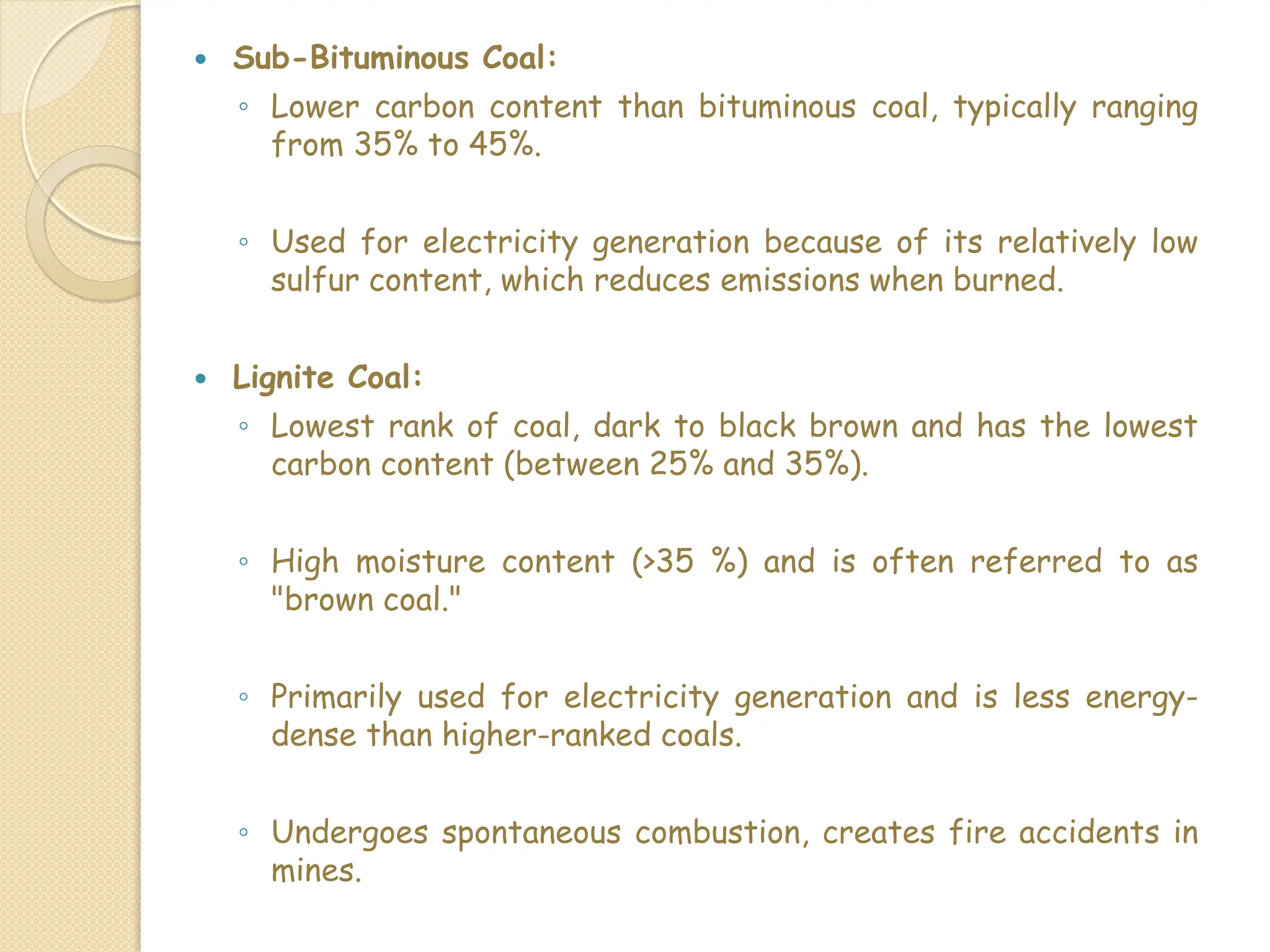
Peat/Turf
 peat, spongy material formed by the partial decomposition of organic
matter, primarily plant material, in wetlands such as swamps, muskegs, bogs,
fens, and moors.
 The development of peat is favored by moist climatic conditions
 In addition to ecological importance, peat is economically important as a
carnon sink, as a source of fuel, and as raw material in horticulture and
other industries.
 The wetlands in which peat forms are known as peatlands.The peat
formed and housed in these special ecosystems is the largest natural
terrestrial carbon store, and it sequesters more carbon than all other
vegetation types in the world combined.
 Peatlands occur in different climate zones.While in tropical climate, they
can occur in mangroves, in Arctic regions, peatlands are dominated by
mosses. Some mangrove species are known to develop peatland soils
under them.
 Besides climate mitigation, peatlands are important for archaeology, as they
maintain pollen, seeds and human remains for a long time in their acidic
and water-logged conditions.
 In India, peatlands occupy roughly 320–1,000 square kilometres
area.
 Peatlands, which play an crucial role in regulating global climate by
acting as carbon sinks.
 Peatlands cover only three per cent of Earth’s surface. Peatlands
contain 30 per cent of the world’s soil carbon.
 When drained, these emit greenhouse gases, contributing up to
one gigaton of emissions per year through oxidation.
 However, their degradation due to drainage, fire, agricultural use
and forestry can trigger release of the stored carbon in a few
decades (Food and Agriculture Organization (FAO) of the United
Nations, 2020)
 Peat is thus critical for preventing and mitigating the effects
of anthropogenic global warming.
 Peat harvesting and land-use changes that damage peatlands are a
major source of greenhouse gas emissions,
 and in the 21st century the use of peat increasingly has been
discouraged in an attempt to protect these valuable ecosystems.
 The recently released UN report 2020 highlighted the importance
of mapping and monitoring.
Mapping peatlands
 Peatlands are formed due to the accumulation of partially
decomposed plant remains over thousands of years under
conditions of water-logging. To prevent their further degradation,
these areas should be urgently mapped and monitored.
 “Peatland mapping tells us where the peat is and what condition it
is in. Together, with conservation and restoration measures,
mapping also helps in maintaining water regulation services
(reduction of flood intensities) and biodiversity,” said Nuutinen.
 For countries keen on reducing emissions, monitoring the ground
water level of peatlands is vital, or else they can turn into carbon
emission sources.
 Mapping methodologies include both ground and remotely-sensed
input data. The report also offered an overview of the different
monitoring approaches and their advantages and limitations.
 According to the authors, mapping forms the basis. Without a map,
there will be no sensible monitoring of peatlands.
 The monitoring exercise requires a mix of satellite and ground-
based exercises
Peatlands Distribution in India
◦ Peatlands in India have been recorded in Arunachal Pradesh,
northern parts of Sikkim, Himachal Pradesh and Kerala. Parts of the
Western Ghats range are also reported to have peatlands. Other
regions with potential distribution of peatlands are mangroves and
delta regions. However, due to lack of monitoring and mapping
efforts, the distribution is not well documented.
HKH Peatlands
◦ The total area of peatland in the Himalayan Hindukush region,
excluding China, was found to be 17,106 square kilometres in 2008.
About 8,236 square kilometres of this area is now degraded. Of
this, the Ruoergai Plateau houses the most important and largest
high altitude peatland system.
Ruoergai Plateau
◦ The Ruoergai Plateau is located in the eastern part of the Tibetan
Plateau. It is the most important area of high mountain peatland
system, not only in the Himalayan Hindukush region, but world-
wide. It is also known as Zoige Marsh or the Songpan Grasslands. It
is a RamsarWetland site.
Peat formation
 Peat moss (Sphagnum) is one of the most common constituents of peat.
 Peatification is influenced by several factors, including the nature of the
plant material deposited, the availability of nutrients to support bacterial
life, the availability of oxygen, the acidity of the peat, and temperature.
 Some wetlands result from high groundwater levels, whereas some
elevated bogs are the result of heavy rainfall.
 Although the rate of plant growth in cold regions is very slow, the rate of
decomposition of organic matter is also very slow.
 Plant material decomposes more rapidly in groundwater rich in nutrients
than in elevated bogs with heavy rainfall.
 The presence of oxygen (aerobic conditions) is necessary for fungal and
microbial activity that promotes decomposition,but peat is formed in
waterlogged soils with little or no access to oxygen (anaerobic conditions),
largely preventing the complete decomposition of organic material.
 The formation of abundant peat was not possible before land
plants spread widely during and after the Devonian period (beginning
approximately 419.2 million years ago).
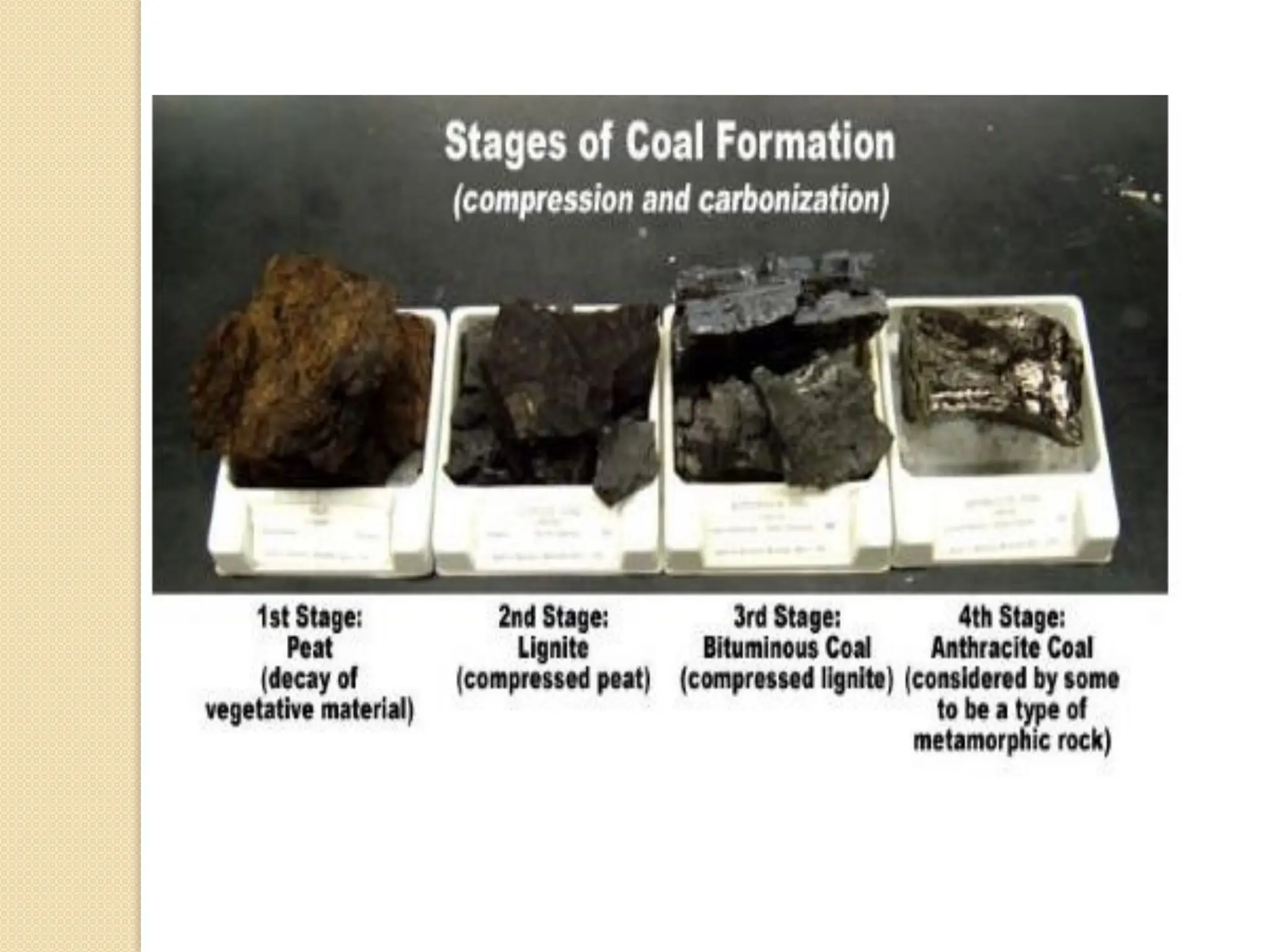
 The formation of peat is the first step in the formation of coal.
 With increasing depth of burial and increasing temperature, peat deposits
are gradually changed to lignite.
 With increased time and higher temperatures, these low-rank coals are
gradually converted to subbutuminous and bituminous cola and to
anthracite.
Extraction/ Processing
o On the basis of macroscopic, microscopic, and chemical characteristics
peats may be divided into several types, including fibric, coarse hemic,
hemic, fine hemic, and sapric, based on their.
o Peat may be distinguished from lower-ranked coals on the basis of four
characteristics: peats generally contain free cellulose, more than 75
percent moisture, and less than 60 percent carbon, and they can be cut
with a knife.
 The transition to brown coal takes place slowly and is usually reached at
depths ranging from 100 to 400 metres (approximately 330 to 1,300 feet).
 Peat is usually hand-cut, although progress has been made in the
excavation and spreading of peat by mechanical methods.
 Peat may be cut by spade in the form of blocks, which are spread out to
dry.
 In one mechanized method, a dredger or excavator digs the peat from the
drained bog and delivers it to a macerator (a device that softens and
separates a material into its component parts through soaking), which
extrudes the peat pulp through a rectangular opening.
 The pulp cut in blocks are spread to dry.
 Maceration tends to yield more uniform shrinkage and a denser and
tougher fuel.
 Hydraulic excavating can also be used, particularly in bogs that contain
roots and tree trunks.
 The peat is washed down by a high-pressure water jet, and the pulp runs
to a sump.There, after slight maceration, it is pumped to a draining ground
in a layer, which, after partial drying, is cut up and dried further.
Uses
 Dried peat can be used as a fuel for domestic heating purposes cooking in
some places and has been used to produce small amounts of electricity.
 Peat is only a minor contributor to the world energy supply, but large
deposits occur in Canada, China, Indonesia, Russia, Scandinavia, and
the United states.
 In the early 21st century the top four peat producers in the world were
Finland, Ireland, Belarus, and Sweden, and most of the major users of peat
were these and other northern European countries.
 Peat is sometimes considered a “slowly renewable energy” and is classified
as a “solid fossil” rather than a biomass fuel by the Intergovernmental Panel
on climate change (IPCC).
 Although peat is not strictly a fossil fuel, its greenhouse gas emissions
are comparable to those of fossil fuels.
 Inhorticulture, peat is used to increase the moisture-holding capacity of
sandy soils and to increase the water infiltration rate of clay soils.
 It is also added to potting mixes to meet the acidity requirements of
certain potted plants.
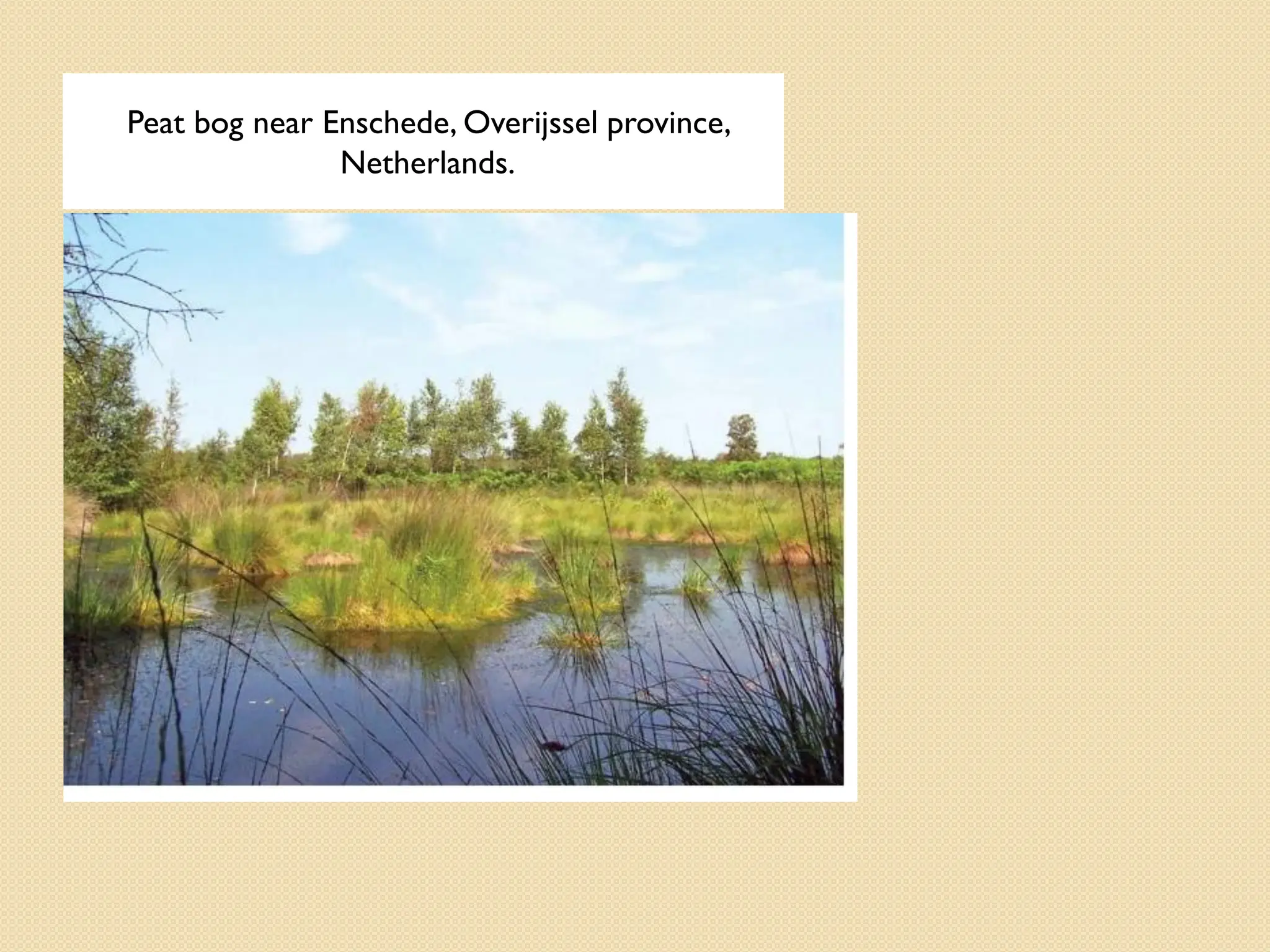
Peat bog near Enschede, Overijssel province,
Netherlands.
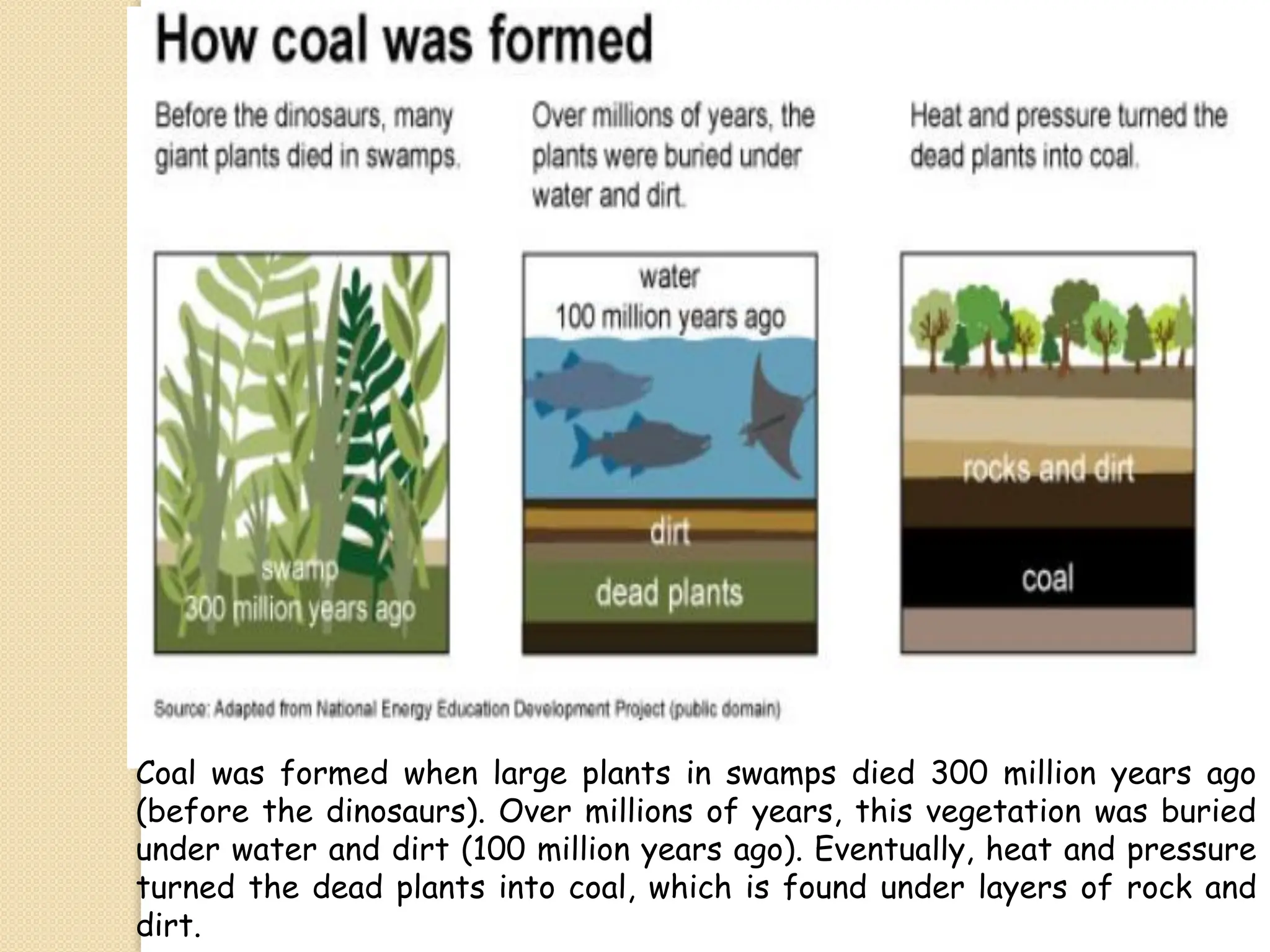
Coal was formed when large plants in swamps died 300 million years ago
(before the dinosaurs). Over millions of years, this vegetation was buried
under water and dirt (100 million years ago). Eventually, heat and pressure
turned the dead plants into coal, which is found under layers of rock and
dirt.
Coal varieties
 The more heat and pressure that coal undergoes during formation, the
greater is its fuel value and the more desirable is the coal.
Swamp → Peat → Lignite → Subbituminous coal → Bituminous coal →
Anthracitic coal → Graphite
 Ranked on the basis of coalification
 Heat and pressure produced chemical and physical changes in the plant
layers which forced out oxygen and left rich carbon deposits.
 With time, the material that had once been plants became coal.
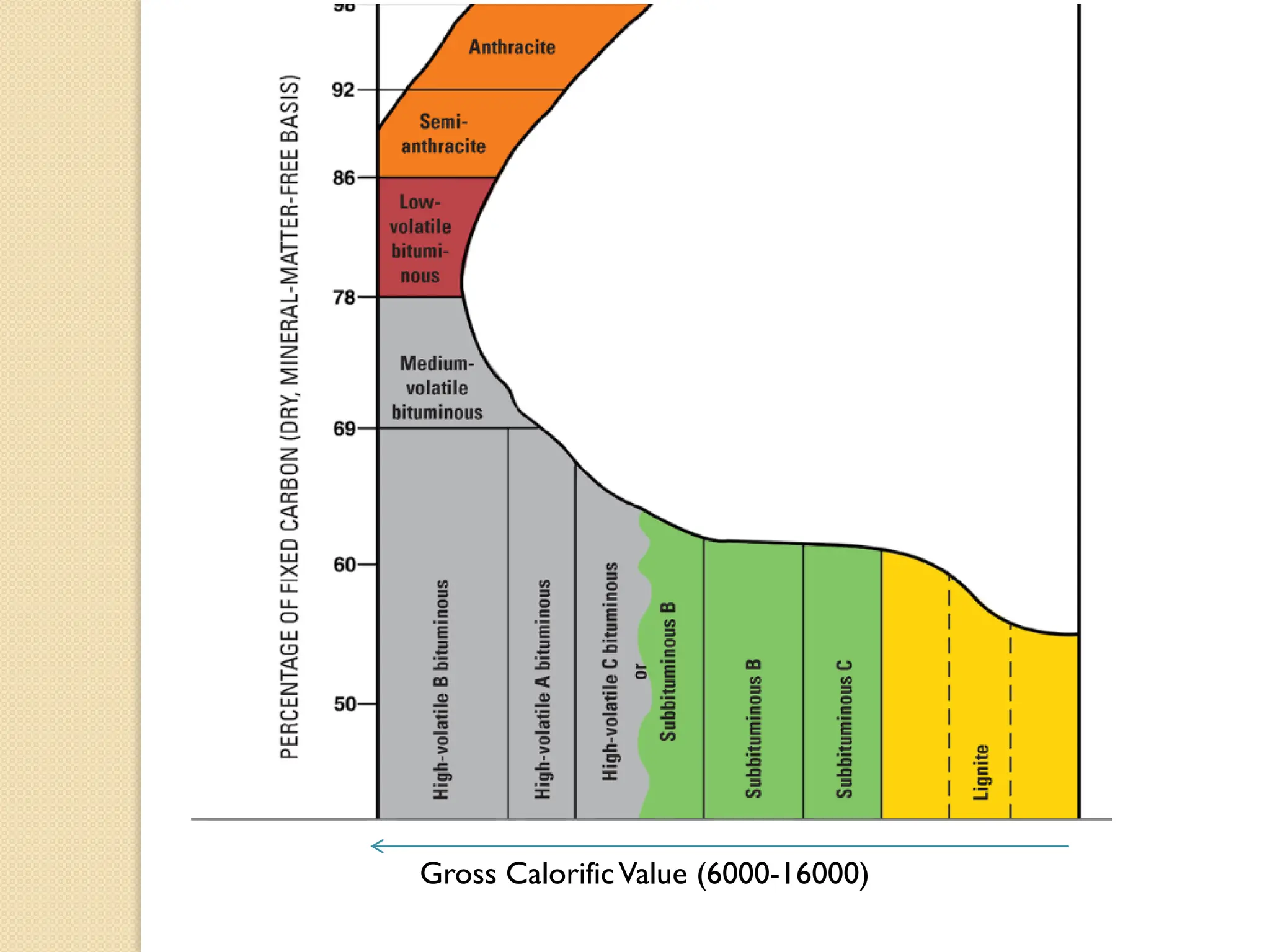
 Coal rankings depend on energy content, measured as gross calorific
value (how much energy is released from combustion) and carbon
content that can be burned (percentage of fixed carbon).
 The increase in coal rank is accompanied by increases in the amount of
fixed carbon and by decreases in the amount of moisture and other
volatile material in the coal.
Gross CalorificValue (6000-16000)
 Lignite, subbituminous coal, and bituminous coal are considered
sedimentary rocks because they form from compacted sediments.
 Anthracite is considered a metamorphic rock because it has been
compacted and transformed to the extent that it is denser than the
other forms of coal and no longer contains sheet-like layers of
sediments.
 With even more heat and pressure driving out all the components
that evaporate easily and leaving pure carbon, anthracite can turn
to graphite.
 anthracite least polluting and lignite posing greater environmental
challenges with release of greenhouse gases and pollutants.
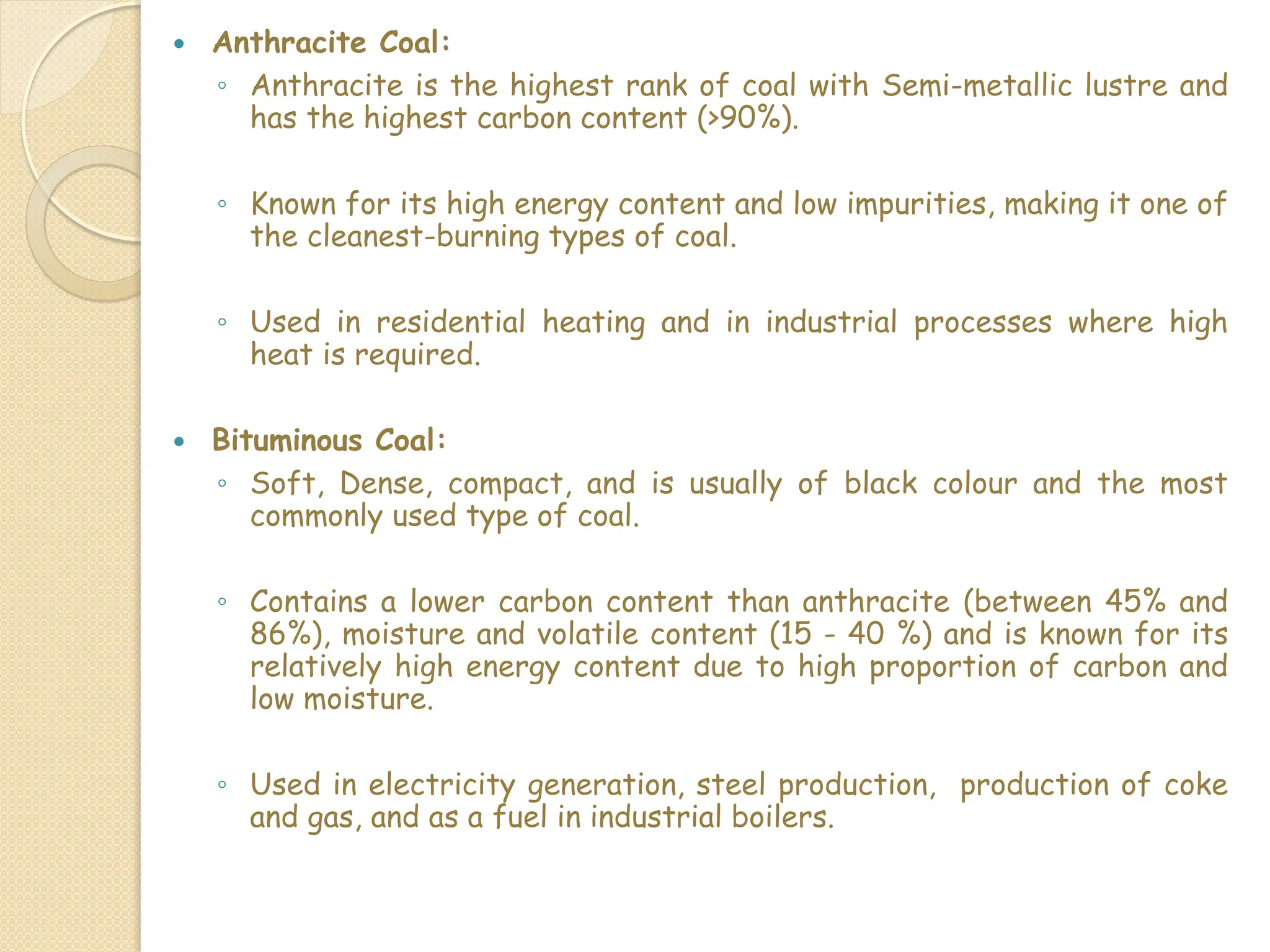
 Lignites are brown and have a laminar structure in which the
remnants of woody fibers may be quite apparent. The
word lignite comes from the Latin word lignum meaning wood. Owing
to the high moisture and low heating value, it is not economical to
transport lignite over long distances.
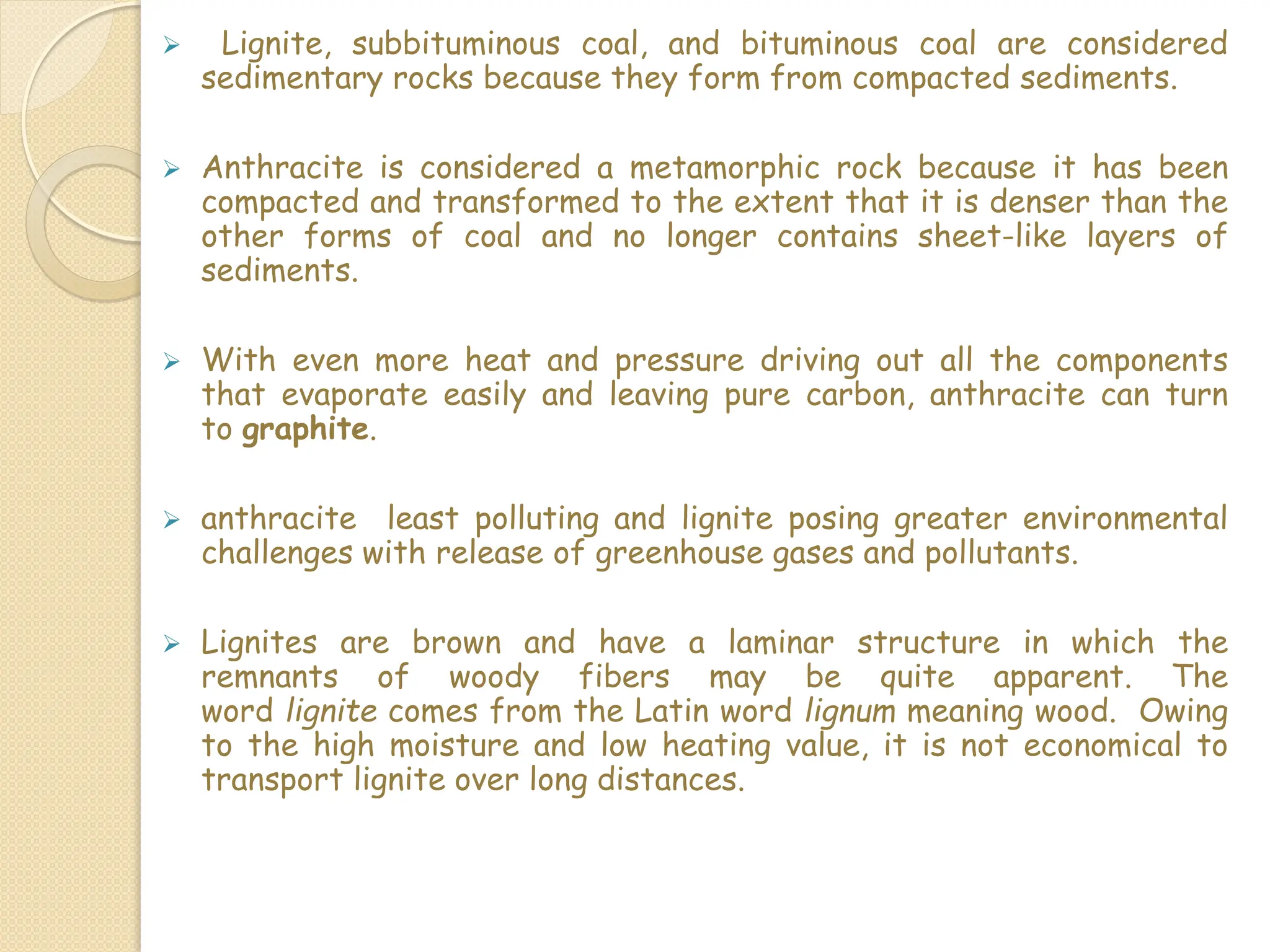
Anthracite
Peat
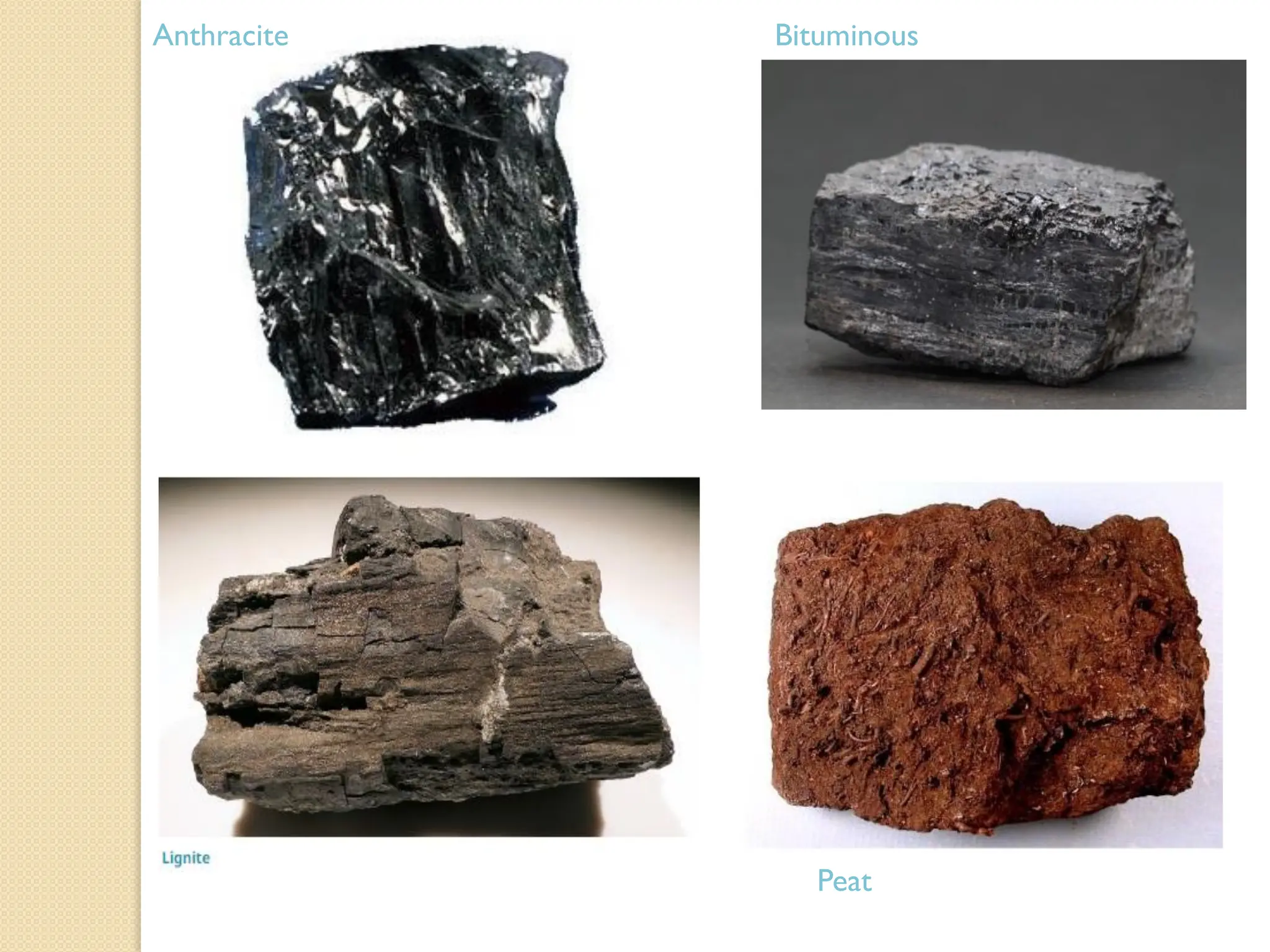
Bituminous
 Anthracite Coal:
◦ Anthracite is the highest rank of coal with Semi-metallic lustre and
has the highest carbon content (>90%).
◦ Known for its high energy content and low impurities, making it one of
the cleanest-burning types of coal.
◦ Used in residential heating and in industrial processes where high
heat is required.
 Bituminous Coal:
◦ Soft, Dense, compact, and is usually of black colour and the most
commonly used type of coal.
◦ Contains a lower carbon content than anthracite (between 45% and
86%), moisture and volatile content (15 - 40 %) and is known for its
relatively high energy content due to high proportion of carbon and
low moisture.
◦ Used in electricity generation, steel production, production of coke
and gas, and as a fuel in industrial boilers.
 Sub-Bituminous Coal:
◦ Lower carbon content than bituminous coal, typically ranging
from 35% to 45%.
◦ Used for electricity generation because of its relatively low
sulfur content, which reduces emissions when burned.
 Lignite Coal:
◦ Lowest rank of coal, dark to black brown and has the lowest
carbon content (between 25% and 35%).
◦ High moisture content (>35 %) and is often referred to as
"brown coal."
◦ Primarily used for electricity generation and is less energy-
dense than higher-ranked coals.
◦ Undergoes spontaneous combustion, creates fire accidents in
mines.
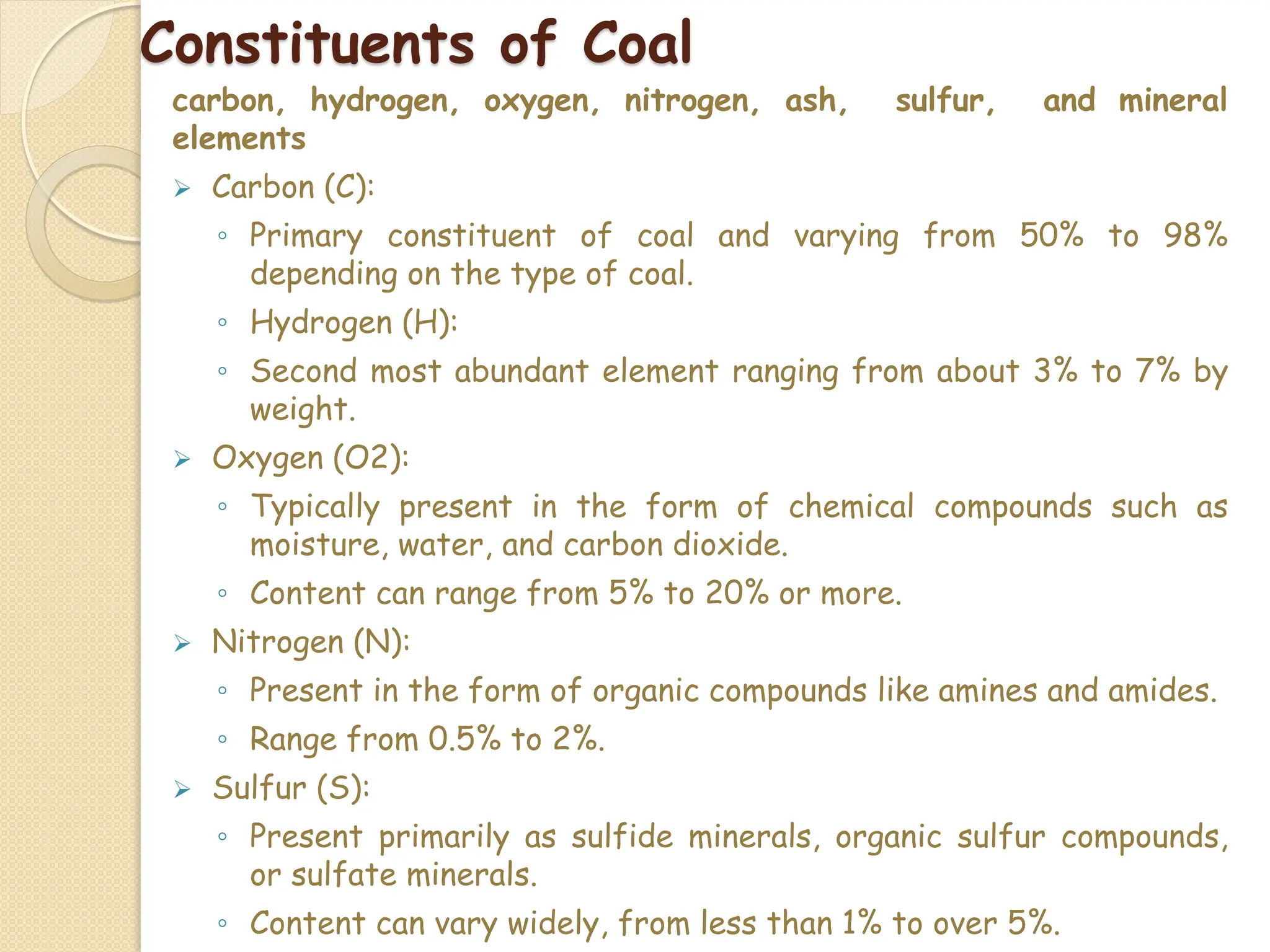
Constituents of Coal
carbon, hydrogen, oxygen, nitrogen, ash, sulfur, and mineral
elements
 Carbon (C):
◦ Primary constituent of coal and varying from 50% to 98%
depending on the type of coal.
◦ Hydrogen (H):
◦ Second most abundant element ranging from about 3% to 7% by
weight.
 Oxygen (O2):
◦ Typically present in the form of chemical compounds such as
moisture, water, and carbon dioxide.
◦ Content can range from 5% to 20% or more.
 Nitrogen (N):
◦ Present in the form of organic compounds like amines and amides.
◦ Range from 0.5% to 2%.
 Sulfur (S):
◦ Present primarily as sulfide minerals, organic sulfur compounds,
or sulfate minerals.
◦ Content can vary widely, from less than 1% to over 5%.
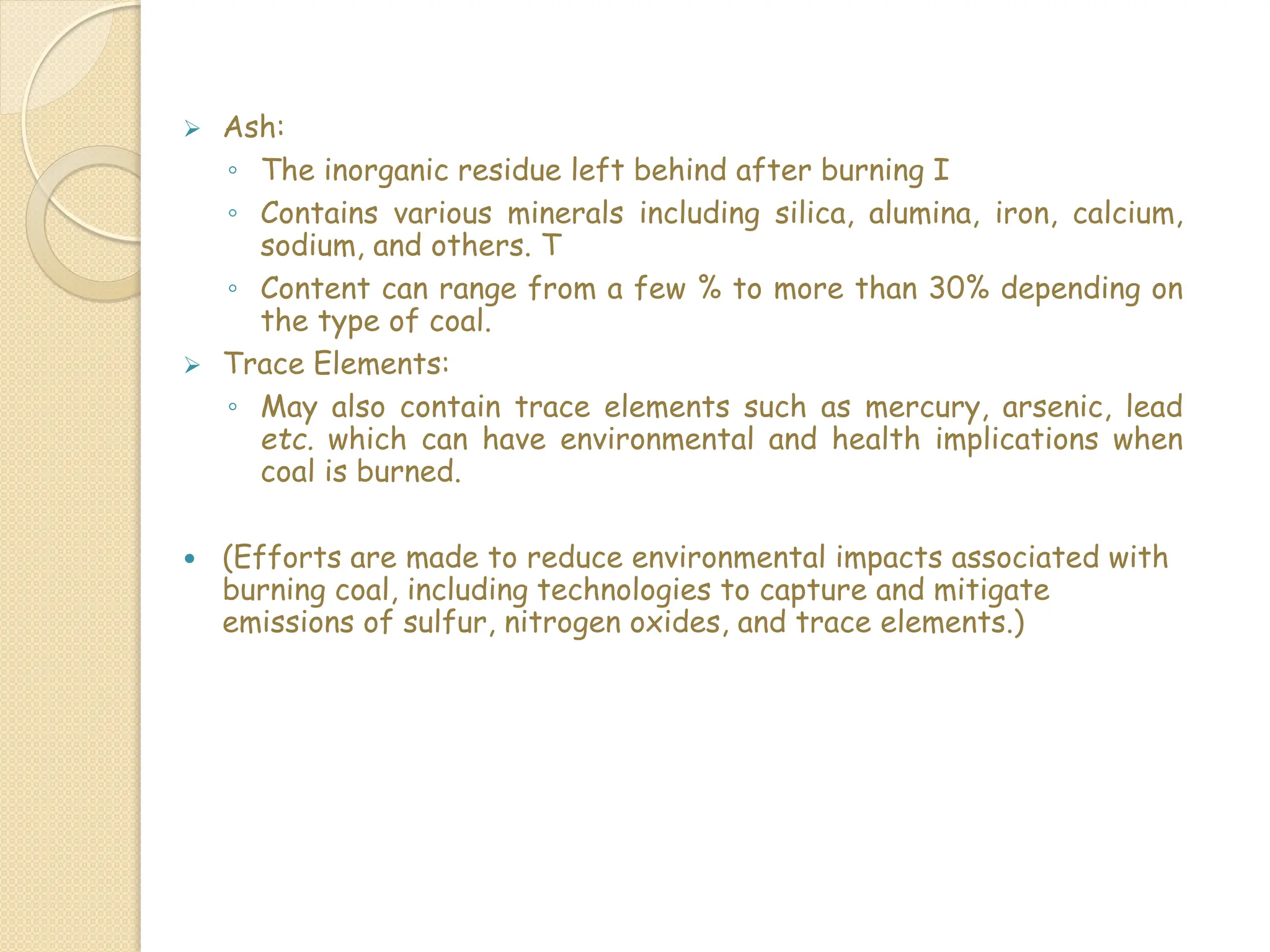
 Ash:
◦ The inorganic residue left behind after burning I
◦ Contains various minerals including silica, alumina, iron, calcium,
sodium, and others. T
◦ Content can range from a few % to more than 30% depending on
the type of coal.
 Trace Elements:
◦ May also contain trace elements such as mercury, arsenic, lead
etc. which can have environmental and health implications when
coal is burned.
 (Efforts are made to reduce environmental impacts associated with
burning coal, including technologies to capture and mitigate
emissions of sulfur, nitrogen oxides, and trace elements.)
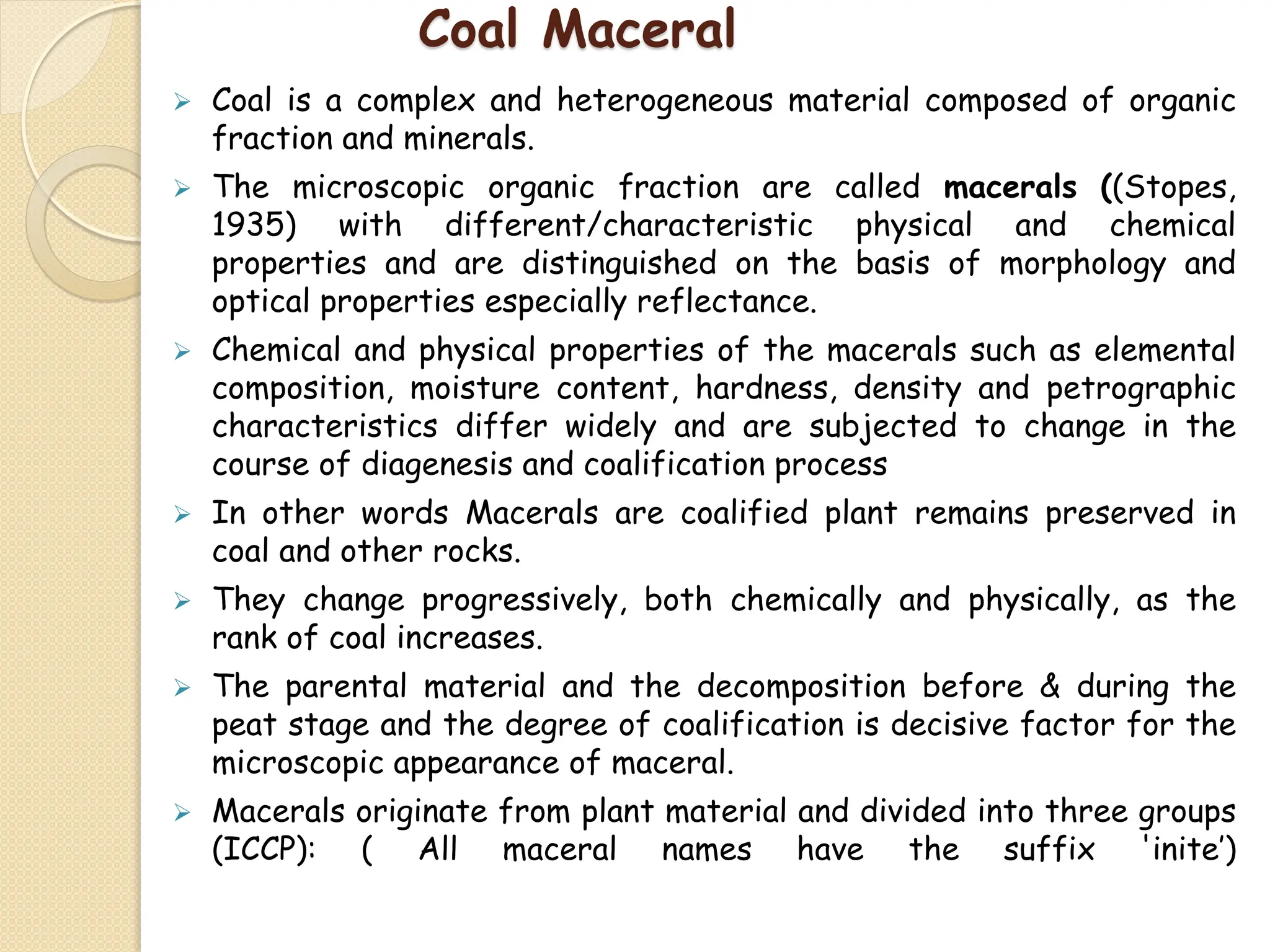
Coal Maceral
 Coal is a complex and heterogeneous material composed of organic
fraction and minerals.
 The microscopic organic fraction are called macerals ((Stopes,
1935) with different/characteristic physical and chemical
properties and are distinguished on the basis of morphology and
optical properties especially reflectance.
 Chemical and physical properties of the macerals such as elemental
composition, moisture content, hardness, density and petrographic
characteristics differ widely and are subjected to change in the
course of diagenesis and coalification process
 In other words Macerals are coalified plant remains preserved in
coal and other rocks.
 They change progressively, both chemically and physically, as the
rank of coal increases.
 The parental material and the decomposition before & during the
peat stage and the degree of coalification is decisive factor for the
microscopic appearance of maceral.
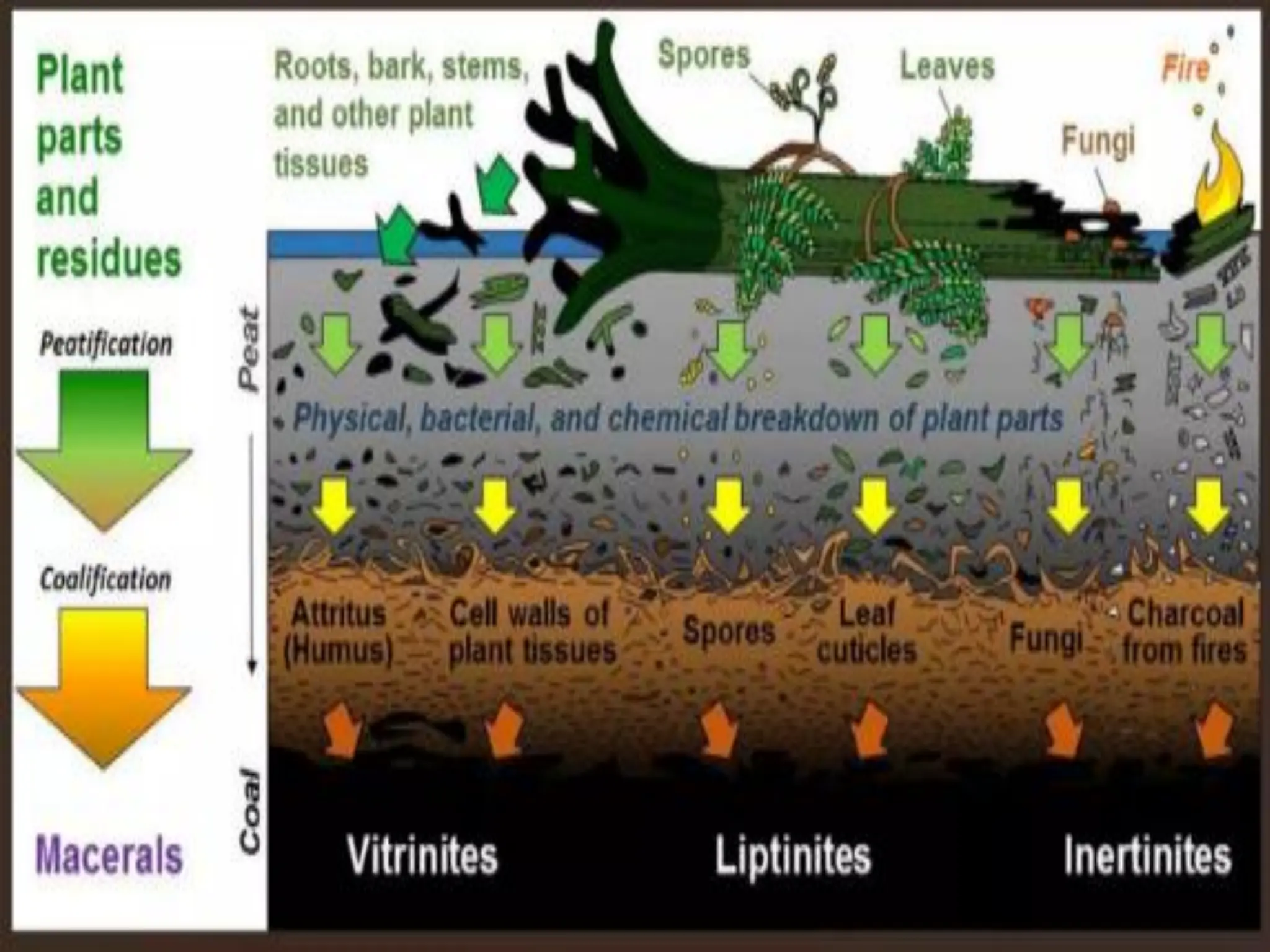
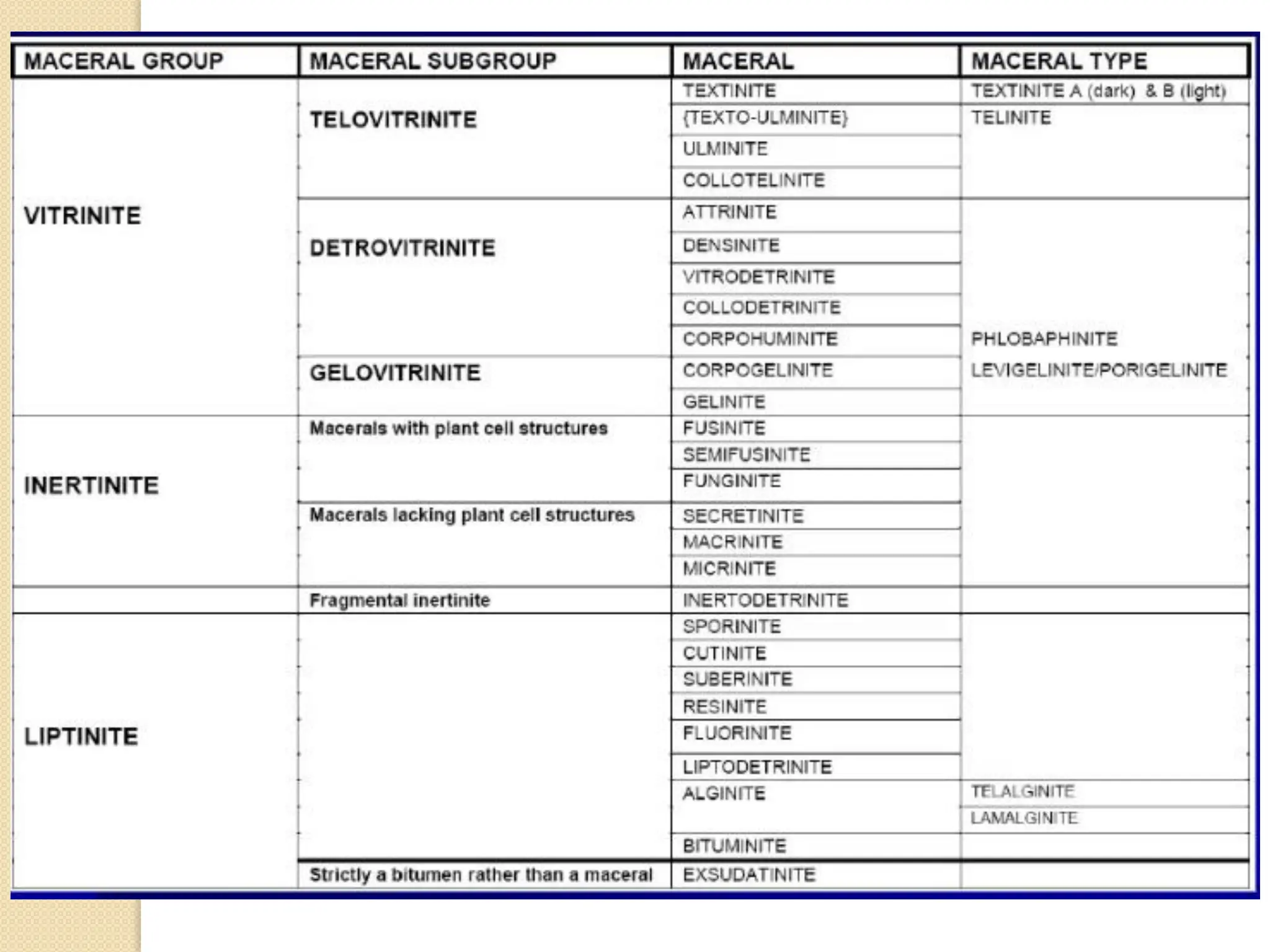
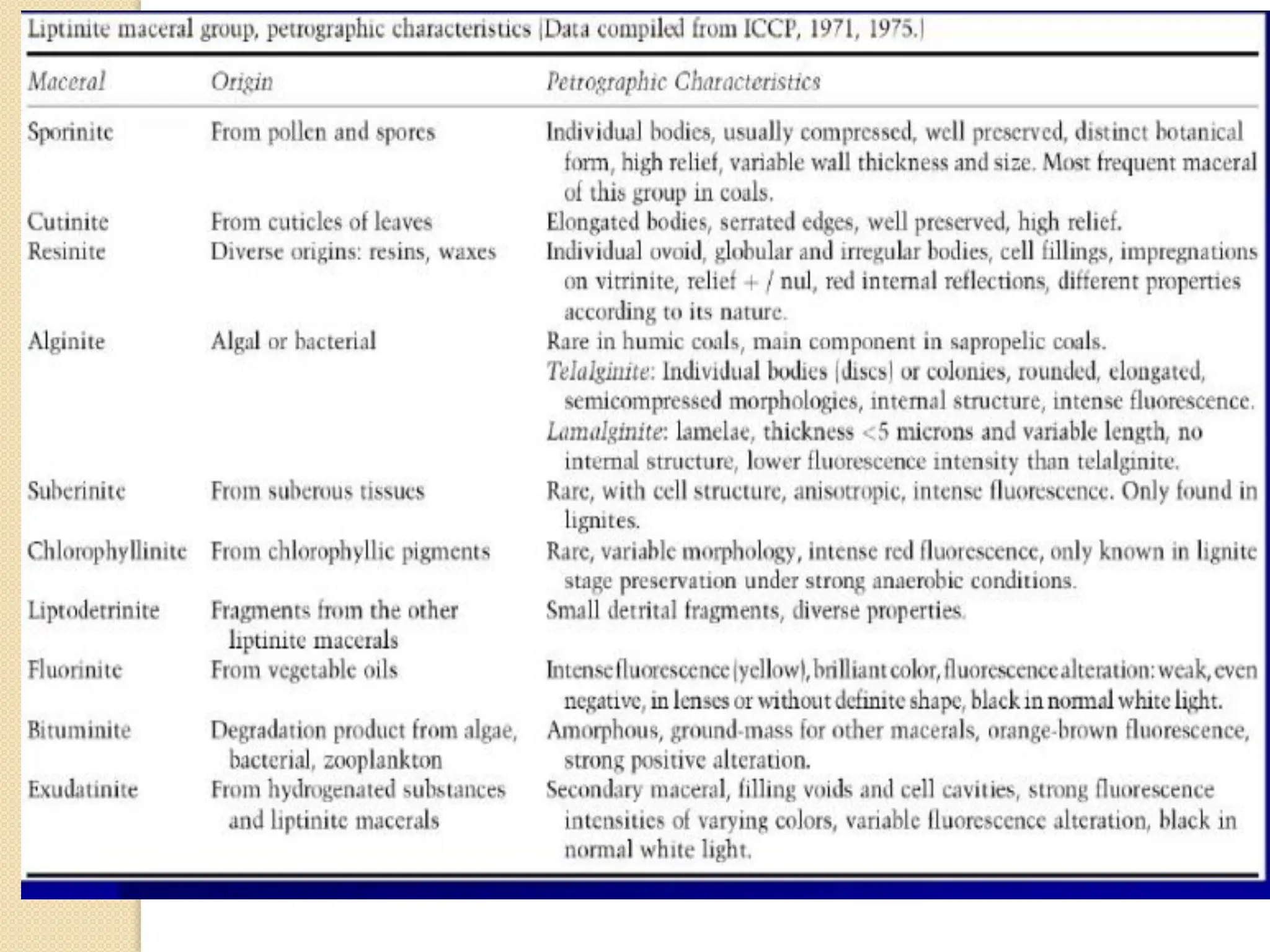
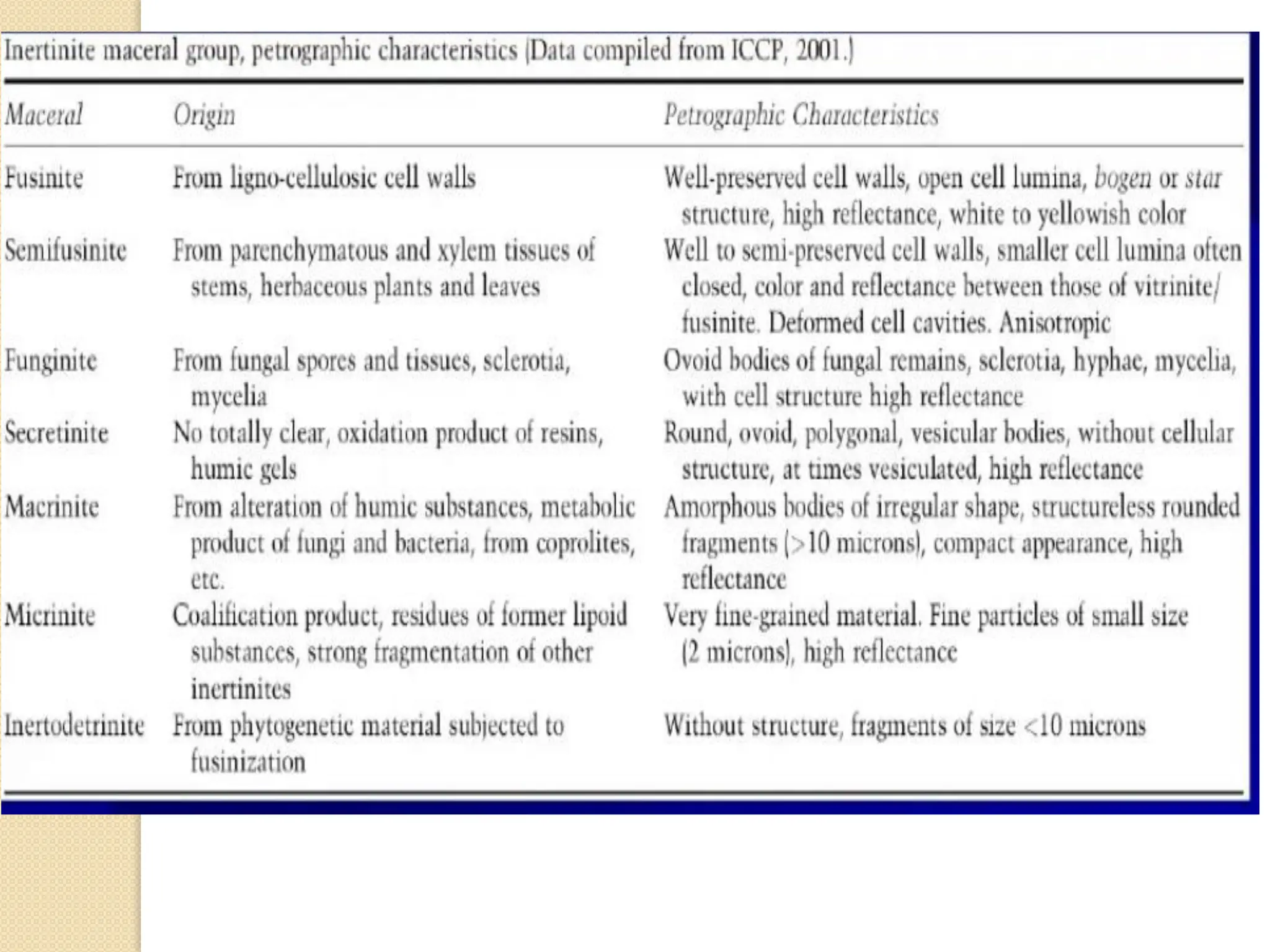
 Macerals originate from plant material and divided into three groups
(ICCP): ( All maceral names have the suffix 'inite’)
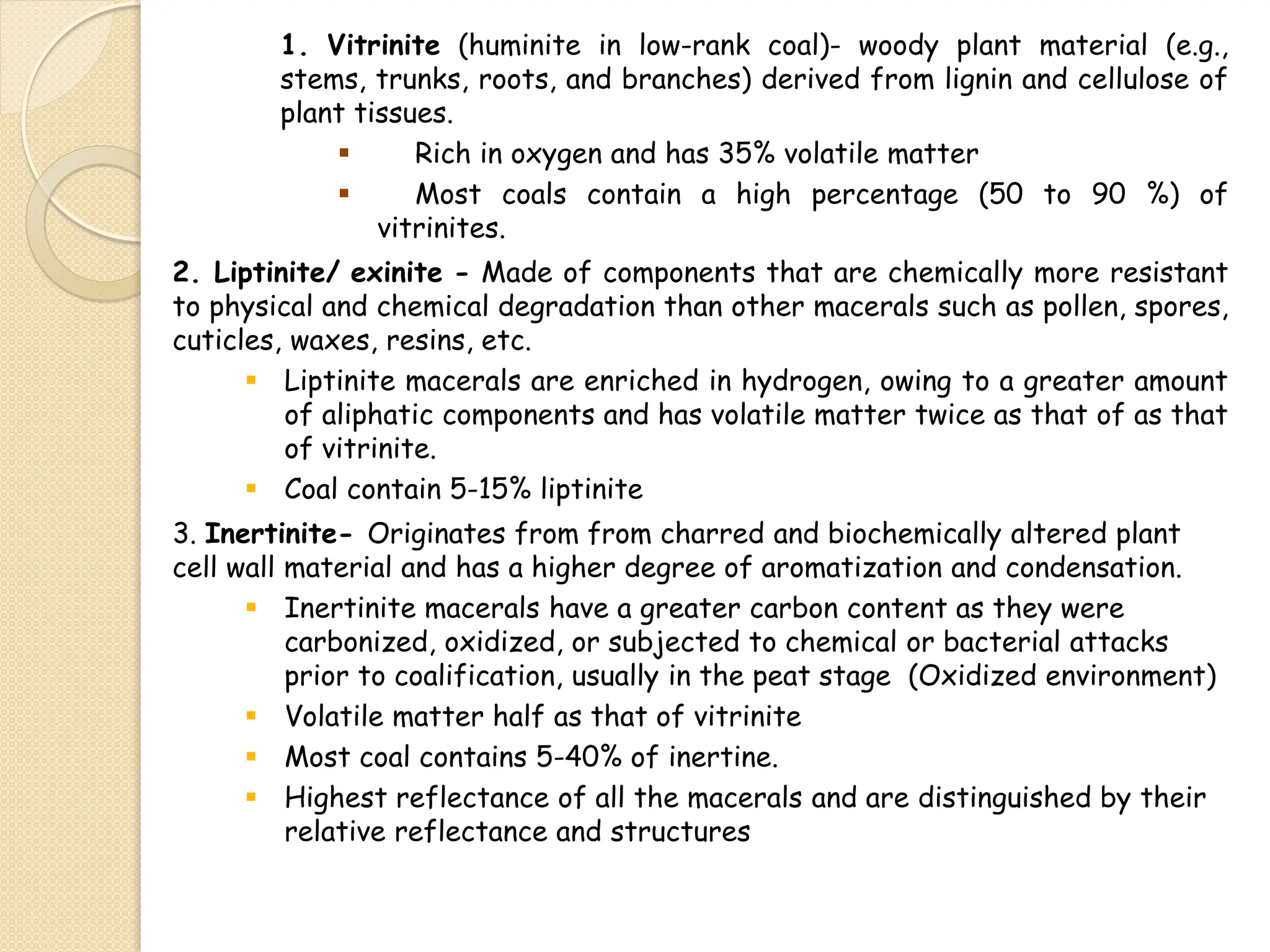
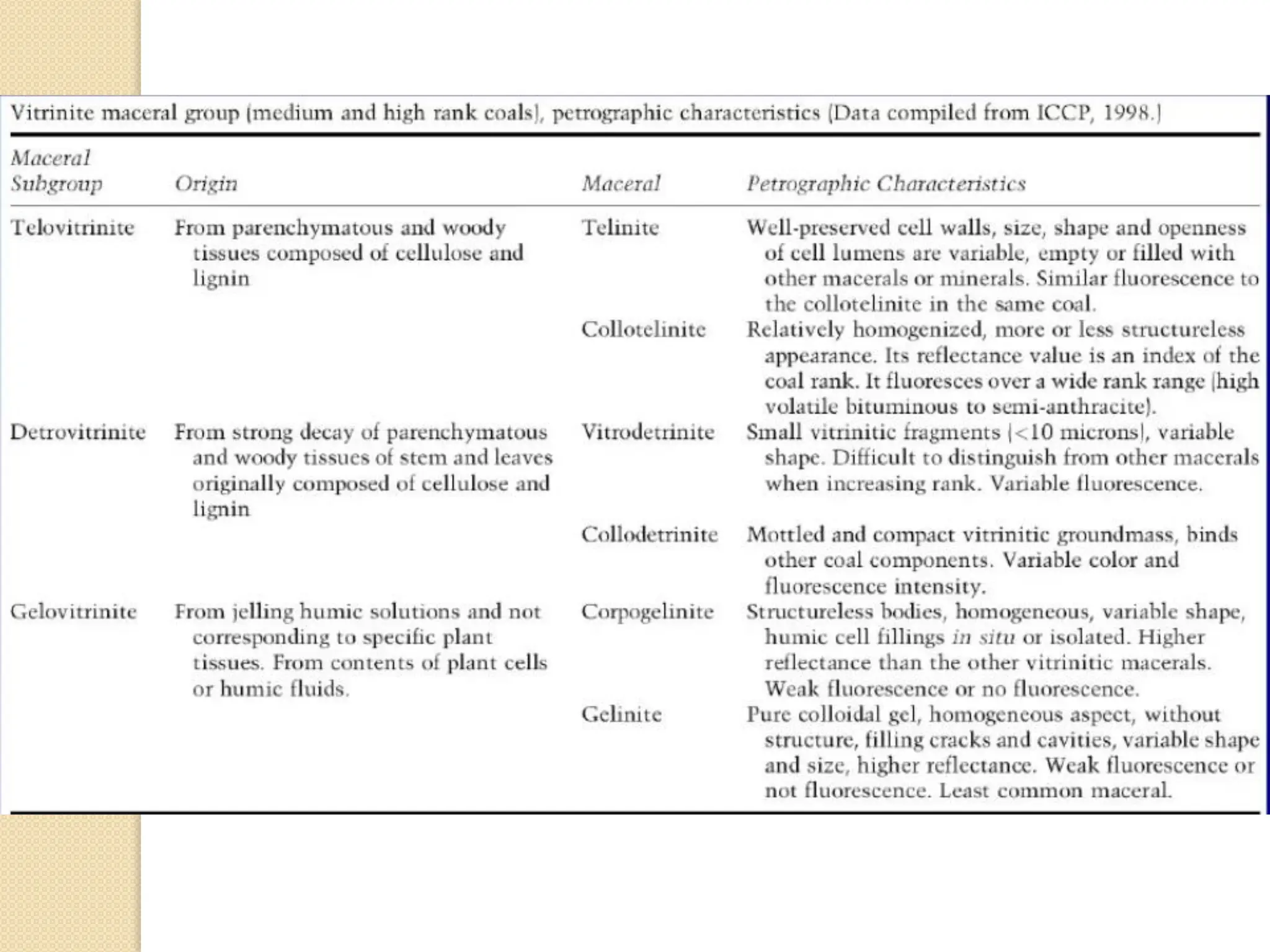
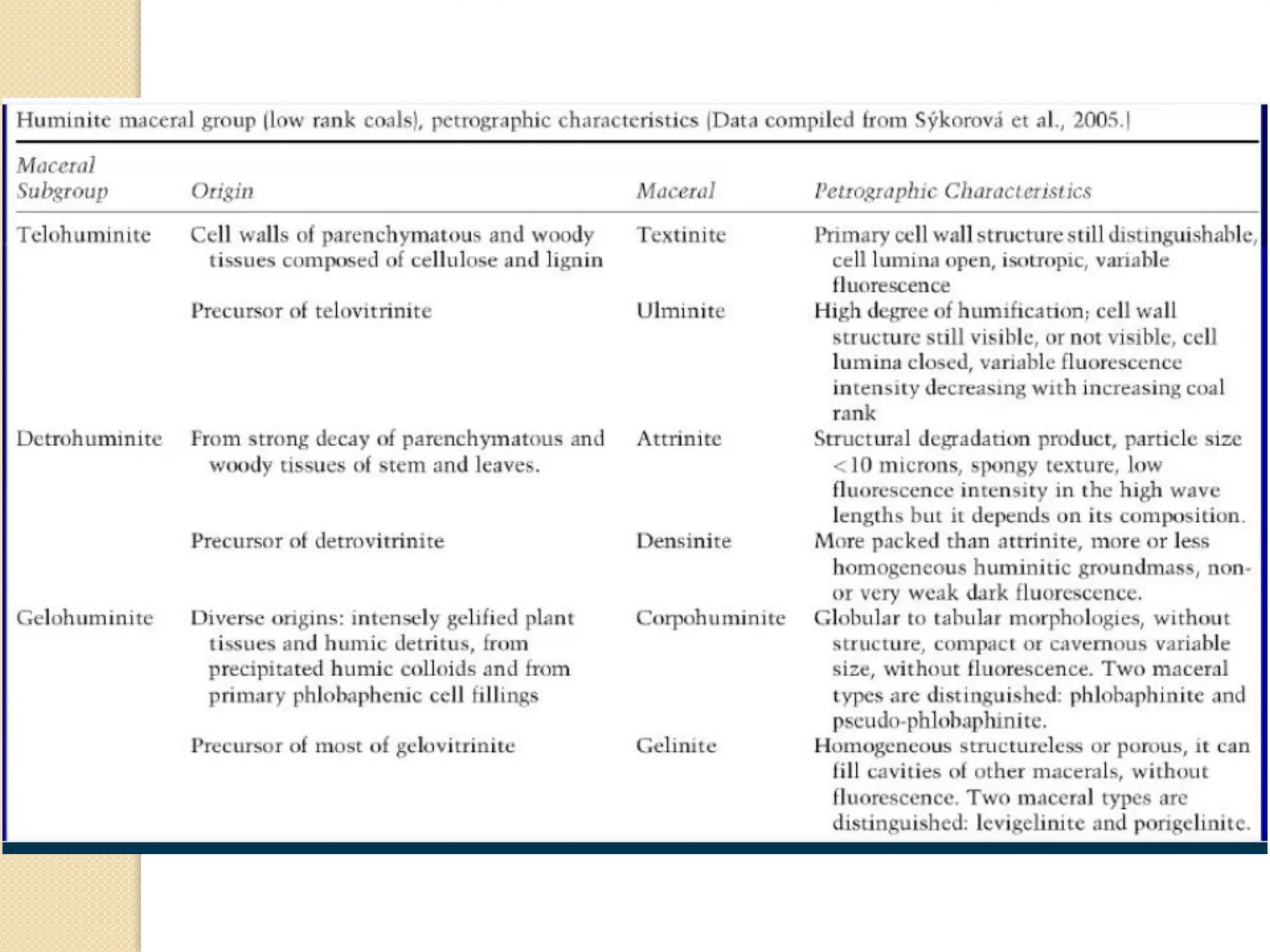
1. Vitrinite (huminite in low-rank coal)- woody plant material (e.g.,
stems, trunks, roots, and branches) derived from lignin and cellulose of
plant tissues.
 Rich in oxygen and has 35% volatile matter
 Most coals contain a high percentage (50 to 90 %) of
vitrinites.
2. Liptinite/ exinite - Made of components that are chemically more resistant
to physical and chemical degradation than other macerals such as pollen, spores,
cuticles, waxes, resins, etc.
 Liptinite macerals are enriched in hydrogen, owing to a greater amount
of aliphatic components and has volatile matter twice as that of as that
of vitrinite.
 Coal contain 5-15% liptinite
3. Inertinite- Originates from from charred and biochemically altered plant
cell wall material and has a higher degree of aromatization and condensation.
 Inertinite macerals have a greater carbon content as they were
carbonized, oxidized, or subjected to chemical or bacterial attacks
prior to coalification, usually in the peat stage (Oxidized environment)
 Volatile matter half as that of vitrinite
 Most coal contains 5-40% of inertine.
 Highest reflectance of all the macerals and are distinguished by their
relative reflectance and structures
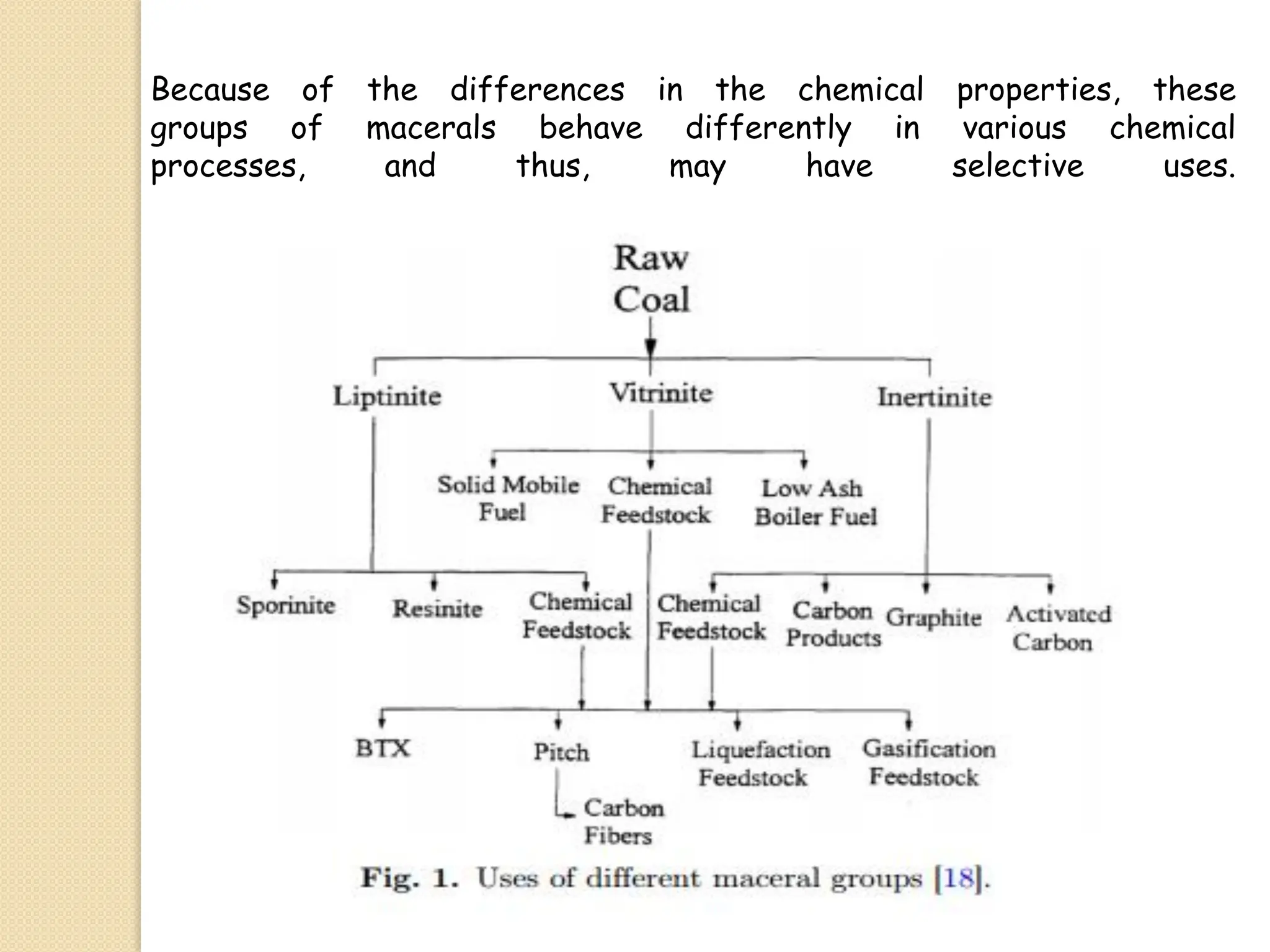
Because of the differences in the chemical properties, these
groups of macerals behave differently in various chemical
processes, and thus, may have selective uses.
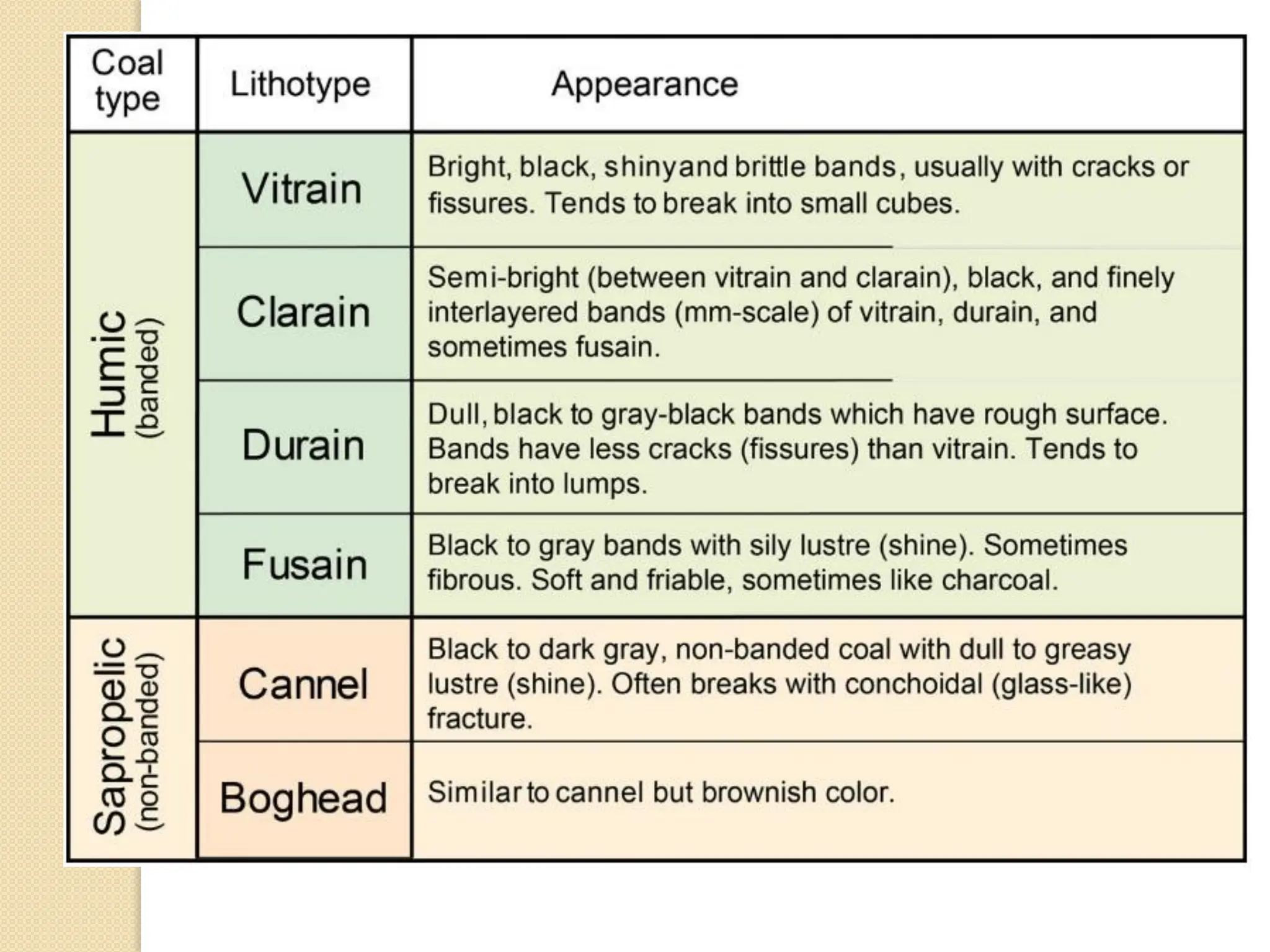
 Macroscopic component (i.e. Observable by naked eye) of coal are
called lithopyes
 Coal type/ Lithophyte is a specific geologic classification based on
the general appearance of coal i.e. the presence or absence of
banding, and the brightness or dullness of individual bands.
 Based on maceral content and its appearance in a band, coal is
classified into four principal types: Clarain, Durain, Fusain, and
Vitrain
 Horsley and Smith (1951) showed that vitrain (a concentrate of
vitrinite) was the most hydrophobic, followed by clarain (vitrinite +
inertinite), durain (vitrinite + inertinite + mineral matter), and
fusain (intertinite)
 Coal lithotypes are further divided into microscopic
microlithotypes. Microlithotypes are the natural assemblages of
macerals at microscopic level.
 The density of the microlithotypes varies with rank, maceral
composition, and size, as well as the form and quantity of
associated minerals.
 The degree of heterogeneity in a microlithotype is also important
in its behavior in carbonization, combustion and gasification
processes
 vitrain, has a brilliant black, glossy lustre and composed primarily of
the maceral group vitrinite, derived from the bark tissue of large
plants.
 It occurs in narrow, sometimes markedly uniform bands that
are rarely more than 0.5 inch (1.27 cm) thick.
 Vitrain was probably formed under drier surface conditions
than the lithotypes Clarain and Durain.
 On burial stagnant groundwater prevented the decomposition
of the woody plant tissue.
 Durain characterised by a hard, granular texture and composed of
the maceral groups exinite and inertinite as well as relatively large
amounts of inorganic minerals.
 Occurs as thick, lenticular bands, usually dull black to dark grey
in colour.
 Durain is thought to have formed in peat deposits below water
level, where only exinite and inertinite components resisted
decomposition and where inorganic minerals accumulated from
sedimentation.
 clarain, macroscopically distinguishable component, characterised
by alternating bright and dull black laminae.
◦ The brightest layers are composed chiefly of the maceral
vitrinite and the duller layers of the other maceral groups exinite
and inertinite.
 fusain, commonly found in silvery-black layers only a few
millimetres thick extremely soft and crumbles readily into a fine
powder.
• Composed mainly of fusinite (carbonized woody plant tissue)
and semi fusinite from inertinite (high carbon, highly
reflective) group.
• It closely resembles charcoal in terms of both chemical and
physical properties and may have been formed in
peat deposits swept by forest fires or by some bacterial
action that generated intense heat.
 cannel coal are hydrogen-rich, dull black, sometimes waxy
lustre.
◦ Formerly called candle coal because it lights easily and burns
with a bright, smoky flame.
◦ Consists of micrinites, macerals of the exinite group, and
certain inorganic materials.
◦ Usually occurs at the top or bottom of other coals, though it
sometimes can be found as individual seams up to 61 cm (2
feet) thick.
◦ Formed in lakes and pools where floating spores, transported
by wind and water, accumulated in mud mixed with plant
debris.
Coal grade
 Coal may also be classified in grades using subjective terms (e.g.,
“Low-sulfurcoal,” “Low-ash coal”) with reference to their impurities
for commercial purposes.
 Low-sulfur coal means less than 1% sulfur and Low-ash coal coals
means ash yields below 10 percent. High-ash coals are generally
coals above 10 percent ash yield.
 An economical or technological classification of the relative quality
of a coal for a particular use.
 A variety of grades of coal are process- or product-specific.
Different quality grades are used in different coal markets:
1. Steam Coal- Used in electric power plants to generate steam to
create electricity.
• Grades of steam coal are generally related to sulfur content and ash yield
and requires low-sulfur and low-ash yield.
2. Metallurgical coal- Used to produce coke (raw material in steel
making. (Also referred as met coal, or coking coal).
• Coke is a hard, porous, carbon-rich compound. Only coals with specific
quality characteristics can be used to make coke. Coals for steel
production requires low-ash, low-sulfur, and low-volatile.
3. Chemical and Specialty coal- Used for the production of chemicals
and specialty products.
Requirement are Low ash and sulfur contents, as with steam coals
and metallurgical-grade coals, but also may be related to mechanical
properties (e.g., Hardgrove grindability, free-swelling index), or to
chemical composition (e.g., trace elements, amounts of reactive
macerals).
Coal Palynology
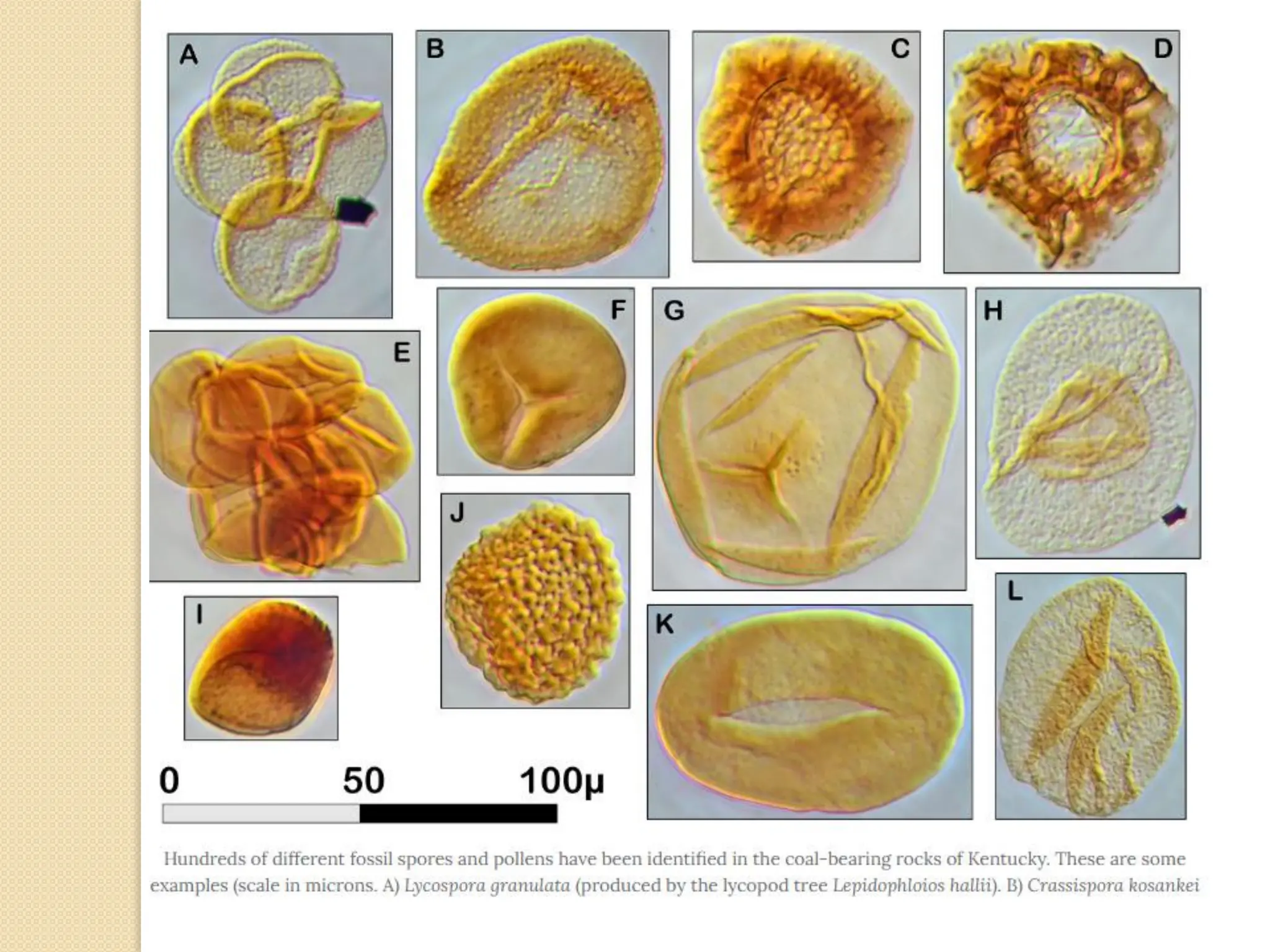
 The study of pollen, spores and certain microscopic planktonic
organisms (called palynomorphs) in both living and fossil form.
 Coal formed from accumulations of plant matter in mire environments
(the term “mire” includes swamps, marshes, moors, fens, and bogs).
 The types of plants inhabiting coal forming mires and ecology of mires
have changed through geologic time resulting in coal deposits with a
variety of compositional characteristics.
 Understanding the kinds of plants that formed a particular coal
deposit contributes to understanding the properties of the coal
(other than rank) that may have economic significance in coal
utilization.
 spores and pollen produced by plants inhabiting ancient coal-forming
mires are well preserved in all because of sporopollenin.
 Hence, study of the fossil spores and pollen preserved in coal can be
the key to understanding the nature of the plant communities of
ancient mires comparison to modern wetland.
 Knowledge of the vegetation of ancient mires leads to
interpretations of their paleoecological settings and of
paleoclimates, which are major factors affecting “coal systems
 Initial deposition of peat to the ultimate utilization of a coal
resource involves several phases, including accumulation, burial, and
preservation, and diagenetic to epigenetic coalification.
 Further, accumulation phase includes five fundamental components:
plant type, peat mire type, climate, sedimentation style, and
syngenetic processes.
 plant type, peat mire type, climate of coal system determined by
palynology.
 Palynological studies provides critical data for interpreting an plant
communities that inhabited the wetland.
 Pollen and spores preserved in coal are primary evidence of the kinds
of plants that formed the deposit.
 The climate in which the mire existed influenced the nature of its
plant community, and in the absence of megafossil paleobotanical
data, palynological determination of the dominant vegetation of the
mire is basic data for interpretation of paleoclimate.
 Spores, pollen and other palynological fossils (Hystrichosphaerids,
Dinoflagellates etc.) can be obtained in abundance from acid-
insoluble residues of shales, coals, limestones, siltstones, peats and
lignites.
 Palynological fossils are minute and well preserved in many
sedimentary environments; approximately 75-80 % of all
sedimentary rocks contain
some type of microfossils.
 They are especially suitable for recovery from even a small amount of
material.
 Palynological fossils are usually abundant and possess taxonomic
characters which make them distinctive entities.
 They are found in rocks ranging in age from late Pre-Cambrian to
Pleistocene and are sufficiently different in each period to serve as
means of recognizing the age of the rocks in question.
 Pollen, Spores, Hystrichosphaerids, dinoflagellates, chitinozoans,
tintinids etc. occur in distictive assemblages that indicate specific
environment at the time of deposition.
 Study of paleopalynology was established at the end of the nineteenth
century with the publication of the first photomicrographs of fossil
pollen and spores from Russia coals (Reinsch, 1884).
 He also gave the methods for the extraction of palynomorphs from
coal samples with concentrated potassium hydroxide and hydrofluoric
acid.
Method
Palynological analysis of coal and associated rocks is done by
separating microscopic fossil spores and pollen from their rock
matrix.
1) Sample collection
2) Palynological extraction: By dissolving the surrounding coal and
rock in strong acids as the fossil spores and pollen are insoluable
in acid
3) Sample mounting and observation: Extracted sample is
transferred to a microscopic slide, and examined under
transmitted light with the aid of microscope.
E.g. from India
 (Gautam et al., 2022) Quantitative analysis of the spores and
pollen grains of Raniganj Coalbed, Damodar Basin, three
palynoassemblages :
i) dominance of nonstriate bisaccate pollen
Scheuringipollenites and subdominance of striate bisaccate
pollen Faunipollenites suggestive of an early Permian
ii) prominence of striate bisaccate mainly Faunipollenites,
Striatopodocarpites and subdominance of Scheuringipollenites
siglate early late Permian
iii striate disaccates pollen, viz., Striatopodocarpites, Crescentipollenites, and
monosaccate pollen Densipollenites spp. corroborate with the latest Permian
 The dominance of gymnosperms pollen glossopteridales, conifers, and cordaites,
lesser quantitative spores of lycopsids, sphenopsids, Bliciopsids algal elements
indicate that the palaeoclimatic condition was warm and high humid.
 (Navale and Tiwari, 1968) On the basis of palynological contents and petrographic
constituets identified two palynassemblages in the Rampur coalfield, Orissa.
 Palynology, the study of pollen and spores, is the only known universal method by
which marine sediments can be correlated with fresh-water sediments.
 Study of the history of pollen analysis shows a rapid expansion in the use of this
technique from 1916 onward.
 The Royal Dutch Shell Group initiated palynological studies in 1938, and many oil
companies now have palynological laboratories.
 Pollen and spores can undoubtedly be preserved because the outer wall of the
grains is extraordinarily resistant.
 Strata deposited in reducing environments commonly contain well preserved pollen
and spores.
 Determination of ancient shorelines, age determination of Gulf Coast salt, and
palynological correlations in Venezuela, Canada, and France are examples of
practical applications of the palynological method.
Fossil fuel.pdf fossil fuels fossil fuels

Fossil fuel.pdf fossil fuels fossil fuels

  • 1.
     fossil fuelare hydrocarbon containing materials of biological origin i.e. plants and microorganism that lived millions of years ago and got deposited within Earth’s crust that are nonrenewable sources of energy.  Fossil fuels include Coal, Petrolium (oil), natural gas, oil shades, bitumens, tar sands and heavy oils,  All contain carbon and were formed as a result of geologic processes acting on the remains of organic matter produced by photosynthesis, a process that began 4.0 billion to 2.5 billion years ago.  The energy and CO2 was originally captured via photosynthesis by living organisms such as plants, algae, and photosynthetic bacteria.  Also called fossil solar energy  Algae and Bacteria contributed to most carbonaceous material occurring before the Devonian period (419.2 million to 358.9 million years ago) and plants whereas most carbonaceous material occurring during and after that interval was derived from plants.  All fossil fuels can be burned in the presence of oxygen to provide energy/heat that can be used for generating electricity, gas tubrines, machinery, motive power etc.
  • 2.
     The conversionof living organisms into fossil fuels is a complex process.  As organisms die, most organic matter is decomposed and oxidized back to the environment.  but any of it that gets isolated from the oxygen of the atmosphere (deep in the ocean or in a stagnant bog) buried by sediments and, if so, may be preserved for tens to hundreds of millions of years and the chemical energy within the organisms’ tissues is added to surrounding geologic materials.  Lack of oxygen and moderate temperatures enhance the preservation of these organic substances  Heat and pressure that is applied after burial also can cause transformation into higher quality materials (brown coal to anthracite, oil to gas)  Mainly carbon and hydrogen, also in addition lesser amounts nitrogen, sulfur, oxygen, and other elements.  The precise chemical structures vary depending on the type of fossil fuel (coal, oil, or natural gas).  The molecules in coal tend to be larger than those in oil and natural gas.
  • 3.
     Coal isthus solid at room temperature, oil is liquid, and natural gas is in a gaseous phase.  Specifically, coal is a black or dark brown solid fossil fuel found as coal seams in rock layers formed from ancient swamp vegetation  Both oil and natural gas are fossil fuels found underground that formed from marine microorganisms.  Oil (petroleum) is a liquid fossil fuel and consists of a variety of hydrocarbons  natural gas is a gaseous fossil fuel that consists of mostly methane and other small hydrocarbons.  Coal is the first fossil fuel to be used widely since the beginning of industrial revolution.  CO2 main by-products of fossil fuel combustion are added to atmosphere by the use of fossil fuels in industry, transportation, and construction.  The increase greenhouse gas CO2 in the atmosphere is a major contributing factor to human-induced global warming.  Methane (CH4), another potent greenhouse gas, is the chief constituent of natural gas
  • 4.
    Peat/Turf  peat, spongymaterial formed by the partial decomposition of organic matter, primarily plant material, in wetlands such as swamps, muskegs, bogs, fens, and moors.  The development of peat is favored by moist climatic conditions  In addition to ecological importance, peat is economically important as a carnon sink, as a source of fuel, and as raw material in horticulture and other industries.  The wetlands in which peat forms are known as peatlands.The peat formed and housed in these special ecosystems is the largest natural terrestrial carbon store, and it sequesters more carbon than all other vegetation types in the world combined.  Peatlands occur in different climate zones.While in tropical climate, they can occur in mangroves, in Arctic regions, peatlands are dominated by mosses. Some mangrove species are known to develop peatland soils under them.  Besides climate mitigation, peatlands are important for archaeology, as they maintain pollen, seeds and human remains for a long time in their acidic and water-logged conditions.
  • 5.
     In India,peatlands occupy roughly 320–1,000 square kilometres area.  Peatlands, which play an crucial role in regulating global climate by acting as carbon sinks.  Peatlands cover only three per cent of Earth’s surface. Peatlands contain 30 per cent of the world’s soil carbon.  When drained, these emit greenhouse gases, contributing up to one gigaton of emissions per year through oxidation.  However, their degradation due to drainage, fire, agricultural use and forestry can trigger release of the stored carbon in a few decades (Food and Agriculture Organization (FAO) of the United Nations, 2020)  Peat is thus critical for preventing and mitigating the effects of anthropogenic global warming.  Peat harvesting and land-use changes that damage peatlands are a major source of greenhouse gas emissions,  and in the 21st century the use of peat increasingly has been discouraged in an attempt to protect these valuable ecosystems.  The recently released UN report 2020 highlighted the importance of mapping and monitoring.
  • 6.
    Mapping peatlands  Peatlandsare formed due to the accumulation of partially decomposed plant remains over thousands of years under conditions of water-logging. To prevent their further degradation, these areas should be urgently mapped and monitored.  “Peatland mapping tells us where the peat is and what condition it is in. Together, with conservation and restoration measures, mapping also helps in maintaining water regulation services (reduction of flood intensities) and biodiversity,” said Nuutinen.  For countries keen on reducing emissions, monitoring the ground water level of peatlands is vital, or else they can turn into carbon emission sources.  Mapping methodologies include both ground and remotely-sensed input data. The report also offered an overview of the different monitoring approaches and their advantages and limitations.  According to the authors, mapping forms the basis. Without a map, there will be no sensible monitoring of peatlands.  The monitoring exercise requires a mix of satellite and ground- based exercises
  • 7.
    Peatlands Distribution inIndia ◦ Peatlands in India have been recorded in Arunachal Pradesh, northern parts of Sikkim, Himachal Pradesh and Kerala. Parts of the Western Ghats range are also reported to have peatlands. Other regions with potential distribution of peatlands are mangroves and delta regions. However, due to lack of monitoring and mapping efforts, the distribution is not well documented. HKH Peatlands ◦ The total area of peatland in the Himalayan Hindukush region, excluding China, was found to be 17,106 square kilometres in 2008. About 8,236 square kilometres of this area is now degraded. Of this, the Ruoergai Plateau houses the most important and largest high altitude peatland system. Ruoergai Plateau ◦ The Ruoergai Plateau is located in the eastern part of the Tibetan Plateau. It is the most important area of high mountain peatland system, not only in the Himalayan Hindukush region, but world- wide. It is also known as Zoige Marsh or the Songpan Grasslands. It is a RamsarWetland site.
  • 8.
    Peat formation  Peatmoss (Sphagnum) is one of the most common constituents of peat.  Peatification is influenced by several factors, including the nature of the plant material deposited, the availability of nutrients to support bacterial life, the availability of oxygen, the acidity of the peat, and temperature.  Some wetlands result from high groundwater levels, whereas some elevated bogs are the result of heavy rainfall.  Although the rate of plant growth in cold regions is very slow, the rate of decomposition of organic matter is also very slow.  Plant material decomposes more rapidly in groundwater rich in nutrients than in elevated bogs with heavy rainfall.  The presence of oxygen (aerobic conditions) is necessary for fungal and microbial activity that promotes decomposition,but peat is formed in waterlogged soils with little or no access to oxygen (anaerobic conditions), largely preventing the complete decomposition of organic material.
  • 9.
     The formationof abundant peat was not possible before land plants spread widely during and after the Devonian period (beginning approximately 419.2 million years ago).  The formation of peat is the first step in the formation of coal.  With increasing depth of burial and increasing temperature, peat deposits are gradually changed to lignite.  With increased time and higher temperatures, these low-rank coals are gradually converted to subbutuminous and bituminous cola and to anthracite. Extraction/ Processing o On the basis of macroscopic, microscopic, and chemical characteristics peats may be divided into several types, including fibric, coarse hemic, hemic, fine hemic, and sapric, based on their. o Peat may be distinguished from lower-ranked coals on the basis of four characteristics: peats generally contain free cellulose, more than 75 percent moisture, and less than 60 percent carbon, and they can be cut with a knife.
  • 10.
     The transitionto brown coal takes place slowly and is usually reached at depths ranging from 100 to 400 metres (approximately 330 to 1,300 feet).  Peat is usually hand-cut, although progress has been made in the excavation and spreading of peat by mechanical methods.  Peat may be cut by spade in the form of blocks, which are spread out to dry.  In one mechanized method, a dredger or excavator digs the peat from the drained bog and delivers it to a macerator (a device that softens and separates a material into its component parts through soaking), which extrudes the peat pulp through a rectangular opening.  The pulp cut in blocks are spread to dry.  Maceration tends to yield more uniform shrinkage and a denser and tougher fuel.  Hydraulic excavating can also be used, particularly in bogs that contain roots and tree trunks.  The peat is washed down by a high-pressure water jet, and the pulp runs to a sump.There, after slight maceration, it is pumped to a draining ground in a layer, which, after partial drying, is cut up and dried further.
  • 11.
    Uses  Dried peatcan be used as a fuel for domestic heating purposes cooking in some places and has been used to produce small amounts of electricity.  Peat is only a minor contributor to the world energy supply, but large deposits occur in Canada, China, Indonesia, Russia, Scandinavia, and the United states.  In the early 21st century the top four peat producers in the world were Finland, Ireland, Belarus, and Sweden, and most of the major users of peat were these and other northern European countries.  Peat is sometimes considered a “slowly renewable energy” and is classified as a “solid fossil” rather than a biomass fuel by the Intergovernmental Panel on climate change (IPCC).  Although peat is not strictly a fossil fuel, its greenhouse gas emissions are comparable to those of fossil fuels.  Inhorticulture, peat is used to increase the moisture-holding capacity of sandy soils and to increase the water infiltration rate of clay soils.  It is also added to potting mixes to meet the acidity requirements of certain potted plants.
  • 12.
    Peat bog nearEnschede, Overijssel province, Netherlands.
  • 13.
    Coal was formedwhen large plants in swamps died 300 million years ago (before the dinosaurs). Over millions of years, this vegetation was buried under water and dirt (100 million years ago). Eventually, heat and pressure turned the dead plants into coal, which is found under layers of rock and dirt.
  • 14.
    Coal varieties  Themore heat and pressure that coal undergoes during formation, the greater is its fuel value and the more desirable is the coal. Swamp → Peat → Lignite → Subbituminous coal → Bituminous coal → Anthracitic coal → Graphite  Ranked on the basis of coalification  Heat and pressure produced chemical and physical changes in the plant layers which forced out oxygen and left rich carbon deposits.  With time, the material that had once been plants became coal.  Coal rankings depend on energy content, measured as gross calorific value (how much energy is released from combustion) and carbon content that can be burned (percentage of fixed carbon).  The increase in coal rank is accompanied by increases in the amount of fixed carbon and by decreases in the amount of moisture and other volatile material in the coal.
  • 16.
  • 17.
     Lignite, subbituminouscoal, and bituminous coal are considered sedimentary rocks because they form from compacted sediments.  Anthracite is considered a metamorphic rock because it has been compacted and transformed to the extent that it is denser than the other forms of coal and no longer contains sheet-like layers of sediments.  With even more heat and pressure driving out all the components that evaporate easily and leaving pure carbon, anthracite can turn to graphite.  anthracite least polluting and lignite posing greater environmental challenges with release of greenhouse gases and pollutants.  Lignites are brown and have a laminar structure in which the remnants of woody fibers may be quite apparent. The word lignite comes from the Latin word lignum meaning wood. Owing to the high moisture and low heating value, it is not economical to transport lignite over long distances.
  • 18.
  • 19.
     Anthracite Coal: ◦Anthracite is the highest rank of coal with Semi-metallic lustre and has the highest carbon content (>90%). ◦ Known for its high energy content and low impurities, making it one of the cleanest-burning types of coal. ◦ Used in residential heating and in industrial processes where high heat is required.  Bituminous Coal: ◦ Soft, Dense, compact, and is usually of black colour and the most commonly used type of coal. ◦ Contains a lower carbon content than anthracite (between 45% and 86%), moisture and volatile content (15 - 40 %) and is known for its relatively high energy content due to high proportion of carbon and low moisture. ◦ Used in electricity generation, steel production, production of coke and gas, and as a fuel in industrial boilers.
  • 20.
     Sub-Bituminous Coal: ◦Lower carbon content than bituminous coal, typically ranging from 35% to 45%. ◦ Used for electricity generation because of its relatively low sulfur content, which reduces emissions when burned.  Lignite Coal: ◦ Lowest rank of coal, dark to black brown and has the lowest carbon content (between 25% and 35%). ◦ High moisture content (>35 %) and is often referred to as "brown coal." ◦ Primarily used for electricity generation and is less energy- dense than higher-ranked coals. ◦ Undergoes spontaneous combustion, creates fire accidents in mines.
  • 21.
    Constituents of Coal carbon,hydrogen, oxygen, nitrogen, ash, sulfur, and mineral elements  Carbon (C): ◦ Primary constituent of coal and varying from 50% to 98% depending on the type of coal. ◦ Hydrogen (H): ◦ Second most abundant element ranging from about 3% to 7% by weight.  Oxygen (O2): ◦ Typically present in the form of chemical compounds such as moisture, water, and carbon dioxide. ◦ Content can range from 5% to 20% or more.  Nitrogen (N): ◦ Present in the form of organic compounds like amines and amides. ◦ Range from 0.5% to 2%.  Sulfur (S): ◦ Present primarily as sulfide minerals, organic sulfur compounds, or sulfate minerals. ◦ Content can vary widely, from less than 1% to over 5%.
  • 22.
     Ash: ◦ Theinorganic residue left behind after burning I ◦ Contains various minerals including silica, alumina, iron, calcium, sodium, and others. T ◦ Content can range from a few % to more than 30% depending on the type of coal.  Trace Elements: ◦ May also contain trace elements such as mercury, arsenic, lead etc. which can have environmental and health implications when coal is burned.  (Efforts are made to reduce environmental impacts associated with burning coal, including technologies to capture and mitigate emissions of sulfur, nitrogen oxides, and trace elements.)
  • 23.
    Coal Maceral  Coalis a complex and heterogeneous material composed of organic fraction and minerals.  The microscopic organic fraction are called macerals ((Stopes, 1935) with different/characteristic physical and chemical properties and are distinguished on the basis of morphology and optical properties especially reflectance.  Chemical and physical properties of the macerals such as elemental composition, moisture content, hardness, density and petrographic characteristics differ widely and are subjected to change in the course of diagenesis and coalification process  In other words Macerals are coalified plant remains preserved in coal and other rocks.  They change progressively, both chemically and physically, as the rank of coal increases.  The parental material and the decomposition before & during the peat stage and the degree of coalification is decisive factor for the microscopic appearance of maceral.  Macerals originate from plant material and divided into three groups (ICCP): ( All maceral names have the suffix 'inite’)
  • 24.
    1. Vitrinite (huminitein low-rank coal)- woody plant material (e.g., stems, trunks, roots, and branches) derived from lignin and cellulose of plant tissues.  Rich in oxygen and has 35% volatile matter  Most coals contain a high percentage (50 to 90 %) of vitrinites. 2. Liptinite/ exinite - Made of components that are chemically more resistant to physical and chemical degradation than other macerals such as pollen, spores, cuticles, waxes, resins, etc.  Liptinite macerals are enriched in hydrogen, owing to a greater amount of aliphatic components and has volatile matter twice as that of as that of vitrinite.  Coal contain 5-15% liptinite 3. Inertinite- Originates from from charred and biochemically altered plant cell wall material and has a higher degree of aromatization and condensation.  Inertinite macerals have a greater carbon content as they were carbonized, oxidized, or subjected to chemical or bacterial attacks prior to coalification, usually in the peat stage (Oxidized environment)  Volatile matter half as that of vitrinite  Most coal contains 5-40% of inertine.  Highest reflectance of all the macerals and are distinguished by their relative reflectance and structures
  • 31.
    Because of thedifferences in the chemical properties, these groups of macerals behave differently in various chemical processes, and thus, may have selective uses.
  • 32.
     Macroscopic component(i.e. Observable by naked eye) of coal are called lithopyes  Coal type/ Lithophyte is a specific geologic classification based on the general appearance of coal i.e. the presence or absence of banding, and the brightness or dullness of individual bands.  Based on maceral content and its appearance in a band, coal is classified into four principal types: Clarain, Durain, Fusain, and Vitrain  Horsley and Smith (1951) showed that vitrain (a concentrate of vitrinite) was the most hydrophobic, followed by clarain (vitrinite + inertinite), durain (vitrinite + inertinite + mineral matter), and fusain (intertinite)  Coal lithotypes are further divided into microscopic microlithotypes. Microlithotypes are the natural assemblages of macerals at microscopic level.  The density of the microlithotypes varies with rank, maceral composition, and size, as well as the form and quantity of associated minerals.  The degree of heterogeneity in a microlithotype is also important in its behavior in carbonization, combustion and gasification processes
  • 34.
     vitrain, hasa brilliant black, glossy lustre and composed primarily of the maceral group vitrinite, derived from the bark tissue of large plants.  It occurs in narrow, sometimes markedly uniform bands that are rarely more than 0.5 inch (1.27 cm) thick.  Vitrain was probably formed under drier surface conditions than the lithotypes Clarain and Durain.  On burial stagnant groundwater prevented the decomposition of the woody plant tissue.  Durain characterised by a hard, granular texture and composed of the maceral groups exinite and inertinite as well as relatively large amounts of inorganic minerals.  Occurs as thick, lenticular bands, usually dull black to dark grey in colour.  Durain is thought to have formed in peat deposits below water level, where only exinite and inertinite components resisted decomposition and where inorganic minerals accumulated from sedimentation.  clarain, macroscopically distinguishable component, characterised by alternating bright and dull black laminae. ◦ The brightest layers are composed chiefly of the maceral vitrinite and the duller layers of the other maceral groups exinite and inertinite.
  • 35.
     fusain, commonlyfound in silvery-black layers only a few millimetres thick extremely soft and crumbles readily into a fine powder. • Composed mainly of fusinite (carbonized woody plant tissue) and semi fusinite from inertinite (high carbon, highly reflective) group. • It closely resembles charcoal in terms of both chemical and physical properties and may have been formed in peat deposits swept by forest fires or by some bacterial action that generated intense heat.  cannel coal are hydrogen-rich, dull black, sometimes waxy lustre. ◦ Formerly called candle coal because it lights easily and burns with a bright, smoky flame. ◦ Consists of micrinites, macerals of the exinite group, and certain inorganic materials. ◦ Usually occurs at the top or bottom of other coals, though it sometimes can be found as individual seams up to 61 cm (2 feet) thick. ◦ Formed in lakes and pools where floating spores, transported by wind and water, accumulated in mud mixed with plant debris.
  • 36.
    Coal grade  Coalmay also be classified in grades using subjective terms (e.g., “Low-sulfurcoal,” “Low-ash coal”) with reference to their impurities for commercial purposes.  Low-sulfur coal means less than 1% sulfur and Low-ash coal coals means ash yields below 10 percent. High-ash coals are generally coals above 10 percent ash yield.  An economical or technological classification of the relative quality of a coal for a particular use.  A variety of grades of coal are process- or product-specific. Different quality grades are used in different coal markets: 1. Steam Coal- Used in electric power plants to generate steam to create electricity. • Grades of steam coal are generally related to sulfur content and ash yield and requires low-sulfur and low-ash yield. 2. Metallurgical coal- Used to produce coke (raw material in steel making. (Also referred as met coal, or coking coal). • Coke is a hard, porous, carbon-rich compound. Only coals with specific quality characteristics can be used to make coke. Coals for steel production requires low-ash, low-sulfur, and low-volatile.
  • 37.
    3. Chemical andSpecialty coal- Used for the production of chemicals and specialty products. Requirement are Low ash and sulfur contents, as with steam coals and metallurgical-grade coals, but also may be related to mechanical properties (e.g., Hardgrove grindability, free-swelling index), or to chemical composition (e.g., trace elements, amounts of reactive macerals).
  • 38.
    Coal Palynology  Thestudy of pollen, spores and certain microscopic planktonic organisms (called palynomorphs) in both living and fossil form.  Coal formed from accumulations of plant matter in mire environments (the term “mire” includes swamps, marshes, moors, fens, and bogs).  The types of plants inhabiting coal forming mires and ecology of mires have changed through geologic time resulting in coal deposits with a variety of compositional characteristics.  Understanding the kinds of plants that formed a particular coal deposit contributes to understanding the properties of the coal (other than rank) that may have economic significance in coal utilization.  spores and pollen produced by plants inhabiting ancient coal-forming mires are well preserved in all because of sporopollenin.
  • 39.
     Hence, studyof the fossil spores and pollen preserved in coal can be the key to understanding the nature of the plant communities of ancient mires comparison to modern wetland.  Knowledge of the vegetation of ancient mires leads to interpretations of their paleoecological settings and of paleoclimates, which are major factors affecting “coal systems  Initial deposition of peat to the ultimate utilization of a coal resource involves several phases, including accumulation, burial, and preservation, and diagenetic to epigenetic coalification.  Further, accumulation phase includes five fundamental components: plant type, peat mire type, climate, sedimentation style, and syngenetic processes.  plant type, peat mire type, climate of coal system determined by palynology.
  • 40.
     Palynological studiesprovides critical data for interpreting an plant communities that inhabited the wetland.  Pollen and spores preserved in coal are primary evidence of the kinds of plants that formed the deposit.  The climate in which the mire existed influenced the nature of its plant community, and in the absence of megafossil paleobotanical data, palynological determination of the dominant vegetation of the mire is basic data for interpretation of paleoclimate.  Spores, pollen and other palynological fossils (Hystrichosphaerids, Dinoflagellates etc.) can be obtained in abundance from acid- insoluble residues of shales, coals, limestones, siltstones, peats and lignites.  Palynological fossils are minute and well preserved in many sedimentary environments; approximately 75-80 % of all sedimentary rocks contain some type of microfossils.
  • 41.
     They areespecially suitable for recovery from even a small amount of material.  Palynological fossils are usually abundant and possess taxonomic characters which make them distinctive entities.  They are found in rocks ranging in age from late Pre-Cambrian to Pleistocene and are sufficiently different in each period to serve as means of recognizing the age of the rocks in question.  Pollen, Spores, Hystrichosphaerids, dinoflagellates, chitinozoans, tintinids etc. occur in distictive assemblages that indicate specific environment at the time of deposition.  Study of paleopalynology was established at the end of the nineteenth century with the publication of the first photomicrographs of fossil pollen and spores from Russia coals (Reinsch, 1884).  He also gave the methods for the extraction of palynomorphs from coal samples with concentrated potassium hydroxide and hydrofluoric acid.
  • 42.
    Method Palynological analysis ofcoal and associated rocks is done by separating microscopic fossil spores and pollen from their rock matrix. 1) Sample collection 2) Palynological extraction: By dissolving the surrounding coal and rock in strong acids as the fossil spores and pollen are insoluable in acid 3) Sample mounting and observation: Extracted sample is transferred to a microscopic slide, and examined under transmitted light with the aid of microscope. E.g. from India  (Gautam et al., 2022) Quantitative analysis of the spores and pollen grains of Raniganj Coalbed, Damodar Basin, three palynoassemblages : i) dominance of nonstriate bisaccate pollen Scheuringipollenites and subdominance of striate bisaccate pollen Faunipollenites suggestive of an early Permian ii) prominence of striate bisaccate mainly Faunipollenites, Striatopodocarpites and subdominance of Scheuringipollenites siglate early late Permian
  • 43.
    iii striate disaccatespollen, viz., Striatopodocarpites, Crescentipollenites, and monosaccate pollen Densipollenites spp. corroborate with the latest Permian  The dominance of gymnosperms pollen glossopteridales, conifers, and cordaites, lesser quantitative spores of lycopsids, sphenopsids, Bliciopsids algal elements indicate that the palaeoclimatic condition was warm and high humid.  (Navale and Tiwari, 1968) On the basis of palynological contents and petrographic constituets identified two palynassemblages in the Rampur coalfield, Orissa.  Palynology, the study of pollen and spores, is the only known universal method by which marine sediments can be correlated with fresh-water sediments.  Study of the history of pollen analysis shows a rapid expansion in the use of this technique from 1916 onward.  The Royal Dutch Shell Group initiated palynological studies in 1938, and many oil companies now have palynological laboratories.  Pollen and spores can undoubtedly be preserved because the outer wall of the grains is extraordinarily resistant.  Strata deposited in reducing environments commonly contain well preserved pollen and spores.  Determination of ancient shorelines, age determination of Gulf Coast salt, and palynological correlations in Venezuela, Canada, and France are examples of practical applications of the palynological method.