The	
  Evolu*on	
  of	
  the	
  Open	
  Source	
  
         So3ware	
  Founda*on	
  
              SCaLE11x	
  
                 Stephen	
  R.	
  Walli	
  
                  February	
  2013	
  
The	
  Thesis	
  

FOSS	
  Founda:ons	
  are	
  essen:al	
  to	
  enabling	
  the	
  
growth	
  of	
  FOSS	
  Projects	
  when	
  companies	
  want	
  
to	
  par:cipate,	
  contribute	
  and	
  adopt.	
  
Two	
  Ra*os	


     ~20	
  LoC/day	
  
1	
  bug	
  :	
  1000	
  LoC	
  
So3ware	
  Economics	
  

      Wri:ng	
  good	
  soIware	
  is	
  hard	
  work	
  
                Re-­‐use	
  is	
  everything	
  
We	
  have	
  shared	
  soIware	
  since	
  we	
  wrote	
  it.	
  	
  
Liberally-­‐licensed	
  collabora:vely	
  developed	
  
      soIware	
  is	
  the	
  best	
  re-­‐use	
  strategy.	


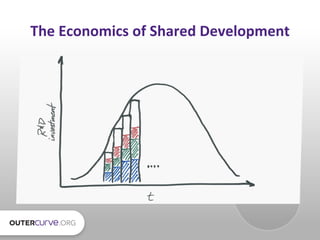
The	
  Economics	
  of	
  Shared	
  Development	
  
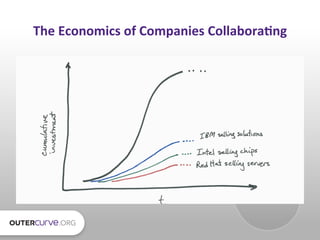
The	
  Economics	
  of	
  Companies	
  Collabora*ng	
  
Founda*ons	
  as	
  IP	
  Management	
  Machines	
  

•  This	
  is	
  the	
  history	
  of	
  the	
  FSF,	
  the	
  ASF,	
  the	
  
   OSDL/Linux	
  Founda:on,	
  and	
  the	
  Eclipse	
  
   Founda:on	
  
•  Regardless	
  of	
  what	
  each	
  founda:on	
  
   represents	
  to	
  its	
  members	
  and	
  cons:tuencies,	
  
   what	
  they	
  “do”	
  is	
  IP	
  management.	
  
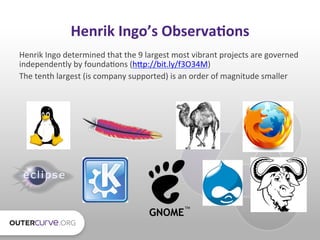
Henrik	
  Ingo’s	
  Observa*ons	
  
Henrik	
  Ingo	
  determined	
  that	
  the	
  9	
  largest	
  most	
  vibrant	
  projects	
  are	
  governed	
  
independently	
  by	
  founda:ons	
  (hXp://bit.ly/f3O34M)	
  
The	
  tenth	
  largest	
  (is	
  company	
  supported)	
  is	
  an	
  order	
  of	
  magnitude	
  smaller	
  
Neutrality	
  and	
  Ownership	
  

“There	
  appears	
  to	
  be	
  a	
  glass	
  ceiling	
  for	
  single	
  
vendor	
  projects	
  prohibi:ng	
  their	
  growth	
  from	
  
the	
  Large	
  category	
  upwards.	
  ”	


  —	
  Henrik	
  Ingo	
  
An	
  Organic	
  Project	
  Life-­‐Cycle	
  
What	
  is	
  a	
  FOSS	
  Founda*on?	
  

Founda:ons	
  are	
  non-­‐profits*	
  that	
  provide:	
  
                    Legal	
  Structure	
  
                  Business	
  Opera:ons	
  
                   Technical	
  Services	


                                      *	
  But	
  they	
  are	
  s:ll	
  businesses	
  
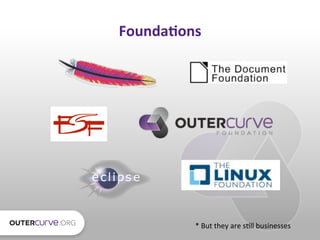
Founda*ons	


            *	
  But	
  they	
  are	
  s:ll	
  businesses	
  
Corporate	
  Projects	
  
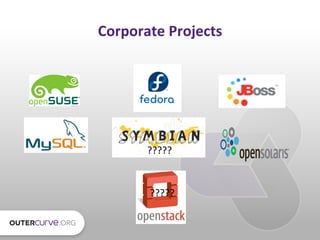
Corporate	
  Projects	


         ?????	


          ?????	
  
Why	
  does	
  it	
  maNer?	


     Neutrality	
  encourages	
  contribu:on	
  
       Clean	
  IP	
  encourages	
  adop:on	
  
Founda:ons	
  act	
  as	
  community	
  centre-­‐of-­‐gravity	


Neutrality	
  Encourages	
  Contribu*on	
  
                (Inbound)	
  
Neutrality	
  and	
  Ownership	
  

•  Successful	
  Projects	
  Grow	
  and	
  Evolve	
  un:l	
  …	
  
    –  Apache	
  SoIware	
  Founda:on	
  
    –  OSDL/Linux	
  Founda:on	
  
    –  Eclipse	
  Founda:on	
  
Clean	
  IP	
  Encourages	
  Adop*on	
  
               (Outbound)	
  
Legal	
  Structures	
  are	
  Important	


•      License	
  (inbound/outbound)	
  
•      Assignments	
  and	
  Contribu:on	
  Licenses	
  	
  
•      Provenance	
  tracking	
  
•      Liability	
  and	
  risk	
  management	
  
•      CommiXer	
  indemnifica:on	


Founda*on	
  as	
  Community	
  Centre-­‐of-­‐Gravity	
  
Crea*ng	
  Strong	
  Communi*es	
  

•    Support	
  an	
  Architecture	
  of	
  Par:cipa:on	
  
•    Make	
  it	
  easy	
  to	
  join	
  the	
  conversa:on	
  	
  
•    Support	
  and	
  grow	
  commiXers	
  
•    Support	
  lines	
  of	
  communica:ons	
  
•    Provide	
  technical	
  services	
  +	
  infrastructure	
  
     (forges,	
  code	
  signing,	
  etc.)	
  
Conclusions	
  

While	
  liberally	
  licensed	
  shared	
  collabora:ve	
  
soIware	
  development	
  may	
  represent	
  the	
  best	
  
soIware	
  re-­‐use	
  strategy	
  we	
  have,	
  FOSS	
  
Founda:ons	
  are	
  essen:al	
  to	
  the	
  par:cipa:on	
  of	
  
companies	
  that	
  can	
  grow	
  and	
  sustain	
  FOSS	
  
projects	
  and	
  their	
  communi:esn	
  long	
  term	
  
Ques*ons?	
  

                        Stephen	
  R.	
  Walli	
  
        Technical	
  Director,	
  Outercurve	
  Founda:on	
  
               hXp://www.outercurve.org	
  
                     swalli@outercurve.org	
  
hXp://stephesblog.blogs.com	
  	
  (Once	
  More	
  unto	
  the	
  Breach)	
  
    hXp://www.networkworld.com/community/walli	
  
                        @stephenrwalli	
  

The Evolution of the Open Source Software Foundation

  • 1.
    The  Evolu*on  of  the  Open  Source   So3ware  Founda*on   SCaLE11x   Stephen  R.  Walli   February  2013  
  • 2.
    The  Thesis   FOSS  Founda:ons  are  essen:al  to  enabling  the   growth  of  FOSS  Projects  when  companies  want   to  par:cipate,  contribute  and  adopt.  
  • 3.
    Two  Ra*os   ~20  LoC/day   1  bug  :  1000  LoC  
  • 4.
    So3ware  Economics   Wri:ng  good  soIware  is  hard  work   Re-­‐use  is  everything   We  have  shared  soIware  since  we  wrote  it.     Liberally-­‐licensed  collabora:vely  developed   soIware  is  the  best  re-­‐use  strategy.    
  • 5.
    The  Economics  of  Shared  Development  
  • 6.
    The  Economics  of  Companies  Collabora*ng  
  • 7.
    Founda*ons  as  IP  Management  Machines   •  This  is  the  history  of  the  FSF,  the  ASF,  the   OSDL/Linux  Founda:on,  and  the  Eclipse   Founda:on   •  Regardless  of  what  each  founda:on   represents  to  its  members  and  cons:tuencies,   what  they  “do”  is  IP  management.  
  • 8.
    Henrik  Ingo’s  Observa*ons   Henrik  Ingo  determined  that  the  9  largest  most  vibrant  projects  are  governed   independently  by  founda:ons  (hXp://bit.ly/f3O34M)   The  tenth  largest  (is  company  supported)  is  an  order  of  magnitude  smaller  
  • 9.
    Neutrality  and  Ownership   “There  appears  to  be  a  glass  ceiling  for  single   vendor  projects  prohibi:ng  their  growth  from   the  Large  category  upwards.  ”                          —  Henrik  Ingo  
  • 10.
    An  Organic  Project  Life-­‐Cycle  
  • 11.
    What  is  a  FOSS  Founda*on?   Founda:ons  are  non-­‐profits*  that  provide:   Legal  Structure   Business  Opera:ons   Technical  Services   *  But  they  are  s:ll  businesses  
  • 12.
    Founda*ons   *  But  they  are  s:ll  businesses  
  • 13.
  • 14.
    Corporate  Projects   ?????   ?????  
  • 15.
    Why  does  it  maNer?   Neutrality  encourages  contribu:on   Clean  IP  encourages  adop:on   Founda:ons  act  as  community  centre-­‐of-­‐gravity    
  • 16.
  • 17.
    Neutrality  and  Ownership   •  Successful  Projects  Grow  and  Evolve  un:l  …   –  Apache  SoIware  Founda:on   –  OSDL/Linux  Founda:on   –  Eclipse  Founda:on  
  • 18.
    Clean  IP  Encourages  Adop*on   (Outbound)  
  • 19.
    Legal  Structures  are  Important   •  License  (inbound/outbound)   •  Assignments  and  Contribu:on  Licenses     •  Provenance  tracking   •  Liability  and  risk  management   •  CommiXer  indemnifica:on    
  • 20.
    Founda*on  as  Community  Centre-­‐of-­‐Gravity  
  • 21.
    Crea*ng  Strong  Communi*es   •  Support  an  Architecture  of  Par:cipa:on   •  Make  it  easy  to  join  the  conversa:on     •  Support  and  grow  commiXers   •  Support  lines  of  communica:ons   •  Provide  technical  services  +  infrastructure   (forges,  code  signing,  etc.)  
  • 22.
    Conclusions   While  liberally  licensed  shared  collabora:ve   soIware  development  may  represent  the  best   soIware  re-­‐use  strategy  we  have,  FOSS   Founda:ons  are  essen:al  to  the  par:cipa:on  of   companies  that  can  grow  and  sustain  FOSS   projects  and  their  communi:esn  long  term  
  • 23.
    Ques*ons?   Stephen  R.  Walli   Technical  Director,  Outercurve  Founda:on   hXp://www.outercurve.org   swalli@outercurve.org   hXp://stephesblog.blogs.com    (Once  More  unto  the  Breach)   hXp://www.networkworld.com/community/walli   @stephenrwalli