ROLE OF FORTIFIED
COMPLEMENTARY FEEDS
IN CHILDREN <2 YEARS
PANEL DISCUSSION
Moderator: DR.S.VIVEKANANDAN
Panelists: DR.S.S.KUMARAN
DR.M.SUCINDAR
SRI LAKSHMI NARAYANA INSTITUTE OF MEDICAL SCIENCES
PONDICHERRY.
1
WHAT IS COMPLEMENTARY FEEDING?
WHAT IS FORTIFICATION?
2
WHO DEFINITION
• Complementary feeding is defined as the
process starting when breast milk alone is no
longer sufficient to meet the nutritional
requirements of infants, and therefore other
foods and liquids are needed, along with
breast milk.
3
WHO DEFINITION
• Fortification refers to "the practice of
deliberately increasing the content of an
essential micronutrient, ie. vitamins and
minerals (including trace elements) in a food
irrespective of whether the nutrients were
originally in the food before processing or not,
so as to improve the nutritional quality of the
food supply and to provide a public health
benefit with minimal risk to health“.
4
WHAT IS HIDDEN HUNGER?
5
1. SIGHT AND LIFE Expert Panel, Bangkok 2009.
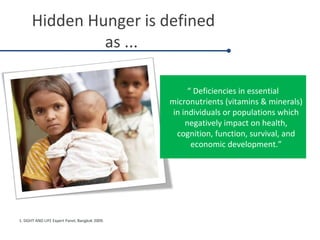
Hidden Hunger is defined
as ...
“ Deficiencies in essential
micronutrients (vitamins & minerals)
in individuals or populations which
negatively impact on health,
cognition, function, survival, and
economic development.”
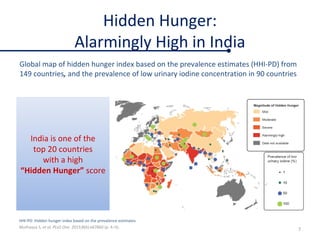
Hidden Hunger:
Alarmingly High in India
7
Global map of hidden hunger index based on the prevalence estimates (HHI-PD) from
149 countries, and the prevalence of low urinary iodine concentration in 90 countries
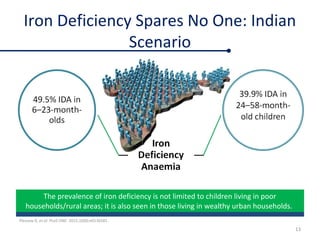
India is one of the
top 20 countries
with a high
“Hidden Hunger” score
HHI-PD: Hidden hunger index based on the prevalence estimates
Muthayya S, et al. PLoS One. 2013;8(6):e67860 (p. 4–5).
HOW HIDDEN HUNGER AFFECTS
THE HEALTH?
8
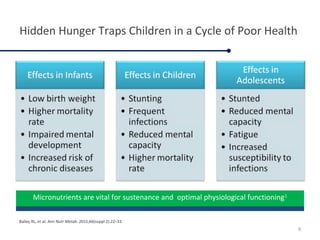
Micronutrients are vital for sustenance and optimal physiological functioning1
Hidden Hunger Traps Children in a Cycle of Poor Health
Bailey RL, et al. Ann Nutr Metab. 2015;66(suppl 2):22–33.
9
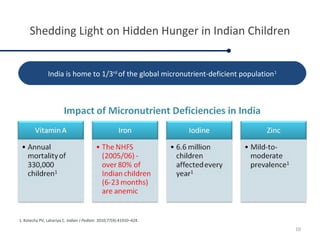
Shedding Light on Hidden Hunger in Indian Children
1. Kotecha PV, Lahariya C. Indian J Pediatr. 2010;77(4):41910–424.
10
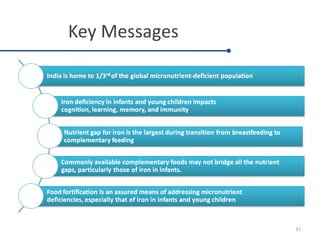
India is home to 1/3rd
of the global micronutrient-deficient population1
11
Hidden Hunger - Of all the micronutrients,
Iron
leads the race in its prominence.
WHAT IS THE PREVALENCE OF IRON
DEFICIENCY ANEMIA?
12
Iron Deficiency Spares No One: Indian
Scenario
Plessow R, et al. PLoS ONE. 2015;10(8):e0136581.
13
The prevalence of iron deficiency is not limited to children living in poor
households/rural areas; it is also seen in those living in wealthy urban households.
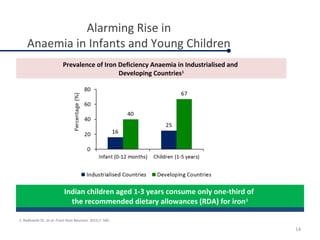
Indian children aged 1-3 years consume only one-third of
the recommended dietary allowances (RDA) for iron1
Prevalence of Iron Deficiency Anaemia in Industrialised and
Developing Countries1
Alarming Rise in
Anaemia in Infants and Young Children
1. Radlowski EC, et al. Front Hum Neurosci. 2013;7: 585.
14
15
Macro Role of Iron
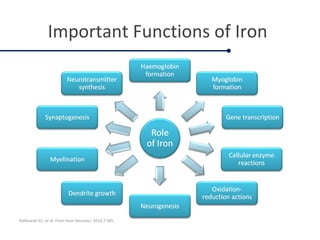
Important Functions of Iron
Radlowski EC, et al. Front Hum Neurosci. 2013;7:585.
WHAT ARE THE PROBLEMS A CHILD
FACES DUE TO IRON DEFICIENCY?
17
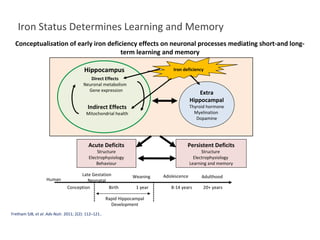
Iron Status Determines Learning and Memory
Fretham SJB, et al. Adv Nutr. 2011; 2(2): 112–121..
Conceptualisation of early iron deficiency effects on neuronal processes mediating short-and long-
term learning and memory
Direct Effects
Neuronal metabolism
Gene expression
Birth 1 year 8-14 years 20+ yearsConception
Human
Rapid Hippocampal
Development
Adolescence AdulthoodWeaningLate Gestation
Neonatal
Persistent Deficits
Structure
Electrophysiology
Learning and memory
Acute Deficits
Structure
Electrophysiology
Behaviour
Extra
Hippocampal
Thyroid hormone
Myelination
Dopamine
Iron deficiencyHippocampus
Indirect Effects
Mitochondrial health
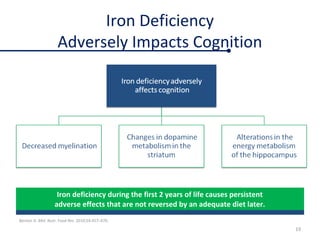
Iron deficiency during the first 2 years of life causes persistent
adverse effects that are not reversed by an adequate diet later.
Iron Deficiency
Adversely Impacts Cognition
Benton D. Mol. Nutr. Food Res. 2010;54:457–470.
19
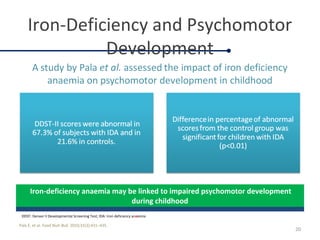
Iron-Deficiency and Psychomotor
Development
Pala E, et al. Food Nutr Bull. 2010;31(3):431–435.
20
DDST: Denver II Developmental Screening Test; IDA: Iron deficiency anaemia
Iron-deficiency anaemia may be linked to impaired psychomotor development
during childhood
27th Feb 2016 Pankaj Garg
1. UNICEF. http://www.unicef.org/nutrition/files/Final_IYCF_programming_guide_2011.pdf
2. Nestlé Nutr Workshop Ser Pediatr Program, vol 56, pp 185–205
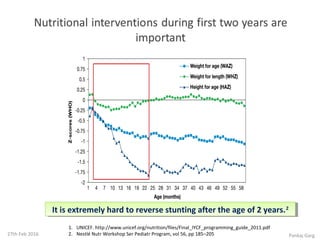
It is extremely hard to reverse stunting after the age of 2 years.2It is extremely hard to reverse stunting after the age of 2 years.2
1.Wang L, et al. J Innate Immun. 2009;1:455–464
2.Jones KDJ, et al. Pediatr Allergy Immunol. 2010;21(4 Pt 1):564–576.
Iron and Immunity
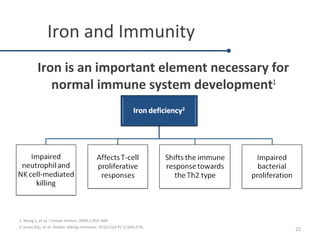
Iron is an important element necessary for
normal immune system development1
22
WHY COMPLEMENTARY FOODS NEED
FORTIFICATION?
23
Complementary Feeding: A Critical
Window for Improving Iron Status
Krebs N, et al. Nutr Today. 2014;49(6):271–277. 24
1000 days critical window
PREGNANCY Exclusive
Breast Feeding
COMPLEMENTARY FEEDING OUTCOMES
↓ Iron stores
↑ Postnatal requirement
Low Fe intake from milk
↓ Milk [Zn] & ↓ Zn intake
Growth requirement
Human Milk
Dependence on CF:
Fe & Zn Rich Foods
(meats) &/or
Fortified Foods
Improved Fe
& Zn Status
Improved Neuro
cognitive Development
& Immune Function
↑LAZ
↑↓ Stunting
↑ Maternal growth & nutritional status
↑ Maternal Education
↓ Enteric infection & inflammation
+
+
CF: Complementary foods; LAZ: Length-for-age Z score; Fe: iron; Zn: zinc .
After 6 months
Nutrient Gap for Iron is the widest
World Health Organization. Complementary feeding: Report of the global consultation [Internet]. 2001.
25
94% of Iron
Requirements
Need to be
Fulfilled by
Complementar
y foods
Nutrient Gaps to be filled by complementary foods
for a breastfed child 12–23 months
Use of WHO-5 Food Groups
Commonly Eaten Foods Leave a
Nutrient Gap
Dewey KG. J Nutr. 2013;143:2050–2054.
26
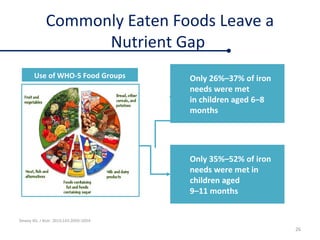
Only 26%–37% of iron
needs were met
in children aged 6–8
months
Only 35%–52% of iron
needs were met in
children aged
9–11 months
Indian Council of Medical Research. Nutrient requirements and recommended dietary allowances for Indians. Available at: http://icmr.nic.in/final/rda-
2010.pdf accessed on 13 July 2016
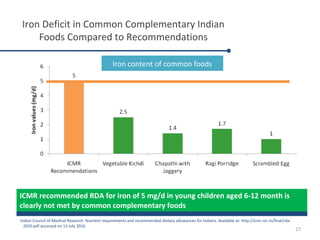
Iron Deficit in Common Complementary Indian
Foods Compared to Recommendations
27
Iron content of common foods
ICMR recommended RDA for iron of 5 mg/d in young children aged 6-12 month is
clearly not met by common complementary foods
28
Food Fortification: Way Forward to
Bridge Nutrient Gaps
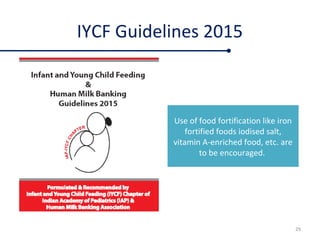
IYCF Guidelines 2015
29
Use of food fortification like iron
fortified foods iodised salt,
vitamin A-enriched food, etc. are
to be encouraged.
WHY IRON FORTIFICATION BETTER
THAN ORAL IRON SUPPLEMENT?
30
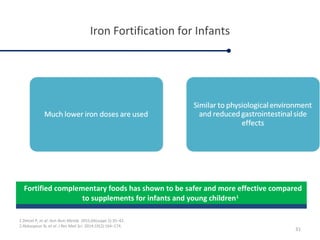
Iron Fortification for Infants
1.Detzel P, et al. Ann Nutr Metab. 2015;66(suppl 2):35–42.
2.Abbaspour N, et al. J Res Med Sci. 2014;19(2):164–174.
31
Fortified complementary foods has shown to be safer and more effective compared
to supplements for infants and young children1
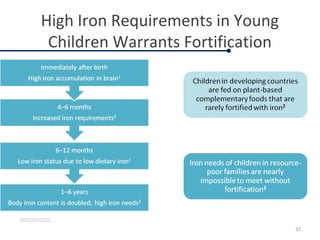
High Iron Requirements in Young
Children Warrants Fortification
1. Radlowski EC, et al. Front Hum Neurosci. 2013;7:585.
2. Abbaspour N, et al. J Res Med Sci. 2014;9(2):164–174.
3. Kotecha PV, et al. Indian J Pediatr. 2010;77(4):41932–424.
32
STUDIES?
33
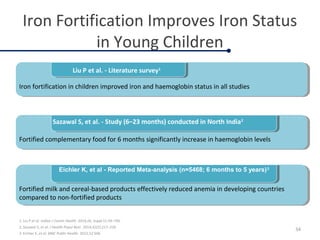
Iron Fortification Improves Iron Status
in Young Children
1. Liu P et al. Indian J Comm Health. 2014;26, Suppl S1:59–74S.
2. Sazawal S, et al. J Health Popul Nutr. 2014;32(2):217–226.
3. Eichler K, et al. BMC Public Health. 2012;12:506.
34
Iron fortification in children improved iron and haemoglobin status in all studies
Liu P et al. - Literature survey1
Fortified complementary food for 6 months significantly increase in haemoglobin levels
Sazawal S, et al. - Study (6–23 months) conducted in North India2
Fortified milk and cereal-based products effectively reduced anemia in developing countries
compared to non-fortified products
Eichler K, et al - Reported Meta-analysis (n=5468; 6 months to 5 years)3Eichler K, et al - Reported Meta-analysis (n=5468; 6 months to 5 years)3
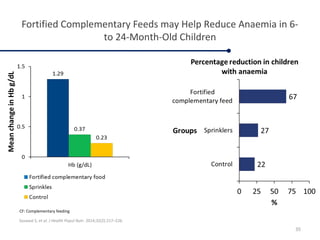
Fortified Complementary Feeds may Help Reduce Anaemia in 6-
to 24-Month-Old Children
Sazawal S, et al. J Health Popul Nutr. 2014;32(2):217–226.
35
CF: Complementary feeding
Key Messages
Key Messages
37
Thank You
Questions?

Fortified complementary foods - Dr.M.Sucindar

  • 1.
    ROLE OF FORTIFIED COMPLEMENTARYFEEDS IN CHILDREN <2 YEARS PANEL DISCUSSION Moderator: DR.S.VIVEKANANDAN Panelists: DR.S.S.KUMARAN DR.M.SUCINDAR SRI LAKSHMI NARAYANA INSTITUTE OF MEDICAL SCIENCES PONDICHERRY. 1
  • 2.
    WHAT IS COMPLEMENTARYFEEDING? WHAT IS FORTIFICATION? 2
  • 3.
    WHO DEFINITION • Complementaryfeeding is defined as the process starting when breast milk alone is no longer sufficient to meet the nutritional requirements of infants, and therefore other foods and liquids are needed, along with breast milk. 3
  • 4.
    WHO DEFINITION • Fortificationrefers to "the practice of deliberately increasing the content of an essential micronutrient, ie. vitamins and minerals (including trace elements) in a food irrespective of whether the nutrients were originally in the food before processing or not, so as to improve the nutritional quality of the food supply and to provide a public health benefit with minimal risk to health“. 4
  • 5.
    WHAT IS HIDDENHUNGER? 5
  • 6.
    1. SIGHT ANDLIFE Expert Panel, Bangkok 2009. Hidden Hunger is defined as ... “ Deficiencies in essential micronutrients (vitamins & minerals) in individuals or populations which negatively impact on health, cognition, function, survival, and economic development.”
  • 7.
    Hidden Hunger: Alarmingly Highin India 7 Global map of hidden hunger index based on the prevalence estimates (HHI-PD) from 149 countries, and the prevalence of low urinary iodine concentration in 90 countries India is one of the top 20 countries with a high “Hidden Hunger” score HHI-PD: Hidden hunger index based on the prevalence estimates Muthayya S, et al. PLoS One. 2013;8(6):e67860 (p. 4–5).
  • 8.
    HOW HIDDEN HUNGERAFFECTS THE HEALTH? 8
  • 9.
    Micronutrients are vitalfor sustenance and optimal physiological functioning1 Hidden Hunger Traps Children in a Cycle of Poor Health Bailey RL, et al. Ann Nutr Metab. 2015;66(suppl 2):22–33. 9
  • 10.
    Shedding Light onHidden Hunger in Indian Children 1. Kotecha PV, Lahariya C. Indian J Pediatr. 2010;77(4):41910–424. 10 India is home to 1/3rd of the global micronutrient-deficient population1
  • 11.
    11 Hidden Hunger -Of all the micronutrients, Iron leads the race in its prominence.
  • 12.
    WHAT IS THEPREVALENCE OF IRON DEFICIENCY ANEMIA? 12
  • 13.
    Iron Deficiency SparesNo One: Indian Scenario Plessow R, et al. PLoS ONE. 2015;10(8):e0136581. 13 The prevalence of iron deficiency is not limited to children living in poor households/rural areas; it is also seen in those living in wealthy urban households.
  • 14.
    Indian children aged1-3 years consume only one-third of the recommended dietary allowances (RDA) for iron1 Prevalence of Iron Deficiency Anaemia in Industrialised and Developing Countries1 Alarming Rise in Anaemia in Infants and Young Children 1. Radlowski EC, et al. Front Hum Neurosci. 2013;7: 585. 14
  • 15.
  • 16.
    Important Functions ofIron Radlowski EC, et al. Front Hum Neurosci. 2013;7:585.
  • 17.
    WHAT ARE THEPROBLEMS A CHILD FACES DUE TO IRON DEFICIENCY? 17
  • 18.
    Iron Status DeterminesLearning and Memory Fretham SJB, et al. Adv Nutr. 2011; 2(2): 112–121.. Conceptualisation of early iron deficiency effects on neuronal processes mediating short-and long- term learning and memory Direct Effects Neuronal metabolism Gene expression Birth 1 year 8-14 years 20+ yearsConception Human Rapid Hippocampal Development Adolescence AdulthoodWeaningLate Gestation Neonatal Persistent Deficits Structure Electrophysiology Learning and memory Acute Deficits Structure Electrophysiology Behaviour Extra Hippocampal Thyroid hormone Myelination Dopamine Iron deficiencyHippocampus Indirect Effects Mitochondrial health
  • 19.
    Iron deficiency duringthe first 2 years of life causes persistent adverse effects that are not reversed by an adequate diet later. Iron Deficiency Adversely Impacts Cognition Benton D. Mol. Nutr. Food Res. 2010;54:457–470. 19
  • 20.
    Iron-Deficiency and Psychomotor Development PalaE, et al. Food Nutr Bull. 2010;31(3):431–435. 20 DDST: Denver II Developmental Screening Test; IDA: Iron deficiency anaemia Iron-deficiency anaemia may be linked to impaired psychomotor development during childhood
  • 21.
    27th Feb 2016Pankaj Garg 1. UNICEF. http://www.unicef.org/nutrition/files/Final_IYCF_programming_guide_2011.pdf 2. Nestlé Nutr Workshop Ser Pediatr Program, vol 56, pp 185–205 It is extremely hard to reverse stunting after the age of 2 years.2It is extremely hard to reverse stunting after the age of 2 years.2
  • 22.
    1.Wang L, etal. J Innate Immun. 2009;1:455–464 2.Jones KDJ, et al. Pediatr Allergy Immunol. 2010;21(4 Pt 1):564–576. Iron and Immunity Iron is an important element necessary for normal immune system development1 22
  • 23.
    WHY COMPLEMENTARY FOODSNEED FORTIFICATION? 23
  • 24.
    Complementary Feeding: ACritical Window for Improving Iron Status Krebs N, et al. Nutr Today. 2014;49(6):271–277. 24 1000 days critical window PREGNANCY Exclusive Breast Feeding COMPLEMENTARY FEEDING OUTCOMES ↓ Iron stores ↑ Postnatal requirement Low Fe intake from milk ↓ Milk [Zn] & ↓ Zn intake Growth requirement Human Milk Dependence on CF: Fe & Zn Rich Foods (meats) &/or Fortified Foods Improved Fe & Zn Status Improved Neuro cognitive Development & Immune Function ↑LAZ ↑↓ Stunting ↑ Maternal growth & nutritional status ↑ Maternal Education ↓ Enteric infection & inflammation + + CF: Complementary foods; LAZ: Length-for-age Z score; Fe: iron; Zn: zinc . After 6 months
  • 25.
    Nutrient Gap forIron is the widest World Health Organization. Complementary feeding: Report of the global consultation [Internet]. 2001. 25 94% of Iron Requirements Need to be Fulfilled by Complementar y foods Nutrient Gaps to be filled by complementary foods for a breastfed child 12–23 months
  • 26.
    Use of WHO-5Food Groups Commonly Eaten Foods Leave a Nutrient Gap Dewey KG. J Nutr. 2013;143:2050–2054. 26 Only 26%–37% of iron needs were met in children aged 6–8 months Only 35%–52% of iron needs were met in children aged 9–11 months
  • 27.
    Indian Council ofMedical Research. Nutrient requirements and recommended dietary allowances for Indians. Available at: http://icmr.nic.in/final/rda- 2010.pdf accessed on 13 July 2016 Iron Deficit in Common Complementary Indian Foods Compared to Recommendations 27 Iron content of common foods ICMR recommended RDA for iron of 5 mg/d in young children aged 6-12 month is clearly not met by common complementary foods
  • 28.
    28 Food Fortification: WayForward to Bridge Nutrient Gaps
  • 29.
    IYCF Guidelines 2015 29 Useof food fortification like iron fortified foods iodised salt, vitamin A-enriched food, etc. are to be encouraged.
  • 30.
    WHY IRON FORTIFICATIONBETTER THAN ORAL IRON SUPPLEMENT? 30
  • 31.
    Iron Fortification forInfants 1.Detzel P, et al. Ann Nutr Metab. 2015;66(suppl 2):35–42. 2.Abbaspour N, et al. J Res Med Sci. 2014;19(2):164–174. 31 Fortified complementary foods has shown to be safer and more effective compared to supplements for infants and young children1
  • 32.
    High Iron Requirementsin Young Children Warrants Fortification 1. Radlowski EC, et al. Front Hum Neurosci. 2013;7:585. 2. Abbaspour N, et al. J Res Med Sci. 2014;9(2):164–174. 3. Kotecha PV, et al. Indian J Pediatr. 2010;77(4):41932–424. 32
  • 33.
  • 34.
    Iron Fortification ImprovesIron Status in Young Children 1. Liu P et al. Indian J Comm Health. 2014;26, Suppl S1:59–74S. 2. Sazawal S, et al. J Health Popul Nutr. 2014;32(2):217–226. 3. Eichler K, et al. BMC Public Health. 2012;12:506. 34 Iron fortification in children improved iron and haemoglobin status in all studies Liu P et al. - Literature survey1 Fortified complementary food for 6 months significantly increase in haemoglobin levels Sazawal S, et al. - Study (6–23 months) conducted in North India2 Fortified milk and cereal-based products effectively reduced anemia in developing countries compared to non-fortified products Eichler K, et al - Reported Meta-analysis (n=5468; 6 months to 5 years)3Eichler K, et al - Reported Meta-analysis (n=5468; 6 months to 5 years)3
  • 35.
    Fortified Complementary Feedsmay Help Reduce Anaemia in 6- to 24-Month-Old Children Sazawal S, et al. J Health Popul Nutr. 2014;32(2):217–226. 35 CF: Complementary feeding
  • 36.
  • 37.
  • 38.

Editor's Notes

  • #7 Hidden hunger is defined as deficiencies in essential micronutrients (vitamins &amp; minerals) in individuals or populations which negatively impact on health, cognition, function, survival, and economic development “ This form of hunger is subtle and insidious and occurs when the intake and absorption of vitamins and minerals is not able to match that needed for sustaining good health and development.1 It is estimated to affect 1 in 3 people globally. 2 Reference SIGHT AND LIFE Expert Panel, Bangkok 2009
  • #8 An estimated 2 billion people have a long-term deficiency of essential vitamins and minerals (micronutrients), together referred to as “hidden hunger.” The graph on this slide depicts the global map of hidden hunger index, based on the prevalence estimates (HHI-PD) from 149 countries and the prevalence of low urinary iodine concentration in 90 countries with 2007 Human Development Index &amp;lt;0.9. The prevalence of hidden hunger is found to be alarmingly high in sub-Saharan Africa, and severe in many countries in South-Central/South-East Asia. India is one of the 20 countries with a high “Hidden Hunger” score. India and Afghanistan, had an alarmingly high level of hidden hunger, with stunting, IDA, and VAD all being highly prevalent amongst preschool-age children. Reference Muthayya S, Rah JH, Sugimoto JD, et al. The Global Hidden Hunger Indices and Maps: An Advocacy Tool for Action. PLoS One. 2013;8(6):e67860. (p. 4–5)
  • #10 Micronutrients are essential to sustain life and for optimal physiological functioning. Deficiencies of micronutrients are linked to poor growth, intellectual impairment, and increased risk of morbidity and mortality. Micronutrient deficiencies starting at infancy continue through adulthood. In infants, these deficiencies are linked to low birth weight, higher mortality rate, impaired mental development, and increased risk of chronic diseases. In children, stunted growth, reduced mental capacity, frequent infections, inadequate catch-up growth, reduced productivity, and higher mortality rate are reported. Reference Bailey RL, West KP, Black RE. The Epidemiology of Global Micronutrient Deficiencies. Ann Nutr Metab 2015;66(suppl 2):22–33.
  • #11 Let us discuss the prevalence rates of hidden hunger in India. India is home to one-third of the 2 billion global population with micronutrient deficiencies. Hence, micronutrient malnutrition has been a persistent problem in India.1 India has the largest number of Vitamin A deficient children, leading to an annual mortality of 330,000 children owing to the deficiency.1 According to the first phase reports of NHFS-4 (2015–2016), the prevalence of anaemia is widespread in the country. It was reported that over 50% of children have anaemia in 10 of the 15 States and Union Territories.2 Iodine deficiency leads to mental retardation in 6.6 million children every year, and intellectual capacity is reduced by 15% across India.1 Although no data are reported on zinc-deficiency in India, it is estimated that mild-to-moderate deficiency exists in the country, based on the dietary pattern .1 References Kotecha PV, Lahariya C. Micronutrient supplementation and child survival in India. Indian J Pediatr. 2010;77(4):419&amp;lt;number&amp;gt;–424. Health Ministry releases results from 1st phase of the NFHS-4 Survey. 2016. Available at http://pib.nic.in/newsite/PrintRelease.aspx?relid=134608 Accessed date: 11 February 2016.
  • #12 Of all the micronutrients, Iron leads the race in its prominence.
  • #14 Iron deficiency is widely prevalent in India; the prevalence of iron deficiency in a recent estimate was 49.5% in 6–23-month-old children and 39.9% in 24–58-month-old children. Although children in resource-poor rural households are particularly affected, iron deficiency is found to be impartial in its prevalence and affects children from wealthy urban households too. Reference Plessow R, Arora NK, Brunner B, et al. Social Costs of Iron Deficiency Anemia in 6–59-Month-Old Children in India. PLoS ONE. 2015;10(8): e0136581.
  • #15 According to the India Health Report, 2015, a high anaemia prevalence rate of 69.5% is reported in children aged 6-59 months.1 NHSF-4 reported that prevalence of anaemia is highest in the young children aged 6 to 23 months and more than 50% of children are anaemic in 10 of the 15 states/union territories.2 Studies have shown that Indian children aged 1-3 years consume only one-third of the recommended dietary allowances (RDA) for iron. The expanding muscle mass and blood volume in infants require huge quantities of the mineral.3 However, reduced dietary iron consumption in this age-group makes them more vulnerable to iron deficiency. The prevalence of iron deficiency anaemia in infants and young children in industrialised and developing countries is shown on the slide.3 It should also be noted that neonatal iron deficiency is higher in preterm infants and in those born to hyperglycaemic mothers. The rates of both these conditions are increasing worldwide and hence it is likely that iron deficiency will be highly impactful in future.3 References India Health Report: Nutrition 2015. Available at: http://www.indiaenvironmentportal.org.in/files/file/INDIA-HEALTH-REPORT-NUTRITION_2015.pdf Accessed date: 11 Feb 2015. Health Ministry releases results from 1st phase of the NFHS-4 Survey. 2016. Available at: http://pib.nic.in/newsite/PrintRelease.aspx?relid=134608 Accessed date: 11 February 2016. Radlowski EC, Johnson RW. Perinatal iron deficiency and neurocognitive development. Front Hum Neurosci. 2013;7 585.
  • #16 Let us look at the journey of iron- from a micro to a macro role
  • #17 Iron plays a vital role in erythropoiesis, haemoglobin and myoglobin formation, gene transcription, oxidation-reduction actions, and cellular enzyme reactions. These processes are important for optimum brain function. The hippocampus matures most rapidly from late gestation to 2–3 years of age. During this period, iron uptake and utilisation is increased in relation to neurogenesis, myelination, dendrite growth, synaptogenesis, and neurotransmitter synthesis. During the first 6 months of age, infants cannot regulate iron transport across the blood-brain barrier. Hence, it is imperative that adequate iron stores are available at birth. Hippocampal neurogenesis occurs at a greater rate in the prenatal phase and in the early postnatal period. Thus, in critical developmental periods, environmental insults, including iron deficiency, that inhibit neurogenesis or alter neuron maturation will likely affect present and future behaviour. Reference Radlowski EC, Johnson RW. Perinatal iron deficiency and neurocognitive development. Front Hum Neurosci. 2013; 7: 585.
  • #19 In humans, iron deficiency up to 3 years of age impacts learning and memory that continue beyond treatment of the iron deficiency status. The hippocampus is the central processing area for declarative learning and memory. The developing hippocampus is particularly vulnerable to the direct and indirect effects of early iron deficiency, as shown in the figure on the slide. The direct effects include neuronal metabolism and gene expression; and indirect effects impact the mitochondrial health. This increased vulnerability is mainly due to its rapid maturation rate in the late fetal-neonatal period, in addition to the dependence on the maturational processes on iron. The extra hippocampal effects include synthesis of thyroid hormone and dopamine and myelination. These hippocampal and extrahippocampal effects lead to acute and persistent deficits impacting learning and memory. Reference Fretham SJB, Carlson ES, Georgieff MK. The role of iron in learning and memory. Adv Nutr. 2011; 2(2): 112–121.
  • #20 Iron deficiency has an adverse effect on cognition. The mechanisms proposed behind iron deficiency include decreased myelination, changes in dopamine metabolism in the striatum, and alterations in the energy metabolism of the hippocampus. Occurrence of iron deficiency during the first 6 or 12 months of life causes persistent adverse effects, even if iron intake subsequently achieves the recommended levels. Reference Benton D. The influence of dietary status on the cognitive performance of children. Mol. Nutr. Food Res. 2010; 54: 457–470
  • #21 Iron-deficiency anaemia in infancy has also been linked to impaired neurodevelopment. In a study by Pala et al., certain aspects of psychomotor development were assessed in healthy children with iron deficiency and iron-deficiency anaemia with the use of the Denver II Developmental Screening Test (DDST-II). This DDST is considered a valuable test to detect early developmental delays, especially in infants with risk factors. The study results indicated that DDST-II scores were abnormal in 67.3% of subjects with iron-deficiency anaemia and 21.6% of those with iron deficiency compared to 15.0% of control subjects. The difference in the percentage of abnormal scores from the control group was significant for children with IDA (p&amp;lt;0.01). The study findings indicate a connection between iron-deficiency anaemia and impaired psychomotor development during childhood. Reference Pala E, Erguven M, Guven S, et al. Psychomotor development in children with iron deficiency and iron-deficiency anemia. Food Nutr Bull. 2010;31(3):431–435
  • #22 Also, undernutrition increases remarkably from 3 to 18–24 months of age.1 Global statistics identify 6–18 months as the time when stunting and malnutrition sets in, exactly during complementary feeding period. This is the period of complementary feeding that has been recognised as a sensitive period of high risk for developing stunting, protein-energy malnutrition, iron-deficiency anaemia and rickets. As seen in the slide, there is a marked decrease from 3 months to 12 months in the Z scores of weight-for-age and height-for age. After this period, there does not seem to be further decrease or catch up in the scores. Reversing stunting after the age of 2 years is highly difficult. 2 References UNICEF. Programming guide. Infant and Young Child Feeding. Nutrition Section, Programmes, UNICEF New York. Available at: http://www.unicef.org/nutrition/files/Final_IYCF_programming_guide_2011.pdf. Accessed on 28 August, 2015. Michaelsen KF. What is known? Short-term and long-term effects of complementary feeding. In: Hernell O, Schmitz J (eds). Feeding during Late Infancy and Early Childhood: Impact on Health. NestlĂŠ Nutr Workshop Ser Pediatr Program. , vol 56, pp 185–205.
  • #23 Iron is an important element necessary for normal immune system development. Availability of iron influences bacterial virulence and host anti-microbial defences.1 Alterations in intra- and extracellular iron concentrations occur during infections due to alterations in the expression of ferroportin, heme oxygenase and siderocalin, or as a result of the effects of bacterial siderophores. These changes in iron concentrations directly affect bacterial growth, and may also have an impact on host gene expression by the modulation of the function of transcription factors such as NF- kappaB and hypoxia-inducible factors-1 alpha.1 Iron deficiency has also been linked to impaired neutrophil and natural killer cell-mediated immunity, T cell proliferative responses. In addition, deficiency states shift the immune response towards the Th2 type.2 There is a certain degree of risk present in patients with infection and malnutrition with routine and early supplementation of iron and WHO guidelines suggest restriction of iron supplementation till antibiotics have been instituted.2 References Wang L, Cherayil BJ. Ironing Out the Wrinkles in Host Defense: Interactions between Iron Homeostasis and Innate Immunity. J Innate Immun 2009;1:455–464 (p. 455, 461) Jones KDJ, Berkley JA, Warner JO, et al. Perinatal nutrition and immunity to infection. Pediatr Allergy Immunol. 2010; 21(4 Pt 1): 564–576 (p.5–6) References Field CJ, Johnson IR, Schley PD. Nutrients and their role in host resistance to infection. J Leukoc Biol. 2002;71: 16–32 (p. 24, 25) Wang L, Cherayil BJ. Ironing Out the Wrinkles in Host Defense: Interactions between Iron Homeostasis and Innate Immunity. J Innate Immun 2009;1:455–464 (p. 461)
  • #25 This slide provides a conceptual understanding of the impact of complementary feeding on micronutrient status and outcomes. Complementary feeding provides a critical window of opportunity for improving micronutrient status of nutrients such as iron, and also has a major influence on outcomes. During this period, there is a dependence on iron and zinc rich foods (from meats) &amp;/or fortified foods which may be linked to improved iron and zinc status causing improved neurocognitive development and immune function. Adequate complementary feeding practices alone may improve iron and zinc status, but when they are combined with maternal and nutritional factors, they may improve neurocognitive development and immune function, and increase length-for-age Z score while also reducing stunting. Reference Krebs N. Food Based Complementary Feeding Strategies for Breastfed Infants: What&amp;apos;s the Evidence that it Matters? Nutr Today. 2014;49(6):271–277 (p. 10)
  • #26 Infants utilise iron stores to cover body needs for the first 6 months, after which the stored iron runs out and the amount in breast milk becomes inadequate. Complementary foods should provide adequate quantity and quality of macronutrients and micronutrients to bridge the infant’s nutritional gaps so that together with breast milk, the infant’s nutritional needs are met. The largest gap is for iron during transition from breastfeeding to complementary feeding. Sub-optimal nutrition can cause an irreversible damage to an infant’s growth and development.1,2 References Infant and Young Child Feeding: Model Chapter for Textbooks for Medical Students and Allied Health Professionals. Geneva: World Health Organization; 2009. SESSION 3, Complementary feeding.Available at: http://www.ncbi.nlm.nih.gov/books/NBK148957/#!po=45.8333 World Health organisation. Complementary feeding: Family foods for breastfed children [Internet]. 2000 [cited 22 July 2015]. Available from: http://apps.who.int/iris/bitstream/10665/66389/1/WHO_NHD_00.1.pdf?ua=1&amp;ua=1
  • #27 Different techniques have been used in order to identify whether micronutrient requirements can be met by using only commonly eaten local foods. The recent WHO 5-food group concept of using an unfortified diet containing a minimum quantity of the typical staple food (30% of energy from complementary foods) as well as legumes, egg, fish or chicken, and green leafy vegetables every day to achieve a diverse, high-quality diet is also seen to leave a nutrient gap. Estimates indicate that these diets provided only 26%–37% of iron needs at 6–8 months and 35%–52% of iron needs at 9–11 months. Reference Dewey KG. The Challenge of Meeting Nutrient Needs of Infants and Young Children during the Period of Complementary Feeding: An Evolutionary Perspective. J Nutr. 2013;143:2050–2054 .
  • #28 Iron deficit is clearly present with the use of common complementary foods (vegetable dal khicdi, ragi porridge, boiled vegetables, chapathi with jaggery) when compared to ICMR recommendations (5.0 mg/d). ICMR recommended RDA for iron of 5 mg/d in young children aged 6-12 month is clearly not met by common complementary foods. Reference Indian Council of Medical Research. Nutrient requirements and recommended dietary allowances for Indians. Available at: http://icmr.nic.in/final/rda-2010.pdf accessed on 13 July 2016
  • #29 Food Fortification may be the way forward to bridge nutrient gaps.
  • #30 The latest IYCF guidelines suggests that the use of food fortificants like iron-fortified foods, iodised salt, vitamin A-enriched food, etc. are to be encouraged.
  • #32 Let us discuss the food vehicles commonly employed for iron fortification. Iron fortification can be done through staple food items such as rice, oils and wheat, condiments such as fish sauce, soy sauce and sugar, and lastly through processed commercial food items, including infant complementary foods, dairy products and noodles. However, for infants and young children, the use of fortified complementary foods has been shown to be safer and more effective compared to supplements.1 Fortification is safe because much lower iron doses are used compared with supplementation and it is similar to the physiological environment and safe strategy for regions prone to malaria. Iron salts recommended by WHO for fortification include ferrous sulphate, ferrous fumarate, ferric pyrophosphate, and electrolytic iron powder.2 References Detzel P, Wieser S. Food fortification for addressing iron deficiency in Filipino children: Benefits and Cost effectiveness. Ann Nutr Metab 2015;66(suppl 2):35–42. Abbaspour N, Hurrell R, Kelishadi R. Review on iron and its importance for human health. J Res Med Sci. 2014; 19(2): 164–174.
  • #33 In the prenatal stage, iron accumulation is high in the brain and hence dietary iron is not required immediately after birth.1 Iron requirements increase markedly at 4­6 months following birth and continue up to the end of first year of life.2 Due to low levels of iron in the breast milk and poor bioavailability, iron status in the brain is reduced after 6 months of age. This condition will prevail until the gastrointestinal tract and blood-brain barrier mature to absorb adequate dietary iron and regulate iron entry into the brain, respectively.1 The body iron content is again doubled between 1 and 6 years of age. Despite high iron requirements, children in many developing countries are fed plant-based complementary foods that are rarely fortified with iron and hence the frequency of anaemia exceeds 50% in children younger than 4 years of age.2 Furthermore, in many resource-poor families, the iron needs of young children are nearly impossible to meet without supplementation or fortification strategies.3 References Radlowski EC, Johnson RW. Perinatal iron deficiency and neurocognitive development. Front Hum Neurosci. 2013;7:585. Abbaspour N, Hurrell R, Kelishadi R. Review on iron and its importance for human health. J Res Med Sci. 2014;19(2):164–174. Kotecha PV, Lahariya C. Micronutrient supplementation and child survival in India. Indian J Pediatr. 2010;77(4):419&amp;lt;number&amp;gt;–424.
  • #35 A literature survey conducted in India suggested that iron fortification in children led to improvement in iron and haemoglobin status in all the studies. This report is consistent with the data from earlier reviews.1 A study in northern India evaluated two home-based fortification strategies for providing iron and zinc in children aged 6–24 months. The authors reported that the use of the fortified complementary food for 6 months resulted in a significant increase in mean haemoglobin levels.2 A recent meta-analysis that included 18 randomised controlled trials and 5468 children compared the impact of micronutrient-fortified milk and cereal-based products versus similar non-fortified items in children between 6 months and 5 years of age. The study reported that the use of fortified milk and cereal-based products was more effective in reducing anaemia in young children in developing countries compared to non-fortified products. Haemoglobin levels significantly increased by 6.2 g/l and the risk of anaemia was 50% lower in children receiving the fortified milk or infant cereals.3 References Liu P, Bhatia R, PachĂłn H, Emory. Food Fortification in India: A Literature Review. Indian J Comm Health. 2014;26, Suppl S1:59–74 S. Sazawal S, Dhingra P, Dhingra U, et al. Compliance with home-based fortification strategies for delivery of iron and zinc: its effect on haematological and growth markers among 6–24 months old children in North India. J Health Popul Nutr. 2014;32(2):217–226. Eichler K, Wieser S, Ruthermann I, et al. Effects of micronutrient fortified milk and cereal food for infants and children: a systematic review. BMC Public Health. 2012;12:506.
  • #36 Home-based food fortification strategies such as the use of fortified sprinklers and fortified complementary foods can be used to deliver nutrients to children in this age group. A study conducted by Sazawal et al. in 2014 in Sangam Vihar, North Delhi, India and funded by the Thrasher Foundation and the World Health Organization (WHO) compared the outcomes of fortified complementary feeding, and home fortification with sprinkles– a micronutrient rich mix and a control group. Two hundred and ninety-two children aged 6 to 24 months consuming complementary food in addition to breastfeeding were divided into 3 groups: rice–based fortified complementary food and nutrition education (n=101), sprinkles and nutrition education (n=97), and nutrition education alone as control (n=94). The micronutrients in both the groups were iron, folic acid, vitamin A, vitamin C, thiamine, riboflavin, niacin, pyridoxine, cyanocobalamine, biotin, pantothenic acid, vitamin D, vitamin E, calcium, magnesium, phosphorus, zinc, copper, and manganese. The intervention was given for six months. Baseline anthropometrics were collected prior to the intervention. On consumption for 6 months, fortified complementary food resulted in a significant increase in mean haemoglobin levels compared to sprinkles and control, as depicted in the graph. Fortified complementary food group had a 67% reduction in the proportion of children with anaemia (Hb &amp;lt;10 g/dL) compared to a 27% reduction in the sprinkle group, and a 22% reduction in the control group. Therefore, this study shows that fortified complementary foods offer an advantage over home fortification, thereby causing improved iron status. Reference Sazawal S, Dhingra P, Dhingra U, et al. Compliance with home–based fortification strategies for delivery of iron and zinc: Its effect on haematological and growth markers among 6–24 months old children in North India. J Health Popul Nutr. 2014;32(2):217–226.
  • #38 India is home to 1/3rd of the global micronutrient-deficient population Iron deficiency in infants and young children impacts cognition, learning, memory, and immunity Nutrient gap for iron prevails during transition from breastfeeding to complementary feeding Commonly available complementary foods may not bridge all the nutrient gaps, particularly those of iron in infants Food fortification is an assured means of addressing micronutrient deficiencies especially that of iron in infants and young children