Formal vs. InformalWriting Style
What is Formal Writing?
When do I write in a Formal Style?
2.
What do youalready know?
• Think about how you communicate with
different types of people.
• Do you use the same tone, words, and phrases
to communicate with your friends as you do
when you communicate with your parents or
your teachers?
3.
Knowing Your Audience
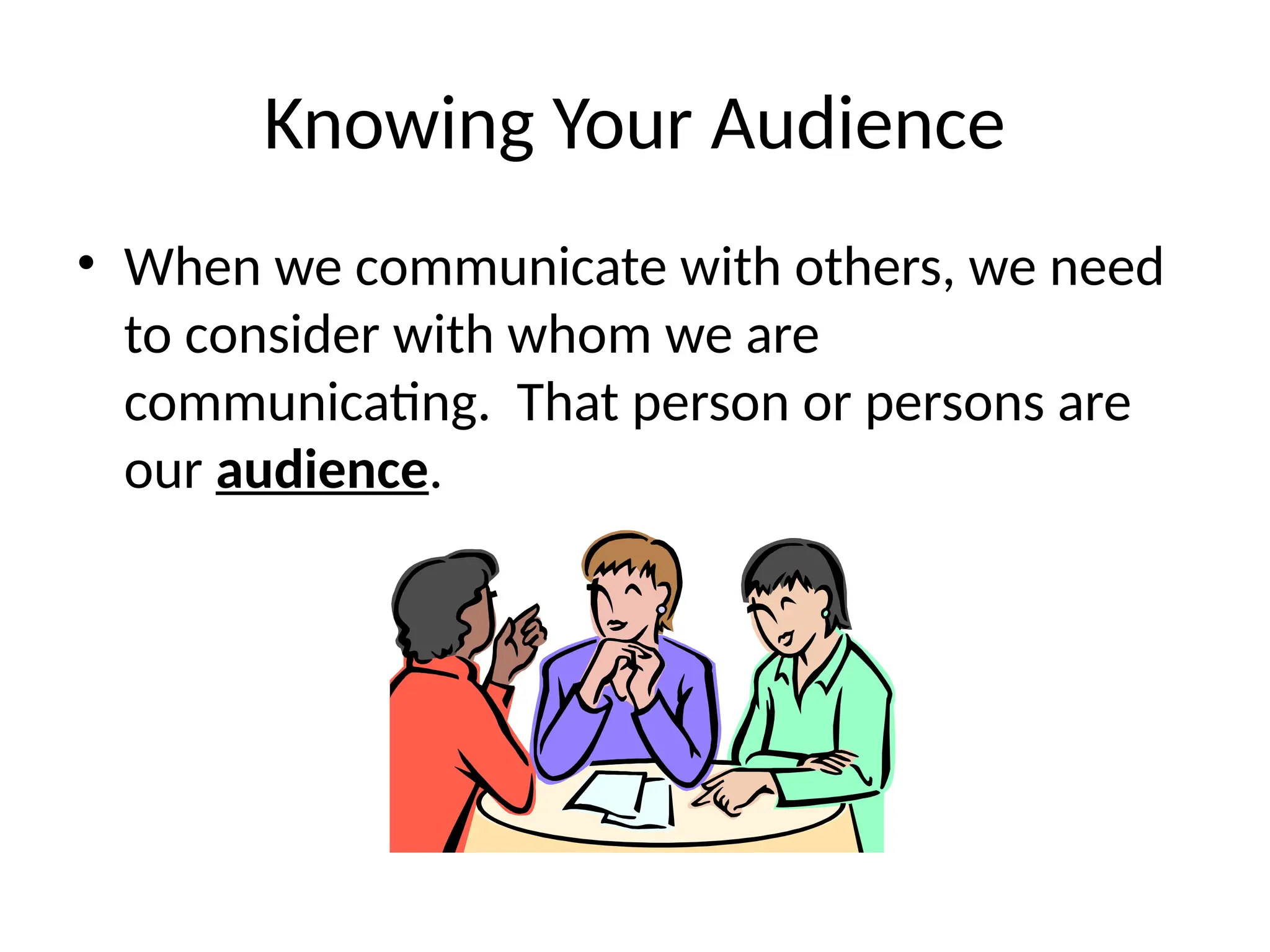
•When we communicate with others, we need
to consider with whom we are
communicating. That person or persons are
our audience.
4.
Knowing Your Purpose
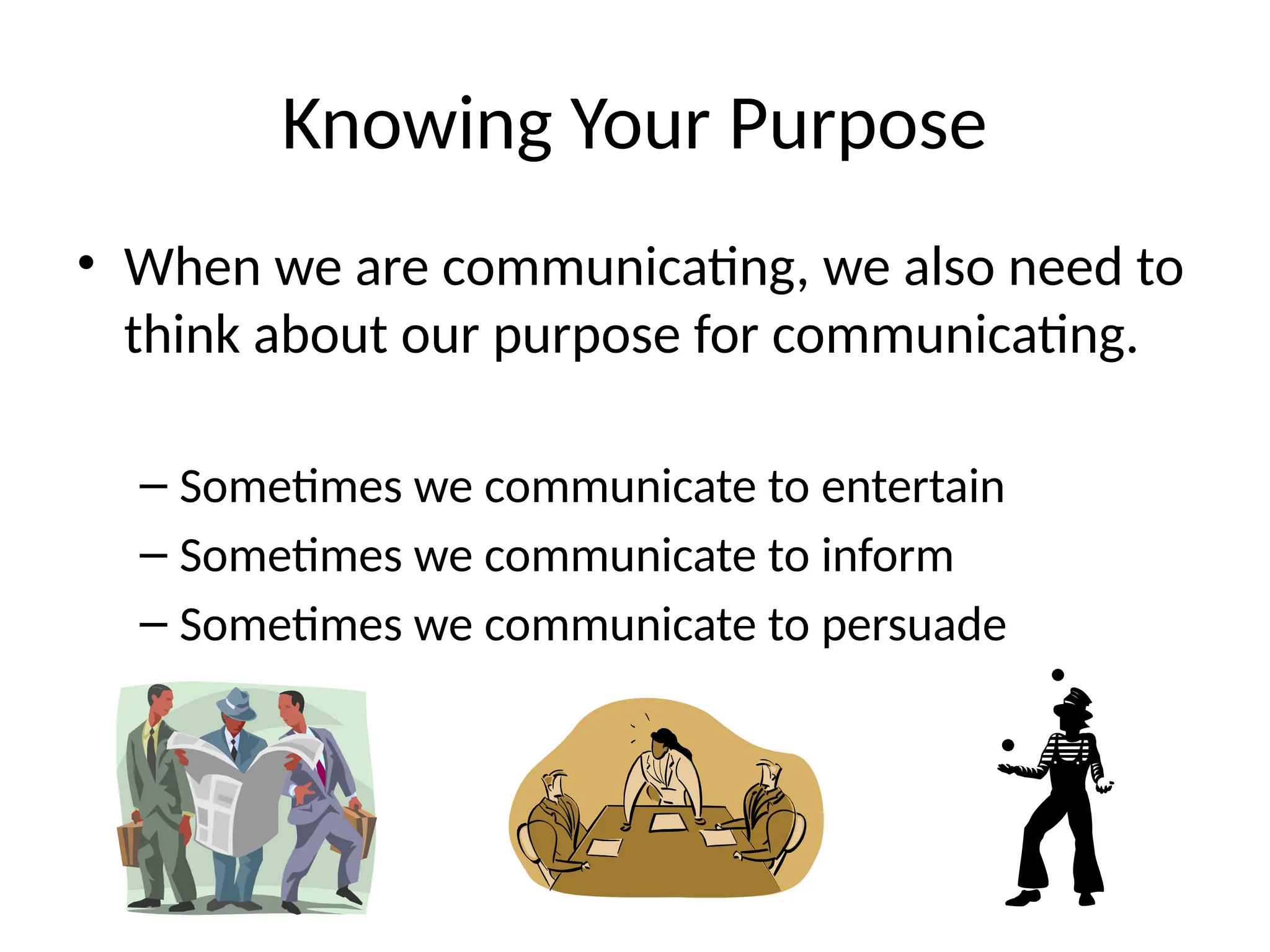
•When we are communicating, we also need to
think about our purpose for communicating.
– Sometimes we communicate to entertain
– Sometimes we communicate to inform
– Sometimes we communicate to persuade
5.
Audience & Purpose
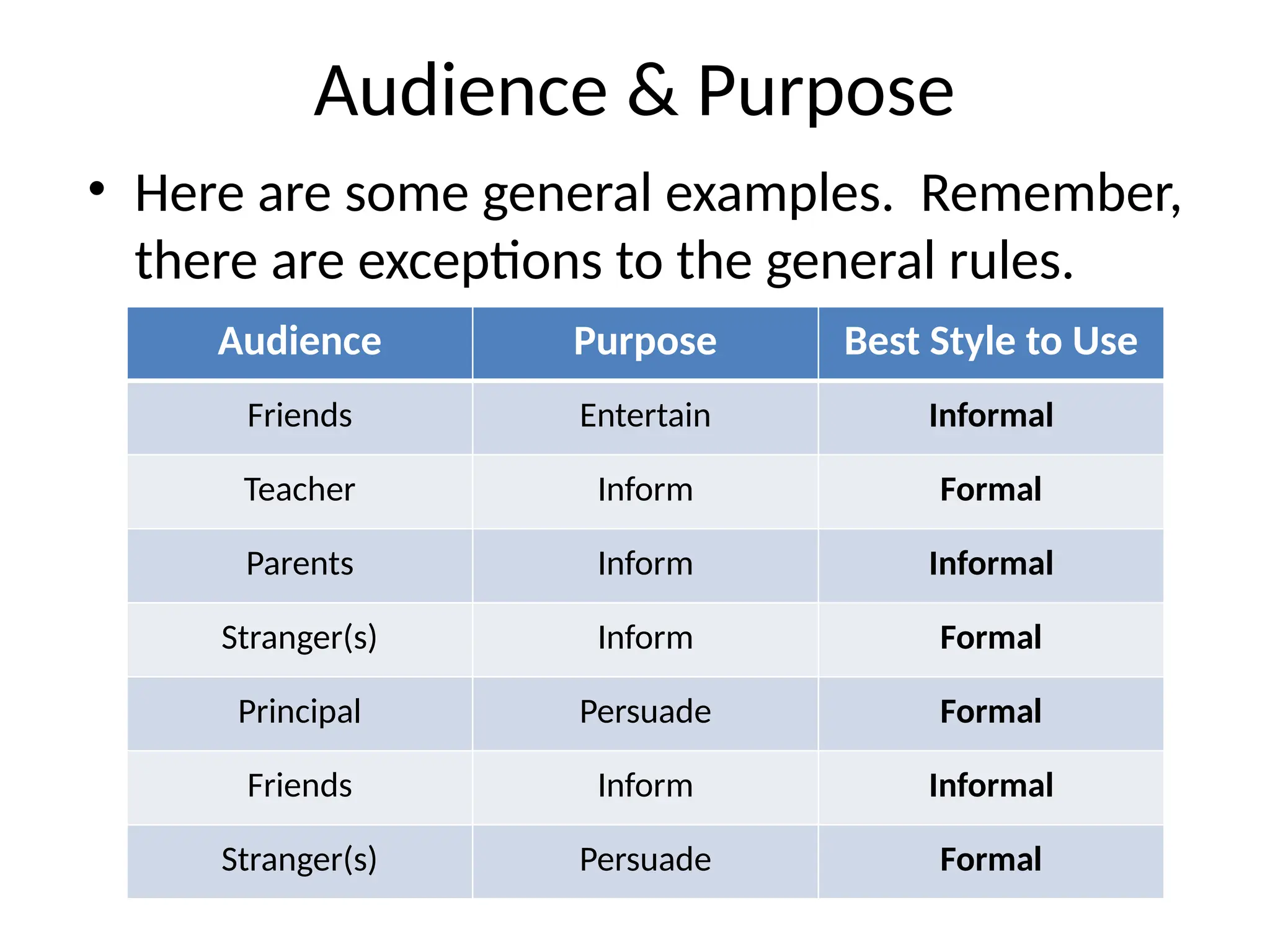
•Here are some general examples. Remember,
there are exceptions to the general rules.
Audience Purpose Best Style to Use
Friends Entertain Informal
Teacher Inform Formal
Parents Inform Informal
Stranger(s) Inform Formal
Principal Persuade Formal
Friends Inform Informal
Stranger(s) Persuade Formal
6.
Formal vs. InformalWriting
• So, what is the difference between formal and
informal writing?
• We will show you a table that compares the
two on the next page.
7.
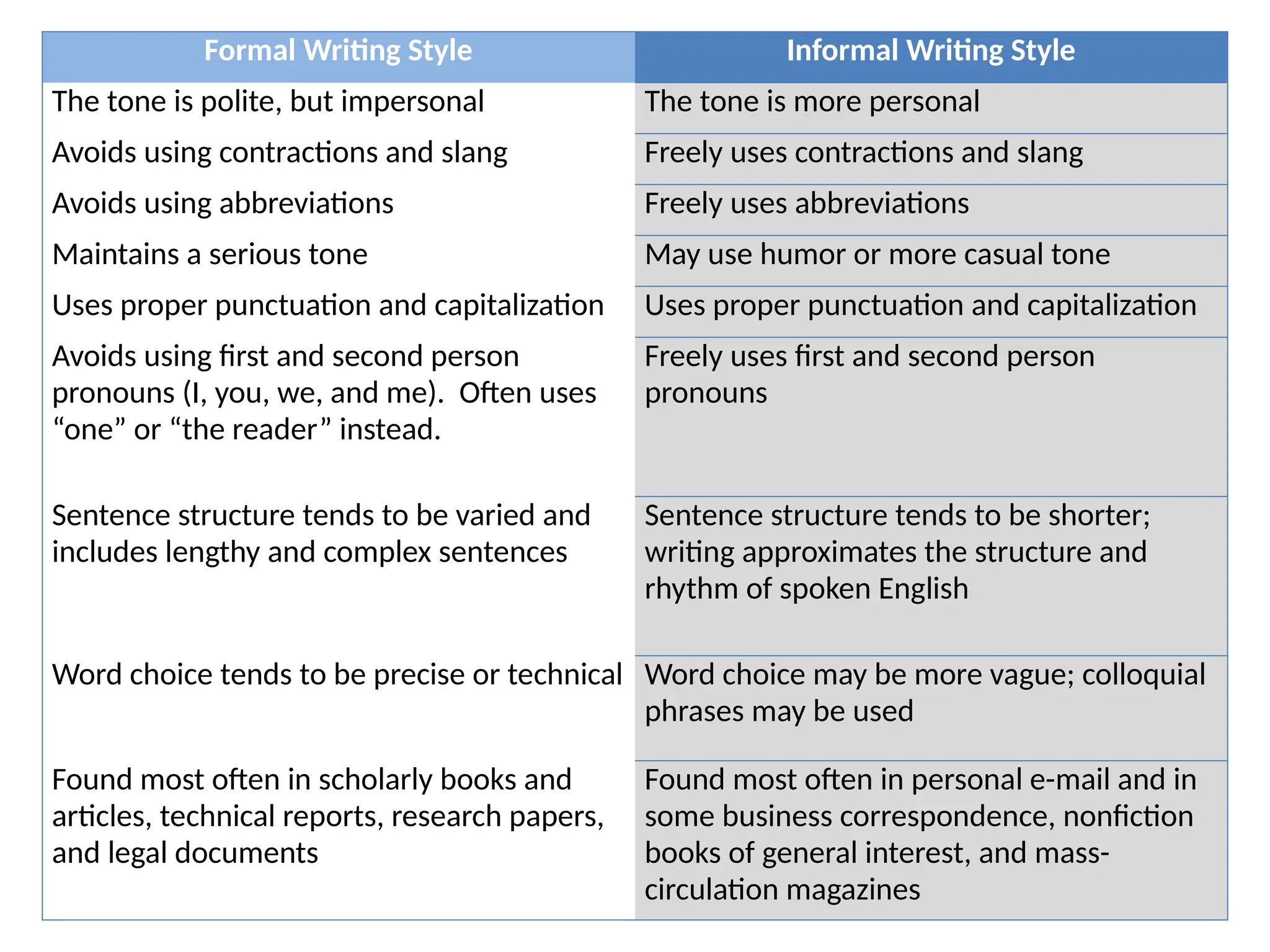
Formal Writing StyleInformal Writing Style
The tone is polite, but impersonal The tone is more personal
Avoids using contractions and slang Freely uses contractions and slang
Avoids using abbreviations Freely uses abbreviations
Maintains a serious tone May use humor or more casual tone
Uses proper punctuation and capitalization Uses proper punctuation and capitalization
Avoids using first and second person
pronouns (I, you, we, and me). Often uses
“one” or “the reader” instead.
Freely uses first and second person
pronouns
Sentence structure tends to be varied and
includes lengthy and complex sentences
Sentence structure tends to be shorter;
writing approximates the structure and
rhythm of spoken English
Word choice tends to be precise or technical Word choice may be more vague; colloquial
phrases may be used
Found most often in scholarly books and
articles, technical reports, research papers,
and legal documents
Found most often in personal e-mail and in
some business correspondence, nonfiction
books of general interest, and mass-
circulation magazines
8.
Formal vs. InformalWriting
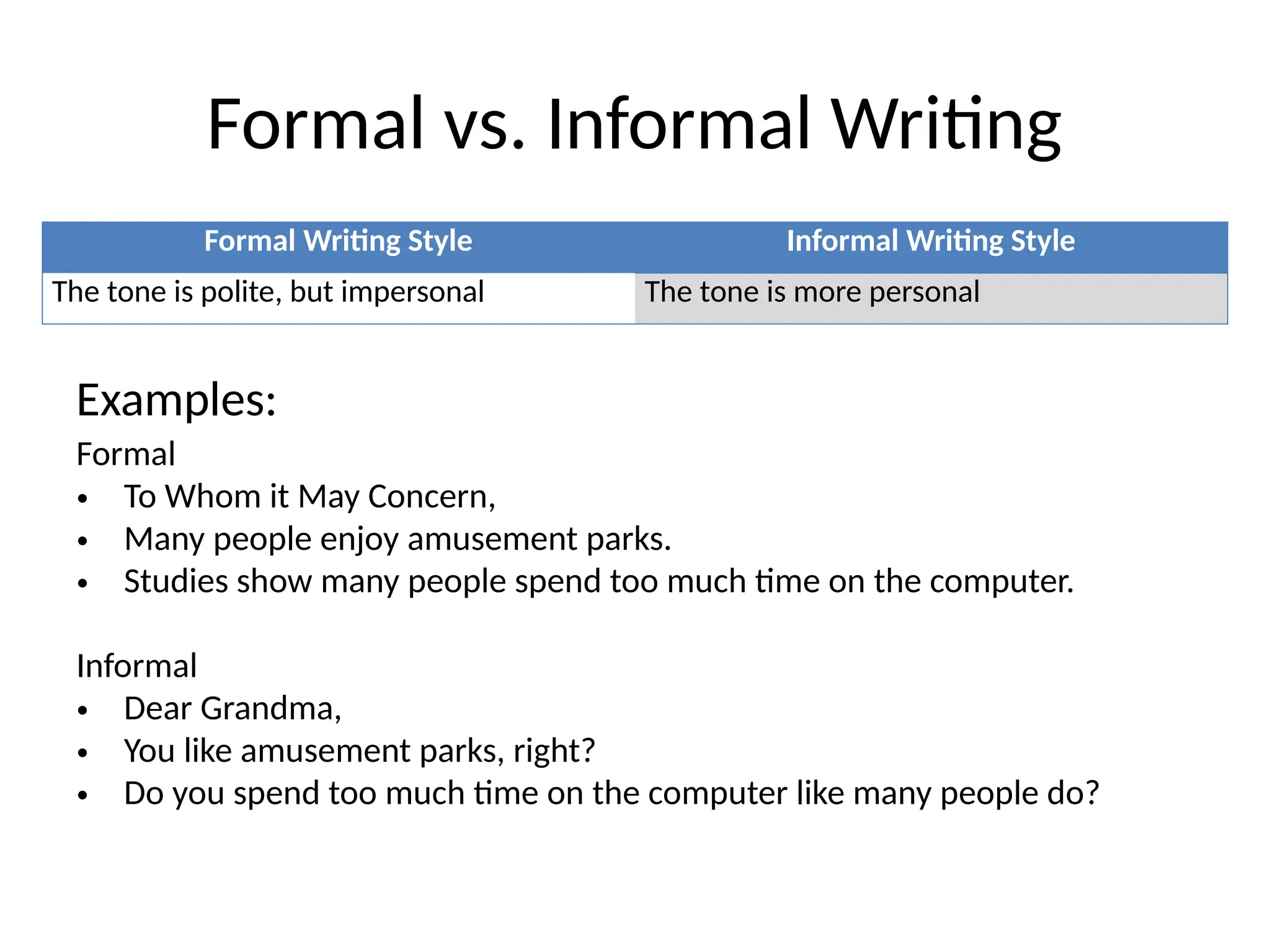
Formal Writing Style Informal Writing Style
The tone is polite, but impersonal The tone is more personal
Formal
• To Whom it May Concern,
• Many people enjoy amusement parks.
• Studies show many people spend too much time on the computer.
Informal
• Dear Grandma,
• You like amusement parks, right?
• Do you spend too much time on the computer like many people do?
Examples:
9.
Formal vs. InformalWriting
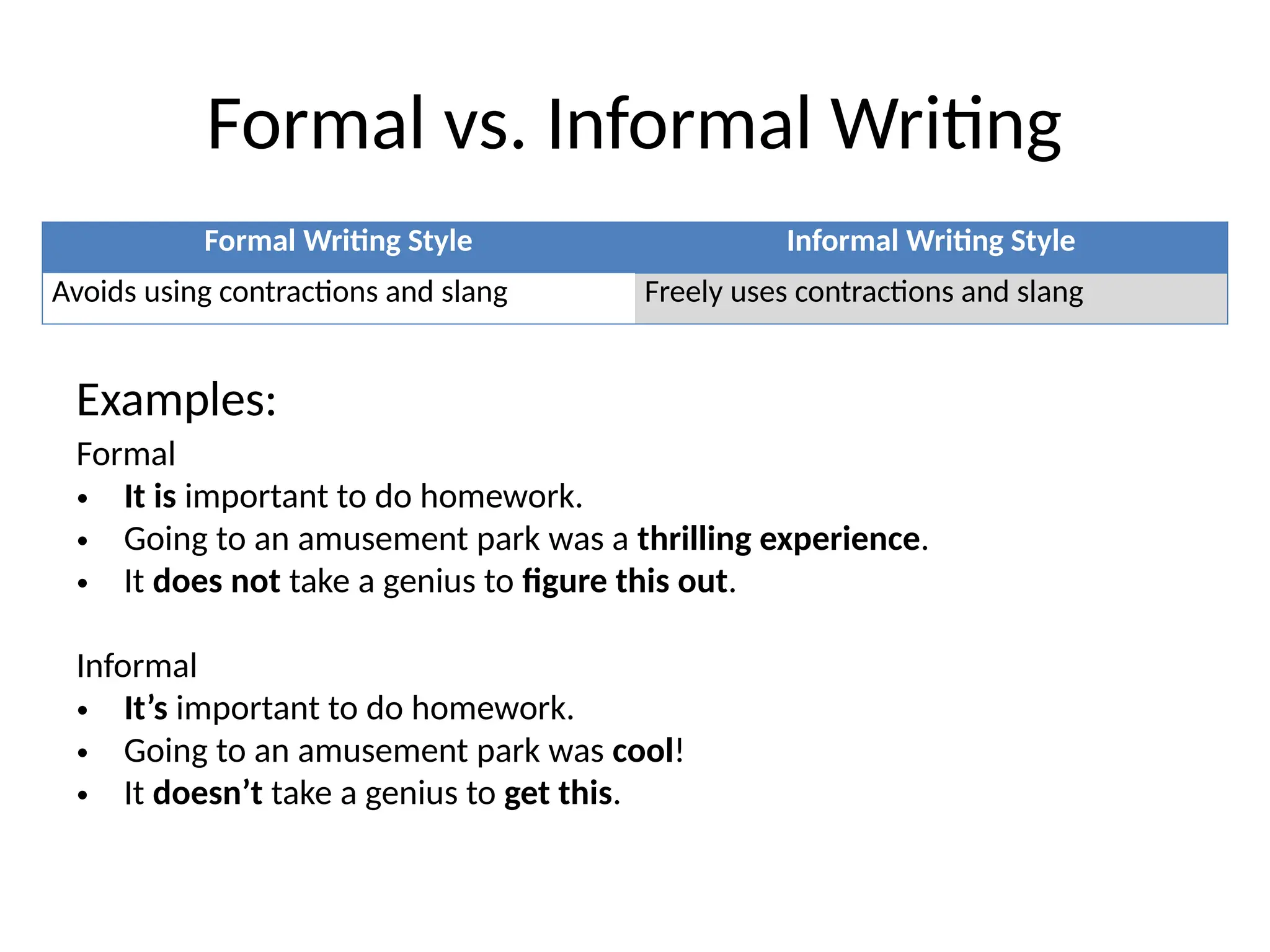
Formal Writing Style Informal Writing Style
Avoids using contractions and slang Freely uses contractions and slang
Formal
• It is important to do homework.
• Going to an amusement park was a thrilling experience.
• It does not take a genius to figure this out.
Informal
• It’s important to do homework.
• Going to an amusement park was cool!
• It doesn’t take a genius to get this.
Examples:
10.
Formal vs. InformalWriting
Formal Writing Style Informal Writing Style
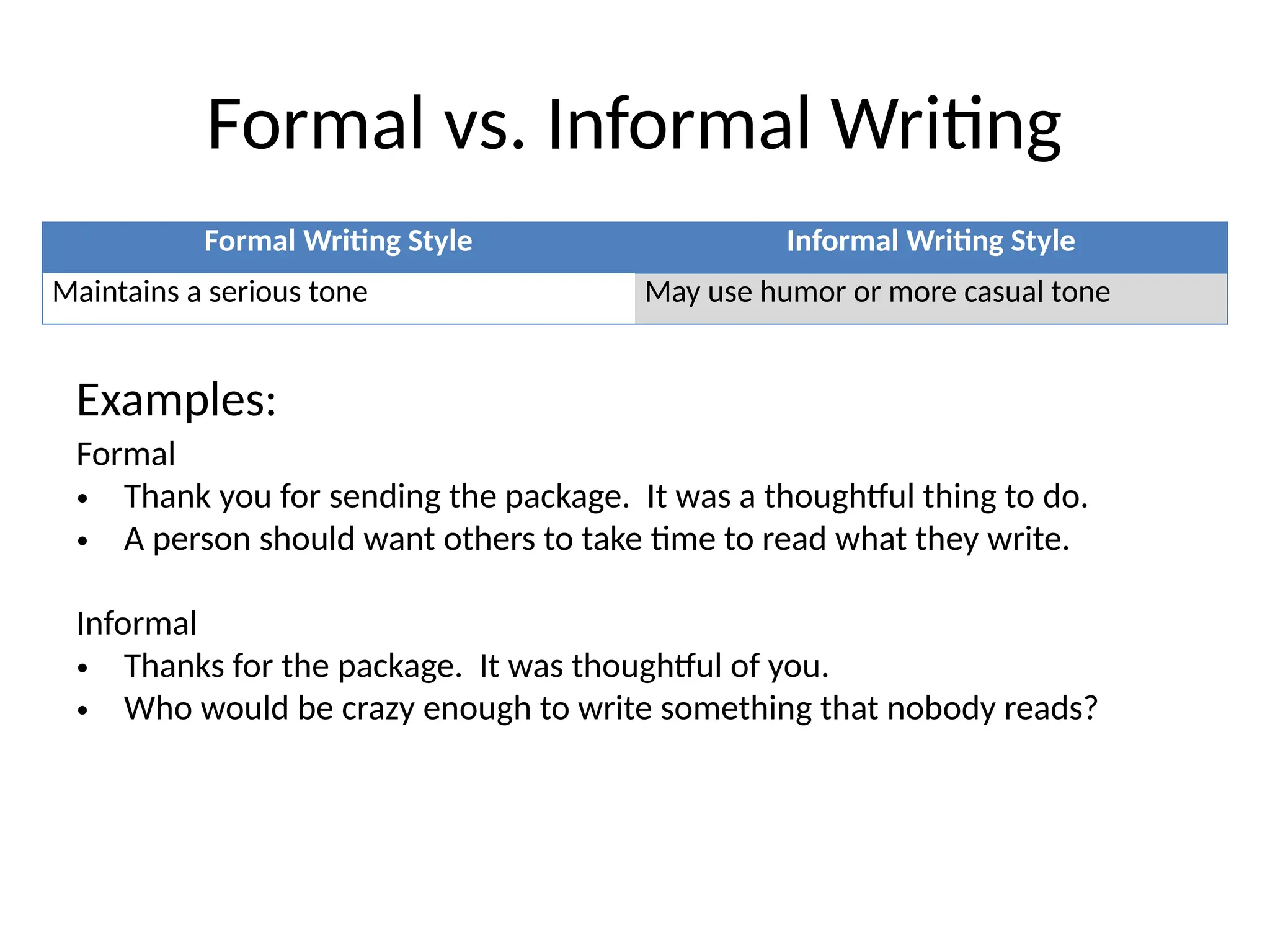
Maintains a serious tone May use humor or more casual tone
Formal
• Thank you for sending the package. It was a thoughtful thing to do.
• A person should want others to take time to read what they write.
Informal
• Thanks for the package. It was thoughtful of you.
• Who would be crazy enough to write something that nobody reads?
Examples:
11.
Formal vs. InformalWriting
Formal Writing Style Informal Writing Style
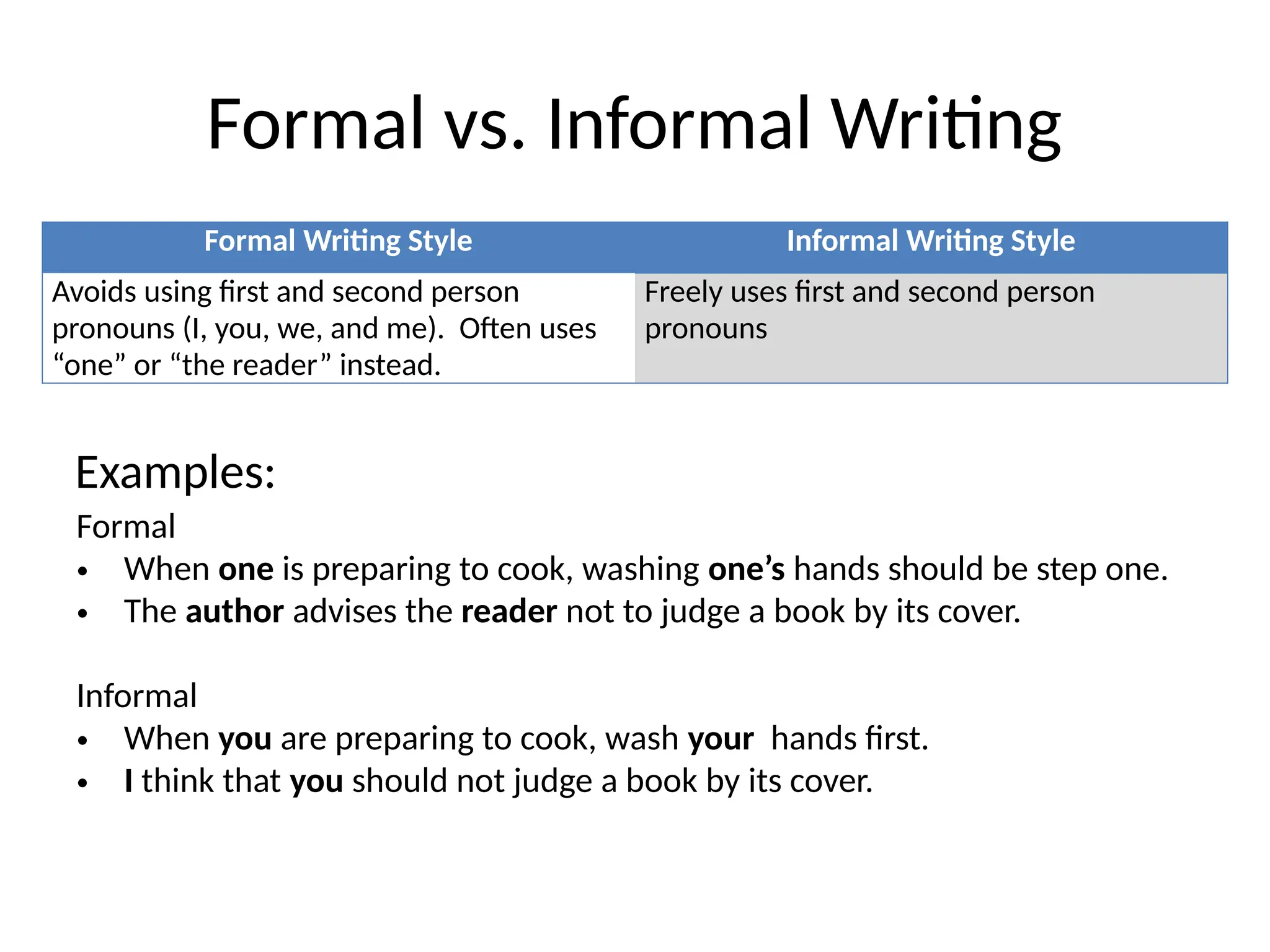
Avoids using first and second person
pronouns (I, you, we, and me). Often uses
“one” or “the reader” instead.
Freely uses first and second person
pronouns
Formal
• When one is preparing to cook, washing one’s hands should be step one.
• The author advises the reader not to judge a book by its cover.
Informal
• When you are preparing to cook, wash your hands first.
• I think that you should not judge a book by its cover.
Examples:
12.
Formal vs. InformalWriting Style
What is Formal Writing?
When do I write in a Formal Style?



![Formal-and-Informal-Language-PPT [Autosaved].pptx](https://cdn.slidesharecdn.com/ss_thumbnails/formal-and-informal-language-pptautosaved-220801052517-90558992-thumbnail.jpg?width=640&height=640&fit=bounds)


