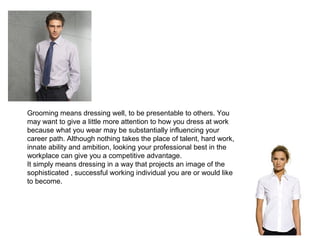
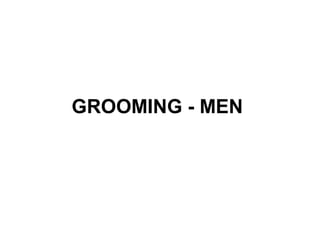
Grooming means dressing well, to be presentable to others. You
may want to give a little more attention to how you dress at work
because what you wear may be substantially influencing your
career path. Although nothing takes the place of talent, hard work,
innate ability and ambition, looking your professional best in the
workplace can give you a competitive advantage.
It simply means dressing in a way that projects an image of the
sophisticated , successful working individual you are or would like
to become.
GROOMING - MEN
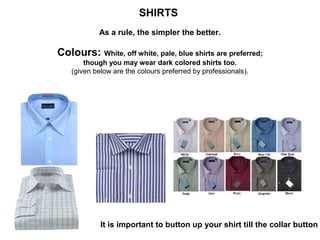
SHIRTS
As a rule, the simpler the better.

Colours: White, off white, pale, blue shirts are preferred;
though you may wear dark colored shirts too.
(given below are the colours preferred by professionals).

It is important to button up your shirt till the collar button
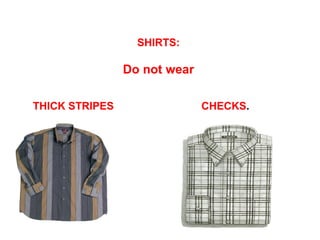
SHIRTS:

Do not wear
THICK STRIPES

CHECKS.
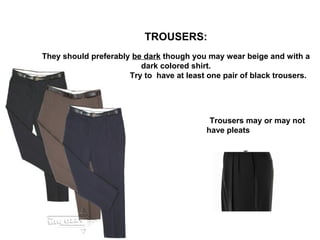
TROUSERS:
They should preferably be dark though you may wear beige and with a
dark colored shirt.
Try to have at least one pair of black trousers.

Trousers may or may not
have pleats
T.
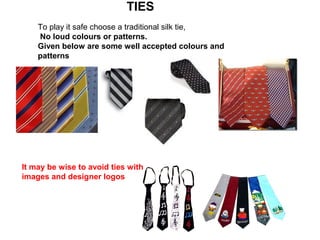
TIES
To play it safe choose a traditional silk tie,
No loud colours or patterns.
Given below are some well accepted colours and
patterns

It may be wise to avoid ties with
images and designer logos
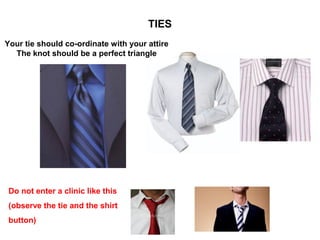
TIES
Your tie should co-ordinate with your attire
The knot should be a perfect triangle

Do not enter a clinic like this
(observe the tie and the shirt
button)
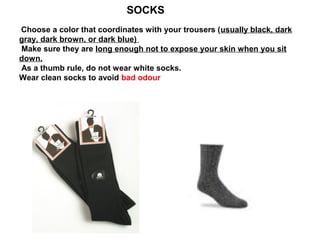
SOCKS
Choose a color that coordinates with your trousers (usually black, dark
gray, dark brown, or dark blue)
Make sure they are long enough not to expose your skin when you sit
down.
As a thumb rule, do not wear white socks.
Wear clean socks to avoid bad odour
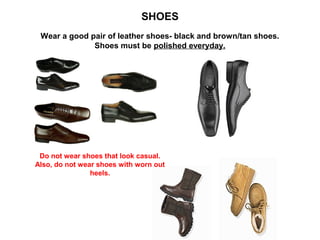
SHOES
Wear a good pair of leather shoes- black and brown/tan shoes.
Shoes must be polished everyday.

Do not wear shoes that look casual.
Also, do not wear shoes with worn out
heels.
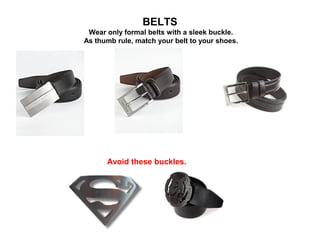
BELTS
Wear only formal belts with a sleek buckle.
As thumb rule, match your belt to your shoes.

Avoid these buckles.
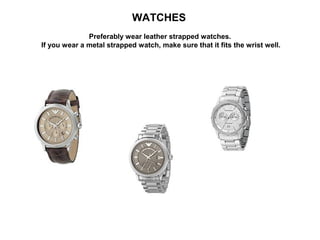
WATCHES
Preferably wear leather strapped watches.
If you wear a metal strapped watch, make sure that it fits the wrist well.
GROOMING - WOMEN
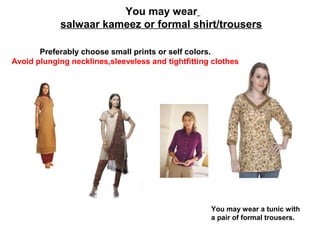
You may wear
salwaar kameez or formal shirt/trousers
Preferably choose small prints or self colors.
Avoid plunging necklines,sleeveless and tightfitting clothes

You may wear a tunic with
a pair of formal trousers.
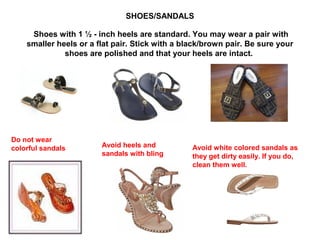
SHOES/SANDALS
Shoes with 1 ½ - inch heels are standard. You may wear a pair with
smaller heels or a flat pair. Stick with a black/brown pair. Be sure your
shoes are polished and that your heels are intact.

Do not wear
colorful sandals

Avoid heels and
sandals with bling

Avoid white colored sandals as
they get dirty easily. If you do,
clean them well.
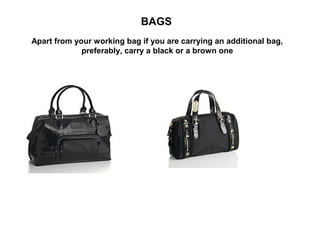
BAGS
Apart from your working bag if you are carrying an additional bag,
preferably, carry a black or a brown one
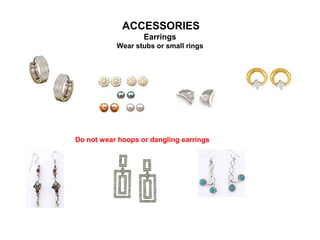
ACCESSORIES
Earrings
Wear stubs or small rings

Do not wear hoops or dangling earrings
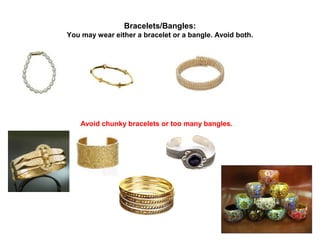
Bracelets/Bangles:
You may wear either a bracelet or a bangle. Avoid both.

Avoid chunky bracelets or too many bangles.
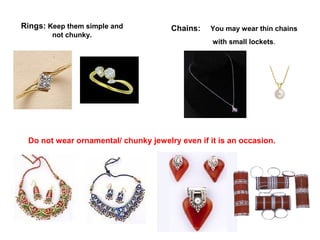
Rings: Keep them simple and
not chunky.

Chains:

You may wear thin chains
with small lockets.

Do not wear ornamental/ chunky jewelry even if it is an occasion.

Formal dress code

  • 1.
    Grooming means dressingwell, to be presentable to others. You may want to give a little more attention to how you dress at work because what you wear may be substantially influencing your career path. Although nothing takes the place of talent, hard work, innate ability and ambition, looking your professional best in the workplace can give you a competitive advantage. It simply means dressing in a way that projects an image of the sophisticated , successful working individual you are or would like to become.
  • 2.
  • 3.
    SHIRTS As a rule,the simpler the better. Colours: White, off white, pale, blue shirts are preferred; though you may wear dark colored shirts too. (given below are the colours preferred by professionals). It is important to button up your shirt till the collar button
  • 4.
  • 5.
    TROUSERS: They should preferablybe dark though you may wear beige and with a dark colored shirt. Try to have at least one pair of black trousers. Trousers may or may not have pleats T.
  • 6.
    TIES To play itsafe choose a traditional silk tie, No loud colours or patterns. Given below are some well accepted colours and patterns It may be wise to avoid ties with images and designer logos
  • 7.
    TIES Your tie shouldco-ordinate with your attire The knot should be a perfect triangle Do not enter a clinic like this (observe the tie and the shirt button)
  • 8.
    SOCKS Choose a colorthat coordinates with your trousers (usually black, dark gray, dark brown, or dark blue) Make sure they are long enough not to expose your skin when you sit down. As a thumb rule, do not wear white socks. Wear clean socks to avoid bad odour
  • 9.
    SHOES Wear a goodpair of leather shoes- black and brown/tan shoes. Shoes must be polished everyday. Do not wear shoes that look casual. Also, do not wear shoes with worn out heels.
  • 10.
    BELTS Wear only formalbelts with a sleek buckle. As thumb rule, match your belt to your shoes. Avoid these buckles.
  • 11.
    WATCHES Preferably wear leatherstrapped watches. If you wear a metal strapped watch, make sure that it fits the wrist well.
  • 12.
  • 13.
    You may wear salwaarkameez or formal shirt/trousers Preferably choose small prints or self colors. Avoid plunging necklines,sleeveless and tightfitting clothes You may wear a tunic with a pair of formal trousers.
  • 14.
    SHOES/SANDALS Shoes with 1½ - inch heels are standard. You may wear a pair with smaller heels or a flat pair. Stick with a black/brown pair. Be sure your shoes are polished and that your heels are intact. Do not wear colorful sandals Avoid heels and sandals with bling Avoid white colored sandals as they get dirty easily. If you do, clean them well.
  • 15.
    BAGS Apart from yourworking bag if you are carrying an additional bag, preferably, carry a black or a brown one
  • 16.
    ACCESSORIES Earrings Wear stubs orsmall rings Do not wear hoops or dangling earrings
  • 17.
    Bracelets/Bangles: You may weareither a bracelet or a bangle. Avoid both. Avoid chunky bracelets or too many bangles.
  • 18.
    Rings: Keep themsimple and not chunky. Chains: You may wear thin chains with small lockets. Do not wear ornamental/ chunky jewelry even if it is an occasion.