Force Continuum, When to use force, Use of force when necessary.pptx
1.
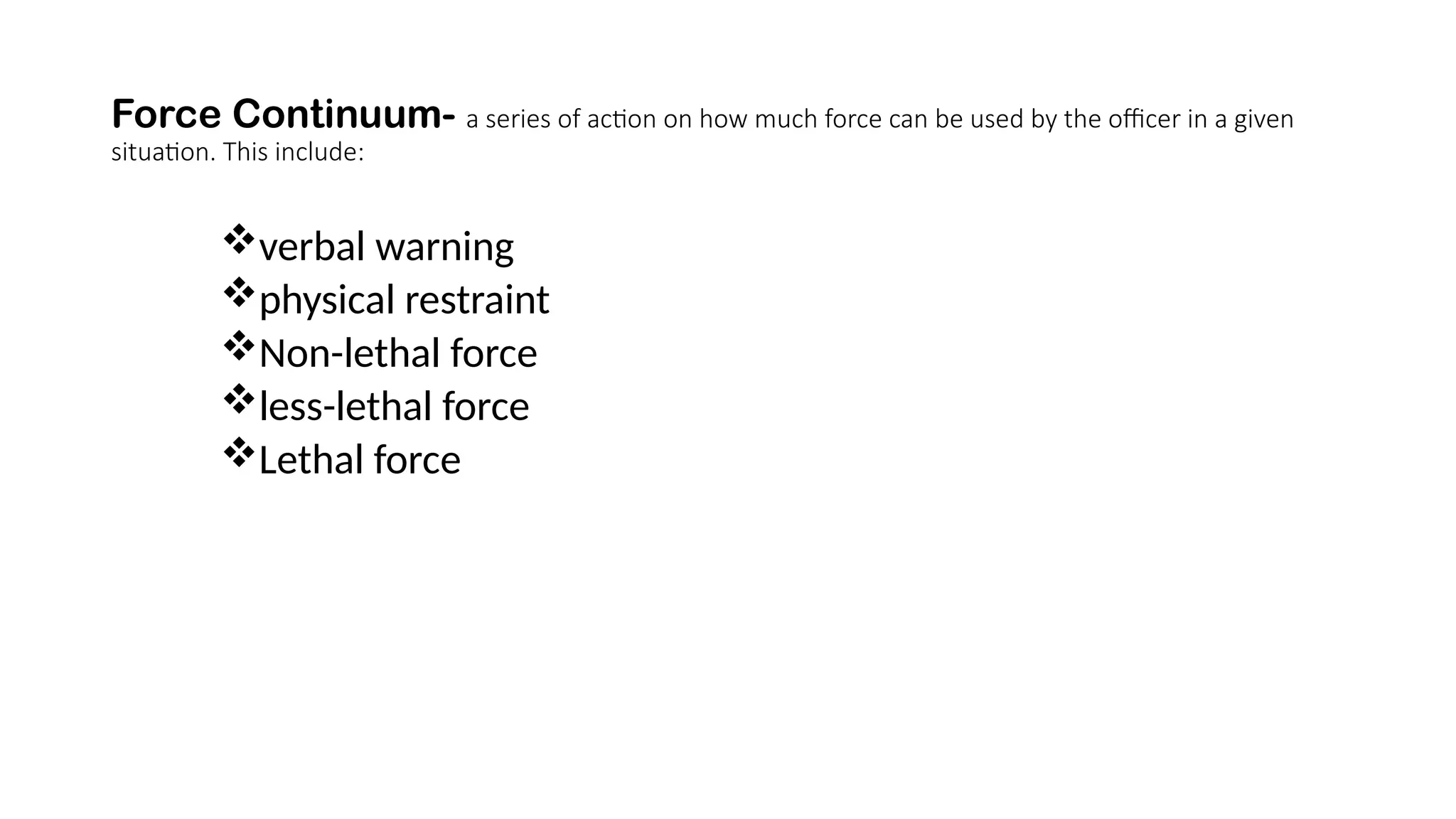
Force Continuum- aseries of action on how much force can be used by the officer in a given
situation. This include:
verbal warning
physical restraint
Non-lethal force
less-lethal force
Lethal force
2.
What is theprinciple use of force during
police operations?
• According to the PNP Operational Procedures (POP), force
can only be used when it is "necessary and reasonable" to
accomplish a lawful duty, such as when apprehending a
suspect resisting arrest, preventing imminent harm to
oneself or others, or maintaining order during a critical
situation, always prioritizing de-escalation tactics and verbal
warnings before resorting to physical force.
3.
When force isjustified
• When a suspect actively resists arrest and poses a threat to the officer or
others;
• protect themselves or others;
• When a suspect is fleeing and is believed to be armed with a dangerous
weapon.
• prevent the destruction of evidence;
• When necessary to control a violent crowd that poses a danger to public
safety.
• Deadly force is justified if an officer believes they have no other option
to protect themselves or others from serious injury or death.
4.
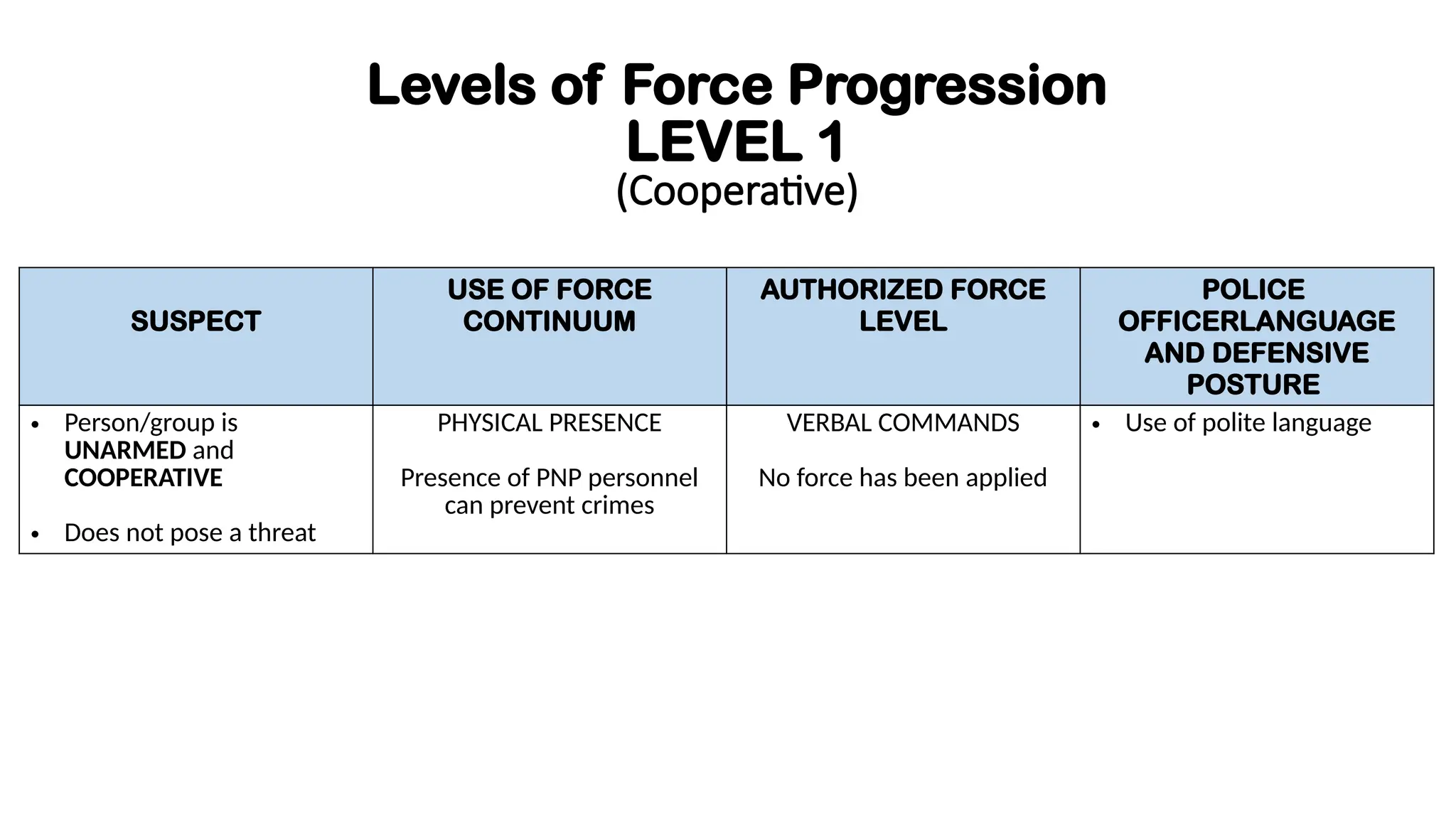
Levels of ForceProgression
LEVEL 1
(Cooperative)
SUSPECT
USE OF FORCE
CONTINUUM
AUTHORIZED FORCE
LEVEL
POLICE
OFFICERLANGUAGE
AND DEFENSIVE
POSTURE
• Person/group is
UNARMED and
COOPERATIVE
• Does not pose a threat
PHYSICAL PRESENCE
Presence of PNP personnel
can prevent crimes
VERBAL COMMANDS
No force has been applied
• Use of polite language
5.
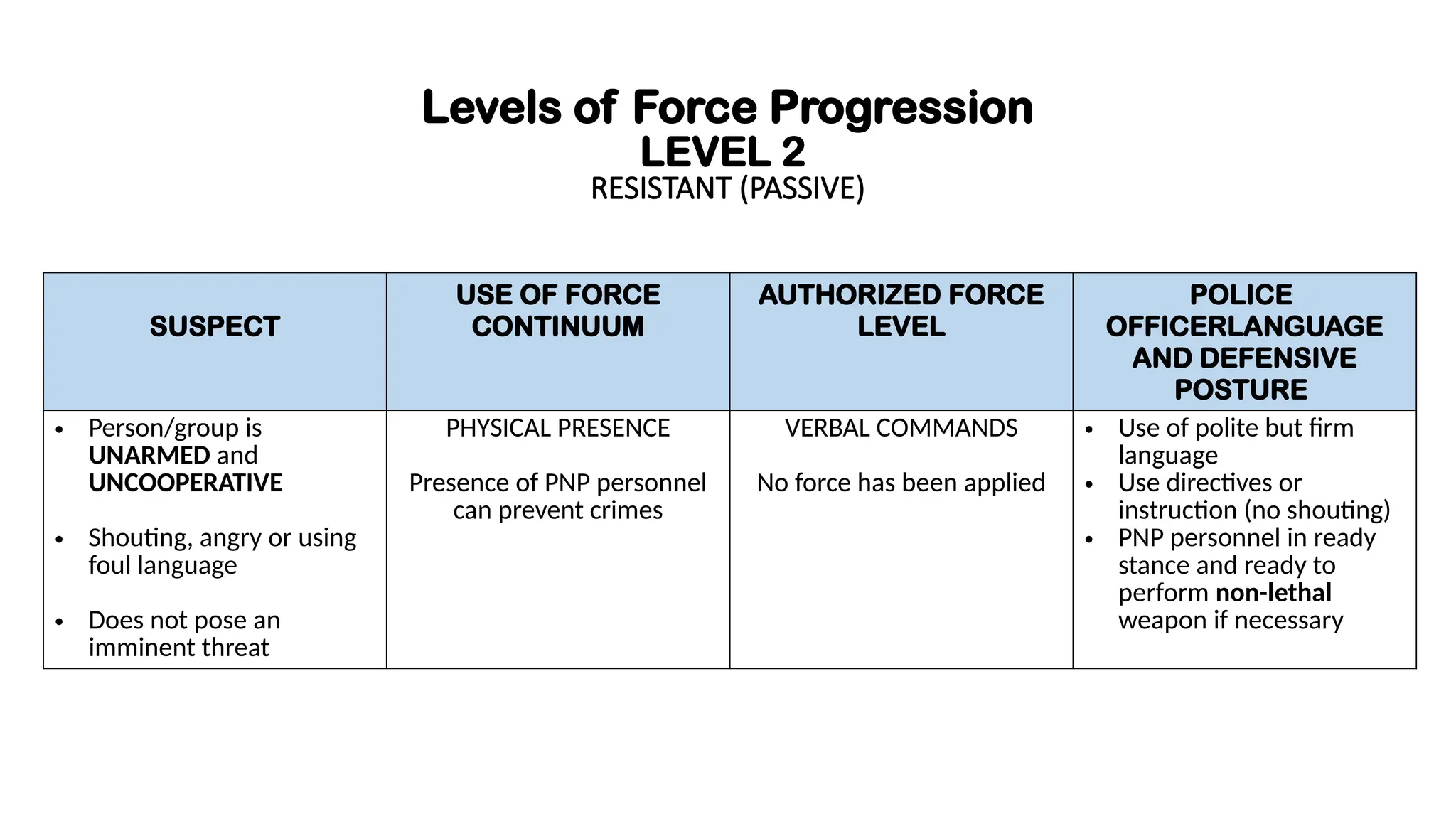
Levels of ForceProgression
LEVEL 2
RESISTANT (PASSIVE)
SUSPECT
USE OF FORCE
CONTINUUM
AUTHORIZED FORCE
LEVEL
POLICE
OFFICERLANGUAGE
AND DEFENSIVE
POSTURE
• Person/group is
UNARMED and
UNCOOPERATIVE
• Shouting, angry or using
foul language
• Does not pose an
imminent threat
PHYSICAL PRESENCE
Presence of PNP personnel
can prevent crimes
VERBAL COMMANDS
No force has been applied
• Use of polite but firm
language
• Use directives or
instruction (no shouting)
• PNP personnel in ready
stance and ready to
perform non-lethal
weapon if necessary
6.
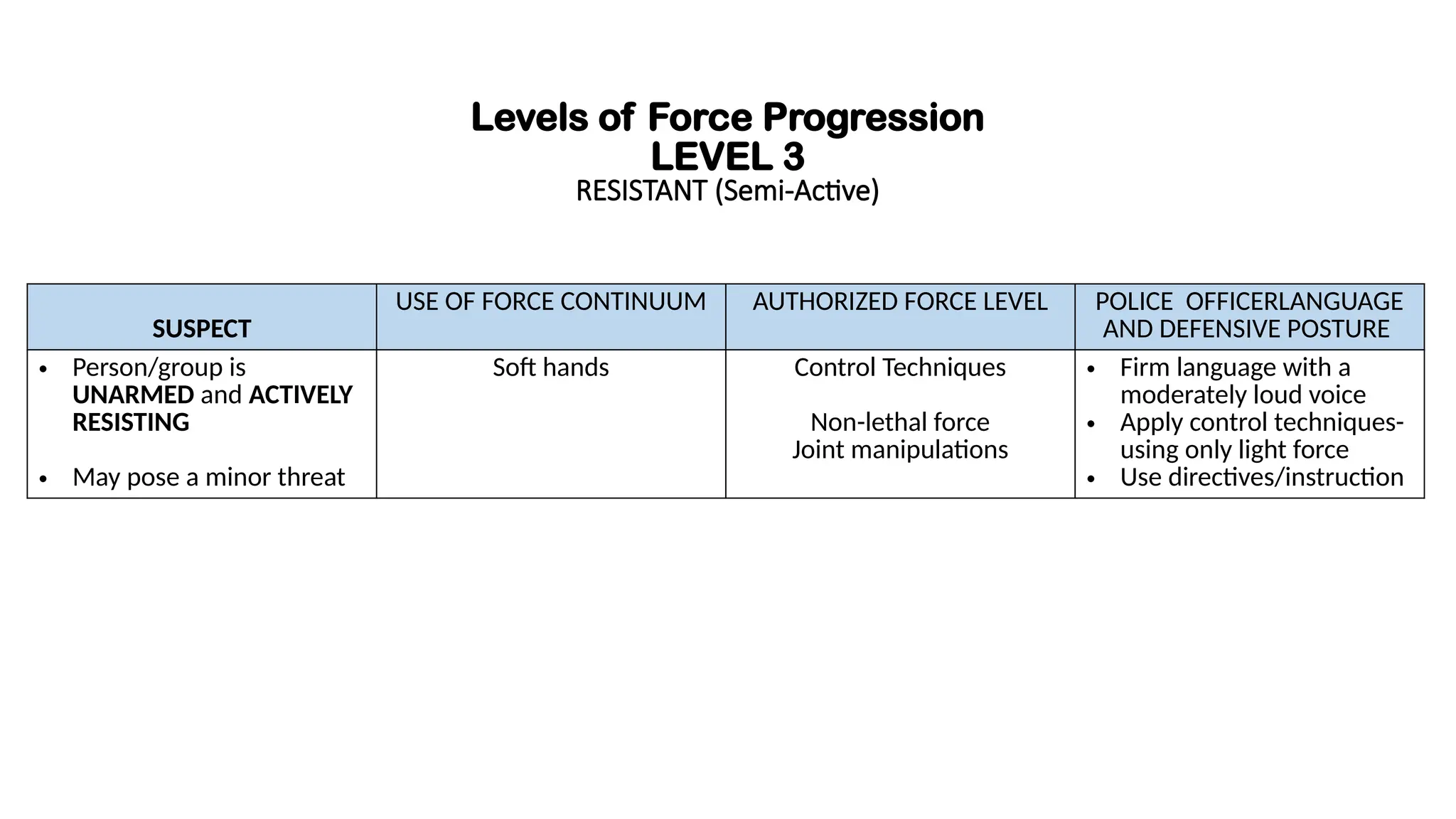
Levels of ForceProgression
LEVEL 3
RESISTANT (Semi-Active)
SUSPECT
USE OF FORCE CONTINUUM AUTHORIZED FORCE LEVEL POLICE OFFICERLANGUAGE
AND DEFENSIVE POSTURE
• Person/group is
UNARMED and ACTIVELY
RESISTING
• May pose a minor threat
Soft hands Control Techniques
Non-lethal force
Joint manipulations
• Firm language with a
moderately loud voice
• Apply control techniques-
using only light force
• Use directives/instruction
7.
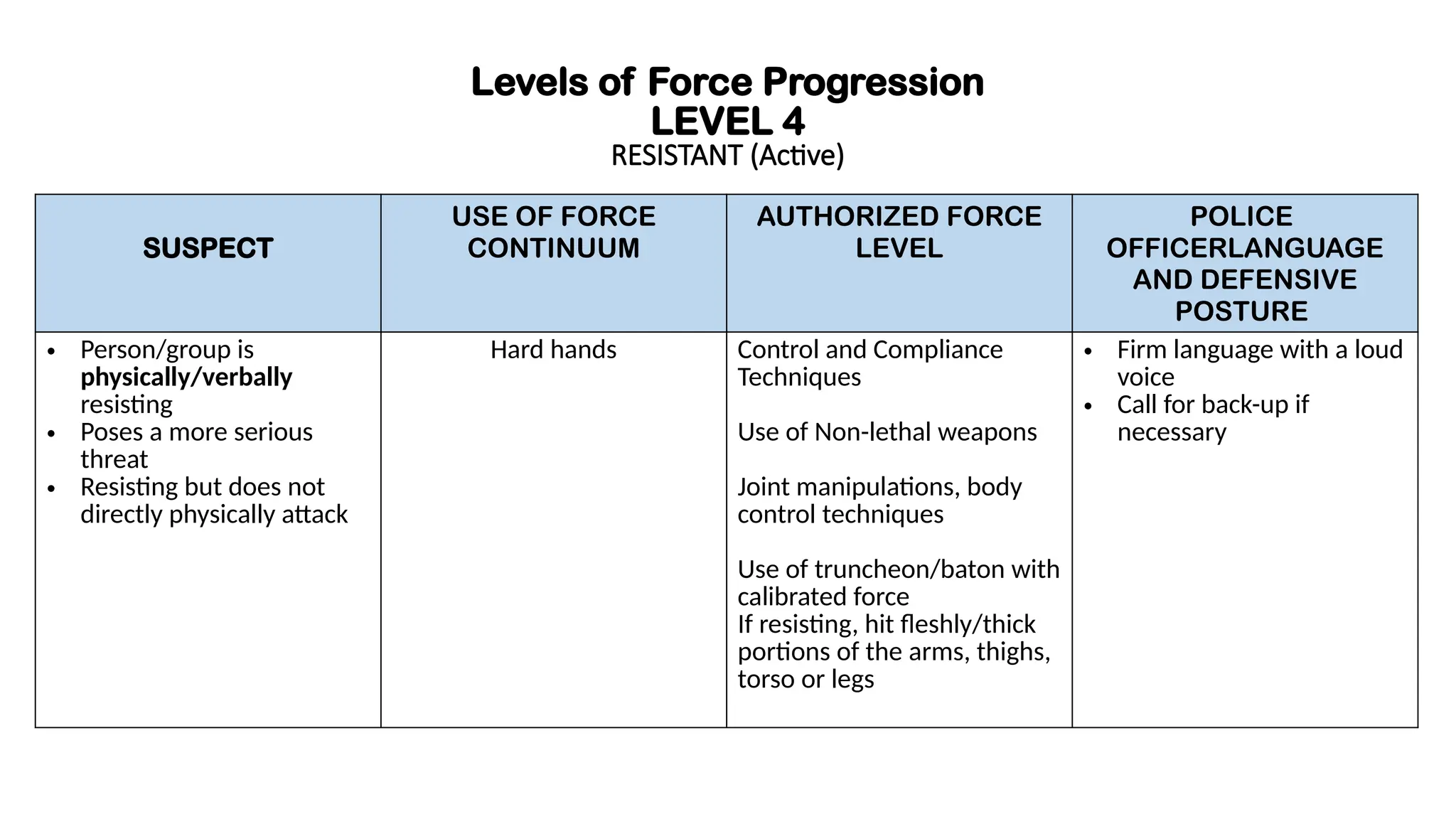
Levels of ForceProgression
LEVEL 4
RESISTANT (Active)
SUSPECT
USE OF FORCE
CONTINUUM
AUTHORIZED FORCE
LEVEL
POLICE
OFFICERLANGUAGE
AND DEFENSIVE
POSTURE
• Person/group is
physically/verbally
resisting
• Poses a more serious
threat
• Resisting but does not
directly physically attack
Hard hands Control and Compliance
Techniques
Use of Non-lethal weapons
Joint manipulations, body
control techniques
Use of truncheon/baton with
calibrated force
If resisting, hit fleshly/thick
portions of the arms, thighs,
torso or legs
• Firm language with a loud
voice
• Call for back-up if
necessary
8.
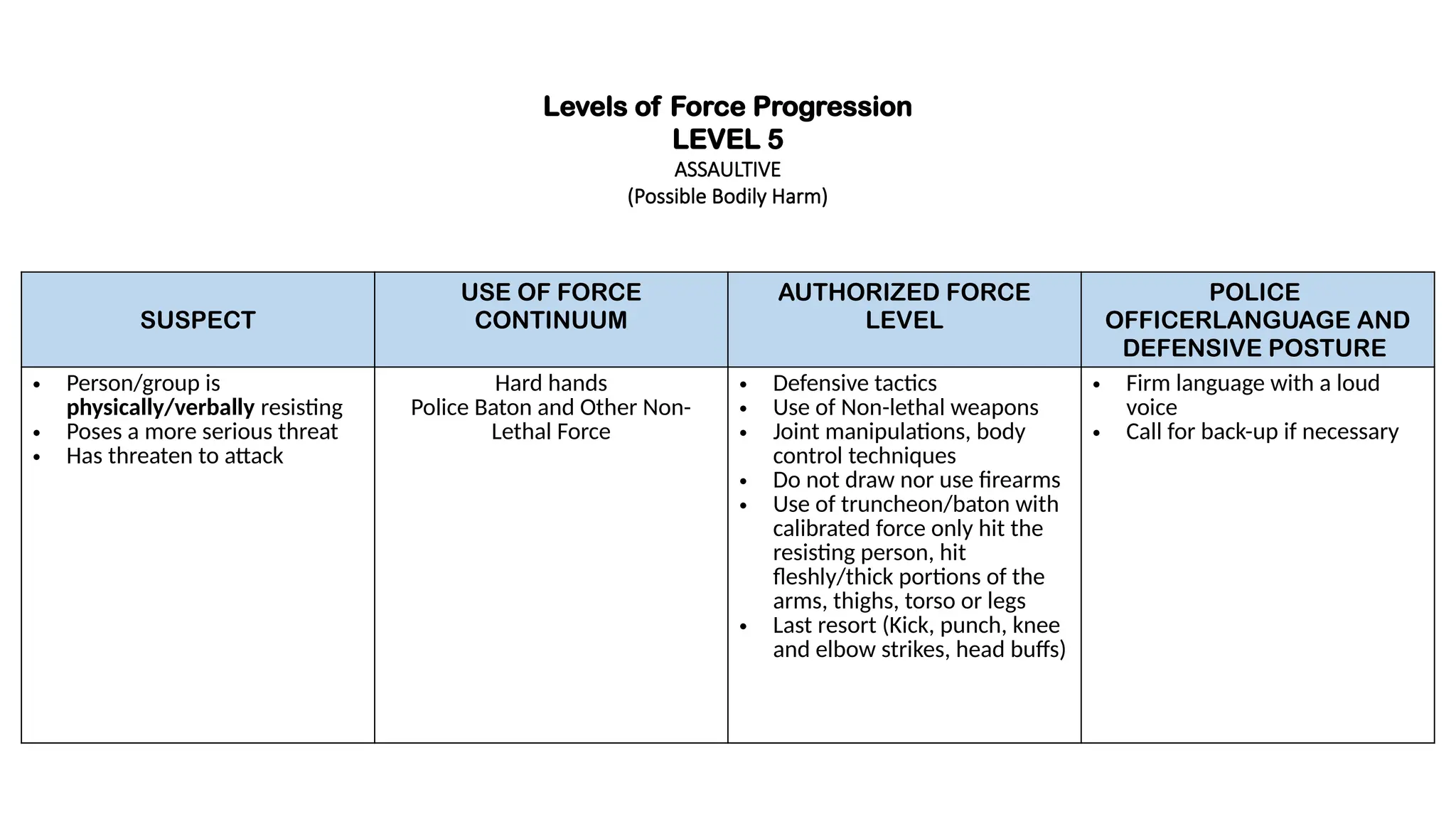
Levels of ForceProgression
LEVEL 5
ASSAULTIVE
(Possible Bodily Harm)
SUSPECT
USE OF FORCE
CONTINUUM
AUTHORIZED FORCE
LEVEL
POLICE
OFFICERLANGUAGE AND
DEFENSIVE POSTURE
• Person/group is
physically/verbally resisting
• Poses a more serious threat
• Has threaten to attack
Hard hands
Police Baton and Other Non-
Lethal Force
• Defensive tactics
• Use of Non-lethal weapons
• Joint manipulations, body
control techniques
• Do not draw nor use firearms
• Use of truncheon/baton with
calibrated force only hit the
resisting person, hit
fleshly/thick portions of the
arms, thighs, torso or legs
• Last resort (Kick, punch, knee
and elbow strikes, head buffs)
• Firm language with a loud
voice
• Call for back-up if necessary
9.
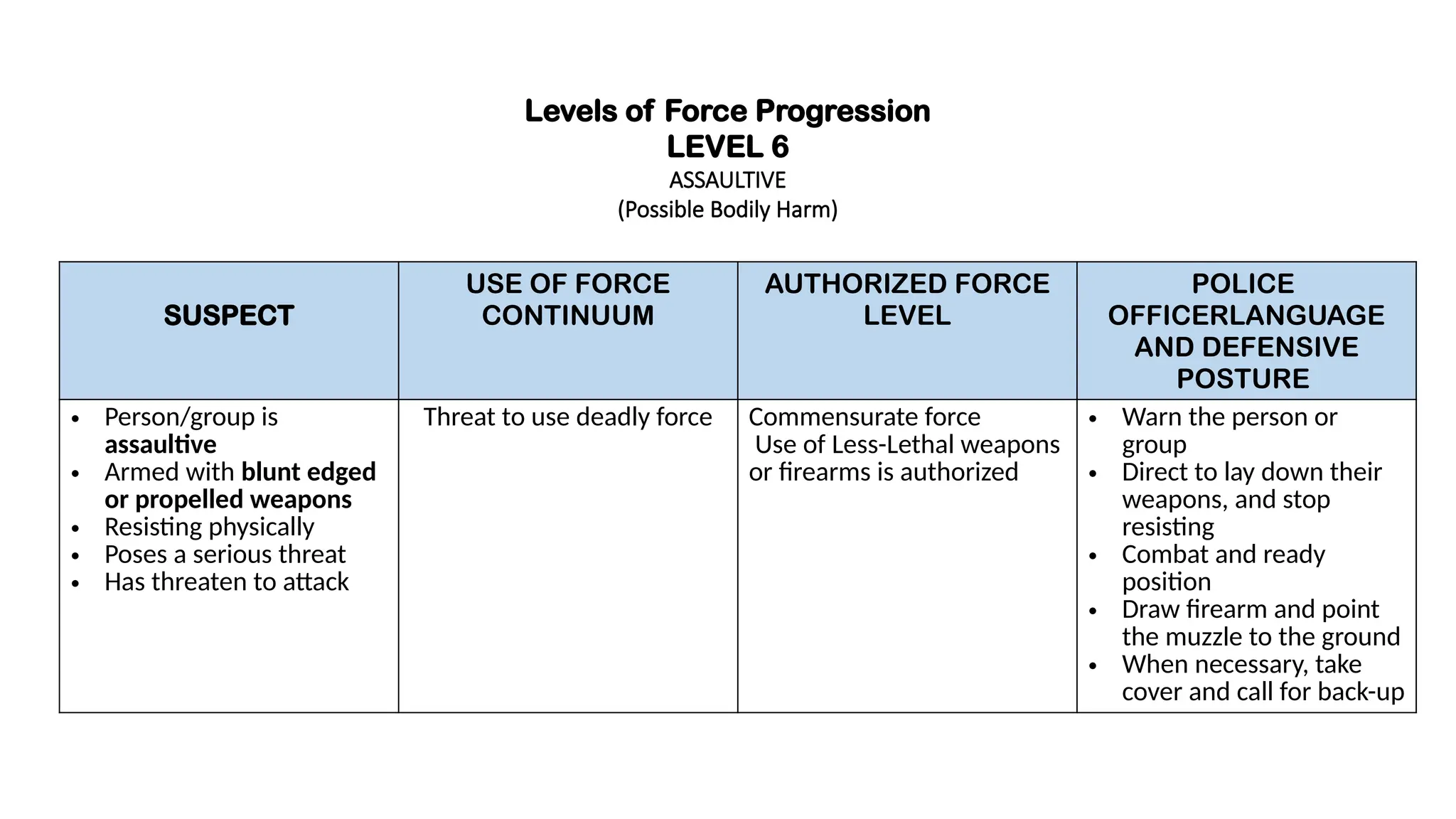
Levels of ForceProgression
LEVEL 6
ASSAULTIVE
(Possible Bodily Harm)
SUSPECT
USE OF FORCE
CONTINUUM
AUTHORIZED FORCE
LEVEL
POLICE
OFFICERLANGUAGE
AND DEFENSIVE
POSTURE
• Person/group is
assaultive
• Armed with blunt edged
or propelled weapons
• Resisting physically
• Poses a serious threat
• Has threaten to attack
Threat to use deadly force Commensurate force
Use of Less-Lethal weapons
or firearms is authorized
• Warn the person or
group
• Direct to lay down their
weapons, and stop
resisting
• Combat and ready
position
• Draw firearm and point
the muzzle to the ground
• When necessary, take
cover and call for back-up
10.
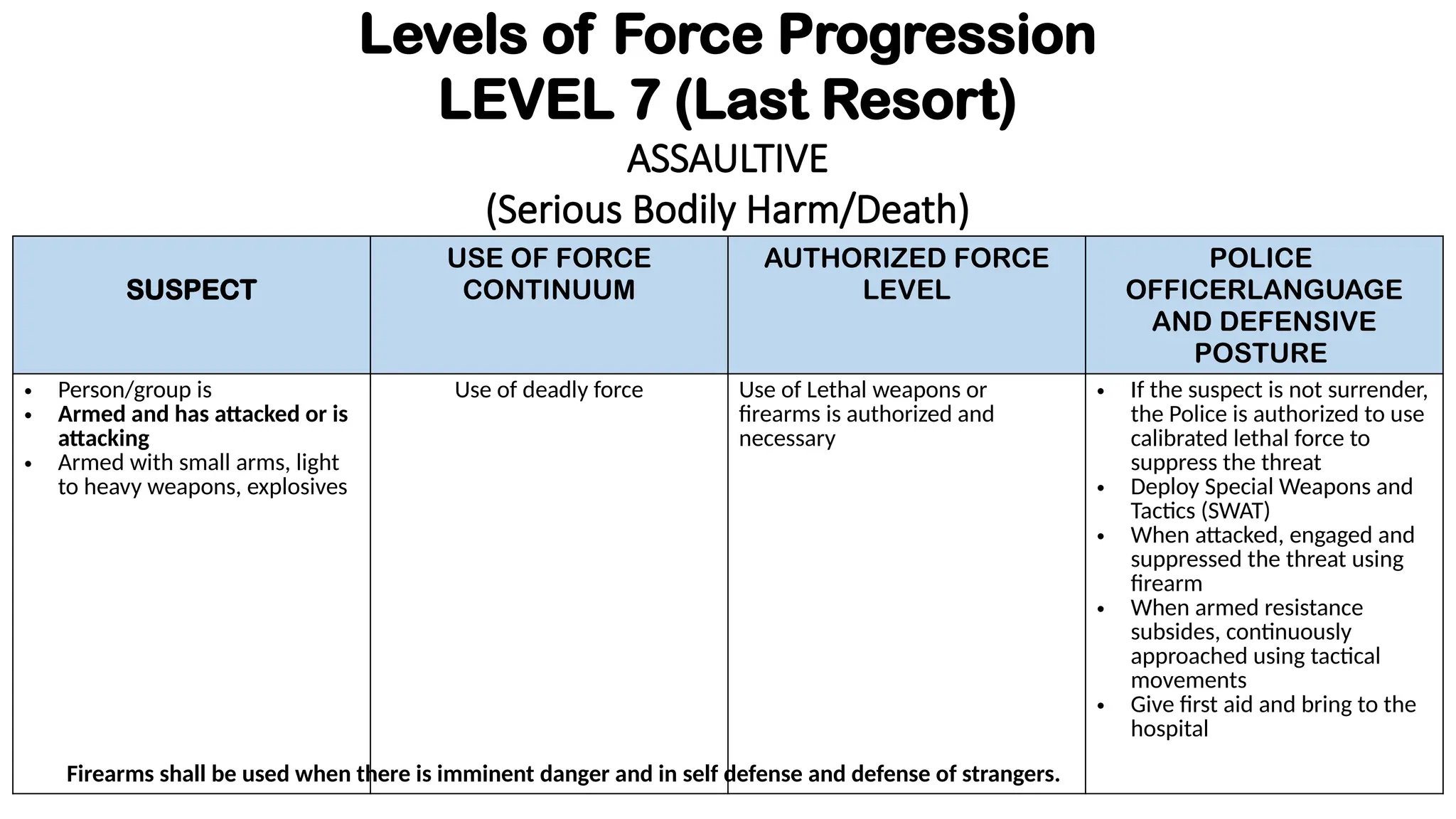
Levels of ForceProgression
LEVEL 7 (Last Resort)
ASSAULTIVE
(Serious Bodily Harm/Death)
SUSPECT
USE OF FORCE
CONTINUUM
AUTHORIZED FORCE
LEVEL
POLICE
OFFICERLANGUAGE
AND DEFENSIVE
POSTURE
• Person/group is
• Armed and has attacked or is
attacking
• Armed with small arms, light
to heavy weapons, explosives
Use of deadly force Use of Lethal weapons or
firearms is authorized and
necessary
• If the suspect is not surrender,
the Police is authorized to use
calibrated lethal force to
suppress the threat
• Deploy Special Weapons and
Tactics (SWAT)
• When attacked, engaged and
suppressed the threat using
firearm
• When armed resistance
subsides, continuously
approached using tactical
movements
• Give first aid and bring to the
hospital
Firearms shall be used when there is imminent danger and in self defense and defense of strangers.