Food chains
5th level

Anna Mas
Introduction
I decided to implement a lesson about food chains to 5th level.
As you are going to see after, I added some changes when I
implemented it.
Lesson plan

Link

Link
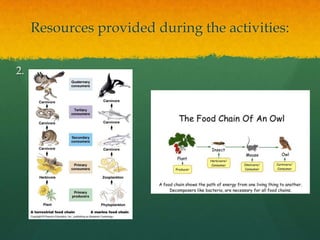
Resources provided during the activities:

1. Introductory text:
“ All living things need food to give them the energy
to grow and move. A food chain shows how each
living thing gets its food. It shows who eats whom”.
Resources provided during the activities:
2.
Scafolding:



What happens if ________ disappears?

 There will be a lot of ______
 The ______ won’t have anything to eat
Assessment activity:
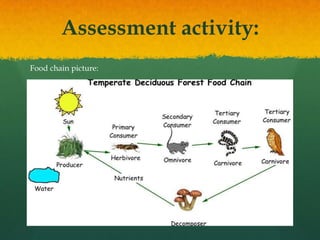
Look at the food chain picture and complete:
 What happens if the snake disappears?
 There will be a lot of ______
 The ______ won’t have anything to eat.
 What happens if insects disappear?
 There will be a lot of ______
 The ______ won’t have anything to eat.
Assessment activity:
Food chain picture:
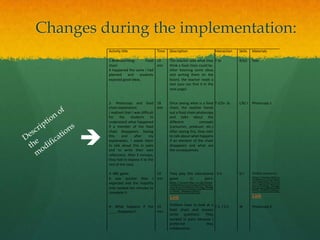
Changes during the implementation:
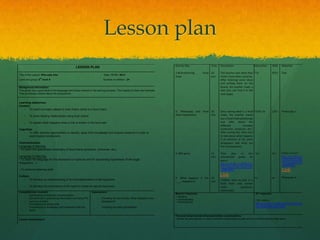
Activity title

Time

Description

Interaction

Skills

Materials

1-Brainstorming:
Food 10
chain
min
It happened the same I had
planned
and
students
exposed good ideas.



The teacher asks what they T-Ss
think a food chain could be.
After listening some ideas
and writing them on the
board, the teacher reads a
text (you can find it in the
next page).

R/S/I

Text

2- Photocopy and food 18
chain explanation
min
I realized that I was difficult
for
the
students
to
understand what happened
if a member of the food
chain disappears. Seeing
this
and
after
my
explanation, I asked them
to talk about this in pairs
and to write their own
reflections. After 3 minutes,
they had to expose it to the
rest of the class.

Once seeing what is a food T-S/Ss- Ss
chain, the teacher hands
out a food chain photocopy
and talks about the
different
concepts
(consumer, producer, etc.)
After seeing this, they start
to talk about what happens
if an element of the chain
disappears and what are
the consequences.

L/R/ I

Photocopy 1

3- BBC game
10
It was quicker than I min
expected and the majority
only needed ten minutes to
complete it.

They play this educational S-S
game
in
pairs:

S/ I

Online resource:
http://www.bbc.co.
uk/bitesize/ks2/sci
ence/living_things/
food_chains/play/

4- What happens if the 10
____ disappears?
min

Children have to look at a T-S / S-S
food chain and answer
some questions. They
worked in pairs because I
preferred
they
collaborated.

http://www.bbc.co.uk/bites
ize/ks2/science/living_thing
s/food_chains/play/

Link

Link
W

Photocopy 2
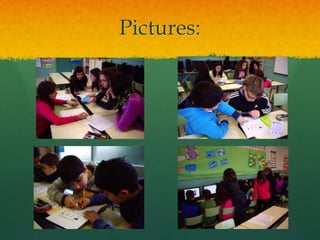
Pictures:
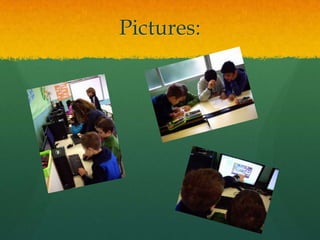
Pictures:
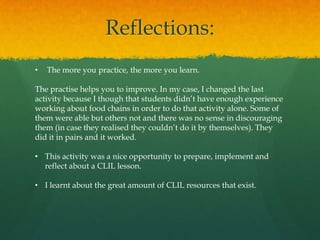
Reflections:
•

The more you practice, the more you learn.

The practise helps you to improve. In my case, I changed the last
activity because I though that students didn’t have enough experience
working about food chains in order to do that activity alone. Some of
them were able but others not and there was no sense in discouraging
them (in case they realised they couldn’t do it by themselves). They
did it in pairs and it worked.
• This activity was a nice opportunity to prepare, implement and
reflect about a CLIL lesson.
• I learnt about the great amount of CLIL resources that exist.

Food chains 4 anna mas

  • 1.
  • 2.
    Introduction I decided toimplement a lesson about food chains to 5th level. As you are going to see after, I added some changes when I implemented it.
  • 3.
  • 4.
    Resources provided duringthe activities: 1. Introductory text: “ All living things need food to give them the energy to grow and move. A food chain shows how each living thing gets its food. It shows who eats whom”.
  • 5.
    Resources provided duringthe activities: 2.
  • 6.
    Scafolding:  What happens if________ disappears?  There will be a lot of ______  The ______ won’t have anything to eat
  • 7.
    Assessment activity: Look atthe food chain picture and complete:  What happens if the snake disappears?  There will be a lot of ______  The ______ won’t have anything to eat.  What happens if insects disappear?  There will be a lot of ______  The ______ won’t have anything to eat.
  • 8.
  • 9.
    Changes during theimplementation: Activity title Time Description Interaction Skills Materials 1-Brainstorming: Food 10 chain min It happened the same I had planned and students exposed good ideas.  The teacher asks what they T-Ss think a food chain could be. After listening some ideas and writing them on the board, the teacher reads a text (you can find it in the next page). R/S/I Text 2- Photocopy and food 18 chain explanation min I realized that I was difficult for the students to understand what happened if a member of the food chain disappears. Seeing this and after my explanation, I asked them to talk about this in pairs and to write their own reflections. After 3 minutes, they had to expose it to the rest of the class. Once seeing what is a food T-S/Ss- Ss chain, the teacher hands out a food chain photocopy and talks about the different concepts (consumer, producer, etc.) After seeing this, they start to talk about what happens if an element of the chain disappears and what are the consequences. L/R/ I Photocopy 1 3- BBC game 10 It was quicker than I min expected and the majority only needed ten minutes to complete it. They play this educational S-S game in pairs: S/ I Online resource: http://www.bbc.co. uk/bitesize/ks2/sci ence/living_things/ food_chains/play/ 4- What happens if the 10 ____ disappears? min Children have to look at a T-S / S-S food chain and answer some questions. They worked in pairs because I preferred they collaborated. http://www.bbc.co.uk/bites ize/ks2/science/living_thing s/food_chains/play/ Link Link W Photocopy 2
  • 10.
  • 11.
  • 12.
    Reflections: • The more youpractice, the more you learn. The practise helps you to improve. In my case, I changed the last activity because I though that students didn’t have enough experience working about food chains in order to do that activity alone. Some of them were able but others not and there was no sense in discouraging them (in case they realised they couldn’t do it by themselves). They did it in pairs and it worked. • This activity was a nice opportunity to prepare, implement and reflect about a CLIL lesson. • I learnt about the great amount of CLIL resources that exist.