Starter
Conflict: What do I already know?
Conflict
Civilians
Terrorism
Examine the form,
structure and language
in the poem ‘Flag’.
• All will analyse the structure of the
poem.
• Most will be able to discuss the
structure with confidence.
• Some will start to comment on the
effect the structure has on the
reader.
Conflict- Causes
1. When different people, groups or
countries disagree with each other
2. This can lead to fear and violence
3. This can also lead to war.
4. Reasons could be political and
religious reasons.
L.O Examine the form, structure and language in the poem ‘Flag’.
Conflict- Effects
• Conflict can kill and injure soldiers
and civilians.
• People can be mentally scarred by
their experiences.
• People who are not directly involved
can be affected for example
L.O Examine the form, structure and language in the poem ‘Flag’.
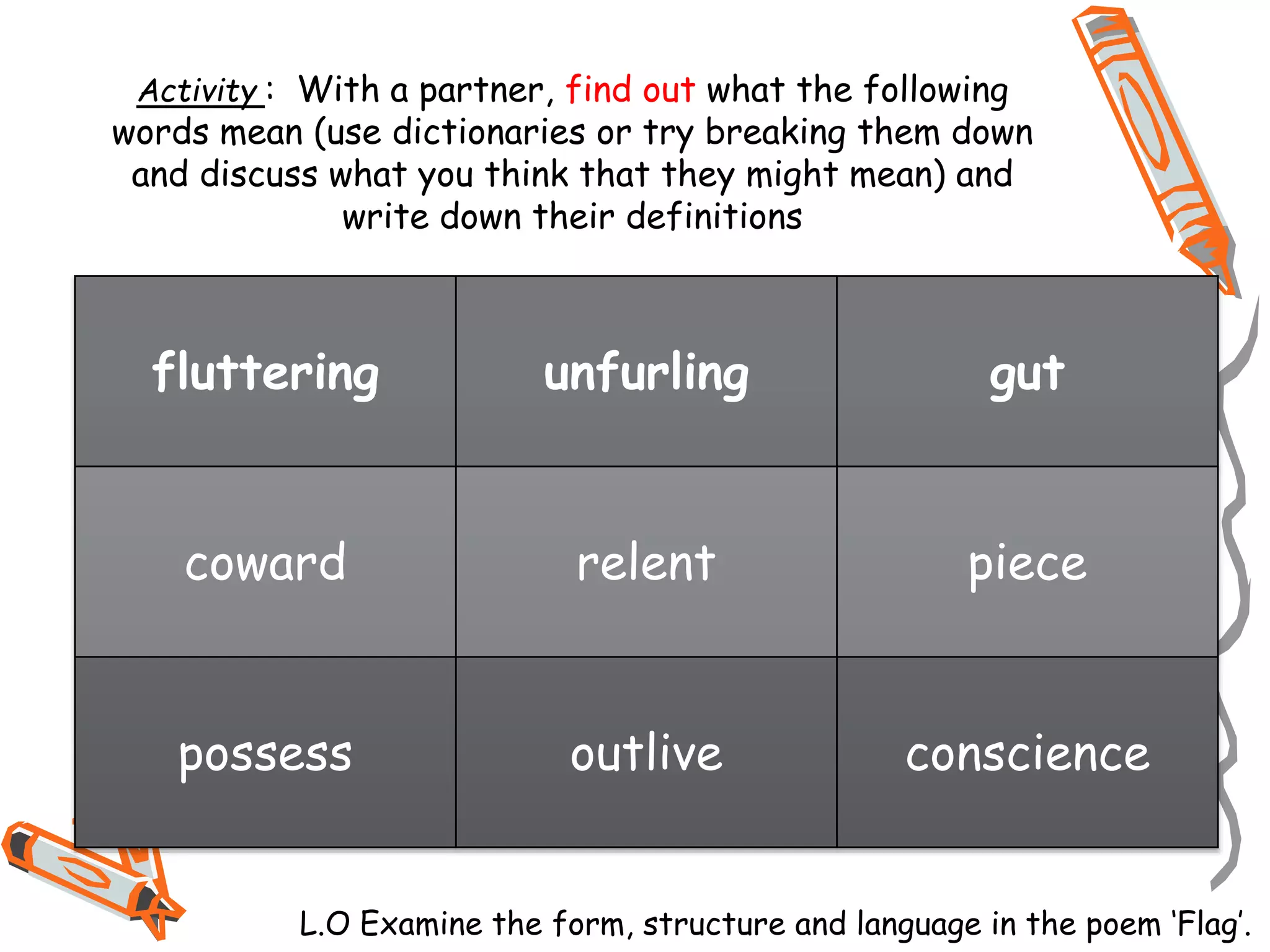
Activity : With a partner, find out what the following
words mean (use dictionaries or try breaking them down
and discuss what you think that they might mean) and
write down their definitions
fluttering unfurling gut
coward relent piece
possess outlive conscience
L.O Examine the form, structure and language in the poem ‘Flag’.
What is the poem about?
• The poem is about the power of a
national flag.
• This is shown through a conversation
between two characters.
• One character asks questions about the
flag.
• The other character explains that the
flag has the power to make people fight
wars and die.
L.O Examine the form, structure and language in the poem ‘Flag’.
What’s that fluttering in a breeze?
It’s just a piece of cloth
that brings a nation to its knees.
Each stanza start with a question about a flag.
a breeze- this flag could be anywhere- this shows
how powerful it is.
Out of respect? Or out of
weakness? This can symbolise
both.
What’s that unfurling from a pole?
It’s just a piece of cloth
that makes the guts of men grow
bold.
This line is
repeated
throughout.
To show
that a flag
should not
have so
much
power.
Double meaning
1) Bravery
2)Battlefield injuries
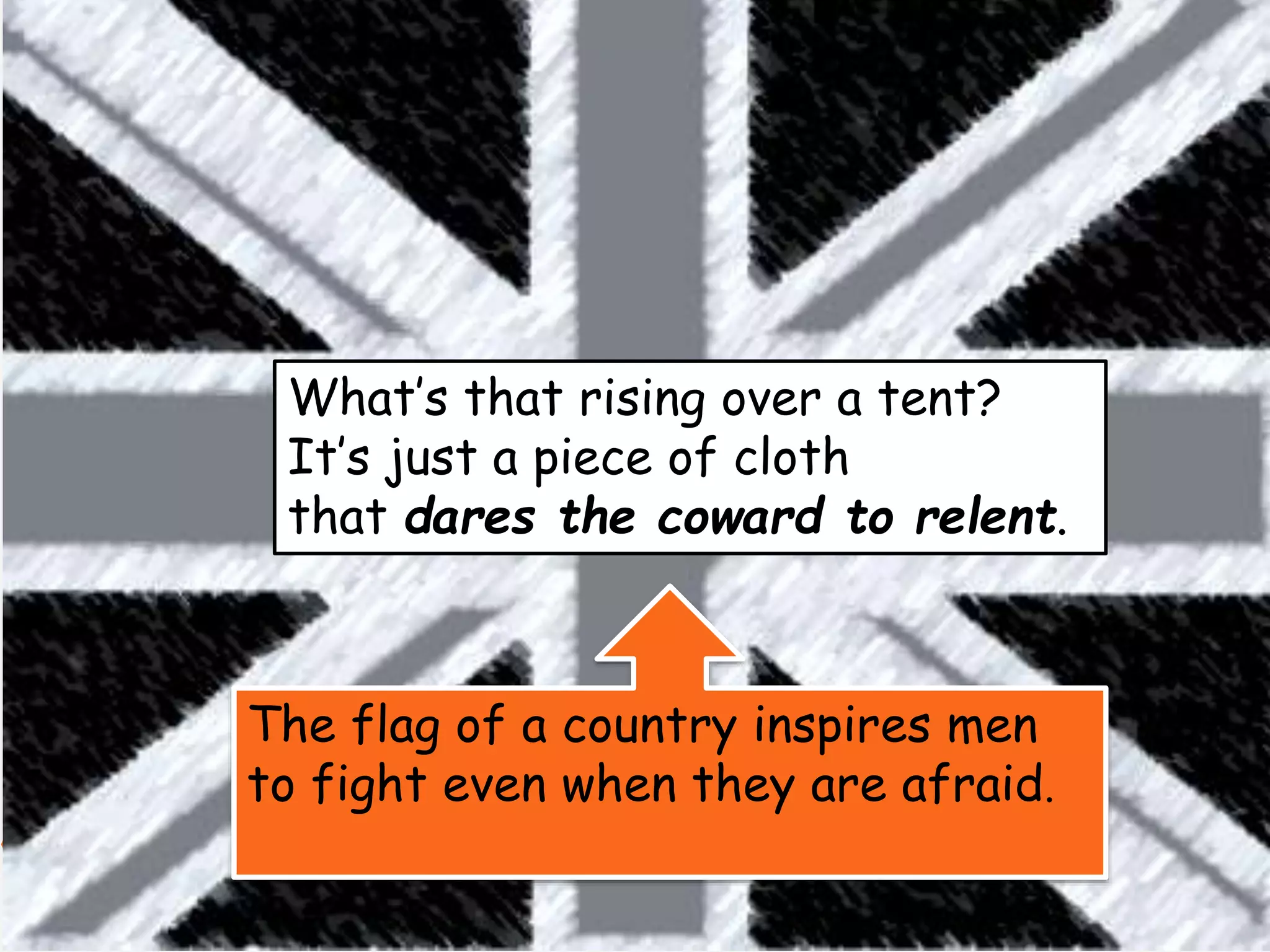
What’s that rising over a tent?
It’s just a piece of cloth
that dares the coward to relent.
The flag of a country inspires men
to fight even when they are afraid.
What’s that flying across a field?
It’s just a piece of cloth
that will outlive the blood you
bleed.
Enjambment (the sentence running onto
the next line) puts the focus on the
cloth
Personification- the flag
doesn’t care how many
lives are lost for it.
Alliteration-
violence and war.
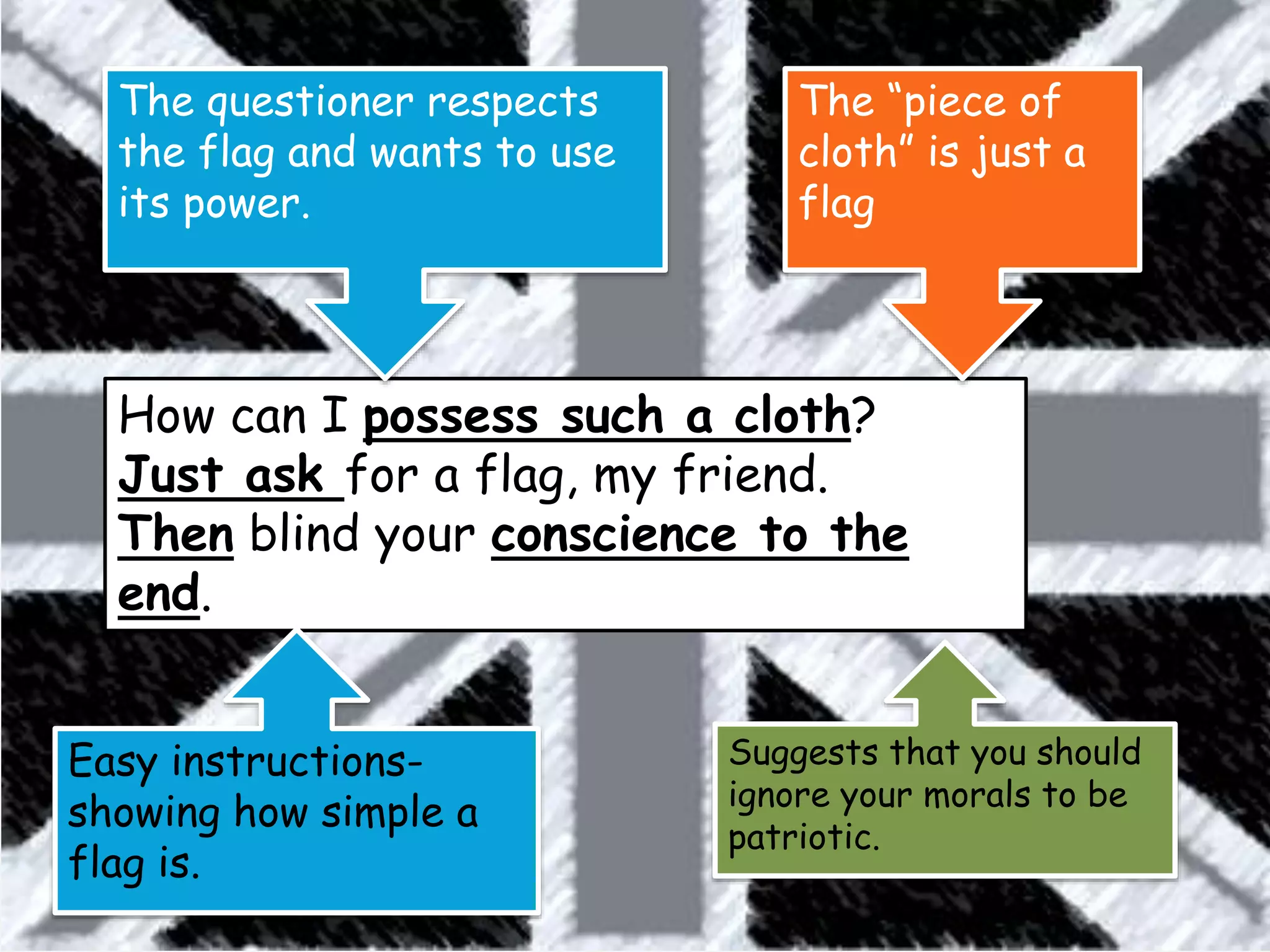
How can I possess such a cloth?
Just ask for a flag, my friend.
Then blind your conscience to the
end.
The questioner respects
the flag and wants to use
its power.
Easy instructions-
showing how simple a
flag is.
Suggests that you should
ignore your morals to be
patriotic.
The “piece of
cloth” is just a
flag
Important Terms:
Patriotism: (Noun) If you are a patriot you are
a proud supporter or defender of his or her
country and its way of life.
Nationalism: (Noun) The desire to achieve
political independence, especially by a country
under foreign control or by a people with a
separate identity and culture but no state of
their own.
L.O Examine the form, structure and language in the poem ‘Flag’.
Homework
• Find a news article that
discusses/examines
nationalism/patriotism.
• Due in Tuesday 5th
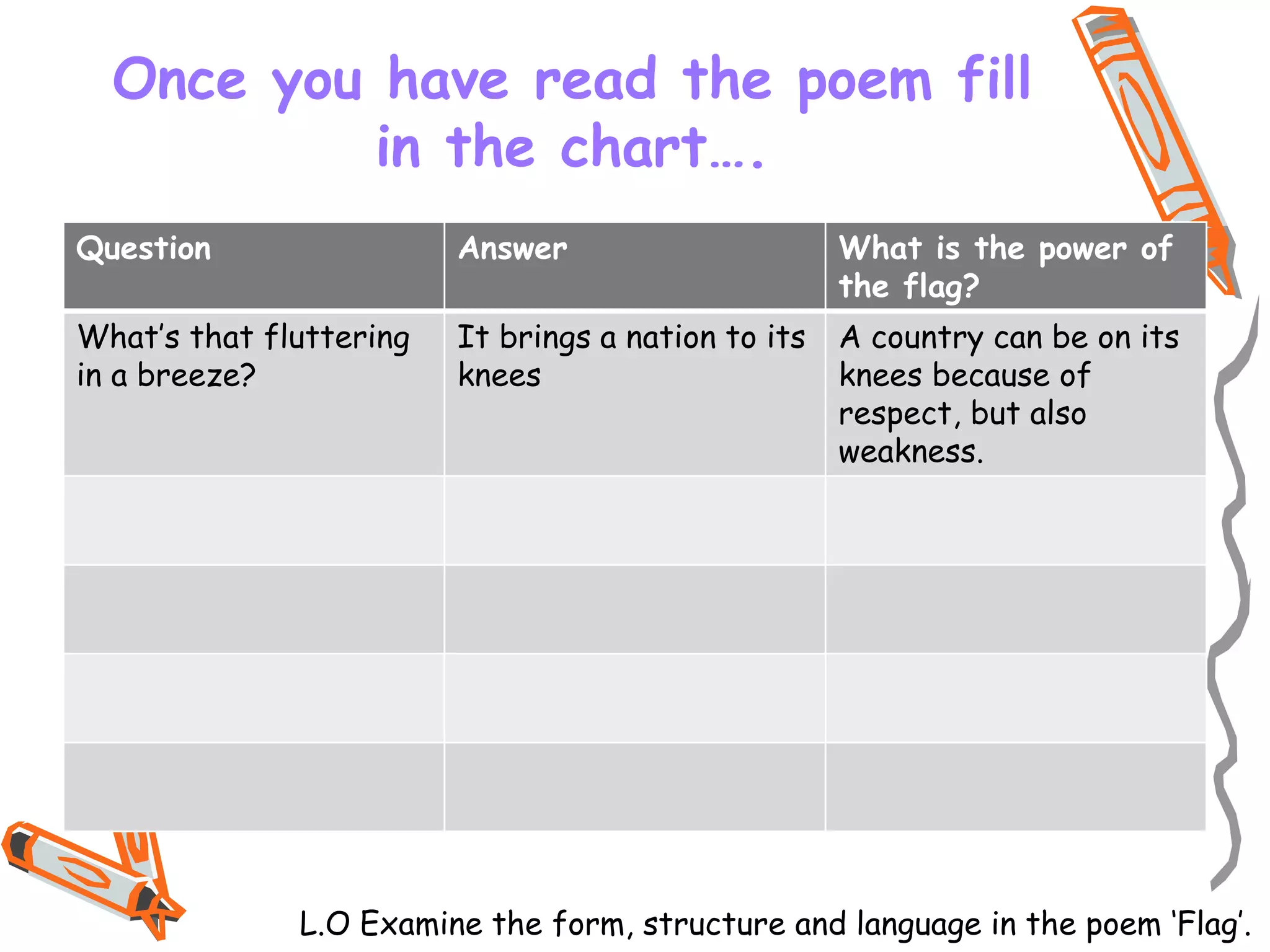
Once you have read the poem fill
in the chart….
Question Answer What is the power of
the flag?
What’s that fluttering
in a breeze?
It brings a nation to its
knees
A country can be on its
knees because of
respect, but also
weakness.
L.O Examine the form, structure and language in the poem ‘Flag’.
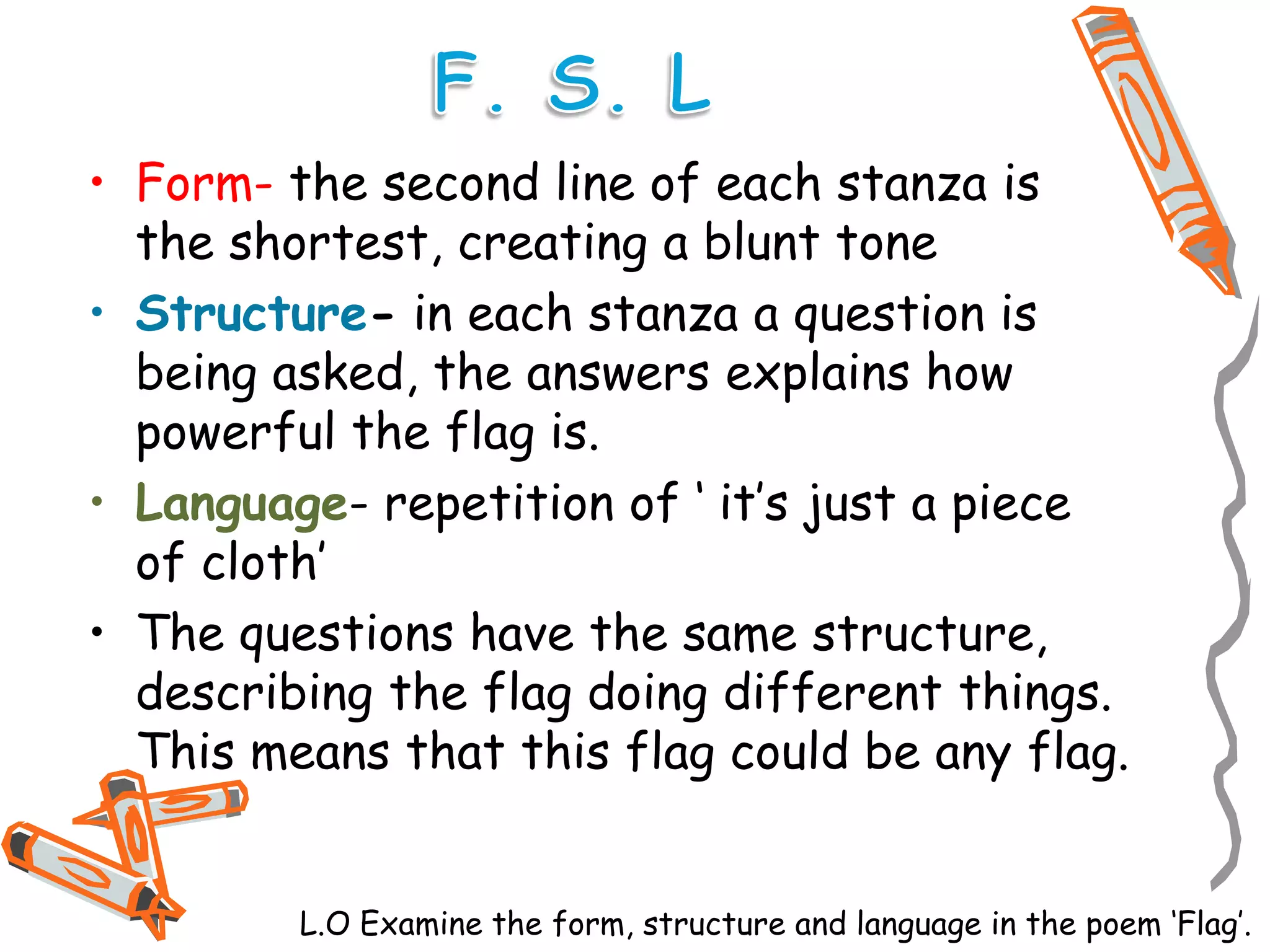
• Form- the second line of each stanza is
the shortest, creating a blunt tone
• Structure- in each stanza a question is
being asked, the answers explains how
powerful the flag is.
• Language- repetition of ‘ it’s just a piece
of cloth’
• The questions have the same structure,
describing the flag doing different things.
This means that this flag could be any flag.
L.O Examine the form, structure and language in the poem ‘Flag’.
Watch the following clip
about this poem
Write five sentences about
what you have learnt from
the video clip.
L.O Examine the form, structure and language in the poem ‘Flag’.
Consolidate what you have learnt by
answering the following questions.
• What power does a flag have? List
and explain the different types.
• Why do you think the questioner
wants to know how they can “possess
such a cloth”?
• Do you agree with the poets thoughts
on the power of a flag? Explain you
reasons.
Extension activity
• Create a mind-map of this poem

Flag

  • 1.
    Starter Conflict: What doI already know? Conflict Civilians Terrorism
  • 2.
    Examine the form, structureand language in the poem ‘Flag’.
  • 3.
    • All willanalyse the structure of the poem. • Most will be able to discuss the structure with confidence. • Some will start to comment on the effect the structure has on the reader.
  • 4.
    Conflict- Causes 1. Whendifferent people, groups or countries disagree with each other 2. This can lead to fear and violence 3. This can also lead to war. 4. Reasons could be political and religious reasons. L.O Examine the form, structure and language in the poem ‘Flag’.
  • 5.
    Conflict- Effects • Conflictcan kill and injure soldiers and civilians. • People can be mentally scarred by their experiences. • People who are not directly involved can be affected for example L.O Examine the form, structure and language in the poem ‘Flag’.
  • 6.
    Activity : Witha partner, find out what the following words mean (use dictionaries or try breaking them down and discuss what you think that they might mean) and write down their definitions fluttering unfurling gut coward relent piece possess outlive conscience L.O Examine the form, structure and language in the poem ‘Flag’.
  • 7.
    What is thepoem about? • The poem is about the power of a national flag. • This is shown through a conversation between two characters. • One character asks questions about the flag. • The other character explains that the flag has the power to make people fight wars and die. L.O Examine the form, structure and language in the poem ‘Flag’.
  • 8.
    What’s that flutteringin a breeze? It’s just a piece of cloth that brings a nation to its knees. Each stanza start with a question about a flag. a breeze- this flag could be anywhere- this shows how powerful it is. Out of respect? Or out of weakness? This can symbolise both.
  • 9.
    What’s that unfurlingfrom a pole? It’s just a piece of cloth that makes the guts of men grow bold. This line is repeated throughout. To show that a flag should not have so much power. Double meaning 1) Bravery 2)Battlefield injuries
  • 10.
    What’s that risingover a tent? It’s just a piece of cloth that dares the coward to relent. The flag of a country inspires men to fight even when they are afraid.
  • 11.
    What’s that flyingacross a field? It’s just a piece of cloth that will outlive the blood you bleed. Enjambment (the sentence running onto the next line) puts the focus on the cloth Personification- the flag doesn’t care how many lives are lost for it. Alliteration- violence and war.
  • 12.
    How can Ipossess such a cloth? Just ask for a flag, my friend. Then blind your conscience to the end. The questioner respects the flag and wants to use its power. Easy instructions- showing how simple a flag is. Suggests that you should ignore your morals to be patriotic. The “piece of cloth” is just a flag
  • 13.
    Important Terms: Patriotism: (Noun)If you are a patriot you are a proud supporter or defender of his or her country and its way of life. Nationalism: (Noun) The desire to achieve political independence, especially by a country under foreign control or by a people with a separate identity and culture but no state of their own. L.O Examine the form, structure and language in the poem ‘Flag’.
  • 14.
    Homework • Find anews article that discusses/examines nationalism/patriotism. • Due in Tuesday 5th
  • 15.
    Once you haveread the poem fill in the chart…. Question Answer What is the power of the flag? What’s that fluttering in a breeze? It brings a nation to its knees A country can be on its knees because of respect, but also weakness. L.O Examine the form, structure and language in the poem ‘Flag’.
  • 16.
    • Form- thesecond line of each stanza is the shortest, creating a blunt tone • Structure- in each stanza a question is being asked, the answers explains how powerful the flag is. • Language- repetition of ‘ it’s just a piece of cloth’ • The questions have the same structure, describing the flag doing different things. This means that this flag could be any flag. L.O Examine the form, structure and language in the poem ‘Flag’.
  • 17.
    Watch the followingclip about this poem Write five sentences about what you have learnt from the video clip. L.O Examine the form, structure and language in the poem ‘Flag’.
  • 18.
    Consolidate what youhave learnt by answering the following questions. • What power does a flag have? List and explain the different types. • Why do you think the questioner wants to know how they can “possess such a cloth”? • Do you agree with the poets thoughts on the power of a flag? Explain you reasons.
  • 19.
    Extension activity • Createa mind-map of this poem