ARTWORK
Mat Merchlewitz
U.S. Fish and Wildlife Service
Division of Wildlife and Refuges
Regional Sign Center
Winona, Minnesota
TEXT DESIGN
Susan Merrifield, Fishery Biologist
U.S. Fish and Wildlife Service
Division of Fisheries and Federal Aid
Gulf Coast Fisheries Coordination Office
Ocean Springs, Mississippi
GRAPHIC DESIGN
Barbara Orisich
U.S. Fish and Wildlife Service
Division of Wildlife and Refuges
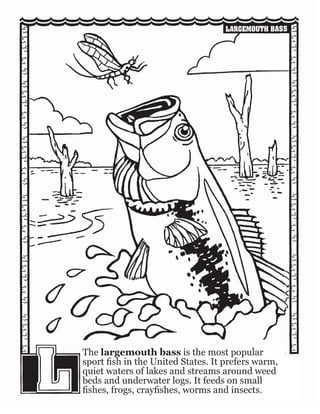
Public Use Branch
Atlanta, Georgia
REVISIONS
U.S. Fish and Wildlife Service
Fish and Aquatic Conservation
Headquarters: MS-FAC
5275 Leesburg Pike
Falls Church, VA 22041-3803
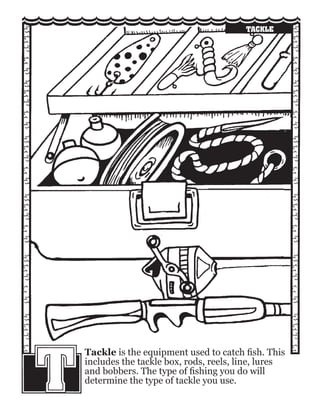
DEDICATION
This new edition of the Fishing ABC’s Coloring Book is dedicated to Susan (Faw
Faw) Blair (1957-2014), who conceived the idea for the coloring book itself, as
well as the pictures, and wrote the original text while working for the Fish and
Aquatic Conservation (FAC) Program in Ocean Springs, Mississippi.
2015—Text Revised
1994—U.S. Fish and Wildlife Service
Department of the Interior
This coloring book was developed with the assistance of a number of
U.S. Fish and Wildlife Service employees whom we thank. Text and design
assistance for the first edition came from Dr. Alexander V. Zale and
Mr. Douglas J. Frugé.
ACKNOWLEDGEMENTS
The aquatic environment is home to animals that
live in water and on land. Some of these include fish,
frogs and herons. Water is essential to all life.
The bluegill is fun to catch! It is a valuable fish
because it is an important source of food for
other fish. It lives in shallow, quiet waters near
weed beds. Bluegills build nests where they
deposit their eggs.
The channel catfish is highly rated by many
anglers because it has a strong bite and is very
good to eat. It can be found in all kinds of
freshwater habitats. Catfish feed mostly at night

on insects and other fish. Whiskers on the upper

and lower jaw help catfish find food in the dark.
Dragonflies are aquatic insects that live in
marshes, lakes, creeks and rivers. They are
eaten by fish, both as nymphs (young dragon­
flies), which live underwater, and as adults,
which spend most of their time in the air.
Eels are long and skinny with a continuous fin

on the upper and lower part of their bodies. The
young eels are leaf-like in shape and are called

larvae. Most eels live in fresh water but lay their

eggs in the ocean.
Fishing can be enjoyed alone or shared with
family and friends, regardless of age. Some
anglers enjoy just being outdoors and combine
fishing with boating and camping. Fishing is fun,
relaxing and can provide tasty meals.
Gar are long, thin fish. They have sharp teeth
and a long snout. Their bodies are covered with
hard scales and they live in clear, slow-moving
waters where they feed on small fish.
A hatchery improves fishing by raising and
releasing fish for streams, rivers and lakes.
Hatcheries also raise plants, toads, mussels and
salamanders that are in danger of disappearing
forever.
Ice fishing is fun in the winter when the ice is
thick enough to hold you up. Most ice fishing

is done on large lakes in the northern states.
A juvenile fish looks like an adult fish, but is
not yet mature enough to reproduce. Juvenile
fish need clean water and good habitat to grow
into adults big enough to catch.
The king salmon (also known as Chinook)
is the largest of the Pacific salmons. Adults
return from the sea and move into freshwater
streams to reproduce. They are highly valued
by Alaska Natives and many others!
The largemouth bass is the most popular
sport fish in the United States. It prefers warm,

quiet waters of lakes and streams around weed
beds and underwater logs. It feeds on small
fishes, frogs, crayfishes, worms and insects.
Management of fish populations, their
habitats and creel limits (the number of fish
allowed per day) means improved fishing for all!
The northern pike has a tremendous fighting
spirit. It eats almost anything that swims (frogs,
crayfish and insects). It can usually be found in
shallow waters of lakes, rivers and streams.
Over-fishing results when too many fish are
removed from a body of water. Limits may be
needed on how many fish of certain species you
can keep.
Pollution can be a problem in our aquatic
environment. It threatens the health and safety

of both animals and people. Pollution-free
waters are essential for high quality
recreational fishing.
The quality of fishing may be maintained with
creel limits (the number of fish allowed per
day) or size limits. Size limits allow fish to
grow larger and reach maturity.
Research by state and federal biologists
provides answers to problems facing anglers and
fisheries managers. Research projects can tell us
the condition of the fish and give us information
to help improve our fisheries.
flotation device
	
life jacket
Safety comes first! Fishing and boating can be
fun, but remember to take along these important
items for your safety!
Tackle is the equipment used to catch fish. This
includes the tackle box, rods, reels, line, lures
and bobbers. The type of fishing you do will
determine the type of tackle you use.
The mission of the United States (U.S.) Fish
and Wildlife Service is working with others to
conserve, protect and enhance fish, wildlife,

plants and their habitats for the continuing
benefit of the American people.
Vegetation (plant life) that grows in the
aquatic environment provides food and cover
for animals that live in or near the water. It
provides a place for fish to lay eggs.
The walleye is a popular game fish in large
lakes and rivers. They feed mostly at night on
fish, insects, crayfish and snails. They are
considered to be one of the best fish to eat.
X marks the spot! A map of a river or lake
can provide useful information to the angler on
good fishing spots. The location of rocks,
boulders and the main stream channel are
important things to know for successful fishing.
Yellow perch usually swim in schools (groups
of fishes) in both deep and shallow water of lakes,
rivers, streams and ponds, giving anglers a good
chance to catch their limit.
Zones are layers in a lake, stream or river that

can separate different fish habitats. Some fish

live in the shallow water zone (bluegill), some
fish can be found in the open water zone
(walleye) and others live in the deepwater
zone (catfish).
The Fish and Aquatic Conservation program works with
our partners and engages the public, using a science-based
approach, to conserve, restore and enhance fish and other
aquatic resources for the continuing benefit of the American
people.
www.fws.gov
1/800-344 WILD
October 2015
Item: FW 3001

Fishing ABC's Coloring Book

  • 3.
    ARTWORK Mat Merchlewitz U.S. Fishand Wildlife Service Division of Wildlife and Refuges Regional Sign Center Winona, Minnesota TEXT DESIGN Susan Merrifield, Fishery Biologist U.S. Fish and Wildlife Service Division of Fisheries and Federal Aid Gulf Coast Fisheries Coordination Office Ocean Springs, Mississippi GRAPHIC DESIGN Barbara Orisich U.S. Fish and Wildlife Service Division of Wildlife and Refuges Public Use Branch Atlanta, Georgia REVISIONS U.S. Fish and Wildlife Service Fish and Aquatic Conservation Headquarters: MS-FAC 5275 Leesburg Pike Falls Church, VA 22041-3803 DEDICATION This new edition of the Fishing ABC’s Coloring Book is dedicated to Susan (Faw Faw) Blair (1957-2014), who conceived the idea for the coloring book itself, as well as the pictures, and wrote the original text while working for the Fish and Aquatic Conservation (FAC) Program in Ocean Springs, Mississippi. 2015—Text Revised 1994—U.S. Fish and Wildlife Service Department of the Interior
  • 4.
    This coloring bookwas developed with the assistance of a number of U.S. Fish and Wildlife Service employees whom we thank. Text and design assistance for the first edition came from Dr. Alexander V. Zale and Mr. Douglas J. Frugé. ACKNOWLEDGEMENTS
  • 5.
    The aquatic environmentis home to animals that live in water and on land. Some of these include fish, frogs and herons. Water is essential to all life.
  • 6.
    The bluegill isfun to catch! It is a valuable fish because it is an important source of food for other fish. It lives in shallow, quiet waters near weed beds. Bluegills build nests where they deposit their eggs.
  • 7.
    The channel catfishis highly rated by many anglers because it has a strong bite and is very good to eat. It can be found in all kinds of freshwater habitats. Catfish feed mostly at night on insects and other fish. Whiskers on the upper and lower jaw help catfish find food in the dark.
  • 8.
    Dragonflies are aquaticinsects that live in marshes, lakes, creeks and rivers. They are eaten by fish, both as nymphs (young dragon­ flies), which live underwater, and as adults, which spend most of their time in the air.
  • 9.
    Eels are longand skinny with a continuous fin on the upper and lower part of their bodies. The young eels are leaf-like in shape and are called larvae. Most eels live in fresh water but lay their eggs in the ocean.
  • 10.
    Fishing can beenjoyed alone or shared with family and friends, regardless of age. Some anglers enjoy just being outdoors and combine fishing with boating and camping. Fishing is fun, relaxing and can provide tasty meals.
  • 11.
    Gar are long,thin fish. They have sharp teeth and a long snout. Their bodies are covered with hard scales and they live in clear, slow-moving waters where they feed on small fish.
  • 12.
    A hatchery improvesfishing by raising and releasing fish for streams, rivers and lakes. Hatcheries also raise plants, toads, mussels and salamanders that are in danger of disappearing forever.
  • 13.
    Ice fishing isfun in the winter when the ice is thick enough to hold you up. Most ice fishing is done on large lakes in the northern states.
  • 14.
    A juvenile fishlooks like an adult fish, but is not yet mature enough to reproduce. Juvenile fish need clean water and good habitat to grow into adults big enough to catch.
  • 15.
    The king salmon(also known as Chinook) is the largest of the Pacific salmons. Adults return from the sea and move into freshwater streams to reproduce. They are highly valued by Alaska Natives and many others!
  • 16.
    The largemouth bassis the most popular sport fish in the United States. It prefers warm, quiet waters of lakes and streams around weed beds and underwater logs. It feeds on small fishes, frogs, crayfishes, worms and insects.
  • 17.
    Management of fishpopulations, their habitats and creel limits (the number of fish allowed per day) means improved fishing for all!
  • 18.
    The northern pikehas a tremendous fighting spirit. It eats almost anything that swims (frogs, crayfish and insects). It can usually be found in shallow waters of lakes, rivers and streams.
  • 19.
    Over-fishing results whentoo many fish are removed from a body of water. Limits may be needed on how many fish of certain species you can keep.
  • 20.
    Pollution can bea problem in our aquatic environment. It threatens the health and safety of both animals and people. Pollution-free waters are essential for high quality recreational fishing.
  • 21.
    The quality offishing may be maintained with creel limits (the number of fish allowed per day) or size limits. Size limits allow fish to grow larger and reach maturity.
  • 22.
    Research by stateand federal biologists provides answers to problems facing anglers and fisheries managers. Research projects can tell us the condition of the fish and give us information to help improve our fisheries.
  • 23.
    flotation device life jacket Safetycomes first! Fishing and boating can be fun, but remember to take along these important items for your safety!
  • 24.
    Tackle is theequipment used to catch fish. This includes the tackle box, rods, reels, line, lures and bobbers. The type of fishing you do will determine the type of tackle you use.
  • 25.
    The mission ofthe United States (U.S.) Fish and Wildlife Service is working with others to conserve, protect and enhance fish, wildlife, plants and their habitats for the continuing benefit of the American people.
  • 26.
    Vegetation (plant life)that grows in the aquatic environment provides food and cover for animals that live in or near the water. It provides a place for fish to lay eggs.
  • 27.
    The walleye isa popular game fish in large lakes and rivers. They feed mostly at night on fish, insects, crayfish and snails. They are considered to be one of the best fish to eat.
  • 28.
    X marks thespot! A map of a river or lake can provide useful information to the angler on good fishing spots. The location of rocks, boulders and the main stream channel are important things to know for successful fishing.
  • 29.
    Yellow perch usuallyswim in schools (groups of fishes) in both deep and shallow water of lakes, rivers, streams and ponds, giving anglers a good chance to catch their limit.
  • 30.
    Zones are layersin a lake, stream or river that can separate different fish habitats. Some fish live in the shallow water zone (bluegill), some fish can be found in the open water zone (walleye) and others live in the deepwater zone (catfish).
  • 32.
    The Fish andAquatic Conservation program works with our partners and engages the public, using a science-based approach, to conserve, restore and enhance fish and other aquatic resources for the continuing benefit of the American people. www.fws.gov 1/800-344 WILD October 2015 Item: FW 3001