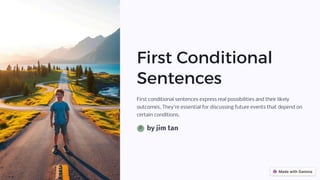
First Conditional
Sentences
First conditional sentences express real possibilities and their likely
outcomes. They're essential for discussing future events that depend on
certain conditions.
by jim tan
JT
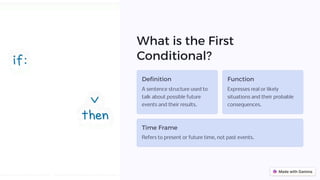
What is the First
Conditional?
Definition
A sentence structure used to
talk about possible future
events and their results.
Function
Expresses real or likely
situations and their probable
consequences.
Time Frame
Refers to present or future time, not past events.
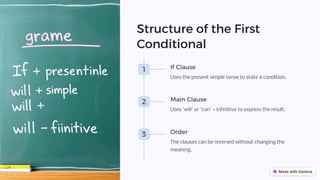
Structure of the First
Conditional
1 If Clause
Uses the present simple tense to state a condition.
2 Main Clause
Uses 'will' or 'can' + infinitive to express the result.
3 Order
The clauses can be reversed without changing the
meaning.
When to Use the First
Conditional
1 Real Possibilities
Use for situations that are
likely or possible to occur in
the future.
2 Cause and Effect
Express logical
consequences of potential
actions or events.
3 Future Plans
Discuss plans that depend on certain conditions being met.
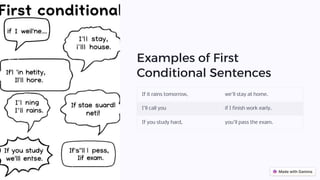
Examples of First
Conditional Sentences
If it rains tomorrow, we'll stay at home.
I'll call you if I finish work early.
If you study hard, you'll pass the exam.
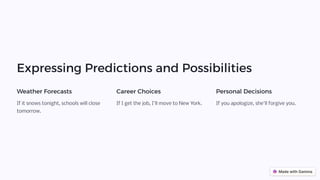
Expressing Predictions and Possibilities
Weather Forecasts
If it snows tonight, schools will close
tomorrow.
Career Choices
If I get the job, I'll move to New York.
Personal Decisions
If you apologize, she'll forgive you.
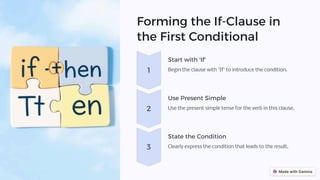
Forming the If-Clause in
the First Conditional
1
Start with 'If'
Begin the clause with 'If' to introduce the condition.
2
Use Present Simple
Use the present simple tense for the verb in this clause.
3
State the Condition
Clearly express the condition that leads to the result.
Forming the Main Clause in
the First Conditional
Use 'Will'
'Will' is the most common auxiliary verb for the main clause.
Alternative: 'Can'
'Can' may be used to express ability or possibility.
Add Infinitive
Follow 'will' or 'can' with the infinitive form of the main verb.
Common Mistakes to Avoid
with the First Conditional
1 Tense Confusion
Don't use 'will' in the if-
clause. Use present simple
instead.
2 Comma Omission
Always use a comma when
the if-clause comes first.
3 Modal Verb Misuse
Avoid using 'would' in place of 'will' in the main clause.
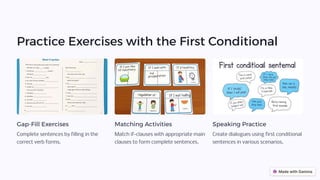
Practice Exercises with the First Conditional
Gap-Fill Exercises
Complete sentences by filling in the
correct verb forms.
Matching Activities
Match if-clauses with appropriate main
clauses to form complete sentences.
Speaking Practice
Create dialogues using first conditional
sentences in various scenarios.

First-Conditional-Sentenceshigh school.pdf

  • 1.
    First Conditional Sentences First conditionalsentences express real possibilities and their likely outcomes. They're essential for discussing future events that depend on certain conditions. by jim tan JT
  • 2.
    What is theFirst Conditional? Definition A sentence structure used to talk about possible future events and their results. Function Expresses real or likely situations and their probable consequences. Time Frame Refers to present or future time, not past events.
  • 3.
    Structure of theFirst Conditional 1 If Clause Uses the present simple tense to state a condition. 2 Main Clause Uses 'will' or 'can' + infinitive to express the result. 3 Order The clauses can be reversed without changing the meaning.
  • 4.
    When to Usethe First Conditional 1 Real Possibilities Use for situations that are likely or possible to occur in the future. 2 Cause and Effect Express logical consequences of potential actions or events. 3 Future Plans Discuss plans that depend on certain conditions being met.
  • 5.
    Examples of First ConditionalSentences If it rains tomorrow, we'll stay at home. I'll call you if I finish work early. If you study hard, you'll pass the exam.
  • 6.
    Expressing Predictions andPossibilities Weather Forecasts If it snows tonight, schools will close tomorrow. Career Choices If I get the job, I'll move to New York. Personal Decisions If you apologize, she'll forgive you.
  • 7.
    Forming the If-Clausein the First Conditional 1 Start with 'If' Begin the clause with 'If' to introduce the condition. 2 Use Present Simple Use the present simple tense for the verb in this clause. 3 State the Condition Clearly express the condition that leads to the result.
  • 8.
    Forming the MainClause in the First Conditional Use 'Will' 'Will' is the most common auxiliary verb for the main clause. Alternative: 'Can' 'Can' may be used to express ability or possibility. Add Infinitive Follow 'will' or 'can' with the infinitive form of the main verb.
  • 9.
    Common Mistakes toAvoid with the First Conditional 1 Tense Confusion Don't use 'will' in the if- clause. Use present simple instead. 2 Comma Omission Always use a comma when the if-clause comes first. 3 Modal Verb Misuse Avoid using 'would' in place of 'will' in the main clause.
  • 10.
    Practice Exercises withthe First Conditional Gap-Fill Exercises Complete sentences by filling in the correct verb forms. Matching Activities Match if-clauses with appropriate main clauses to form complete sentences. Speaking Practice Create dialogues using first conditional sentences in various scenarios.