The Sharing Economy
Mark Suster
@msuster
LeWeb London,
June 2013
What new can a VC really tell you?
1
After 2 days of the sharing economy
2
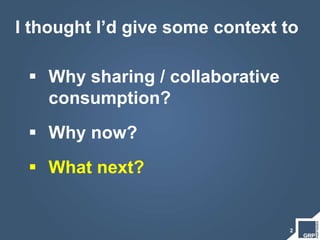
I thought I’d give some context to
 Why sharing / collaborative
consumption?
 Why now?
 What next?
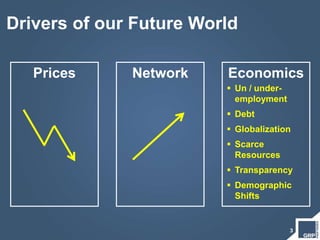
Prices
3
Network
Drivers of our Future World
Economics
 Un / under-
employment
 Debt
 Globalization
 Scarce
Resources
 Transparency
 Demographic
Shifts
1. Prices
4
5
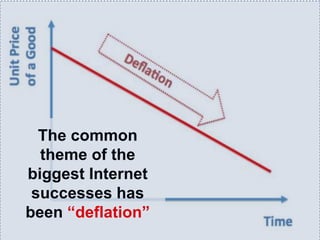
The common
theme of the
biggest Internet
successes has
been “deflation”
6
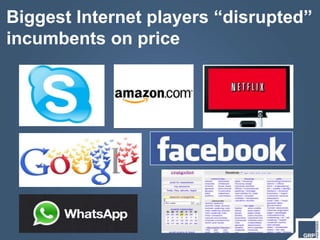
Biggest Internet players “disrupted”
incumbents on price
7
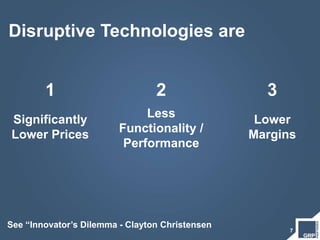
Disruptive Technologies are
2
Less
Functionality /
Performance
3
Lower
Margins
See “Innovator’s Dilemma - Clayton Christensen
1
Significantly
Lower Prices
8
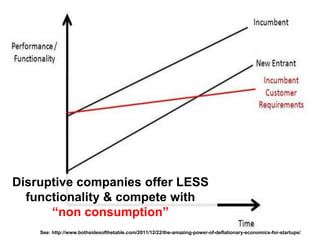
Disruptive companies offer LESS
functionality & compete with
“non consumption”
See: http://www.bothsidesofthetable.com/2011/12/22/the-amazing-power-of-deflationary-economics-for-startups/
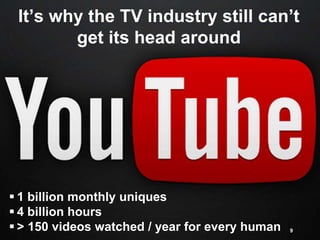
It’s why the TV industry still can’t
get its head around
9
 1 billion monthly uniques
 4 billion hours
 > 150 videos watched / year for every human
10
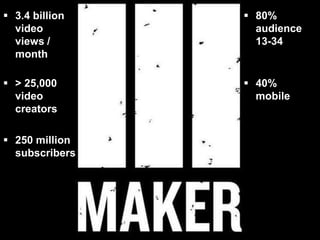
 3.4 billion
video
views /
month
 > 25,000
video
creators
 250 million
subscribers
 80%
audience
13-34
 40%
mobile
2. Network
11
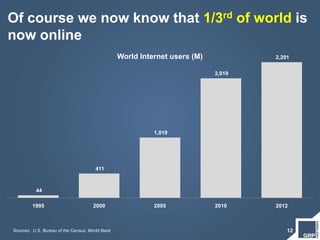
Of course we now know that 1/3rd of world is
now online

12Sources: U.S. Bureau of the Census, World Bank
44
411
1,019
2,019
2,291
1995 2000 2005 2010 2012
World Internet users (M)
13
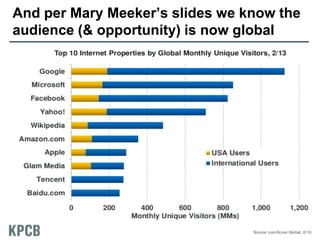
And per Mary Meeker’s slides we know the
audience (& opportunity) is now global
14
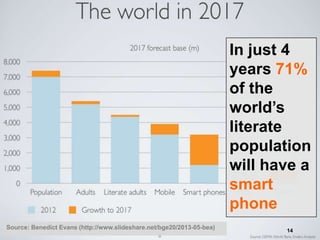
In just 4
years 71%
of the
world’s
literate
population
will have a
smart
phone

Source: Benedict Evans (http://www.slideshare.net/bge20/2013-05-bea)
15
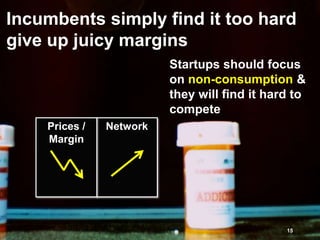
Incumbents simply find it too hard
give up juicy margins

NetworkPrices /
Margin
Startups should focus
on non-consumption &
they will find it hard to
compete
16
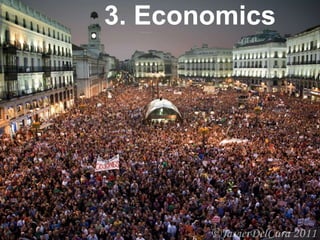
3. Economics
17
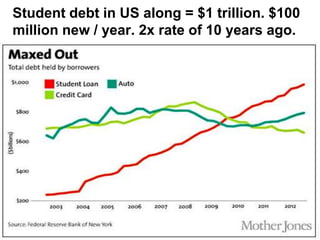
Student debt in US along = $1 trillion. $100
million new / year. 2x rate of 10 years ago.
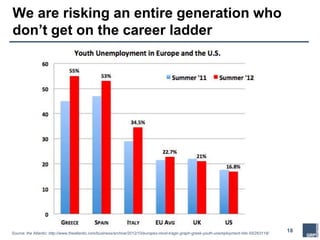
18Source: the Atlantic: http://www.theatlantic.com/business/archive/2012/10/europes-most-tragic-graph-greek-youth-unemployment-hits-55/263118/
We are risking an entire generation who
don’t get on the career ladder
19
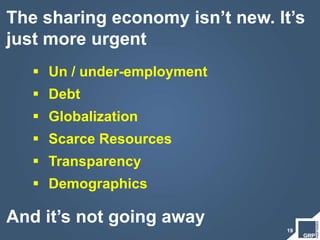
The sharing economy isn’t new. It’s
just more urgent
 Un / under-employment
 Debt
 Globalization
 Scarce Resources
 Transparency
 Demographics
And it’s not going away
20
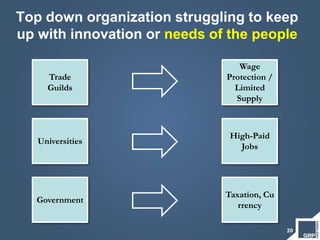
Trade
Guilds
Wage
Protection /
Limited
Supply
Top down organization struggling to keep
up with innovation or needs of the people
Universities
High-Paid
Jobs
Government
Taxation, Cu
rrency
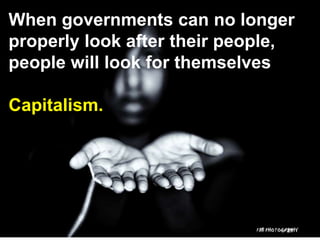
When governments can no longer
properly look after their people,
people will look for themselves
Capitalism.
21
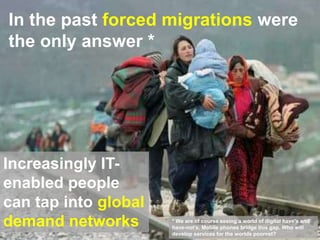
In the past forced migrations were
the only answer *
22
Increasingly IT-
enabled people
can tap into global
demand networks * We are of course seeing a world of digital have’s and
have-not’s. Mobile phones bridge this gap. Who will
develop services for the worlds poorest?
23
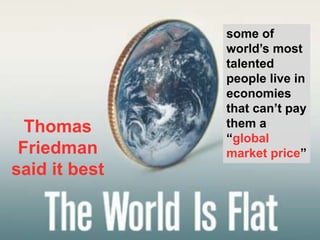
Thomas
Friedman
said it best
some of
world’s most
talented
people live in
economies
that can’t pay
them a
“global
market price”
The sharing economy will have new
“market-makers”
Will they all be benevolent in the
future?
Market forces, transparency & new
disruptions must keep them in check
24
25
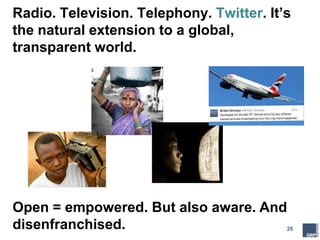
Radio. Television. Telephony. Twitter. It’s
the natural extension to a global,
transparent world.
Open = empowered. But also aware. And
disenfranchised.
Of course all of this open data can be mined
in real time. For business. And government.
For marketplaces this can help with trust,
authority, safety, marketing, & planning.
Note: I’m a proud investor in DataSift
27
1. THE ECONOMICS
OF “GLOBAL”
Comparatively richer countries want to tap
into enormous pool of intelligent resources
in countries with lower wages
28
Some of the world’s most talented film
maker’s can’t just relocate to Los Angeles
29
30
Artists
struggling to
earn a global
wage suddenly
find demand at
higher prices
 30 million
registered users
 65 million month
uniques
 2.5 billion
monthly page
views
31
2. EMPOWERING THE
UNDER-EMPLOYED
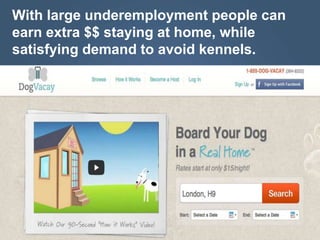
With large underemployment people can
earn extra $$ staying at home, while
satisfying demand to avoid kennels.
32
And this is true of many of the peer-to-peer
marketplaces.
33
34
3. MOVE FROM
HIERARCHIC TO
FLAT STRUCTURES
35
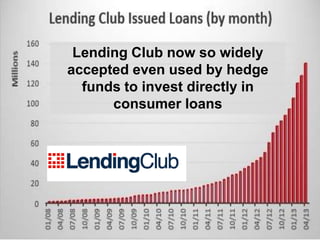
Lending Club now so widely
accepted even used by hedge
funds to invest directly in
consumer loans
36
And of course
startups can now
more easily tap
into pools of
angel investors
directly
37
3. REMOVING
PHYSICAL
BOUNDARIES
By removing physical boundaries you
create win-win opportunities for both
instructors & students
38
Example Industries:
 Education
 Music Lessons
 Personal Trainers
 Psychologists
39
4. EFFICIENCY GAINS
IN EXISTING
MARKETS
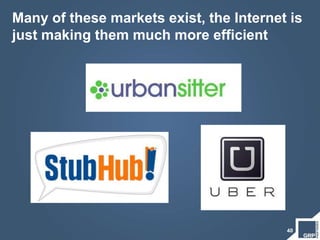
Many of these markets exist, the Internet is
just making them much more efficient
40
So What’s Next?
41
42
HELPING
BUSINESSES TAP
INTO PEER
NETWORKS
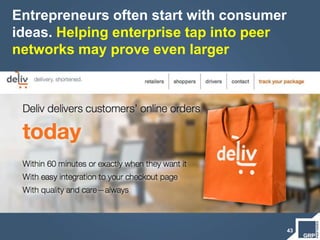
Entrepreneurs often start with consumer
ideas. Helping enterprise tap into peer
networks may prove even larger
43
44
Recap – in a world of economic
challenges & large networks … the
“sharing economy” will thrive.
Will you find your place in it?
The Sharing Economy
Thank you!
Mark Suster - @msuster
LeWeb, June 2013

Finalleweb londonjune2013-130609075343-phpapp02 (2)