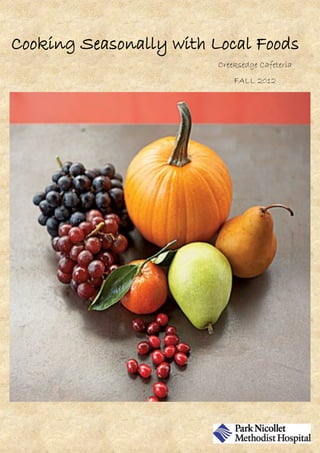
Cooking Seasonally with Local Foods
Creeksedge Cafeteria
FALL 2012
Fall Produce Guide
As the air in the upper Midwest turns cool and the trees blaze with color, it’s time to go to the local
farmer’s market or grocery store and fill up your basket to taste the harvest. This season’s crop of
fruits and vegetables offers an interesting range of intense flavors and textures. Local grocery
stores and farmers’ markets are full of apples, pears, mushrooms, sweet potatoes, winter squash,
and pumpkins. Here we’ll give you tips for a few of these favorite fall fruits and veggies.
APPLES
There are thousands of varieties of apples ranging from sweet to tart. Apples
are always available year-round, but they are best from September to
November. They are especially easy to get in Minnesota because over 20
varieties are currently grown in our state alone! One medium size apple is a
good source of fiber (about 5 grams) and only about 80 calories. To select,
look for firm, vibrant colored apples with no bruises. They should also smell
fresh, and skin should be tight and smooth looking.
MUSHROOMS
While most types of mushrooms are available year-round, many are at
their peak during the fall and winter months. Mushrooms contain many
nutrients such as potassium, copper, riboflavin, selenium, niacin, and
amino acids. They are also extremely low in sodium and calories and are
fat-free. To select, look for firm, evenly colored mushrooms. Avoid
choosing any that are broken, damaged, have soft spots, are damp, or smell
like mildew.
WINTER SQUASH
Winter squash are picked in the autumn and can be stored until spring.
Some of the most popular varieties are acorn, butternut, and spaghetti.
Winter squash can add color, texture and nutrition to stews, casseroles, and
soups. Squash can provide nearly 6 grams of fiber in one cup and is a
good source of potassium, vitamin c, folate, magnesium, iron, and calcium.
To select, the tastiest winter squashes will be solid and heavy with stems
that are full and firm. The skin of the squash should be deeply colored with
a matte finish.
Menu Selections—
Chicken Wild Rice Soup Roasted Vegetable Wrap
Look for some of these menu
features in the Creeksedge
Cafeteria this season.
Carved Turkey Breast
*Menu selections may vary based on
local availability.
Bacon and Butternut Squash Pasta
 5 cups (1/2 inch) cubed peeled butternut squash
 1 tablespoon olive oil
 Cooking spray
 12 ounces uncooked ziti (short tube-shaped pasta, campanile, or
other short pasta)
 4 cups chopped kale
 2 bacon slices
 2 cups vertically sliced red onion
 1 teaspoon salt
 5 garlic cloves
 2 cups fat-free, lower-sodium chicken broth, divided
 2 tablespoons all-purpose flour
 1/2 teaspoon crushed red pepper
 1 cup crème fraîche
 1/3 cup (about 1 1/2 ounces) shredded Gruyère cheese
Broth, thickened with flour and enriched with crème fraîche , forms the savory sauce in this lovely
fall dish. We love the earthiness of kale, which helps balance the sweetness from the squash. You
could also use Swiss chard, or for a more peppery bite, try substituting mustard greens.
INGREDIENTS
1. Preheat oven to 400°.
2. Combine squash and oil in a large bowl; toss well. Arrange squash mixture in a single layer on a baking
sheet coated with cooking spray. Bake at 400° for 30 minutes or until squash is tender.
3. Cook pasta 7 minutes or until almost al dente, omitting salt and fat. Add kale to pan during last 2
minutes of cooking. Drain pasta mixture.
4. Cook bacon in a large nonstick skillet over medium heat until crisp. Remove bacon from pan, crumble. Add
red onion to drippings in pan; cook 6 minutes stirring occasionally. Add 1/2 teaspoon salt and garlic; cook
1 minute, stirring occasionally.
5. Bring 1 3/4 cups broth to a boil in a small saucepan. Combine remaining 1/4 cup broth and flour in a
small bowl, stirring with a whisk. Add flour mixture, remaining 1/2 teaspoon salt, and pepper to broth. Cook
2 minutes or until slightly thickened.
6. Combine squash, pasta mixture, bacon, onion mixture, and sauce in a large bowl; toss gently. Place pasta
mixture in 13 x 9-inch glass or ceramic baking dish coated in cooking spray; sprinkle evenly with cheese.
Bake at 400° for 25 minutes or until slightly bubbly and slightly browned.
PREPARATION
NUTRITIONAL INFORMATION: Calories 388, Calories From Fat 200, Total Fat 15g (23%), Saturated Fat 8g (53%), Trans Fat 0g, Cholesterol 36 mg
(12%), Sodium 475mg (20%), Total Carbohydrate 51g (17%), Dietary Fiber 5g (20%), Sugars 0g, Protein 12g. Percent Daily Values (DV) are based
on a 2000 calorie diet. Your daily values might be higher or lower depending on your calorie needs.
Portion: 1 1/2 cups Yield: Serves 8
How to Properly Select and Serve
Raw Produce Safely
Fresh fruits and vegetables are an essential part of a healthy diet and local markets try to make it more accessible
by carrying numerous varieties of fresh produce. However, all produce, even those labeled organic, can contain
harmful bacteria which can lead to food poisoning. Practicing food safety isn’t just about washing hands and
cooking meat to its proper temperature. Harmful bacteria that may be in the soil or water where produce grows can
come in contact with fruits and vegetables and contaminate them. Fresh produce can also become contaminated
after it is harvested, during preparation or storage. As you enjoy the many types of fresh fruits and vegetables
local markets have to offer, follow some of these safe handling tips to help protect yourself and your family.
BUYING
 Buy produce in season as much as possible.
 Buy loose produce rather than packaged, you will have more control over
what you select.
 Do not purchase produce with any visible mold, bruises, or cuts.
 If you are not satisfied with the store’s selection, ask the produce manager if
there is any more product available.
 Buy only the amount of produce that you will use within a week.
STORING
 Immediately store perishable fresh fruits and vegetables (like strawberries,
lettuce, and mushrooms) in a clean refrigerator at a temperature of 40°F or
below. If you’re not sure whether an item should be refrigerated to maintain
its quality, ask your grocer.
 Refrigerate fresh produce within two hours of peeling or cutting.
 Discard cooked vegetables after three to four days.
PREPARING
 Wash all fresh fruits and vegetables with cool tap water before eating.
 Cut away any damaged or bruised areas before preparing or eating.
 Dry produce with a clean cloth or paper towel to further reduce bacteria that
may be present.
 Use two separate cutting boards to avoid cross-contamination, use one for raw
meats and the other for fruits and vegetables.

Final Brochure for Fall 2012

  • 1.
    Cooking Seasonally withLocal Foods Creeksedge Cafeteria FALL 2012
  • 2.
    Fall Produce Guide Asthe air in the upper Midwest turns cool and the trees blaze with color, it’s time to go to the local farmer’s market or grocery store and fill up your basket to taste the harvest. This season’s crop of fruits and vegetables offers an interesting range of intense flavors and textures. Local grocery stores and farmers’ markets are full of apples, pears, mushrooms, sweet potatoes, winter squash, and pumpkins. Here we’ll give you tips for a few of these favorite fall fruits and veggies. APPLES There are thousands of varieties of apples ranging from sweet to tart. Apples are always available year-round, but they are best from September to November. They are especially easy to get in Minnesota because over 20 varieties are currently grown in our state alone! One medium size apple is a good source of fiber (about 5 grams) and only about 80 calories. To select, look for firm, vibrant colored apples with no bruises. They should also smell fresh, and skin should be tight and smooth looking. MUSHROOMS While most types of mushrooms are available year-round, many are at their peak during the fall and winter months. Mushrooms contain many nutrients such as potassium, copper, riboflavin, selenium, niacin, and amino acids. They are also extremely low in sodium and calories and are fat-free. To select, look for firm, evenly colored mushrooms. Avoid choosing any that are broken, damaged, have soft spots, are damp, or smell like mildew. WINTER SQUASH Winter squash are picked in the autumn and can be stored until spring. Some of the most popular varieties are acorn, butternut, and spaghetti. Winter squash can add color, texture and nutrition to stews, casseroles, and soups. Squash can provide nearly 6 grams of fiber in one cup and is a good source of potassium, vitamin c, folate, magnesium, iron, and calcium. To select, the tastiest winter squashes will be solid and heavy with stems that are full and firm. The skin of the squash should be deeply colored with a matte finish. Menu Selections— Chicken Wild Rice Soup Roasted Vegetable Wrap Look for some of these menu features in the Creeksedge Cafeteria this season. Carved Turkey Breast *Menu selections may vary based on local availability.
  • 3.
    Bacon and ButternutSquash Pasta  5 cups (1/2 inch) cubed peeled butternut squash  1 tablespoon olive oil  Cooking spray  12 ounces uncooked ziti (short tube-shaped pasta, campanile, or other short pasta)  4 cups chopped kale  2 bacon slices  2 cups vertically sliced red onion  1 teaspoon salt  5 garlic cloves  2 cups fat-free, lower-sodium chicken broth, divided  2 tablespoons all-purpose flour  1/2 teaspoon crushed red pepper  1 cup crème fraîche  1/3 cup (about 1 1/2 ounces) shredded Gruyère cheese Broth, thickened with flour and enriched with crème fraîche , forms the savory sauce in this lovely fall dish. We love the earthiness of kale, which helps balance the sweetness from the squash. You could also use Swiss chard, or for a more peppery bite, try substituting mustard greens. INGREDIENTS 1. Preheat oven to 400°. 2. Combine squash and oil in a large bowl; toss well. Arrange squash mixture in a single layer on a baking sheet coated with cooking spray. Bake at 400° for 30 minutes or until squash is tender. 3. Cook pasta 7 minutes or until almost al dente, omitting salt and fat. Add kale to pan during last 2 minutes of cooking. Drain pasta mixture. 4. Cook bacon in a large nonstick skillet over medium heat until crisp. Remove bacon from pan, crumble. Add red onion to drippings in pan; cook 6 minutes stirring occasionally. Add 1/2 teaspoon salt and garlic; cook 1 minute, stirring occasionally. 5. Bring 1 3/4 cups broth to a boil in a small saucepan. Combine remaining 1/4 cup broth and flour in a small bowl, stirring with a whisk. Add flour mixture, remaining 1/2 teaspoon salt, and pepper to broth. Cook 2 minutes or until slightly thickened. 6. Combine squash, pasta mixture, bacon, onion mixture, and sauce in a large bowl; toss gently. Place pasta mixture in 13 x 9-inch glass or ceramic baking dish coated in cooking spray; sprinkle evenly with cheese. Bake at 400° for 25 minutes or until slightly bubbly and slightly browned. PREPARATION NUTRITIONAL INFORMATION: Calories 388, Calories From Fat 200, Total Fat 15g (23%), Saturated Fat 8g (53%), Trans Fat 0g, Cholesterol 36 mg (12%), Sodium 475mg (20%), Total Carbohydrate 51g (17%), Dietary Fiber 5g (20%), Sugars 0g, Protein 12g. Percent Daily Values (DV) are based on a 2000 calorie diet. Your daily values might be higher or lower depending on your calorie needs. Portion: 1 1/2 cups Yield: Serves 8
  • 4.
    How to ProperlySelect and Serve Raw Produce Safely Fresh fruits and vegetables are an essential part of a healthy diet and local markets try to make it more accessible by carrying numerous varieties of fresh produce. However, all produce, even those labeled organic, can contain harmful bacteria which can lead to food poisoning. Practicing food safety isn’t just about washing hands and cooking meat to its proper temperature. Harmful bacteria that may be in the soil or water where produce grows can come in contact with fruits and vegetables and contaminate them. Fresh produce can also become contaminated after it is harvested, during preparation or storage. As you enjoy the many types of fresh fruits and vegetables local markets have to offer, follow some of these safe handling tips to help protect yourself and your family. BUYING  Buy produce in season as much as possible.  Buy loose produce rather than packaged, you will have more control over what you select.  Do not purchase produce with any visible mold, bruises, or cuts.  If you are not satisfied with the store’s selection, ask the produce manager if there is any more product available.  Buy only the amount of produce that you will use within a week. STORING  Immediately store perishable fresh fruits and vegetables (like strawberries, lettuce, and mushrooms) in a clean refrigerator at a temperature of 40°F or below. If you’re not sure whether an item should be refrigerated to maintain its quality, ask your grocer.  Refrigerate fresh produce within two hours of peeling or cutting.  Discard cooked vegetables after three to four days. PREPARING  Wash all fresh fruits and vegetables with cool tap water before eating.  Cut away any damaged or bruised areas before preparing or eating.  Dry produce with a clean cloth or paper towel to further reduce bacteria that may be present.  Use two separate cutting boards to avoid cross-contamination, use one for raw meats and the other for fruits and vegetables.