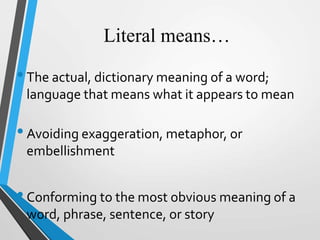
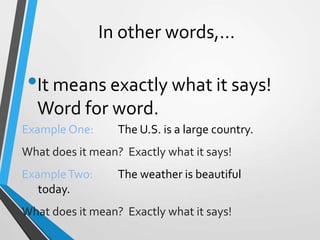
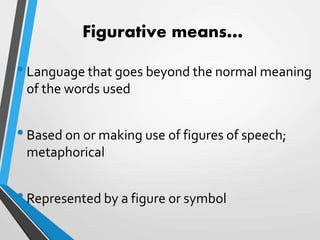
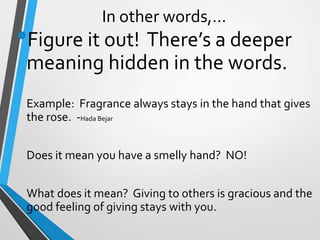
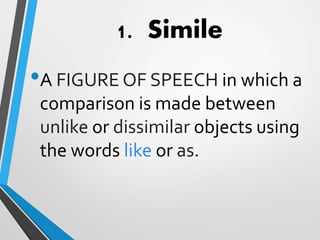
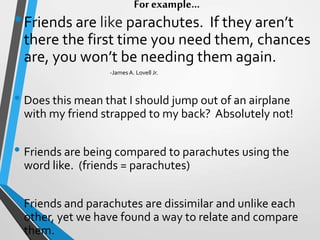
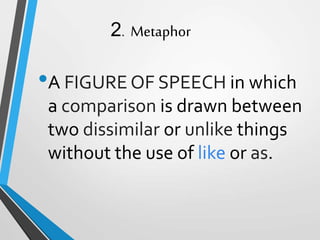
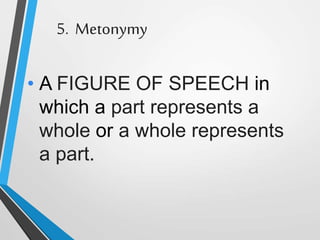
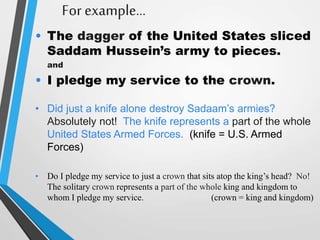
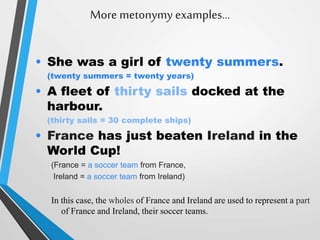
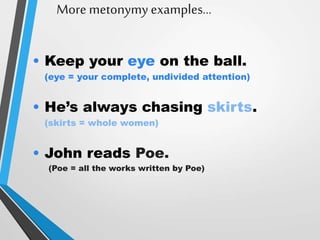
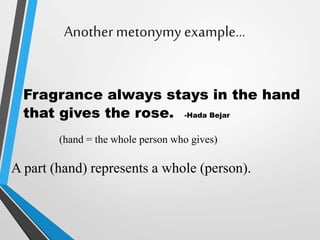
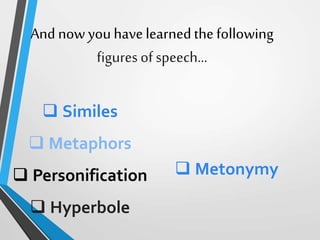
The document explains the difference between literal and figurative language. Literal language means exactly what is stated, while figurative language uses figures of speech to convey meaning beyond the normal definitions of words. Examples of common figures of speech are provided, including similes (comparing two unlike things using "like" or "as"), metaphors (comparisons without "like" or "as"), personification (giving human traits to non-human things), hyperbole (exaggeration to emphasize a point), and metonymy (a part representing the whole or vice versa). Specific examples for each figure of speech are analyzed to understand the deeper meaning being conveyed beyond the surface-level definition of words.