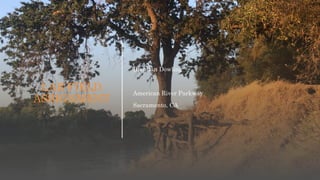
LAB FIELD
ASSIGNMENT
Brennan Dowling
American River Parkway
Sacramento, CA
GEOLOGICAL
BACKGROUN
D
After the Sierra Nevada formed about 140 million
years ago, the Sacramento-San Joaquin Valley began to form.
As the Sierra Nevada rose, a shallow see formed. When more
coastal ranges grew, this sea dried up. Erosion cause much of
the mountain rock to settle in the river beds and sandbars in
the valley.
The American River Parkway, is located where much
of this mountain sediment settled. The American River runs
through this protected area in Sacramento which hosts a rich
ecosystem.
AMERICAN RIVER PARKWAY
I enjoy going to the American River Parkway
both for its wildlife and its geological features. Given its
proximity to the American River, it has much of both.
Over the course of the quarter, I visited the American
River Parkway several times, photographing examples
of the living things that inhabit it, as well as some
interesting features and rocks.
EXAMPLE OF TIME CHANGE
#1
I found the skeleton of a snake. This may be a gopher
snake skeleton since they are abundant in this area.
The Pacific Gopher snake is a nonvenomous spotted
snake about five feet in length.
Gopher snakes are colubrids which date back to the
Oligocene. Snakes have grown abundant in North
America in the past 100 million years because of the
abundance of grasslands providing prey which can be
seen first hand at in the parkway.
The first snakes found in the fossil record are from the
Cretaceous period which most likely evolved from
lizards.
(Peters, 2019)
EXAMPLE OF TIME CHANGE
#2
I took this picture of this mule deer early in the year.
There are many deer here because of the bounty of
leaves, twigs, fruit, flowers, and other grasses which
deer eat. Female deer also like to burrow and hide,
which the many trees and varied terrain provide.
Mule deer belong to the order Artiodactyla. They are
even-toed ungulates, many of which, like deer have
adapted to grasslands both through camouflage and
speed.
(Geist, 2016)
EXAMPLE OF TIME
CHANGE #3
I TOOK A PICTURE OF A BANK FILLED
WITH BLACKBERRY BUSH WHICH IS
ABUNDANT IN THE PARKWAY. THE BUSH
PROVIDES SHELTER TO BUGS AND SMALL
ANIMALS.
THESE BUSHES BELONG TO THE ROSE
FAMILY OF FLOWERING PLANTS.
THE DEVELOPMENT OF THORNS KEEPS
PREDATORS AWAY AND ITS BERRIES ARE
AN EFFECTIVE MEANS OF SPREADING ITS
SEED.
(SYTSMA, 2016)
ROCK SAMPLE #1
I found this rock in a creek bed. It has small
lines in the sides, small grains, some rust
colored spots, and very smooth. This may be
a metamorphic marble rock since it is so
smooth. This rock may contain some quartz
since it has rust tint.
ROCK SAMPLE #3
This rock was also found in a dried
creek bed. It is moderately smooth,
medium-small grains, and has a
reddish color. The rock may contain
some quartz, given its color.
This may be a metamorphic rock
like schist, formed from sand and
smoothed from running water and
rubbing other rocks.
ROCK SAMPLE #3
I found this rock on a dry creek bed. It is
smooth on most of the sides but jagged where
it looks like it had broken off from the rest of
the rock.
The rock appears to be a metamorphic rock.
It has very small grains. Since it is dark and
very smooth, and hornfells are so abundant
in the area, this may be a hornfell.
STENO’S
PRINCIPLE OF
SUPERPOSITION
IN THE PICTURE, YOU CAN SEE AN
OLD ENGINE STICKING OUT OF THE
SEDIMENT. THIS IS TAKEN FROM
INSIDE A DRIED CREEK BED. THE
ENGINE MUST HAVE BEEN HERE
FOR A WHILE AND NEWER
SEDIMENT HAS LAYERED ON TOP.
WHILE STENO’S LAWS DO NOT
INCLUDE MAN-MADE OBJECTS, THIS
PICTURE STILL SHOWS RELATIVELY
YOUNGER SEDIMENT LAYER ON TOP
OF OLDER SEDIMENT CONFORMING
TO STENO’S PRINCIPLE OF
SUPERPOSITION.
DISCONFORMITY
BEGINNINGThe picture was taken from inside a
creek bed. The wall of the bed features
what appears to be a disconformity. The
higher stratified layer does not
smoothly fit the lower level. This could
be caused by the creek flowing. The
lower level sediment is removed by
water and replaced by younger
sediment which sets once the creek
dries.
WORKS CITED
Monroe, J. S., & Wicander, R. (2015). The changing earth: Exploring geology and
evolution. Stamford, CT: Cengage Learning.
Shakal, D. (n.d.). Early Geology of the Lower American River. The Acorn.
Raab, W., Phd. (n.d.). Life Cycle of a River Rock. The Acorn.
Peters, J. A., & Wallach, V. (2019, February 07). Snake. Retrieved from
https://www.britannica.com/animal/snake
Geist, V. (2019, June 13). Deer. Retrieved from
https://www.britannica.com/animal/deer
Geist, V. (2016, November 09). Mule deer. Retrieved from
https://www.britannica.com/animal/mule-deer
Sytsma, K. J. (2016, September 05). Rosaceae. Retrieved from
https://www.britannica.com/plant/Rosaceae
THE END

Field assignment

  • 1.
  • 2.
    GEOLOGICAL BACKGROUN D After the SierraNevada formed about 140 million years ago, the Sacramento-San Joaquin Valley began to form. As the Sierra Nevada rose, a shallow see formed. When more coastal ranges grew, this sea dried up. Erosion cause much of the mountain rock to settle in the river beds and sandbars in the valley. The American River Parkway, is located where much of this mountain sediment settled. The American River runs through this protected area in Sacramento which hosts a rich ecosystem.
  • 3.
    AMERICAN RIVER PARKWAY Ienjoy going to the American River Parkway both for its wildlife and its geological features. Given its proximity to the American River, it has much of both. Over the course of the quarter, I visited the American River Parkway several times, photographing examples of the living things that inhabit it, as well as some interesting features and rocks.
  • 4.
    EXAMPLE OF TIMECHANGE #1 I found the skeleton of a snake. This may be a gopher snake skeleton since they are abundant in this area. The Pacific Gopher snake is a nonvenomous spotted snake about five feet in length. Gopher snakes are colubrids which date back to the Oligocene. Snakes have grown abundant in North America in the past 100 million years because of the abundance of grasslands providing prey which can be seen first hand at in the parkway. The first snakes found in the fossil record are from the Cretaceous period which most likely evolved from lizards. (Peters, 2019)
  • 5.
    EXAMPLE OF TIMECHANGE #2 I took this picture of this mule deer early in the year. There are many deer here because of the bounty of leaves, twigs, fruit, flowers, and other grasses which deer eat. Female deer also like to burrow and hide, which the many trees and varied terrain provide. Mule deer belong to the order Artiodactyla. They are even-toed ungulates, many of which, like deer have adapted to grasslands both through camouflage and speed. (Geist, 2016)
  • 6.
    EXAMPLE OF TIME CHANGE#3 I TOOK A PICTURE OF A BANK FILLED WITH BLACKBERRY BUSH WHICH IS ABUNDANT IN THE PARKWAY. THE BUSH PROVIDES SHELTER TO BUGS AND SMALL ANIMALS. THESE BUSHES BELONG TO THE ROSE FAMILY OF FLOWERING PLANTS. THE DEVELOPMENT OF THORNS KEEPS PREDATORS AWAY AND ITS BERRIES ARE AN EFFECTIVE MEANS OF SPREADING ITS SEED. (SYTSMA, 2016)
  • 7.
    ROCK SAMPLE #1 Ifound this rock in a creek bed. It has small lines in the sides, small grains, some rust colored spots, and very smooth. This may be a metamorphic marble rock since it is so smooth. This rock may contain some quartz since it has rust tint.
  • 8.
    ROCK SAMPLE #3 Thisrock was also found in a dried creek bed. It is moderately smooth, medium-small grains, and has a reddish color. The rock may contain some quartz, given its color. This may be a metamorphic rock like schist, formed from sand and smoothed from running water and rubbing other rocks.
  • 9.
    ROCK SAMPLE #3 Ifound this rock on a dry creek bed. It is smooth on most of the sides but jagged where it looks like it had broken off from the rest of the rock. The rock appears to be a metamorphic rock. It has very small grains. Since it is dark and very smooth, and hornfells are so abundant in the area, this may be a hornfell.
  • 10.
    STENO’S PRINCIPLE OF SUPERPOSITION IN THEPICTURE, YOU CAN SEE AN OLD ENGINE STICKING OUT OF THE SEDIMENT. THIS IS TAKEN FROM INSIDE A DRIED CREEK BED. THE ENGINE MUST HAVE BEEN HERE FOR A WHILE AND NEWER SEDIMENT HAS LAYERED ON TOP. WHILE STENO’S LAWS DO NOT INCLUDE MAN-MADE OBJECTS, THIS PICTURE STILL SHOWS RELATIVELY YOUNGER SEDIMENT LAYER ON TOP OF OLDER SEDIMENT CONFORMING TO STENO’S PRINCIPLE OF SUPERPOSITION.
  • 11.
    DISCONFORMITY BEGINNINGThe picture wastaken from inside a creek bed. The wall of the bed features what appears to be a disconformity. The higher stratified layer does not smoothly fit the lower level. This could be caused by the creek flowing. The lower level sediment is removed by water and replaced by younger sediment which sets once the creek dries.
  • 12.
    WORKS CITED Monroe, J.S., & Wicander, R. (2015). The changing earth: Exploring geology and evolution. Stamford, CT: Cengage Learning. Shakal, D. (n.d.). Early Geology of the Lower American River. The Acorn. Raab, W., Phd. (n.d.). Life Cycle of a River Rock. The Acorn. Peters, J. A., & Wallach, V. (2019, February 07). Snake. Retrieved from https://www.britannica.com/animal/snake Geist, V. (2019, June 13). Deer. Retrieved from https://www.britannica.com/animal/deer Geist, V. (2016, November 09). Mule deer. Retrieved from https://www.britannica.com/animal/mule-deer Sytsma, K. J. (2016, September 05). Rosaceae. Retrieved from https://www.britannica.com/plant/Rosaceae
  • 13.