Fever
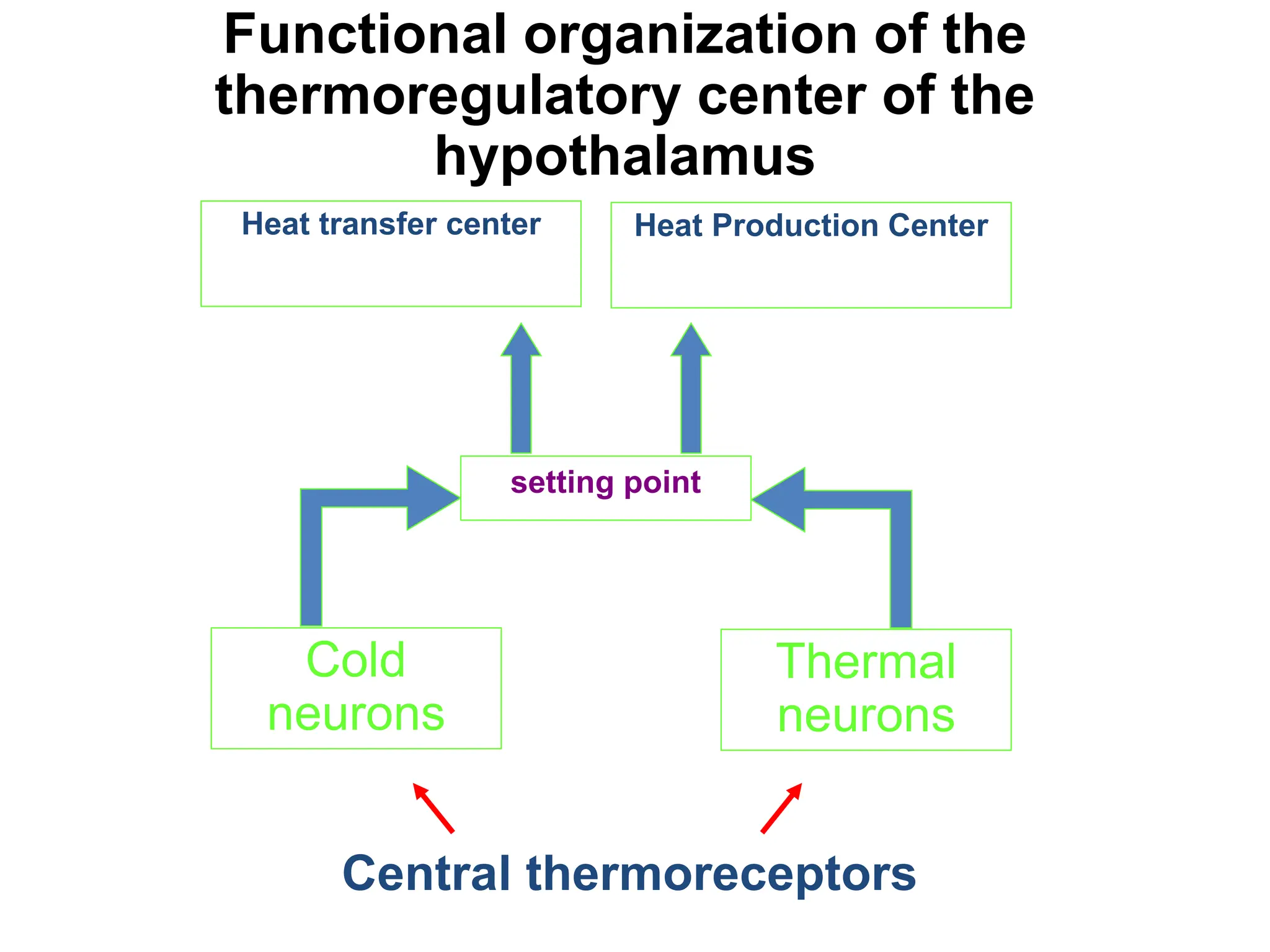
Functional organization of the
thermoregulatory center of the
hypothalamus
setting point
Cold
neurons
Thermal
neurons
Heat Production Center
Heat transfer center
Central thermoreceptors
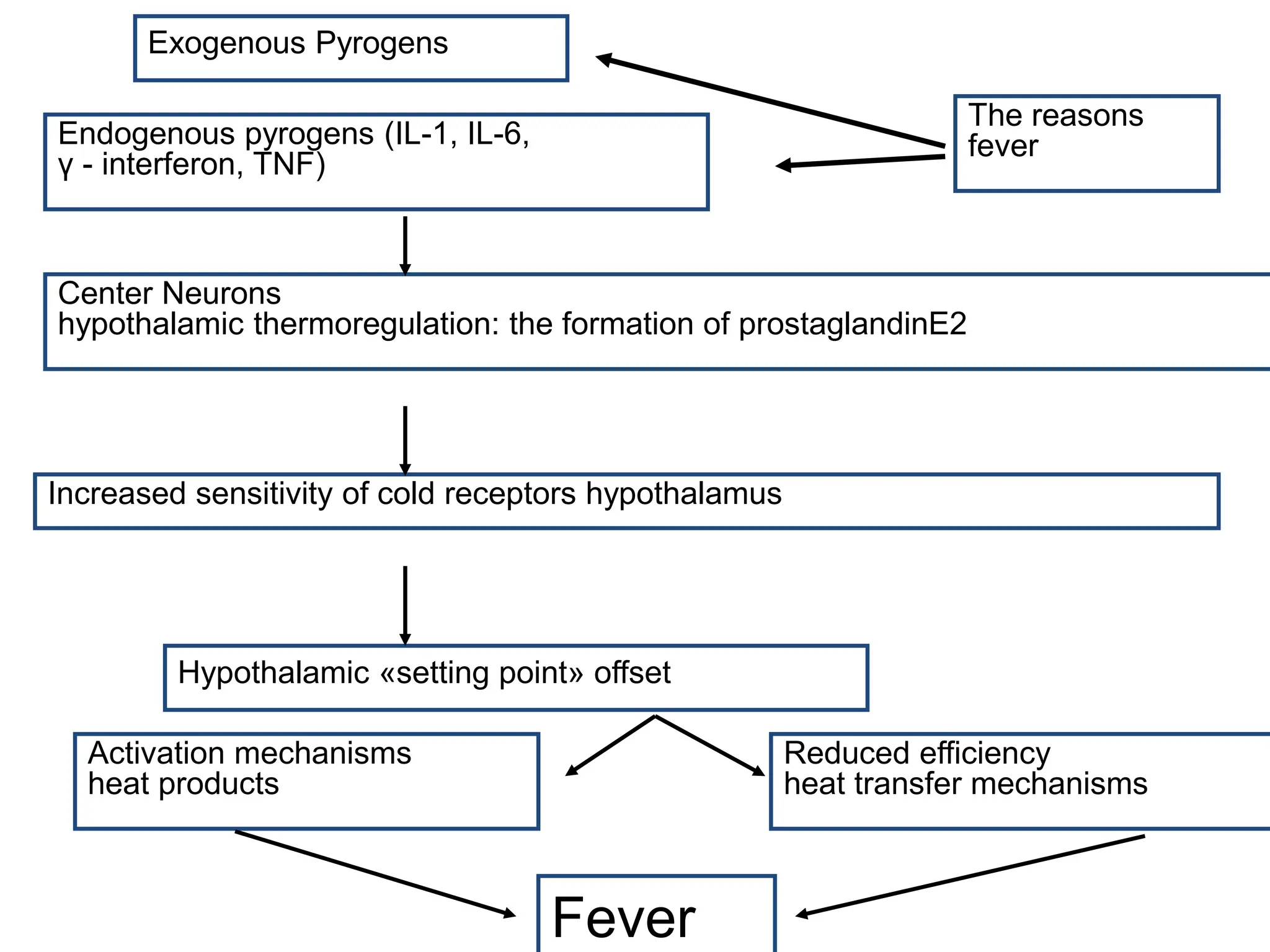
Exogenous Pyrogens
Endogenous pyrogens (IL-1, IL-6,
γ - interferon, TNF)
Center Neurons
hypothalamic thermoregulation: the formation of prostaglandinE2
Increased sensitivity of cold receptors hypothalamus
Hypothalamic «setting point» offset
Activation mechanisms
heat products
Reduced efficiency
heat transfer mechanisms
Fever
The reasons
fever
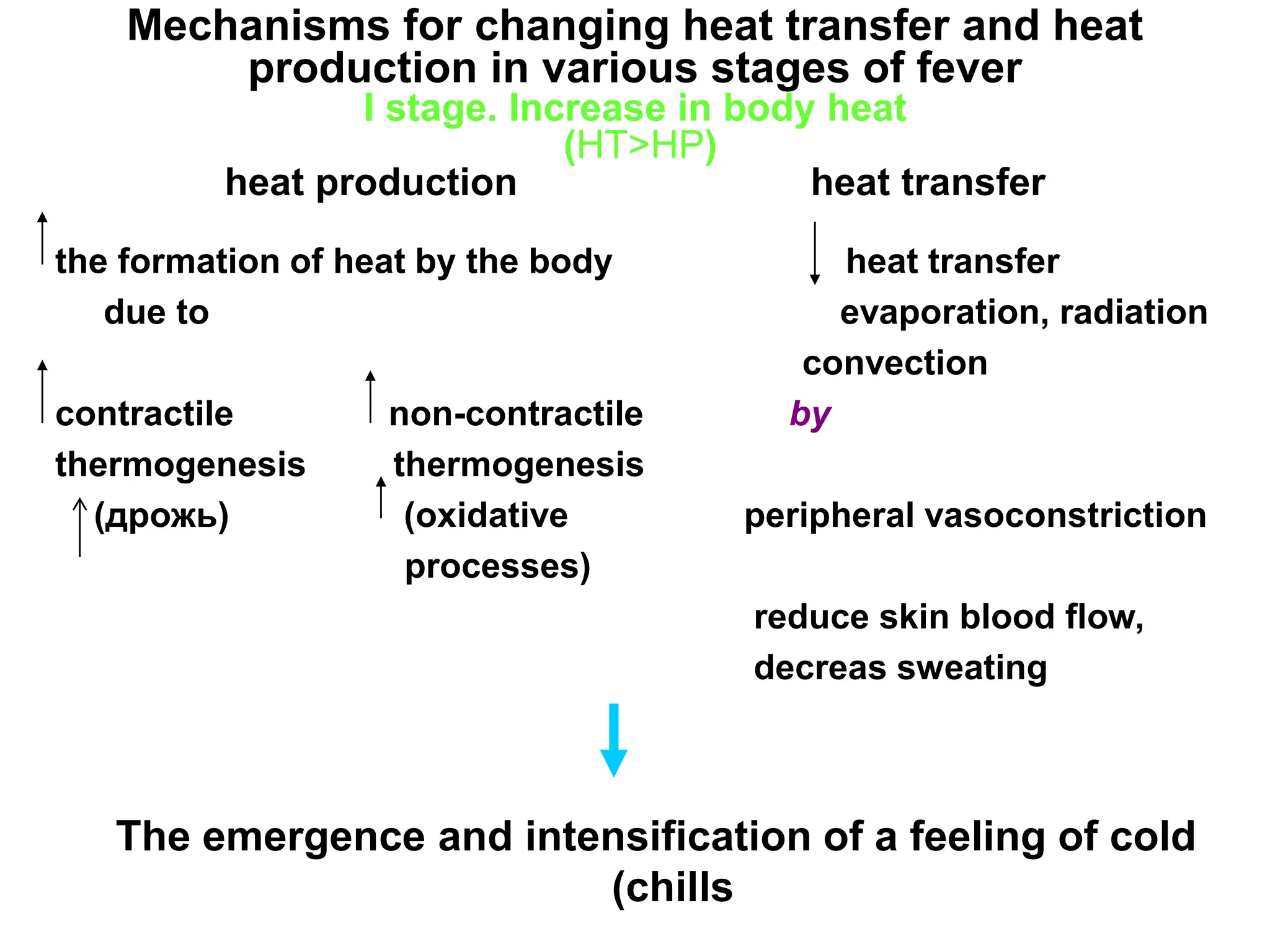
Mechanisms for changing heat transfer and heat
production in various stages of fever
I stage. Increase in body heat
(HT>HP)
heat production heat transfer
the formation of heat by the body heat transfer
due to evaporation, radiation
convection
contractile non-contractile by
thermogenesis thermogenesis
(дрожь) (oxidative peripheral vasoconstriction
processes)
reduce skin blood flow,
decreas sweating
The emergence and intensification of a feeling of cold
(chills)
Mechanisms for changing heat transfer and heat
production in various stages of fever
2nd stage - standing temperature
(HP=HT)
Thermoregulation balance is set at a higher level than normal
HP HT
the formation of heat by the body heat transfer by the body by
radiation, convection
due to by
non-contractile expansion of the peripheral
thermogenesis vessels of the skin, thermal
(oxidative processes) dyspnea (respiratory
function activation)
The emergence and intensification of a feeling of heat
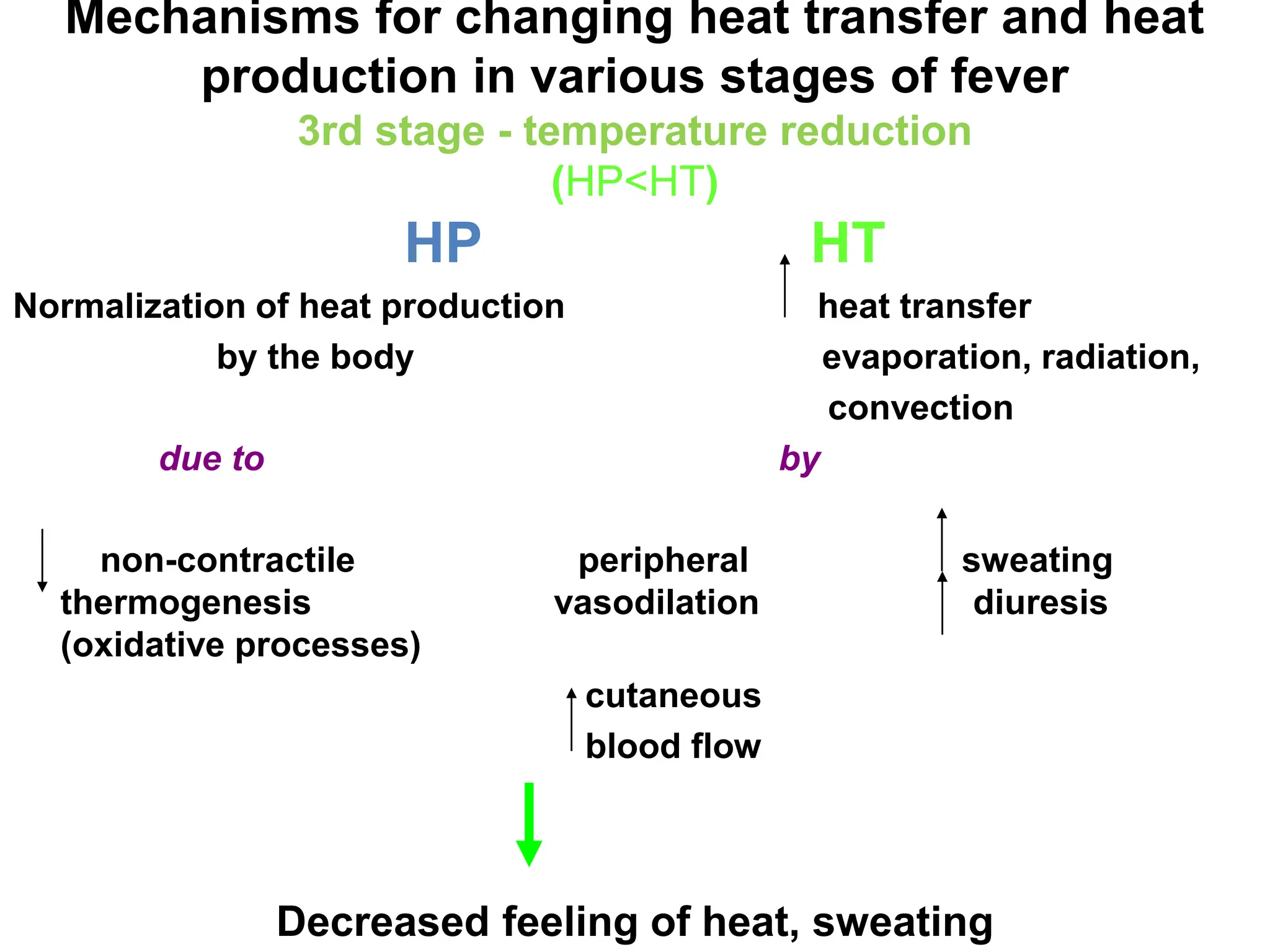
Mechanisms for changing heat transfer and heat
production in various stages of fever
3rd stage - temperature reduction
(HP<HT)
HP HT
Normalization of heat production heat transfer
by the body evaporation, radiation,
convection
due to by
non-contractile peripheral sweating
thermogenesis vasodilation diuresis
(oxidative processes)
cutaneous
blood flow
Decreased feeling of heat, sweating

Fever mechanisms and heat transfer. pptx

  • 1.
  • 2.
    Functional organization ofthe thermoregulatory center of the hypothalamus setting point Cold neurons Thermal neurons Heat Production Center Heat transfer center Central thermoreceptors
  • 3.
    Exogenous Pyrogens Endogenous pyrogens(IL-1, IL-6, γ - interferon, TNF) Center Neurons hypothalamic thermoregulation: the formation of prostaglandinE2 Increased sensitivity of cold receptors hypothalamus Hypothalamic «setting point» offset Activation mechanisms heat products Reduced efficiency heat transfer mechanisms Fever The reasons fever
  • 4.
    Mechanisms for changingheat transfer and heat production in various stages of fever I stage. Increase in body heat (HT>HP) heat production heat transfer the formation of heat by the body heat transfer due to evaporation, radiation convection contractile non-contractile by thermogenesis thermogenesis (дрожь) (oxidative peripheral vasoconstriction processes) reduce skin blood flow, decreas sweating The emergence and intensification of a feeling of cold (chills)
  • 5.
    Mechanisms for changingheat transfer and heat production in various stages of fever 2nd stage - standing temperature (HP=HT) Thermoregulation balance is set at a higher level than normal HP HT the formation of heat by the body heat transfer by the body by radiation, convection due to by non-contractile expansion of the peripheral thermogenesis vessels of the skin, thermal (oxidative processes) dyspnea (respiratory function activation) The emergence and intensification of a feeling of heat
  • 6.
    Mechanisms for changingheat transfer and heat production in various stages of fever 3rd stage - temperature reduction (HP<HT) HP HT Normalization of heat production heat transfer by the body evaporation, radiation, convection due to by non-contractile peripheral sweating thermogenesis vasodilation diuresis (oxidative processes) cutaneous blood flow Decreased feeling of heat, sweating