Feiyuebio research direction
Metabolomics
Metabolomics is the scientific study of chemical processes
involving metabolites, the small molecule substrates, intermediates
and products of cell metabolism. It is a general term of cells and
biological biochemical reactions, including energy metabolism in
the mitochondrial, decomposing metabolism, and biosynthesis of
fatty acids and proteins.
Metabolic sympathography is the scientific research of
chemical process in the study, which can be systematically
identified and quantified by small molecule chemicals, including
metabolites, intermediates, and small molecular substrates. New
metabolic disorders can lead to the occurrence of diseases such as
diabetes, obesity, fatty hymosis, fatty liver, etc. Studies of
metabolism have been widely used in poison learning, disease
research and other fields.
Signal transduction
Signal transduction is the process by which a chemical or
physical signal is transmitted through a cell as a series of molecular
events, most commonly protein phosphorylation catalyzed by
protein kinases, which ultimately results in a cellular response.
Proteins responsible for detecting stimuli are generally termed
receptors, although in some cases the term sensor is used. The
changes elicited by ligand binding (or signal sensing) in a receptor
give rise to a biochemical cascade, which is a chain of biochemical
events known as a signaling pathway.
Signal transduction refers to the process of transmitting
extracellular information to intracellular and acts, and external
signals are identified by cell surface receptors, amplify and
integrated, and produce a series of processes of cell response
reactions. Signal transduction includes the generation of signals,
transmission, and bond, that is, the signal molecules are released
from the synthetic cells, and then transmitted, and the resulting
effect is recognized. Signal transduction is involved in many
processes,such as cell survival,growth,proliferation, differentiation,
apoptosis, and communications.
Neuroscience
Neurocience is the scientific study of the nervous system.It is
a multidisciplinary science that combines physiology, anatomy,
molecular biology,developmental biology, cytology, computer
science and mathematical modeling to understand the fundamental
and emergent properties of neurons, glia and neural circuits.The
understanding of the biological basis of
learning,memory,behavior,perception,and consciousness has
been described by Eric Kandel as the "epic challenge" of the
biological sciences.
As the 21st century star discipline, neurobiology research
category includes molecular composition and structure of neuronal
cells and how nerve cells successfully loop through synaptic
linkages to process information and mediate behavior.
Neurobiology is a scientific with the brain as the main object,
studying the shape, function and body integration function
mechanism of the brain. The normal or not of brain function directly
affects the health, quality of life and creation of human health. To
study the structure and function of the nervous system, it can clarify
the working principle of the brain and prevent and treat nervous
system diseases.
Immunology
Immunology is a branch of biology and medicine that covers
the study of immune systems in all organisms.Immunology charts,
measures, and contextualizes the physiological functioning of the
immune system in states of both health and diseases; malfunctions
of the immune system in immunological disorders, and the physical,
chemical, and physiological characteristics of the components of
the immune system in vitro,in situ, and in vivo.Immunology has
applications in numerous disciplines of medicine, particularly in the
fields of organ transplantation, oncology, bacteriology, parasitology,
psychiatry, and dermatology, rheumatology, virology.
As the most important defense mechanism of vertebrates,
immunization has gradually developed and perfected with the
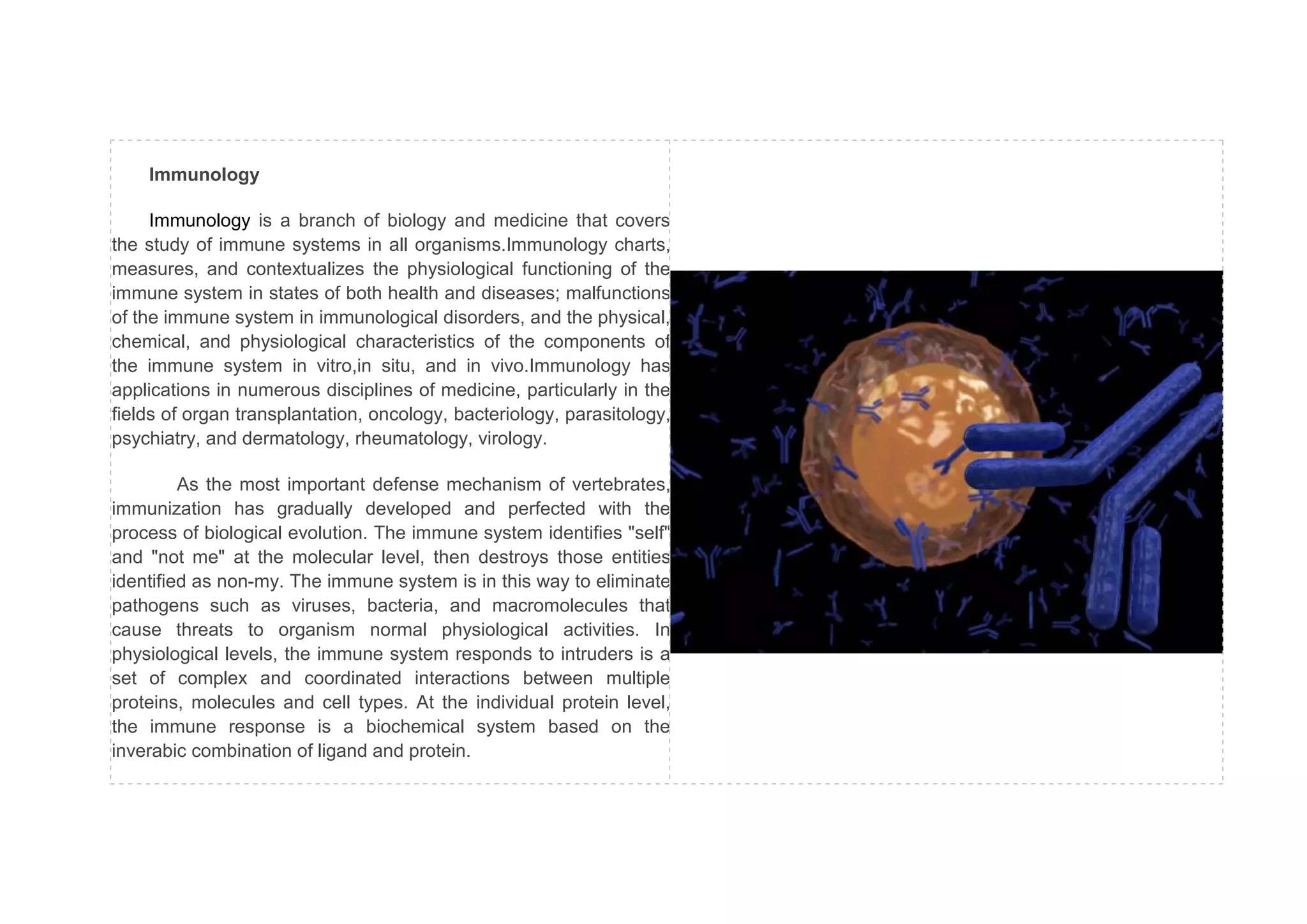
process of biological evolution. The immune system identifies "self"
and "not me" at the molecular level, then destroys those entities
identified as non-my. The immune system is in this way to eliminate
pathogens such as viruses, bacteria, and macromolecules that
cause threats to organism normal physiological activities. In
physiological levels, the immune system responds to intruders is a
set of complex and coordinated interactions between multiple
proteins, molecules and cell types. At the individual protein level,
the immune response is a biochemical system based on the
inverabic combination of ligand and protein.

Feiyuebio Research direction.pdf

  • 1.
    Feiyuebio research direction Metabolomics Metabolomicsis the scientific study of chemical processes involving metabolites, the small molecule substrates, intermediates and products of cell metabolism. It is a general term of cells and biological biochemical reactions, including energy metabolism in the mitochondrial, decomposing metabolism, and biosynthesis of fatty acids and proteins. Metabolic sympathography is the scientific research of chemical process in the study, which can be systematically identified and quantified by small molecule chemicals, including metabolites, intermediates, and small molecular substrates. New metabolic disorders can lead to the occurrence of diseases such as diabetes, obesity, fatty hymosis, fatty liver, etc. Studies of metabolism have been widely used in poison learning, disease research and other fields.
  • 2.
    Signal transduction Signal transductionis the process by which a chemical or physical signal is transmitted through a cell as a series of molecular events, most commonly protein phosphorylation catalyzed by protein kinases, which ultimately results in a cellular response. Proteins responsible for detecting stimuli are generally termed receptors, although in some cases the term sensor is used. The changes elicited by ligand binding (or signal sensing) in a receptor give rise to a biochemical cascade, which is a chain of biochemical events known as a signaling pathway. Signal transduction refers to the process of transmitting extracellular information to intracellular and acts, and external signals are identified by cell surface receptors, amplify and integrated, and produce a series of processes of cell response reactions. Signal transduction includes the generation of signals, transmission, and bond, that is, the signal molecules are released from the synthetic cells, and then transmitted, and the resulting effect is recognized. Signal transduction is involved in many processes,such as cell survival,growth,proliferation, differentiation, apoptosis, and communications.
  • 3.
    Neuroscience Neurocience is thescientific study of the nervous system.It is a multidisciplinary science that combines physiology, anatomy, molecular biology,developmental biology, cytology, computer science and mathematical modeling to understand the fundamental and emergent properties of neurons, glia and neural circuits.The understanding of the biological basis of learning,memory,behavior,perception,and consciousness has been described by Eric Kandel as the "epic challenge" of the biological sciences. As the 21st century star discipline, neurobiology research category includes molecular composition and structure of neuronal cells and how nerve cells successfully loop through synaptic linkages to process information and mediate behavior. Neurobiology is a scientific with the brain as the main object, studying the shape, function and body integration function mechanism of the brain. The normal or not of brain function directly affects the health, quality of life and creation of human health. To study the structure and function of the nervous system, it can clarify the working principle of the brain and prevent and treat nervous system diseases.
  • 4.
    Immunology Immunology is abranch of biology and medicine that covers the study of immune systems in all organisms.Immunology charts, measures, and contextualizes the physiological functioning of the immune system in states of both health and diseases; malfunctions of the immune system in immunological disorders, and the physical, chemical, and physiological characteristics of the components of the immune system in vitro,in situ, and in vivo.Immunology has applications in numerous disciplines of medicine, particularly in the fields of organ transplantation, oncology, bacteriology, parasitology, psychiatry, and dermatology, rheumatology, virology. As the most important defense mechanism of vertebrates, immunization has gradually developed and perfected with the process of biological evolution. The immune system identifies "self" and "not me" at the molecular level, then destroys those entities identified as non-my. The immune system is in this way to eliminate pathogens such as viruses, bacteria, and macromolecules that cause threats to organism normal physiological activities. In physiological levels, the immune system responds to intruders is a set of complex and coordinated interactions between multiple proteins, molecules and cell types. At the individual protein level, the immune response is a biochemical system based on the inverabic combination of ligand and protein.