BMC Complementary and
Alternative Medicine                                                                                                                     BioMed Central


Correspondence                                                                                                                         Open Access
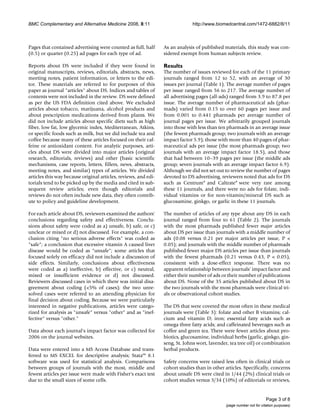
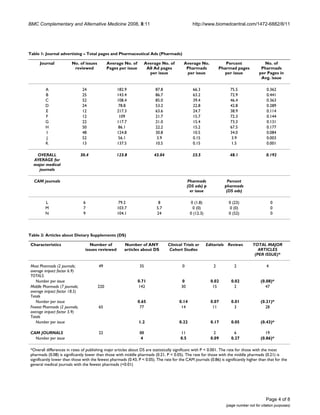
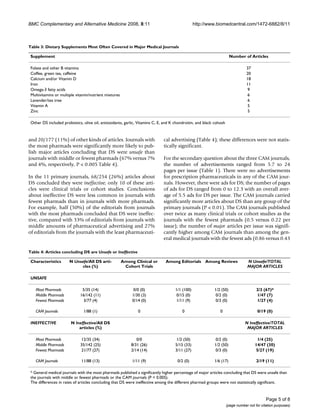
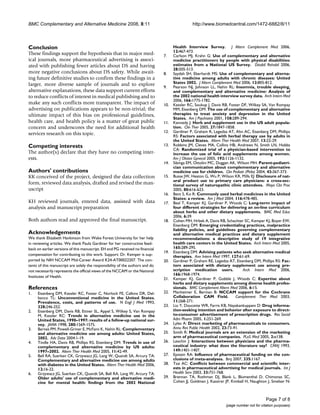
Does pharmaceutical advertising affect journal publication about
dietary supplements?
Kathi J Kemper*1 and Kaylene L Hood2

Address: 1Department of Pediatrics and the Program for Complementary and Integrative Medicine, Wake Forest University School of Medicine,
Winston-Salem, NC, USA and 2University of Florida, Department of Nutrition, Gainesville, FL, USA
Email: Kathi J Kemper* - kkemper@wfubmc.edu; Kaylene L Hood - Kayhood@ufl.edu
* Corresponding author


Published: 9 April 2008                                                                   Received: 6 August 2007
                                                                                          Accepted: 9 April 2008
BMC Complementary and Alternative Medicine 2008, 8:11   doi:10.1186/1472-6882-8-11
This article is available from: http://www.biomedcentral.com/1472-6882/8/11
© 2008 Kemper and Hood; licensee BioMed Central Ltd.
This is an Open Access article distributed under the terms of the Creative Commons Attribution License (http://creativecommons.org/licenses/by/2.0),
which permits unrestricted use, distribution, and reproduction in any medium, provided the original work is properly cited.


                 Abstract
                 Background: Advertising affects consumer and prescriber behaviors. The relationship between
                 pharmaceutical advertising and journals' publication of articles regarding dietary supplements (DS)
                 is unknown.
                 Methods: We reviewed one year of the issues of 11 major medical journals for advertising and
                 content about DS. Advertising was categorized as pharmaceutical versus other. Articles about DS
                 were included if they discussed vitamins, minerals, herbs or similar products. Articles were
                 classified as major (e.g., clinical trials, cohort studies, editorials and reviews) or other (e.g., case
                 reports, letters, news, and others). Articles' conclusions regarding safety and effectiveness were
                 coded as negative (unsafe or ineffective) or other (safe, effective, unstated, unclear or mixed).
                 Results: Journals' total pages per issue ranged from 56 to 217 while advertising pages ranged from
                 4 to 88; pharmaceutical advertisements (pharmads) accounted for 1.5% to 76% of ad pages. Journals
                 with the most pharmads published significantly fewer major articles about DS per issue than
                 journals with the fewest pharmads (P < 0.01). Journals with the most pharmads published no clinical
                 trials or cohort studies about DS. The percentage of major articles concluding that DS were unsafe
                 was 4% in journals with fewest and 67% among those with the most pharmads (P = 0.02). The
                 percentage of articles concluding that DS were ineffective was 50% higher among journals with
                 more than among those with fewer pharmads (P = 0.4).
                 Conclusion: These data are consistent with the hypothesis that increased pharmaceutical
                 advertising is associated with publishing fewer articles about DS and publishing more articles with
                 conclusions that DS are unsafe. Additional research is needed to test alternative hypotheses for
                 these findings in a larger sample of more diverse journals.


Background                                                                    other botanicals, amino acids, and substances such as
Interest in vitamins, minerals, herbs and other dietary                       enzymes, organ tissues, glandulars, and metabolites." DS
supplements (DS) has grown markedly in the US since the                       are commonly used [2,3,11,12]. In certain cases, DS are
early 1990's [1-10]. DS are defined by the US Food and                        medically recommended (e.g., folic acid for women of
Drug Administration as "vitamins, minerals, herbs or                          child-bearing age [13]). However, for most supplements


                                                                                                                                         Page 1 of 8
                                                                                                                 (page number not for citation purposes)
BMC Complementary and Alternative Medicine 2008, 8:11                          http://www.biomedcentral.com/1472-6882/8/11


there are few official recommendations, and patients              plementary and alternative medicine (CAM); we expected
often use DS without informing their physician [2,14,15].         CAM journals would have fewer pharmads and more DS
Physicians have been urged to discuss with their patients         articles; finally, we expected that fewer of the articles in
the effectiveness and safety of DS, particularly when com-        CAM journals would be unfavorable about DS than arti-
bining use of DS with prescription medications [16-21].           cles in the general medical and primary care journals.

In response to citizen demand and the high prevalence of          Methods
DS use, the US National Institutes of Health have funded          Data Sources
research to evaluate the safety and effectiveness of DS           We selected 11 major medical journals published in Eng-
[22]. An increasing number of research papers about DS            lish between June 30, 2006 and June 30, 2007. Journals
have been published recently, and a number of journals            were selected if they were devoted to general medicine
specifically devoted to CAM research and education have           (American Family Physician, British Medical Journal, Cana-
appeared. However, most primary care clinicians sub-              dian Medical Association Journal, Journal of the American
scribe to established and highly visible general medical          Medical Association, and the New England Journal of Medi-
journals; articles in these journals are frequently cited in      cine; internal medicine (Annals of Internal Medicine and
professional practice guidelines and by the media to guide        Archives of Internal Medicine, or pediatrics (Pediatrics,
the general public. Many medical journals are supported           Archives of Pediatrics and Adolescent Medicine, and Pediatric
in part by advertising revenues; however, we are unaware          Research). For each journal, all issues available in the Coy
of research evaluating the relationship between pharma-           C. Carpenter Library at Wake Forest University School of
ceutical advertising and publication about natural health         Medicine (WFUSM) for the study time period were
products, which may in some cases be viewed as compet-            reviewed. We used the American library version of these
itive with pharmaceutical products.                               journals and did not compare different versions that may
                                                                  have been published for various groups of subscribers.
In general, the aim of advertising is to increase demand
for and purchase advertised products. Direct to consumer          The WFUSM library did not subscribe to hard copies of
pharmaceutical advertising affects consumer behavior              any CAM journals. For the secondary question about CAM
[23,24] ; advertising in medical journals and other mar-          journals, we reviewed a convenience sample of three jour-
keting aimed at clinicians affects clinician prescribing          nals with issues published in the same time period as for
behavior [25,26]. Pharmaceutical funding of research also         the other journals to which the WFUSM Program for
appears to influence authors' interpretation of results           Holistic and Integrative Medicine at WFUSM had a sub-
(conclusions) about the effectiveness of these products           scription: Journal of Alternative and Complementary Thera-
[27]. It is possible that advertising funds may influence         pies, Alternative Therapies in Health and Medicine, and
journals and their paid staff [25]. The potential conflicts       Explore.
of interest between advertisers, editors and authors have
resulted in the emergence of guidelines and rules about           Reviews
disclosure of potential conflicts of interest, particularly for   All reviews were carried out between May 21 and July 17,
authors writing about the effectiveness and safety of spe-        2007. Journals were reviewed by two pre-medical students
cific products [28-34].                                           using standard rating forms created for the study. Review-
                                                                  ers were trained; inter-rater agreement was confirmed
Because of the importance of established medical journals         through independent review of journals. Reviewers exam-
in informing and influencing professional and public              ined each page of every journal reviewed. Pages were
behavior, the question of unintended bias favoring adver-         selected for the study if they included a) any kind of adver-
tisers in making editorial decisions is of great public           tising or b) any report regarding a DS.
health as well as business interest. The purpose of this
pilot study was to begin to explore the relationship              Advertising included pharmaceutical (including prescrip-
between pharmaceutical advertising and the publication            tion and over-the-counter medications and ads for drug-
of articles about DS. We expected that journals with more         eluting stents); classified; self-promoting (e.g., advertise-
pharmaceutical advertising would publish fewer articles           ments for the journal itself, its parent organization or an
about DS because DS may at times be viewed as competi-            affiliated publication or meeting); for-profit products
tors to pharmaceutical products; furthermore, we                  (e.g., foods, automotive, office equipment), non-profit
expected that those with more pharmaceutical advertise-           (e.g., for schools, foundations, and associations such as
ments (pharmads) would publish more articles suggest-             the American Heart Association), and other (e.g. US mili-
ing that DS were unsafe or ineffective than journals with         tary and other). For analytic purposes, these were col-
fewer pharmads. As a secondary question, we assessed              lapsed into two categories: pharmaceutical versus other.
publications about DS in three journals devoted to com-


                                                                                                                        Page 2 of 8
                                                                                                (page number not for citation purposes)
BMC Complementary and Alternative Medicine 2008, 8:11                         http://www.biomedcentral.com/1472-6882/8/11


Pages that contained advertising were counted as full, half      As an analysis of published materials, this study was con-
(0.5) or quarter (0.25) ad pages for each type of ad.            sidered exempt from human subjects review.

Reports about DS were included if they were found in             Results
original manuscripts, reviews, editorials, abstracts, news,      The number of issues reviewed for each of the 11 primary
meeting notes, patient information, or letters to the edi-       journals ranged from 12 to 52, with an average of 30
tor. These materials are referred to for purposes of this        issues per journal (Table 1). The average number of pages
paper as journal "articles" about DS. Indices and tables of      per issue ranged from 56 to 217. The average number of
contents were not included in the review. DS were defined        all advertising pages (all-ads) ranged from 3.9 to 87.8 per
as per the US FDA definition cited above. We excluded            issue. The average number of pharmaceutical ads (phar-
articles about tobacco, marijuana, alcohol products and          mads) varied from 0.15 to over 60 pages per issue and
about prescription medications derived from plants. We           from 0.001 to 0.441 pharmads per average number of
did not include articles about specific diets such as high       journal pages per issue. We arbitrarily grouped journals
fiber, low fat, low glycemic index, Mediterranean, Atkins,       into those with less than ten pharmads in an average issue
or specific foods such as milk, but we did include tea and       (the fewest pharmads group; two journals with an average
coffee because many of these articles focused on their caf-      impact factor 5.9); those with more than 40 pages of phar-
feine or antioxidant content. For analytic purposes, arti-       maceutical ads per issue (the most pharmads group; two
cles about DS were divided into major articles (original         journals with an average impact factor 18.5), and those
research, editorials, reviews) and other (basic scientific       that had between 10–39 pages per issue (the middle ads
mechanisms, case reports, letters, fillers, news, abstracts,     group; seven journals with an average impact factor 6.9).
meeting notes, and similar) types of articles. We divided        Although we did not set out to review the number of pages
articles this way because original articles, reviews, and edi-   devoted to DS advertising, reviewers noted that ads for DS
torials tend to be picked up by the media and cited in sub-      such as Centrum® and Caltrate® were very rare among
sequent review articles; even though editorials and              these 11 journals, and there were no ads for folate, indi-
reviews do not often include new data, they often contrib-       vidual vitamins or for non-vitamin/mineral DS such as
ute to policy and guideline development.                         glucosamine, ginkgo, or garlic in these 11 journals.

For each article about DS, reviewers examined the authors'       The number of articles of any type about any DS in each
conclusions regarding safety and effectiveness. Conclu-          journal ranged from four to 61 (Table 2). The journals
sions about safety were coded as a) unsafe, b) safe, or c)       with the most pharmads published fewer major articles
unclear or mixed or d) not discussed. For example, a con-        about DS per issue than journals with a middle number of
clusion citing "no serious adverse effects" was coded as         ads (0.08 versus 0.21 per major articles per issue, P <
"safe"; a conclusion that excessive vitamin A caused liver       0.05); and journals with the middle number of pharmads
disease would be coded as "unsafe"; some articles that           published fewer major DS articles per issue than journals
focused solely on efficacy did not include a discussion of       with the fewest pharmads (0.21 versus 0.43, P < 0.05),
side effects. Similarly, conclusions about effectiveness         consistent with a dose-effect response. There was no
were coded as a) ineffective, b) effective, or c) neutral,       apparent relationship between journals' impact factor and
mixed or insufficient evidence or d) not discussed.              either their number of ads or their number of publications
Reviewers discussed cases in which there was initial disa-       about DS. None of the 35 articles published about DS in
greement about coding (<5% of cases); the two unre-              the two journals with the most pharmads were clinical tri-
solved cases were referred to an attending physician for         als or observational cohort studies.
final decision about coding. Because we were particularly
interested in negative publications, articles were catego-       The DS that were covered the most often in these medical
rized for analysis as "unsafe" versus "other" and as "inef-      journals were (Table 3): folate and other B vitamins; cal-
fective" versus "other."                                         cium and vitamin D; iron; essential fatty acids such as
                                                                 omega three fatty acids; and caffeinated beverages such as
Data about each journal's impact factor was collected for        coffee and green tea. There were fewer articles about pro-
2006 on the journal websites.                                    biotics, glucosamine, individual herbs (garlic, ginkgo, gin-
                                                                 seng, St. Johns wort, lavender, tea tree oil) or combination
Data were entered into a MS Access Database and trans-           herbal products.
ferred to MS EXCEL for descriptive analysis; Stata™ 8.1
software was used for statistical analysis. Comparisons          Safety concerns were raised less often in clinical trials or
between groups of journals with the most, middle and             cohort studies than in other articles. Specifically, concerns
fewest articles per issue were made with Fisher's exact test     about unsafe DS were cited in 1/44 (2%) clinical trials or
due to the small sizes of some cells.                            cohort studies versus 3/34 (10%) of editorials or reviews,


                                                                                                                       Page 3 of 8
                                                                                               (page number not for citation purposes)
BMC Complementary and Alternative Medicine 2008, 8:11                                            http://www.biomedcentral.com/1472-6882/8/11


Table 1: Journal advertising – Total pages and Pharmaceutical Ads (Pharmads)

      Journal            No. of issues         Average No. of         Average No. of       Average No.               Percent                No. of
                          reviewed             Pages per issue         All Ad pages         Pharmads              Pharmad pages           Pharmads
                                                                        per issue           per issue                per issue           per Pages in
                                                                                                                                          Avg. issue

         A                      24                  182.9                  87.8                   66.3                 75.5                  0.362
         B                      25                  143.4                  86.7                   63.2                 72.9                  0.441
         C                      52                  108.4                  85.0                   39.4                 46.4                  0.363
         D                      24                   78.8                  53.2                   22.8                 42.8                  0.289
         E                      12                  217.3                  63.6                   24.7                 38.9                  0.114
         F                      12                   109                   21.7                   15.7                 72.3                  0.144
         G                      22                  117.7                  21.0                   15.4                 73.3                  0.131
         H                      50                  86.1                   22.2                   15.2                 67.5                  0.177
         I                      48                  124.8                  30.8                   10.5                 34.0                  0.084
         J                      52                   56.1                   3.9                   0.15                  3.9                  0.003
         K                      13                  137.5                  10.5                   0.15                 1.5                   0.001

   OVERALL                      30.4                123.8                 43.04                  23.5                  48.1                  0.192
  AVERAGE for
  major medical
    journals

   CAM journals                                                                                Pharmads               Percent
                                                                                               (DS ads) p           pharmads
                                                                                                er issue             (DS ads)

         L                       6                   79.2                   8                    0 (1.8)              0 (23)                     0
         M                       7                  103.7                  5.7                    0 (0)               0 (0)                      0
         N                       9                  104.1                  24                   0 (12.3)              0 (52)                     0


Table 2: Articles about Dietary Supplements (DS)

 Characteristics                     Number of          Number of ANY             Clinical Trials or       Editorials Reviews        TOTAL MAJOR
                                  issues reviewed       articles about DS          Cohort Studies                                       ARTICLES
                                                                                                                                      (PER ISSUE)*

 Most Pharmads (2 journals;              49                      35                        0                  2           2                  4
 average impact factor 6.9)
 TOTALS
    Number per issue                                             0.71                     0                  0.02       0.02              (0.08)*
 Middle Pharmads (7 journals;            220                     142                      30                  15          2                  47
 average impact factor 18.5)
 Totals
    Number per issue                                             0.65                    0.14                0.07       0.01              (0.21)*
 Fewest Pharmads (2 journals;            65                       77                      14                  11          3                  28
 average impact factor 5.9)
 Totals
    Number per issue                                             1.2                     0.22                0.17       0.05              (0.43)*

 CAM JOURNALS                            22                      88                      11                    2          6                  19
   Number per issue                                              4                       0.5                 0.09       0.27              (0.86)*

 *Overall differences in rates of publishing major articles about DS are statistically significant with P < 0.001. The rate for those with the most
 pharmads (0.08) is significantly lower than those with middle pharmads (0.21, P < 0.05). The rate for those with the middle pharmads (0.21) is
 significantly lower than those with the fewest pharmads (0.43, P < 0.05). The rate for the CAM journals (0.86) is significantly higher than that for the
 general medical journals with the fewest pharmads (<0.01)


                                                                                                                                             Page 4 of 8
                                                                                                                     (page number not for citation purposes)
BMC Complementary and Alternative Medicine 2008, 8:11                                            http://www.biomedcentral.com/1472-6882/8/11


Table 3: Dietary Supplements Most Often Covered in Major Medical Journals

 Supplement                                                                                                           Number of Articles

 Folate and other B vitamins                                                                                                     37
 Coffee, green tea, caffeine                                                                                                     20
 Calcium and/or Vitamin D                                                                                                        18
 Iron                                                                                                                            11
 Omega-3 fatty acids                                                                                                              9
 Multivitamins or multiple vitamin/nutrient mixtures                                                                             6
 Lavender/tea tree                                                                                                                6
 Vitamin A                                                                                                                        5
 Zinc                                                                                                                             5

 Other DS included probiotics, olive oil, antioxidants, garlic, Vitamins C, E, and K chondroitin, and black cohosh


and 20/177 (11%) of other kinds of articles. Journals with                    cal advertising (Table 4); these differences were not statis-
the most pharmads were significantly more likely to pub-                      tically significant.
lish major articles concluding that DS were unsafe than
journals with middle or fewest pharmads (67% versus 7%                        For the secondary question about the three CAM journals,
and 4%, respectively, P < 0.005 Table 4).                                     the number of advertisements ranged from 5.7 to 24
                                                                              pages per issue (Table 1). There were no advertisements
In the 11 primary journals, 68/254 (26%) articles about                       for prescription pharmaceuticals in any of the CAM jour-
DS concluded they were ineffective; only 10 of these arti-                    nals. However, there were ads for DS; the number of pages
cles were clinical trials or cohort studies. Conclusions                      of ads for DS ranged from 0 to 12.3 with an overall aver-
about ineffective DS were less common in journals with                        age of 5.5 ads for DS per issue. The CAM journals carried
fewest pharmads than in journals with more pharmads.                          significantly more articles about DS than any group of the
For example, half (50%) of the editorials from journals                       primary journals (P < 0.01). The CAM journals published
with the most pharmads concluded that DS were ineffec-                        over twice as many clinical trials or cohort studies as the
tive, compared with 33% of editorials from journals with                      journals with the fewest pharmads (0.5 versus 0.22 per
middle amounts of pharmaceutical advertising and 27%                          issue); the number of major articles per issue was signifi-
of editorials from the journals with the least pharmaceuti-                   cantly higher among CAM journals than among the gen-
                                                                              eral medical journals with the fewest ads (0.86 versus 0.43

Table 4: Articles concluding DS are Unsafe or Ineffective

 Characteristics       N Unsafe/All DS arti-           Among Clinical or       Among Editorials Among Reviews                    N Unsafe/TOTAL
                             cles (%)                   Cohort Trials                                                            MAJOR ARTICLES

 UNSAFE

    Most Pharmads             5/35 (14)                     0/0 (0)                  1/1 (100)             1/2 (50)                    2/3 (67)*
    Middle Pharmads          16/142 (11)                    1/30 (3)                  0/15 (0)              0/2 (0)                    1/47 (7)
    Fewest Pharmads            3/77 (4)                     0/14 (0)                 1/11 (9)               0/3 (0)                    1/27 (4)

    CAM Journals               1/88 (1)                        0                         0                     0                        0/19 (0)

 INEFFECTIVE            N Ineffective/All DS                                                                                    N Ineffective/TOTAL
                            articles (%)                                                                                         MAJOR ARTICLES

    Most Pharmads            12/35 (34)                       0/0                     1/2 (50)              0/2 (0)                     1/4 (25)
    Middle Pharmads          35/142 (25)                   8/31 (26)                 5/15 (33)             1/2 (50)                   14/47 (30)
    Fewest Pharmads          21/77 (27)                    2/14 (14)                 3/11 (27)              0/3 (0)                    5/27 (19)

    CAM Journals              11/88 (13)                    1/11 (9)                  0/2 (0)              1/6 (17)                    2/19 (11)

 * General medical journals with the most pharmads published a significantly higher percentage of major articles concluding that DS were unsafe than
 the journals with middle or fewest pharmads or the CAM journals (P < 0.005).
 The differences in rates of articles concluding that DS were ineffective among the different pharmad groups were not statistically significant.


                                                                                                                                             Page 5 of 8
                                                                                                                     (page number not for citation purposes)
BMC Complementary and Alternative Medicine 2008, 8:11                        http://www.biomedcentral.com/1472-6882/8/11


P < 0.05). Although CAM journals published more origi-          On the other hand, non-vitamin/mineral supplements,
nal science about DS, the proportion of major articles          such as glucosamine, echinacea, garlic, ginseng, and
concluding that DS were unsafe or ineffective was not sig-      ginkgo are also frequently used by the public, often con-
nificantly different from general journals with middle or       currently with prescription medications [12,20], yet the
fewest pharmads (Table 4).                                      primary 11 journals included in the survey published few
                                                                research studies, editorials or reviews on these DS. Future
Discussion                                                      research will need to focus on publication about DS that
This is the first study to examine the relationship between     may be viewed as greater threats to the pharmaceutical
advertising in medical journals and the publication of          industry (such as non-vitamin/mineral products that are
articles in those journals about DS. The results are consist-   used by the public to promote weight loss, improve sexual
ent with the hypothesis that pharmaceutical advertising         or athletic performance, relieve joint or back pain, or to
biases journals against non-drug therapies. Journals with       improve memory, cardiovascular health or GI health).
the most pharmads per issue published significantly fewer       Such research will need a large sample size of many types
major articles about DS than journals with fewer phar-          of journals; furthermore, such research will also need to
mads. For example, the two journals with the most phar-         account for potential confounding by research funding by
mads published no clinical trials or cohort studies about       DS manufacturers.
DS. Furthermore, journals with the most pharmads were
more likely to publish articles concluding that DS were         This pilot study has several limitations. It included only a
unsafe than journals with fewer pharmads. CAM journals          few of the many clinical medical journals available and
had no pharmaceutical ads, and they published signifi-          used only the American library version of these journals,
cantly more original science articles about DS; however,        but it did focus on those with very high readership that are
they were not significantly less likely to publish major        often quoted by professional organizations, the media
articles suggesting that DS were unsafe or ineffective than     and policymakers. Results from the smaller secondary
general medical journals with middle or few pharmads.           analysis of the CAM journals would be enhanced by larger
                                                                sample of more diverse CAM publications. The review did
These results are generally consistent with a substantial       not specifically address the funding for different trials or
body of research suggesting that advertising influences         evaluate the methodologic quality of the published trials.
behavior. Advertising influences consumer behavior              This study was not a survey of journal editors regarding
[23,24]. Advertising, particularly in the forms of gifts and    the number of submissions of different types they receive
samples, also influences physician prescribing behavior         or how they decide which articles to include. An alterna-
[26,35,36]. This study extends those findings, and it sup-      tive hypothesis that might explain these findings is that
ports growing efforts to minimize potential conflicts of        journals with a high number of pharmaceutical ads
interest or at least make them more transparent, if elimi-      receive few submissions about dietary supplements; fur-
nating them entirely is not feasible [28,37,38].                thermore, it is possible that a large number of articles
                                                                about dietary supplements are of poor quality and do not
It is possible that there might have been greater apparent      deserve publication. It is also possible that the observed
impact on publication decisions if the analysis had been        associations are due to another underlying factor ; for
restricted to DS that are typically used to replace pharma-     example, one recent study reported that in high impact
ceutical products. The great majority of the articles about     journals, European journals were approximately twice as
DS reviewed here were about caffeinated beverages and           likely as American journals to publish positive articles
vitamins or other essential nutrients (minerals and essen-      about complementary therapies [42]. In addition, this
tial fatty acids) which are not competitors of prescription     study used the number of issues per journal as the study
medications. For the most part, recent research suggests        denominator rather than the total number of articles per
that the DS most often used, including multivitamins, cal-      issue; future studies could use the number of articles per
cium, iron and folate, are those often recommended by           issue as the denominator to address the related question
professionals or those known to be deficient in the diet        of whether journals with more advertising per issue also
[39-41]. Furthermore, many vitamins are manufactured            have fewer articles of all types and hence fewer articles
by pharmaceutical companies, thus reducing these com-           about dietary supplements. Future studies on this topic to
panies' potential bias against DS. For example, Centrum®        explore alternative hypotheses for our findings should
products and Caltrate® are manufactured by Wyeth, the           include a larger number of journals and more diverse
maker of Advil®, Alavert®, Effexor® and Embrel® among           journals; additional studies might also survey journal edi-
many other products. These facts would tend to favor the        tors to determine the number of articles submitted for
null hypothesis.                                                consideration for publication and ask about the percent-
                                                                age of submissions related to dietary supplements.


                                                                                                                     Page 6 of 8
                                                                                             (page number not for citation purposes)
BMC Complementary and Alternative Medicine 2008, 8:11                                           http://www.biomedcentral.com/1472-6882/8/11


Conclusion                                                                           Health Interview Survey. J Altern Complement Med 2006,
                                                                                     12:467-473.
These findings support the hypothesis that in major med-                       7.    Carlson MJ, Krahn G: Use of complementary and alternative
ical journals, more pharmaceutical advertising is associ-                            medicine practitioners by people with physical disabilities:
ated with publishing fewer articles about DS and having                              estimates from a National US Survey. Disabil Rehabil 2006,
                                                                                     28:505-513.
more negative conclusions about DS safety. While await-                        8.    Saydah SH, Eberhardt MS: Use of complementary and alterna-
ing future definitive studies to confirm these findings in a                         tive medicine among adults with chronic diseases: United
larger, more diverse sample of journals and to explore                               States 2002. J Altern Complement Med 2006, 12:805-812.
                                                                               9.    Pearson NJ, Johnson LL, Nahin RL: Insomnia, trouble sleeping,
alternative explanations, these data support current efforts                         and complementary and alternative medicine: Analysis of
to reduce conflicts of interest in medical publishing and to                         the 2002 national health interview survey data. Arch Intern Med
                                                                                     2006, 166:1775-1782.
make any such conflicts more transparent. The impact of                        10.   Kessler RC, Soukup J, Davis RB, Foster DF, Wilkey SA, Van Rompay
advertising on publications appears to be non-trivial; the                           MM, Eisenberg DM: The use of complementary and alternative
ultimate impact of this bias on professional guidelines,                             therapies to treat anxiety and depression in the United
                                                                                     States. Am J Psychiatry 2001, 158:289-294.
health care, and health policy is a matter of great public                     11.   Kennedy J: Herb and supplement use in the US adult popula-
concern and underscores the need for additional health                               tion. Clin Ther 2005, 27:1847-1858.
                                                                               12.   Gardiner P, Graham R, Legedza AT, Ahn AC, Eisenberg DM, Phillips
services research on this topic.                                                     RS: Factors associated with herbal therapy use by adults in
                                                                                     the United States. Altern Ther Health Med 2007, 13:22-29.
Competing interests                                                            13.   Robbins JM, Cleves MA, Collins HB, Andrews N, Smith LN, Hobbs
                                                                                     CA: Randomized trial of a physician-based intervention to
The author(s) declare that they have no competing inter-                             increase the use of folic acid supplements among women.
ests.                                                                                Am J Obstet Gynecol 2005, 192:1126-1132.
                                                                               14.   Sibinga EM, Ottolini MC, Duggan AK, Wilson MH: Parent-pediatri-
                                                                                     cian communication about complementary and alternative
Authors' contributions                                                               medicine use for children. Clin Pediatr (Phila) 2004, 43:367-373.
KK conceived of the project, designed the data collection                      15.   Busse JW, Heaton G, Wu P, Wilson KR, Mills EJ: Disclosure of nat-
                                                                                     ural product use to primary care physicians: a cross-sec-
form, reviewed data analysis, drafted and revised the man-                           tional survey of naturopathic clinic attendees. Mayo Clin Proc
uscript                                                                              2005, 80:616-623.
                                                                               16.   Bent S, Ko R: Commonly used herbal medicines in the United
                                                                                     States: a review. Am J Med 2004, 116:478-485.
KH reviewed journals, entered data, assisted with data                         17.   Beal T, Kemper KJ, Gardiner P, Woods C: Long-term impact of
analysis and manuscript preparation                                                  four different strategies for delivering an on-line curriculum
                                                                                     about herbs and other dietary supplements. BMC Med Educ
                                                                                     2006, 6:39.
Both authors read and approved the final manuscript.                           18.   Cohen MH, Hrbek A, Davis RB, Schachter SC, Kemper KJ, Boyer EW,
                                                                                     Eisenberg DM: Emerging credentialing practices, malpractice
                                                                                     liability policies, and guidelines governing complementary
Acknowledgements                                                                     and alternative medical practices and dietary supplement
We thank Elizabeth Hankinson from Wake Forest University for her help                recommendations: a descriptive study of 19 integrative
in reviewing articles. We thank Paula Gardiner for her constructive feed-            health care centers in the United States. Arch Intern Med 2005,
back on earlier versions of this manuscript. EH and PG received no financial         165:289-295.
                                                                               19.   Eisenberg DM: Advising patients who seek alternative medical
compensation for contributing to this work. Support: Dr. Kemper is sup-              therapies. Ann Intern Med 1997, 127:61-69.
ported by NIH NCCAM Mid-Career Award K24-AT00022207. The con-                  20.   Gardiner P, Graham RE, Legedza AT, Eisenberg DM, Phillips RS: Fac-
tents of this manuscript are solely the responsibility of the authors and do         tors associated with dietary supplement use among pre-
not necessarily represents the official views of the NCCAM or the National           scription medication users.             Arch Intern Med 2006,
                                                                                     166:1968-1974.
Institutes of Health.
                                                                               21.   Kemper KJ, Gardiner P, Gobble J, Woods C: Expertise about
                                                                                     herbs and dietary supplements among diverse health profes-
References                                                                           sionals. BMC Complement Altern Med 2006, 6:15.
1.   Eisenberg DM, Kessler RC, Foster C, Norlock FE, Calkins DR, Del-          22.   Manheimer E, Berman B: NCCAM support for the Cochrane
     banco TL: Unconventional medicine in the United States.                         Collaboration CAM Field.            Complement Ther Med 2003,
     Prevalence, costs, and patterns of use. N Engl J Med 1993,                      11:268-271.
     328:246-252.                                                              23.   Liu Y, Doucette WR, Farris KB, Nayakankuppam D: Drug informa-
2.   Eisenberg DM, Davis RB, Ettner SL, Appel S, Wilkey S, Van Rompay                tion-seeking intention and behavior after exposure to direct-
     M, Kessler RC: Trends in alternative medicine use in the                        to-consumer advertisement of prescription drugs. Res Social
     United States, 1990–1997: results of a follow-up national sur-                  Adm Pharm 2005, 1:251-269.
     vey. JAMA 1998, 280:1569-1575.                                            24.   Lyles A: Direct marketing of pharmaceuticals to consumers.
3.   Barnes PM, Powell-Griner E, McFann K, Nahin RL: Complementary                   Annu Rev Public Health 2002, 23:73-91.
     and alternative medicine use among adults: United States,                 25.   Smith R: Medical journals are an extension of the marketing
     2002. Adv Data 2004:1-19.                                                       arm of pharmaceutical companies. PLoS Med 2005, 2:e138.
4.   Tindle HA, Davis RB, Phillips RS, Eisenberg DM: Trends in use of          26.   Lexchin J: Interactions between physicians and the pharma-
     complementary and alternative medicine by US adults:                            ceutical industry: what does the literature say? CMAJ 1993,
     1997–2002. Altern Ther Health Med 2005, 11:42-49.                               149:1401-1407.
5.   Bell RA, Suerken CK, Grzywacz JG, Lang W, Quandt SA, Arcury TA:           27.   Epstein RA: Influence of pharmaceutical funding on the con-
     Complementary and alternative medicine use among adults                         clusions of meta-analyses. Bmj 2007, 335:1167.
     with diabetes in the United States. Altern Ther Health Med 2006,          28.   Tsai AC: Conflicts between commercial and scientific inter-
     12:16-22.                                                                       ests in pharmaceutical advertising for medical journals. Int J
6.   Grzywacz JG, Suerken CK, Quandt SA, Bell RA, Lang W, Arcury TA:                 Health Serv 2003, 33:751-768.
     Older adults' use of complementary and alternative medi-                  29.   Brennan TA, Rothman DJ, Blank L, Blumenthal D, Chimonas SC,
     cine for mental health: findings from the 2002 National                         Cohen JJ, Goldman J, Kassirer JP, Kimball H, Naughton J, Smelser N:


                                                                                                                                           Page 7 of 8
                                                                                                                   (page number not for citation purposes)
BMC Complementary and Alternative Medicine 2008, 8:11                                           http://www.biomedcentral.com/1472-6882/8/11


      Health industry practices that create conflicts of interest: a
      policy proposal for academic medical centers. JAMA 2006,
      295:429-433.
30.   Coleman DL, Kazdin AE, Miller LA, Morrow JS, Udelsman R: Guide-
      lines for interactions between clinical faculty and the phar-
      maceutical industry: one medical school's approach. Acad
      Med 2006, 81:154-160.
31.   Lo B, Wolf LE, Berkeley A: Conflict-of-interest policies for inves-
      tigators in clinical trials. N Engl J Med 2000, 343:1616-1620.
32.   Kirch DG: Conflict-of-interest management: efforts and
      insights from the Association of American Medical Colleges.
      Cleve Clin J Med 2007, 74(Suppl 2):S23-25. discussion S32-27.
33.   Jacobson MF, Sharpe VA, Angell M, Ashford NA, Blum A, Chary LK,
      Cho M, Coull BC, Davis D, Doolittle RF, et al.: Editorial policies on
      financial disclosure. Nat Neurosci 2003, 6:1001.
34.   Lexchin J, Light DW: Commercial influence and the content of
      medical journals. BMJ 2006, 332:1444-1447.
35.   McFadden DW, Calvario E, Graves C: The devil is in the details:
      the pharmaceutical industry's use of gifts to physicians as
      marketing strategy. J Surg Res 2007, 140:1-5.
36.   Wazana A: Physicians and the pharmaceutical industry: is a
      gift ever just a gift? JAMA 2000, 283:373-380.
37.   Wilkes MS, Kravitz RL: Policies, practices, and attitudes of
      North American medical journal editors. J Gen Intern Med
      1995, 10:443-450.
38.   Friedman L, Richter ED: Conflicts of interest and scientific
      integrity. Int J Occup Environ Health 2005, 11:205-206.
39.   Buettner C, Phillips RS, Davis RB, Gardiner P, Mittleman MA: Use of
      dietary supplements among United States adults with coro-
      nary artery disease and atherosclerotic risks. Am J Cardiol
      2007, 99:661-666.
40.   NIH State-of-the-Science Conference Statement on Multiv-
      itamin/Mineral Supplements and Chronic Disease Preven-
      tion. NIH Consens State Sci Statements 2006, 23:1-30.
41.   North American Menopause Society: The role of calcium in peri-
      and postmenopausal women 2006 position statement of the
      North American Menopause Society.                   Menopause 2006,
      13:862-877. quiz 878–880.
42.   Sood A, Knudsen K, Sood R, Wahner-Roedler DL, Barnes SA, Bardia
      A, Bauer BA: Publication bias for CAM trials in the highest
      impact factor medicine journals is partly due to geographical
      bias. J Clin Epidemiol 2007, 60:1123-1126.

Pre-publication history
The pre-publication history for this paper can be accessed
here:

http://www.biomedcentral.com/1472-6882/8/11/prepub


                                                                                       Publish with Bio Med Central and every
                                                                                      scientist can read your work free of charge
                                                                                  "BioMed Central will be the most significant development for
                                                                                  disseminating the results of biomedical researc h in our lifetime."
                                                                                       Sir Paul Nurse, Cancer Research UK

                                                                                     Your research papers will be:
                                                                                       available free of charge to the entire biomedical community
                                                                                       peer reviewed and published immediately upon acceptance
                                                                                       cited in PubMed and archived on PubMed Central
                                                                                       yours — you keep the copyright

                                                                              Submit your manuscript here:                                BioMedcentral
                                                                              http://www.biomedcentral.com/info/publishing_adv.asp


                                                                                                                                                Page 8 of 8
                                                                                                                        (page number not for citation purposes)

Farmaceuticas suplementos dieteticos

  • 1.
    BMC Complementary and AlternativeMedicine BioMed Central Correspondence Open Access Does pharmaceutical advertising affect journal publication about dietary supplements? Kathi J Kemper*1 and Kaylene L Hood2 Address: 1Department of Pediatrics and the Program for Complementary and Integrative Medicine, Wake Forest University School of Medicine, Winston-Salem, NC, USA and 2University of Florida, Department of Nutrition, Gainesville, FL, USA Email: Kathi J Kemper* - kkemper@wfubmc.edu; Kaylene L Hood - Kayhood@ufl.edu * Corresponding author Published: 9 April 2008 Received: 6 August 2007 Accepted: 9 April 2008 BMC Complementary and Alternative Medicine 2008, 8:11 doi:10.1186/1472-6882-8-11 This article is available from: http://www.biomedcentral.com/1472-6882/8/11 © 2008 Kemper and Hood; licensee BioMed Central Ltd. This is an Open Access article distributed under the terms of the Creative Commons Attribution License (http://creativecommons.org/licenses/by/2.0), which permits unrestricted use, distribution, and reproduction in any medium, provided the original work is properly cited. Abstract Background: Advertising affects consumer and prescriber behaviors. The relationship between pharmaceutical advertising and journals' publication of articles regarding dietary supplements (DS) is unknown. Methods: We reviewed one year of the issues of 11 major medical journals for advertising and content about DS. Advertising was categorized as pharmaceutical versus other. Articles about DS were included if they discussed vitamins, minerals, herbs or similar products. Articles were classified as major (e.g., clinical trials, cohort studies, editorials and reviews) or other (e.g., case reports, letters, news, and others). Articles' conclusions regarding safety and effectiveness were coded as negative (unsafe or ineffective) or other (safe, effective, unstated, unclear or mixed). Results: Journals' total pages per issue ranged from 56 to 217 while advertising pages ranged from 4 to 88; pharmaceutical advertisements (pharmads) accounted for 1.5% to 76% of ad pages. Journals with the most pharmads published significantly fewer major articles about DS per issue than journals with the fewest pharmads (P < 0.01). Journals with the most pharmads published no clinical trials or cohort studies about DS. The percentage of major articles concluding that DS were unsafe was 4% in journals with fewest and 67% among those with the most pharmads (P = 0.02). The percentage of articles concluding that DS were ineffective was 50% higher among journals with more than among those with fewer pharmads (P = 0.4). Conclusion: These data are consistent with the hypothesis that increased pharmaceutical advertising is associated with publishing fewer articles about DS and publishing more articles with conclusions that DS are unsafe. Additional research is needed to test alternative hypotheses for these findings in a larger sample of more diverse journals. Background other botanicals, amino acids, and substances such as Interest in vitamins, minerals, herbs and other dietary enzymes, organ tissues, glandulars, and metabolites." DS supplements (DS) has grown markedly in the US since the are commonly used [2,3,11,12]. In certain cases, DS are early 1990's [1-10]. DS are defined by the US Food and medically recommended (e.g., folic acid for women of Drug Administration as "vitamins, minerals, herbs or child-bearing age [13]). However, for most supplements Page 1 of 8 (page number not for citation purposes)
  • 2.
    BMC Complementary andAlternative Medicine 2008, 8:11 http://www.biomedcentral.com/1472-6882/8/11 there are few official recommendations, and patients plementary and alternative medicine (CAM); we expected often use DS without informing their physician [2,14,15]. CAM journals would have fewer pharmads and more DS Physicians have been urged to discuss with their patients articles; finally, we expected that fewer of the articles in the effectiveness and safety of DS, particularly when com- CAM journals would be unfavorable about DS than arti- bining use of DS with prescription medications [16-21]. cles in the general medical and primary care journals. In response to citizen demand and the high prevalence of Methods DS use, the US National Institutes of Health have funded Data Sources research to evaluate the safety and effectiveness of DS We selected 11 major medical journals published in Eng- [22]. An increasing number of research papers about DS lish between June 30, 2006 and June 30, 2007. Journals have been published recently, and a number of journals were selected if they were devoted to general medicine specifically devoted to CAM research and education have (American Family Physician, British Medical Journal, Cana- appeared. However, most primary care clinicians sub- dian Medical Association Journal, Journal of the American scribe to established and highly visible general medical Medical Association, and the New England Journal of Medi- journals; articles in these journals are frequently cited in cine; internal medicine (Annals of Internal Medicine and professional practice guidelines and by the media to guide Archives of Internal Medicine, or pediatrics (Pediatrics, the general public. Many medical journals are supported Archives of Pediatrics and Adolescent Medicine, and Pediatric in part by advertising revenues; however, we are unaware Research). For each journal, all issues available in the Coy of research evaluating the relationship between pharma- C. Carpenter Library at Wake Forest University School of ceutical advertising and publication about natural health Medicine (WFUSM) for the study time period were products, which may in some cases be viewed as compet- reviewed. We used the American library version of these itive with pharmaceutical products. journals and did not compare different versions that may have been published for various groups of subscribers. In general, the aim of advertising is to increase demand for and purchase advertised products. Direct to consumer The WFUSM library did not subscribe to hard copies of pharmaceutical advertising affects consumer behavior any CAM journals. For the secondary question about CAM [23,24] ; advertising in medical journals and other mar- journals, we reviewed a convenience sample of three jour- keting aimed at clinicians affects clinician prescribing nals with issues published in the same time period as for behavior [25,26]. Pharmaceutical funding of research also the other journals to which the WFUSM Program for appears to influence authors' interpretation of results Holistic and Integrative Medicine at WFUSM had a sub- (conclusions) about the effectiveness of these products scription: Journal of Alternative and Complementary Thera- [27]. It is possible that advertising funds may influence pies, Alternative Therapies in Health and Medicine, and journals and their paid staff [25]. The potential conflicts Explore. of interest between advertisers, editors and authors have resulted in the emergence of guidelines and rules about Reviews disclosure of potential conflicts of interest, particularly for All reviews were carried out between May 21 and July 17, authors writing about the effectiveness and safety of spe- 2007. Journals were reviewed by two pre-medical students cific products [28-34]. using standard rating forms created for the study. Review- ers were trained; inter-rater agreement was confirmed Because of the importance of established medical journals through independent review of journals. Reviewers exam- in informing and influencing professional and public ined each page of every journal reviewed. Pages were behavior, the question of unintended bias favoring adver- selected for the study if they included a) any kind of adver- tisers in making editorial decisions is of great public tising or b) any report regarding a DS. health as well as business interest. The purpose of this pilot study was to begin to explore the relationship Advertising included pharmaceutical (including prescrip- between pharmaceutical advertising and the publication tion and over-the-counter medications and ads for drug- of articles about DS. We expected that journals with more eluting stents); classified; self-promoting (e.g., advertise- pharmaceutical advertising would publish fewer articles ments for the journal itself, its parent organization or an about DS because DS may at times be viewed as competi- affiliated publication or meeting); for-profit products tors to pharmaceutical products; furthermore, we (e.g., foods, automotive, office equipment), non-profit expected that those with more pharmaceutical advertise- (e.g., for schools, foundations, and associations such as ments (pharmads) would publish more articles suggest- the American Heart Association), and other (e.g. US mili- ing that DS were unsafe or ineffective than journals with tary and other). For analytic purposes, these were col- fewer pharmads. As a secondary question, we assessed lapsed into two categories: pharmaceutical versus other. publications about DS in three journals devoted to com- Page 2 of 8 (page number not for citation purposes)
  • 3.
    BMC Complementary andAlternative Medicine 2008, 8:11 http://www.biomedcentral.com/1472-6882/8/11 Pages that contained advertising were counted as full, half As an analysis of published materials, this study was con- (0.5) or quarter (0.25) ad pages for each type of ad. sidered exempt from human subjects review. Reports about DS were included if they were found in Results original manuscripts, reviews, editorials, abstracts, news, The number of issues reviewed for each of the 11 primary meeting notes, patient information, or letters to the edi- journals ranged from 12 to 52, with an average of 30 tor. These materials are referred to for purposes of this issues per journal (Table 1). The average number of pages paper as journal "articles" about DS. Indices and tables of per issue ranged from 56 to 217. The average number of contents were not included in the review. DS were defined all advertising pages (all-ads) ranged from 3.9 to 87.8 per as per the US FDA definition cited above. We excluded issue. The average number of pharmaceutical ads (phar- articles about tobacco, marijuana, alcohol products and mads) varied from 0.15 to over 60 pages per issue and about prescription medications derived from plants. We from 0.001 to 0.441 pharmads per average number of did not include articles about specific diets such as high journal pages per issue. We arbitrarily grouped journals fiber, low fat, low glycemic index, Mediterranean, Atkins, into those with less than ten pharmads in an average issue or specific foods such as milk, but we did include tea and (the fewest pharmads group; two journals with an average coffee because many of these articles focused on their caf- impact factor 5.9); those with more than 40 pages of phar- feine or antioxidant content. For analytic purposes, arti- maceutical ads per issue (the most pharmads group; two cles about DS were divided into major articles (original journals with an average impact factor 18.5), and those research, editorials, reviews) and other (basic scientific that had between 10–39 pages per issue (the middle ads mechanisms, case reports, letters, fillers, news, abstracts, group; seven journals with an average impact factor 6.9). meeting notes, and similar) types of articles. We divided Although we did not set out to review the number of pages articles this way because original articles, reviews, and edi- devoted to DS advertising, reviewers noted that ads for DS torials tend to be picked up by the media and cited in sub- such as Centrum® and Caltrate® were very rare among sequent review articles; even though editorials and these 11 journals, and there were no ads for folate, indi- reviews do not often include new data, they often contrib- vidual vitamins or for non-vitamin/mineral DS such as ute to policy and guideline development. glucosamine, ginkgo, or garlic in these 11 journals. For each article about DS, reviewers examined the authors' The number of articles of any type about any DS in each conclusions regarding safety and effectiveness. Conclu- journal ranged from four to 61 (Table 2). The journals sions about safety were coded as a) unsafe, b) safe, or c) with the most pharmads published fewer major articles unclear or mixed or d) not discussed. For example, a con- about DS per issue than journals with a middle number of clusion citing "no serious adverse effects" was coded as ads (0.08 versus 0.21 per major articles per issue, P < "safe"; a conclusion that excessive vitamin A caused liver 0.05); and journals with the middle number of pharmads disease would be coded as "unsafe"; some articles that published fewer major DS articles per issue than journals focused solely on efficacy did not include a discussion of with the fewest pharmads (0.21 versus 0.43, P < 0.05), side effects. Similarly, conclusions about effectiveness consistent with a dose-effect response. There was no were coded as a) ineffective, b) effective, or c) neutral, apparent relationship between journals' impact factor and mixed or insufficient evidence or d) not discussed. either their number of ads or their number of publications Reviewers discussed cases in which there was initial disa- about DS. None of the 35 articles published about DS in greement about coding (<5% of cases); the two unre- the two journals with the most pharmads were clinical tri- solved cases were referred to an attending physician for als or observational cohort studies. final decision about coding. Because we were particularly interested in negative publications, articles were catego- The DS that were covered the most often in these medical rized for analysis as "unsafe" versus "other" and as "inef- journals were (Table 3): folate and other B vitamins; cal- fective" versus "other." cium and vitamin D; iron; essential fatty acids such as omega three fatty acids; and caffeinated beverages such as Data about each journal's impact factor was collected for coffee and green tea. There were fewer articles about pro- 2006 on the journal websites. biotics, glucosamine, individual herbs (garlic, ginkgo, gin- seng, St. Johns wort, lavender, tea tree oil) or combination Data were entered into a MS Access Database and trans- herbal products. ferred to MS EXCEL for descriptive analysis; Stata™ 8.1 software was used for statistical analysis. Comparisons Safety concerns were raised less often in clinical trials or between groups of journals with the most, middle and cohort studies than in other articles. Specifically, concerns fewest articles per issue were made with Fisher's exact test about unsafe DS were cited in 1/44 (2%) clinical trials or due to the small sizes of some cells. cohort studies versus 3/34 (10%) of editorials or reviews, Page 3 of 8 (page number not for citation purposes)
  • 4.
    BMC Complementary andAlternative Medicine 2008, 8:11 http://www.biomedcentral.com/1472-6882/8/11 Table 1: Journal advertising – Total pages and Pharmaceutical Ads (Pharmads) Journal No. of issues Average No. of Average No. of Average No. Percent No. of reviewed Pages per issue All Ad pages Pharmads Pharmad pages Pharmads per issue per issue per issue per Pages in Avg. issue A 24 182.9 87.8 66.3 75.5 0.362 B 25 143.4 86.7 63.2 72.9 0.441 C 52 108.4 85.0 39.4 46.4 0.363 D 24 78.8 53.2 22.8 42.8 0.289 E 12 217.3 63.6 24.7 38.9 0.114 F 12 109 21.7 15.7 72.3 0.144 G 22 117.7 21.0 15.4 73.3 0.131 H 50 86.1 22.2 15.2 67.5 0.177 I 48 124.8 30.8 10.5 34.0 0.084 J 52 56.1 3.9 0.15 3.9 0.003 K 13 137.5 10.5 0.15 1.5 0.001 OVERALL 30.4 123.8 43.04 23.5 48.1 0.192 AVERAGE for major medical journals CAM journals Pharmads Percent (DS ads) p pharmads er issue (DS ads) L 6 79.2 8 0 (1.8) 0 (23) 0 M 7 103.7 5.7 0 (0) 0 (0) 0 N 9 104.1 24 0 (12.3) 0 (52) 0 Table 2: Articles about Dietary Supplements (DS) Characteristics Number of Number of ANY Clinical Trials or Editorials Reviews TOTAL MAJOR issues reviewed articles about DS Cohort Studies ARTICLES (PER ISSUE)* Most Pharmads (2 journals; 49 35 0 2 2 4 average impact factor 6.9) TOTALS Number per issue 0.71 0 0.02 0.02 (0.08)* Middle Pharmads (7 journals; 220 142 30 15 2 47 average impact factor 18.5) Totals Number per issue 0.65 0.14 0.07 0.01 (0.21)* Fewest Pharmads (2 journals; 65 77 14 11 3 28 average impact factor 5.9) Totals Number per issue 1.2 0.22 0.17 0.05 (0.43)* CAM JOURNALS 22 88 11 2 6 19 Number per issue 4 0.5 0.09 0.27 (0.86)* *Overall differences in rates of publishing major articles about DS are statistically significant with P < 0.001. The rate for those with the most pharmads (0.08) is significantly lower than those with middle pharmads (0.21, P < 0.05). The rate for those with the middle pharmads (0.21) is significantly lower than those with the fewest pharmads (0.43, P < 0.05). The rate for the CAM journals (0.86) is significantly higher than that for the general medical journals with the fewest pharmads (<0.01) Page 4 of 8 (page number not for citation purposes)
  • 5.
    BMC Complementary andAlternative Medicine 2008, 8:11 http://www.biomedcentral.com/1472-6882/8/11 Table 3: Dietary Supplements Most Often Covered in Major Medical Journals Supplement Number of Articles Folate and other B vitamins 37 Coffee, green tea, caffeine 20 Calcium and/or Vitamin D 18 Iron 11 Omega-3 fatty acids 9 Multivitamins or multiple vitamin/nutrient mixtures 6 Lavender/tea tree 6 Vitamin A 5 Zinc 5 Other DS included probiotics, olive oil, antioxidants, garlic, Vitamins C, E, and K chondroitin, and black cohosh and 20/177 (11%) of other kinds of articles. Journals with cal advertising (Table 4); these differences were not statis- the most pharmads were significantly more likely to pub- tically significant. lish major articles concluding that DS were unsafe than journals with middle or fewest pharmads (67% versus 7% For the secondary question about the three CAM journals, and 4%, respectively, P < 0.005 Table 4). the number of advertisements ranged from 5.7 to 24 pages per issue (Table 1). There were no advertisements In the 11 primary journals, 68/254 (26%) articles about for prescription pharmaceuticals in any of the CAM jour- DS concluded they were ineffective; only 10 of these arti- nals. However, there were ads for DS; the number of pages cles were clinical trials or cohort studies. Conclusions of ads for DS ranged from 0 to 12.3 with an overall aver- about ineffective DS were less common in journals with age of 5.5 ads for DS per issue. The CAM journals carried fewest pharmads than in journals with more pharmads. significantly more articles about DS than any group of the For example, half (50%) of the editorials from journals primary journals (P < 0.01). The CAM journals published with the most pharmads concluded that DS were ineffec- over twice as many clinical trials or cohort studies as the tive, compared with 33% of editorials from journals with journals with the fewest pharmads (0.5 versus 0.22 per middle amounts of pharmaceutical advertising and 27% issue); the number of major articles per issue was signifi- of editorials from the journals with the least pharmaceuti- cantly higher among CAM journals than among the gen- eral medical journals with the fewest ads (0.86 versus 0.43 Table 4: Articles concluding DS are Unsafe or Ineffective Characteristics N Unsafe/All DS arti- Among Clinical or Among Editorials Among Reviews N Unsafe/TOTAL cles (%) Cohort Trials MAJOR ARTICLES UNSAFE Most Pharmads 5/35 (14) 0/0 (0) 1/1 (100) 1/2 (50) 2/3 (67)* Middle Pharmads 16/142 (11) 1/30 (3) 0/15 (0) 0/2 (0) 1/47 (7) Fewest Pharmads 3/77 (4) 0/14 (0) 1/11 (9) 0/3 (0) 1/27 (4) CAM Journals 1/88 (1) 0 0 0 0/19 (0) INEFFECTIVE N Ineffective/All DS N Ineffective/TOTAL articles (%) MAJOR ARTICLES Most Pharmads 12/35 (34) 0/0 1/2 (50) 0/2 (0) 1/4 (25) Middle Pharmads 35/142 (25) 8/31 (26) 5/15 (33) 1/2 (50) 14/47 (30) Fewest Pharmads 21/77 (27) 2/14 (14) 3/11 (27) 0/3 (0) 5/27 (19) CAM Journals 11/88 (13) 1/11 (9) 0/2 (0) 1/6 (17) 2/19 (11) * General medical journals with the most pharmads published a significantly higher percentage of major articles concluding that DS were unsafe than the journals with middle or fewest pharmads or the CAM journals (P < 0.005). The differences in rates of articles concluding that DS were ineffective among the different pharmad groups were not statistically significant. Page 5 of 8 (page number not for citation purposes)
  • 6.
    BMC Complementary andAlternative Medicine 2008, 8:11 http://www.biomedcentral.com/1472-6882/8/11 P < 0.05). Although CAM journals published more origi- On the other hand, non-vitamin/mineral supplements, nal science about DS, the proportion of major articles such as glucosamine, echinacea, garlic, ginseng, and concluding that DS were unsafe or ineffective was not sig- ginkgo are also frequently used by the public, often con- nificantly different from general journals with middle or currently with prescription medications [12,20], yet the fewest pharmads (Table 4). primary 11 journals included in the survey published few research studies, editorials or reviews on these DS. Future Discussion research will need to focus on publication about DS that This is the first study to examine the relationship between may be viewed as greater threats to the pharmaceutical advertising in medical journals and the publication of industry (such as non-vitamin/mineral products that are articles in those journals about DS. The results are consist- used by the public to promote weight loss, improve sexual ent with the hypothesis that pharmaceutical advertising or athletic performance, relieve joint or back pain, or to biases journals against non-drug therapies. Journals with improve memory, cardiovascular health or GI health). the most pharmads per issue published significantly fewer Such research will need a large sample size of many types major articles about DS than journals with fewer phar- of journals; furthermore, such research will also need to mads. For example, the two journals with the most phar- account for potential confounding by research funding by mads published no clinical trials or cohort studies about DS manufacturers. DS. Furthermore, journals with the most pharmads were more likely to publish articles concluding that DS were This pilot study has several limitations. It included only a unsafe than journals with fewer pharmads. CAM journals few of the many clinical medical journals available and had no pharmaceutical ads, and they published signifi- used only the American library version of these journals, cantly more original science articles about DS; however, but it did focus on those with very high readership that are they were not significantly less likely to publish major often quoted by professional organizations, the media articles suggesting that DS were unsafe or ineffective than and policymakers. Results from the smaller secondary general medical journals with middle or few pharmads. analysis of the CAM journals would be enhanced by larger sample of more diverse CAM publications. The review did These results are generally consistent with a substantial not specifically address the funding for different trials or body of research suggesting that advertising influences evaluate the methodologic quality of the published trials. behavior. Advertising influences consumer behavior This study was not a survey of journal editors regarding [23,24]. Advertising, particularly in the forms of gifts and the number of submissions of different types they receive samples, also influences physician prescribing behavior or how they decide which articles to include. An alterna- [26,35,36]. This study extends those findings, and it sup- tive hypothesis that might explain these findings is that ports growing efforts to minimize potential conflicts of journals with a high number of pharmaceutical ads interest or at least make them more transparent, if elimi- receive few submissions about dietary supplements; fur- nating them entirely is not feasible [28,37,38]. thermore, it is possible that a large number of articles about dietary supplements are of poor quality and do not It is possible that there might have been greater apparent deserve publication. It is also possible that the observed impact on publication decisions if the analysis had been associations are due to another underlying factor ; for restricted to DS that are typically used to replace pharma- example, one recent study reported that in high impact ceutical products. The great majority of the articles about journals, European journals were approximately twice as DS reviewed here were about caffeinated beverages and likely as American journals to publish positive articles vitamins or other essential nutrients (minerals and essen- about complementary therapies [42]. In addition, this tial fatty acids) which are not competitors of prescription study used the number of issues per journal as the study medications. For the most part, recent research suggests denominator rather than the total number of articles per that the DS most often used, including multivitamins, cal- issue; future studies could use the number of articles per cium, iron and folate, are those often recommended by issue as the denominator to address the related question professionals or those known to be deficient in the diet of whether journals with more advertising per issue also [39-41]. Furthermore, many vitamins are manufactured have fewer articles of all types and hence fewer articles by pharmaceutical companies, thus reducing these com- about dietary supplements. Future studies on this topic to panies' potential bias against DS. For example, Centrum® explore alternative hypotheses for our findings should products and Caltrate® are manufactured by Wyeth, the include a larger number of journals and more diverse maker of Advil®, Alavert®, Effexor® and Embrel® among journals; additional studies might also survey journal edi- many other products. These facts would tend to favor the tors to determine the number of articles submitted for null hypothesis. consideration for publication and ask about the percent- age of submissions related to dietary supplements. Page 6 of 8 (page number not for citation purposes)
  • 7.
    BMC Complementary andAlternative Medicine 2008, 8:11 http://www.biomedcentral.com/1472-6882/8/11 Conclusion Health Interview Survey. J Altern Complement Med 2006, 12:467-473. These findings support the hypothesis that in major med- 7. Carlson MJ, Krahn G: Use of complementary and alternative ical journals, more pharmaceutical advertising is associ- medicine practitioners by people with physical disabilities: ated with publishing fewer articles about DS and having estimates from a National US Survey. Disabil Rehabil 2006, 28:505-513. more negative conclusions about DS safety. While await- 8. Saydah SH, Eberhardt MS: Use of complementary and alterna- ing future definitive studies to confirm these findings in a tive medicine among adults with chronic diseases: United larger, more diverse sample of journals and to explore States 2002. J Altern Complement Med 2006, 12:805-812. 9. Pearson NJ, Johnson LL, Nahin RL: Insomnia, trouble sleeping, alternative explanations, these data support current efforts and complementary and alternative medicine: Analysis of to reduce conflicts of interest in medical publishing and to the 2002 national health interview survey data. Arch Intern Med 2006, 166:1775-1782. make any such conflicts more transparent. The impact of 10. Kessler RC, Soukup J, Davis RB, Foster DF, Wilkey SA, Van Rompay advertising on publications appears to be non-trivial; the MM, Eisenberg DM: The use of complementary and alternative ultimate impact of this bias on professional guidelines, therapies to treat anxiety and depression in the United States. Am J Psychiatry 2001, 158:289-294. health care, and health policy is a matter of great public 11. Kennedy J: Herb and supplement use in the US adult popula- concern and underscores the need for additional health tion. Clin Ther 2005, 27:1847-1858. 12. Gardiner P, Graham R, Legedza AT, Ahn AC, Eisenberg DM, Phillips services research on this topic. RS: Factors associated with herbal therapy use by adults in the United States. Altern Ther Health Med 2007, 13:22-29. Competing interests 13. Robbins JM, Cleves MA, Collins HB, Andrews N, Smith LN, Hobbs CA: Randomized trial of a physician-based intervention to The author(s) declare that they have no competing inter- increase the use of folic acid supplements among women. ests. Am J Obstet Gynecol 2005, 192:1126-1132. 14. Sibinga EM, Ottolini MC, Duggan AK, Wilson MH: Parent-pediatri- cian communication about complementary and alternative Authors' contributions medicine use for children. Clin Pediatr (Phila) 2004, 43:367-373. KK conceived of the project, designed the data collection 15. Busse JW, Heaton G, Wu P, Wilson KR, Mills EJ: Disclosure of nat- ural product use to primary care physicians: a cross-sec- form, reviewed data analysis, drafted and revised the man- tional survey of naturopathic clinic attendees. Mayo Clin Proc uscript 2005, 80:616-623. 16. Bent S, Ko R: Commonly used herbal medicines in the United States: a review. Am J Med 2004, 116:478-485. KH reviewed journals, entered data, assisted with data 17. Beal T, Kemper KJ, Gardiner P, Woods C: Long-term impact of analysis and manuscript preparation four different strategies for delivering an on-line curriculum about herbs and other dietary supplements. BMC Med Educ 2006, 6:39. Both authors read and approved the final manuscript. 18. Cohen MH, Hrbek A, Davis RB, Schachter SC, Kemper KJ, Boyer EW, Eisenberg DM: Emerging credentialing practices, malpractice liability policies, and guidelines governing complementary Acknowledgements and alternative medical practices and dietary supplement We thank Elizabeth Hankinson from Wake Forest University for her help recommendations: a descriptive study of 19 integrative in reviewing articles. We thank Paula Gardiner for her constructive feed- health care centers in the United States. Arch Intern Med 2005, back on earlier versions of this manuscript. EH and PG received no financial 165:289-295. 19. Eisenberg DM: Advising patients who seek alternative medical compensation for contributing to this work. Support: Dr. Kemper is sup- therapies. Ann Intern Med 1997, 127:61-69. ported by NIH NCCAM Mid-Career Award K24-AT00022207. The con- 20. Gardiner P, Graham RE, Legedza AT, Eisenberg DM, Phillips RS: Fac- tents of this manuscript are solely the responsibility of the authors and do tors associated with dietary supplement use among pre- not necessarily represents the official views of the NCCAM or the National scription medication users. Arch Intern Med 2006, 166:1968-1974. Institutes of Health. 21. Kemper KJ, Gardiner P, Gobble J, Woods C: Expertise about herbs and dietary supplements among diverse health profes- References sionals. BMC Complement Altern Med 2006, 6:15. 1. Eisenberg DM, Kessler RC, Foster C, Norlock FE, Calkins DR, Del- 22. Manheimer E, Berman B: NCCAM support for the Cochrane banco TL: Unconventional medicine in the United States. Collaboration CAM Field. Complement Ther Med 2003, Prevalence, costs, and patterns of use. N Engl J Med 1993, 11:268-271. 328:246-252. 23. Liu Y, Doucette WR, Farris KB, Nayakankuppam D: Drug informa- 2. Eisenberg DM, Davis RB, Ettner SL, Appel S, Wilkey S, Van Rompay tion-seeking intention and behavior after exposure to direct- M, Kessler RC: Trends in alternative medicine use in the to-consumer advertisement of prescription drugs. Res Social United States, 1990–1997: results of a follow-up national sur- Adm Pharm 2005, 1:251-269. vey. JAMA 1998, 280:1569-1575. 24. Lyles A: Direct marketing of pharmaceuticals to consumers. 3. Barnes PM, Powell-Griner E, McFann K, Nahin RL: Complementary Annu Rev Public Health 2002, 23:73-91. and alternative medicine use among adults: United States, 25. Smith R: Medical journals are an extension of the marketing 2002. Adv Data 2004:1-19. arm of pharmaceutical companies. PLoS Med 2005, 2:e138. 4. Tindle HA, Davis RB, Phillips RS, Eisenberg DM: Trends in use of 26. Lexchin J: Interactions between physicians and the pharma- complementary and alternative medicine by US adults: ceutical industry: what does the literature say? CMAJ 1993, 1997–2002. Altern Ther Health Med 2005, 11:42-49. 149:1401-1407. 5. Bell RA, Suerken CK, Grzywacz JG, Lang W, Quandt SA, Arcury TA: 27. Epstein RA: Influence of pharmaceutical funding on the con- Complementary and alternative medicine use among adults clusions of meta-analyses. Bmj 2007, 335:1167. with diabetes in the United States. Altern Ther Health Med 2006, 28. Tsai AC: Conflicts between commercial and scientific inter- 12:16-22. ests in pharmaceutical advertising for medical journals. Int J 6. Grzywacz JG, Suerken CK, Quandt SA, Bell RA, Lang W, Arcury TA: Health Serv 2003, 33:751-768. Older adults' use of complementary and alternative medi- 29. Brennan TA, Rothman DJ, Blank L, Blumenthal D, Chimonas SC, cine for mental health: findings from the 2002 National Cohen JJ, Goldman J, Kassirer JP, Kimball H, Naughton J, Smelser N: Page 7 of 8 (page number not for citation purposes)
  • 8.
    BMC Complementary andAlternative Medicine 2008, 8:11 http://www.biomedcentral.com/1472-6882/8/11 Health industry practices that create conflicts of interest: a policy proposal for academic medical centers. JAMA 2006, 295:429-433. 30. Coleman DL, Kazdin AE, Miller LA, Morrow JS, Udelsman R: Guide- lines for interactions between clinical faculty and the phar- maceutical industry: one medical school's approach. Acad Med 2006, 81:154-160. 31. Lo B, Wolf LE, Berkeley A: Conflict-of-interest policies for inves- tigators in clinical trials. N Engl J Med 2000, 343:1616-1620. 32. Kirch DG: Conflict-of-interest management: efforts and insights from the Association of American Medical Colleges. Cleve Clin J Med 2007, 74(Suppl 2):S23-25. discussion S32-27. 33. Jacobson MF, Sharpe VA, Angell M, Ashford NA, Blum A, Chary LK, Cho M, Coull BC, Davis D, Doolittle RF, et al.: Editorial policies on financial disclosure. Nat Neurosci 2003, 6:1001. 34. Lexchin J, Light DW: Commercial influence and the content of medical journals. BMJ 2006, 332:1444-1447. 35. McFadden DW, Calvario E, Graves C: The devil is in the details: the pharmaceutical industry's use of gifts to physicians as marketing strategy. J Surg Res 2007, 140:1-5. 36. Wazana A: Physicians and the pharmaceutical industry: is a gift ever just a gift? JAMA 2000, 283:373-380. 37. Wilkes MS, Kravitz RL: Policies, practices, and attitudes of North American medical journal editors. J Gen Intern Med 1995, 10:443-450. 38. Friedman L, Richter ED: Conflicts of interest and scientific integrity. Int J Occup Environ Health 2005, 11:205-206. 39. Buettner C, Phillips RS, Davis RB, Gardiner P, Mittleman MA: Use of dietary supplements among United States adults with coro- nary artery disease and atherosclerotic risks. Am J Cardiol 2007, 99:661-666. 40. NIH State-of-the-Science Conference Statement on Multiv- itamin/Mineral Supplements and Chronic Disease Preven- tion. NIH Consens State Sci Statements 2006, 23:1-30. 41. North American Menopause Society: The role of calcium in peri- and postmenopausal women 2006 position statement of the North American Menopause Society. Menopause 2006, 13:862-877. quiz 878–880. 42. Sood A, Knudsen K, Sood R, Wahner-Roedler DL, Barnes SA, Bardia A, Bauer BA: Publication bias for CAM trials in the highest impact factor medicine journals is partly due to geographical bias. J Clin Epidemiol 2007, 60:1123-1126. Pre-publication history The pre-publication history for this paper can be accessed here: http://www.biomedcentral.com/1472-6882/8/11/prepub Publish with Bio Med Central and every scientist can read your work free of charge "BioMed Central will be the most significant development for disseminating the results of biomedical researc h in our lifetime." Sir Paul Nurse, Cancer Research UK Your research papers will be: available free of charge to the entire biomedical community peer reviewed and published immediately upon acceptance cited in PubMed and archived on PubMed Central yours — you keep the copyright Submit your manuscript here: BioMedcentral http://www.biomedcentral.com/info/publishing_adv.asp Page 8 of 8 (page number not for citation purposes)