Family
Conflict
Managem
ent
PE 7 Q2 week 2
Activity 1:
Exploring Family
Dynamics:
Identifying
Family Conflicts
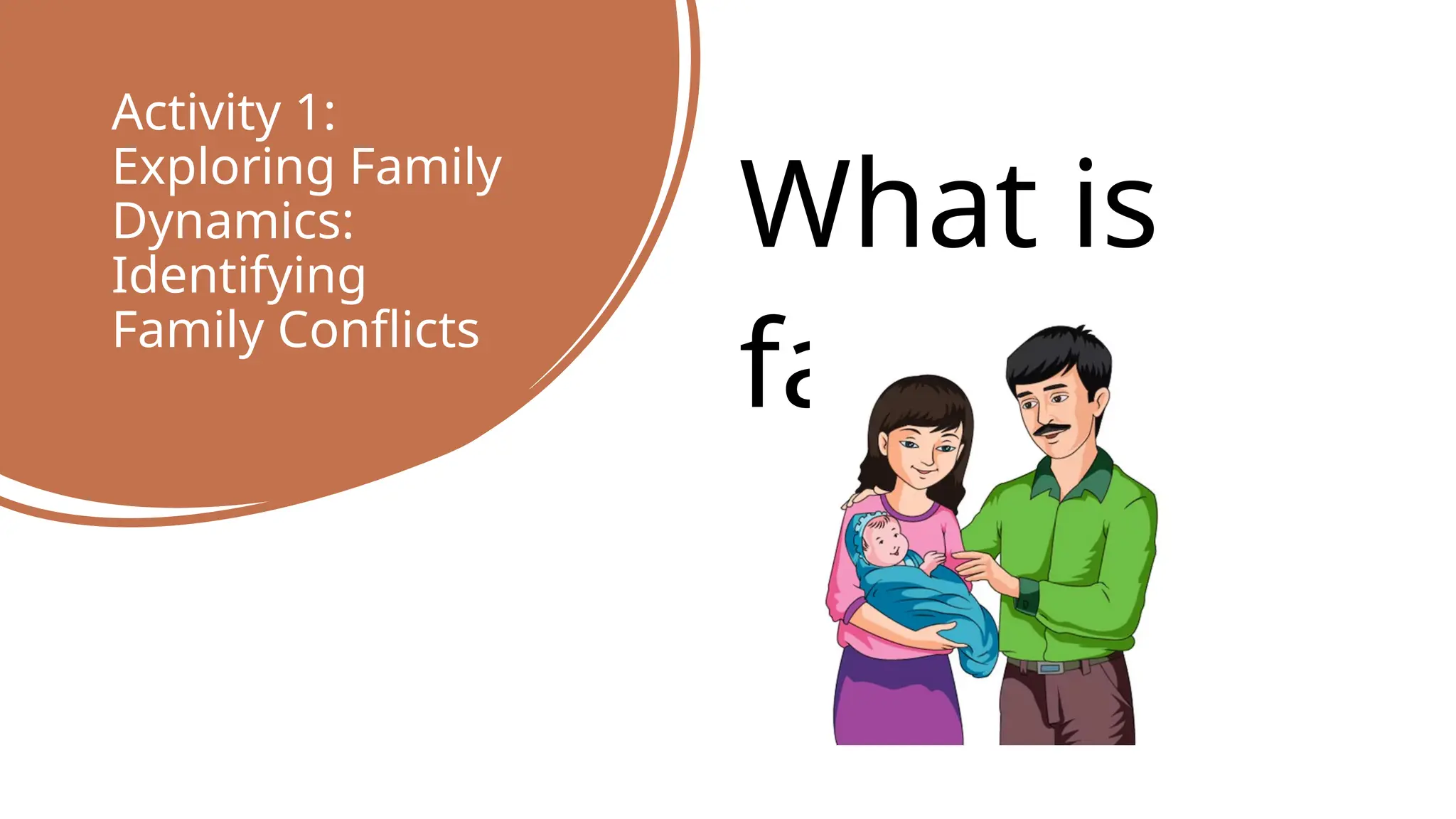
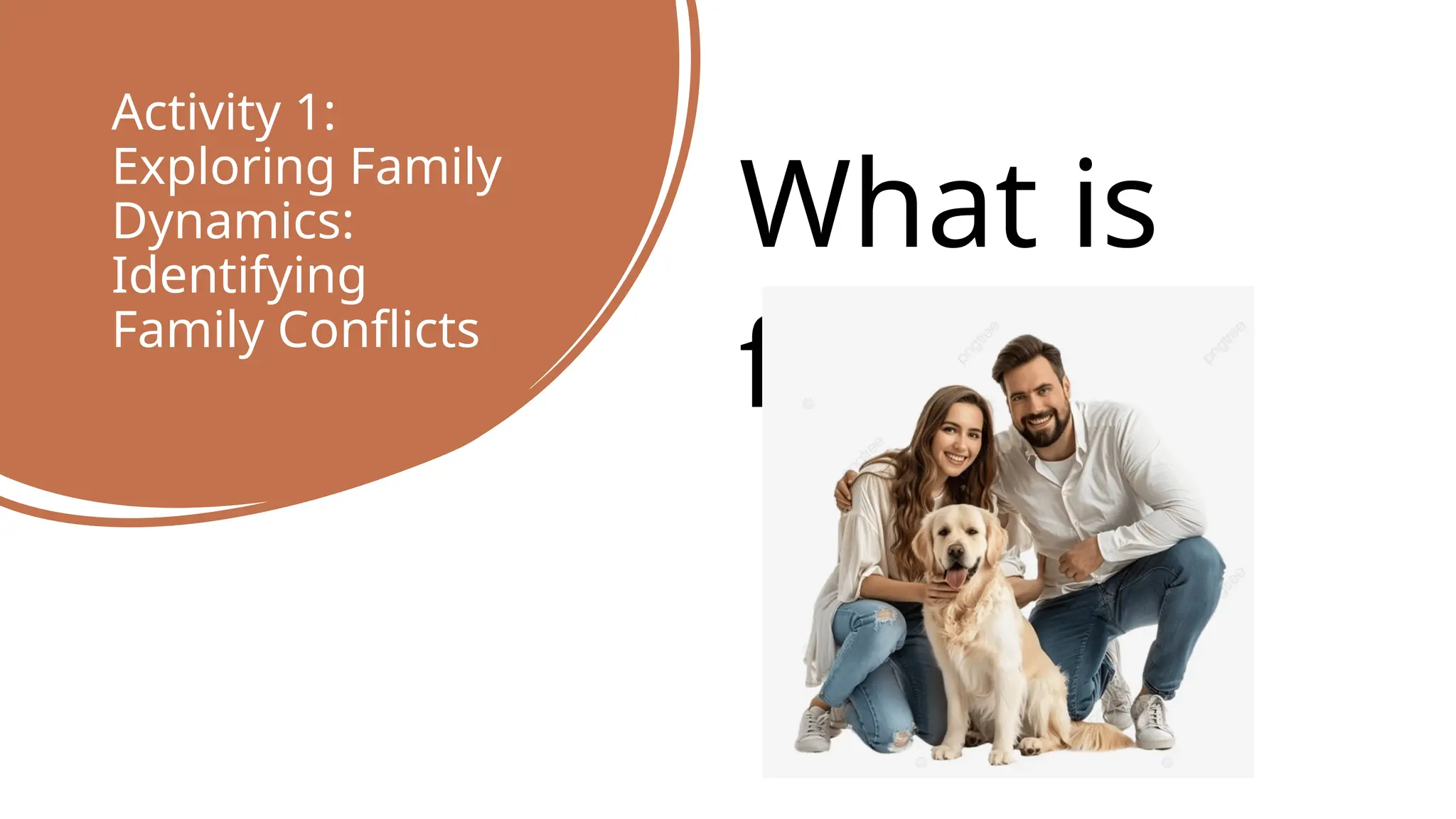
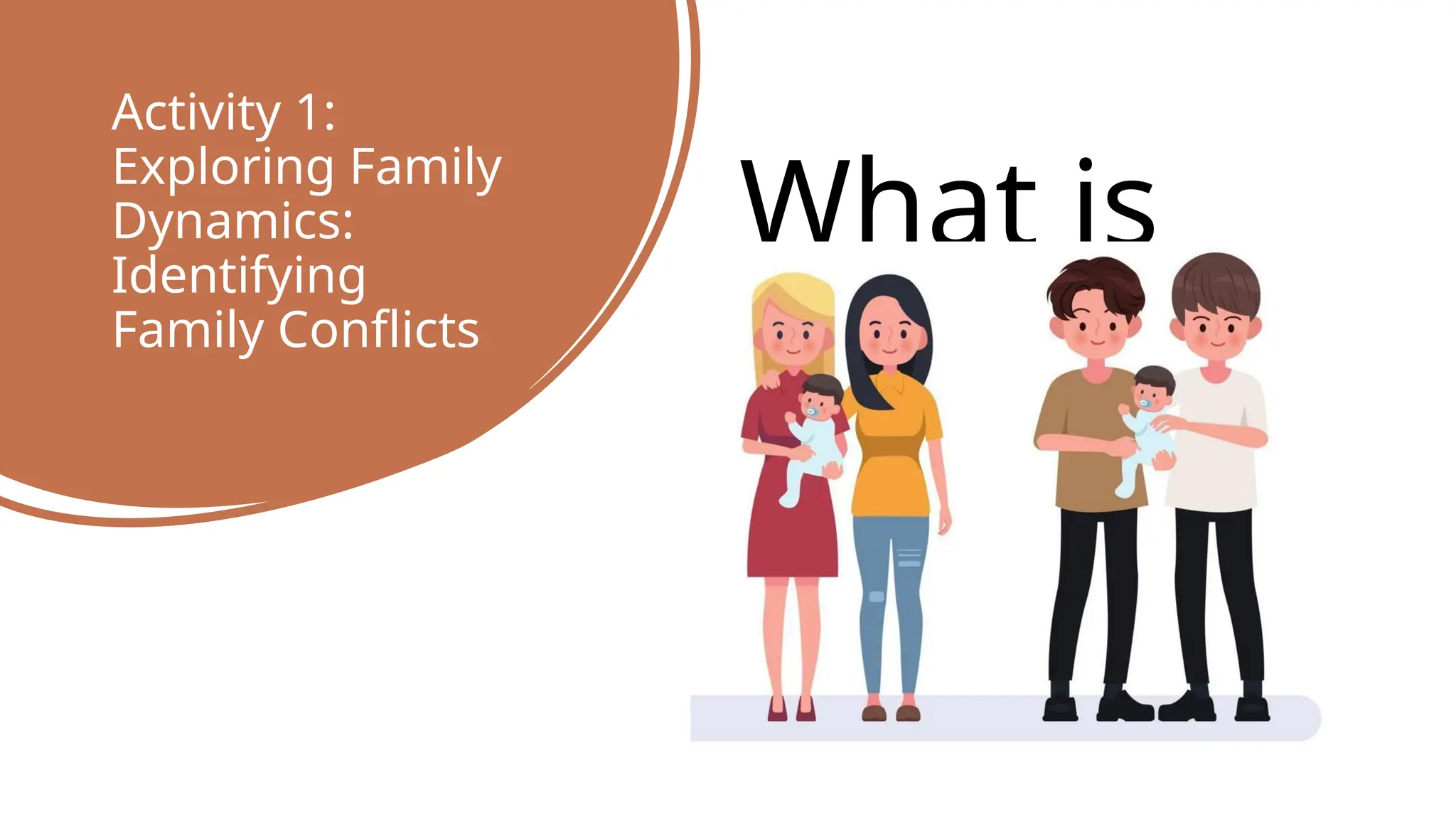
What is
family?
Activity 1:
Exploring Family
Dynamics:
Identifying
Family Conflicts
What is
family?
Activity 1:
Exploring Family
Dynamics:
Identifying
Family Conflicts
What is
family?
Activity 1:
Exploring Family
Dynamics:
Identifying
Family Conflicts
What is
family?
Activity 1:
Exploring Family
Dynamics:
Identifying
Family Conflicts
What is
family?
Activity 1:
Exploring Family
Dynamics:
Identifying
Family Conflicts
What is
family?
Activity 1:
Exploring Family
Dynamics:
Identifying
Family Conflicts
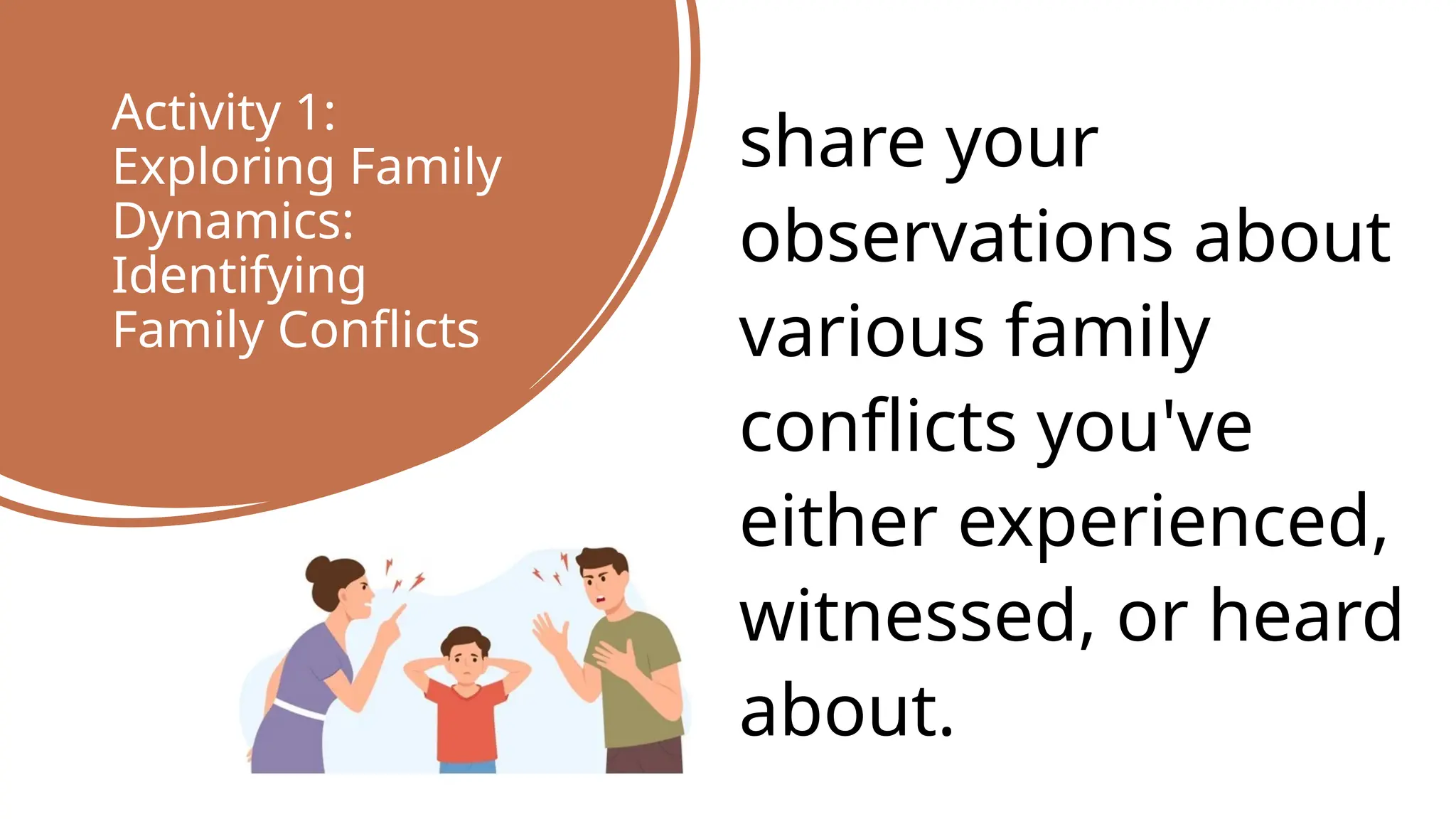
share your
observations about
various family
conflicts you've
either experienced,
witnessed, or heard
about.
Activity 1:
Exploring Family
Dynamics:
Identifying
Family Conflicts
add details,
examples, or
insights that
provide a deeper
understanding
of the conflicts.
Family Talk: The Importance of Open
Communication
share and discuss related topics. answer
the given questions:
Group 1 - Open Communication in
Problem-Solving
Group 2 - Nurturing Empathy and Active
Listening
Group 3- Establishing Healthy Boundaries
Open Communication in Problem-
Solving
• Group 1:
A. Why is open communication important in the context
of solving family problems?
B. What are the possible strategies that can be employed
by the family in attaining effective communication?
C. As a student and a member of a family, how will you
apply or teach open communication in your own
family?
Nurturing Empathy and Active
Listening
• Group 2
A.When can you be considered a good or active
listener?
B.How will you show empathy within your family?
C.Is listening a form of open communication?
Prove your answer.
Establishing Healthy
Boundaries
• Group 3
A. How will you establish a healthy boundary within
your family?
B. Is having boundaries in the family a good way of
communicating and understanding within the
family? Provide scenarios.
C. What are possible boundaries in the family that
creates positive results?
• The Importance of Family Communication
• 1. Builds Stronger Relationships
• Effective communication is key to creating stronger, more effective family relationships. When all family members can openly share their
thoughts and feelings, it leads to better understanding and respect among everyone. This open communication helps solve disagreements
more smoothly and strengthens the connection between family members, ensuring everyone feels valued and heard.
• 2. Enhances Emotional Health
• Having open lines of communication within the family is crucial for everyone's emotional well-being. It creates a supportive space where
individuals can express their emotions freely without fear of being judged. This aspect is particularly vital for children and teenagers as they
navigate through their emotional development. A nurturing environment allows family members to support each other in dealing with
stress, anxiety, and other emotional challenges, enhancing overall mental health and resilience.
• 3. Encourages Mutual Support and Problem-Solving
• Facing life's challenges becomes more manageable with a supportive family network. Good communication enables family members to
share their concerns and collaborate on finding solutions. This collective approach to problem-solving not only assists in addressing
individual issues but also strengthens the family's capacity to face future challenges as a united front.
• 4. Fosters Personal Growth and Learning
• Healthy communication within a family encourages everyone to share knowledge, experiences, and life lessons. This exchange is especially
beneficial for younger members who can learn from the wisdom and guidance of older relatives. Discussing different viewpoints and
experiences enriches the family's understanding and promotes a culture of continuous learning and personal development.

Family Conflict Management.pptx.........

  • 1.
  • 2.
  • 3.
  • 4.
  • 5.
  • 6.
  • 7.
  • 8.
    Activity 1: Exploring Family Dynamics: Identifying FamilyConflicts share your observations about various family conflicts you've either experienced, witnessed, or heard about.
  • 9.
    Activity 1: Exploring Family Dynamics: Identifying FamilyConflicts add details, examples, or insights that provide a deeper understanding of the conflicts.
  • 10.
    Family Talk: TheImportance of Open Communication share and discuss related topics. answer the given questions: Group 1 - Open Communication in Problem-Solving Group 2 - Nurturing Empathy and Active Listening Group 3- Establishing Healthy Boundaries
  • 11.
    Open Communication inProblem- Solving • Group 1: A. Why is open communication important in the context of solving family problems? B. What are the possible strategies that can be employed by the family in attaining effective communication? C. As a student and a member of a family, how will you apply or teach open communication in your own family?
  • 12.
    Nurturing Empathy andActive Listening • Group 2 A.When can you be considered a good or active listener? B.How will you show empathy within your family? C.Is listening a form of open communication? Prove your answer.
  • 13.
    Establishing Healthy Boundaries • Group3 A. How will you establish a healthy boundary within your family? B. Is having boundaries in the family a good way of communicating and understanding within the family? Provide scenarios. C. What are possible boundaries in the family that creates positive results?
  • 14.
    • The Importanceof Family Communication • 1. Builds Stronger Relationships • Effective communication is key to creating stronger, more effective family relationships. When all family members can openly share their thoughts and feelings, it leads to better understanding and respect among everyone. This open communication helps solve disagreements more smoothly and strengthens the connection between family members, ensuring everyone feels valued and heard. • 2. Enhances Emotional Health • Having open lines of communication within the family is crucial for everyone's emotional well-being. It creates a supportive space where individuals can express their emotions freely without fear of being judged. This aspect is particularly vital for children and teenagers as they navigate through their emotional development. A nurturing environment allows family members to support each other in dealing with stress, anxiety, and other emotional challenges, enhancing overall mental health and resilience. • 3. Encourages Mutual Support and Problem-Solving • Facing life's challenges becomes more manageable with a supportive family network. Good communication enables family members to share their concerns and collaborate on finding solutions. This collective approach to problem-solving not only assists in addressing individual issues but also strengthens the family's capacity to face future challenges as a united front. • 4. Fosters Personal Growth and Learning • Healthy communication within a family encourages everyone to share knowledge, experiences, and life lessons. This exchange is especially beneficial for younger members who can learn from the wisdom and guidance of older relatives. Discussing different viewpoints and experiences enriches the family's understanding and promotes a culture of continuous learning and personal development.

Editor's Notes

  • #9 Interact with peers by responding to their posted observations and comments. Then, students will be asked to share their thoughts, experiences, or they may ask questions. Activity 2: Family Talk: The Importance of Open Communication Instructions: In this activity, students will be engaged in the profound importance of open communication within the family. They will understand how it is pivotal in resolving issues, nurturing empathy, honing active listening skills, and realizing the significance of setting boundaries to cultivate a healthier family dynamic and conflict resolution.