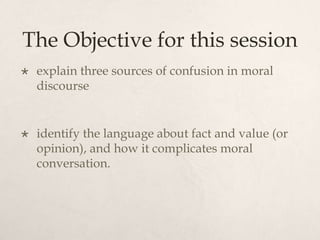
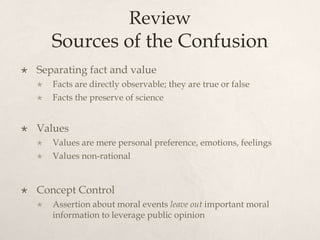
This document outlines three sources of confusion in moral discourse:
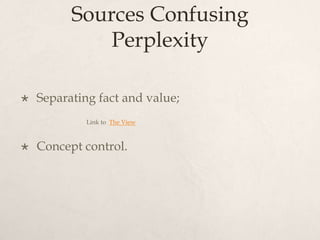
1) Separating facts from values and opinions, which complicates moral conversations by implying values are non-rational.
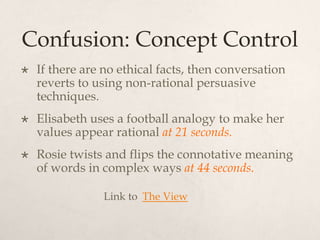
2) Concept control, where assertions about moral issues leave out important information to manipulate public opinion.
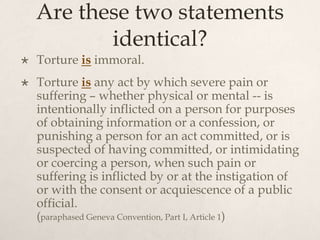
3) When there are no agreed upon ethical facts, conversations revert to non-rational persuasive techniques like analogies or twisting the meaning of words.
The document uses an example discussion from "The View" to illustrate these challenges in separating facts from values. It aims to explain complicating factors in moral language and discourse.


![indian_constitution_and_democracy[1][1].pptx](https://cdn.slidesharecdn.com/ss_thumbnails/indianconstitutionanddemocracy11-231015070130-1fec60fe-thumbnail.jpg?width=640&height=640&fit=bounds)


