Arshad Ali
Final Year, MBBS
Saidu Medical College, Swat
Facial NerveDepartment of Otorhinolaryngology,
Saidu Group of Teaching Hospitals,
Saidu Sharif, Swat - KP
Anatomy
 Course, branches & blood supply
Facial Nerve Paralysis
Causes
Symptoms
Investigations
 Exams & tests
Management
 Counselling
 Medical
 Surgical
 Prevention
Prognosis
Possible complications
Contents
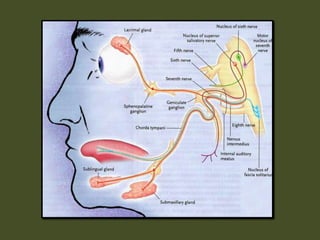
The facial nerve is the seventh cranial
nerve, or simply cranial nerve VII. It emerges
from the brainstem between the pons and
the medulla, and controls the muscles of
facial expression, and functions in the
conveyance of taste sensations from the
anterior two-thirds of the tongue and oral
cavity. It also supplies
preganglionic parasympathetic fibers to
several head and neck ganglia.
Facial Nerve
Intracranial
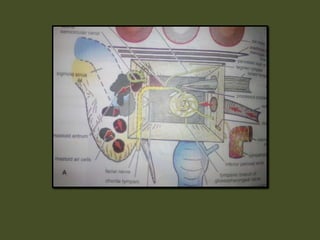
 From pons to internal acoustic meatus (15 -17 mm)
Intratemporal
 Meatal segment (8-10 mm)
 Labyrinthine segment (4 mm)
 Tympanic/horizontal segment (11 mm)
 Mastoid/vertical segment (13 mm)
Extracranial
 Stylomastoid foramen to the termination of its
peripheral branches
Course
Greater Petrosal Nerve to Lacrimal Gland
Nerve to Stapedius
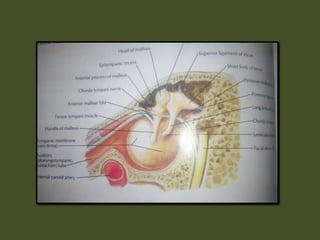
Chorda tympani
Communicating branch
Posterior auricular branch
Muscular branches
Peripheral branches
Branches
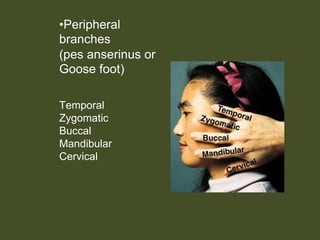
•Peripheral
branches
(pes anserinus or
Goose foot)
Temporal
Zygomatic
Buccal
Mandibular
Cervical
Anterior-inferior cerebellar artery
Labyrinthine artery
Superficial petrosal artery
Stylomastoid artery
Arterial Supply
For middle ear & mastoid surgery
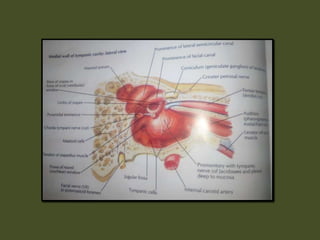
•Processus cochleariformis
•Oval window & horizontal canal
•Short process of incus
•Pyramid
•Tympanomastoid suture
•Digastric ridge
Surgical Land Marks of CN VII
For parotid surgery
•Cartilaginous pointer
•Tympanomastoid suture
•Styloid process
•Posterior belly of digastric
Surgical Land Marks of CN VII
Facial nerve paralysis is a nervous system disorder in which a
damaged nerve in the skull affects the movement of the muscles of
the face.
Facial Nerve Paralysis
Neuropathy – facial
Cranial mononeuropathy VII
Seventh cranial nerve palsy
Alternative Names
Idiopathic
 Bell’s palsy: viral, ischemia, heredatary, autoimmune
 Melkersson syndrome
 Recurrent facial nerve palsy
 Bilateral facial paralysis
Infections
 Herpes zoster oticus (Ramsy-Hunt syndrome)
Trauma
 Fractures of temporal bone (immediat or delayed
onset)
 Ear or mastoid surgery
 Parotid surgery & trauma to face
Causes
Neoplasms
 Intratemporal neoplasms
 Tumors of the parotid
Systemic disease & facial paralysis
 Mostly idiopathic
 Diabetes
 Hypothyroidism
 Leukemia
 Sacroidosis
 Wegener’s granulomatosis
 Leprosy
 Demyelinating disease
Causes cont’d
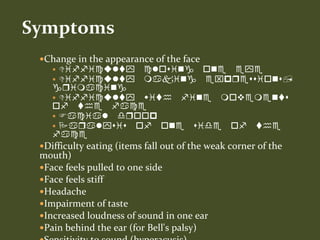
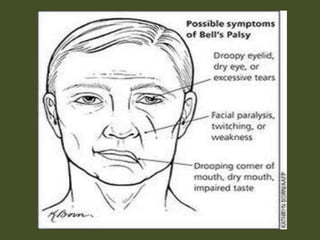
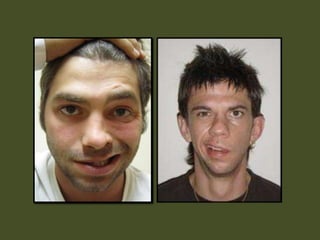
Change in the appearance of the face
 Difficulty closing one eye
 Difficulty making expressions,
grimacing
 Difficulty with fine movements
of the face
 Facial droop
 Paralysis of one side of the
face
Difficulty eating (items fall out of the weak corner of the
mouth)
Face feels pulled to one side
Face feels stiff
Headache
Impairment of taste
Increased loudness of sound in one ear
Pain behind the ear (for Bell's palsy)
Symptoms
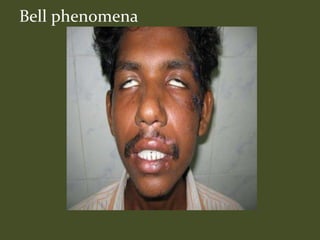
Bell phenomena
An examination will show facial drooping on one
side of the face or just on the forehead, eyelid, or
mouth. Examination of the eardrum may show fluid-
filled sacs (vesicles).
A blood test may be done to check for Lyme disease
Other tests may include:
 Lumbar puncture
 MRI of the head
 Tests to rule out a stroke
or other nervous system
problems
Exams and Tests
(to didegenerafferentiate b/w neuropraxia & degeneration)
Minimal nerve excitability test
Maximal stimulation test (MST)
Electroneuronography (ENoG)
Electromyography
Electrodiagnostic Tests
1.Central facial paralysis
2.Peripheral facial paralysis
At the level of nucleus: associated with the
paralysis of CN VI
At cerbellopontine angle: associated with
the involvement of CN VIII, V, IX, X, XI
In the bony canal: identified by the
topodiagnostic tests
In the parotid area: effects only the motor
functions of nerve
Localization of facial lesion
Schirmer test
Stapedial reflex
Taste test
Submandibular salivary flow test
Topodiagnostic tests
Medical
 Reassurance
 Analgesics
 Protection for the cornea
 Corticosteroids for idiopathic facial nerve palsy
 Physiotherapy
Surgical
 Decompression
 End-to-end anastomosis
 Nerve graft (cable graft)
 Hypoglossal facial anastomosis
 Plastic procedures
Management
The outlook varies. Some patients recover
completely, while others permanently lose movement
of the face.
Outlook (Prognosis)
Changes to the appearance of the face
(disfigurement) from loss of movement
Changes to taste
Damage to the eye (corneal ulcers and infections)
Nerves that grow back to the wrong structures
(aberrant regeneration) - for example, smiling causes
the eye to close
Spasm of face muscles or eyelids
Frey’s syndrome
Possible Complications
Call your health care provider if your face droops or
you have other symptoms of facial nerve palsy.
When to Contact a Medical
Professional?
Quickly treating tumors or other growths that
press down on the facial nerve may reduce the risk of
facial nerve palsy in some cases.
Prevention
Facial nerve

Facial nerve

  • 1.
    Arshad Ali Final Year,MBBS Saidu Medical College, Swat Facial NerveDepartment of Otorhinolaryngology, Saidu Group of Teaching Hospitals, Saidu Sharif, Swat - KP
  • 3.
    Anatomy  Course, branches& blood supply Facial Nerve Paralysis Causes Symptoms Investigations  Exams & tests Management  Counselling  Medical  Surgical  Prevention Prognosis Possible complications Contents
  • 4.
    The facial nerveis the seventh cranial nerve, or simply cranial nerve VII. It emerges from the brainstem between the pons and the medulla, and controls the muscles of facial expression, and functions in the conveyance of taste sensations from the anterior two-thirds of the tongue and oral cavity. It also supplies preganglionic parasympathetic fibers to several head and neck ganglia. Facial Nerve
  • 5.
    Intracranial  From ponsto internal acoustic meatus (15 -17 mm) Intratemporal  Meatal segment (8-10 mm)  Labyrinthine segment (4 mm)  Tympanic/horizontal segment (11 mm)  Mastoid/vertical segment (13 mm) Extracranial  Stylomastoid foramen to the termination of its peripheral branches Course
  • 10.
    Greater Petrosal Nerveto Lacrimal Gland Nerve to Stapedius Chorda tympani Communicating branch Posterior auricular branch Muscular branches Peripheral branches Branches
  • 11.
    •Peripheral branches (pes anserinus or Goosefoot) Temporal Zygomatic Buccal Mandibular Cervical
  • 12.
    Anterior-inferior cerebellar artery Labyrinthineartery Superficial petrosal artery Stylomastoid artery Arterial Supply
  • 13.
    For middle ear& mastoid surgery •Processus cochleariformis •Oval window & horizontal canal •Short process of incus •Pyramid •Tympanomastoid suture •Digastric ridge Surgical Land Marks of CN VII
  • 14.
    For parotid surgery •Cartilaginouspointer •Tympanomastoid suture •Styloid process •Posterior belly of digastric Surgical Land Marks of CN VII
  • 15.
    Facial nerve paralysisis a nervous system disorder in which a damaged nerve in the skull affects the movement of the muscles of the face. Facial Nerve Paralysis
  • 16.
    Neuropathy – facial Cranialmononeuropathy VII Seventh cranial nerve palsy Alternative Names
  • 17.
    Idiopathic  Bell’s palsy:viral, ischemia, heredatary, autoimmune  Melkersson syndrome  Recurrent facial nerve palsy  Bilateral facial paralysis Infections  Herpes zoster oticus (Ramsy-Hunt syndrome) Trauma  Fractures of temporal bone (immediat or delayed onset)  Ear or mastoid surgery  Parotid surgery & trauma to face Causes
  • 18.
    Neoplasms  Intratemporal neoplasms Tumors of the parotid Systemic disease & facial paralysis  Mostly idiopathic  Diabetes  Hypothyroidism  Leukemia  Sacroidosis  Wegener’s granulomatosis  Leprosy  Demyelinating disease Causes cont’d
  • 19.
    Change in theappearance of the face  Difficulty closing one eye  Difficulty making expressions, grimacing  Difficulty with fine movements of the face  Facial droop  Paralysis of one side of the face Difficulty eating (items fall out of the weak corner of the mouth) Face feels pulled to one side Face feels stiff Headache Impairment of taste Increased loudness of sound in one ear Pain behind the ear (for Bell's palsy) Symptoms
  • 22.
  • 23.
    An examination willshow facial drooping on one side of the face or just on the forehead, eyelid, or mouth. Examination of the eardrum may show fluid- filled sacs (vesicles). A blood test may be done to check for Lyme disease Other tests may include:  Lumbar puncture  MRI of the head  Tests to rule out a stroke or other nervous system problems Exams and Tests
  • 24.
    (to didegenerafferentiate b/wneuropraxia & degeneration) Minimal nerve excitability test Maximal stimulation test (MST) Electroneuronography (ENoG) Electromyography Electrodiagnostic Tests
  • 25.
    1.Central facial paralysis 2.Peripheralfacial paralysis At the level of nucleus: associated with the paralysis of CN VI At cerbellopontine angle: associated with the involvement of CN VIII, V, IX, X, XI In the bony canal: identified by the topodiagnostic tests In the parotid area: effects only the motor functions of nerve Localization of facial lesion
  • 26.
    Schirmer test Stapedial reflex Tastetest Submandibular salivary flow test Topodiagnostic tests
  • 27.
    Medical  Reassurance  Analgesics Protection for the cornea  Corticosteroids for idiopathic facial nerve palsy  Physiotherapy Surgical  Decompression  End-to-end anastomosis  Nerve graft (cable graft)  Hypoglossal facial anastomosis  Plastic procedures Management
  • 28.
    The outlook varies.Some patients recover completely, while others permanently lose movement of the face. Outlook (Prognosis)
  • 29.
    Changes to theappearance of the face (disfigurement) from loss of movement Changes to taste Damage to the eye (corneal ulcers and infections) Nerves that grow back to the wrong structures (aberrant regeneration) - for example, smiling causes the eye to close Spasm of face muscles or eyelids Frey’s syndrome Possible Complications
  • 30.
    Call your healthcare provider if your face droops or you have other symptoms of facial nerve palsy. When to Contact a Medical Professional?
  • 31.
    Quickly treating tumorsor other growths that press down on the facial nerve may reduce the risk of facial nerve palsy in some cases. Prevention