STRUCTU
RE
ORGANIZATI
ONAL
FBS
MR. ANDRIAN V. REYES, LPT
SERVICE
FOOD AND
BEVERAGE
• recognize the importance of an
organizational structure in
achieving one common goal; and
• explain the job descriptions and
job specifications of different food
and beverage personnel.
WHAT YOU
NEED TO KNOW
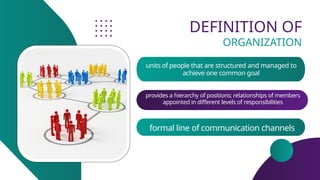
DEFINITION OF
ORGANIZATION
units of people that are structured and managed to
achieve one common goal
provides a hierarchy of positions; relationships of members
appointed in different levels of responsibilities
formal line of communication channels
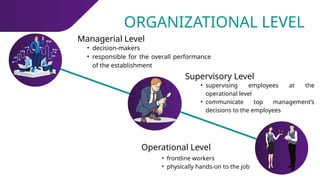
ORGANIZATIONAL LEVEL
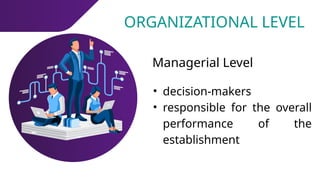
Managerial Level
• decision-makers
• responsible for the overall performance
of the establishment
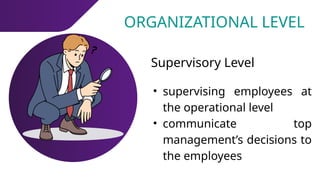
Supervisory Level
• supervising employees at the
operational level
• communicate top management’s
decisions to the employees
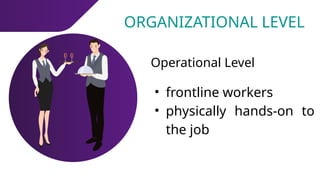
Operational Level
• frontline workers
• physically hands-on to the job
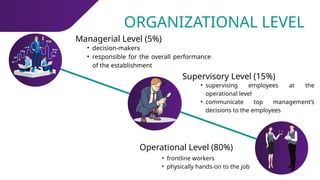
ORGANIZATIONAL LEVEL
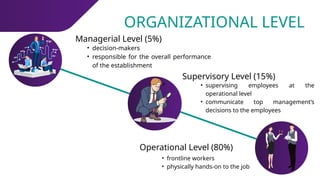
Managerial Level (5%)
• decision-makers
• responsible for the overall performance
of the establishment
Supervisory Level (15%)
• supervising employees at the
operational level
• communicate top management’s
decisions to the employees
Operational Level (80%)
• frontline workers
• physically hands-on to the job
ORGANIZATIONAL LEVEL
Managerial Level
• decision-makers
• responsible for the overall
performance of the
establishment
ORGANIZATIONAL LEVEL
Supervisory Level
• supervising employees at
the operational level
• communicate top
management’s decisions to
the employees
ORGANIZATIONAL LEVEL
Operational Level
• frontline workers
• physically hands-on to
the job
ORGANIZATIONAL LEVEL
Managerial Level (5%)
• decision-makers
• responsible for the overall performance
of the establishment
Supervisory Level (15%)
• supervising employees at the
operational level
• communicate top management’s
decisions to the employees
Operational Level (80%)
• frontline workers
• physically hands-on to the job
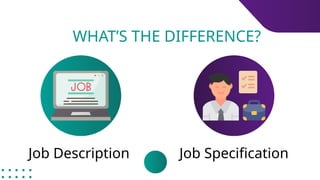
Job Description Job Specification
WHAT’S THE DIFFERENCE?
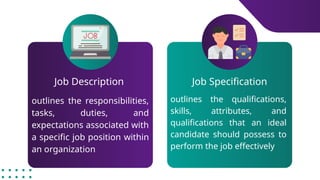
Job Description Job Specification
outlines the responsibilities,
tasks, duties, and
expectations associated with
a specific job position within
an organization
outlines the qualifications,
skills, attributes, and
qualifications that an ideal
candidate should possess to
perform the job effectively
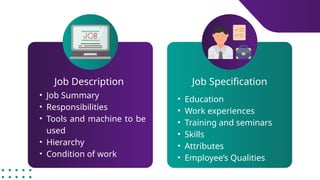
Job Description Job Specification
• Job Summary
• Responsibilities
• Tools and machine to be
used
• Hierarchy
• Condition of work
• Education
• Work experiences
• Training and seminars
• Skills
• Attributes
• Employee’s Qualities
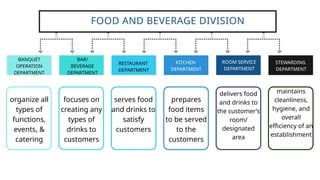
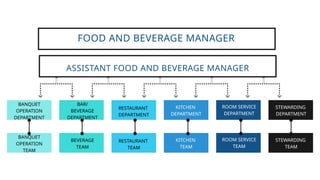
BANQUET
OPERATION
DEPARTMENT
FOOD AND BEVERAGE DIVISION
BAR/
BEVERAGE
DEPARTMENT
RESTAURANT
DEPARTMENT
KITCHEN
DEPARTMENT
ROOM SERVICE
DEPARTMENT
STEWARDING
DEPARTMENT
organize all
types of
functions,
events, &
catering
focuses on
creating any
types of
drinks to
customers
serves food
and drinks to
satisfy
customers
prepares
food items
to be served
to the
customers
delivers food
and drinks to
the customer’s
room/
designated
area
maintains
cleanliness,
hygiene, and
overall
efficiency of an
establishment
BANQUET
OPERATION
DEPARTMENT
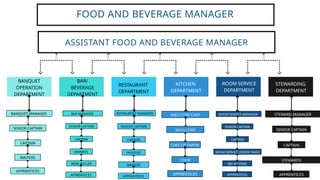
ASSISTANT FOOD AND BEVERAGE MANAGER
BAR/
BEVERAGE
DEPARTMENT
RESTAURANT
DEPARTMENT
KITCHEN
DEPARTMENT
ROOM SERVICE
DEPARTMENT
STEWARDING
DEPARTMENT
FOOD AND BEVERAGE MANAGER
BANQUET
OPERATION
TEAM
BEVERAGE
TEAM
RESTAURANT
TEAM
KITCHEN
TEAM
ROOM SERVICE
TEAM
STEWARDING
TEAM
BANQUET
OPERATION
DEPARTMENT
ASSISTANT FOOD AND BEVERAGE MANAGER
BAR/
BEVERAGE
DEPARTMENT
RESTAURANT
DEPARTMENT
KITCHEN
DEPARTMENT
ROOM SERVICE
DEPARTMENT
STEWARDING
DEPARTMENT
FOOD AND BEVERAGE MANAGER
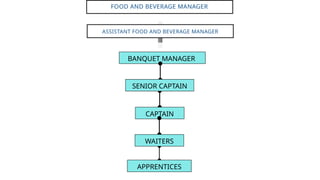
BANQUET MANAGER
SENIOR CAPTAIN
APPRENTICES
CAPTAIN
WAITERS
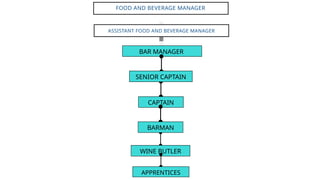
BAR MANAGER
SENIOR CAPTAIN
WINE BUTLER
CAPTAIN
BARMAN
APPRENTICES
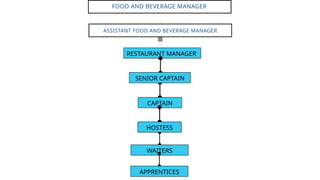
RESTAURANT MANAGER
SENIOR CAPTAIN
WAITERS
CAPTAIN
HOSTESS
APPRENTICES
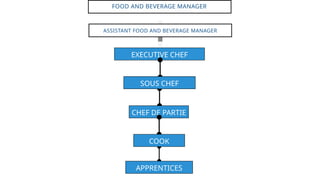
EXECUTIVE CHEF
SOUS CHEF
APPRENTICES
CHEF DE PARTIE
COOK
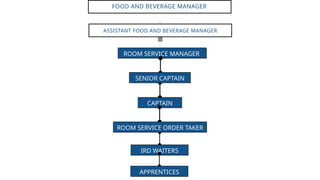
ROOM SERVICE MANAGER
SENIOR CAPTAIN
IRD WAITERS
CAPTAIN
ROOM SERVICE ORDER TAKER
APPRENTICES
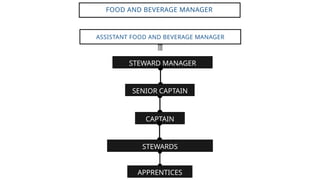
STEWARD MANAGER
SENIOR CAPTAIN
CAPTAIN
STEWARDS
APPRENTICES
BANQUET MANAGER
ASSISTANT FOOD AND BEVERAGE MANAGER
FOOD AND BEVERAGE MANAGER
SENIOR CAPTAIN
APPRENTICES
CAPTAIN
WAITERS
BAR MANAGER
ASSISTANT FOOD AND BEVERAGE MANAGER
FOOD AND BEVERAGE MANAGER
SENIOR CAPTAIN
WINE BUTLER
CAPTAIN
BARMAN
APPRENTICES
RESTAURANT MANAGER
ASSISTANT FOOD AND BEVERAGE MANAGER
FOOD AND BEVERAGE MANAGER
SENIOR CAPTAIN
WAITERS
CAPTAIN
HOSTESS
APPRENTICES
EXECUTIVE CHEF
ASSISTANT FOOD AND BEVERAGE MANAGER
FOOD AND BEVERAGE MANAGER
SOUS CHEF
APPRENTICES
CHEF DE PARTIE
COOK
ROOM SERVICE MANAGER
ASSISTANT FOOD AND BEVERAGE MANAGER
FOOD AND BEVERAGE MANAGER
SENIOR CAPTAIN
IRD WAITERS
CAPTAIN
ROOM SERVICE ORDER TAKER
APPRENTICES
STEWARD MANAGER
ASSISTANT FOOD AND BEVERAGE MANAGER
FOOD AND BEVERAGE MANAGER
SENIOR CAPTAIN
CAPTAIN
STEWARDS
APPRENTICES
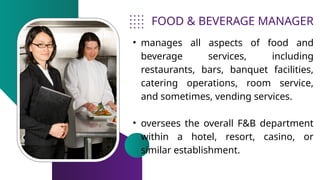
FOOD & BEVERAGE MANAGER
• manages all aspects of food and
beverage services, including
restaurants, bars, banquet facilities,
catering operations, room service,
and sometimes, vending services.
• oversees the overall F&B department
within a hotel, resort, casino, or
similar establishment.
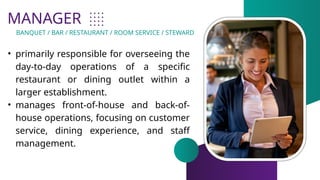
MANAGER
• primarily responsible for overseeing the
day-to-day operations of a specific
restaurant or dining outlet within a
larger establishment.
• manages front-of-house and back-of-
house operations, focusing on customer
service, dining experience, and staff
management.
BANQUET / BAR / RESTAURANT / ROOM SERVICE / STEWARD
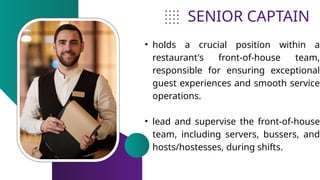
SENIOR CAPTAIN
• holds a crucial position within a
restaurant's front-of-house team,
responsible for ensuring exceptional
guest experiences and smooth service
operations.
• lead and supervise the front-of-house
team, including servers, bussers, and
hosts/hostesses, during shifts.
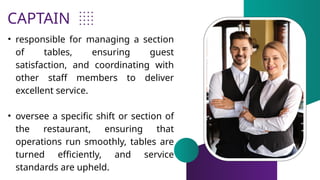
CAPTAIN
• responsible for managing a section
of tables, ensuring guest
satisfaction, and coordinating with
other staff members to deliver
excellent service.
• oversee a specific shift or section of
the restaurant, ensuring that
operations run smoothly, tables are
turned efficiently, and service
standards are upheld.
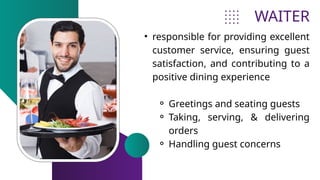
WAITER
• responsible for providing excellent
customer service, ensuring guest
satisfaction, and contributing to a
positive dining experience
⚬ Greetings and seating guests
⚬ Taking, serving, & delivering
orders
⚬ Handling guest concerns
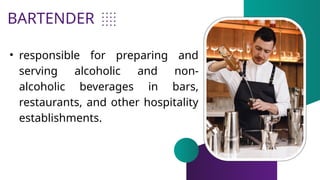
BARTENDER
• responsible for preparing and
serving alcoholic and non-
alcoholic beverages in bars,
restaurants, and other hospitality
establishments.
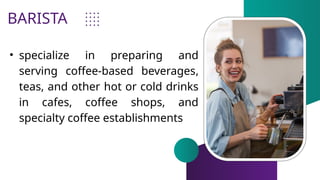
BARISTA
• specialize in preparing and
serving coffee-based beverages,
teas, and other hot or cold drinks
in cafes, coffee shops, and
specialty coffee establishments
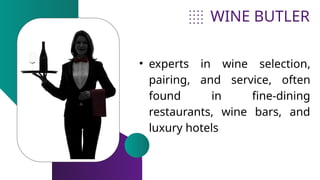
WINE BUTLER
• experts in wine selection,
pairing, and service, often
found in fine-dining
restaurants, wine bars, and
luxury hotels
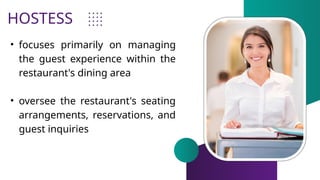
HOSTESS
• focuses primarily on managing
the guest experience within the
restaurant's dining area
• oversee the restaurant's seating
arrangements, reservations, and
guest inquiries
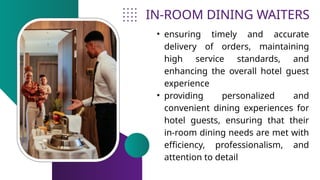
IN-ROOM DINING WAITERS
• ensuring timely and accurate
delivery of orders, maintaining
high service standards, and
enhancing the overall hotel guest
experience
• providing personalized and
convenient dining experiences for
hotel guests, ensuring that their
in-room dining needs are met with
efficiency, professionalism, and
attention to detail
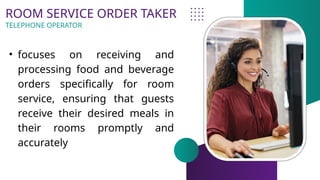
ROOM SERVICE ORDER TAKER
• focuses on receiving and
processing food and beverage
orders specifically for room
service, ensuring that guests
receive their desired meals in
their rooms promptly and
accurately
TELEPHONE OPERATOR
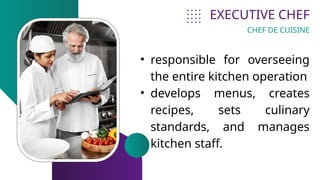
EXECUTIVE CHEF
• responsible for overseeing
the entire kitchen operation
• develops menus, creates
recipes, sets culinary
standards, and manages
kitchen staff.
CHEF DE CUISINE
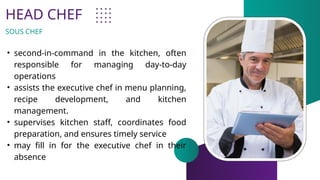
HEAD CHEF
• second-in-command in the kitchen, often
responsible for managing day-to-day
operations
• assists the executive chef in menu planning,
recipe development, and kitchen
management.
• supervises kitchen staff, coordinates food
preparation, and ensures timely service
• may fill in for the executive chef in their
absence
SOUS CHEF
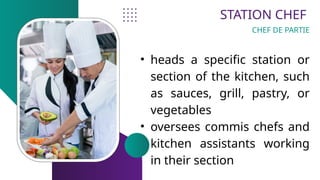
STATION CHEF
• heads a specific station or
section of the kitchen, such
as sauces, grill, pastry, or
vegetables
• oversees commis chefs and
kitchen assistants working
in their section
CHEF DE PARTIE
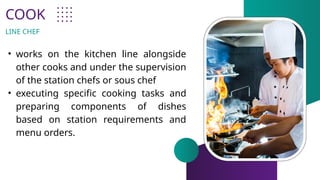
COOK
• works on the kitchen line alongside
other cooks and under the supervision
of the station chefs or sous chef
• executing specific cooking tasks and
preparing components of dishes
based on station requirements and
menu orders.
LINE CHEF
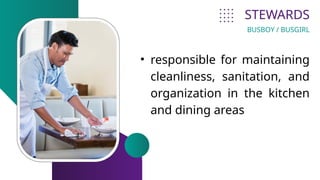
STEWARDS
• responsible for maintaining
cleanliness, sanitation, and
organization in the kitchen
and dining areas
BUSBOY / BUSGIRL
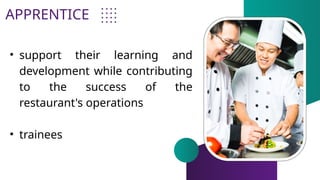
APPRENTICE
• support their learning and
development while contributing
to the success of the
restaurant's operations
• trainees
BANQUET
OPERATION
DEPARTMENT
ASSISTANT FOOD AND BEVERAGE MANAGER
BAR/
BEVERAGE
DEPARTMENT
RESTAURANT
DEPARTMENT
KITCHEN
DEPARTMENT
ROOM SERVICE
DEPARTMENT
STEWARDING
DEPARTMENT
FOOD AND BEVERAGE MANAGER
BANQUET MANAGER
SENIOR CAPTAIN
APPRENTICES
CAPTAIN
WAITERS
BAR MANAGER
SENIOR CAPTAIN
WINE BUTLER
CAPTAIN
BARMAN
APPRENTICES
RESTAURANT MANAGER
SENIOR CAPTAIN
WAITERS
CAPTAIN
HOSTESS
APPRENTICES
EXECUTIVE CHEF
SOUS CHEF
APPRENTICES
CHEF DE PARTIE
COOK
ROOM SERVICE MANAGER
SENIOR CAPTAIN
IRD WAITERS
CAPTAIN
ROOM SERVICE ORDER TAKER
APPRENTICES
STEWARD MANAGER
SENIOR CAPTAIN
CAPTAIN
STEWARDS
APPRENTICES
THANK
YOU
F O R Y O U R AT T E N T I O N

F&B Service Organizational Structure .pptx

  • 1.
    STRUCTU RE ORGANIZATI ONAL FBS MR. ANDRIAN V.REYES, LPT SERVICE FOOD AND BEVERAGE
  • 2.
    • recognize theimportance of an organizational structure in achieving one common goal; and • explain the job descriptions and job specifications of different food and beverage personnel. WHAT YOU NEED TO KNOW
  • 3.
    DEFINITION OF ORGANIZATION units ofpeople that are structured and managed to achieve one common goal provides a hierarchy of positions; relationships of members appointed in different levels of responsibilities formal line of communication channels
  • 4.
    ORGANIZATIONAL LEVEL Managerial Level •decision-makers • responsible for the overall performance of the establishment Supervisory Level • supervising employees at the operational level • communicate top management’s decisions to the employees Operational Level • frontline workers • physically hands-on to the job
  • 5.
    ORGANIZATIONAL LEVEL Managerial Level(5%) • decision-makers • responsible for the overall performance of the establishment Supervisory Level (15%) • supervising employees at the operational level • communicate top management’s decisions to the employees Operational Level (80%) • frontline workers • physically hands-on to the job
  • 6.
    ORGANIZATIONAL LEVEL Managerial Level •decision-makers • responsible for the overall performance of the establishment
  • 7.
    ORGANIZATIONAL LEVEL Supervisory Level •supervising employees at the operational level • communicate top management’s decisions to the employees
  • 8.
    ORGANIZATIONAL LEVEL Operational Level •frontline workers • physically hands-on to the job
  • 9.
    ORGANIZATIONAL LEVEL Managerial Level(5%) • decision-makers • responsible for the overall performance of the establishment Supervisory Level (15%) • supervising employees at the operational level • communicate top management’s decisions to the employees Operational Level (80%) • frontline workers • physically hands-on to the job
  • 10.
    Job Description JobSpecification WHAT’S THE DIFFERENCE?
  • 11.
    Job Description JobSpecification outlines the responsibilities, tasks, duties, and expectations associated with a specific job position within an organization outlines the qualifications, skills, attributes, and qualifications that an ideal candidate should possess to perform the job effectively
  • 12.
    Job Description JobSpecification • Job Summary • Responsibilities • Tools and machine to be used • Hierarchy • Condition of work • Education • Work experiences • Training and seminars • Skills • Attributes • Employee’s Qualities
  • 13.
    BANQUET OPERATION DEPARTMENT FOOD AND BEVERAGEDIVISION BAR/ BEVERAGE DEPARTMENT RESTAURANT DEPARTMENT KITCHEN DEPARTMENT ROOM SERVICE DEPARTMENT STEWARDING DEPARTMENT organize all types of functions, events, & catering focuses on creating any types of drinks to customers serves food and drinks to satisfy customers prepares food items to be served to the customers delivers food and drinks to the customer’s room/ designated area maintains cleanliness, hygiene, and overall efficiency of an establishment
  • 14.
    BANQUET OPERATION DEPARTMENT ASSISTANT FOOD ANDBEVERAGE MANAGER BAR/ BEVERAGE DEPARTMENT RESTAURANT DEPARTMENT KITCHEN DEPARTMENT ROOM SERVICE DEPARTMENT STEWARDING DEPARTMENT FOOD AND BEVERAGE MANAGER BANQUET OPERATION TEAM BEVERAGE TEAM RESTAURANT TEAM KITCHEN TEAM ROOM SERVICE TEAM STEWARDING TEAM
  • 15.
    BANQUET OPERATION DEPARTMENT ASSISTANT FOOD ANDBEVERAGE MANAGER BAR/ BEVERAGE DEPARTMENT RESTAURANT DEPARTMENT KITCHEN DEPARTMENT ROOM SERVICE DEPARTMENT STEWARDING DEPARTMENT FOOD AND BEVERAGE MANAGER BANQUET MANAGER SENIOR CAPTAIN APPRENTICES CAPTAIN WAITERS BAR MANAGER SENIOR CAPTAIN WINE BUTLER CAPTAIN BARMAN APPRENTICES RESTAURANT MANAGER SENIOR CAPTAIN WAITERS CAPTAIN HOSTESS APPRENTICES EXECUTIVE CHEF SOUS CHEF APPRENTICES CHEF DE PARTIE COOK ROOM SERVICE MANAGER SENIOR CAPTAIN IRD WAITERS CAPTAIN ROOM SERVICE ORDER TAKER APPRENTICES STEWARD MANAGER SENIOR CAPTAIN CAPTAIN STEWARDS APPRENTICES
  • 16.
    BANQUET MANAGER ASSISTANT FOODAND BEVERAGE MANAGER FOOD AND BEVERAGE MANAGER SENIOR CAPTAIN APPRENTICES CAPTAIN WAITERS
  • 17.
    BAR MANAGER ASSISTANT FOODAND BEVERAGE MANAGER FOOD AND BEVERAGE MANAGER SENIOR CAPTAIN WINE BUTLER CAPTAIN BARMAN APPRENTICES
  • 18.
    RESTAURANT MANAGER ASSISTANT FOODAND BEVERAGE MANAGER FOOD AND BEVERAGE MANAGER SENIOR CAPTAIN WAITERS CAPTAIN HOSTESS APPRENTICES
  • 19.
    EXECUTIVE CHEF ASSISTANT FOODAND BEVERAGE MANAGER FOOD AND BEVERAGE MANAGER SOUS CHEF APPRENTICES CHEF DE PARTIE COOK
  • 20.
    ROOM SERVICE MANAGER ASSISTANTFOOD AND BEVERAGE MANAGER FOOD AND BEVERAGE MANAGER SENIOR CAPTAIN IRD WAITERS CAPTAIN ROOM SERVICE ORDER TAKER APPRENTICES
  • 21.
    STEWARD MANAGER ASSISTANT FOODAND BEVERAGE MANAGER FOOD AND BEVERAGE MANAGER SENIOR CAPTAIN CAPTAIN STEWARDS APPRENTICES
  • 22.
    FOOD & BEVERAGEMANAGER • manages all aspects of food and beverage services, including restaurants, bars, banquet facilities, catering operations, room service, and sometimes, vending services. • oversees the overall F&B department within a hotel, resort, casino, or similar establishment.
  • 23.
    MANAGER • primarily responsiblefor overseeing the day-to-day operations of a specific restaurant or dining outlet within a larger establishment. • manages front-of-house and back-of- house operations, focusing on customer service, dining experience, and staff management. BANQUET / BAR / RESTAURANT / ROOM SERVICE / STEWARD
  • 24.
    SENIOR CAPTAIN • holdsa crucial position within a restaurant's front-of-house team, responsible for ensuring exceptional guest experiences and smooth service operations. • lead and supervise the front-of-house team, including servers, bussers, and hosts/hostesses, during shifts.
  • 25.
    CAPTAIN • responsible formanaging a section of tables, ensuring guest satisfaction, and coordinating with other staff members to deliver excellent service. • oversee a specific shift or section of the restaurant, ensuring that operations run smoothly, tables are turned efficiently, and service standards are upheld.
  • 26.
    WAITER • responsible forproviding excellent customer service, ensuring guest satisfaction, and contributing to a positive dining experience ⚬ Greetings and seating guests ⚬ Taking, serving, & delivering orders ⚬ Handling guest concerns
  • 27.
    BARTENDER • responsible forpreparing and serving alcoholic and non- alcoholic beverages in bars, restaurants, and other hospitality establishments.
  • 28.
    BARISTA • specialize inpreparing and serving coffee-based beverages, teas, and other hot or cold drinks in cafes, coffee shops, and specialty coffee establishments
  • 29.
    WINE BUTLER • expertsin wine selection, pairing, and service, often found in fine-dining restaurants, wine bars, and luxury hotels
  • 30.
    HOSTESS • focuses primarilyon managing the guest experience within the restaurant's dining area • oversee the restaurant's seating arrangements, reservations, and guest inquiries
  • 31.
    IN-ROOM DINING WAITERS •ensuring timely and accurate delivery of orders, maintaining high service standards, and enhancing the overall hotel guest experience • providing personalized and convenient dining experiences for hotel guests, ensuring that their in-room dining needs are met with efficiency, professionalism, and attention to detail
  • 32.
    ROOM SERVICE ORDERTAKER • focuses on receiving and processing food and beverage orders specifically for room service, ensuring that guests receive their desired meals in their rooms promptly and accurately TELEPHONE OPERATOR
  • 33.
    EXECUTIVE CHEF • responsiblefor overseeing the entire kitchen operation • develops menus, creates recipes, sets culinary standards, and manages kitchen staff. CHEF DE CUISINE
  • 34.
    HEAD CHEF • second-in-commandin the kitchen, often responsible for managing day-to-day operations • assists the executive chef in menu planning, recipe development, and kitchen management. • supervises kitchen staff, coordinates food preparation, and ensures timely service • may fill in for the executive chef in their absence SOUS CHEF
  • 35.
    STATION CHEF • headsa specific station or section of the kitchen, such as sauces, grill, pastry, or vegetables • oversees commis chefs and kitchen assistants working in their section CHEF DE PARTIE
  • 36.
    COOK • works onthe kitchen line alongside other cooks and under the supervision of the station chefs or sous chef • executing specific cooking tasks and preparing components of dishes based on station requirements and menu orders. LINE CHEF
  • 37.
    STEWARDS • responsible formaintaining cleanliness, sanitation, and organization in the kitchen and dining areas BUSBOY / BUSGIRL
  • 38.
    APPRENTICE • support theirlearning and development while contributing to the success of the restaurant's operations • trainees
  • 39.
    BANQUET OPERATION DEPARTMENT ASSISTANT FOOD ANDBEVERAGE MANAGER BAR/ BEVERAGE DEPARTMENT RESTAURANT DEPARTMENT KITCHEN DEPARTMENT ROOM SERVICE DEPARTMENT STEWARDING DEPARTMENT FOOD AND BEVERAGE MANAGER BANQUET MANAGER SENIOR CAPTAIN APPRENTICES CAPTAIN WAITERS BAR MANAGER SENIOR CAPTAIN WINE BUTLER CAPTAIN BARMAN APPRENTICES RESTAURANT MANAGER SENIOR CAPTAIN WAITERS CAPTAIN HOSTESS APPRENTICES EXECUTIVE CHEF SOUS CHEF APPRENTICES CHEF DE PARTIE COOK ROOM SERVICE MANAGER SENIOR CAPTAIN IRD WAITERS CAPTAIN ROOM SERVICE ORDER TAKER APPRENTICES STEWARD MANAGER SENIOR CAPTAIN CAPTAIN STEWARDS APPRENTICES
  • 40.
    THANK YOU F O RY O U R AT T E N T I O N

Editor's Notes

  • #4 Managerial Level: Managers and Executives: The managerial level is responsible for making strategic decisions and setting the overall direction of the organization. Managers develop plans, policies, and objectives to achieve organizational goals. Responsibilities: Managers are accountable for the performance of their departments or divisions. They make decisions related to resource allocation, budgeting, goal setting, and organizational strategy. Examples: Department managers, branch managers, regional directors, and executives such as CEOs, CFOs, and COOs. Supervisory Level: Supervisors or Team Leaders: The supervisory level is responsible for overseeing the work of operational-level employees. Supervisors bridge the gap between frontline workers and higher management. Responsibilities: Supervisors are responsible for managing and guiding the daily activities of their teams. They ensure that tasks are completed efficiently, quality standards are met, and employees are working effectively. Examples: Shift supervisors in a restaurant, team leaders on a factory floor, or department heads in a hospital. Operational Level: Frontline Workers: This is the lowest level of the organizational hierarchy and includes employees who are directly involved in the day-to-day operations of the organization. Responsibilities: Operational-level employees perform tasks related to the core functions of the organization. They are responsible for producing goods, delivering services, and carrying out routine activities that directly contribute to the organization's mission. Examples: In a manufacturing company, operational-level employees would include assembly line workers. In a retail store, it would be sales associates and cashiers.
  • #5 Managerial Level: Managers and Executives: The managerial level is responsible for making strategic decisions and setting the overall direction of the organization. Managers develop plans, policies, and objectives to achieve organizational goals. Responsibilities: Managers are accountable for the performance of their departments or divisions. They make decisions related to resource allocation, budgeting, goal setting, and organizational strategy. Examples: Department managers, branch managers, regional directors, and executives such as CEOs, CFOs, and COOs. Supervisory Level: Supervisors or Team Leaders: The supervisory level is responsible for overseeing the work of operational-level employees. Supervisors bridge the gap between frontline workers and higher management. Responsibilities: Supervisors are responsible for managing and guiding the daily activities of their teams. They ensure that tasks are completed efficiently, quality standards are met, and employees are working effectively. Examples: Shift supervisors in a restaurant, team leaders on a factory floor, or department heads in a hospital. Operational Level: Frontline Workers: This is the lowest level of the organizational hierarchy and includes employees who are directly involved in the day-to-day operations of the organization. Responsibilities: Operational-level employees perform tasks related to the core functions of the organization. They are responsible for producing goods, delivering services, and carrying out routine activities that directly contribute to the organization's mission. Examples: In a manufacturing company, operational-level employees would include assembly line workers. In a retail store, it would be sales associates and cashiers.
  • #6 Managerial Level: Managers and Executives: The managerial level is responsible for making strategic decisions and setting the overall direction of the organization. Managers develop plans, policies, and objectives to achieve organizational goals. Responsibilities: Managers are accountable for the performance of their departments or divisions. They make decisions related to resource allocation, budgeting, goal setting, and organizational strategy. Examples: Department managers, branch managers, regional directors, and executives such as CEOs, CFOs, and COOs.
  • #7 Supervisory Level: Supervisors or Team Leaders: The supervisory level is responsible for overseeing the work of operational-level employees. Supervisors bridge the gap between frontline workers and higher management. Responsibilities: Supervisors are responsible for managing and guiding the daily activities of their teams. They ensure that tasks are completed efficiently, quality standards are met, and employees are working effectively. Examples: Shift supervisors in a restaurant, team leaders on a factory floor, or department heads in a hospital. Operational Level: Frontline Workers: This is the lowest level of the organizational hierarchy and includes employees who are directly involved in the day-to-day operations of the organization. Responsibilities: Operational-level employees perform tasks related to the core functions of the organization. They are responsible for producing goods, delivering services, and carrying out routine activities that directly contribute to the organization's mission. Examples: In a manufacturing company, operational-level employees would include assembly line workers. In a retail store, it would be sales associates and cashiers.
  • #8 Operational Level: Frontline Workers: This is the lowest level of the organizational hierarchy and includes employees who are directly involved in the day-to-day operations of the organization. Responsibilities: Operational-level employees perform tasks related to the core functions of the organization. They are responsible for producing goods, delivering services, and carrying out routine activities that directly contribute to the organization's mission. Examples: In a manufacturing company, operational-level employees would include assembly line workers. In a retail store, it would be sales associates and cashiers.
  • #9 Managerial Level: Managers and Executives: The managerial level is responsible for making strategic decisions and setting the overall direction of the organization. Managers develop plans, policies, and objectives to achieve organizational goals. Responsibilities: Managers are accountable for the performance of their departments or divisions. They make decisions related to resource allocation, budgeting, goal setting, and organizational strategy. Examples: Department managers, branch managers, regional directors, and executives such as CEOs, CFOs, and COOs. Supervisory Level: Supervisors or Team Leaders: The supervisory level is responsible for overseeing the work of operational-level employees. Supervisors bridge the gap between frontline workers and higher management. Responsibilities: Supervisors are responsible for managing and guiding the daily activities of their teams. They ensure that tasks are completed efficiently, quality standards are met, and employees are working effectively. Examples: Shift supervisors in a restaurant, team leaders on a factory floor, or department heads in a hospital. Operational Level: Frontline Workers: This is the lowest level of the organizational hierarchy and includes employees who are directly involved in the day-to-day operations of the organization. Responsibilities: Operational-level employees perform tasks related to the core functions of the organization. They are responsible for producing goods, delivering services, and carrying out routine activities that directly contribute to the organization's mission. Examples: In a manufacturing company, operational-level employees would include assembly line workers. In a retail store, it would be sales associates and cashiers.
  • #10 Job Specification: A job specification, also known as a person specification, is a complementary document to the job description. It outlines the qualifications, skills, attributes, and qualifications that an ideal candidate should possess to perform the job effectively. It provides detailed information about the qualifications and requirements needed to be considered for the position, such as educational background, experience, certifications, specific skills, and personal characteristics. Job specifications help in the recruitment and selection process by assisting hiring managers and HR professionals in identifying the most suitable candidates. They serve as criteria against which applicants are evaluated during the screening and interviewing process. By matching an applicant's qualifications with the job specification, employers can determine if the candidate is a good fit for the role. Job specifications also aid in creating structured interview questions and assessments that align with the job's requirements. Job Description: A job description is a detailed written document that outlines the responsibilities, tasks, duties, and expectations associated with a specific job position within an organization. It provides a comprehensive overview of what the job entails, including the purpose of the role, reporting relationships, essential functions, and day-to-day responsibilities. Job descriptions often include information about the department or team the position belongs to, the job title, the location, and to whom the employee will report. Job descriptions serve as a valuable tool for both employers and employees. Employers use them to set expectations, evaluate performance, and establish job roles. Job seekers use them to assess whether they are qualified and interested in the position.
  • #11 Job Specification: A job specification, also known as a person specification, is a complementary document to the job description. It outlines the qualifications, skills, attributes, and qualifications that an ideal candidate should possess to perform the job effectively. It provides detailed information about the qualifications and requirements needed to be considered for the position, such as educational background, experience, certifications, specific skills, and personal characteristics. Job specifications help in the recruitment and selection process by assisting hiring managers and HR professionals in identifying the most suitable candidates. They serve as criteria against which applicants are evaluated during the screening and interviewing process. By matching an applicant's qualifications with the job specification, employers can determine if the candidate is a good fit for the role. Job specifications also aid in creating structured interview questions and assessments that align with the job's requirements. Job Description: A job description is a detailed written document that outlines the responsibilities, tasks, duties, and expectations associated with a specific job position within an organization. It provides a comprehensive overview of what the job entails, including the purpose of the role, reporting relationships, essential functions, and day-to-day responsibilities. Job descriptions often include information about the department or team the position belongs to, the job title, the location, and to whom the employee will report. Job descriptions serve as a valuable tool for both employers and employees. Employers use them to set expectations, evaluate performance, and establish job roles. Job seekers use them to assess whether they are qualified and interested in the position.
  • #12 Job Specification: A job specification, also known as a person specification, is a complementary document to the job description. It outlines the qualifications, skills, attributes, and qualifications that an ideal candidate should possess to perform the job effectively. It provides detailed information about the qualifications and requirements needed to be considered for the position, such as educational background, experience, certifications, specific skills, and personal characteristics. Job specifications help in the recruitment and selection process by assisting hiring managers and HR professionals in identifying the most suitable candidates. They serve as criteria against which applicants are evaluated during the screening and interviewing process. By matching an applicant's qualifications with the job specification, employers can determine if the candidate is a good fit for the role. Job specifications also aid in creating structured interview questions and assessments that align with the job's requirements. Job Description: A job description is a detailed written document that outlines the responsibilities, tasks, duties, and expectations associated with a specific job position within an organization. It provides a comprehensive overview of what the job entails, including the purpose of the role, reporting relationships, essential functions, and day-to-day responsibilities. Job descriptions often include information about the department or team the position belongs to, the job title, the location, and to whom the employee will report. Job descriptions serve as a valuable tool for both employers and employees. Employers use them to set expectations, evaluate performance, and establish job roles. Job seekers use them to assess whether they are qualified and interested in the position.
  • #22  Food & Beverage (F&B) Manager plays a crucial role in the hospitality industry, overseeing the operations and management of all food and beverage services within a hotel, restaurant, catering company, or similar establishment. Their responsibilities are diverse and encompass various aspects of F&B service. Here are the typical roles and responsibilities of a Food & Beverage Manager: Menu Planning and Development: Collaborate with chefs and culinary teams to create menus that align with the establishment's concept, target audience, and budget. Monitor food trends, customer preferences, and dietary requirements to update menus regularly. Ensure menu items are priced appropriately to meet financial goals while maintaining quality and profitability. Inventory Management: Oversee inventory levels of food, beverages, supplies, and equipment. Implement inventory control measures to minimize waste, spoilage, and theft. Coordinate with suppliers for timely deliveries and negotiate contracts for favorable pricing and terms. Quality Control and Compliance: Maintain high standards of food quality, presentation, and service. Ensure compliance with health and safety regulations, including food handling, sanitation, and hygiene practices. Conduct regular inspections and audits to assess cleanliness, organization, and overall operational efficiency. Staff Recruitment and Training: Recruit, hire, and train F&B staff, including servers, bartenders, kitchen staff, and supervisors. Develop training programs to educate staff on service standards, product knowledge, upselling techniques, and customer relations. Foster a positive work environment, provide coaching and feedback, and address performance issues as needed. Customer Service and Guest Satisfaction: Monitor customer feedback and reviews to identify areas for improvement and implement corrective actions. Resolve customer complaints and ensure guest satisfaction by delivering exceptional service and personalized experiences. Train staff to anticipate guest needs, handle inquiries professionally, and exceed expectations. Financial Management: Develop and manage budgets for F&B operations, including revenue forecasts, cost controls, and profit margins. Analyze financial reports, sales data, and performance metrics to track progress and make informed business decisions. Implement strategies to increase revenue through promotions, upselling, and cost-effective purchasing practices. Event Planning and Catering Services: Coordinate and oversee events, banquets, and catering services, including menu selection, setup, staffing, and logistics. Work closely with event planners, clients, and vendors to ensure seamless execution and customer satisfaction. Promote and market catering services to generate additional revenue and expand clientele. Collaboration and Communication: Collaborate with other departments such as marketing, sales, and operations to align F&B initiatives with overall business objectives. Communicate effectively with stakeholders, including senior management, staff, suppliers, and customers. Stay informed about industry trends, market conditions, and competitor activities to stay competitive and innovative. Overall, a Food & Beverage Manager plays a pivotal role in managing all aspects of F&B operations, from strategic planning and financial management to customer service and team leadership. Their goal is to ensure a memorable dining experience for guests while achieving business objectives and maintaining profitability.
  • #23 estaurant Manager: Focus Area: Primarily responsible for overseeing the day-to-day operations of a specific restaurant or dining outlet within a larger establishment. Manages front-of-house and back-of-house operations, focusing on customer service, dining experience, and staff management. Staff Supervision and Training: Recruits, trains, schedules, and supervises restaurant staff, including hosts, servers, bussers, and kitchen personnel. Ensures staff adhere to service standards, handle customer inquiries professionally, and maintain a positive work environment. Guest Relations and Service Excellence: Interacts with guests, handles reservations, addresses customer concerns, and ensures a pleasant dining experience. Monitors service flow, table turnovers, and overall restaurant ambiance to meet guest expectations. Financial Performance: Manages restaurant budgets, tracks expenses, and analyzes sales data to optimize profitability. Implements pricing strategies, promotions, and cost-control measures to achieve financial goals. Menu Execution and Quality Assurance: Ensures menu items are prepared correctly, plated attractively, and served according to established standards. Monitors food quality, portion sizes, and presentation to maintain consistency and customer satisfaction.
  • #24 Senior Captain: Guest Service and Experience: Welcomes guests, escorts them to their tables, and ensures a positive dining experience. Provides personalized service, takes orders, and makes menu recommendations based on guest preferences. Addresses guest inquiries, resolves complaints, and ensures satisfaction throughout the dining experience. Team Leadership and Coordination: Leads the front-of-house team, including servers, hosts/hostesses, and bussers. Assigns duties, schedules shifts, and ensures smooth coordination among staff for efficient service. Trains new team members on service standards, menu knowledge, and guest interaction protocols. Table Management and Service Flow: Manages table reservations, seating arrangements, and table turnovers to optimize seating capacity and guest flow. Coordinates with kitchen staff and bar personnel to ensure timely delivery of food and beverages. Monitors dining areas for cleanliness, ambiance, and adherence to restaurant standards. Upselling and Revenue Generation: Promotes menu items, specials, and beverage offerings to increase sales and enhance guest experience. Suggests wine pairings, dessert options, and additional menu items to upsell and maximize revenue. Handles billing, processes payments accurately, and manages cash handling procedures.
  • #26 The role of a waiter is fundamental to the smooth operation of a restaurant or dining establishment. Waiters are responsible for providing excellent customer service, ensuring guest satisfaction, and contributing to a positive dining experience. Here are the typical roles and responsibilities of a waiter: Greeting and Seating Guests: Welcome guests as they arrive at the restaurant with a warm and friendly demeanor. Escort guests to their tables, provide menus, and assist with seating arrangements. Taking Orders: Present menus and provide recommendations or descriptions of menu items. Take orders accurately and efficiently, noting any special requests or dietary restrictions. Serving Food and Beverages: Deliver food and beverages to tables promptly and courteously. Ensure orders are complete and accurately prepared according to guest specifications. Knowledge of Menu and Specials: Have a thorough understanding of the menu, including ingredients, preparation methods, and available specials. Be able to answer questions about menu items, make recommendations, and upsell additional items. Upselling and Promotion: Promote specials, appetizers, desserts, and beverage offerings to increase sales. Suggest wine pairings, recommend menu combinations, and highlight promotional offers. Maintaining Table Appearance: Set tables with appropriate utensils, glassware, and tableware before guests arrive. Ensure tables are clean, organized, and properly set throughout service. Handling Payments: Present bills to guests, accurately itemize charges, and process payments (cash, credit/debit cards, etc.). Handle cash transactions, provide change, and process credit card payments securely. Guest Interaction and Engagement: Maintain a professional and friendly demeanor while interacting with guests. Anticipate guest needs, offer refills, provide condiments, and address any requests promptly. Communication with Kitchen and Bar: Communicate guest orders to the kitchen and bar accurately and in a timely manner. Coordinate with kitchen staff to ensure orders are prepared correctly and delivered promptly. Handling Guest Concerns: Address guest complaints or concerns professionally and tactfully. Resolve issues to the guest's satisfaction or involve a manager if necessary. Maintaining Cleanliness and Hygiene: Ensure cleanliness and hygiene standards are maintained in the dining area, including tables, chairs, floors, and restrooms. Adhere to food safety protocols, including proper handling of food and beverages. Teamwork and Collaboration: Work collaboratively with other waitstaff, kitchen staff, bartenders, and support staff to ensure smooth service operations. Assist colleagues as needed, communicate effectively, and contribute to a positive team environment. Overall, a waiter plays a crucial role in providing excellent customer service, enhancing the dining experience, and contributing to the overall success of the restaurant. Their attention to detail, communication skills, product knowledge, and professionalism are key to creating a positive and memorable experience for guests.
  • #27 Bartender, barista, and wine sommelier are distinct roles within the hospitality industry, each specializing in different areas of beverage service. Here's a breakdown of their roles and responsibilities: Bartender: Role: Bartenders are responsible for preparing and serving alcoholic and non-alcoholic beverages in bars, restaurants, and other hospitality establishments. Responsibilities: Mixing and serving cocktails, beers, wines, and other beverages according to recipes and customer preferences. Maintaining a clean and organized bar area, including stocking supplies, cleaning glassware, and managing inventory. Interacting with guests, taking drink orders, providing recommendations, and ensuring a positive bar experience. Handling cash transactions, processing payments, and managing the cash register or POS system. Adhering to alcohol serving laws and regulations, promoting responsible drinking, and monitoring guest behavior. Barista: Role: Baristas specialize in preparing and serving coffee-based beverages, teas, and other hot or cold drinks in cafes, coffee shops, and specialty coffee establishments. Responsibilities: Brewing coffee using espresso machines, pour-over methods, or other brewing techniques to achieve desired flavor profiles. Creating espresso-based drinks such as lattes, cappuccinos, macchiatos, and mochas with precision and consistency. Frothing milk, crafting latte art, and garnishing beverages to enhance presentation and appeal. Taking customer orders, providing product information, and recommending coffee blends or flavors. Maintaining cleanliness and sanitation standards in the coffee preparation area, including equipment upkeep and ingredient inventory. Wine Sommelier: Role: Wine sommeliers are experts in wine selection, pairing, and service, often found in fine dining restaurants, wine bars, and luxury hotels. Responsibilities: Curating and managing wine lists, selecting wines based on quality, varietals, vintages, and food pairing potential. Assisting guests with wine selections, offering guidance on wine tasting notes, regions, and styles. Opening and serving wine bottles with proper techniques, including decanting and serving temperatures. Conducting wine tastings, wine education sessions, and wine pairing events for guests and staff. Collaborating with chefs to create wine and food pairing experiences that enhance the overall dining experience. In summary, while bartenders specialize in crafting and serving alcoholic and non-alcoholic beverages, baristas focus on coffee preparation and service, and wine sommeliers excel in wine selection, pairing, and service. Each role requires specific skills, knowledge, and expertise related to beverages, customer interactions, and maintaining high standards of service and hospitality.
  • #28 Barista: Role: Baristas specialize in preparing and serving coffee-based beverages, teas, and other hot or cold drinks in cafes, coffee shops, and specialty coffee establishments. Responsibilities: Brewing coffee using espresso machines, pour-over methods, or other brewing techniques to achieve desired flavor profiles. Creating espresso-based drinks such as lattes, cappuccinos, macchiatos, and mochas with precision and consistency. Frothing milk, crafting latte art, and garnishing beverages to enhance presentation and appeal. Taking customer orders, providing product information, and recommending coffee blends or flavors. Maintaining cleanliness and sanitation standards in the coffee preparation area, including equipment upkeep and ingredient inventory.
  • #29 Wine Sommelier: Role: Wine sommeliers are experts in wine selection, pairing, and service, often found in fine dining restaurants, wine bars, and luxury hotels. Responsibilities: Curating and managing wine lists, selecting wines based on quality, varietals, vintages, and food pairing potential. Assisting guests with wine selections, offering guidance on wine tasting notes, regions, and styles. Opening and serving wine bottles with proper techniques, including decanting and serving temperatures. Conducting wine tastings, wine education sessions, and wine pairing events for guests and staff. Collaborating with chefs to create wine and food pairing experiences that enhance the overall dining experience. In summary, while bartenders specialize in crafting and serving alcoholic and non-alcoholic beverages, baristas focus on coffee preparation and service, and wine sommeliers excel in wine selection, pairing, and service. Each role requires specific skills, knowledge, and expertise related to beverages, customer interactions, and maintaining high standards of service and hospitality.
  • #30 Hostess: Environment: A hostess usually works in the hospitality industry, particularly in restaurants, hotels, or event venues. The primary focus of a hostess is to manage guest arrivals, seating arrangements, and enhance the overall guest experience. Responsibilities: Greeting and welcoming guests as they enter the establishment with a friendly and welcoming attitude. Managing reservations, recording guest details, and coordinating with the service team for efficient table seating. Communicating wait times, offering seating options, and updating guests on table availability. Assisting guests with coat check, special requests, and providing information about the establishment's services. Guest Interaction: Engaging with guests to ensure they have a positive experience, addressing any concerns, and providing assistance as needed. Upselling menu items, specials, or promotions to enhance the guest's dining experience and increase revenue. Team Collaboration: Collaborating with servers, bartenders, and other staff members to ensure smooth operations and guest satisfaction. Communicating guest preferences, dietary restrictions, or special requests to the service team for personalized service. Receptionist: Environment: A receptionist typically works in various industries, including corporate offices, medical facilities, hotels, spas, and other businesses. The primary focus of a receptionist is to manage incoming calls, greet visitors, and provide administrative support. Responsibilities: Answering and directing incoming calls to the appropriate departments or individuals within the organization. Greeting visitors, clients, or customers as they arrive at the office or facility and directing them to the correct personnel or meeting rooms. Managing appointment schedules, booking meetings, and coordinating conference room reservations. Handling administrative tasks such as sorting mail, managing office supplies, and organizing documents or files. Guest/Client Interaction: Providing a professional and courteous first point of contact for clients, customers, and visitors. Assisting guests with inquiries, providing information about the organization's services or products, and addressing general questions. Managing visitor badges, sign-in processes, and maintaining security protocols for the premises. Administrative Support: Assisting with various administrative tasks, including data entry, filing, and handling correspondence. Coordinating with other departments or teams to ensure efficient communication and workflow. Handling basic customer service inquiries or concerns and escalating issues to the appropriate personnel. In summary, while both hostesses and receptionists involve customer interaction and providing assistance, hostesses typically work in hospitality settings and focus on guest experiences, reservations, and dining services. On the other hand, receptionists work in various industries and handle administrative tasks, incoming calls, and visitor management in office or business environments.
  • #31 In-room dining waiters, also known as room service attendants, play a crucial role in providing food and beverage services to guests in hotels, resorts, and other hospitality establishments. Their responsibilities include ensuring timely and accurate delivery of orders, maintaining high service standards, and enhancing the overall guest experience. Here are the typical roles and responsibilities of in-room dining waiters: Order Taking and Delivery: Receive food and beverage orders from guests via phone, online platforms, or in-person requests. Accurately record guest preferences, special requests, dietary restrictions, and room numbers. Coordinate with the kitchen and bar staff to prepare and assemble orders promptly. Ensure orders are delivered to the correct guest rooms in a timely and efficient manner. Menu Knowledge and Recommendations: Have a thorough understanding of the in-room dining menu, including food items, beverages, and available options. Provide menu recommendations, suggest specials, and offer alternatives based on guest preferences and dietary needs. Upsell additional menu items, beverages, or promotional offers to enhance guest satisfaction and increase revenue. Guest Interaction and Service: Greet guests professionally and courteously upon delivery of orders to their rooms. Verify guest identities and confirm order details to ensure accuracy and guest satisfaction. Assist guests with setting up the in-room dining table, arranging condiments, and providing necessary utensils or amenities. Address any guest inquiries, concerns, or special requests promptly and effectively. Quality Control and Presentation: Ensure that food and beverages are presented attractively, following established service standards. Verify order accuracy, portion sizes, and temperature before delivering to guest rooms. Maintain cleanliness and hygiene standards while handling and serving food and beverages. Billing and Payment Processing: Present guest checks or invoices accurately, itemizing charges for food, beverages, service fees, and taxes. Process guest payments securely, including cash, credit/debit cards, or room charges as per hotel policies. Obtain guest signatures for payment authorization and provide receipts as requested. Room Service Setup and Inventory Management: Set up in-room dining trays, carts, or tables with proper linens, dishware, glassware, and utensils. Organize condiments, garnishes, and accompanying items neatly for guest convenience. Monitor and replenish in-room dining inventory, including food items, beverages, supplies, and amenities. Communication and Coordination: Maintain clear and effective communication with kitchen staff, bar personnel, and fellow team members to ensure seamless service. Coordinate with housekeeping and front desk teams to schedule deliveries, handle guest requests, and maintain room service schedules. Report any guest feedback, service issues, or operational challenges to supervisors for resolution and improvement. Compliance and Safety: Adhere to food safety standards, hygiene protocols, and sanitation guidelines while handling and serving food. Follow hotel policies and procedures related to in-room dining service, including privacy, security, and guest confidentiality. Maintain a safe working environment, report any hazards or incidents, and participate in training programs related to food handling and safety. Overall, in-room dining waiters play a vital role in providing personalized and convenient dining experiences for hotel guests, ensuring that their in-room dining needs are met with efficiency, professionalism, and attention to detail. Their contributions contribute significantly to guest satisfaction, loyalty, and overall hotel reputation.
  • #32 Room Service Order Taker: Role: The room service order taker is responsible for receiving and processing food and beverage orders from guests staying in the hotel or resort. Responsibilities: Answering incoming calls from guest rooms requesting room service. Taking accurate food and beverage orders, noting special requests, dietary preferences, and delivery instructions. Providing menu descriptions, recommendations, and information about promotions or specials. Confirming order details with guests, including order items, quantities, and pricing. Inputting orders into the hotel's computer system, ensuring accuracy and completeness. Coordinating with the kitchen and service staff to ensure timely preparation and delivery of orders. Communicating any order modifications or guest requests to the appropriate departments. Following up with guests to ensure satisfaction with their room service experience. Handling billing inquiries, processing payments, and generating guest checks or invoices.
  • #33 Executive Chef (Chef de Cuisine): The top-ranking chef responsible for overseeing the entire kitchen operation. Develops menus, creates recipes, sets culinary standards, and manages kitchen staff. Ensures food quality, consistency, and adherence to food safety standards. Handles budgeting, ordering supplies, and managing kitchen operations.
  • #34 Sous Chef (Chef de Cuisine Adjoint or Second Chef): The second-in-command in the kitchen, often responsible for managing day-to-day operations. Assists the executive chef in menu planning, recipe development, and kitchen management. Supervises kitchen staff, coordinates food preparation, and ensures timely service. May fill in for the executive chef in their absence and oversee specific kitchen sections.
  • #35 Chef de Partie (Station Chef or Line Cook): Heads a specific station or section of the kitchen, such as sauces, grill, pastry, or vegetables. Responsible for preparing and cooking dishes according to recipes and standards. Oversees commis chefs and kitchen assistants working in their section. Ensures food quality, presentation, and timely execution of orders.
  • #36 A line cook, also referred to as a line chef or simply a cook, works on the kitchen line alongside other cooks and under the supervision of the station chefs or sous chef. Responsibilities: Executing specific cooking tasks and preparing components of dishes based on station requirements and menu orders. Following recipes, portion sizes, and plating instructions provided by the station chef or kitchen management. Collaborating with other line cooks and kitchen staff to ensure smooth workflow and timely completion of orders. Assisting station chefs with mise en place (preparation) tasks, ingredient assembly, and finishing touches. Adhering to food safety standards, hygiene practices, and kitchen procedures to maintain a safe and clean work environment. Communicating effectively with the kitchen team, expeditors, and servers to coordinate orders and resolve any issues promptly. Supporting station chefs during peak service periods, multitasking, and prioritizing tasks to meet guest expectations and service standards.