ATTENDANCE IS A MUST!
DIRECTION:
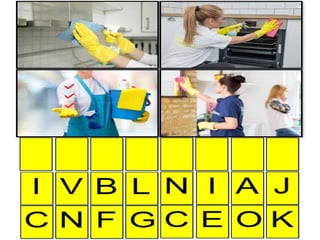
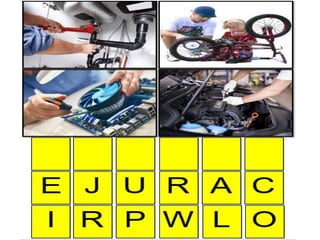
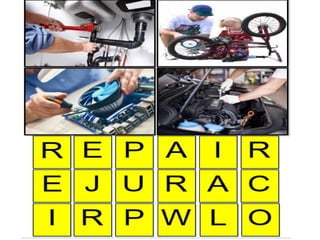
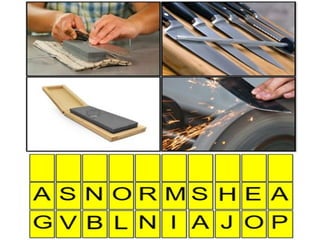
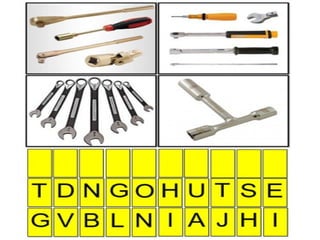
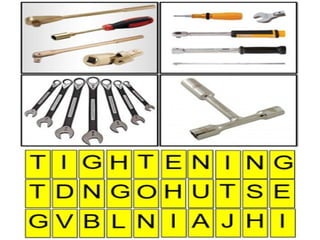
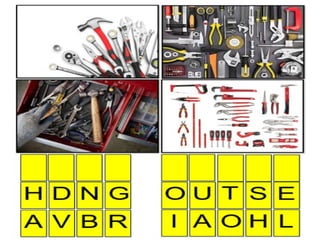
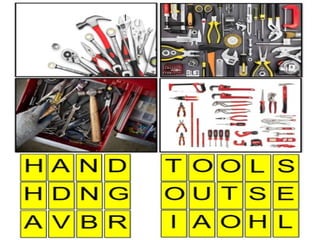
• Each level display four
pictures linked by one
word.
• The Students aim is to
work out what the word
is, from a set of letters
given below.
M
A
I
N
T
E
N
a
N
C
e
DIRECTION:
• Form three groups.
• Each group will be given a
bingo card.
• Each group must be identify
the pictures on their bingo card
and once the teacher say a
word that fits to the picture
you need to have mark on it..
• If a group has all pictures
covered diagonally,
vertically or straight line,
they should call bingo.
• If a group claims they have
bingo and they are
incorrect, they are
disqualified from that
round.
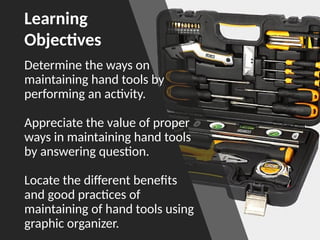
Determine the ways on
maintaining hand tools by
performing an activity.
Appreciate the value of proper
ways in maintaining hand tools
by answering question.
Locate the different benefits
and good practices of
maintaining of hand tools using
graphic organizer.
Learning
Objectives
MAINTAIN
HANDTOOLS
All tools and equipment must
be properly maintained so that
workers are not endangered.
Regulation require inspections
of tools, machines and
equipment before use.
ROUTINE MAINTAINANCE
• Means maintenance activities that are
scheduled in advanced and occur on a regular
basis, such as weekly, monthly, quarterly,
semi annually or annually, which are normally
included as an annually recurring cost in
maintenance and repair budgets for
transportation facilities.
Repair
• Unusually
focuses on the
program of
works done in
the operation of
power plants in
machines that
are in trouble of
stopping its
function.
MAINTENANCE
• Means a scheduled or
a planned visit of
tools or equipments
for inspection and
from there, reports
and recommendation
developed and the
next tasks to be
decided such as
cleaning, application
of lubricants,
dismantling and etc.
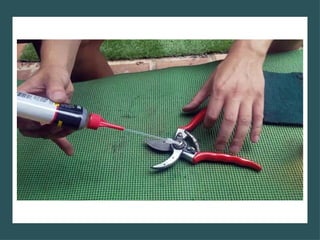
Lubricating
• A task performed in the
shop/production. Through
the application of lubricant
substance to the identified
items in parts like barrels,
rollers, springs, bearing,
bolts and nuts, and other
automotive parts.
Tightening/Loosening
• In an assembly of structures, we have tools
for fittings that need to be tightened and
loosened and in as much as they pose high
risk to safety. Tightening bolts and nuts
and other fittings requires procedures
should carried out compliance.
Tool for hand
Sharpening
• Some tools need to be
sharpened such as blades
of knife, cold chisel,
punches and many others.
To do hand sharpening for
hand tools requires
techniques and application.
• In some multi knives cutter,
manufacturers produce knife
sharpening system to hold or clamp
the blade for ensuring strong blade to
stone contact during sharpening and
also provided with course to fine
honing stones.
• For cold chisel and punches, the right
file-size and grades are used for
repairing the defective anvil curve.
Simple Repair
• Repair practices of hand tools are
still available anytime. But, to some
extent, tools are checked yearly and
many of the hand tools are eligible
for condemnation and the whole
items are to be replaced by a new
unit. However, there are instances
that minor repair can be performed,
like replacement of wooden handle
of a hammer and mushroomed
head of a cold chisel.
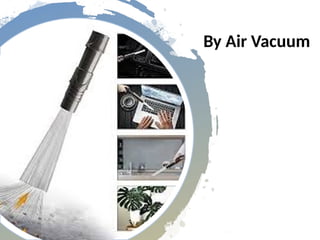
Cleaning
• Simple process applied to
hand tools. The cleaning
approach may differ from one
another. For example, cleaning
of the rack corners of hand
tools by using air vacuum or by
a piece of clothes. Similar
process may be applied to
identical cleaning situations.
By Piece Of Cloth
By Air Vacuum
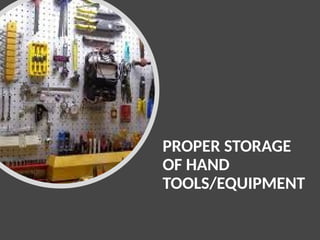
PROPER STORAGE
OF HAND
TOOLS/EQUIPMENT
5S
Implementation
• Clearly label
machinery,
equipment,
part, jigs, tools,
and their
locations, so
that everything
is
understandable
, and visible to
everyone at a
glance.
• Don’t pile up jigs,
tools, and
materials without
separators
(shelves). They
should be picked
up easily.
• Rearrange
machinery
and
equipment to
make smooth
production
flow, when
necessary.
• Maintain the
space around
the fire
extinguishers
and
evacuation
passages
free.
List Of
Benefits
•Tools and
parts are kept
in good
condition and
easy to find.
•Cost are
reduced
.
• Productivity
is increased
because time
is not wasted
looking for
tools, parts
and
equipment.
•Workshop
staffs
develop a
sense of
responsibility
and pride in
their work.
QUESTIONS:
1.What are the good benefits of
having proper storage and
maintaining tools practices?
2.How will you differentiate
having and not having good
practices in maintaining tools?
3.Why is it important to know
the practices of maintaining
tools and proper storage ?
GRAPHIC
0RGANIZER
DIRECTION:
• Discuss the benefits of good
practices in maintaining and
proper storage of tools
through graphic organizer.
Write this in a ½
I’ll give you 3 minutes to answer this.
Maintaining and proper storage of
tools
Good practices Benefits
1.
2.
4.
3.
5.
ASSIGNMENT:
•on one whole
sheet of paper,
write a
reflection about
the good
practices and
benefits of
having proper
storage of tools.
maintaining_tools_for_demo toolssss.pptx

maintaining_tools_for_demo toolssss.pptx

  • 3.
  • 5.
    DIRECTION: • Each leveldisplay four pictures linked by one word. • The Students aim is to work out what the word is, from a set of letters given below.
  • 18.
  • 19.
    DIRECTION: • Form threegroups. • Each group will be given a bingo card. • Each group must be identify the pictures on their bingo card and once the teacher say a word that fits to the picture you need to have mark on it..
  • 20.
    • If agroup has all pictures covered diagonally, vertically or straight line, they should call bingo. • If a group claims they have bingo and they are incorrect, they are disqualified from that round.
  • 21.
    Determine the wayson maintaining hand tools by performing an activity. Appreciate the value of proper ways in maintaining hand tools by answering question. Locate the different benefits and good practices of maintaining of hand tools using graphic organizer. Learning Objectives
  • 22.
  • 23.
    All tools andequipment must be properly maintained so that workers are not endangered. Regulation require inspections of tools, machines and equipment before use.
  • 24.
    ROUTINE MAINTAINANCE • Meansmaintenance activities that are scheduled in advanced and occur on a regular basis, such as weekly, monthly, quarterly, semi annually or annually, which are normally included as an annually recurring cost in maintenance and repair budgets for transportation facilities.
  • 25.
    Repair • Unusually focuses onthe program of works done in the operation of power plants in machines that are in trouble of stopping its function.
  • 26.
    MAINTENANCE • Means ascheduled or a planned visit of tools or equipments for inspection and from there, reports and recommendation developed and the next tasks to be decided such as cleaning, application of lubricants, dismantling and etc.
  • 27.
    Lubricating • A taskperformed in the shop/production. Through the application of lubricant substance to the identified items in parts like barrels, rollers, springs, bearing, bolts and nuts, and other automotive parts.
  • 29.
    Tightening/Loosening • In anassembly of structures, we have tools for fittings that need to be tightened and loosened and in as much as they pose high risk to safety. Tightening bolts and nuts and other fittings requires procedures should carried out compliance.
  • 31.
    Tool for hand Sharpening •Some tools need to be sharpened such as blades of knife, cold chisel, punches and many others. To do hand sharpening for hand tools requires techniques and application.
  • 32.
    • In somemulti knives cutter, manufacturers produce knife sharpening system to hold or clamp the blade for ensuring strong blade to stone contact during sharpening and also provided with course to fine honing stones. • For cold chisel and punches, the right file-size and grades are used for repairing the defective anvil curve.
  • 34.
    Simple Repair • Repairpractices of hand tools are still available anytime. But, to some extent, tools are checked yearly and many of the hand tools are eligible for condemnation and the whole items are to be replaced by a new unit. However, there are instances that minor repair can be performed, like replacement of wooden handle of a hammer and mushroomed head of a cold chisel.
  • 35.
    Cleaning • Simple processapplied to hand tools. The cleaning approach may differ from one another. For example, cleaning of the rack corners of hand tools by using air vacuum or by a piece of clothes. Similar process may be applied to identical cleaning situations.
  • 36.
  • 37.
  • 38.
  • 39.
  • 40.
    • Clearly label machinery, equipment, part,jigs, tools, and their locations, so that everything is understandable , and visible to everyone at a glance.
  • 41.
    • Don’t pileup jigs, tools, and materials without separators (shelves). They should be picked up easily.
  • 42.
    • Rearrange machinery and equipment to makesmooth production flow, when necessary.
  • 43.
    • Maintain the spacearound the fire extinguishers and evacuation passages free.
  • 44.
  • 45.
    •Tools and parts arekept in good condition and easy to find.
  • 46.
  • 47.
    • Productivity is increased becausetime is not wasted looking for tools, parts and equipment.
  • 48.
  • 49.
    QUESTIONS: 1.What are thegood benefits of having proper storage and maintaining tools practices? 2.How will you differentiate having and not having good practices in maintaining tools? 3.Why is it important to know the practices of maintaining tools and proper storage ?
  • 50.
  • 51.
    DIRECTION: • Discuss thebenefits of good practices in maintaining and proper storage of tools through graphic organizer. Write this in a ½
  • 52.
    I’ll give you3 minutes to answer this. Maintaining and proper storage of tools Good practices Benefits 1. 2. 4. 3. 5.
  • 53.
    ASSIGNMENT: •on one whole sheetof paper, write a reflection about the good practices and benefits of having proper storage of tools.