Expressing Contrast
There are many ways to express contrast.


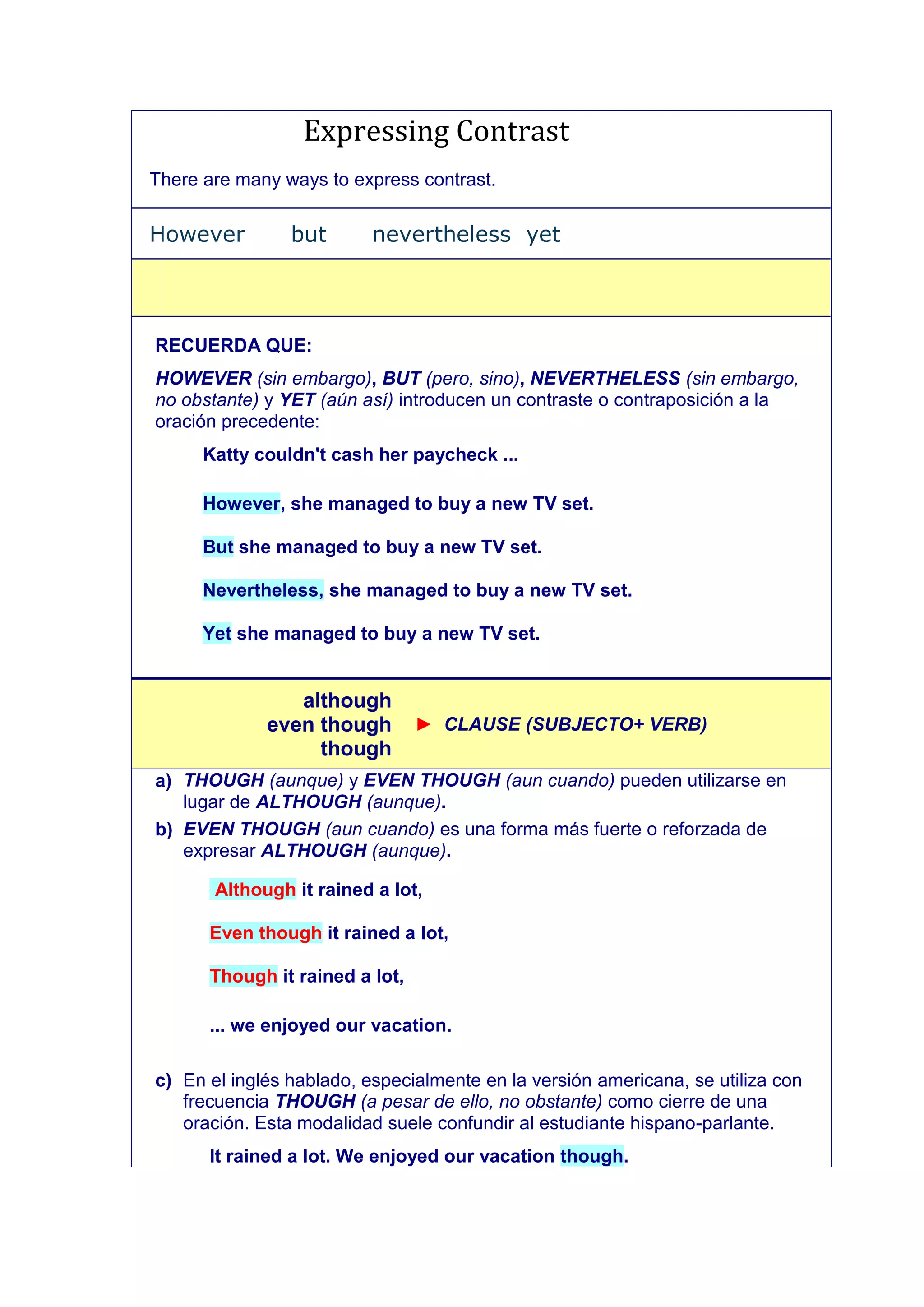
However         but       nevertheless yet


RECUERDA QUE:
HOWEVER (sin embargo), BUT (pero, sino), NEVERTHELESS (sin embargo,
no obstante) y YET (aún así) introducen un contraste o contraposición a la
oración precedente:
      Katty couldn't cash her paycheck ...

      However, she managed to buy a new TV set.

      But she managed to buy a new TV set.

      Nevertheless, she managed to buy a new TV set.

      Yet she managed to buy a new TV set.


                although
             even though        ► CLAUSE (SUBJECTO+ VERB)
                  though
a) THOUGH (aunque) y EVEN THOUGH (aun cuando) pueden utilizarse en
   lugar de ALTHOUGH (aunque).
b) EVEN THOUGH (aun cuando) es una forma más fuerte o reforzada de
   expresar ALTHOUGH (aunque).

       Although it rained a lot,

      Even though it rained a lot,

      Though it rained a lot,

      ... we enjoyed our vacation.

c) En el inglés hablado, especialmente en la versión americana, se utiliza con
   frecuencia THOUGH (a pesar de ello, no obstante) como cierre de una
   oración. Esta modalidad suele confundir al estudiante hispano-parlante.
      It rained a lot. We enjoyed our vacation though.
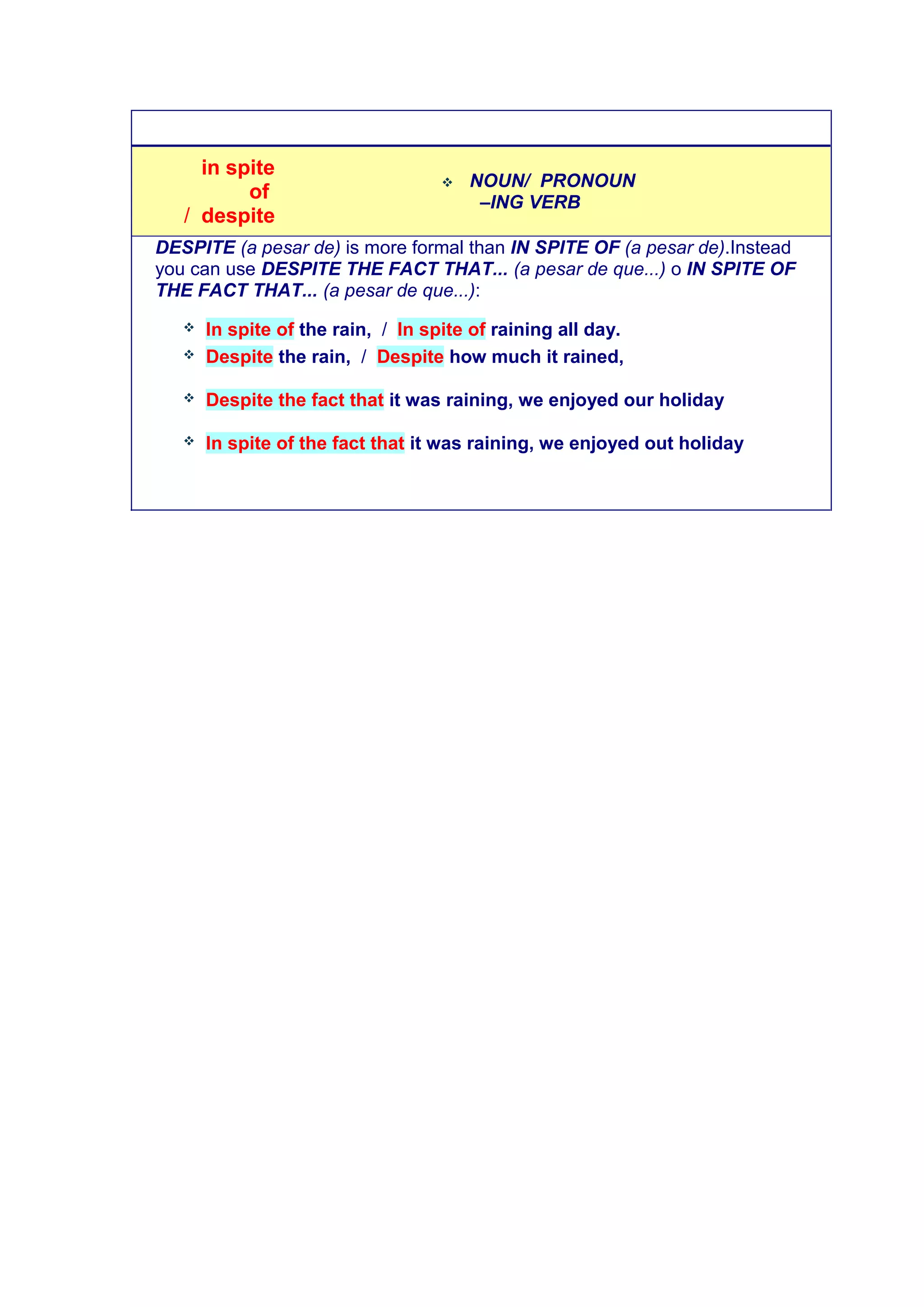
in spite
                                       NOUN/ PRONOUN
          of                             –ING VERB
   / despite
DESPITE (a pesar de) is more formal than IN SPITE OF (a pesar de).Instead
you can use DESPITE THE FACT THAT... (a pesar de que...) o IN SPITE OF
THE FACT THAT... (a pesar de que...):
      In spite of the rain, / In spite of raining all day.
      Despite the rain, / Despite how much it rained,

      Despite the fact that it was raining, we enjoyed our holiday

      In spite of the fact that it was raining, we enjoyed out holiday

Expressing contrast

  • 1.
    Expressing Contrast There aremany ways to express contrast. However but nevertheless yet RECUERDA QUE: HOWEVER (sin embargo), BUT (pero, sino), NEVERTHELESS (sin embargo, no obstante) y YET (aún así) introducen un contraste o contraposición a la oración precedente: Katty couldn't cash her paycheck ... However, she managed to buy a new TV set. But she managed to buy a new TV set. Nevertheless, she managed to buy a new TV set. Yet she managed to buy a new TV set. although even though ► CLAUSE (SUBJECTO+ VERB) though a) THOUGH (aunque) y EVEN THOUGH (aun cuando) pueden utilizarse en lugar de ALTHOUGH (aunque). b) EVEN THOUGH (aun cuando) es una forma más fuerte o reforzada de expresar ALTHOUGH (aunque). Although it rained a lot, Even though it rained a lot, Though it rained a lot, ... we enjoyed our vacation. c) En el inglés hablado, especialmente en la versión americana, se utiliza con frecuencia THOUGH (a pesar de ello, no obstante) como cierre de una oración. Esta modalidad suele confundir al estudiante hispano-parlante. It rained a lot. We enjoyed our vacation though.
  • 2.
    in spite  NOUN/ PRONOUN of –ING VERB / despite DESPITE (a pesar de) is more formal than IN SPITE OF (a pesar de).Instead you can use DESPITE THE FACT THAT... (a pesar de que...) o IN SPITE OF THE FACT THAT... (a pesar de que...):  In spite of the rain, / In spite of raining all day.  Despite the rain, / Despite how much it rained,  Despite the fact that it was raining, we enjoyed our holiday  In spite of the fact that it was raining, we enjoyed out holiday