The Great Olympian Graph
Live Webinar
August 18th, 2016
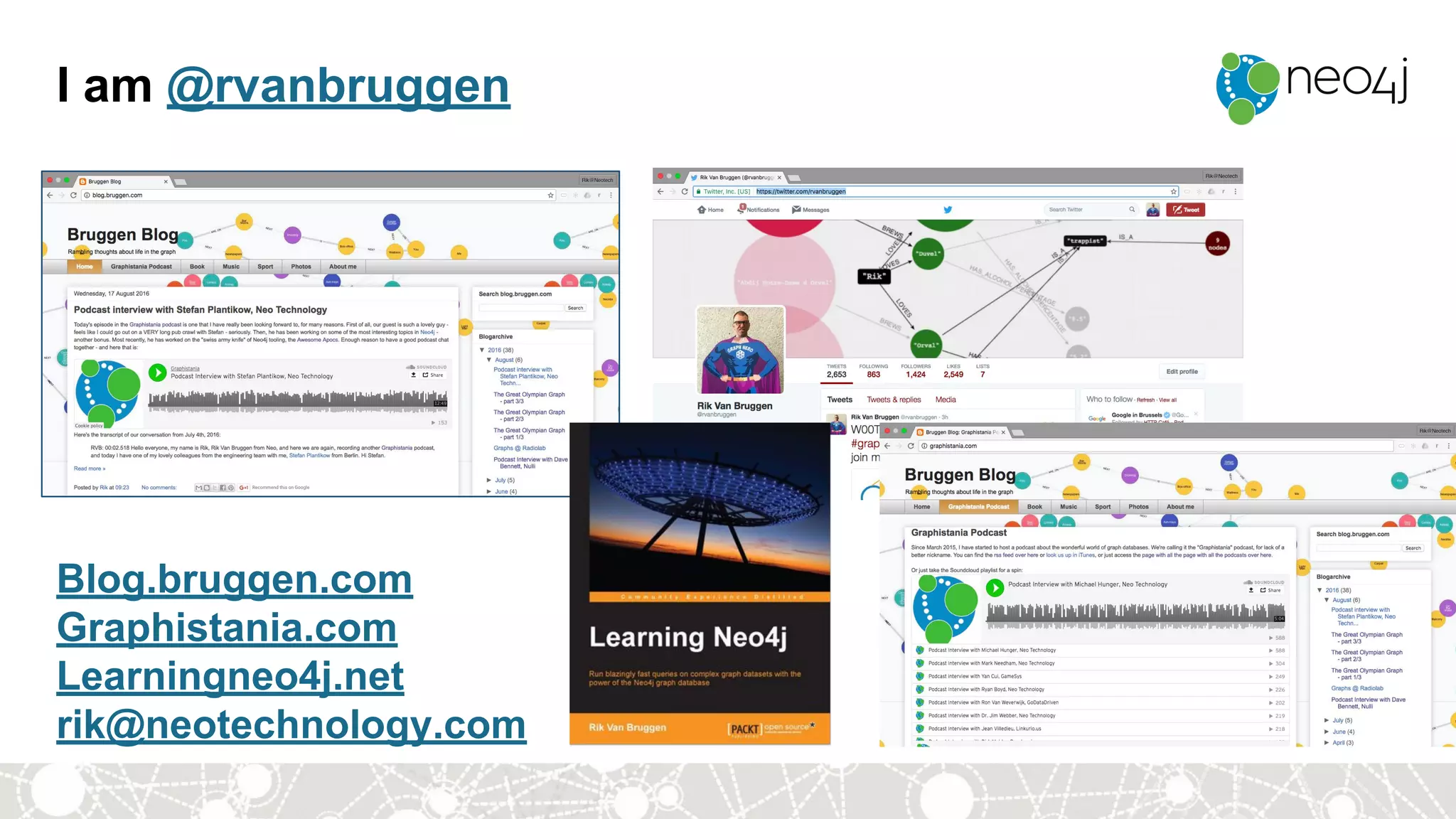
I am @rvanbruggen
Blog.bruggen.com
Graphistania.com
Learningneo4j.net
rik@neotechnology.com
The Background
Always on the lookout for interesting datasets
In Love with Graphs since knowing Neo4j because
1.
MODEL
2.
PERFORMANCE
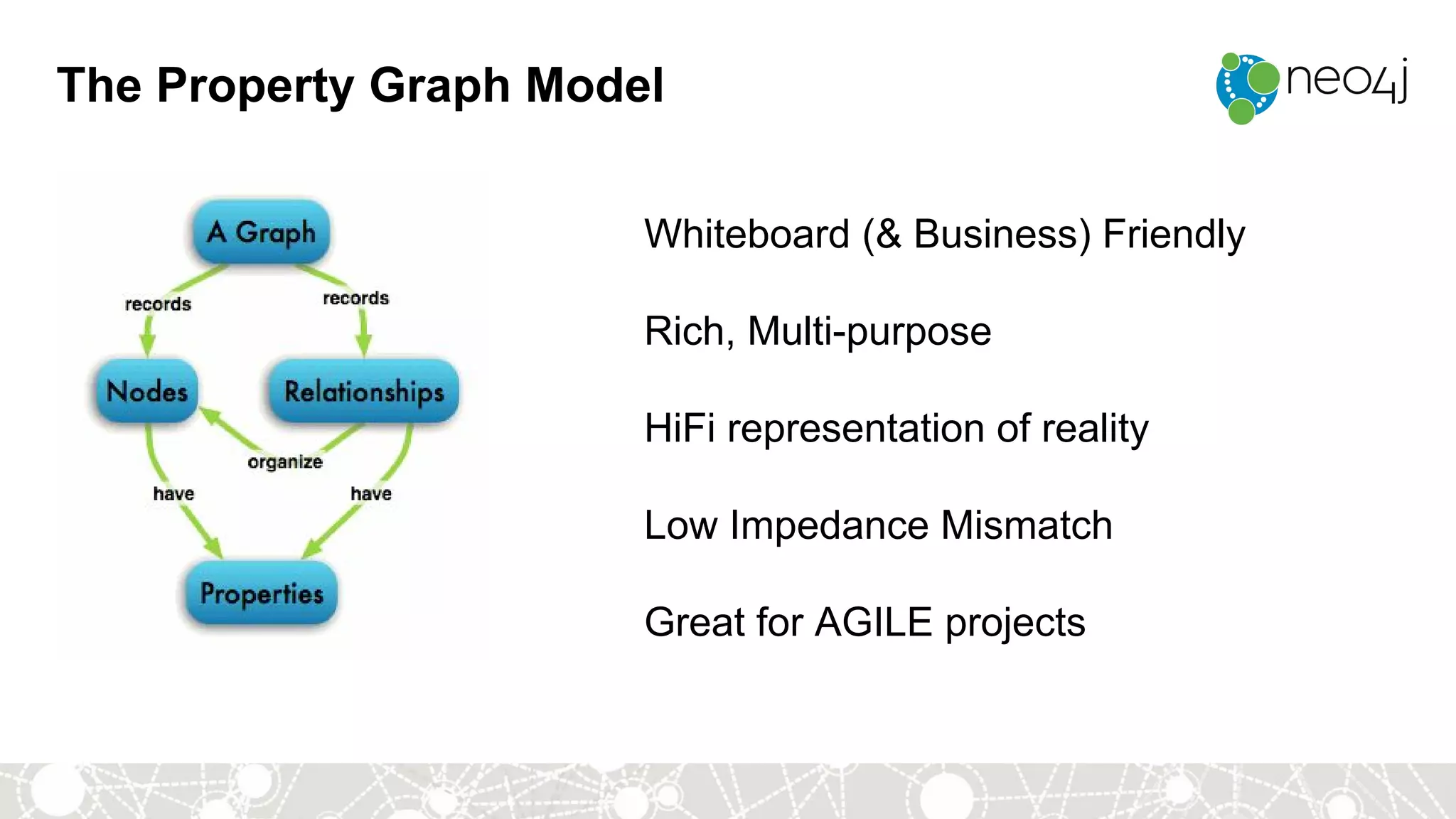
The Property Graph Model
Whiteboard (& Business) Friendly
Rich, Multi-purpose
HiFi representation of reality
Low Impedance Mismatch
Great for AGILE projects
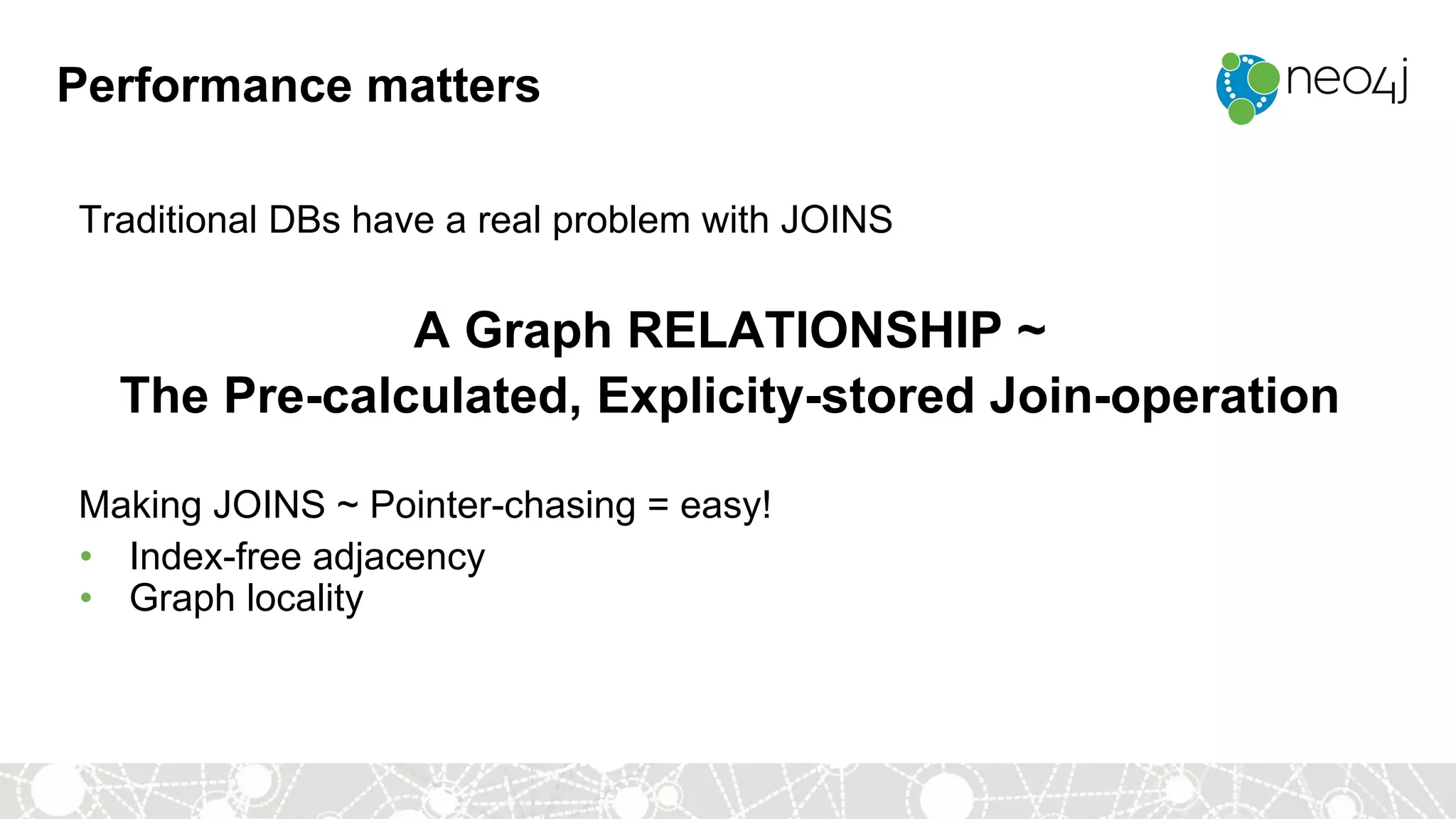
Performance matters
Traditional DBs have a real problem with JOINS
A Graph RELATIONSHIP ~
The Pre-calculated, Explicity-stored Join-operation
Making JOINS ~ Pointer-chasing = easy!
• Index-free adjacency
• Graph locality
Over the years: MANY Examples
Corporate networks, Terrorism database, Social Networks, Music recommendations,
Clickstream analysis, Friends and Foes in the Middle East, Access and Identity
Management, Tour de France, Flanders Classics Cycling, Twitter communities, VAT
registries, Rail networks, GTFS feeds, Bus / Metro networks, Electricity networks,
Process flows, Orienteering maps, PanamaPapers, Wikipedia, Conference Schedules,
GraphConnect, Oredev, Qcon, Business Continuity Management, Recommendation
Engines, Knowledge Graph, Podcast database, Family Tree, Genealogy, Food
Recipes, Food Composition, Belgian Beer Graph, GOTO Conference, Dutch Beer
Graph, Single Malt Graph, Conceptnet, Trophic Cascade: how wolves change rivers,
Swearwords, World Cup Football, Belgian TV Sitcom show “Thuis”, Email traffic
analysis, Telco Churn, Doctor Who, LinkedIn…
http://blog.bruggen.com
Yet another graph...
The Great Olympic Graph
Dataset >> Model >> Import >> Query
http://blog.bruggen.com/search/label/olympics for more details
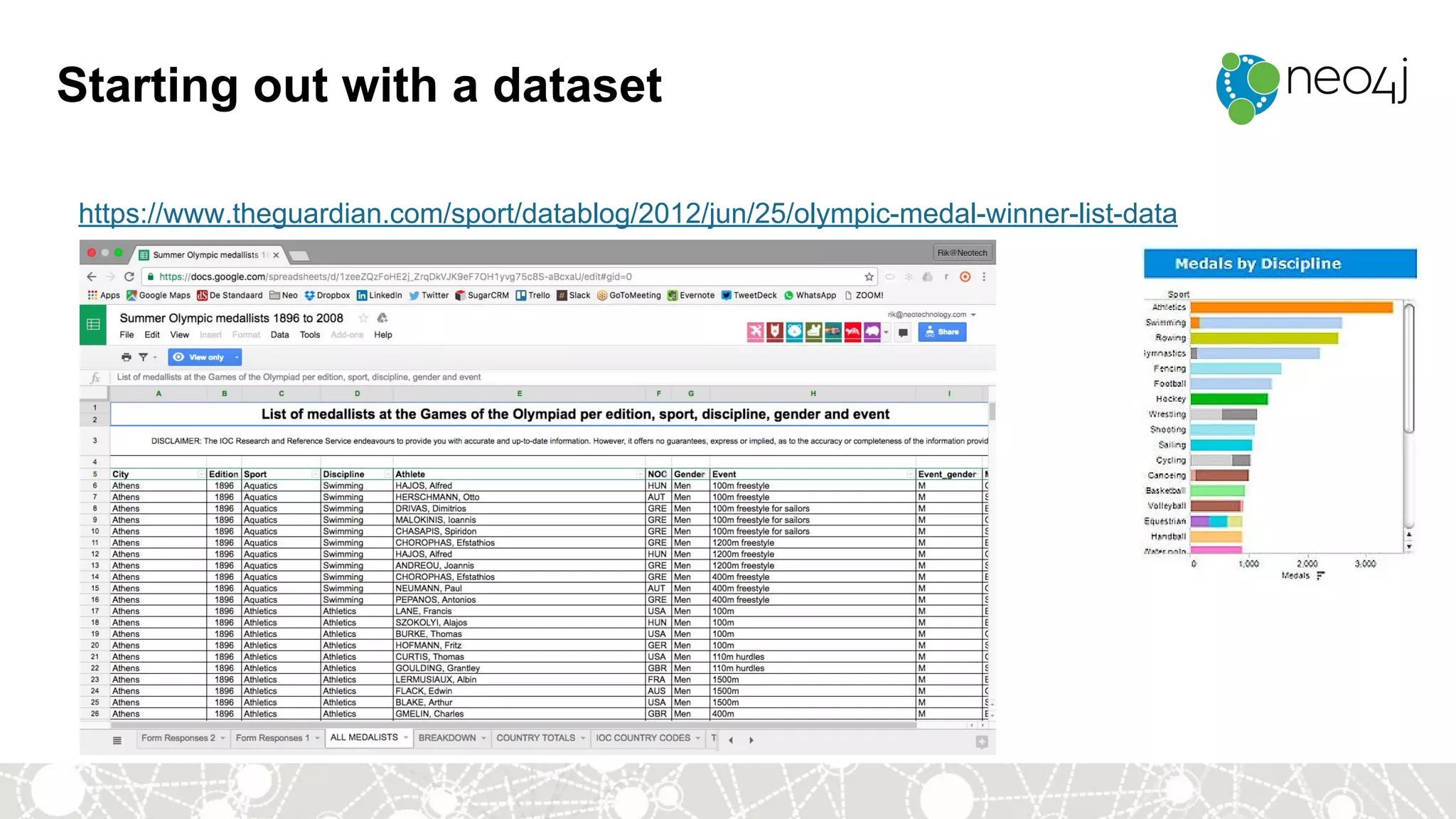
Starting out with a dataset
https://www.theguardian.com/sport/datablog/2012/jun/25/olympic-medal-winner-list-data
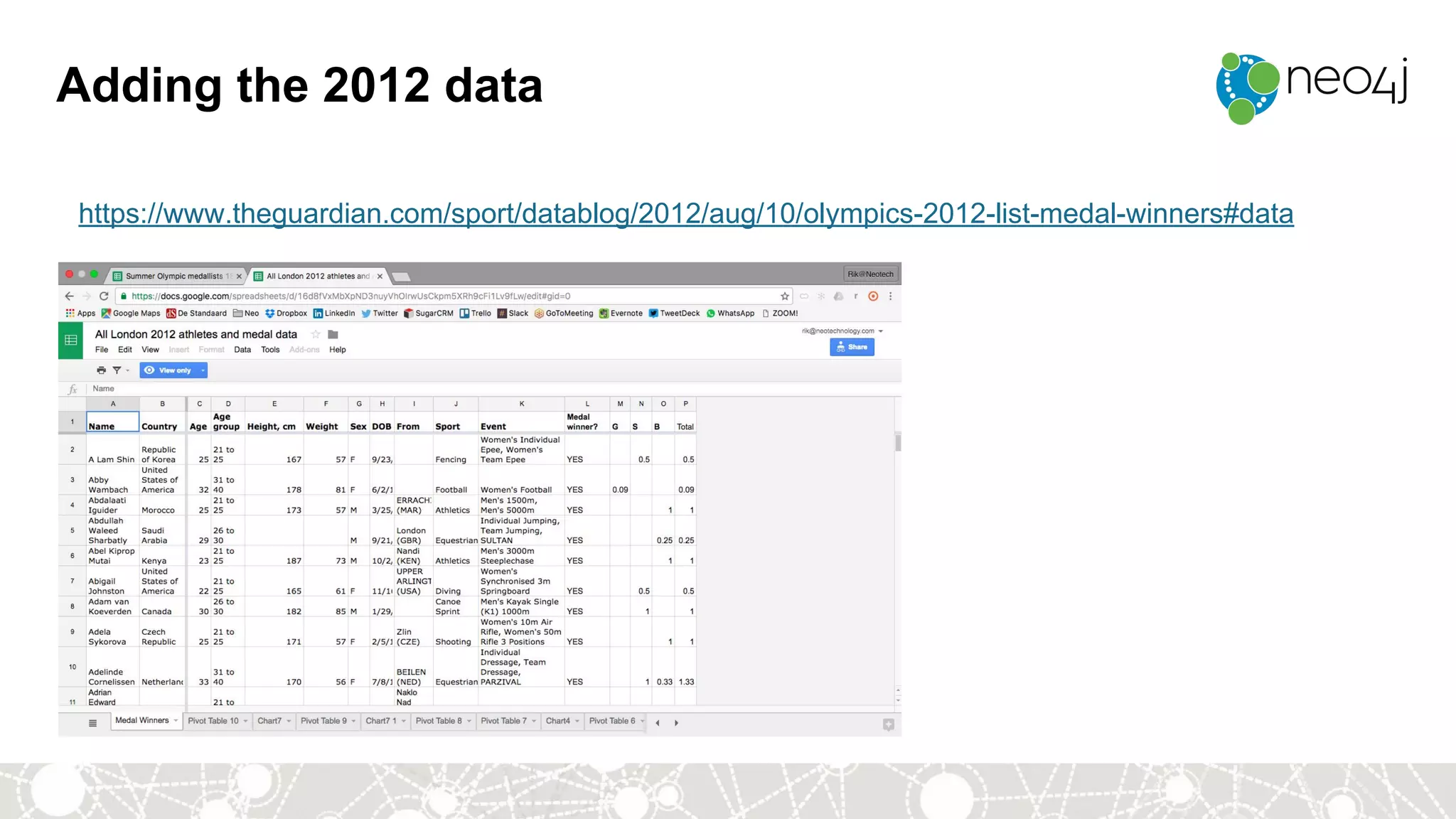
Adding the 2012 data
https://www.theguardian.com/sport/datablog/2012/aug/10/olympics-2012-list-medal-winners#data
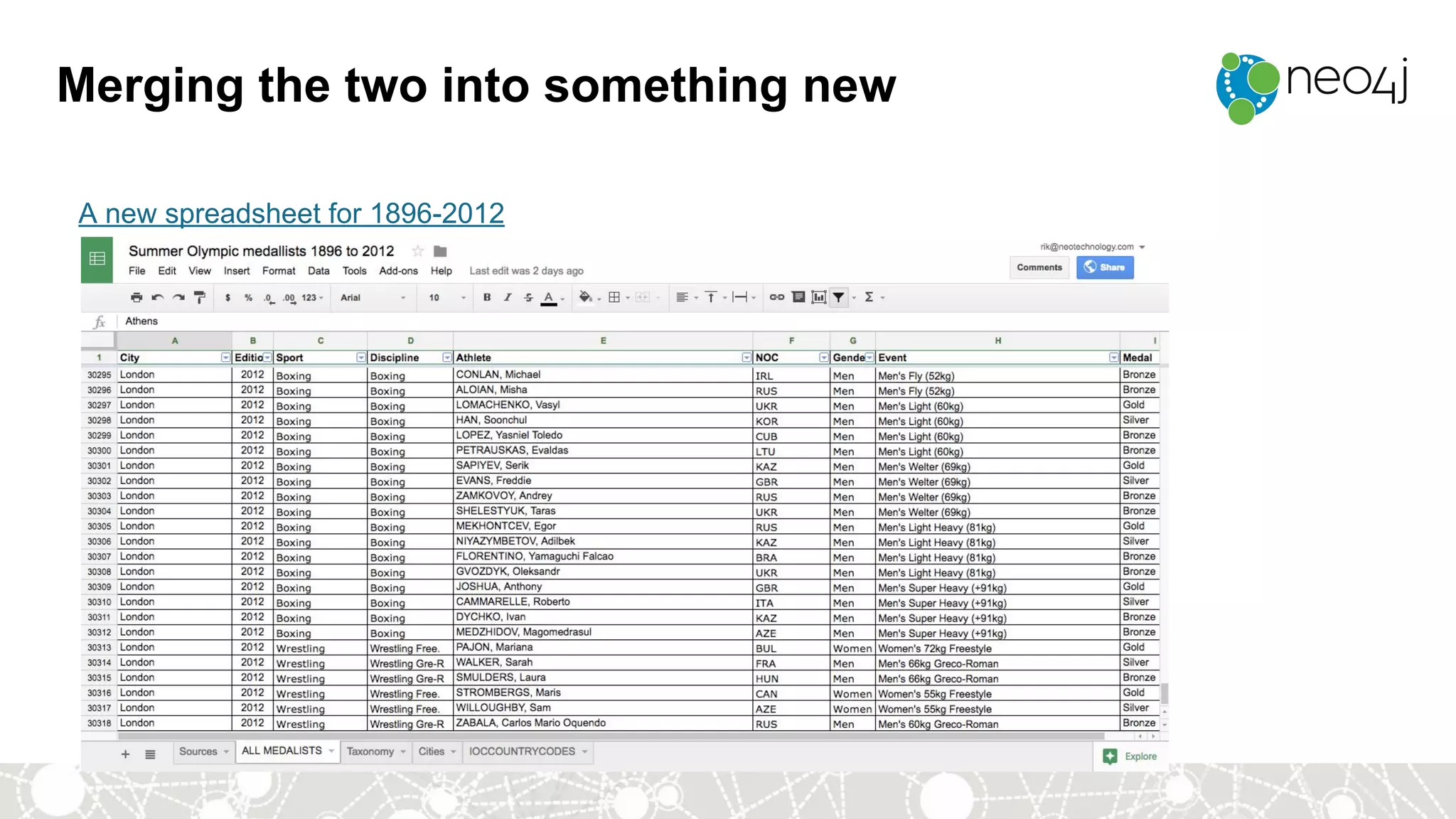
Merging the two into something new
A new spreadsheet for 1896-2012
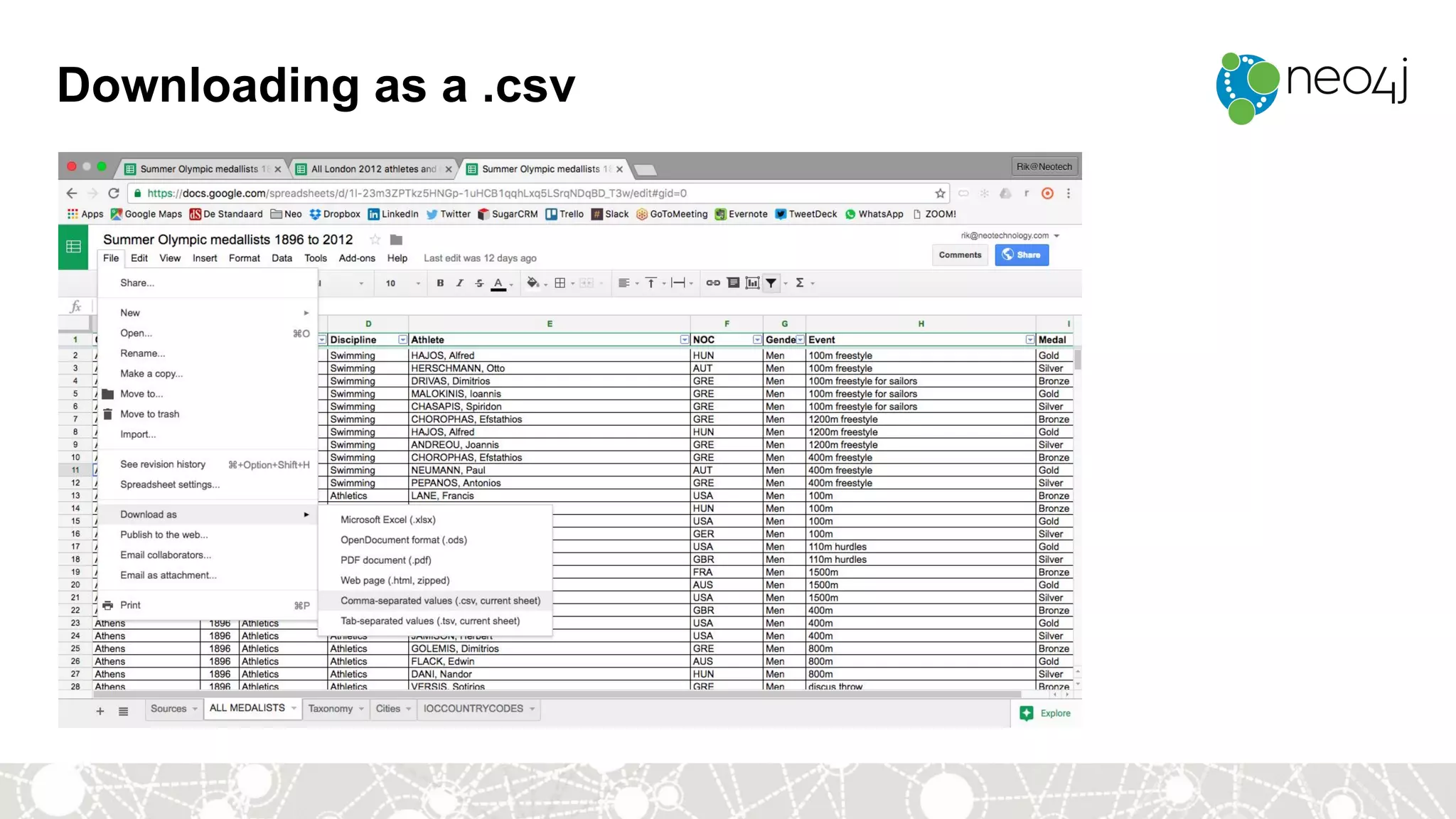
Downloading as a .csv
4 .csv files
1. One for the countries, and their 3-letter country-codes
2. One for the hosting cities, and their mappings to the above countries
3. A two-level categorisation (let's call it a "sports taxonomy") of some sort
containing Sports (eg. Aquatics, Cycling,...), and Disciplines (eg. Swimming,
Track Cycling, …)
4. A much bigger and longer sheet / .csv file that contains the actual data about
each and every of the 30000+ medallists.
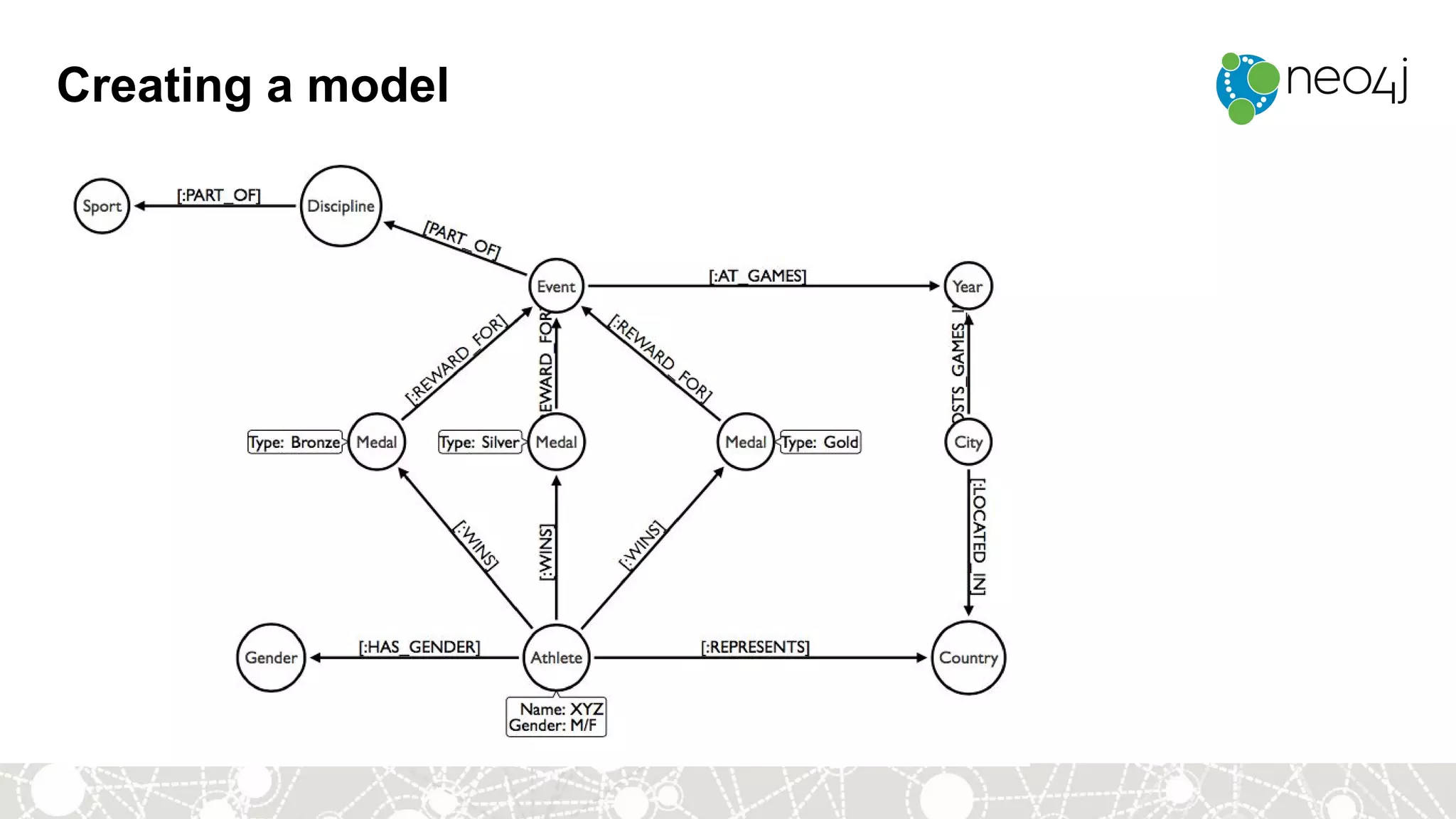
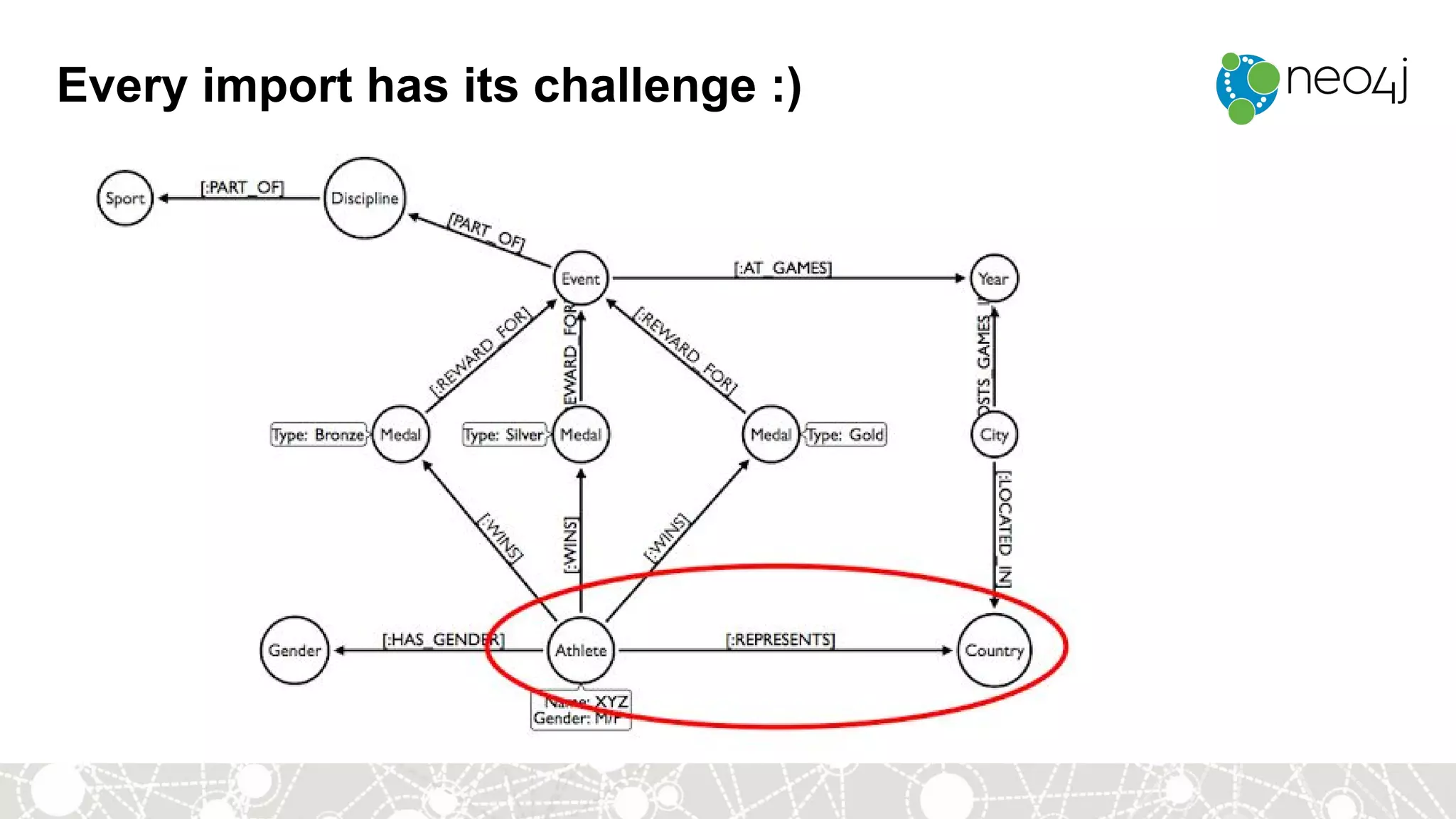
Creating a model
Loading the data
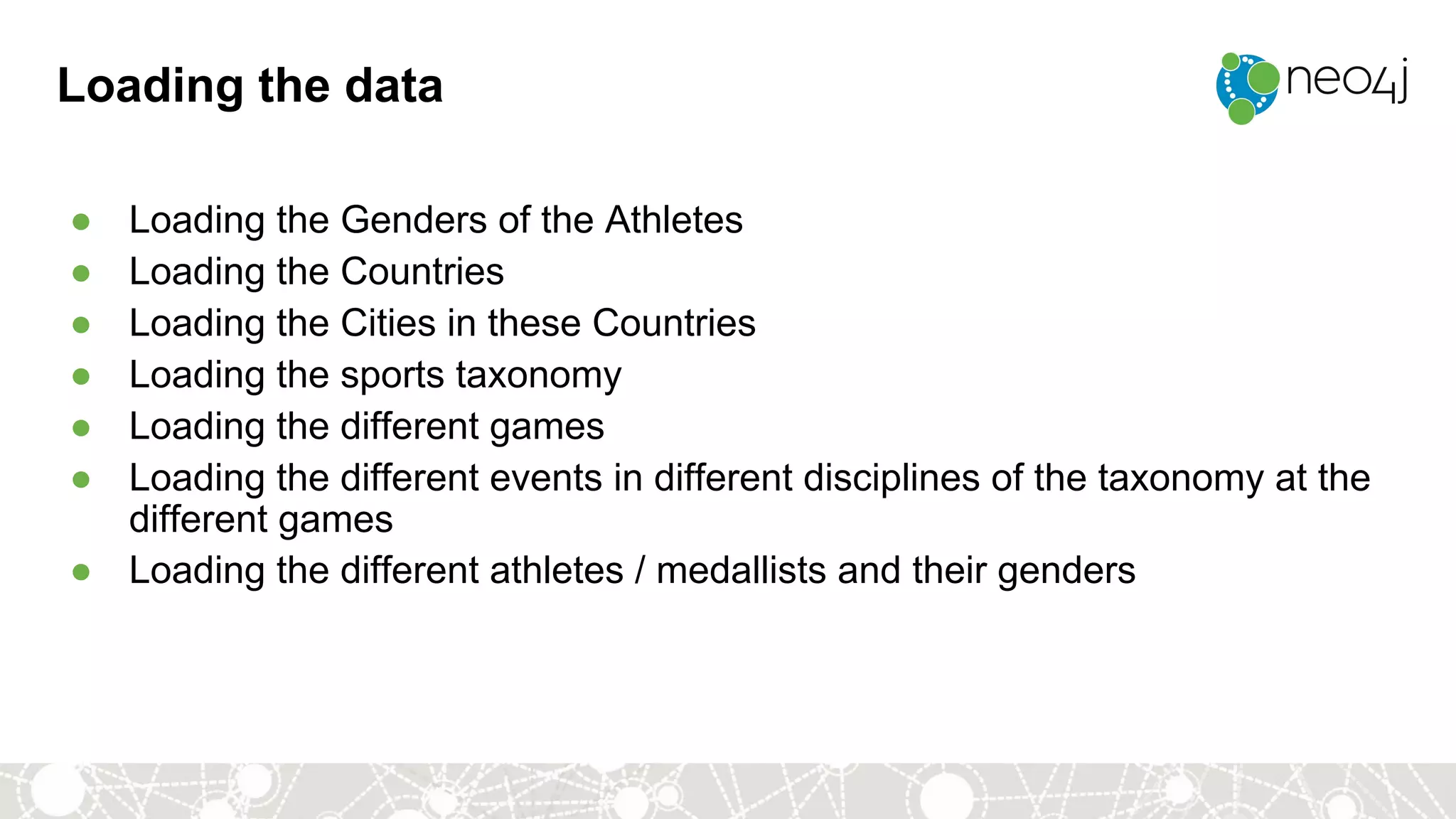
● Loading the Genders of the Athletes
● Loading the Countries
● Loading the Cities in these Countries
● Loading the sports taxonomy
● Loading the different games
● Loading the different events in different disciplines of the taxonomy at the
different games
● Loading the different athletes / medallists and their genders
Every import has its challenge :)
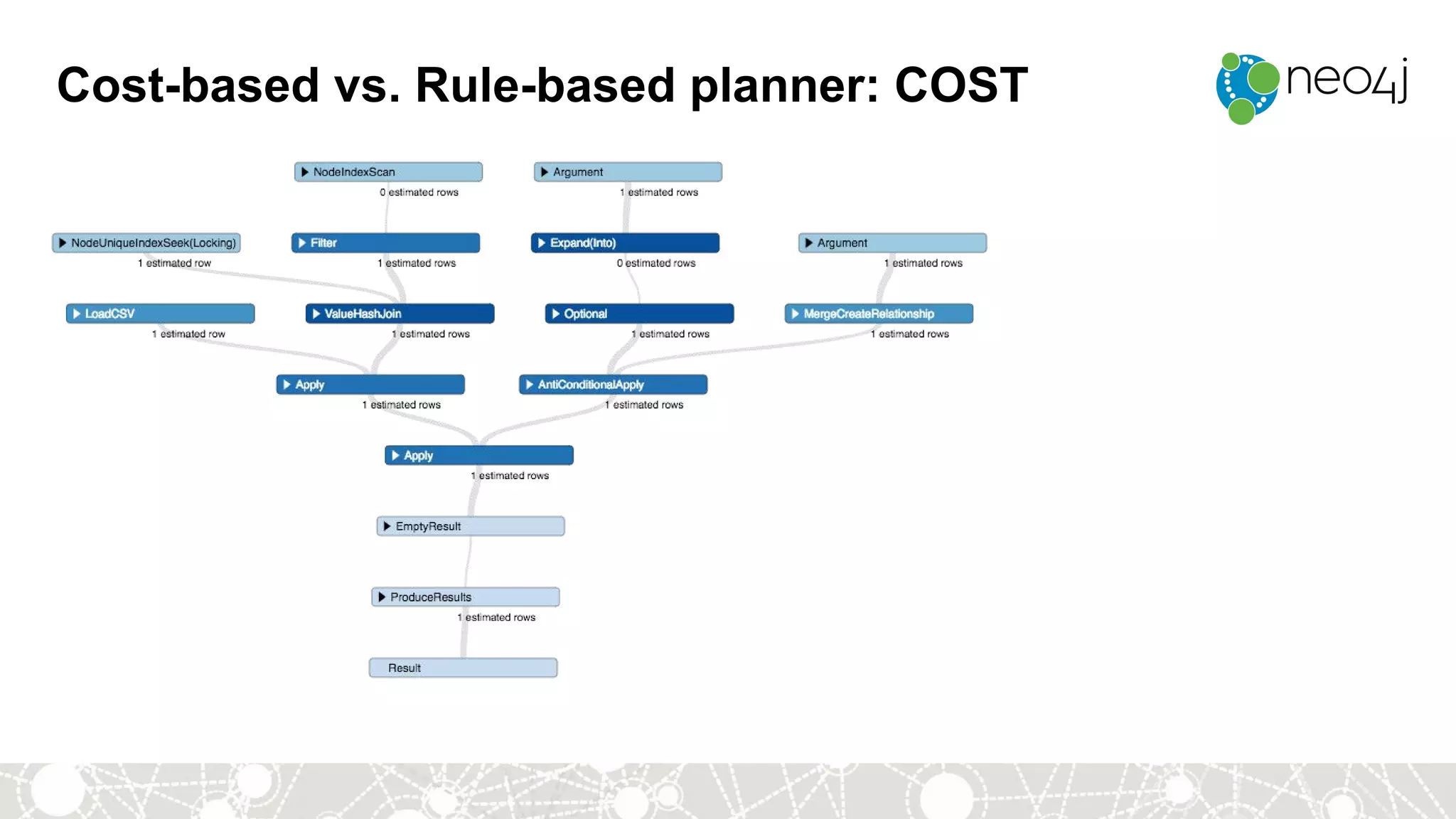
Cost-based vs. Rule-based planner: COST
Cost-based vs. Rule-based planner: RULE
cypher planner=rule
load csv with headers from
"https://docs.google.com/a/neotechnology.com/spreadsheets/d/1l-2
3m3ZPTkz5HNGp-1uHCB1qqhLxq5LSrqNDqBD_T3w/export?format=csv&id=1l
-23m3ZPTkz5HNGp-1uHCB1qqhLxq5LSrqNDqBD_T3w&gid=0" as csv
match (d:Discipline {name: csv.Discipline})-[:PART_OF]->(s:Sport
{name: csv.Sport})match (a:Athlete {name: csv.Athlete})match
(e:Event {name: csv.Event})-->(y:Year {name: csv.Edition})create
(a)-[:WINS]->(m:Medal {type: csv.Medal})-[:REWARD_FOR]->(e);
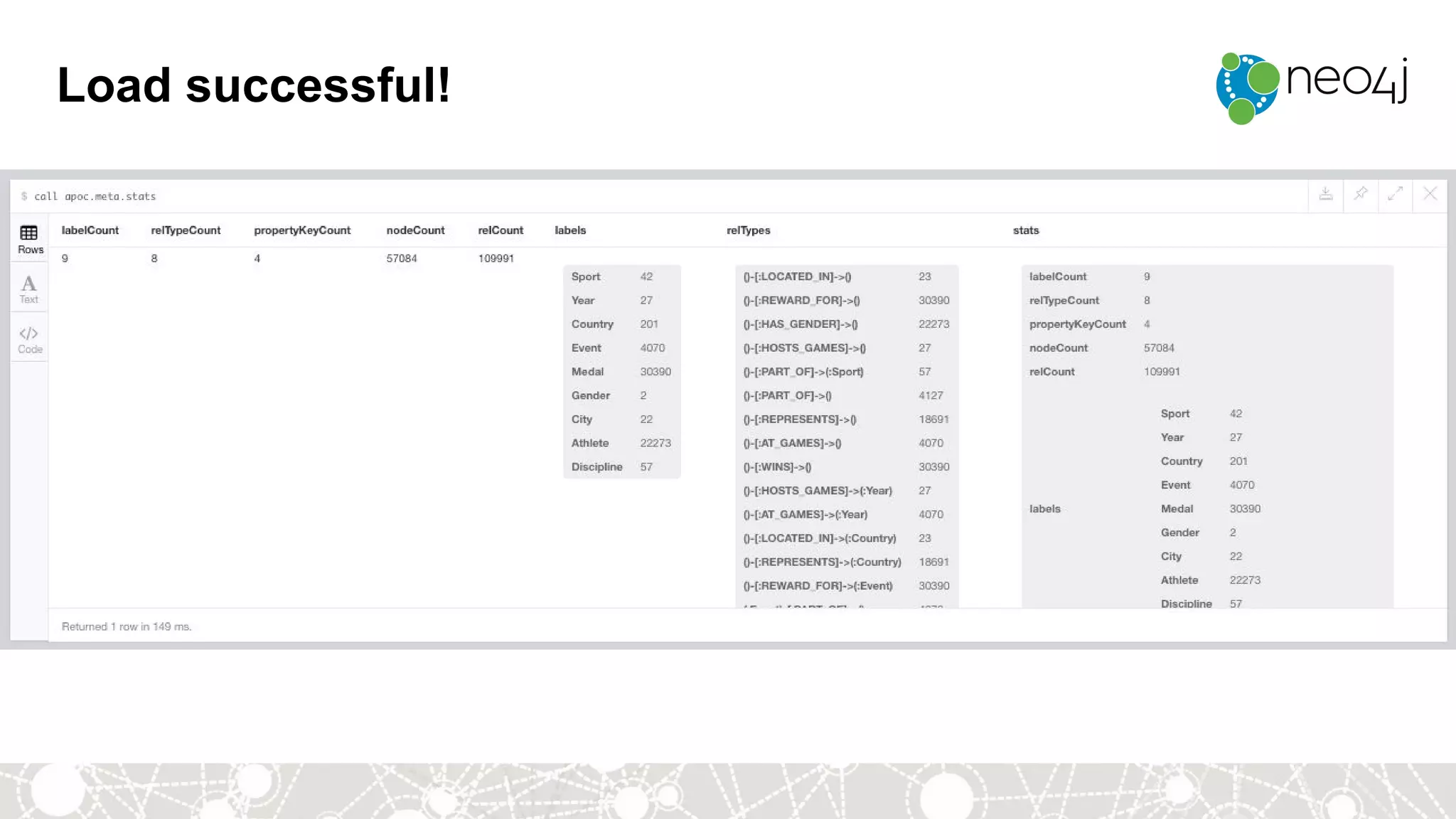
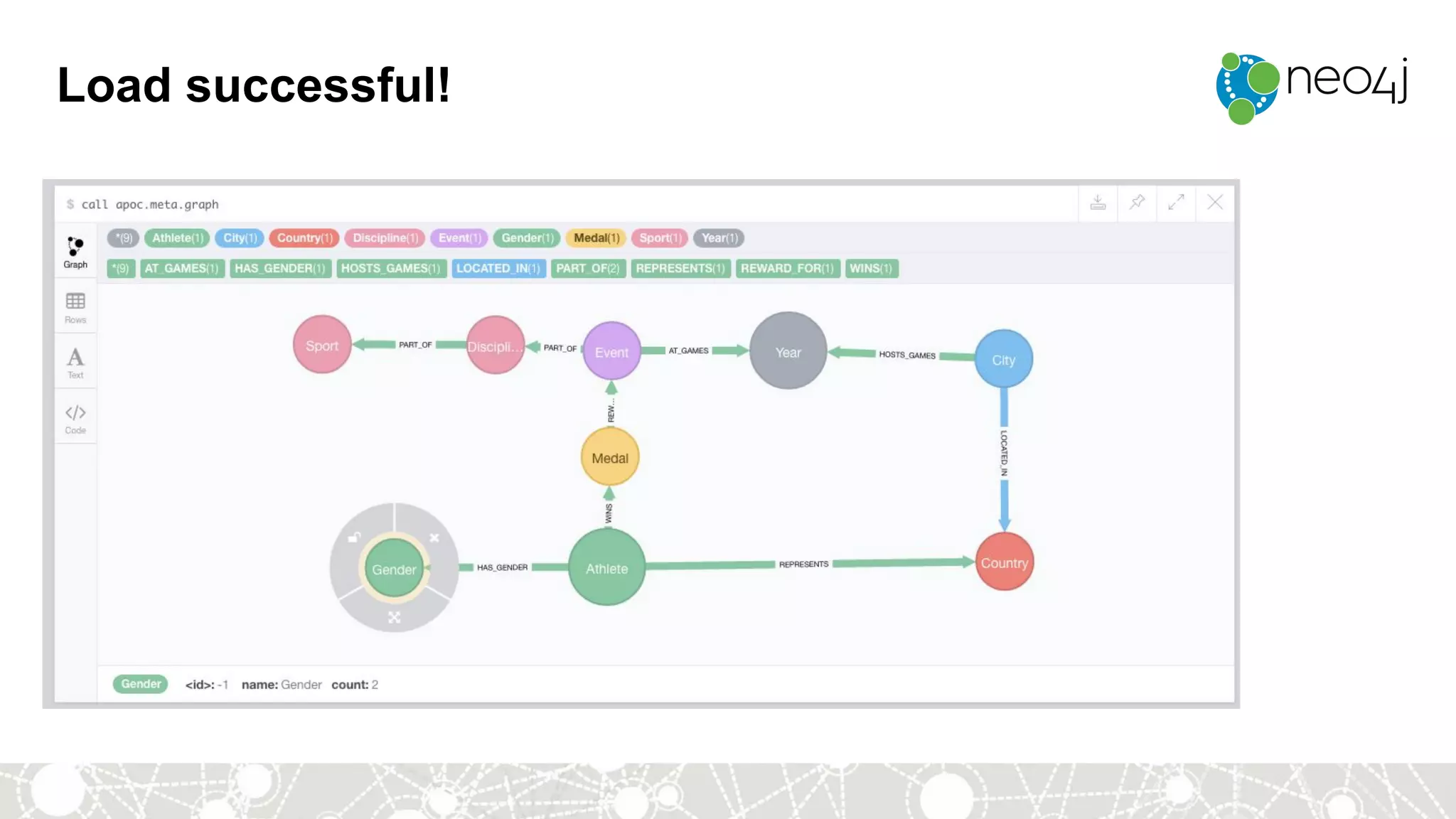
Load successful!
Load successful!
Querying the Olympic Graph
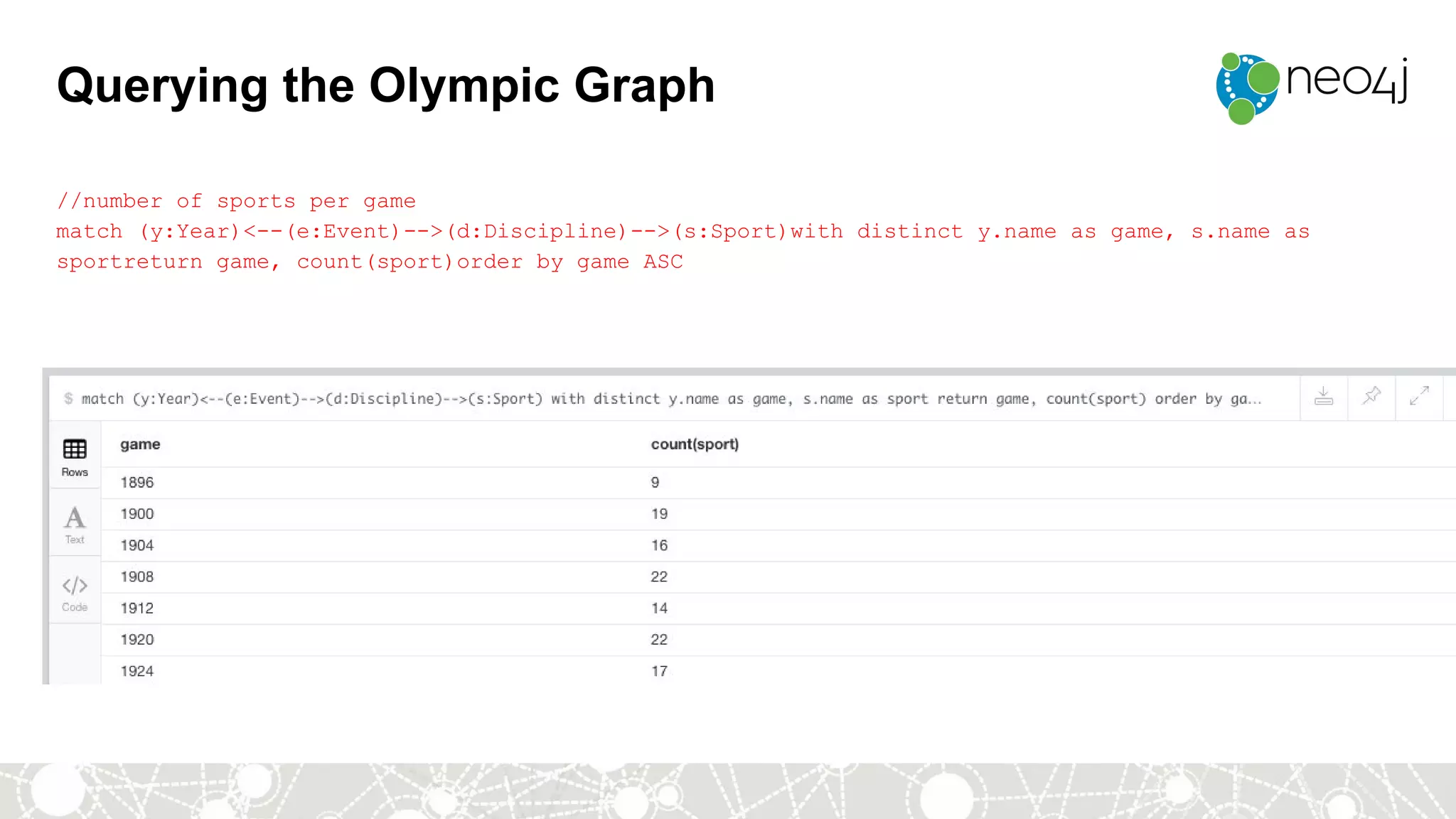
//number of sports per game
match (y:Year)<--(e:Event)-->(d:Discipline)-->(s:Sport)with distinct y.name as game, s.name as
sportreturn game, count(sport)order by game ASC
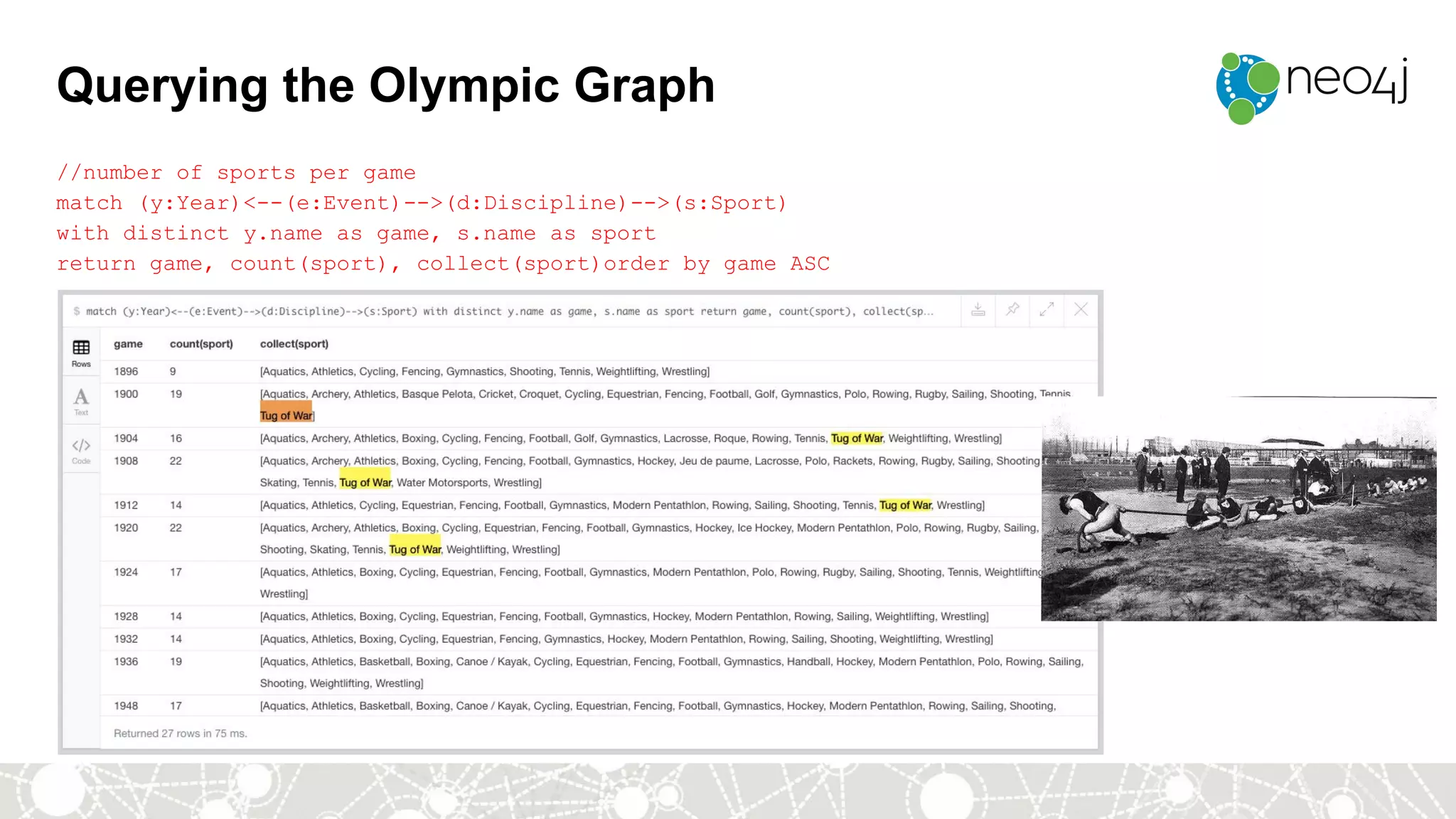
//number of sports per game
match (y:Year)<--(e:Event)-->(d:Discipline)-->(s:Sport)
with distinct y.name as game, s.name as sport
return game, count(sport), collect(sport)order by game ASC
Querying the Olympic Graph
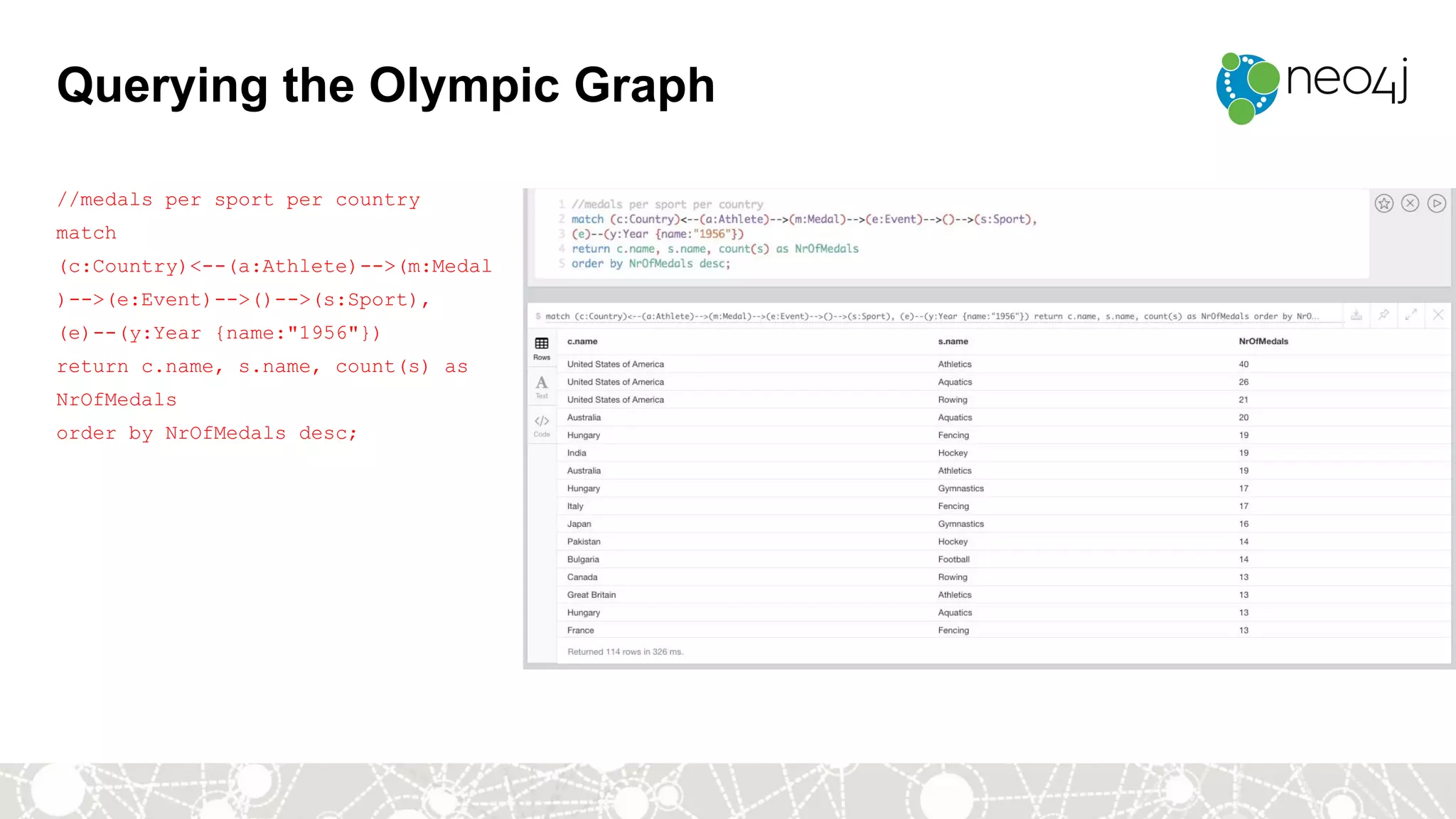
//medals per sport per country
match
(c:Country)<--(a:Athlete)-->(m:Medal
)-->(e:Event)-->()-->(s:Sport),
(e)--(y:Year {name:"1956"})
return c.name, s.name, count(s) as
NrOfMedals
order by NrOfMedals desc;
Querying the Olympic Graph
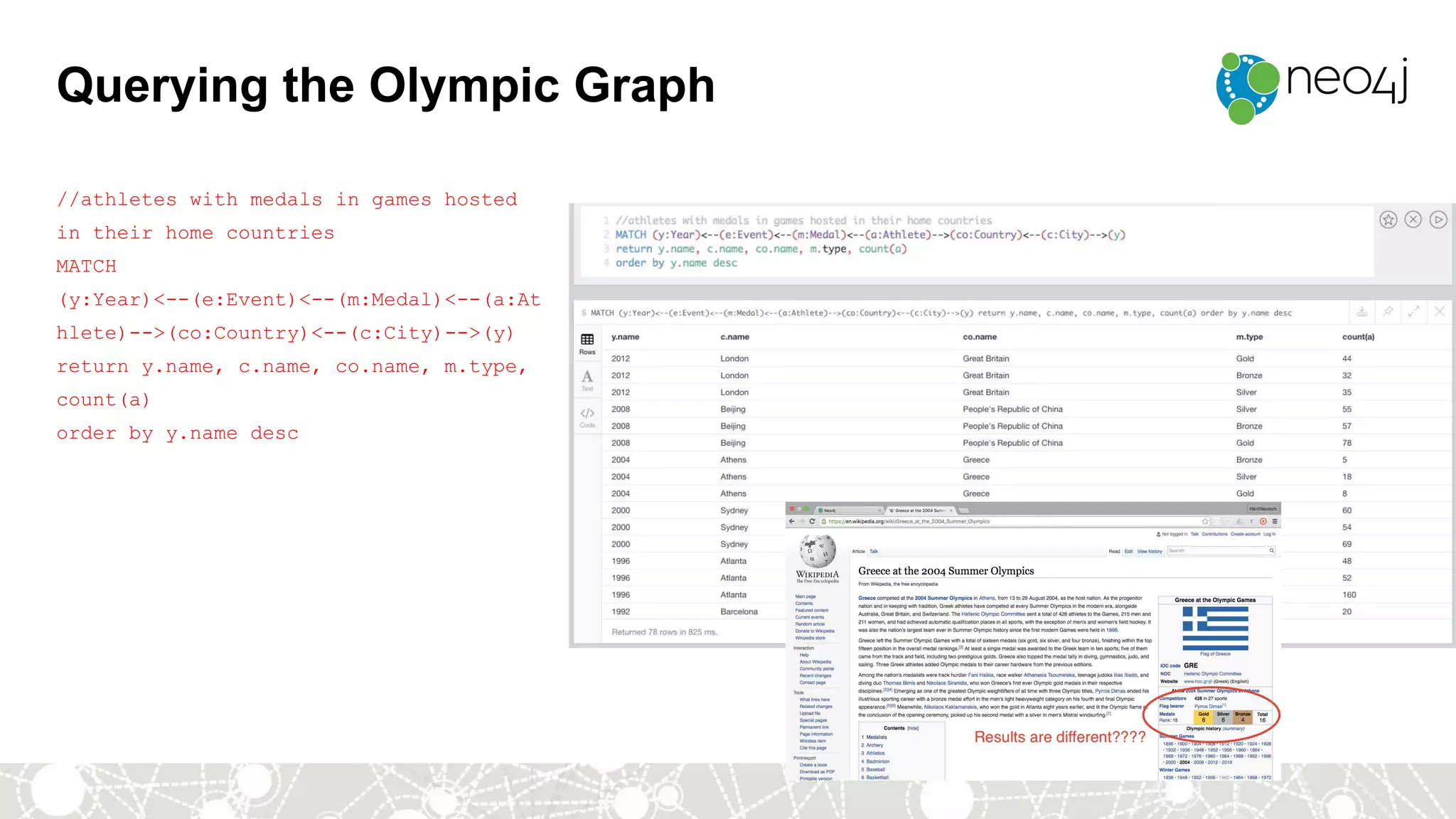
//athletes with medals in games hosted
in their home countries
MATCH
(y:Year)<--(e:Event)<--(m:Medal)<--(a:At
hlete)-->(co:Country)<--(c:City)-->(y)
return y.name, c.name, co.name, m.type,
count(a)
order by y.name desc
Querying the Olympic Graph
//Olympians with medals in different
sports
match (a:Athlete)
with a, size((a)-[:WINS]->()) as
countmedals
limit 100
where countmedals > 1
match
(s:Sport)--(:Discipline)--(:Event)--(m
:Medal)--(a)
with distinct a,s
match (a)-->(c:Country)
with a.name as Athlete, c.name as
Country, collect(s.name) as Sports
where size(Sports)>1
return Athlete, Country, Sports;
Querying the Olympic Graph
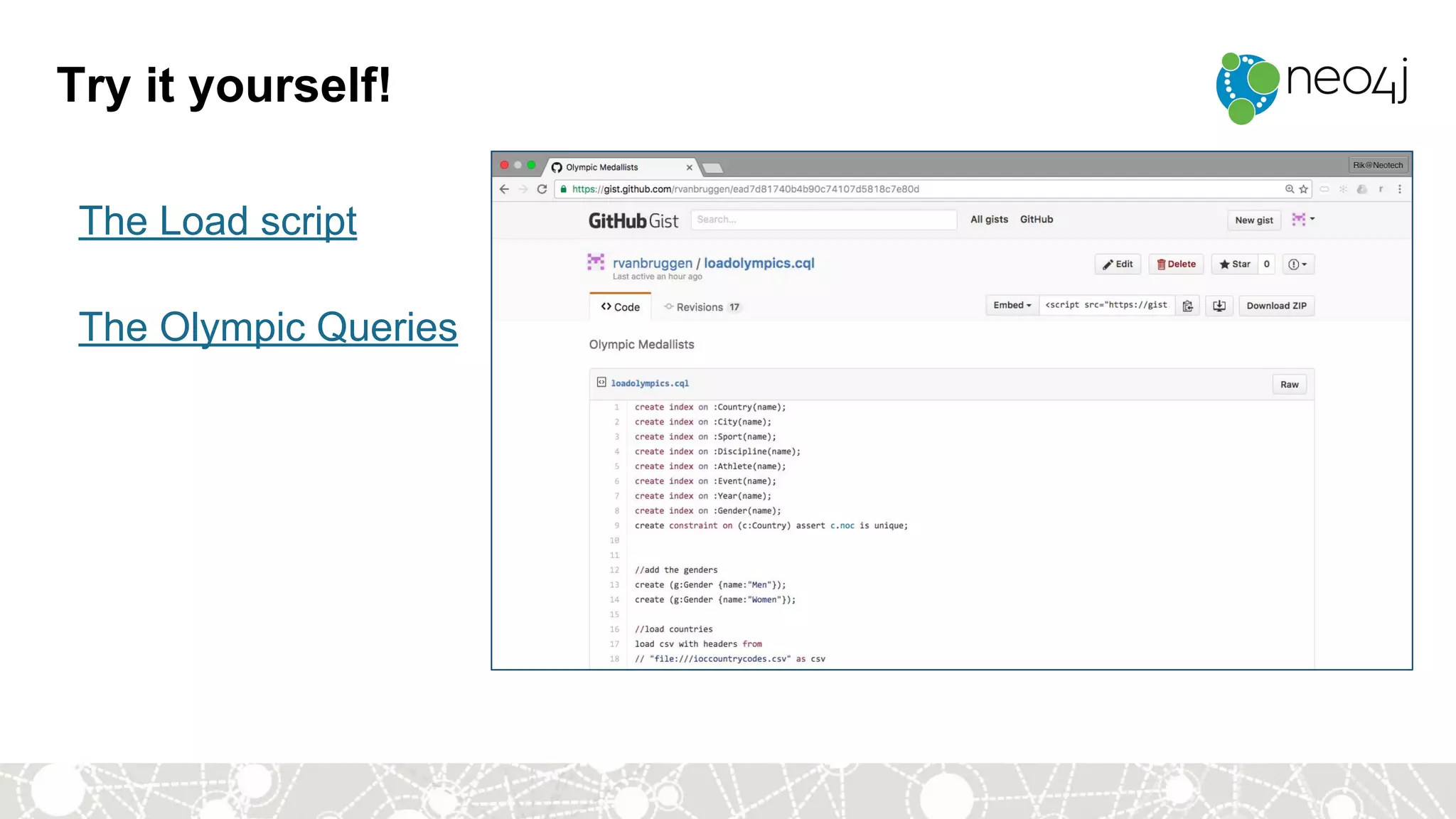
Try it yourself!
The Load script
The Olympic Queries
Questions?
OLYMPIC Answers!

Exploring the Great Olympian Graph

  • 1.
    The Great OlympianGraph Live Webinar August 18th, 2016
  • 2.
  • 3.
    The Background Always onthe lookout for interesting datasets In Love with Graphs since knowing Neo4j because 1. MODEL 2. PERFORMANCE
  • 4.
    The Property GraphModel Whiteboard (& Business) Friendly Rich, Multi-purpose HiFi representation of reality Low Impedance Mismatch Great for AGILE projects
  • 5.
    Performance matters Traditional DBshave a real problem with JOINS A Graph RELATIONSHIP ~ The Pre-calculated, Explicity-stored Join-operation Making JOINS ~ Pointer-chasing = easy! • Index-free adjacency • Graph locality
  • 6.
    Over the years:MANY Examples Corporate networks, Terrorism database, Social Networks, Music recommendations, Clickstream analysis, Friends and Foes in the Middle East, Access and Identity Management, Tour de France, Flanders Classics Cycling, Twitter communities, VAT registries, Rail networks, GTFS feeds, Bus / Metro networks, Electricity networks, Process flows, Orienteering maps, PanamaPapers, Wikipedia, Conference Schedules, GraphConnect, Oredev, Qcon, Business Continuity Management, Recommendation Engines, Knowledge Graph, Podcast database, Family Tree, Genealogy, Food Recipes, Food Composition, Belgian Beer Graph, GOTO Conference, Dutch Beer Graph, Single Malt Graph, Conceptnet, Trophic Cascade: how wolves change rivers, Swearwords, World Cup Football, Belgian TV Sitcom show “Thuis”, Email traffic analysis, Telco Churn, Doctor Who, LinkedIn… http://blog.bruggen.com
  • 7.
    Yet another graph... TheGreat Olympic Graph Dataset >> Model >> Import >> Query http://blog.bruggen.com/search/label/olympics for more details
  • 8.
    Starting out witha dataset https://www.theguardian.com/sport/datablog/2012/jun/25/olympic-medal-winner-list-data
  • 9.
    Adding the 2012data https://www.theguardian.com/sport/datablog/2012/aug/10/olympics-2012-list-medal-winners#data
  • 10.
    Merging the twointo something new A new spreadsheet for 1896-2012
  • 11.
  • 12.
    4 .csv files 1.One for the countries, and their 3-letter country-codes 2. One for the hosting cities, and their mappings to the above countries 3. A two-level categorisation (let's call it a "sports taxonomy") of some sort containing Sports (eg. Aquatics, Cycling,...), and Disciplines (eg. Swimming, Track Cycling, …) 4. A much bigger and longer sheet / .csv file that contains the actual data about each and every of the 30000+ medallists.
  • 13.
  • 14.
    Loading the data ●Loading the Genders of the Athletes ● Loading the Countries ● Loading the Cities in these Countries ● Loading the sports taxonomy ● Loading the different games ● Loading the different events in different disciplines of the taxonomy at the different games ● Loading the different athletes / medallists and their genders
  • 15.
    Every import hasits challenge :)
  • 16.
  • 17.
    Cost-based vs. Rule-basedplanner: RULE cypher planner=rule load csv with headers from "https://docs.google.com/a/neotechnology.com/spreadsheets/d/1l-2 3m3ZPTkz5HNGp-1uHCB1qqhLxq5LSrqNDqBD_T3w/export?format=csv&id=1l -23m3ZPTkz5HNGp-1uHCB1qqhLxq5LSrqNDqBD_T3w&gid=0" as csv match (d:Discipline {name: csv.Discipline})-[:PART_OF]->(s:Sport {name: csv.Sport})match (a:Athlete {name: csv.Athlete})match (e:Event {name: csv.Event})-->(y:Year {name: csv.Edition})create (a)-[:WINS]->(m:Medal {type: csv.Medal})-[:REWARD_FOR]->(e);
  • 18.
  • 19.
  • 20.
    Querying the OlympicGraph //number of sports per game match (y:Year)<--(e:Event)-->(d:Discipline)-->(s:Sport)with distinct y.name as game, s.name as sportreturn game, count(sport)order by game ASC
  • 21.
    //number of sportsper game match (y:Year)<--(e:Event)-->(d:Discipline)-->(s:Sport) with distinct y.name as game, s.name as sport return game, count(sport), collect(sport)order by game ASC Querying the Olympic Graph
  • 22.
    //medals per sportper country match (c:Country)<--(a:Athlete)-->(m:Medal )-->(e:Event)-->()-->(s:Sport), (e)--(y:Year {name:"1956"}) return c.name, s.name, count(s) as NrOfMedals order by NrOfMedals desc; Querying the Olympic Graph
  • 23.
    //athletes with medalsin games hosted in their home countries MATCH (y:Year)<--(e:Event)<--(m:Medal)<--(a:At hlete)-->(co:Country)<--(c:City)-->(y) return y.name, c.name, co.name, m.type, count(a) order by y.name desc Querying the Olympic Graph
  • 24.
    //Olympians with medalsin different sports match (a:Athlete) with a, size((a)-[:WINS]->()) as countmedals limit 100 where countmedals > 1 match (s:Sport)--(:Discipline)--(:Event)--(m :Medal)--(a) with distinct a,s match (a)-->(c:Country) with a.name as Athlete, c.name as Country, collect(s.name) as Sports where size(Sports)>1 return Athlete, Country, Sports; Querying the Olympic Graph
  • 25.
    Try it yourself! TheLoad script The Olympic Queries
  • 26.