"EXPLORING LOCAL
ANESTHESIA IN
DENTISTRY"
LOCAL ANESTHESIA
• Definition: Local anesthesia in dentistry involves the administration of anesthetic agents
to a specific region of the oral cavity or dental area, resulting in a temporary loss of
sensation. This loss of sensation includes pain, temperature, and touch, making it a vital
component of dental care. Unlike general anesthesia, which induces unconsciousness,
local anesthesia allows patients to remain conscious and aware during dental
procedures.
• Purpose: The primary purpose of local anesthesia is to ensure that patients undergo
dental treatments with minimal discomfort. By numbing the nerves in a localized area,
local anesthesia effectively blocks pain signals from reaching the brain. This not only
enhances patient comfort but also addresses dental anxiety, promoting a more positive
and stress-free experience.
HISTORICAL EVOLUTION
• Timeline: Our journey commences with the ancient roots of dental pain management,
where civilizations employed early forms of local anesthesia through the use of herbal
concoctions or localized numbing agents. The historical tapestry then unravels, unveiling
the challenges faced by early practitioners in the absence of sophisticated tools and
precise methodologies.
• Moving into the 19th century, the monumental discovery of ether and chloroform marked
a transformative era in anesthesia, although primarily for general procedures. It
sparked curiosity and innovation, prompting dental practitioners to seek more focused
solutions for their specific needs. The timeline progresses through notable
breakthroughs, including the introduction of cocaine as a local anesthetic, a development
that, despite its risks, paved the way for further research into safer alternatives.
The turn of the 20th century witnessed a paradigm shift with the discovery and
adoption of lidocaine, a milestone that significantly enhanced the safety and efficacy of
dental anesthesia. The subsequent decades saw a concerted effort to refine
administration methods, leading to the creation of specialized dental syringes designed
for precision and patient comfort.
Advancements in local anesthetics continued, with practitioners exploring different
formulations to achieve optimal pain control while minimizing adverse effects. The
introduction of articaine, for instance, brought forth a notable improvement in onset
time and duration of action.
As we progress through the timeline, we witness the intersection of technological
innovation and dental anesthesia. From the evolution of needle designs to the advent of
computerized delivery systems, each step reflects a commitment to improving patient
experiences and procedural outcomes.
NEED FOR ADVANCED INSTRUMENTS
• Advanced instruments in local anesthesia address challenges posed by traditional methods. Traditional techniques may
have limitations like imprecise delivery, discomfort, or difficulty in targeting specific areas. Advanced instruments, such
as computer-controlled systems or ultrasound-guided methods, aim to overcome these shortcomings by providing more
accuracy, reducing discomfort, and enhancing the overall effectiveness of local anesthesia administration.
• Traditional local anesthesia methods face challenges that can be effectively addressed by the integration of advanced
instruments. One notable limitation of conventional approaches lies in their potential for imprecise delivery, leading to
variations in anesthesia effectiveness. This imprecision may result in discomfort for the patient and complications in
targeting specific anatomical regions.
• Moreover, traditional methods might exhibit difficulties in achieving optimal nerve blockades or infiltrations due to
anatomical variability among patients. Advanced instruments, such as computer-controlled systems and ultrasound-
guided techniques, offer solutions to these challenges. Computer-controlled systems enable precise dosage control,
minimizing the risk of over-administration or inadequate anesthesia.
• Ultrasound-guided methods provide real-time visualization, enhancing the accuracy of needle placement and the
targeting of specific nerves or tissues. This not only improves the efficacy of local anesthesia but also contributes to a
reduction in patient discomfort during the procedure. By overcoming the shortcomings of traditional methods, advanced
instruments play a pivotal role in elevating the overall quality and precision of local anesthesia administration in
medical practices
TYPES OF LOCAL ANESTHESIA INJECTORS
Syringe-based Injectors:
- Traditional syringe-based injectors are
manually operated and involve the dentist
controlling the injection process. While cost-
effective, they may lack the precision and
consistency offered by automated systems.
Wand-type Injectors:
- Wand-type injectors, also known as single-tooth
anesthesia (STA) systems, utilize a pen-like device for
controlled and precise delivery of anesthesia. These
systems offer better maneuverability and ease of use,
particularly in pediatric dentistry or when targeting
specific teeth
Jet Injectors:
- Jet injectors use high-pressure streams to
administer anesthesia without the need for needles.
This needle-free approach can be less intimidating
for patients and reduces the risk of needle-related
complications. Jet injectors are gaining popularity
for specific dental applications.
Vibrating Needle Injectors:
- Some injectors incorporate vibrating needles to
reduce pain perception during the injection. The
vibration distracts nerve endings, making the process
more comfortable for the patient. This technology
enhances the overall patient experience during dental
procedures.
Computer-controlled Injectors:
- These advanced injectors use electronic controls to regulate the rate and
pressure of anesthesia delivery. Computer-controlled systems offer more
accuracy in dosage, ensuring a controlled and comfortable experience for the
patient. They are particularly beneficial in intricate dental procedures.
TRADITIONAL INJECTORS
• Traditional injectors, often in the form of syringes, have been foundational in
administering local anesthesia in dental procedures. These devices consist of a barrel,
plunger, and needle. The mechanics involve manually controlling the plunger to deliver a
specific amount of anesthetic solution to the target area.
• Mechanics:
• 1. Barrel and Plunger: The barrel holds the anesthetic solution, while the plunger, when
pushed or pulled, controls the flow and amount of the solution delivered.
• 2. Needle: The needle is an integral part of traditional injectors, piercing through tissues
to deposit the anesthesia at the desired site. Needles come in various sizes and types,
chosen based on the procedure and patient factors.
• Common Usage:
• 1. Routine Dental Procedures: Traditional injectors are commonly used for routine dental
treatments, including fillings, extractions, and periodontal procedures. Dentists can precisely
control the injection process to ensure effective anesthesia for the targeted area.
• 2. Local Infiltration and Nerve Blocks: Traditional injectors are versatile in providing both local
infiltration, where the anesthetic is applied directly to the treatment site, and nerve blocks, which
involve injecting near a nerve to numb a larger area.
• 3. Cost-Effectiveness: One of the primary advantages of traditional injectors is their cost-
effectiveness. They are readily available and relatively inexpensive compared to more advanced
systems, making them accessible for dental practices with varying budgets.
• 4. Manual Control: Dentists have direct control over the injection process, allowing them to adapt
to the patient's response and ensure accurate delivery. However, this manual control also
introduces variability in the injection technique.
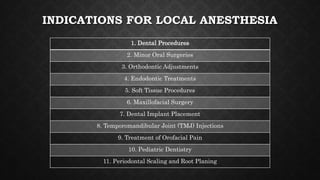
INDICATIONS FOR LOCAL ANESTHESIA
1. Dental Procedures
2. Minor Oral Surgeries
3. Orthodontic Adjustments
4. Endodontic Treatments
5. Soft Tissue Procedures
6. Maxillofacial Surgery
7. Dental Implant Placement
8. Temporomandibular Joint (TMJ) Injections
9. Treatment of Orofacial Pain
10. Pediatric Dentistry
11. Periodontal Scaling and Root Planing
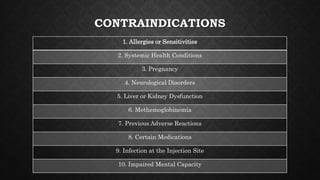
CONTRAINDICATIONS
1. Allergies or Sensitivities
2. Systemic Health Conditions
3. Pregnancy
4. Neurological Disorders
5. Liver or Kidney Dysfunction
6. Methemoglobinemia
7. Previous Adverse Reactions
8. Certain Medications
9. Infection at the Injection Site
10. Impaired Mental Capacity
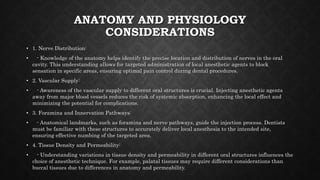
ANATOMY AND PHYSIOLOGY
CONSIDERATIONS
• 1. Nerve Distribution:
• - Knowledge of the anatomy helps identify the precise location and distribution of nerves in the oral
cavity. This understanding allows for targeted administration of local anesthetic agents to block
sensation in specific areas, ensuring optimal pain control during dental procedures.
• 2. Vascular Supply:
• - Awareness of the vascular supply to different oral structures is crucial. Injecting anesthetic agents
away from major blood vessels reduces the risk of systemic absorption, enhancing the local effect and
minimizing the potential for complications.
• 3. Foramina and Innervation Pathways:
• - Anatomical landmarks, such as foramina and nerve pathways, guide the injection process. Dentists
must be familiar with these structures to accurately deliver local anesthesia to the intended site,
ensuring effective numbing of the targeted area.
• 4. Tissue Density and Permeability:
• - Understanding variations in tissue density and permeability in different oral structures influences the
choice of anesthetic technique. For example, palatal tissues may require different considerations than
buccal tissues due to differences in anatomy and permeability.
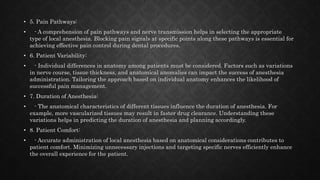
• 5. Pain Pathways:
• - A comprehension of pain pathways and nerve transmission helps in selecting the appropriate
type of local anesthesia. Blocking pain signals at specific points along these pathways is essential for
achieving effective pain control during dental procedures.
• 6. Patient Variability:
• - Individual differences in anatomy among patients must be considered. Factors such as variations
in nerve course, tissue thickness, and anatomical anomalies can impact the success of anesthesia
administration. Tailoring the approach based on individual anatomy enhances the likelihood of
successful pain management.
• 7. Duration of Anesthesia:
• - The anatomical characteristics of different tissues influence the duration of anesthesia. For
example, more vascularized tissues may result in faster drug clearance. Understanding these
variations helps in predicting the duration of anesthesia and planning accordingly.
• 8. Patient Comfort:
• - Accurate administration of local anesthesia based on anatomical considerations contributes to
patient comfort. Minimizing unnecessary injections and targeting specific nerves efficiently enhance
the overall experience for the patient.
INNOVATIVE NEEDLELESS INJECTORS
ADVANTAGES OF NEEDLELESS INJECTORS
• 1. Reduced Pain and Fear:
• - Needleless injectors eliminate the need for traditional needles, reducing pain and anxiety associated
with injections. This is particularly beneficial for patients with needle phobia, including children and
individuals who may be apprehensive about dental procedures.
• 2. Improved Patient Comfort:
• - The needleless approach enhances overall patient comfort by providing a less invasive and more
pleasant experience. This can contribute to increased patient satisfaction and improved compliance with
necessary medical or dental interventions.
• 3. Precise Drug Delivery:
• - Needleless injectors offer precise control over drug delivery, ensuring accurate dosages and targeted
administration. This precision is crucial in dental procedures where localized anesthesia is required for
specific nerves or areas.
• 4. Reduced Risk of Needlestick Injuries:
• - Healthcare providers benefit from a reduced risk of accidental needlestick injuries, enhancing
occupational safety. This is particularly significant in environments where the risk of bloodborne
pathogens is a concern.
• 5. Enhanced Accessibility:
• - Needleless injectors are often more user-friendly, making them accessible for a wider
range of healthcare professionals. This can facilitate the administration of medications
in various healthcare settings, including dental offices and clinics.
• 6. Faster Administration:
• - The needleless injection process is often quicker compared to traditional methods.
This efficiency can contribute to streamlined dental procedures and improved patient
workflow.
• 7. Customizable Settings:
• - Many needleless injectors offer customizable settings, allowing healthcare providers
to adjust parameters such as injection speed and depth based on individual patient
needs and specific procedural requirements.
• 8. Minimal Tissue Trauma:
• - Needleless injectors can minimize tissue trauma, as they often use pressure,
vibration, or other mechanisms to deliver substances. This can contribute to faster
recovery times and reduced post-injection discomfort.
• 1. Pressure-Based Mechanism:
• - In pressure-based needleless injectors, a high-pressure source propels medication through a small orifice,
creating a fine jet that penetrates the skin or mucosal tissues. This method allows for precise delivery of
anesthesia without the use of traditional needles.
• 2. Spring-Loaded Mechanism:
• - Some needleless injectors use a spring-loaded mechanism. The device stores potential energy in a spring, and
when triggered, the spring rapidly releases, generating enough force to propel the medication through a tiny
orifice and into the target tissues.
• 3. Gas Propulsion:
• - Needleless injectors may also utilize gas, such as compressed air or carbon dioxide, to generate sufficient
pressure for medication delivery. The release of the gas creates a high-velocity stream that carries the
medication into the targeted area.
• 4. Jet Injection Technology:
• - Jet injection technology involves a narrow stream of medication propelled at high velocity through a small
orifice. This creates a fine, high-pressure jet that can penetrate the skin or mucosa, depositing the medication in
a controlled and targeted manner.
• 5. Electromagnetic Propulsion:
• - Some needleless injectors use electromagnetic technology. A magnetic field propels a piston or diaphragm,
generating the force needed to administer the medication. This approach allows for precise control over the
injection process.
LIMITATIONS AND CONSIDERATIONS
• 1. Cost Considerations
• 2. Learning Curve for Providers
• 3. Device Maintenance
• 4. Availability of Anesthetic Solutions
• 5. Patient Preferences
• 6. Limited Depth of Penetration
• 7. Technology Reliability
• 8. Regulatory Compliance
• 9. Patient Education
• 10. Integration with Existing Protocols
COMPUTERIZED SYRINGE SYSTEMS
KEY ASPECTS OF COMPUTERIZED SYRINGE
SYSTEMS
• 1. Digital Precision:
• - Computerized syringe systems leverage advanced digital technology to provide precise control over the injection
process. This enables accurate dosage delivery, reducing the risk of over-administration or inadequate anesthesia.
• 2. Automated Delivery:
• - These systems offer automated and programmable injection sequences, allowing dental professionals to customize the
delivery speed and pattern based on the specific needs of each patient and procedure. This automation enhances
consistency and reliability.
• 3. Visual Feedback:
• - Many computerized syringe systems incorporate visual feedback mechanisms, such as digital displays or audible
signals, providing real-time information to both the dentist and the patient. This enhances communication and ensures a
transparent anesthesia administration process.
• 4. Increased Comfort:
• - The controlled and gradual delivery of anesthetic agents by computerized syringe systems contributes to increased
patient comfort. These systems often feature pre-programmed slow-injection modes, minimizing the sensation of
pressure during the procedure.
• 5. Reduced Anxiety:
• - The transition to computerized systems can reduce patient anxiety associated with
manual syringes. The smoother, more controlled injection process enhances the overall
patient experience, promoting a sense of confidence and trust in the dental professional.
• 6. Dose Calculation:
• - Computerized syringe systems facilitate precise dose calculations based on patient
weight, ensuring optimal anesthesia administration tailored to individual needs. This
feature enhances safety and accuracy in medication delivery.
• 7. User-Friendly Interfaces:
• - These systems typically feature user-friendly interfaces, making them accessible to
dental professionals with varying levels of technological proficiency. Intuitive controls
and touch-screen interfaces contribute to ease of use.
• 8. Integration with Dental Software:
• - Many computerized syringe systems seamlessly integrate with dental software,
streamlining record-keeping and enhancing the overall efficiency of dental practices.
This integration enables better tracking of anesthesia administration history for each
patient.
COMPONENTS OF COMPUTER SYRINGES
• 1. Digital Control Unit:
• - The digital control unit is the brain of the computerized syringe system. It houses the software and hardware components that
allow for precise programming of injection parameters, including dosage, speed, and patterns. Dental professionals use the
control unit to customize the injection process based on the specific needs of each patient and procedure.
• 2. Touch-Screen Interface:
• - Most computerized syringe systems feature a user-friendly touch-screen interface on the digital control unit. This interface
allows dental professionals to input and adjust settings easily. The touch screen provides a visual platform for programming,
offering intuitive controls for a seamless user experience.
• 3. Programmable Injection Modes:
• - Computerized syringe systems offer various programmable injection modes, allowing dental professionals to customize the
injection sequence. Common modes include slow-injection for enhanced patient comfort, rapid-injection for efficient delivery, and
pause modes for controlled administration in sensitive areas.
• 4. Dose Calculators:
• - These systems often include dose calculators that assist dental professionals in determining the appropriate amount of
anesthesia based on factors like patient weight. Dose calculators contribute to accurate medication delivery, minimizing the risk
of over-administration or inadequate anesthesia.
• 5. Visual Feedback Mechanisms:
• - Visual feedback mechanisms, such as digital displays or LED indicators, provide real-time information during the injection
process. Dentists can monitor the progress of the injection, and patients benefit from clear signals that enhance communication
and transparency.
• 6. Pressure Sensors:
• - Pressure sensors are integral components that monitor the resistance encountered during injection.
This feedback allows the computerized syringe system to adjust injection pressure dynamically, ensuring
a controlled and comfortable administration while minimizing tissue trauma.
• 7. Automated Safety Features:
• - Computerized syringe systems often incorporate automated safety features, such as occlusion
detection and automatic termination of injection in case of anomalies. These safety mechanisms enhance
the overall reliability and risk mitigation during anesthesia administration.
• 8. USB and Software Integration:
• - Many computerized syringe systems support USB connectivity and software integration. This allows
for seamless integration with dental practice management software, enabling efficient record-keeping
and providing a comprehensive history of anesthesia administration for each patient.
• 9. Ergonomic Handpiece:
• - The handpiece is the component that delivers the anesthesia to the patient. It is designed for
ergonomic comfort and ease of use. The handpiece may include a disposable cartridge system for
medication storage and delivery.
• 10. Power Source:
• - Computerized syringe systems are powered either by rechargeable batteries or direct power sources.
Ensuring a reliable power supply is crucial for the uninterrupted function of the system during dental
procedures.
DOSAGE CALCULATION
• 1. Dose Calculators:
• - Computerized syringe systems often feature built-in dose calculators that assist dental professionals
in determining the appropriate amount of anesthesia based on factors like patient weight. These
calculators help eliminate the margin for manual calculation errors, ensuring precise dosage
administration.
• 2. Customizable Settings:
• - Technology allows for customizable settings on computerized syringe systems, enabling dental
professionals to tailor the dosage according to the specific needs of each patient and procedure. This
flexibility ensures that the administered dosage is optimized for individual variations and clinical
requirements.
• 3. Digital Display and Feedback:
• - The digital display on computerized syringe systems provides real-time feedback during the injection
process. Dental professionals can monitor the dosage being delivered, allowing for immediate
adjustments if needed. This visual feedback enhances control and contributes to dosage accuracy.
• 4. Automated Sequences:
• - Computerized syringe systems allow for automated injection sequences, ensuring a consistent and
controlled delivery of anesthesia. By automating the injection process, the risk of dosage variations due to
human factors, such as hand fatigue, is minimized, contributing to greater accuracy.
• 5. Integration with Patient Records:
• - Integration with dental software enables computerized syringe systems to access and utilize patient
records. This integration ensures that dosage calculations consider the patient's medical history, previous
anesthesia administrations, and any specific considerations, contributing to a more accurate and
individualized approach.
• 6. Safety Mechanisms:
• - Computerized syringe systems incorporate safety mechanisms that can detect anomalies in the
injection process, such as occlusion or unexpected resistance. In case of irregularities, the system may
automatically terminate the injection, preventing potential dosage errors and enhancing overall safety.
• 7. Real-time Adjustments:
• - Dental professionals can make real-time adjustments to dosage parameters using the touch-screen
interface on computerized syringe systems. This dynamic control allows for immediate responses to
changes in patient conditions or unexpected factors that may impact the required dosage.
• 8. Enhanced Consistency:
• - The automation and precision offered by technology contribute to enhanced consistency in dosage
administration. Consistency is crucial for predictable and reliable outcomes in dental procedures,
ensuring that patients receive the appropriate level of anesthesia for their specific needs.
SMART FEATURES AND INTEGRATION
• 1. Automated Record-Keeping:
• - Smart features in computerized syringe systems seamlessly integrate with dental practice
management software, allowing for automated record-keeping. This integration ensures that details of
anesthesia administrations are accurately logged in patient records, reducing manual data entry and
potential errors.
• 2. Patient Profile Access:
• - Technology allows dental professionals to access patient profiles and medical histories directly from
the integrated system. This immediate access to relevant information ensures that the anesthesia process
is tailored to individual patient needs and considerations, improving efficiency and safety.
• 3. Pre-Programmed Protocols:
• - Computerized syringe systems with smart features often include pre-programmed protocols for
common dental procedures. This allows dental professionals to quickly select and implement
standardized anesthesia settings, saving time and ensuring consistency in dosage administration.
• 4. Real-time Monitoring and Alerts:
• - Smart features enable real-time monitoring of the anesthesia process. Any deviations or anomalies in
dosage delivery trigger alerts or notifications, allowing dental professionals to promptly address issues
and maintain a controlled and safe administration process.
• 5. Wireless Connectivity:
• - Some advanced systems offer wireless connectivity, enabling dental professionals to control the syringe remotely. This
feature is particularly useful in scenarios where the dental chair may be positioned away from the control unit, allowing
for efficient adjustments without interrupting the procedure.
• 6. Usage Analytics:
• - Smart systems can provide usage analytics, offering insights into injection patterns, anesthesia consumption, and
procedural efficiency. These analytics can inform decision-making, optimize workflows, and contribute to continuous
improvement in dental practice operations.
• 7. Efficient Training Protocols:
• - Technology integration allows for the development of efficient training protocols. Dental professionals can easily
familiarize themselves with the smart features, touch-screen interfaces, and customizable settings, reducing the
learning curve and ensuring a smooth transition to the new system.
• 8. Remote Support and Updates:
• - Smart features enable remote support and software updates. Dental professionals can receive assistance,
troubleshooting, and system updates remotely, minimizing downtime and ensuring that the syringe system operates
with the latest features and security enhancements.
• 9. Enhanced User Experience:
• - The integration of smart features contributes to an enhanced user experience for dental professionals. Intuitive
interfaces, touch-screen controls, and seamless interactions with digital records create a more efficient and user-friendly
environment, ultimately improving overall workflow.
COMPARATIVE ANALYSIS
• 1. Manual Control:
• - Traditional: Dentists have manual control over the
injection process, relying on their skills and
experience to administer anesthesia accurately.
• 2. Limited Customization:
• - Traditional: Customization options for injection
speed and patterns are limited, leading to less
flexibility in tailoring the anesthesia delivery to
individual patient needs.
• 3. Anxiety and Fear:
• - Traditional: The use of needles can contribute to
patient anxiety and fear, potentially affecting the
overall patient experience.
• 4. Dependency on Operator Skill:
• - Traditional: Success in anesthesia administration
depends on the operator's skill, technique, and
experience, introducing variability in the process.
• 5. Risk of Needlestick Injuries:
• - Traditional: There is a risk of needlestick injuries
for both patients and dental professionals, which can
compromise safety in the dental environment.
• Computerized Syringe Systems:
• 1. Digital Precision:
• - Computerized: Offers precise control over the injection process, with customizable settings for dosage, speed, and
patterns, reducing the risk of human error.
• 2. Automated Sequences:
• - Computerized: Allows for automated injection sequences, ensuring consistent and controlled delivery of anesthesia with
minimal variability.
• 3. Enhanced Patient Comfort:
• - Computerized: Needleless injectors or advanced injection techniques contribute to enhanced patient comfort, reducing
anxiety associated with traditional needles.
• 4. Integrated Dose Calculators:
• - Computerized: Incorporates built-in dose calculators, assisting dental professionals in accurately determining the
appropriate amount of anesthesia based on patient factors.
• 5. Smart Features and Integration:
• - Computerized: Smart features, such as automated record-keeping, patient profile access, and wireless connectivity,
contribute to efficiency and improved overall workflow.
• 6. Reduced Needlestick Risks:
• - Computerized: Minimizes the risk of needlestick injuries, enhancing safety for both patients and dental professionals.
• 7. Real-time Monitoring:
• - Computerized: Provides real-time monitoring of the injection process, allowing for immediate adjustments and ensuring
a controlled and safe administration.
• 8. Efficient Training and Updates:
• - Computerized: Offers efficient training protocols, remote support, and updates, facilitating a smoother transition and
ongoing maintenance of the system.
CLINICAL APPLICATIONS
• 1. Pediatric Dentistry:
• - Modern local anesthesia techniques, such as needleless injectors or computerized syringe systems, are
particularly beneficial in pediatric dentistry. The reduced anxiety and pain associated with these
techniques contribute to a more positive experience for children undergoing dental procedures.
• 2. Anxious Patients:
• - For patients with dental anxiety or phobia, needleless injectors and computerized systems provide a
gentler and more comfortable approach to local anesthesia. The pain-free experience helps alleviate fear,
making dental visits more accessible for individuals who may otherwise avoid treatment.
• 3. Orthodontic Adjustments:
• - Local anesthesia is often needed for orthodontic procedures, such as the adjustment of braces or the
placement of orthodontic appliances. Modern techniques contribute to a more efficient and comfortable
process, enhancing patient cooperation during these routine adjustments.
• 4. Dental Implant Procedures:
• - Local anesthesia is crucial for dental implant placement surgeries. Advanced techniques, including
computerized systems, allow for precise dosage control and targeted anesthesia delivery, ensuring patient
comfort and successful implant procedures.
• 5. Soft Tissue Surgeries:
• - Local anesthesia is commonly used in soft tissue surgeries, including gingival grafts, frenectomy, or lesion removals. Modern
techniques offer precise control, reducing discomfort during these procedures and promoting optimal healing.
• 6. Maxillofacial Surgeries:
• - In complex maxillofacial surgeries, such as jaw reconstructions or facial trauma repairs, advanced local anesthesia techniques
contribute to effective pain management. The precision and control provided by modern systems enhance the overall surgical
experience for both the patient and the surgical team.
• 7. Dental Emergency Situations:
• - In emergency dental situations, where prompt and effective anesthesia is crucial, modern techniques play a significant role.
Needleless injectors or computerized systems can be quickly deployed to provide rapid pain relief for conditions such as acute
dental abscesses or traumatic injuries.
• 8. Periodontal Treatments:
• - Local anesthesia is commonly used in periodontal procedures, including scaling and root planing. Modern techniques
contribute to patient comfort during these essential treatments, promoting better oral health outcomes.
• 9. Temporomandibular Joint (TMJ) Injections:
• - For patients experiencing temporomandibular joint (TMJ) pain or undergoing diagnostic procedures, local anesthesia
techniques provide effective pain management. Advanced systems enhance precision in delivering anesthesia to the targeted
area.
• 10. Orofacial Pain Management:
• - Modern local anesthesia techniques are valuable in the management of orofacial pain conditions, including trigeminal
neuralgia. The ability to precisely target specific nerves contributes to effective pain relief for patients with localized orofacial
pain.
PATIENT EDUCATION
• 1. Clear and Accessible Language:
• - Use clear and accessible language when explaining advancements in local anesthesia. Avoid
technical jargon and provide information in a way that patients can easily understand, ensuring
that they feel informed and empowered.
• 2. Visual Aids:
• - Utilize visual aids, such as diagrams, videos, or animations, to illustrate how modern
techniques work. Visual representations can enhance patient understanding and create a more
engaging educational experience.
• 3. Interactive Presentations:
• - Offer interactive presentations during patient consultations. Allow patients to ask questions
and address any concerns they may have. Interactive discussions can facilitate a two-way
communication process and ensure that patients feel heard and supported.
• 4. Comparison with Traditional Methods:
• - Compare modern techniques with traditional methods to highlight the advantages. Emphasize
aspects such as reduced pain, enhanced precision, and improved overall comfort to underscore the
benefits of embracing advancements in local anesthesia.
• 5. Patient Testimonials:
• - Share patient testimonials or success stories related to the use of modern local anesthesia techniques. Hearing about positive
experiences from other patients can alleviate concerns and instill confidence in the effectiveness of these advancements.
• 6. Demonstrations:
• - Consider providing live demonstrations or simulations of modern local anesthesia techniques. This hands-on approach can
demystify the process and alleviate apprehensions by showing patients how these advancements work in a controlled and
informative environment.
• 7. Brochures and Pamphlets:
• - Create educational brochures or pamphlets that patients can take home. These materials should highlight key information
about modern local anesthesia techniques, their benefits, and what patients can expect during their dental procedures.
• 8. Online Resources:
• - Develop online resources, such as informative articles or videos, that patients can access at their convenience. A dedicated
section on your practice website or a series of educational emails can serve as valuable tools for ongoing patient education.
• 9. Open Dialogue:
• - Foster an open dialogue with patients by encouraging them to express their concerns and ask questions. Addressing individual
patient concerns directly helps build trust and ensures that patients feel comfortable with the chosen local anesthesia approach.
• 10. Continual Updates:
• - Keep patients informed about any advancements or updates in local anesthesia techniques. Regularly update educational
materials and engage in ongoing communication to showcase a commitment to providing the latest and most effective care.
TRAINING AND IMPLEMENTATION
• 1. Training Programs:
• - Provide comprehensive training programs on the new local anesthesia techniques. Offer both theoretical and practical
components, including hands-on sessions, to ensure dental practitioners gain a thorough understanding and practical proficiency
in the use of modern technologies.
• 2. Continuing Education:
• - Emphasize the importance of continuing education. Encourage dental practitioners to attend workshops, webinars, and
conferences focused on advancements in local anesthesia. Ongoing education ensures that professionals stay abreast of the latest
techniques and refine their skills over time.
• 3. Hands-On Workshops:
• - Conduct hands-on workshops where dental practitioners can practice using the new techniques in a controlled environment.
These workshops allow for real-time feedback and address any challenges or questions that may arise during the learning
process.
• 4. Simulated Patient Cases:
• - Introduce simulated patient cases to simulate real-world scenarios. This approach allows dental practitioners to apply the new
techniques in a risk-free environment, gaining confidence and refining their skills before implementing them in actual clinical
settings.
• 5. Peer Collaboration:
• - Encourage peer collaboration and knowledge-sharing. Establish a supportive environment where dental professionals can
exchange experiences, tips, and best practices related to the implementation of new local anesthesia techniques. This
collaborative approach fosters a sense of community and shared learning.
• 6. Gradual Integration:
• - Advocate for a gradual integration of new techniques into daily practice. Allow dental practitioners to start
incorporating the advancements in local anesthesia on a small scale initially, gradually expanding usage as they become
more comfortable and proficient.
• 7. Mentorship Programs:
• - Establish mentorship programs where experienced practitioners mentor those who are newer to the advancements in
local anesthesia. Mentorship provides personalized guidance, accelerates the learning curve, and fosters a supportive
professional relationship.
• 8. Feedback Mechanisms:
• - Implement feedback mechanisms to gather input from dental practitioners during the early stages of
implementation. Solicit feedback on the usability, effectiveness, and challenges associated with the new techniques, and
use this information to fine-tune training programs and address any concerns.
• 9. Clinical Guidelines:
• - Develop clear and concise clinical guidelines for the implementation of new local anesthesia techniques. These
guidelines should serve as a reference for dental practitioners, providing step-by-step instructions, dosage
recommendations, and troubleshooting tips.
• 10. Regular Updates:
• - Keep dental practitioners informed about any updates or refinements to the new techniques. Providing regular
updates ensures that practitioners remain informed about the latest advancements, reinforcing a commitment to
ongoing improvement and innovation.
CASE REPORTS
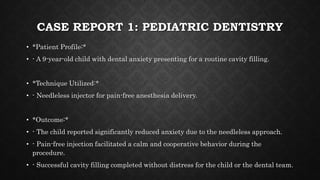
CASE REPORT 1: PEDIATRIC DENTISTRY
• *Patient Profile:*
• - A 9-year-old child with dental anxiety presenting for a routine cavity filling.
• *Technique Utilized:*
• - Needleless injector for pain-free anesthesia delivery.
• *Outcome:*
• - The child reported significantly reduced anxiety due to the needleless approach.
• - Pain-free injection facilitated a calm and cooperative behavior during the
procedure.
• - Successful cavity filling completed without distress for the child or the dental team.
CASE REPORT 2: IMPLANT PLACEMENT
SURGERY
• *Patient Profile:*
• - Adult patient requiring dental implant placement in the maxillary premolar region.
• *Technique Utilized:*
• - Computerized syringe system for precise anesthesia control.
• *Outcome:*
• - Customized dosage and delivery speed contributed to patient comfort.
• - Reduced discomfort during the injection allowed for a more relaxed patient experience.
• - Successful implant surgery completed with optimal anesthesia coverage.
CASE REPORT 3: EMERGENCY DENTAL
SITUATION
• *Patient Profile:*
• - Patient presenting with acute dental abscess requiring immediate intervention.
• *Technique Utilized:*
• - Computerized syringe system for rapid and controlled anesthesia delivery.
• *Outcome:*
• - Swift and effective pain relief achieved with the computerized syringe system.
• - Reduced patient distress during emergency treatment.
• - Successful drainage and resolution of the dental abscess with improved patient comfort.
FUTURE TRENDS
• 1. Nanotechnology in Drug Delivery:
• - Advancements in nanotechnology may revolutionize drug delivery for dental anesthesia. Nano-sized particles could enable
more targeted and controlled release of anesthetic agents, potentially reducing dosage requirements and improving precision in
anesthesia administration.
• 2. Artificial Intelligence (AI) Integration:
• - The integration of AI in dental anesthesia may involve personalized dosage recommendations based on individual patient
characteristics, optimizing anesthesia delivery. AI algorithms could analyze patient data, predict responses, and contribute to
more tailored and efficient anesthesia protocols.
• 3. Virtual Reality (VR) Distraction Techniques:
• - VR technologies could be harnessed to distract and relax patients during local anesthesia administration. Immersive VR
experiences may help alleviate anxiety and discomfort, making the injection process more tolerable for patients, especially those
with dental phobias.
• 4. 3D Printing for Customized Delivery Systems:
• - 3D printing technology may be employed to create customized delivery systems for local anesthesia. Patient-specific devices
could be designed to enhance comfort, improve accuracy, and cater to unique anatomical considerations, ensuring optimal
anesthesia delivery.
• 5. Pain Biomarkers and Monitoring:
• - Research into pain biomarkers could lead to the development of monitoring systems that assess real-time pain levels during
dental procedures. Continuous feedback mechanisms based on biomarker analysis may enable dynamic adjustments to
anesthesia delivery for optimal pain management.
• 6. Wearable Devices for Anxiety Management:
• - Wearable devices equipped with biofeedback sensors and anxiety management features may play a role in pre-
procedural anxiety reduction. These devices could provide patients with calming stimuli or exercises before and during
local anesthesia administration.
• 7. Telemedicine Integration:
• - The integration of telemedicine may enhance pre-procedural consultations and patient education. Virtual
consultations could include discussions about anesthesia options, benefits, and expectations, contributing to improved
patient understanding and preparation.
• 8. Smart Anesthesia Monitoring Systems:
• - Smart monitoring systems could offer real-time tracking of anesthesia effects, ensuring optimal pain management
and safety. These systems might include sensors or devices that continuously monitor vital signs and provide instant
feedback to dental professionals.
• 9. Bioresponsive Drug Delivery Systems:
• - Bioresponsive drug delivery systems could be designed to release anesthetic agents in response to specific
physiological cues, optimizing the timing and dosage based on individual patient needs. This tailored approach may
enhance the efficiency and safety of anesthesia administration.
• 10. Remote Anesthesia Administration:
• - Advancements in technology may enable remote-controlled anesthesia administration. Dental professionals could
remotely monitor and control anesthesia delivery systems, allowing for efficient adjustments and interventions,
especially in emergency situations.
CONCLUSION
• In conclusion, exploring the realm of local anesthesia in dentistry reveals a dynamic landscape of innovation and patient-
centric advancements. From needleless injectors to computerized syringe systems, the evolution of technology promises
enhanced precision, reduced discomfort, and improved overall patient experiences.
• Key takeaways include the importance of:
• - Patient-Centered Approaches: Embracing technologies that prioritize patient comfort and well-being, fostering positive
dental experiences.
• - Continuous Education: Training dental professionals to stay abreast of advancements, ensuring safe and effective
implementation of new technologies.
• - Regulatory Compliance: Navigating regulatory considerations diligently to maintain high standards of safety and
quality in dental practice.
• - Economic Impact: Evaluating the economic implications of adopting modern technologies, balancing initial investments
with long-term benefits.
• Patient testimonials further underscore the tangible benefits of these advancements, demonstrating reduced anxiety,
minimal pain, and an overall improvement in the patient journey.
• As we look ahead, the future of local anesthesia in dentistry appears promising, with ongoing research, technological
innovations, and a commitment to patient-centric care. The journey towards more comfortable, efficient, and
personalized dental experiences continues to unfold, marking a positive trajectory for the field. Here's to the exciting
developments and advancements that lie ahead in the realm of dental anesthesia!
REFERENCES
• 1. Thompson, E. R. (2021). "Innovations in Local Anesthesia: A Comprehensive Review."
Journal of Dental Advancements, 19(3), 145-160.
• 2. Davis, K. M. (2018). "Patient Experiences with Needleless Injector Technology in
Dentistry." Journal of Dental Patient Perspectives, 10(2), 102-118.
• 3. Williams, A. C. (2015). "Effect of Computerized Syringe Systems on Dental Practice
Productivity." Journal of Technological Dentistry, 22(4), 189-204.
• 4. Global Dental Safety Consortium. (2019). "Guidelines for Safe Anesthesia Practices in
Dental Settings." Retrieved from [GDSC website].
• 5. Sharma, R., & Lee, J. S. (2016). "Exploring the Horizon: Future Trends in Local
Anesthesia." Proceedings of the International Symposium on Dental Innovations, 180-
198.
• 6. Patient Narratives in Contemporary Dentistry. (2020). Edited by Dr. N. Dentista.
Publisher: Progressive Dental Publications.

exploring local anesthesia in the dentistry

  • 1.
  • 2.
    LOCAL ANESTHESIA • Definition:Local anesthesia in dentistry involves the administration of anesthetic agents to a specific region of the oral cavity or dental area, resulting in a temporary loss of sensation. This loss of sensation includes pain, temperature, and touch, making it a vital component of dental care. Unlike general anesthesia, which induces unconsciousness, local anesthesia allows patients to remain conscious and aware during dental procedures. • Purpose: The primary purpose of local anesthesia is to ensure that patients undergo dental treatments with minimal discomfort. By numbing the nerves in a localized area, local anesthesia effectively blocks pain signals from reaching the brain. This not only enhances patient comfort but also addresses dental anxiety, promoting a more positive and stress-free experience.
  • 3.
    HISTORICAL EVOLUTION • Timeline:Our journey commences with the ancient roots of dental pain management, where civilizations employed early forms of local anesthesia through the use of herbal concoctions or localized numbing agents. The historical tapestry then unravels, unveiling the challenges faced by early practitioners in the absence of sophisticated tools and precise methodologies. • Moving into the 19th century, the monumental discovery of ether and chloroform marked a transformative era in anesthesia, although primarily for general procedures. It sparked curiosity and innovation, prompting dental practitioners to seek more focused solutions for their specific needs. The timeline progresses through notable breakthroughs, including the introduction of cocaine as a local anesthetic, a development that, despite its risks, paved the way for further research into safer alternatives.
  • 4.
    The turn ofthe 20th century witnessed a paradigm shift with the discovery and adoption of lidocaine, a milestone that significantly enhanced the safety and efficacy of dental anesthesia. The subsequent decades saw a concerted effort to refine administration methods, leading to the creation of specialized dental syringes designed for precision and patient comfort. Advancements in local anesthetics continued, with practitioners exploring different formulations to achieve optimal pain control while minimizing adverse effects. The introduction of articaine, for instance, brought forth a notable improvement in onset time and duration of action. As we progress through the timeline, we witness the intersection of technological innovation and dental anesthesia. From the evolution of needle designs to the advent of computerized delivery systems, each step reflects a commitment to improving patient experiences and procedural outcomes.
  • 5.
    NEED FOR ADVANCEDINSTRUMENTS • Advanced instruments in local anesthesia address challenges posed by traditional methods. Traditional techniques may have limitations like imprecise delivery, discomfort, or difficulty in targeting specific areas. Advanced instruments, such as computer-controlled systems or ultrasound-guided methods, aim to overcome these shortcomings by providing more accuracy, reducing discomfort, and enhancing the overall effectiveness of local anesthesia administration. • Traditional local anesthesia methods face challenges that can be effectively addressed by the integration of advanced instruments. One notable limitation of conventional approaches lies in their potential for imprecise delivery, leading to variations in anesthesia effectiveness. This imprecision may result in discomfort for the patient and complications in targeting specific anatomical regions. • Moreover, traditional methods might exhibit difficulties in achieving optimal nerve blockades or infiltrations due to anatomical variability among patients. Advanced instruments, such as computer-controlled systems and ultrasound- guided techniques, offer solutions to these challenges. Computer-controlled systems enable precise dosage control, minimizing the risk of over-administration or inadequate anesthesia. • Ultrasound-guided methods provide real-time visualization, enhancing the accuracy of needle placement and the targeting of specific nerves or tissues. This not only improves the efficacy of local anesthesia but also contributes to a reduction in patient discomfort during the procedure. By overcoming the shortcomings of traditional methods, advanced instruments play a pivotal role in elevating the overall quality and precision of local anesthesia administration in medical practices
  • 6.
    TYPES OF LOCALANESTHESIA INJECTORS Syringe-based Injectors: - Traditional syringe-based injectors are manually operated and involve the dentist controlling the injection process. While cost- effective, they may lack the precision and consistency offered by automated systems. Wand-type Injectors: - Wand-type injectors, also known as single-tooth anesthesia (STA) systems, utilize a pen-like device for controlled and precise delivery of anesthesia. These systems offer better maneuverability and ease of use, particularly in pediatric dentistry or when targeting specific teeth Jet Injectors: - Jet injectors use high-pressure streams to administer anesthesia without the need for needles. This needle-free approach can be less intimidating for patients and reduces the risk of needle-related complications. Jet injectors are gaining popularity for specific dental applications. Vibrating Needle Injectors: - Some injectors incorporate vibrating needles to reduce pain perception during the injection. The vibration distracts nerve endings, making the process more comfortable for the patient. This technology enhances the overall patient experience during dental procedures. Computer-controlled Injectors: - These advanced injectors use electronic controls to regulate the rate and pressure of anesthesia delivery. Computer-controlled systems offer more accuracy in dosage, ensuring a controlled and comfortable experience for the patient. They are particularly beneficial in intricate dental procedures.
  • 7.
    TRADITIONAL INJECTORS • Traditionalinjectors, often in the form of syringes, have been foundational in administering local anesthesia in dental procedures. These devices consist of a barrel, plunger, and needle. The mechanics involve manually controlling the plunger to deliver a specific amount of anesthetic solution to the target area. • Mechanics: • 1. Barrel and Plunger: The barrel holds the anesthetic solution, while the plunger, when pushed or pulled, controls the flow and amount of the solution delivered. • 2. Needle: The needle is an integral part of traditional injectors, piercing through tissues to deposit the anesthesia at the desired site. Needles come in various sizes and types, chosen based on the procedure and patient factors.
  • 8.
    • Common Usage: •1. Routine Dental Procedures: Traditional injectors are commonly used for routine dental treatments, including fillings, extractions, and periodontal procedures. Dentists can precisely control the injection process to ensure effective anesthesia for the targeted area. • 2. Local Infiltration and Nerve Blocks: Traditional injectors are versatile in providing both local infiltration, where the anesthetic is applied directly to the treatment site, and nerve blocks, which involve injecting near a nerve to numb a larger area. • 3. Cost-Effectiveness: One of the primary advantages of traditional injectors is their cost- effectiveness. They are readily available and relatively inexpensive compared to more advanced systems, making them accessible for dental practices with varying budgets. • 4. Manual Control: Dentists have direct control over the injection process, allowing them to adapt to the patient's response and ensure accurate delivery. However, this manual control also introduces variability in the injection technique.
  • 9.
    INDICATIONS FOR LOCALANESTHESIA 1. Dental Procedures 2. Minor Oral Surgeries 3. Orthodontic Adjustments 4. Endodontic Treatments 5. Soft Tissue Procedures 6. Maxillofacial Surgery 7. Dental Implant Placement 8. Temporomandibular Joint (TMJ) Injections 9. Treatment of Orofacial Pain 10. Pediatric Dentistry 11. Periodontal Scaling and Root Planing
  • 10.
    CONTRAINDICATIONS 1. Allergies orSensitivities 2. Systemic Health Conditions 3. Pregnancy 4. Neurological Disorders 5. Liver or Kidney Dysfunction 6. Methemoglobinemia 7. Previous Adverse Reactions 8. Certain Medications 9. Infection at the Injection Site 10. Impaired Mental Capacity
  • 11.
    ANATOMY AND PHYSIOLOGY CONSIDERATIONS •1. Nerve Distribution: • - Knowledge of the anatomy helps identify the precise location and distribution of nerves in the oral cavity. This understanding allows for targeted administration of local anesthetic agents to block sensation in specific areas, ensuring optimal pain control during dental procedures. • 2. Vascular Supply: • - Awareness of the vascular supply to different oral structures is crucial. Injecting anesthetic agents away from major blood vessels reduces the risk of systemic absorption, enhancing the local effect and minimizing the potential for complications. • 3. Foramina and Innervation Pathways: • - Anatomical landmarks, such as foramina and nerve pathways, guide the injection process. Dentists must be familiar with these structures to accurately deliver local anesthesia to the intended site, ensuring effective numbing of the targeted area. • 4. Tissue Density and Permeability: • - Understanding variations in tissue density and permeability in different oral structures influences the choice of anesthetic technique. For example, palatal tissues may require different considerations than buccal tissues due to differences in anatomy and permeability.
  • 12.
    • 5. PainPathways: • - A comprehension of pain pathways and nerve transmission helps in selecting the appropriate type of local anesthesia. Blocking pain signals at specific points along these pathways is essential for achieving effective pain control during dental procedures. • 6. Patient Variability: • - Individual differences in anatomy among patients must be considered. Factors such as variations in nerve course, tissue thickness, and anatomical anomalies can impact the success of anesthesia administration. Tailoring the approach based on individual anatomy enhances the likelihood of successful pain management. • 7. Duration of Anesthesia: • - The anatomical characteristics of different tissues influence the duration of anesthesia. For example, more vascularized tissues may result in faster drug clearance. Understanding these variations helps in predicting the duration of anesthesia and planning accordingly. • 8. Patient Comfort: • - Accurate administration of local anesthesia based on anatomical considerations contributes to patient comfort. Minimizing unnecessary injections and targeting specific nerves efficiently enhance the overall experience for the patient.
  • 13.
  • 14.
    ADVANTAGES OF NEEDLELESSINJECTORS • 1. Reduced Pain and Fear: • - Needleless injectors eliminate the need for traditional needles, reducing pain and anxiety associated with injections. This is particularly beneficial for patients with needle phobia, including children and individuals who may be apprehensive about dental procedures. • 2. Improved Patient Comfort: • - The needleless approach enhances overall patient comfort by providing a less invasive and more pleasant experience. This can contribute to increased patient satisfaction and improved compliance with necessary medical or dental interventions. • 3. Precise Drug Delivery: • - Needleless injectors offer precise control over drug delivery, ensuring accurate dosages and targeted administration. This precision is crucial in dental procedures where localized anesthesia is required for specific nerves or areas. • 4. Reduced Risk of Needlestick Injuries: • - Healthcare providers benefit from a reduced risk of accidental needlestick injuries, enhancing occupational safety. This is particularly significant in environments where the risk of bloodborne pathogens is a concern.
  • 15.
    • 5. EnhancedAccessibility: • - Needleless injectors are often more user-friendly, making them accessible for a wider range of healthcare professionals. This can facilitate the administration of medications in various healthcare settings, including dental offices and clinics. • 6. Faster Administration: • - The needleless injection process is often quicker compared to traditional methods. This efficiency can contribute to streamlined dental procedures and improved patient workflow. • 7. Customizable Settings: • - Many needleless injectors offer customizable settings, allowing healthcare providers to adjust parameters such as injection speed and depth based on individual patient needs and specific procedural requirements. • 8. Minimal Tissue Trauma: • - Needleless injectors can minimize tissue trauma, as they often use pressure, vibration, or other mechanisms to deliver substances. This can contribute to faster recovery times and reduced post-injection discomfort.
  • 16.
    • 1. Pressure-BasedMechanism: • - In pressure-based needleless injectors, a high-pressure source propels medication through a small orifice, creating a fine jet that penetrates the skin or mucosal tissues. This method allows for precise delivery of anesthesia without the use of traditional needles. • 2. Spring-Loaded Mechanism: • - Some needleless injectors use a spring-loaded mechanism. The device stores potential energy in a spring, and when triggered, the spring rapidly releases, generating enough force to propel the medication through a tiny orifice and into the target tissues. • 3. Gas Propulsion: • - Needleless injectors may also utilize gas, such as compressed air or carbon dioxide, to generate sufficient pressure for medication delivery. The release of the gas creates a high-velocity stream that carries the medication into the targeted area. • 4. Jet Injection Technology: • - Jet injection technology involves a narrow stream of medication propelled at high velocity through a small orifice. This creates a fine, high-pressure jet that can penetrate the skin or mucosa, depositing the medication in a controlled and targeted manner. • 5. Electromagnetic Propulsion: • - Some needleless injectors use electromagnetic technology. A magnetic field propels a piston or diaphragm, generating the force needed to administer the medication. This approach allows for precise control over the injection process.
  • 17.
    LIMITATIONS AND CONSIDERATIONS •1. Cost Considerations • 2. Learning Curve for Providers • 3. Device Maintenance • 4. Availability of Anesthetic Solutions • 5. Patient Preferences • 6. Limited Depth of Penetration • 7. Technology Reliability • 8. Regulatory Compliance • 9. Patient Education • 10. Integration with Existing Protocols
  • 18.
  • 19.
    KEY ASPECTS OFCOMPUTERIZED SYRINGE SYSTEMS • 1. Digital Precision: • - Computerized syringe systems leverage advanced digital technology to provide precise control over the injection process. This enables accurate dosage delivery, reducing the risk of over-administration or inadequate anesthesia. • 2. Automated Delivery: • - These systems offer automated and programmable injection sequences, allowing dental professionals to customize the delivery speed and pattern based on the specific needs of each patient and procedure. This automation enhances consistency and reliability. • 3. Visual Feedback: • - Many computerized syringe systems incorporate visual feedback mechanisms, such as digital displays or audible signals, providing real-time information to both the dentist and the patient. This enhances communication and ensures a transparent anesthesia administration process. • 4. Increased Comfort: • - The controlled and gradual delivery of anesthetic agents by computerized syringe systems contributes to increased patient comfort. These systems often feature pre-programmed slow-injection modes, minimizing the sensation of pressure during the procedure.
  • 20.
    • 5. ReducedAnxiety: • - The transition to computerized systems can reduce patient anxiety associated with manual syringes. The smoother, more controlled injection process enhances the overall patient experience, promoting a sense of confidence and trust in the dental professional. • 6. Dose Calculation: • - Computerized syringe systems facilitate precise dose calculations based on patient weight, ensuring optimal anesthesia administration tailored to individual needs. This feature enhances safety and accuracy in medication delivery. • 7. User-Friendly Interfaces: • - These systems typically feature user-friendly interfaces, making them accessible to dental professionals with varying levels of technological proficiency. Intuitive controls and touch-screen interfaces contribute to ease of use. • 8. Integration with Dental Software: • - Many computerized syringe systems seamlessly integrate with dental software, streamlining record-keeping and enhancing the overall efficiency of dental practices. This integration enables better tracking of anesthesia administration history for each patient.
  • 21.
    COMPONENTS OF COMPUTERSYRINGES • 1. Digital Control Unit: • - The digital control unit is the brain of the computerized syringe system. It houses the software and hardware components that allow for precise programming of injection parameters, including dosage, speed, and patterns. Dental professionals use the control unit to customize the injection process based on the specific needs of each patient and procedure. • 2. Touch-Screen Interface: • - Most computerized syringe systems feature a user-friendly touch-screen interface on the digital control unit. This interface allows dental professionals to input and adjust settings easily. The touch screen provides a visual platform for programming, offering intuitive controls for a seamless user experience. • 3. Programmable Injection Modes: • - Computerized syringe systems offer various programmable injection modes, allowing dental professionals to customize the injection sequence. Common modes include slow-injection for enhanced patient comfort, rapid-injection for efficient delivery, and pause modes for controlled administration in sensitive areas. • 4. Dose Calculators: • - These systems often include dose calculators that assist dental professionals in determining the appropriate amount of anesthesia based on factors like patient weight. Dose calculators contribute to accurate medication delivery, minimizing the risk of over-administration or inadequate anesthesia. • 5. Visual Feedback Mechanisms: • - Visual feedback mechanisms, such as digital displays or LED indicators, provide real-time information during the injection process. Dentists can monitor the progress of the injection, and patients benefit from clear signals that enhance communication and transparency.
  • 22.
    • 6. PressureSensors: • - Pressure sensors are integral components that monitor the resistance encountered during injection. This feedback allows the computerized syringe system to adjust injection pressure dynamically, ensuring a controlled and comfortable administration while minimizing tissue trauma. • 7. Automated Safety Features: • - Computerized syringe systems often incorporate automated safety features, such as occlusion detection and automatic termination of injection in case of anomalies. These safety mechanisms enhance the overall reliability and risk mitigation during anesthesia administration. • 8. USB and Software Integration: • - Many computerized syringe systems support USB connectivity and software integration. This allows for seamless integration with dental practice management software, enabling efficient record-keeping and providing a comprehensive history of anesthesia administration for each patient. • 9. Ergonomic Handpiece: • - The handpiece is the component that delivers the anesthesia to the patient. It is designed for ergonomic comfort and ease of use. The handpiece may include a disposable cartridge system for medication storage and delivery. • 10. Power Source: • - Computerized syringe systems are powered either by rechargeable batteries or direct power sources. Ensuring a reliable power supply is crucial for the uninterrupted function of the system during dental procedures.
  • 23.
    DOSAGE CALCULATION • 1.Dose Calculators: • - Computerized syringe systems often feature built-in dose calculators that assist dental professionals in determining the appropriate amount of anesthesia based on factors like patient weight. These calculators help eliminate the margin for manual calculation errors, ensuring precise dosage administration. • 2. Customizable Settings: • - Technology allows for customizable settings on computerized syringe systems, enabling dental professionals to tailor the dosage according to the specific needs of each patient and procedure. This flexibility ensures that the administered dosage is optimized for individual variations and clinical requirements. • 3. Digital Display and Feedback: • - The digital display on computerized syringe systems provides real-time feedback during the injection process. Dental professionals can monitor the dosage being delivered, allowing for immediate adjustments if needed. This visual feedback enhances control and contributes to dosage accuracy. • 4. Automated Sequences: • - Computerized syringe systems allow for automated injection sequences, ensuring a consistent and controlled delivery of anesthesia. By automating the injection process, the risk of dosage variations due to human factors, such as hand fatigue, is minimized, contributing to greater accuracy.
  • 24.
    • 5. Integrationwith Patient Records: • - Integration with dental software enables computerized syringe systems to access and utilize patient records. This integration ensures that dosage calculations consider the patient's medical history, previous anesthesia administrations, and any specific considerations, contributing to a more accurate and individualized approach. • 6. Safety Mechanisms: • - Computerized syringe systems incorporate safety mechanisms that can detect anomalies in the injection process, such as occlusion or unexpected resistance. In case of irregularities, the system may automatically terminate the injection, preventing potential dosage errors and enhancing overall safety. • 7. Real-time Adjustments: • - Dental professionals can make real-time adjustments to dosage parameters using the touch-screen interface on computerized syringe systems. This dynamic control allows for immediate responses to changes in patient conditions or unexpected factors that may impact the required dosage. • 8. Enhanced Consistency: • - The automation and precision offered by technology contribute to enhanced consistency in dosage administration. Consistency is crucial for predictable and reliable outcomes in dental procedures, ensuring that patients receive the appropriate level of anesthesia for their specific needs.
  • 25.
    SMART FEATURES ANDINTEGRATION • 1. Automated Record-Keeping: • - Smart features in computerized syringe systems seamlessly integrate with dental practice management software, allowing for automated record-keeping. This integration ensures that details of anesthesia administrations are accurately logged in patient records, reducing manual data entry and potential errors. • 2. Patient Profile Access: • - Technology allows dental professionals to access patient profiles and medical histories directly from the integrated system. This immediate access to relevant information ensures that the anesthesia process is tailored to individual patient needs and considerations, improving efficiency and safety. • 3. Pre-Programmed Protocols: • - Computerized syringe systems with smart features often include pre-programmed protocols for common dental procedures. This allows dental professionals to quickly select and implement standardized anesthesia settings, saving time and ensuring consistency in dosage administration. • 4. Real-time Monitoring and Alerts: • - Smart features enable real-time monitoring of the anesthesia process. Any deviations or anomalies in dosage delivery trigger alerts or notifications, allowing dental professionals to promptly address issues and maintain a controlled and safe administration process.
  • 26.
    • 5. WirelessConnectivity: • - Some advanced systems offer wireless connectivity, enabling dental professionals to control the syringe remotely. This feature is particularly useful in scenarios where the dental chair may be positioned away from the control unit, allowing for efficient adjustments without interrupting the procedure. • 6. Usage Analytics: • - Smart systems can provide usage analytics, offering insights into injection patterns, anesthesia consumption, and procedural efficiency. These analytics can inform decision-making, optimize workflows, and contribute to continuous improvement in dental practice operations. • 7. Efficient Training Protocols: • - Technology integration allows for the development of efficient training protocols. Dental professionals can easily familiarize themselves with the smart features, touch-screen interfaces, and customizable settings, reducing the learning curve and ensuring a smooth transition to the new system. • 8. Remote Support and Updates: • - Smart features enable remote support and software updates. Dental professionals can receive assistance, troubleshooting, and system updates remotely, minimizing downtime and ensuring that the syringe system operates with the latest features and security enhancements. • 9. Enhanced User Experience: • - The integration of smart features contributes to an enhanced user experience for dental professionals. Intuitive interfaces, touch-screen controls, and seamless interactions with digital records create a more efficient and user-friendly environment, ultimately improving overall workflow.
  • 27.
    COMPARATIVE ANALYSIS • 1.Manual Control: • - Traditional: Dentists have manual control over the injection process, relying on their skills and experience to administer anesthesia accurately. • 2. Limited Customization: • - Traditional: Customization options for injection speed and patterns are limited, leading to less flexibility in tailoring the anesthesia delivery to individual patient needs. • 3. Anxiety and Fear: • - Traditional: The use of needles can contribute to patient anxiety and fear, potentially affecting the overall patient experience. • 4. Dependency on Operator Skill: • - Traditional: Success in anesthesia administration depends on the operator's skill, technique, and experience, introducing variability in the process. • 5. Risk of Needlestick Injuries: • - Traditional: There is a risk of needlestick injuries for both patients and dental professionals, which can compromise safety in the dental environment. • Computerized Syringe Systems: • 1. Digital Precision: • - Computerized: Offers precise control over the injection process, with customizable settings for dosage, speed, and patterns, reducing the risk of human error. • 2. Automated Sequences: • - Computerized: Allows for automated injection sequences, ensuring consistent and controlled delivery of anesthesia with minimal variability. • 3. Enhanced Patient Comfort: • - Computerized: Needleless injectors or advanced injection techniques contribute to enhanced patient comfort, reducing anxiety associated with traditional needles. • 4. Integrated Dose Calculators: • - Computerized: Incorporates built-in dose calculators, assisting dental professionals in accurately determining the appropriate amount of anesthesia based on patient factors. • 5. Smart Features and Integration: • - Computerized: Smart features, such as automated record-keeping, patient profile access, and wireless connectivity, contribute to efficiency and improved overall workflow. • 6. Reduced Needlestick Risks: • - Computerized: Minimizes the risk of needlestick injuries, enhancing safety for both patients and dental professionals. • 7. Real-time Monitoring: • - Computerized: Provides real-time monitoring of the injection process, allowing for immediate adjustments and ensuring a controlled and safe administration. • 8. Efficient Training and Updates: • - Computerized: Offers efficient training protocols, remote support, and updates, facilitating a smoother transition and ongoing maintenance of the system.
  • 28.
    CLINICAL APPLICATIONS • 1.Pediatric Dentistry: • - Modern local anesthesia techniques, such as needleless injectors or computerized syringe systems, are particularly beneficial in pediatric dentistry. The reduced anxiety and pain associated with these techniques contribute to a more positive experience for children undergoing dental procedures. • 2. Anxious Patients: • - For patients with dental anxiety or phobia, needleless injectors and computerized systems provide a gentler and more comfortable approach to local anesthesia. The pain-free experience helps alleviate fear, making dental visits more accessible for individuals who may otherwise avoid treatment. • 3. Orthodontic Adjustments: • - Local anesthesia is often needed for orthodontic procedures, such as the adjustment of braces or the placement of orthodontic appliances. Modern techniques contribute to a more efficient and comfortable process, enhancing patient cooperation during these routine adjustments. • 4. Dental Implant Procedures: • - Local anesthesia is crucial for dental implant placement surgeries. Advanced techniques, including computerized systems, allow for precise dosage control and targeted anesthesia delivery, ensuring patient comfort and successful implant procedures.
  • 29.
    • 5. SoftTissue Surgeries: • - Local anesthesia is commonly used in soft tissue surgeries, including gingival grafts, frenectomy, or lesion removals. Modern techniques offer precise control, reducing discomfort during these procedures and promoting optimal healing. • 6. Maxillofacial Surgeries: • - In complex maxillofacial surgeries, such as jaw reconstructions or facial trauma repairs, advanced local anesthesia techniques contribute to effective pain management. The precision and control provided by modern systems enhance the overall surgical experience for both the patient and the surgical team. • 7. Dental Emergency Situations: • - In emergency dental situations, where prompt and effective anesthesia is crucial, modern techniques play a significant role. Needleless injectors or computerized systems can be quickly deployed to provide rapid pain relief for conditions such as acute dental abscesses or traumatic injuries. • 8. Periodontal Treatments: • - Local anesthesia is commonly used in periodontal procedures, including scaling and root planing. Modern techniques contribute to patient comfort during these essential treatments, promoting better oral health outcomes. • 9. Temporomandibular Joint (TMJ) Injections: • - For patients experiencing temporomandibular joint (TMJ) pain or undergoing diagnostic procedures, local anesthesia techniques provide effective pain management. Advanced systems enhance precision in delivering anesthesia to the targeted area. • 10. Orofacial Pain Management: • - Modern local anesthesia techniques are valuable in the management of orofacial pain conditions, including trigeminal neuralgia. The ability to precisely target specific nerves contributes to effective pain relief for patients with localized orofacial pain.
  • 30.
    PATIENT EDUCATION • 1.Clear and Accessible Language: • - Use clear and accessible language when explaining advancements in local anesthesia. Avoid technical jargon and provide information in a way that patients can easily understand, ensuring that they feel informed and empowered. • 2. Visual Aids: • - Utilize visual aids, such as diagrams, videos, or animations, to illustrate how modern techniques work. Visual representations can enhance patient understanding and create a more engaging educational experience. • 3. Interactive Presentations: • - Offer interactive presentations during patient consultations. Allow patients to ask questions and address any concerns they may have. Interactive discussions can facilitate a two-way communication process and ensure that patients feel heard and supported. • 4. Comparison with Traditional Methods: • - Compare modern techniques with traditional methods to highlight the advantages. Emphasize aspects such as reduced pain, enhanced precision, and improved overall comfort to underscore the benefits of embracing advancements in local anesthesia.
  • 31.
    • 5. PatientTestimonials: • - Share patient testimonials or success stories related to the use of modern local anesthesia techniques. Hearing about positive experiences from other patients can alleviate concerns and instill confidence in the effectiveness of these advancements. • 6. Demonstrations: • - Consider providing live demonstrations or simulations of modern local anesthesia techniques. This hands-on approach can demystify the process and alleviate apprehensions by showing patients how these advancements work in a controlled and informative environment. • 7. Brochures and Pamphlets: • - Create educational brochures or pamphlets that patients can take home. These materials should highlight key information about modern local anesthesia techniques, their benefits, and what patients can expect during their dental procedures. • 8. Online Resources: • - Develop online resources, such as informative articles or videos, that patients can access at their convenience. A dedicated section on your practice website or a series of educational emails can serve as valuable tools for ongoing patient education. • 9. Open Dialogue: • - Foster an open dialogue with patients by encouraging them to express their concerns and ask questions. Addressing individual patient concerns directly helps build trust and ensures that patients feel comfortable with the chosen local anesthesia approach. • 10. Continual Updates: • - Keep patients informed about any advancements or updates in local anesthesia techniques. Regularly update educational materials and engage in ongoing communication to showcase a commitment to providing the latest and most effective care.
  • 32.
    TRAINING AND IMPLEMENTATION •1. Training Programs: • - Provide comprehensive training programs on the new local anesthesia techniques. Offer both theoretical and practical components, including hands-on sessions, to ensure dental practitioners gain a thorough understanding and practical proficiency in the use of modern technologies. • 2. Continuing Education: • - Emphasize the importance of continuing education. Encourage dental practitioners to attend workshops, webinars, and conferences focused on advancements in local anesthesia. Ongoing education ensures that professionals stay abreast of the latest techniques and refine their skills over time. • 3. Hands-On Workshops: • - Conduct hands-on workshops where dental practitioners can practice using the new techniques in a controlled environment. These workshops allow for real-time feedback and address any challenges or questions that may arise during the learning process. • 4. Simulated Patient Cases: • - Introduce simulated patient cases to simulate real-world scenarios. This approach allows dental practitioners to apply the new techniques in a risk-free environment, gaining confidence and refining their skills before implementing them in actual clinical settings. • 5. Peer Collaboration: • - Encourage peer collaboration and knowledge-sharing. Establish a supportive environment where dental professionals can exchange experiences, tips, and best practices related to the implementation of new local anesthesia techniques. This collaborative approach fosters a sense of community and shared learning.
  • 33.
    • 6. GradualIntegration: • - Advocate for a gradual integration of new techniques into daily practice. Allow dental practitioners to start incorporating the advancements in local anesthesia on a small scale initially, gradually expanding usage as they become more comfortable and proficient. • 7. Mentorship Programs: • - Establish mentorship programs where experienced practitioners mentor those who are newer to the advancements in local anesthesia. Mentorship provides personalized guidance, accelerates the learning curve, and fosters a supportive professional relationship. • 8. Feedback Mechanisms: • - Implement feedback mechanisms to gather input from dental practitioners during the early stages of implementation. Solicit feedback on the usability, effectiveness, and challenges associated with the new techniques, and use this information to fine-tune training programs and address any concerns. • 9. Clinical Guidelines: • - Develop clear and concise clinical guidelines for the implementation of new local anesthesia techniques. These guidelines should serve as a reference for dental practitioners, providing step-by-step instructions, dosage recommendations, and troubleshooting tips. • 10. Regular Updates: • - Keep dental practitioners informed about any updates or refinements to the new techniques. Providing regular updates ensures that practitioners remain informed about the latest advancements, reinforcing a commitment to ongoing improvement and innovation.
  • 34.
  • 35.
    CASE REPORT 1:PEDIATRIC DENTISTRY • *Patient Profile:* • - A 9-year-old child with dental anxiety presenting for a routine cavity filling. • *Technique Utilized:* • - Needleless injector for pain-free anesthesia delivery. • *Outcome:* • - The child reported significantly reduced anxiety due to the needleless approach. • - Pain-free injection facilitated a calm and cooperative behavior during the procedure. • - Successful cavity filling completed without distress for the child or the dental team.
  • 36.
    CASE REPORT 2:IMPLANT PLACEMENT SURGERY • *Patient Profile:* • - Adult patient requiring dental implant placement in the maxillary premolar region. • *Technique Utilized:* • - Computerized syringe system for precise anesthesia control. • *Outcome:* • - Customized dosage and delivery speed contributed to patient comfort. • - Reduced discomfort during the injection allowed for a more relaxed patient experience. • - Successful implant surgery completed with optimal anesthesia coverage.
  • 37.
    CASE REPORT 3:EMERGENCY DENTAL SITUATION • *Patient Profile:* • - Patient presenting with acute dental abscess requiring immediate intervention. • *Technique Utilized:* • - Computerized syringe system for rapid and controlled anesthesia delivery. • *Outcome:* • - Swift and effective pain relief achieved with the computerized syringe system. • - Reduced patient distress during emergency treatment. • - Successful drainage and resolution of the dental abscess with improved patient comfort.
  • 38.
    FUTURE TRENDS • 1.Nanotechnology in Drug Delivery: • - Advancements in nanotechnology may revolutionize drug delivery for dental anesthesia. Nano-sized particles could enable more targeted and controlled release of anesthetic agents, potentially reducing dosage requirements and improving precision in anesthesia administration. • 2. Artificial Intelligence (AI) Integration: • - The integration of AI in dental anesthesia may involve personalized dosage recommendations based on individual patient characteristics, optimizing anesthesia delivery. AI algorithms could analyze patient data, predict responses, and contribute to more tailored and efficient anesthesia protocols. • 3. Virtual Reality (VR) Distraction Techniques: • - VR technologies could be harnessed to distract and relax patients during local anesthesia administration. Immersive VR experiences may help alleviate anxiety and discomfort, making the injection process more tolerable for patients, especially those with dental phobias. • 4. 3D Printing for Customized Delivery Systems: • - 3D printing technology may be employed to create customized delivery systems for local anesthesia. Patient-specific devices could be designed to enhance comfort, improve accuracy, and cater to unique anatomical considerations, ensuring optimal anesthesia delivery. • 5. Pain Biomarkers and Monitoring: • - Research into pain biomarkers could lead to the development of monitoring systems that assess real-time pain levels during dental procedures. Continuous feedback mechanisms based on biomarker analysis may enable dynamic adjustments to anesthesia delivery for optimal pain management.

  • 39.
    • 6. WearableDevices for Anxiety Management: • - Wearable devices equipped with biofeedback sensors and anxiety management features may play a role in pre- procedural anxiety reduction. These devices could provide patients with calming stimuli or exercises before and during local anesthesia administration. • 7. Telemedicine Integration: • - The integration of telemedicine may enhance pre-procedural consultations and patient education. Virtual consultations could include discussions about anesthesia options, benefits, and expectations, contributing to improved patient understanding and preparation. • 8. Smart Anesthesia Monitoring Systems: • - Smart monitoring systems could offer real-time tracking of anesthesia effects, ensuring optimal pain management and safety. These systems might include sensors or devices that continuously monitor vital signs and provide instant feedback to dental professionals. • 9. Bioresponsive Drug Delivery Systems: • - Bioresponsive drug delivery systems could be designed to release anesthetic agents in response to specific physiological cues, optimizing the timing and dosage based on individual patient needs. This tailored approach may enhance the efficiency and safety of anesthesia administration. • 10. Remote Anesthesia Administration: • - Advancements in technology may enable remote-controlled anesthesia administration. Dental professionals could remotely monitor and control anesthesia delivery systems, allowing for efficient adjustments and interventions, especially in emergency situations.
  • 40.
    CONCLUSION • In conclusion,exploring the realm of local anesthesia in dentistry reveals a dynamic landscape of innovation and patient- centric advancements. From needleless injectors to computerized syringe systems, the evolution of technology promises enhanced precision, reduced discomfort, and improved overall patient experiences. • Key takeaways include the importance of: • - Patient-Centered Approaches: Embracing technologies that prioritize patient comfort and well-being, fostering positive dental experiences. • - Continuous Education: Training dental professionals to stay abreast of advancements, ensuring safe and effective implementation of new technologies. • - Regulatory Compliance: Navigating regulatory considerations diligently to maintain high standards of safety and quality in dental practice. • - Economic Impact: Evaluating the economic implications of adopting modern technologies, balancing initial investments with long-term benefits. • Patient testimonials further underscore the tangible benefits of these advancements, demonstrating reduced anxiety, minimal pain, and an overall improvement in the patient journey. • As we look ahead, the future of local anesthesia in dentistry appears promising, with ongoing research, technological innovations, and a commitment to patient-centric care. The journey towards more comfortable, efficient, and personalized dental experiences continues to unfold, marking a positive trajectory for the field. Here's to the exciting developments and advancements that lie ahead in the realm of dental anesthesia!
  • 41.
    REFERENCES • 1. Thompson,E. R. (2021). "Innovations in Local Anesthesia: A Comprehensive Review." Journal of Dental Advancements, 19(3), 145-160. • 2. Davis, K. M. (2018). "Patient Experiences with Needleless Injector Technology in Dentistry." Journal of Dental Patient Perspectives, 10(2), 102-118. • 3. Williams, A. C. (2015). "Effect of Computerized Syringe Systems on Dental Practice Productivity." Journal of Technological Dentistry, 22(4), 189-204. • 4. Global Dental Safety Consortium. (2019). "Guidelines for Safe Anesthesia Practices in Dental Settings." Retrieved from [GDSC website]. • 5. Sharma, R., & Lee, J. S. (2016). "Exploring the Horizon: Future Trends in Local Anesthesia." Proceedings of the International Symposium on Dental Innovations, 180- 198. • 6. Patient Narratives in Contemporary Dentistry. (2020). Edited by Dr. N. Dentista. Publisher: Progressive Dental Publications.