More Related Content

PDF

PDF

PDF
サルでもわかるMesos schedulerの作り方 
PPTX

PDF

PDF
C++14 relaxing constraints on constexpr 
PPTX

PPTX
Developing Frameworks for Apache Mesos Viewers also liked

PDF
Intro to WordPress #memtech 
PPTX
CRM - Customer Relationship Managemennt 
PDF
The Benefits of Community Banking 
PDF
A Guide to Muir Woods National Monument 
PDF
UX Nights Vol 03.06: Los games también son usuarios 
PPT

PDF

DOC

PDF

PDF

PDF
Greythorn Technology Market Landscape 
PDF
Savings e investimenti pubblicitari: Wrap up & Best practises 4 marzo 2010- F... 
PDF
Building the stacks for a mutualised newspaper 
PPT
Customer Service By Azra Syed 
PPT

PDF
Extract of the report on the anaysis of the okoa kenya initiative 
PDF
Cómo las empresas pueden vender en redes sociales 
PPTX
Universidad nacional de chimborazo (trabajo) 2010 
PDF
Elogio de la perseverancia. 
PPTX
More from Akira Takahashi

PDF

PDF

PDF

PDF

PDF
C++14 solve explicit_default_constructor 
PPTX

PDF

PDF

PDF

PDF

PDF

PDF
error handling using expected 
PDF

PDF

PDF

PPTX
Cpp20 overview language features 
PDF

PDF

PDF

PDF
Executors and schedulers
- 1.
- 2.
- 3.
- 4.
- 5.
- 6.
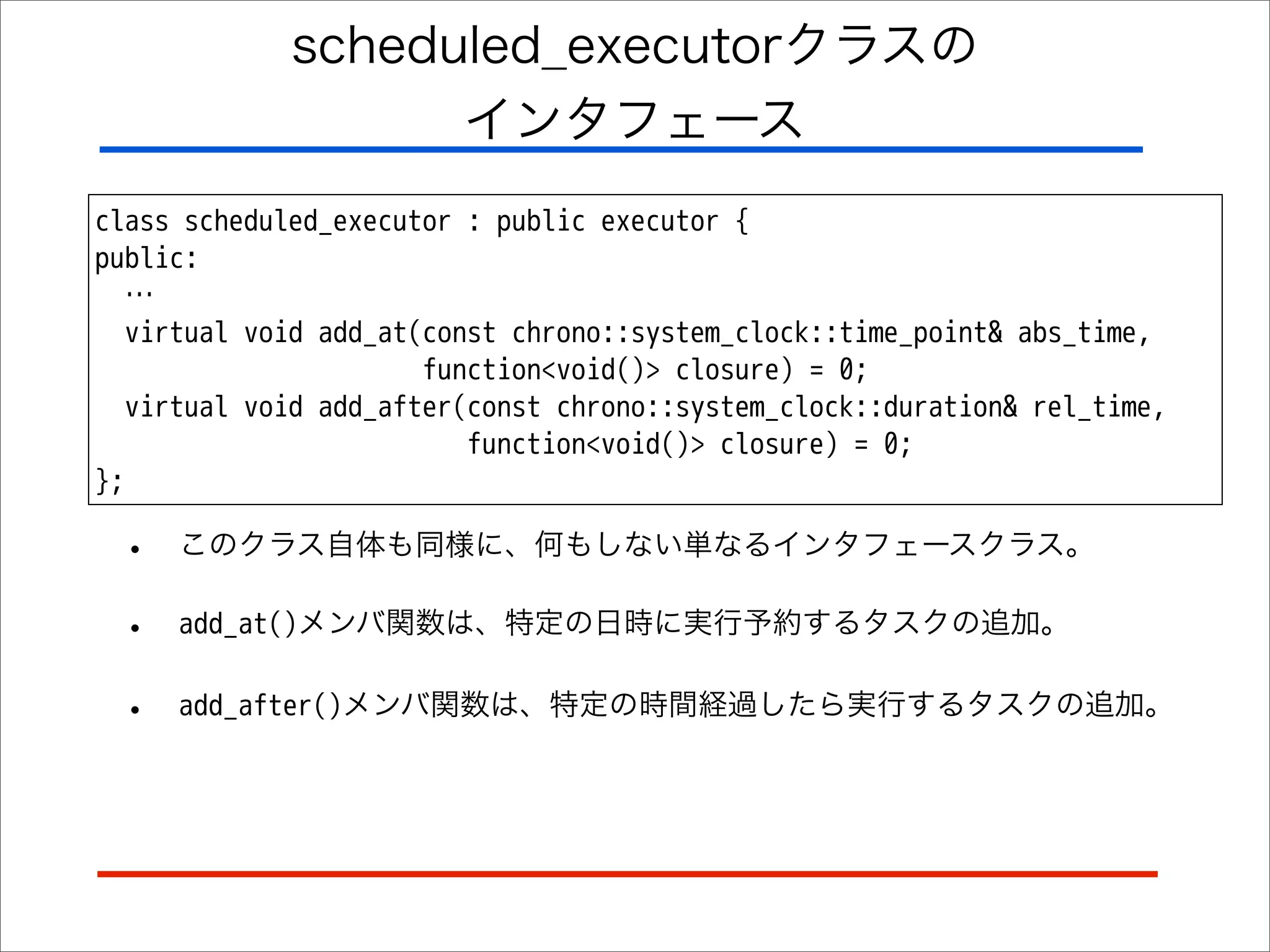
scheduled_executorクラスの
インタフェース
class scheduled_executor :public executor {
public:
…
virtual void add_at(const chrono::system_clock::time_point& abs_time,
function<void()> closure) = 0;
virtual void add_after(const chrono::system_clock::duration& rel_time,
function<void()> closure) = 0;
};
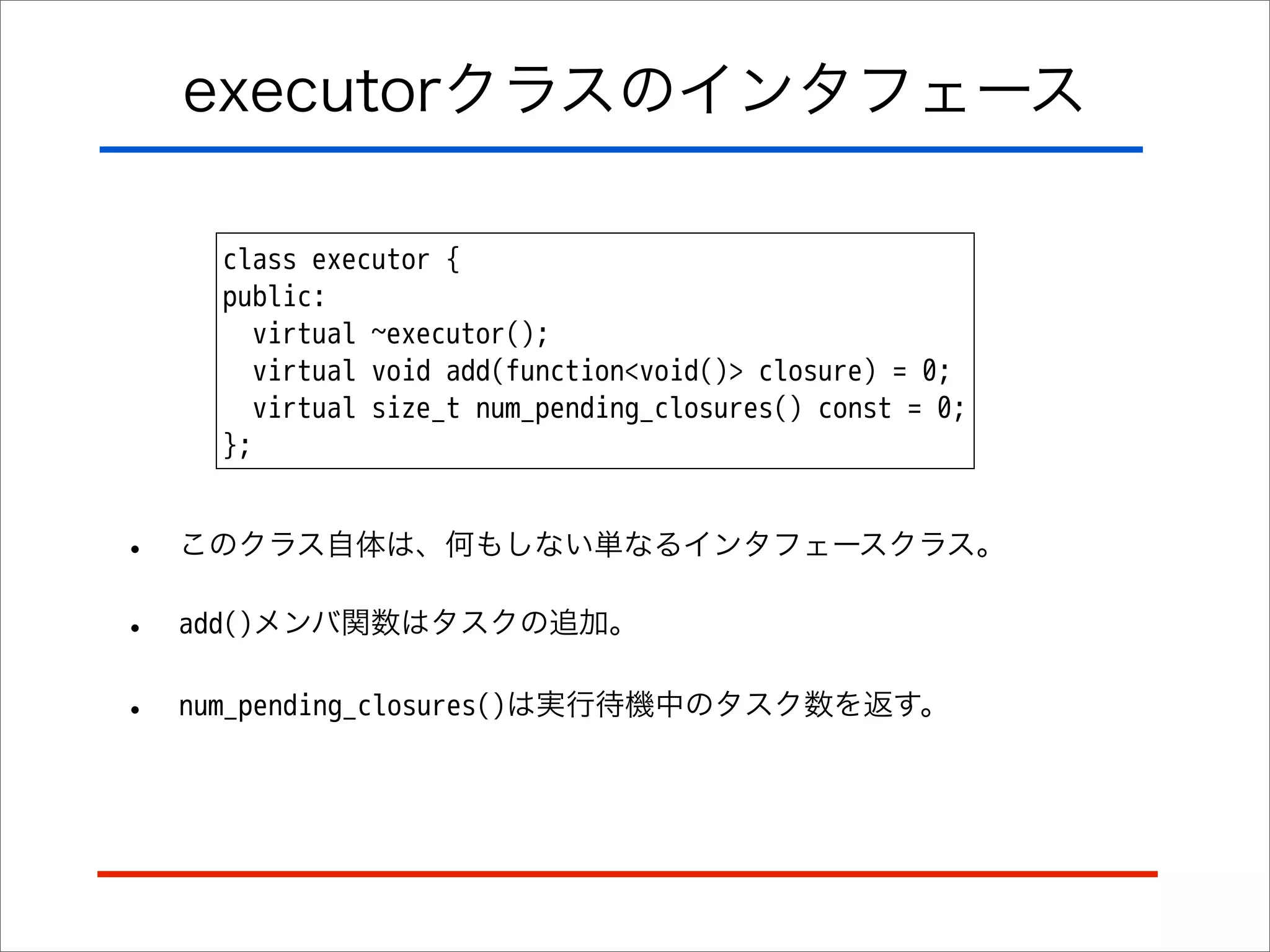
•
このクラス自体も同様に、何もしない単なるインタフェースクラス。
•
add_at()メンバ関数は、特定の日時に実行予約するタスクの追加。
•
add_after()メンバ関数は、特定の時間経過したら実行するタスクの追加。
- 7.
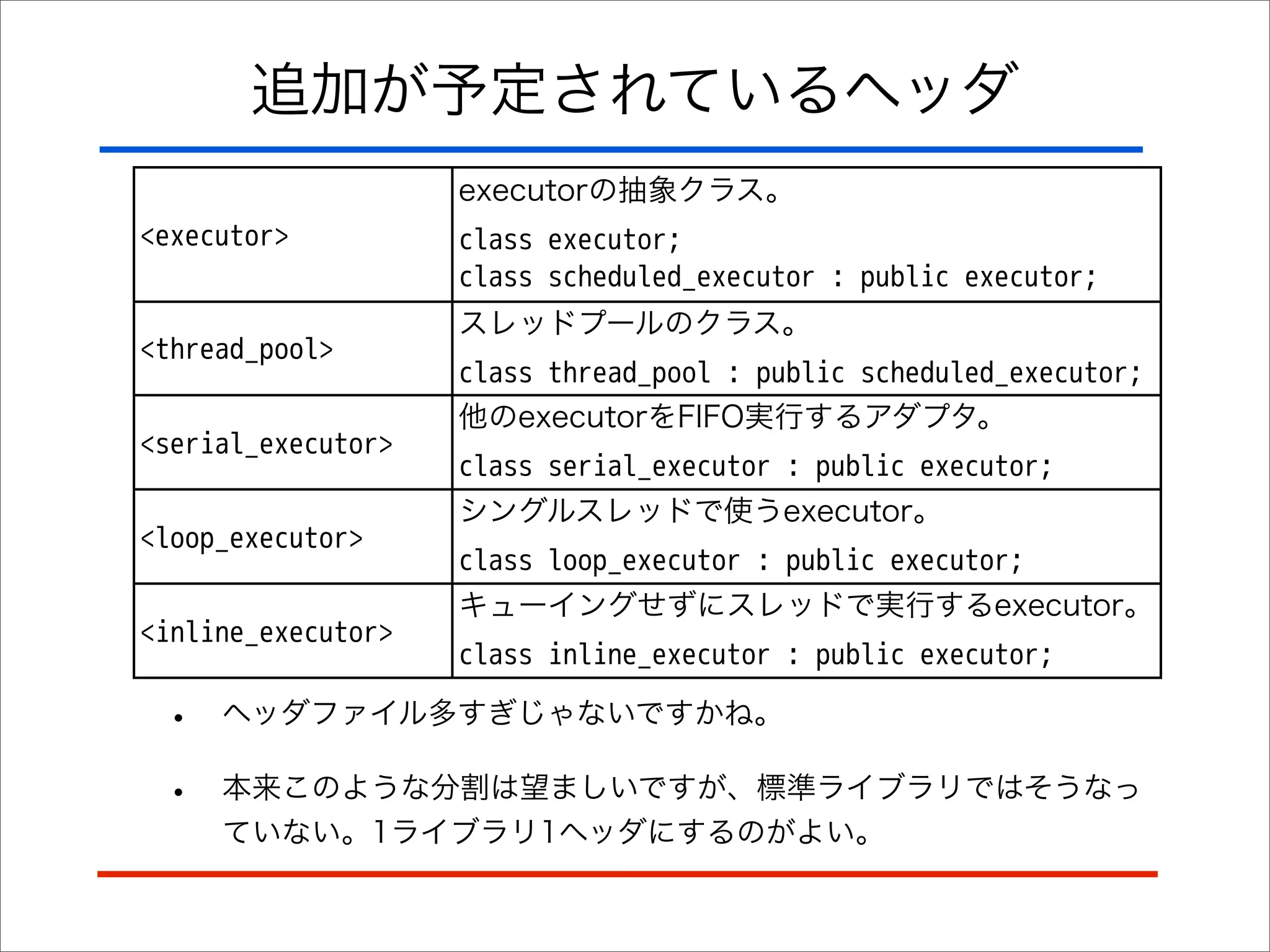
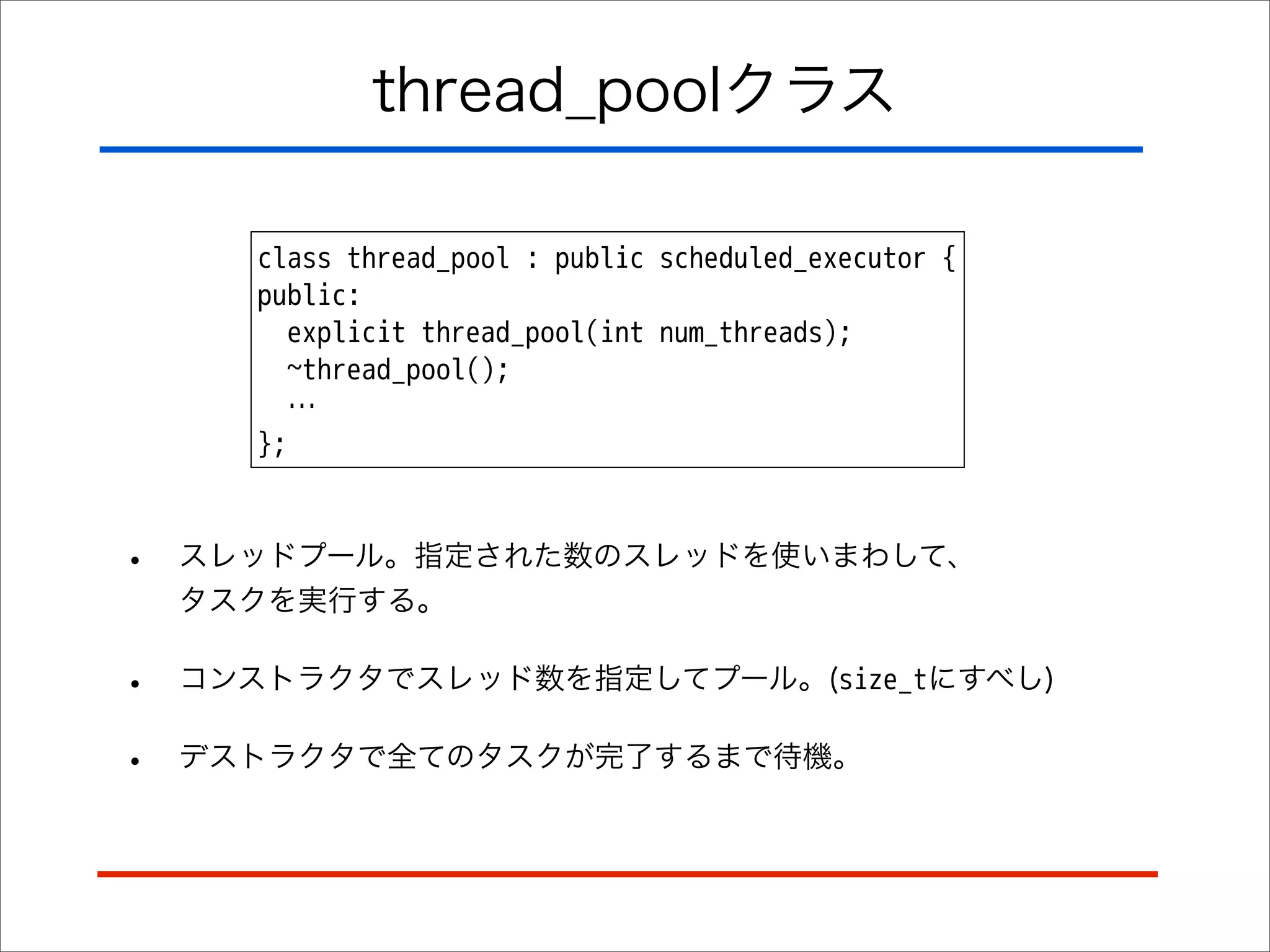
thread_poolクラス
class thread_pool :public scheduled_executor {
public:
explicit thread_pool(int num_threads);
~thread_pool();
…
};
•
スレッドプール。指定された数のスレッドを使いまわして、
タスクを実行する。
•
コンストラクタでスレッド数を指定してプール。(size_tにすべし)
•
デストラクタで全てのタスクが完了するまで待機。
- 8.
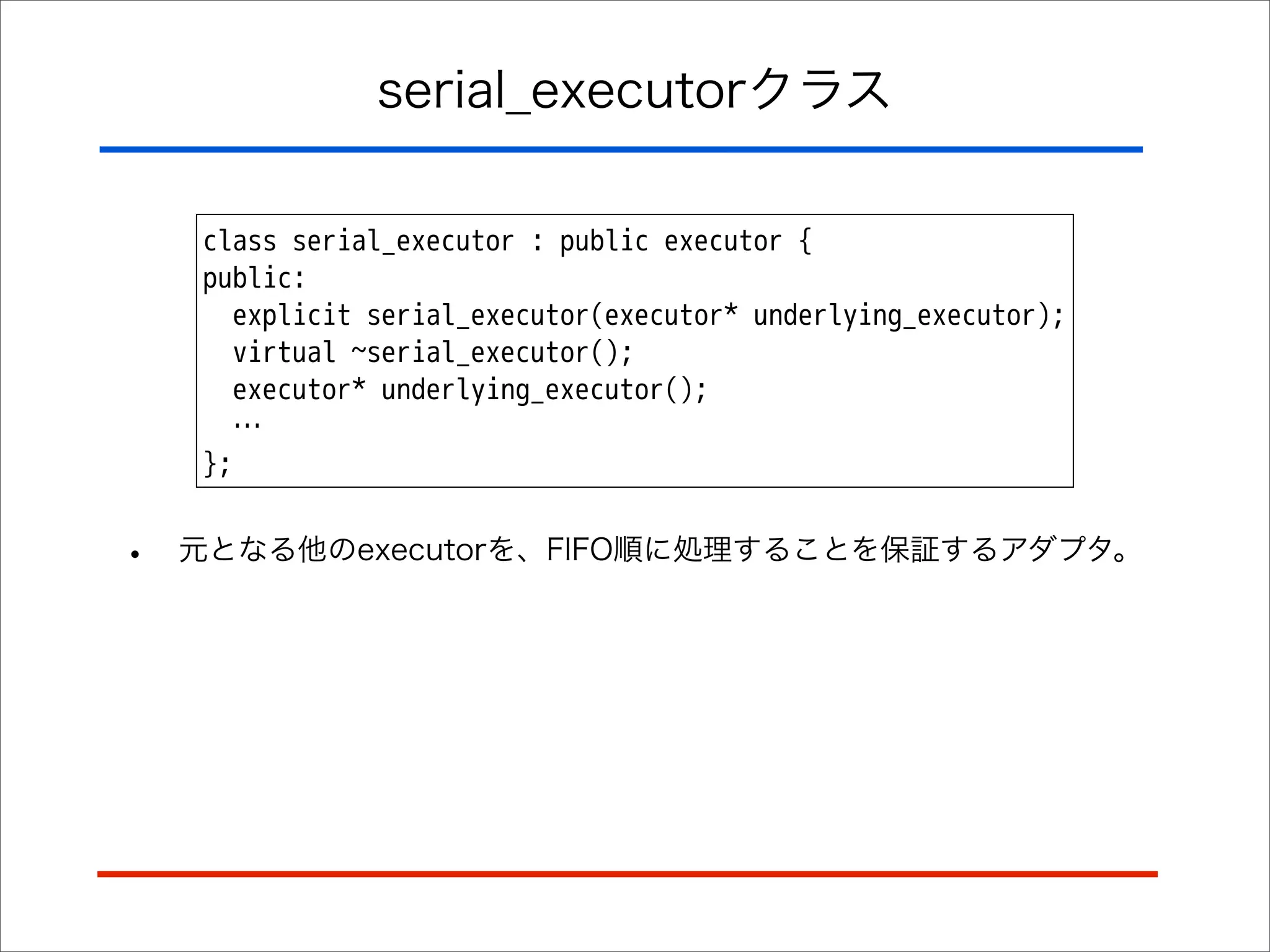
serial_executorクラス
class serial_executor :public executor {
public:
explicit serial_executor(executor* underlying_executor);
virtual ~serial_executor();
executor* underlying_executor();
…
};
•
元となる他のexecutorを、FIFO順に処理することを保証するアダプタ。
- 9.
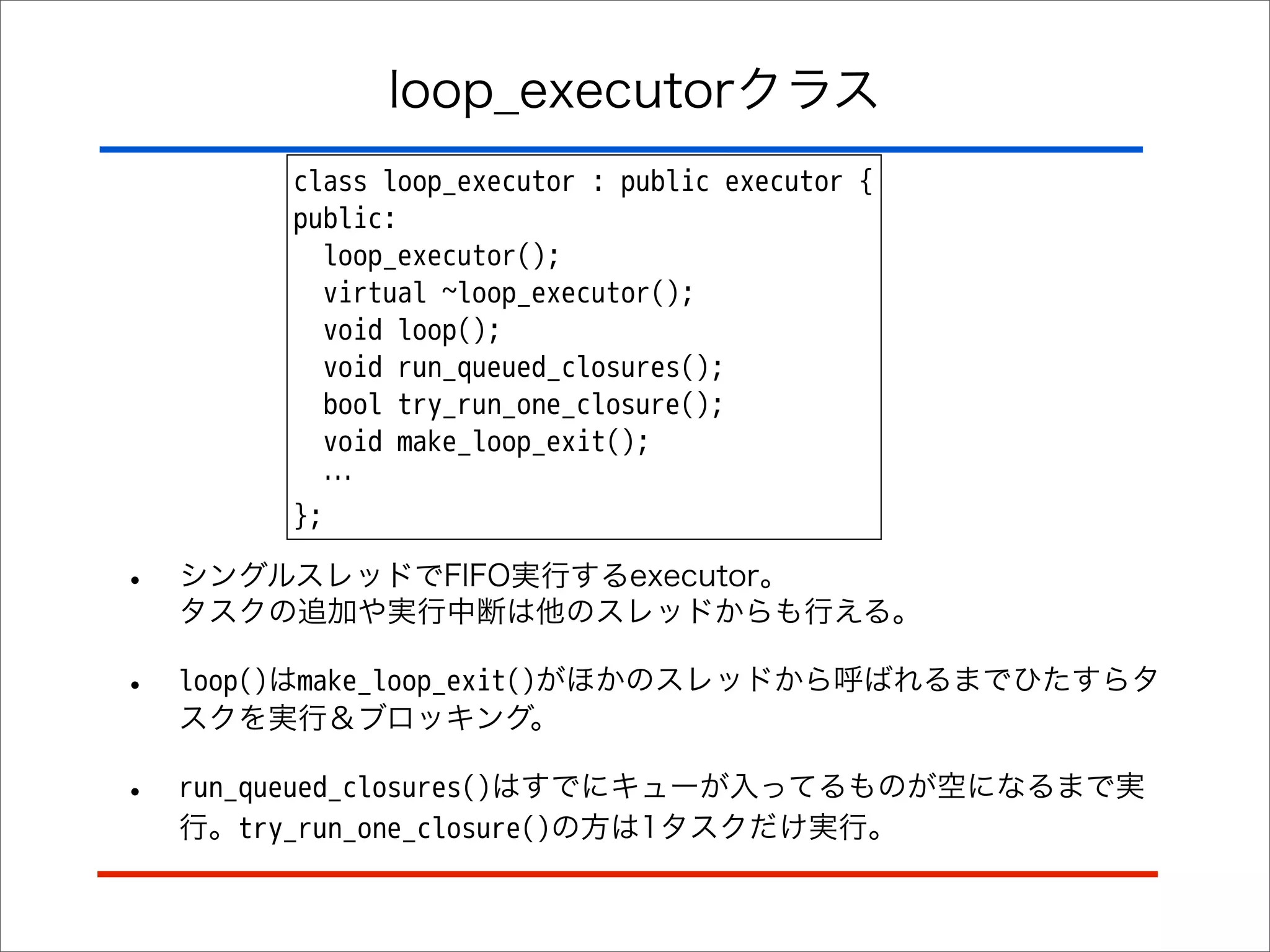
loop_executorクラス
class loop_executor :public executor {
public:
loop_executor();
virtual ~loop_executor();
void loop();
void run_queued_closures();
bool try_run_one_closure();
void make_loop_exit();
…
};
•
シングルスレッドでFIFO実行するexecutor。
タスクの追加や実行中断は他のスレッドからも行える。
•
loop()はmake_loop_exit()がほかのスレッドから呼ばれるまでひたすらタ
スクを実行&ブロッキング。
•
run_queued_closures()はすでにキューが入ってるものが空になるまで実
行。try_run_one_closure()の方は1タスクだけ実行。
- 10.
- 11.
- 12.
- 13.
- 14.