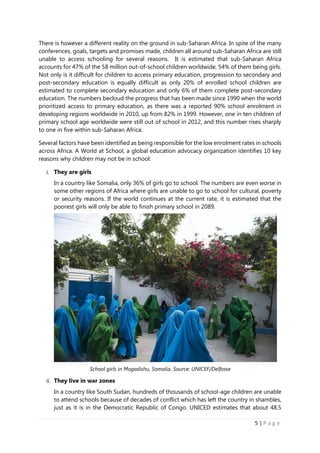
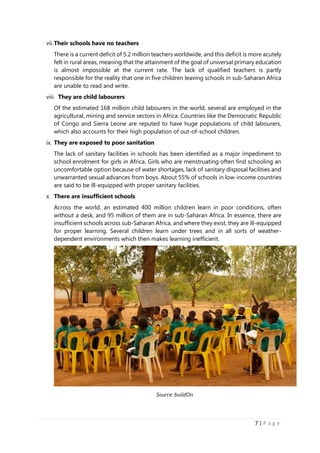
The document discusses ensuring equitable access to primary education in Sub-Saharan Africa. It provides background on international agreements to achieve universal primary education. Currently, 47% of the world's out-of-school children are in Sub-Saharan Africa, where factors like poverty, conflict, gender inequality, and lack of infrastructure limit access to education. While enrollment has increased, completion rates remain low. Case studies of Niger, Ghana and the DRC show how gender issues, poverty, and conflict respectively impact educational access in different countries. Potential solutions discussed include girls' evening classes, partnerships, and school feeding programs.