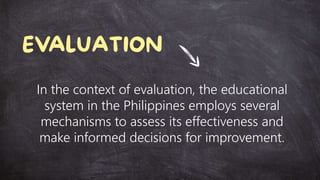
In the context of evaluation, the educational
system in the Philippines employs several
mechanisms to assess its effectiveness and
make informed decisions for improvement.
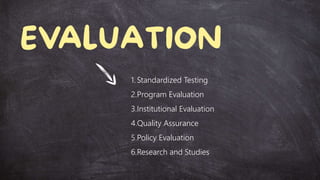
1. Standardized Testing
2.Program Evaluation
3.Institutional Evaluation
4.Quality Assurance
5.Policy Evaluation
6.Research and Studies
The Philippine educational system employs standardized
tests at different levels to evaluate student performance
and achievement.
The National Achievement Test (NAT) is administered
annually to assess the learning outcomes of students in
public and private schools.
Educational programs and initiatives
implemented by the government and
educational institutions undergo evaluation to
gauge their impact and effectiveness.
Schools and higher education institutions in the Philippines
undergo periodic evaluations to assess their overall
performance.
The Commission on Higher Education (CHED) and the
Department of Education (DepEd) oversee the evaluation
process to ensure quality standards are met.
The Philippines has implemented the Quality Assurance (QA)
mechanism in education to enhance the overall quality of
educational institutions.
This includes establishing quality standards, conducting
evaluations, and granting accreditation to institutions that meet
the set criteria.
Educational policies and reforms are
evaluated to assess their impact on
student learning outcomes and overall
system effectiveness.
Educational research and studies play a crucial role in
evaluating the Philippine education system.
Researchers and educational institutions conduct
studies to examine various aspects of education,
such as teaching methods, curriculum effectiveness,
and learning outcomes.
Overall, educational evaluation in the
Philippines is a comprehensive process that
involves assessing student performance,
evaluating programs and institutions, ensuring
quality standards, and examining the
effectiveness of policies.
Educational planning in the Philippines is a dynamic
process that involves revising and updating various
aspects of the education system to ensure its
effectiveness and responsiveness to changing
needs.
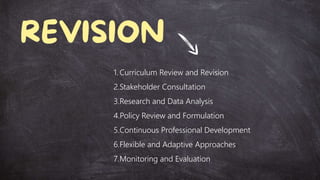
1. Curriculum Review and Revision
2.Stakeholder Consultation
3.Research and Data Analysis
4.Policy Review and Formulation
5.Continuous Professional Development
6.Flexible and Adaptive Approaches
7.Monitoring and Evaluation
The Department of Education (DepEd) regularly assesses the
curriculum to ensure its alignment with national goals, emerging
trends, and global standards.
Curriculum revisions aim to enhance the relevance, quality, and
responsiveness of educational programs to meet the needs of
learners and society.
In the revision process, the Philippines emphasizes the
involvement of various stakeholders, including educators,
experts, parents, students, and community members.
Stakeholder consultation allows for diverse perspectives to
be considered in shaping educational policies and
programs.
Educational planning in the Philippines relies on research
and data analysis to inform the revision process.
Data from national assessments, research studies, surveys,
and evaluations provide insights into the strengths and
weaknesses of the education system.
Educational planning involves the review and formulation
of policies to guide the direction of the education system.
Existing policies are assessed for their effectiveness and
relevance, and new policies are developed to address
emerging needs and challenges.
Revisions in planning often include strategies to enhance
the skills and knowledge of teachers and school
administrators.
This may involve providing training opportunities, updating
teaching methodologies, and integrating technology into
the learning process.
Revision processes consider innovative approaches,
such as competency-based education, flexible
learning modalities, and interdisciplinary learning, to
cater to diverse learning styles and prepare students
for the future.
Regular monitoring and evaluation are
integral to the revision process.
The Philippines emphasizes the collection of
data and feedback on the implementation of
revised policies and programs.
Overall, educational planning in the
Philippines recognizes the importance of
revising and updating various aspects of the
education system to meet the evolving needs
of learners and society.
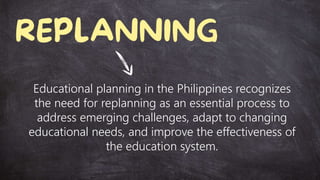
Educational planning in the Philippines recognizes
the need for replanning as an essential process to
address emerging challenges, adapt to changing
educational needs, and improve the effectiveness of
the education system.
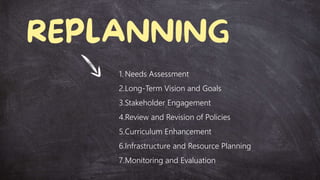
1. Needs Assessment
2.Long-Term Vision and Goals
3.Stakeholder Engagement
4.Review and Revision of Policies
5.Curriculum Enhancement
6.Infrastructure and Resource Planning
7.Monitoring and Evaluation
This involves identifying the current and future educational
needs of learners, communities, and the nation as a whole.
The needs assessment takes into account demographic
changes, economic trends, technological advancements,
and societal demands.
This includes setting clear objectives and
outcomes that align with national
development plans and global educational
frameworks.
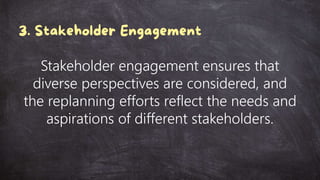
Stakeholder engagement ensures that
diverse perspectives are considered, and
the replanning efforts reflect the needs and
aspirations of different stakeholders.
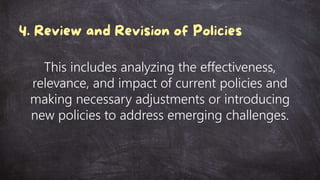
This includes analyzing the effectiveness,
relevance, and impact of current policies and
making necessary adjustments or introducing
new policies to address emerging challenges.
Replanning in the Philippines places emphasis on
enhancing the curriculum to meet the changing demands
of the 21st-century world.
This includes reviewing and updating curriculum
frameworks, content, and pedagogical approaches.
This involves assessing the adequacy of school facilities,
classrooms, libraries, laboratories, and technology
infrastructure.
Replanning also addresses the allocation of resources, such as
funding, instructional materials, and educational technologies, to
ensure equitable access to quality education across different
regions and communities.
Replanning in the Philippines includes establishing
mechanisms for monitoring and evaluation of the
implementation of replanning initiatives. This involves
setting up indicators, benchmarks, and performance
measures to track progress and assess the effectiveness of
the replanned strategies.
Overall, educational replanning in the Philippines is
a dynamic process that involves assessing needs,
setting long-term goals, engaging stakeholders,
reviewing and revising policies, enhancing the
curriculum, addressing infrastructure and resource
needs, and establishing monitoring and evaluation
mechanisms.

Evaluation, Revision and Replanning.pptx

  • 3.
    In the contextof evaluation, the educational system in the Philippines employs several mechanisms to assess its effectiveness and make informed decisions for improvement.
  • 4.
    1. Standardized Testing 2.ProgramEvaluation 3.Institutional Evaluation 4.Quality Assurance 5.Policy Evaluation 6.Research and Studies
  • 5.
    The Philippine educationalsystem employs standardized tests at different levels to evaluate student performance and achievement. The National Achievement Test (NAT) is administered annually to assess the learning outcomes of students in public and private schools.
  • 6.
    Educational programs andinitiatives implemented by the government and educational institutions undergo evaluation to gauge their impact and effectiveness.
  • 7.
    Schools and highereducation institutions in the Philippines undergo periodic evaluations to assess their overall performance. The Commission on Higher Education (CHED) and the Department of Education (DepEd) oversee the evaluation process to ensure quality standards are met.
  • 8.
    The Philippines hasimplemented the Quality Assurance (QA) mechanism in education to enhance the overall quality of educational institutions. This includes establishing quality standards, conducting evaluations, and granting accreditation to institutions that meet the set criteria.
  • 9.
    Educational policies andreforms are evaluated to assess their impact on student learning outcomes and overall system effectiveness.
  • 10.
    Educational research andstudies play a crucial role in evaluating the Philippine education system. Researchers and educational institutions conduct studies to examine various aspects of education, such as teaching methods, curriculum effectiveness, and learning outcomes.
  • 11.
    Overall, educational evaluationin the Philippines is a comprehensive process that involves assessing student performance, evaluating programs and institutions, ensuring quality standards, and examining the effectiveness of policies.
  • 13.
    Educational planning inthe Philippines is a dynamic process that involves revising and updating various aspects of the education system to ensure its effectiveness and responsiveness to changing needs.
  • 14.
    1. Curriculum Reviewand Revision 2.Stakeholder Consultation 3.Research and Data Analysis 4.Policy Review and Formulation 5.Continuous Professional Development 6.Flexible and Adaptive Approaches 7.Monitoring and Evaluation
  • 15.
    The Department ofEducation (DepEd) regularly assesses the curriculum to ensure its alignment with national goals, emerging trends, and global standards. Curriculum revisions aim to enhance the relevance, quality, and responsiveness of educational programs to meet the needs of learners and society.
  • 16.
    In the revisionprocess, the Philippines emphasizes the involvement of various stakeholders, including educators, experts, parents, students, and community members. Stakeholder consultation allows for diverse perspectives to be considered in shaping educational policies and programs.
  • 17.
    Educational planning inthe Philippines relies on research and data analysis to inform the revision process. Data from national assessments, research studies, surveys, and evaluations provide insights into the strengths and weaknesses of the education system.
  • 18.
    Educational planning involvesthe review and formulation of policies to guide the direction of the education system. Existing policies are assessed for their effectiveness and relevance, and new policies are developed to address emerging needs and challenges.
  • 19.
    Revisions in planningoften include strategies to enhance the skills and knowledge of teachers and school administrators. This may involve providing training opportunities, updating teaching methodologies, and integrating technology into the learning process.
  • 20.
    Revision processes considerinnovative approaches, such as competency-based education, flexible learning modalities, and interdisciplinary learning, to cater to diverse learning styles and prepare students for the future.
  • 21.
    Regular monitoring andevaluation are integral to the revision process. The Philippines emphasizes the collection of data and feedback on the implementation of revised policies and programs.
  • 22.
    Overall, educational planningin the Philippines recognizes the importance of revising and updating various aspects of the education system to meet the evolving needs of learners and society.
  • 25.
    Educational planning inthe Philippines recognizes the need for replanning as an essential process to address emerging challenges, adapt to changing educational needs, and improve the effectiveness of the education system.
  • 26.
    1. Needs Assessment 2.Long-TermVision and Goals 3.Stakeholder Engagement 4.Review and Revision of Policies 5.Curriculum Enhancement 6.Infrastructure and Resource Planning 7.Monitoring and Evaluation
  • 27.
    This involves identifyingthe current and future educational needs of learners, communities, and the nation as a whole. The needs assessment takes into account demographic changes, economic trends, technological advancements, and societal demands.
  • 28.
    This includes settingclear objectives and outcomes that align with national development plans and global educational frameworks.
  • 29.
    Stakeholder engagement ensuresthat diverse perspectives are considered, and the replanning efforts reflect the needs and aspirations of different stakeholders.
  • 30.
    This includes analyzingthe effectiveness, relevance, and impact of current policies and making necessary adjustments or introducing new policies to address emerging challenges.
  • 31.
    Replanning in thePhilippines places emphasis on enhancing the curriculum to meet the changing demands of the 21st-century world. This includes reviewing and updating curriculum frameworks, content, and pedagogical approaches.
  • 32.
    This involves assessingthe adequacy of school facilities, classrooms, libraries, laboratories, and technology infrastructure. Replanning also addresses the allocation of resources, such as funding, instructional materials, and educational technologies, to ensure equitable access to quality education across different regions and communities.
  • 33.
    Replanning in thePhilippines includes establishing mechanisms for monitoring and evaluation of the implementation of replanning initiatives. This involves setting up indicators, benchmarks, and performance measures to track progress and assess the effectiveness of the replanned strategies.
  • 34.
    Overall, educational replanningin the Philippines is a dynamic process that involves assessing needs, setting long-term goals, engaging stakeholders, reviewing and revising policies, enhancing the curriculum, addressing infrastructure and resource needs, and establishing monitoring and evaluation mechanisms.

Editor's Notes

  • #5 When it comes to the topic of revision in educational planning, the Philippines employs several strategies and approaches. Here are key points related to educational revision in the country:
  • #15 When it comes to the topic of revision in educational planning, the Philippines employs several strategies and approaches. Here are key points related to educational revision in the country: